
2 2 Decline and Fall of the Empire


- Slides: 10
2 -2: Decline and Fall of the Empire
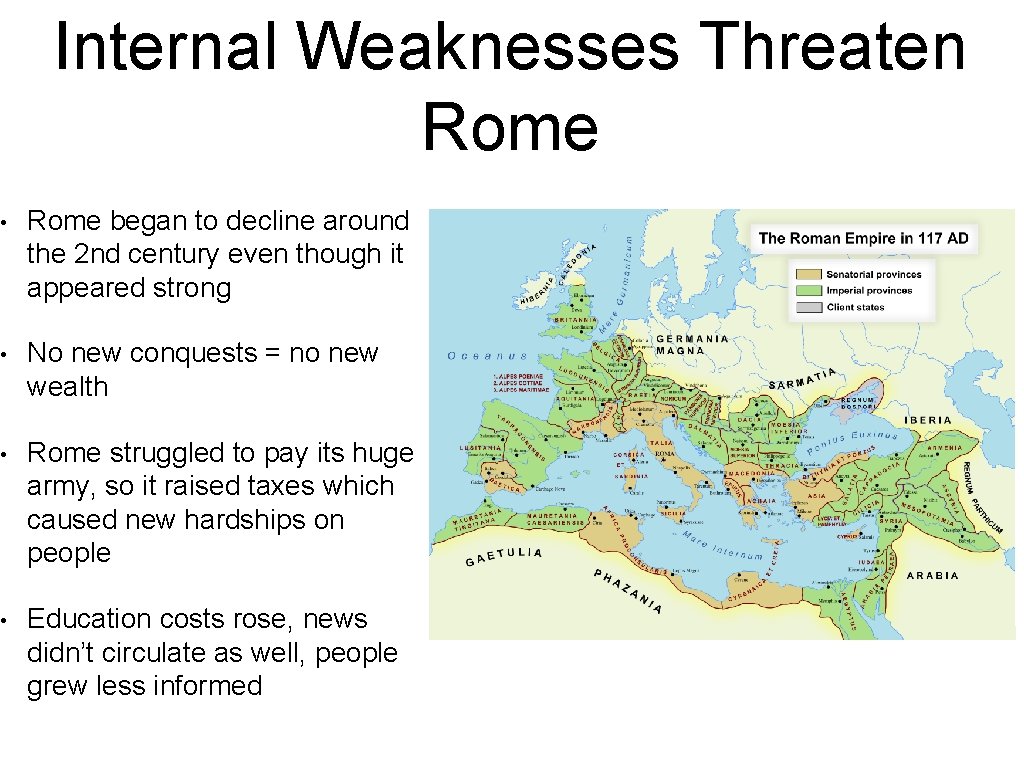
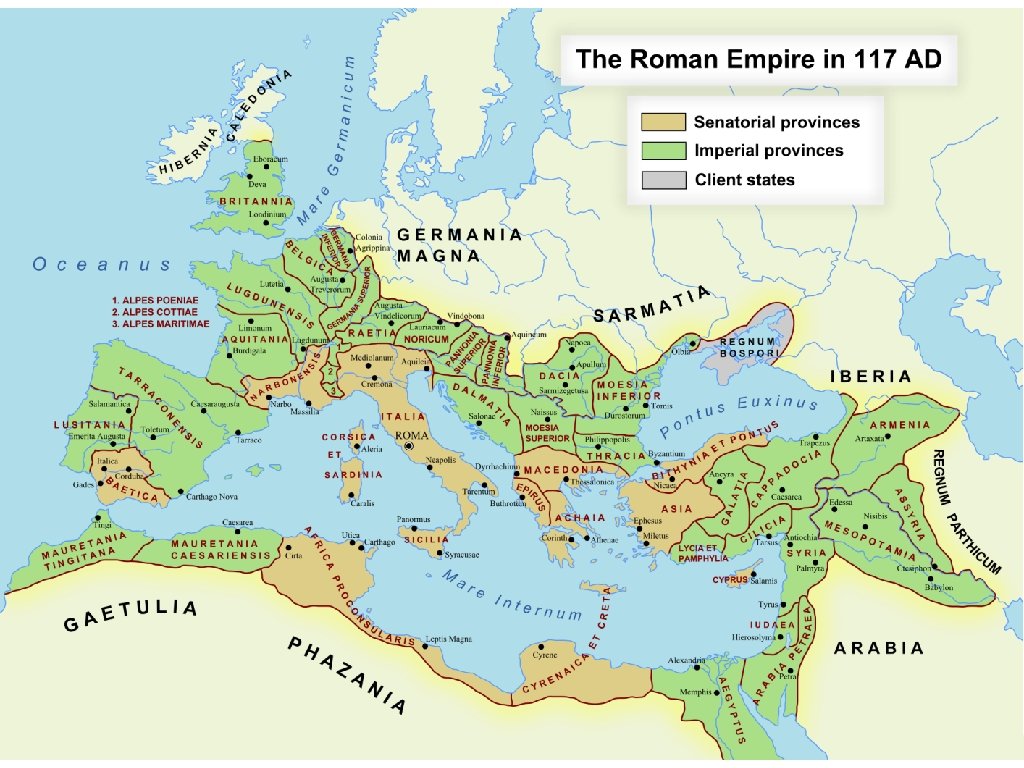
Internal Weaknesses Threaten Rome • Rome began to decline around the 2 nd century even though it appeared strong • No new conquests = no new wealth • Rome struggled to pay its huge army, so it raised taxes which caused new hardships on people • Education costs rose, news didn’t circulate as well, people grew less informed
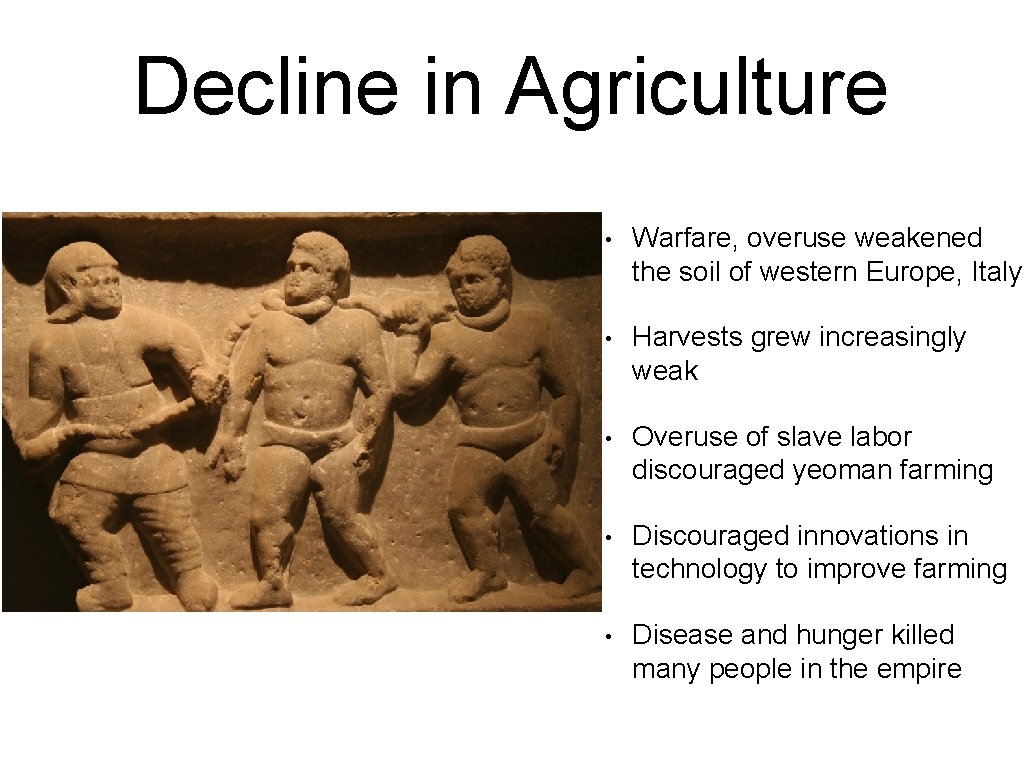
Decline in Agriculture • Warfare, overuse weakened the soil of western Europe, Italy • Harvests grew increasingly weak • Overuse of slave labor discouraged yeoman farming • Discouraged innovations in technology to improve farming • Disease and hunger killed many people in the empire
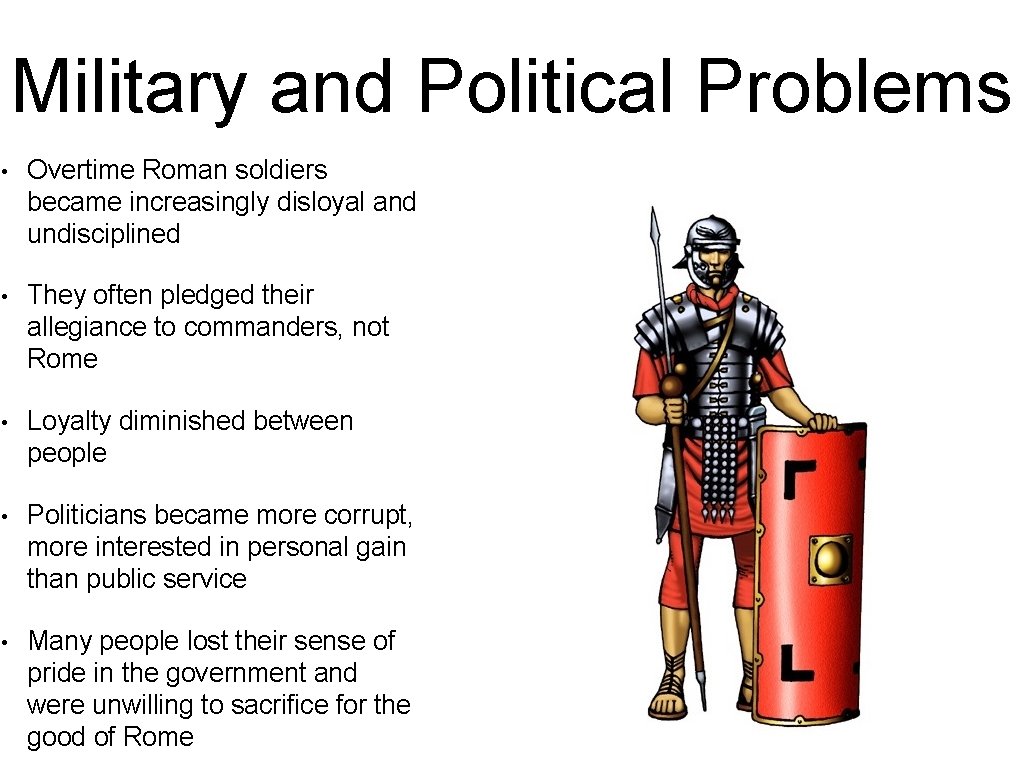
Military and Political Problems • Overtime Roman soldiers became increasingly disloyal and undisciplined • They often pledged their allegiance to commanders, not Rome • Loyalty diminished between people • Politicians became more corrupt, more interested in personal gain than public service • Many people lost their sense of pride in the government and were unwilling to sacrifice for the good of Rome
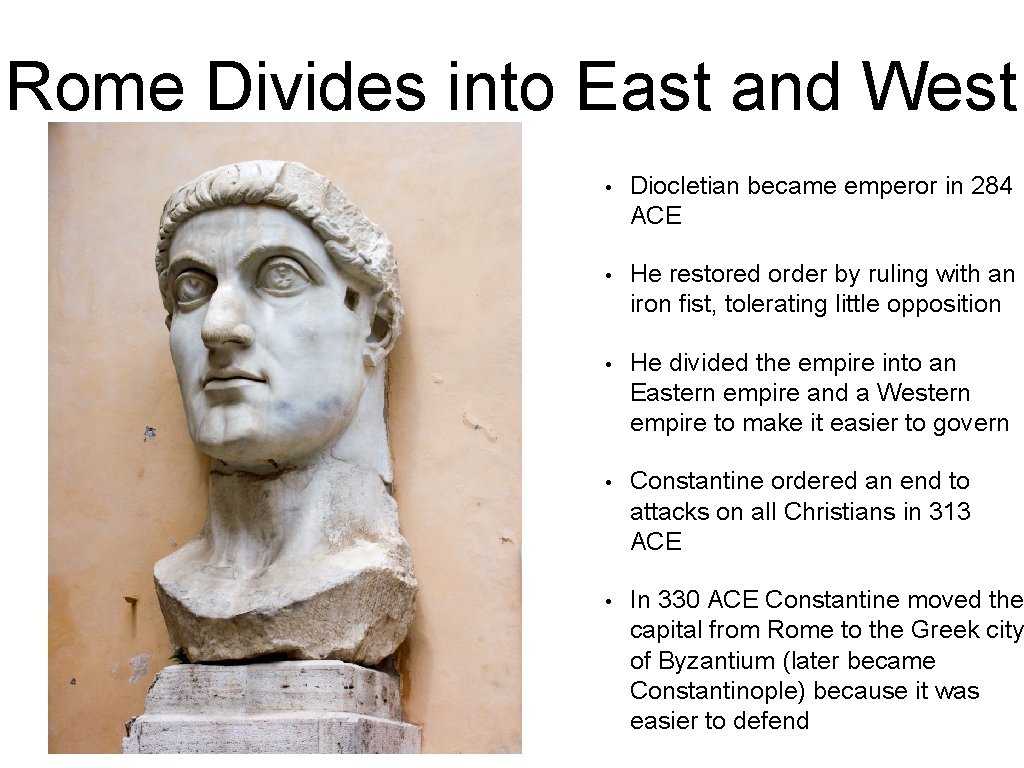
Rome Divides into East and West • Diocletian became emperor in 284 ACE • He restored order by ruling with an iron fist, tolerating little opposition • He divided the empire into an Eastern empire and a Western empire to make it easier to govern • Constantine ordered an end to attacks on all Christians in 313 ACE • In 330 ACE Constantine moved the capital from Rome to the Greek city of Byzantium (later became Constantinople) because it was easier to defend
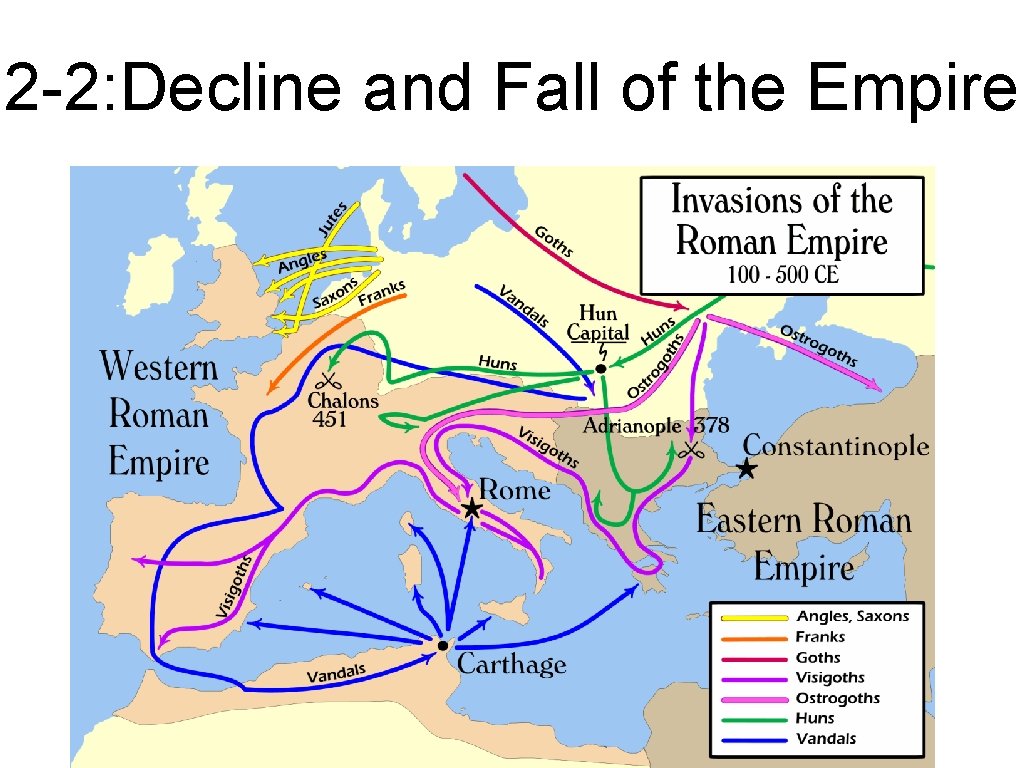
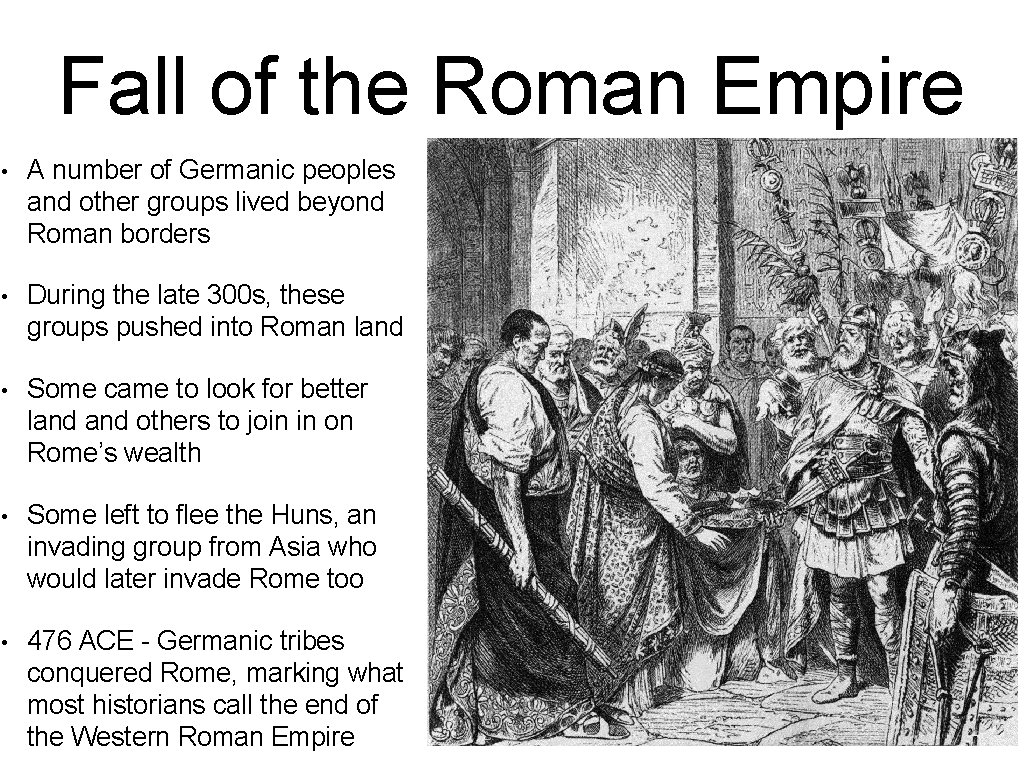
Fall of the Roman Empire • A number of Germanic peoples and other groups lived beyond Roman borders • During the late 300 s, these groups pushed into Roman land • Some came to look for better land others to join in on Rome’s wealth • Some left to flee the Huns, an invading group from Asia who would later invade Rome too • 476 ACE - Germanic tribes conquered Rome, marking what most historians call the end of the Western Roman Empire
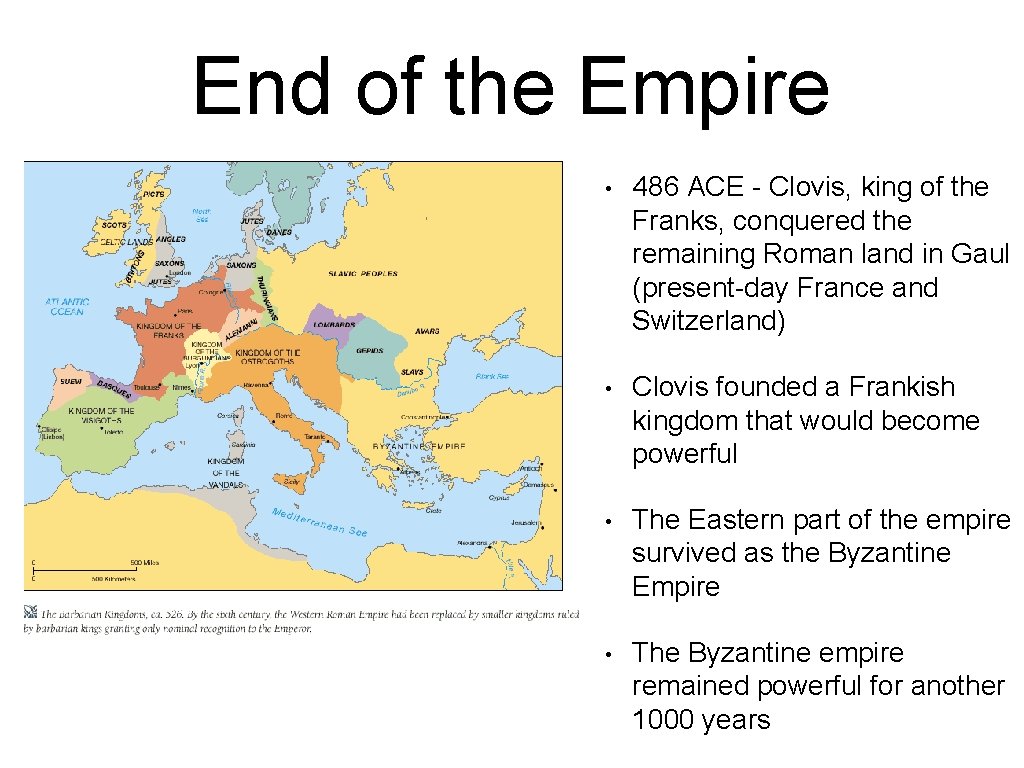
End of the Empire • 486 ACE - Clovis, king of the Franks, conquered the remaining Roman land in Gaul (present-day France and Switzerland) • Clovis founded a Frankish kingdom that would become powerful • The Eastern part of the empire survived as the Byzantine Empire • The Byzantine empire remained powerful for another 1000 years