
2 1 The Structure Functions of Eukaryotic Cells



- Slides: 20
2. 1 The Structure & Functions of Eukaryotic Cells
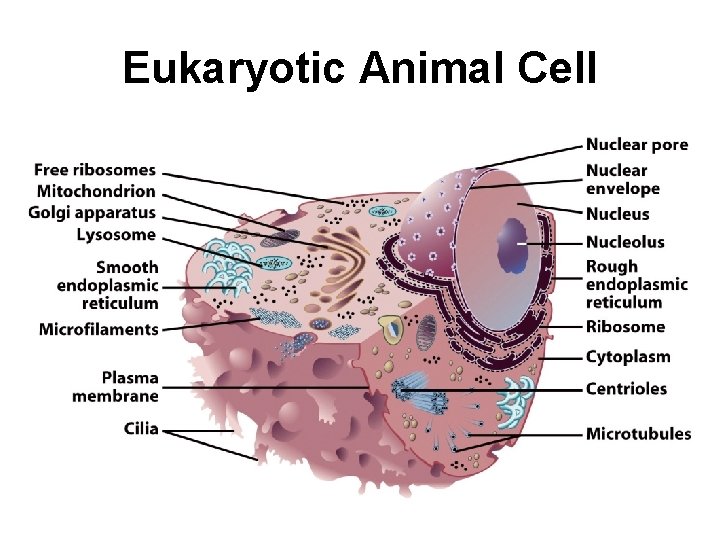
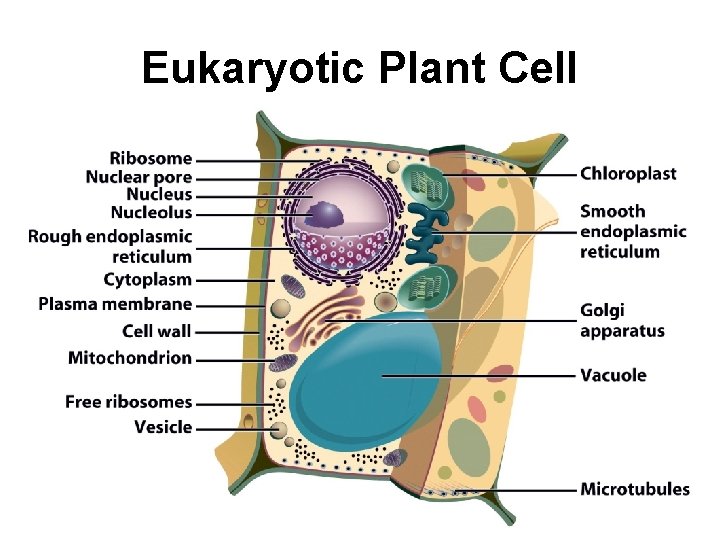
Learning Goals From this power point ( and using section 2. 1 in the text) 1. compare prokaryotes and eukaryotes. 2. explain the following cell structures AND be able to identify them in plant and animal cell diagrams. nucleus (DNA, nucleolus) rough & smooth endoplasmic reticulum, Golgi apparatus (steps in protein excretion), lysosomes, peroxisomes, vacuoles, vesicles, chloroplasts, mitochondria, cell wall, cytoskeleton, cilia, flagella, cell membrane (fluid mosaic model, phospholipids & membrane proteins)
Review: Defining a Cell • A cell is a confined system of potentially self perpetuating linked organic reactions that are catalyzed step-wise by enzymes.
Review: Principles of The Cell Theory • All living things are made of 1 or more cells • Smallest living unit of structure and function of all organisms is the cell • All cells arise from pre-existing cells (this principle discarded the idea of spontaneous generation)
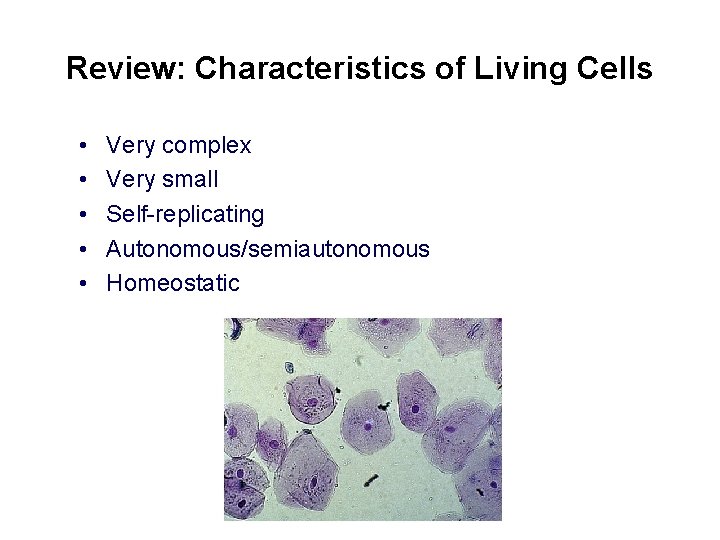
Review: Characteristics of Living Cells • • • Very complex Very small Self-replicating Autonomous/semiautonomous Homeostatic
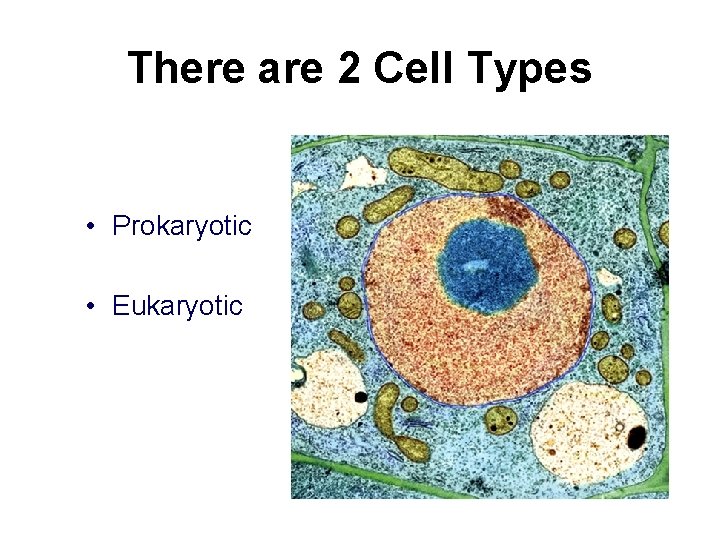
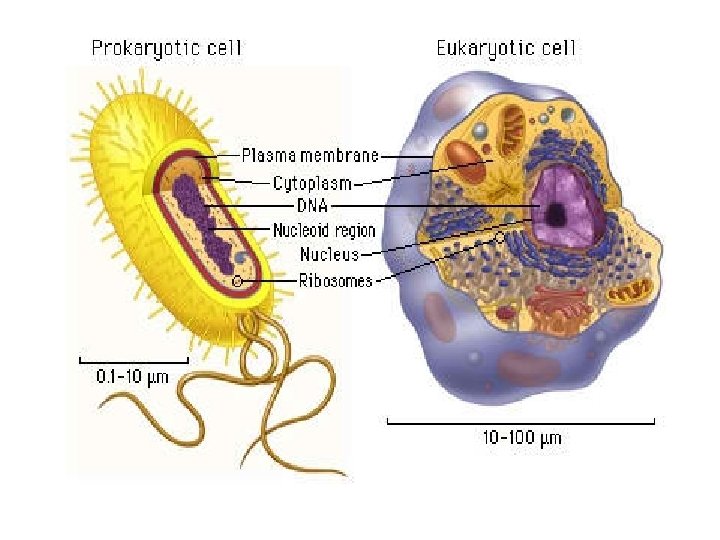
There are 2 Cell Types • Prokaryotic • Eukaryotic
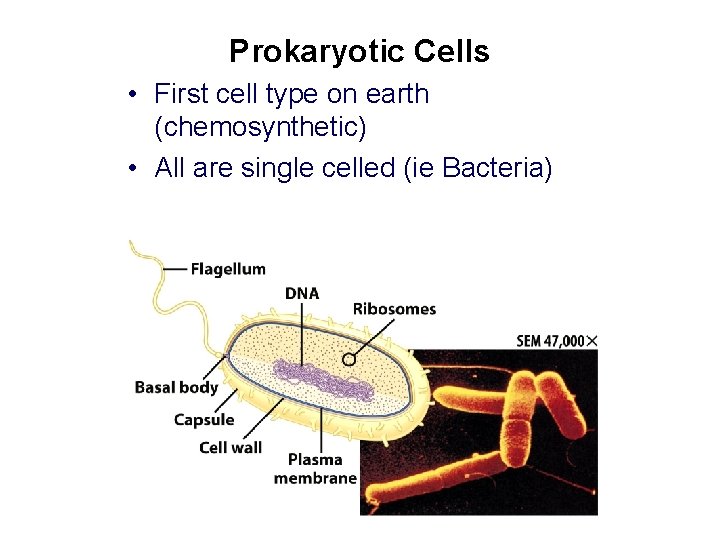
Prokaryotic Cells • First cell type on earth (chemosynthetic) • All are single celled (ie Bacteria)
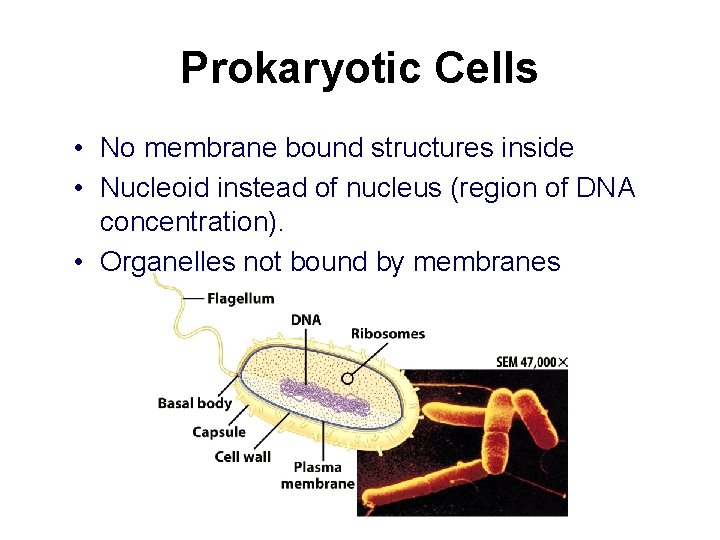
Prokaryotic Cells • No membrane bound structures inside • Nucleoid instead of nucleus (region of DNA concentration). • Organelles not bound by membranes
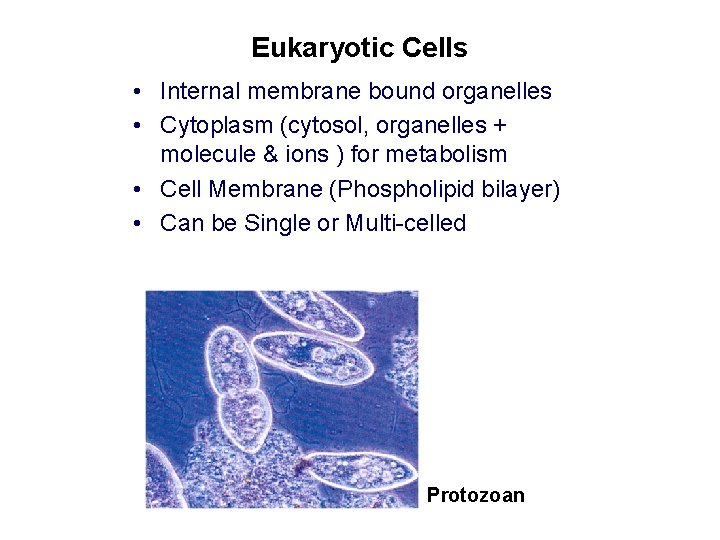
Eukaryotic Cells • Internal membrane bound organelles • Cytoplasm (cytosol, organelles + molecule & ions ) for metabolism • Cell Membrane (Phospholipid bilayer) • Can be Single or Multi-celled Protozoan
Eukaryotic Animal Cell
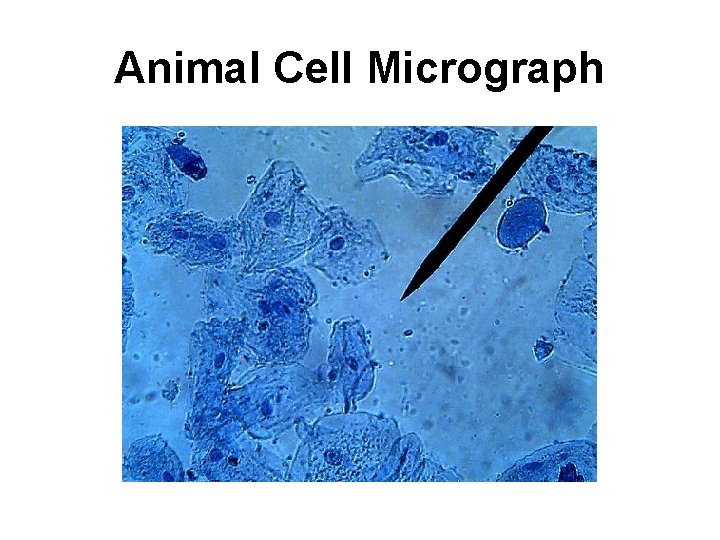
Animal Cell Micrograph
Eukaryotic Plant Cell
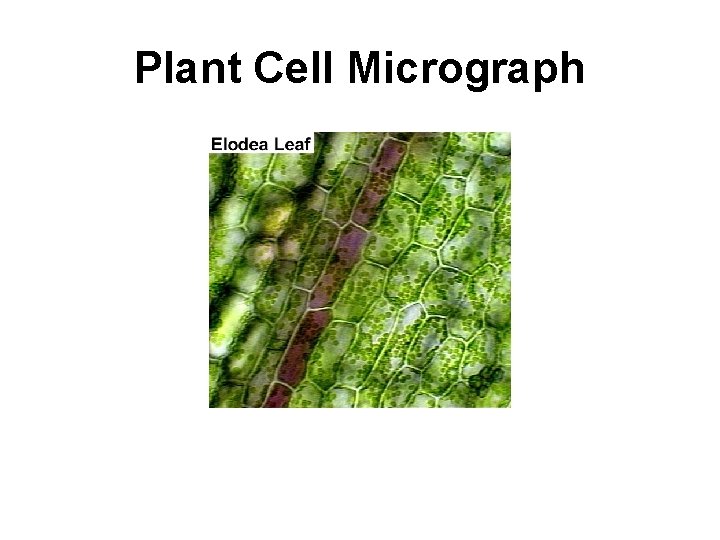
Plant Cell Micrograph
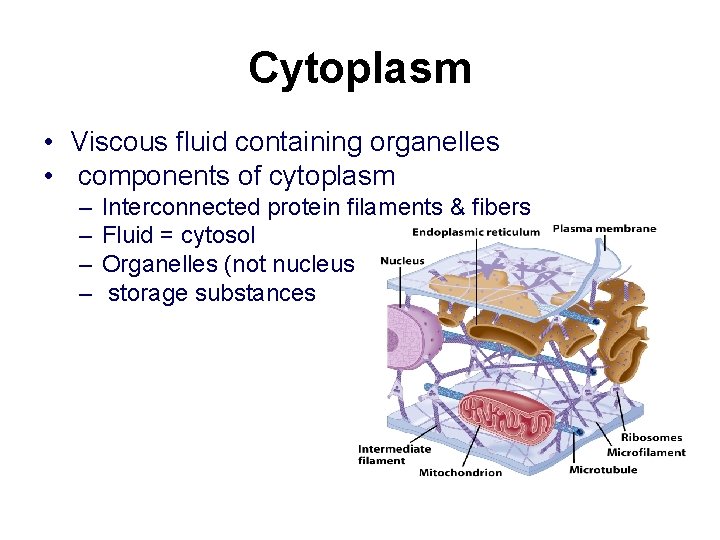
Cytoplasm • Viscous fluid containing organelles • components of cytoplasm – – Interconnected protein filaments & fibers Fluid = cytosol Organelles (not nucleus) storage substances
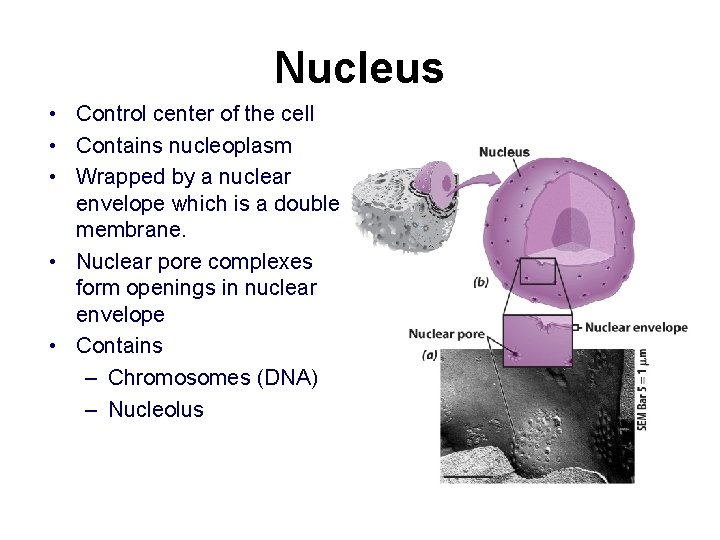
Nucleus • Control center of the cell • Contains nucleoplasm • Wrapped by a nuclear envelope which is a double membrane. • Nuclear pore complexes form openings in nuclear envelope • Contains – Chromosomes (DNA) – Nucleolus
Nucleus Micrograph
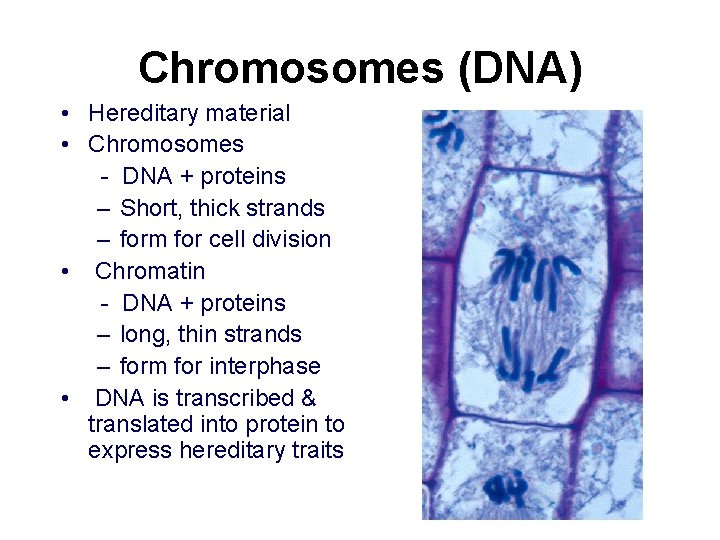
Chromosomes (DNA) • Hereditary material • Chromosomes - DNA + proteins – Short, thick strands – form for cell division • Chromatin - DNA + proteins – long, thin strands – form for interphase • DNA is transcribed & translated into protein to express hereditary traits
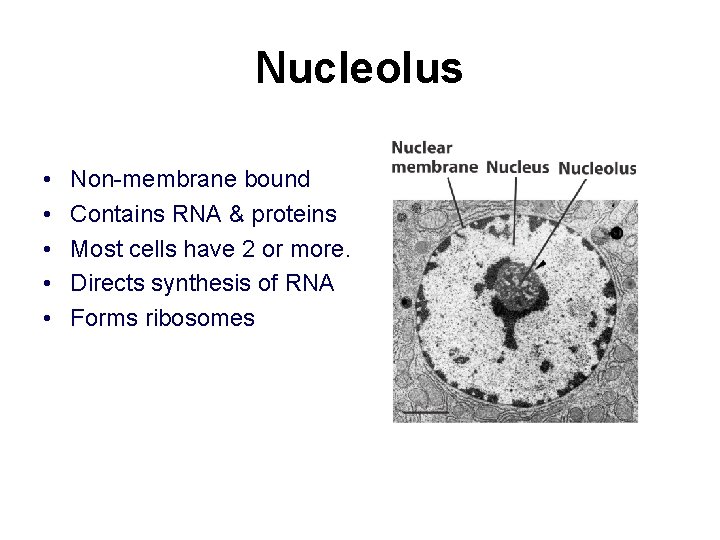
Nucleolus • • • Non-membrane bound Contains RNA & proteins Most cells have 2 or more. Directs synthesis of RNA Forms ribosomes
End of Part 1!