
2 1 Species and Populations IB TESTING TIPS
2. 1 Species and Populations
IB TESTING TIPS: • IB often asks for named examples, be sure to use specific examples and use specific names (scientific names are not required). • For example if you just say tiger this refers to 1 of 10 species versus Bengal tiger is specific to one region and one species! • For a named example of a habitat or ecosystem • be specific; The Giant Kelp Forest off the coast of Monterrey Bay California is much better than the beach • give as much detail as possible; The Sundarbans is the largest mangrove forest in Southern Bangladesh and South-eastern India.
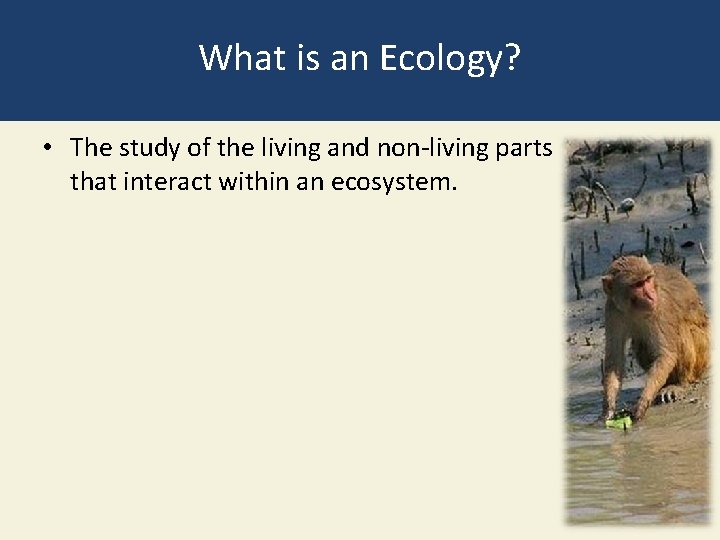
What is an Ecology? • The study of the living and non-living parts that interact within an ecosystem.
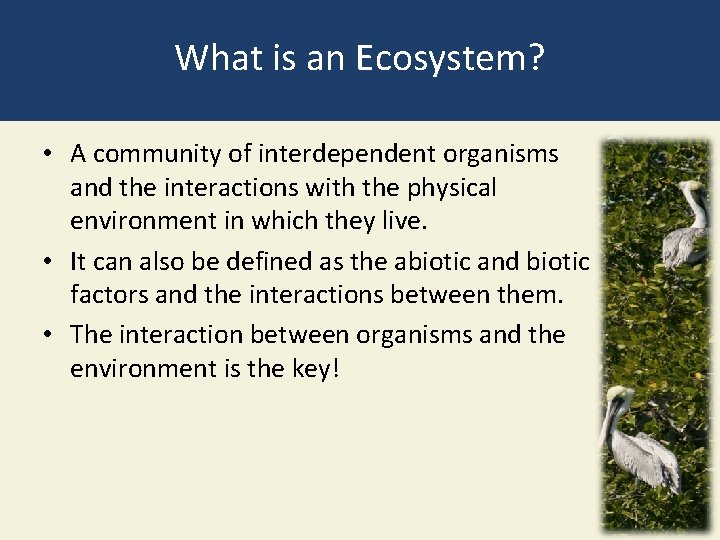
What is an Ecosystem? • A community of interdependent organisms and the interactions with the physical environment in which they live. • It can also be defined as the abiotic and biotic factors and the interactions between them. • The interaction between organisms and the environment is the key!
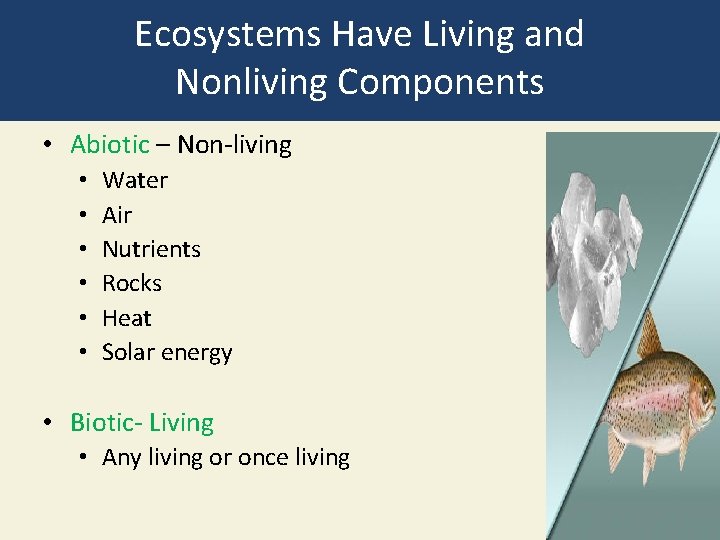
Ecosystems Have Living and Nonliving Components • Abiotic – Non-living • • • Water Air Nutrients Rocks Heat Solar energy • Biotic- Living • Any living or once living
Biotic or Abiotic? • • • River dolphin Algae Daylight hours Precipitation Moss Soil composition • • • Bacteria Mushroom Rocks Minerals Mangrove trees Swamp grass
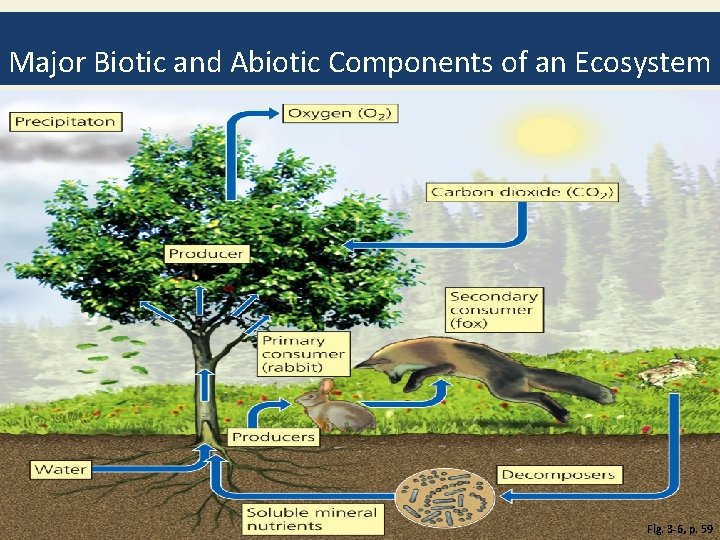
Major Biotic and Abiotic Components of an Ecosystem Fig. 3 -6, p. 59
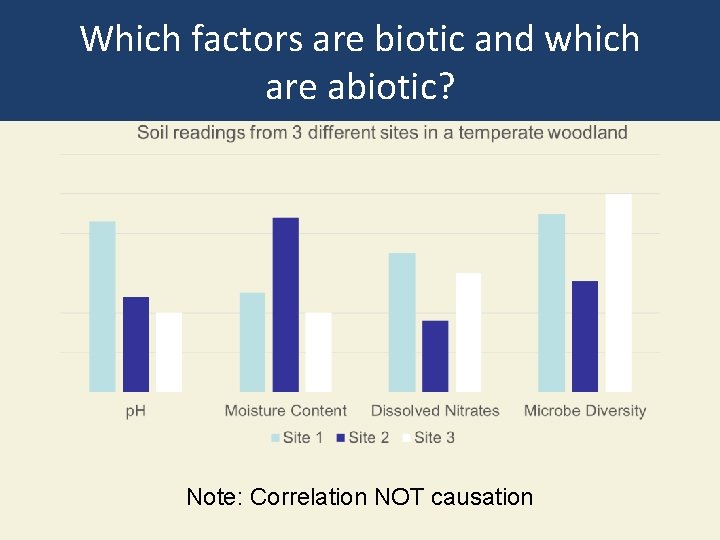
Which factors are biotic and which are abiotic? Note: Correlation NOT causation
How many of these terms do you know? • • • Organism Species Population Community Niche Habitat In your notebook draw a bunch of little organisms. Some of the same type of some of different types. ▪ Label 1 individual as an organism. ▪ Label a group of the same type of organisms (species) ▪ Circle: individuals of the same species (Population) ▪ Draw interactions between the populations (Community)
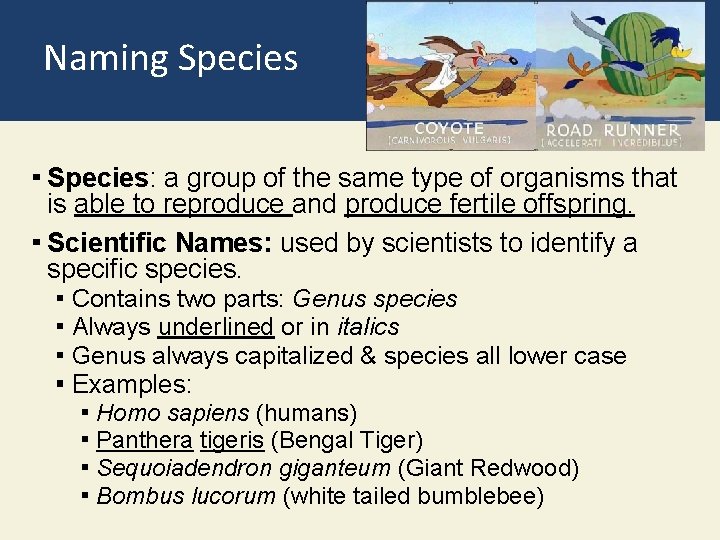
Naming Species ▪ Species: a group of the same type of organisms that is able to reproduce and produce fertile offspring. ▪ Scientific Names: used by scientists to identify a specific species. ▪ Contains two parts: Genus species ▪ Always underlined or in italics ▪ Genus always capitalized & species all lower case ▪ Examples: ▪ Homo sapiens (humans) ▪ Panthera tigeris (Bengal Tiger) ▪ Sequoiadendron giganteum (Giant Redwood) ▪ Bombus lucorum (white tailed bumblebee)
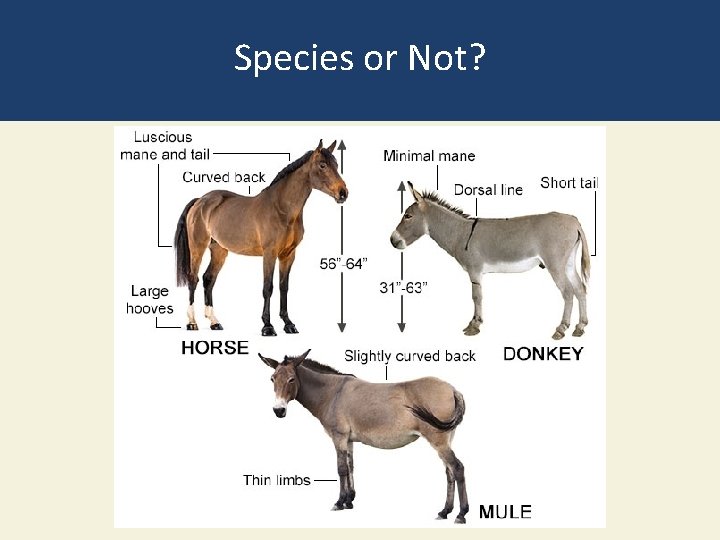
Species or Not?
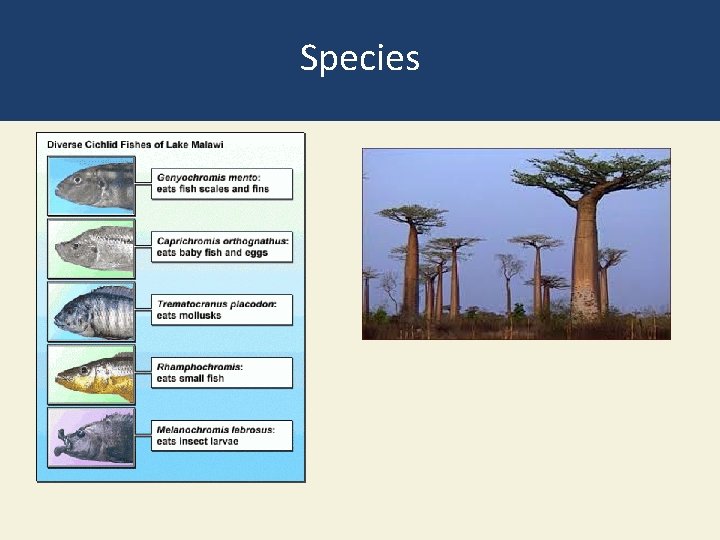
Species
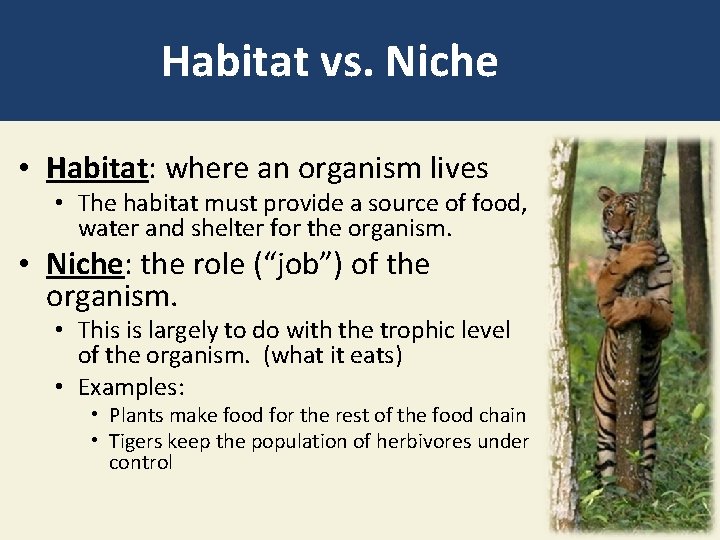
Habitat vs. Niche • Habitat: where an organism lives • The habitat must provide a source of food, water and shelter for the organism. • Niche: the role (“job”) of the organism. • This is largely to do with the trophic level of the organism. (what it eats) • Examples: • Plants make food for the rest of the food chain • Tigers keep the population of herbivores under control
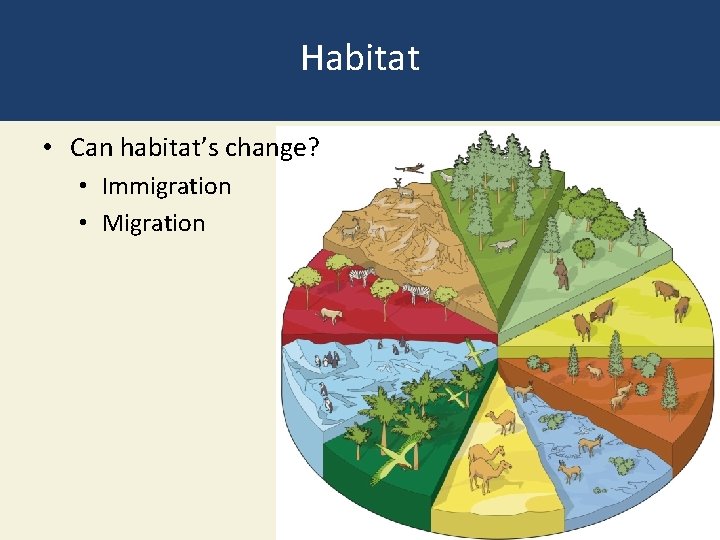
Habitat • Can habitat’s change? • Immigration • Migration
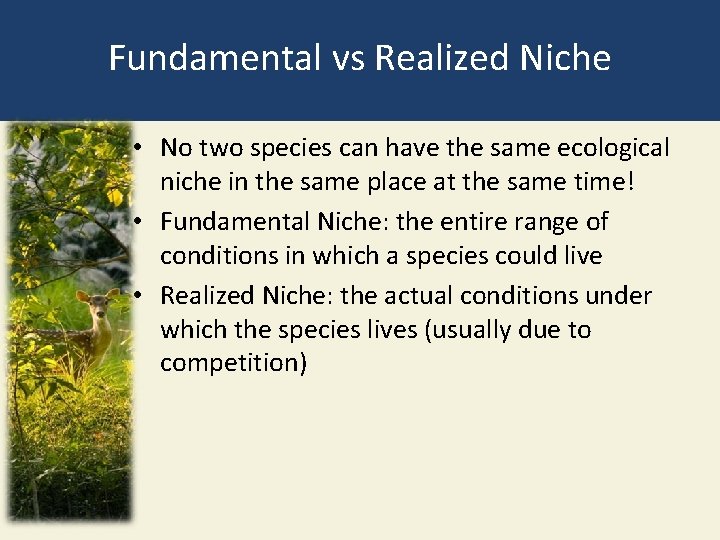
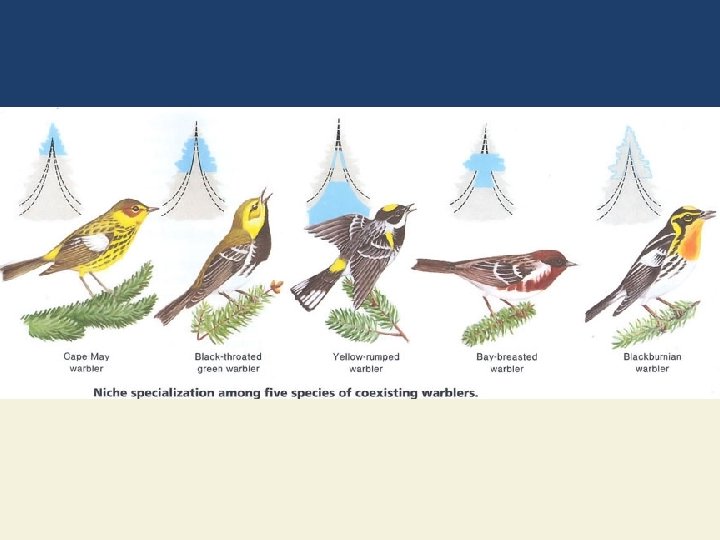
Fundamental vs Realized Niche • No two species can have the same ecological niche in the same place at the same time! • Fundamental Niche: the entire range of conditions in which a species could live • Realized Niche: the actual conditions under which the species lives (usually due to competition)
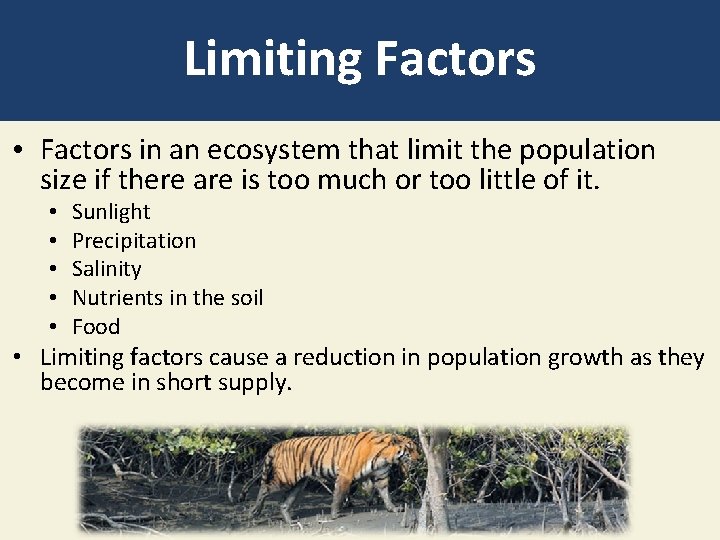
Limiting Factors • Factors in an ecosystem that limit the population size if there are is too much or too little of it. • • • Sunlight Precipitation Salinity Nutrients in the soil Food • Limiting factors cause a reduction in population growth as they become in short supply.
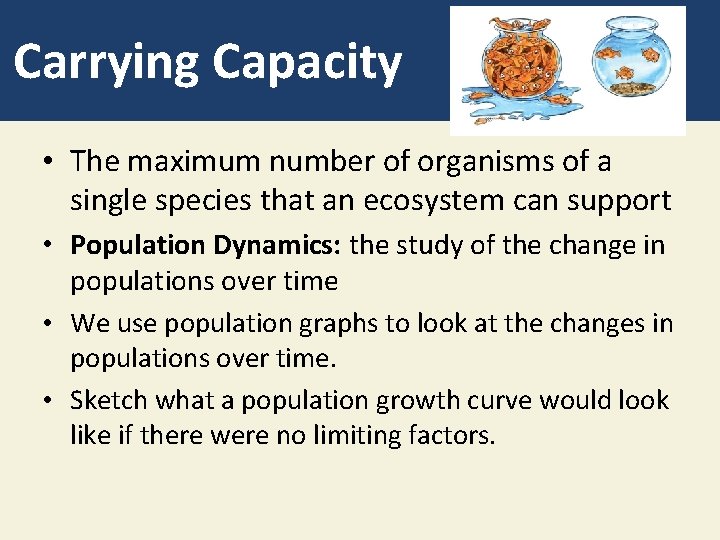
Carrying Capacity • The maximum number of organisms of a single species that an ecosystem can support • Population Dynamics: the study of the change in populations over time • We use population graphs to look at the changes in populations over time. • Sketch what a population growth curve would look like if there were no limiting factors.
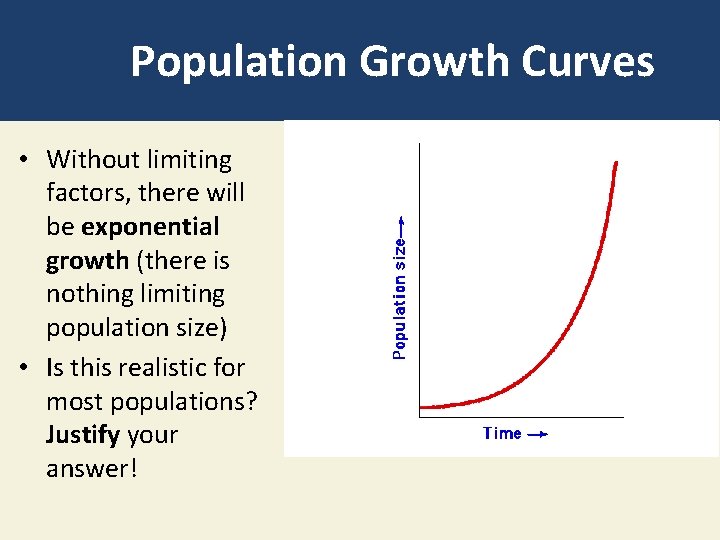
Population Growth Curves • Without limiting factors, there will be exponential growth (there is nothing limiting population size) • Is this realistic for most populations? Justify your answer!
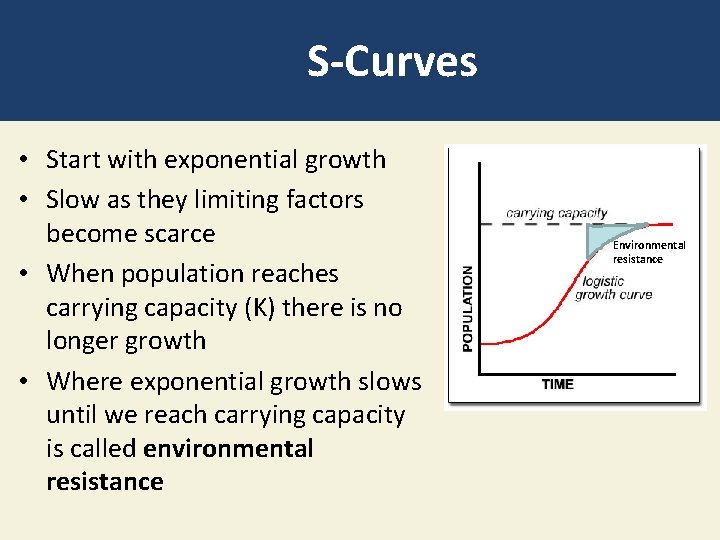
S-Curves • Start with exponential growth • Slow as they limiting factors become scarce • When population reaches carrying capacity (K) there is no longer growth • Where exponential growth slows until we reach carrying capacity is called environmental resistance Environmental resistance
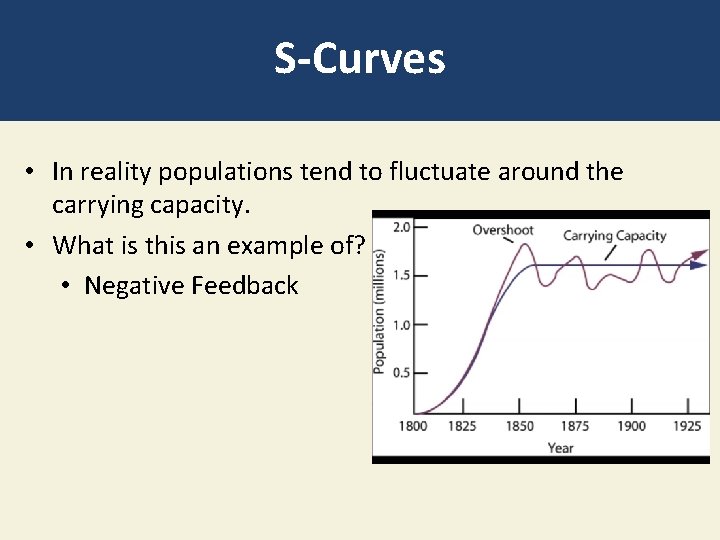
S-Curves • In reality populations tend to fluctuate around the carrying capacity. • What is this an example of? • Negative Feedback
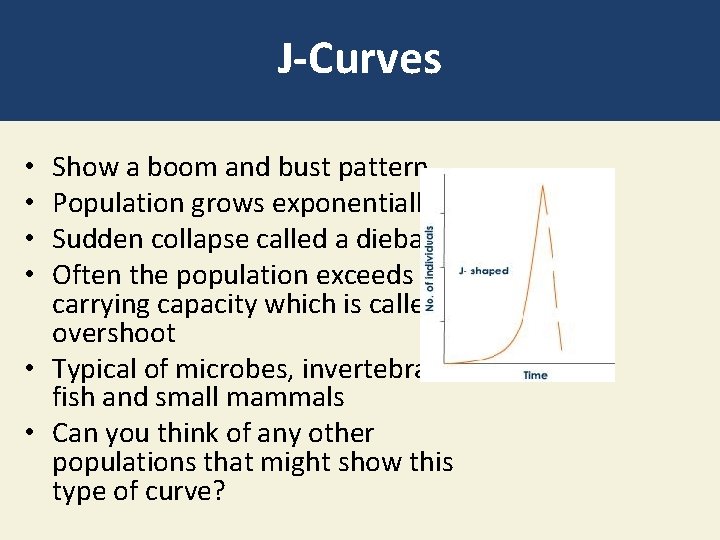
J-Curves Show a boom and bust pattern Population grows exponentially Sudden collapse called a dieback Often the population exceeds carrying capacity which is called overshoot • Typical of microbes, invertebrates, fish and small mammals • Can you think of any other populations that might show this type of curve? • •
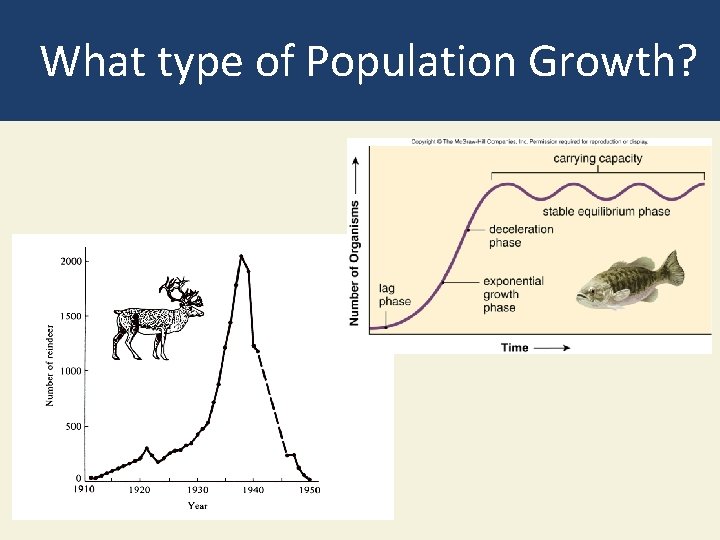
What type of Population Growth?
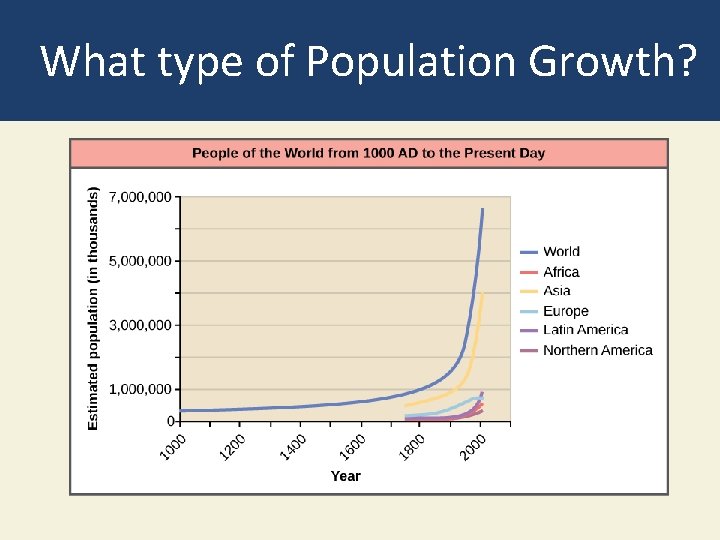
What type of Population Growth?
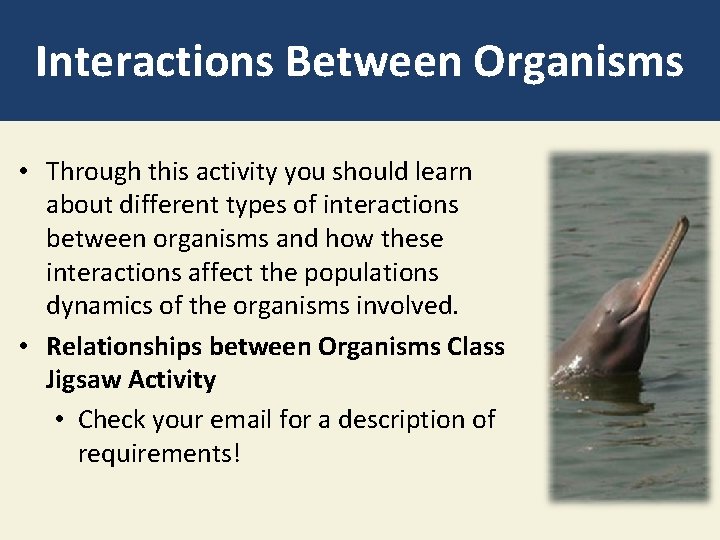
Interactions Between Organisms • Through this activity you should learn about different types of interactions between organisms and how these interactions affect the populations dynamics of the organisms involved. • Relationships between Organisms Class Jigsaw Activity • Check your email for a description of requirements!
- Slides: 25