
2 1 Realignment of Curves String Lining of

- Slides: 52
2. 1 Realignment of Curves, String Lining of Curves. Period - 1 1
WHY SLEW REQUIRED ? • Because curve geometry gets disturbed under passage of traffic as; • Trains are not moving at equilibrium speed • Large horizontal forces on the rails due to slight variations in curvature and due to vehicle imperfections 2
WHAT IS MEANT BY ROC ? • Bringing the curve back to proper alignment • Doesn’t necessarily mean restoring to original alignment • Infinite number of curves are possible between same set of tangents 3
OBJECTIVES OF ROC • No abrupt variation of curvature or superelevation • Superelevation should be in proportion to the curvature • Solution shall be practical • Least slews and subject to obligatory points NOTE: In electrified territory, there is severe restriction of the maximum amount of slews which can be permitted 4
REQUIREMENTS OF REALIGNMENT • Local adjustments • Realignments of transitions • Complete realignment • • During laying During up-gradation During remodelling During service 5
String lining Operations: • (1) The work of realigning and transitioning curves consists of the following three main operations– • (a) Survey of the existing curve by measurement of versines. • (b) Determination of the revised alignment and computation of slews, including provision of correct Super-elevation. • (c) Slewing of the curve to the revised alignment.
Versine survey of curve– • (a) Versine readings shall be taken along the gauge face of the outer rail. • (b) To ensure inclusion of the point of commencement of the curve, a mark is made on the gauge face of the outer rail at a distance of at-least 30 m (three stations) behind the beginning of curve, and at the end of curve as indicated by station markings on the rails. i. e. , station number zero/last station (or apparent tangent point, if no such markings exist on track).
Versine survey (contd. . ) • (c) If station markings at every 10 m interval are not available on track, it shall be marked at every 10 m (half-chord distance) interval beginning from the marking made before beginning of the curve (vide Sub-Para (b) above) till the marking beyond end of the curve (vide Sub-Para (b) above), • (d) These “stations” should be marked and numbered in white paint on the rail.
Versine survey (contd. . ) • (e) With a fishing cord or wire stretched out over the full length of the cord, the versines are measured to 1 mm accuracy serially at each station from one end of the curve to the other with the rule held normal to the line and recorded. • (f) Certain features, which restricts slewing of the track either inwards or outwards should also be recorded, indicating the maximum extent inwards or outwards to which slewing is possible • (i) under existing circumstances; and • (ii) if a moderate expenditure could be incurred in removing the “restriction”
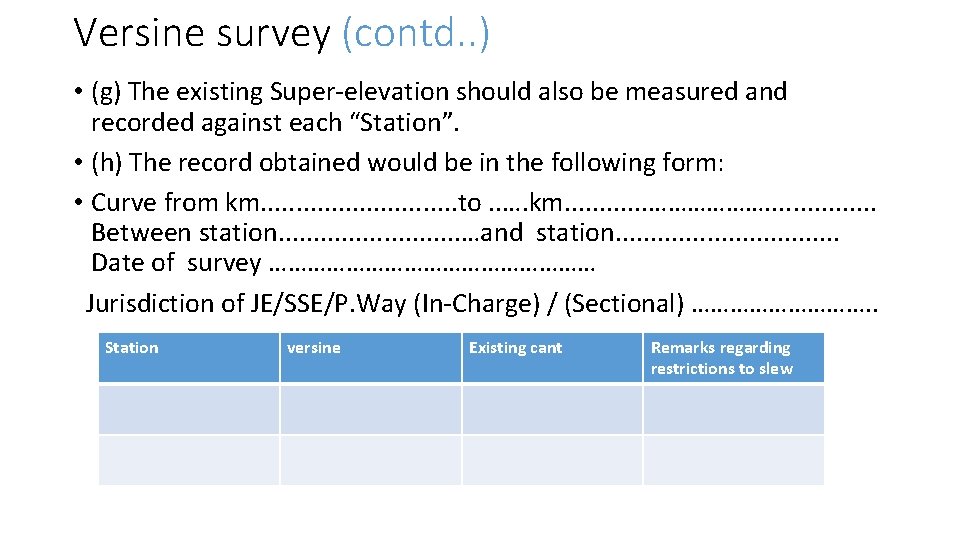
Versine survey (contd. . ) • (g) The existing Super-elevation should also be measured and recorded against each “Station”. • (h) The record obtained would be in the following form: • Curve from km. . . . to. . …. km. . . ………………. . . . Between station. . . …and station. . . . Date of survey ……………………… Jurisdiction of JE/SSE/P. Way (In-Charge) / (Sectional) ……………. . Station versine Existing cant Remarks regarding restrictions to slew
Versine Survey (contd. . ) • (i) In the case of reverse curves, the versine survey should be continuous, but transferred to the outer rail at points where the curvature changes sign. • It is probable that the exact point will not be definite; it is therefore, desirable to keep the original rail face as the base until the change is certain to enable plus or minus versines to be read from the same rail, it is only necessary to hold the fishing cord or wire 20 mm clear of the rail edge at each end by using special gadget and subtracting 20 mm from the reading at the centre. • (j) Where there are two or more lines, track centres should also be recorded at every station. After the versine-survey, the curve alignment shall not be disturbed until the realignment is commenced.
STRING LINING METHOD BASIC PRINCIPLES 12
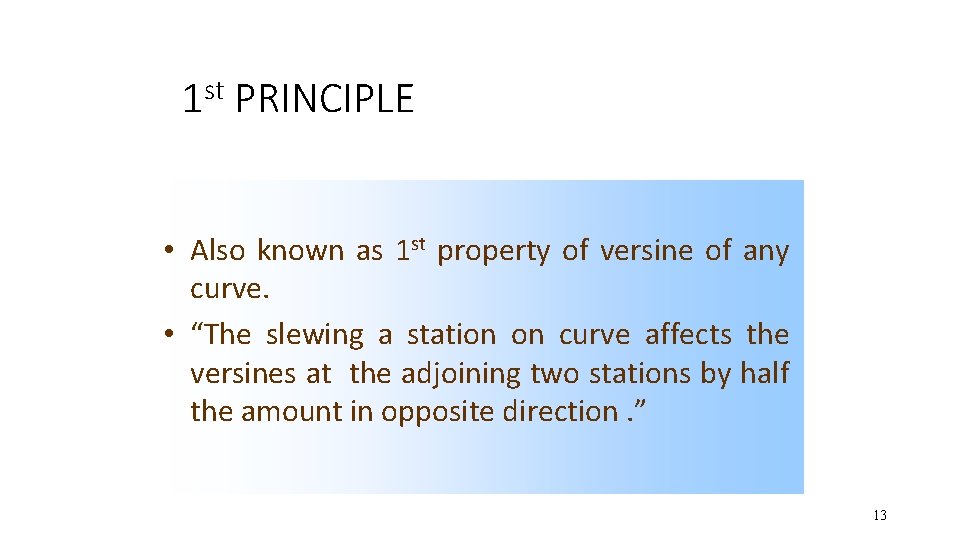
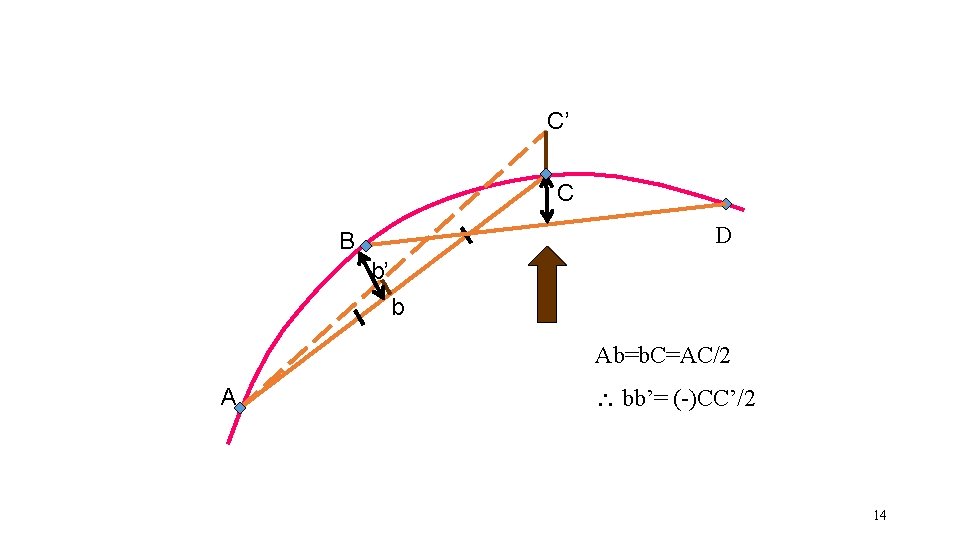
st 1 PRINCIPLE • Also known as 1 st property of versine of any curve. • “The slewing a station on curve affects the versines at the adjoining two stations by half the amount in opposite direction. ” 13
C’ C D B b’ b Ab=b. C=AC/2 A bb’= (-)CC’/2 14
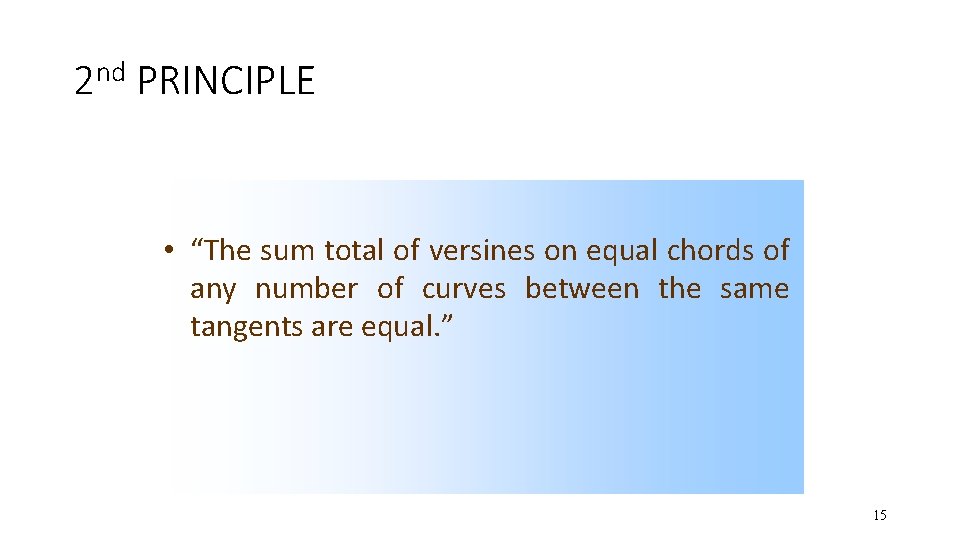
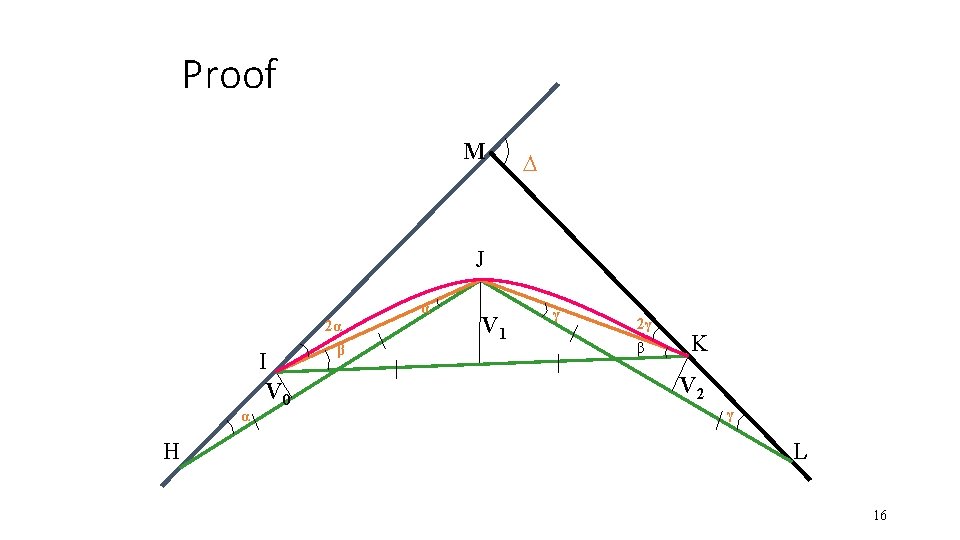
2 nd PRINCIPLE • “The sum total of versines on equal chords of any number of curves between the same tangents are equal. ” 15
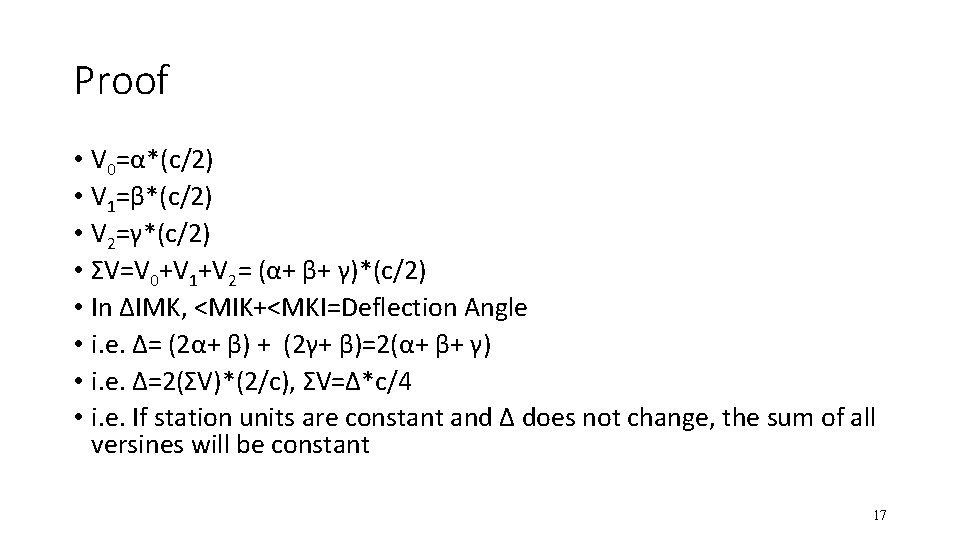
Proof M ∆ J α α H I V 0 2α β V 1 γ 2γ β K V 2 γ L 16
Proof • V 0=α*(c/2) • V 1=β*(c/2) • V 2=γ*(c/2) • ΣV=V 0+V 1+V 2= (α+ β+ γ)*(c/2) • In ∆IMK, <MIK+<MKI=Deflection Angle • i. e. ∆= (2α+ β) + (2γ+ β)=2(α+ β+ γ) • i. e. ∆=2(ΣV)*(2/c), ΣV=∆*c/4 • i. e. If station units are constant and ∆ does not change, the sum of all versines will be constant 17
COROLLARY TO 2 nd PRINCIPLE • “The chord length being equal, the sum total of the existing versines should be equal to the sum total of the proposed versines. ” 18
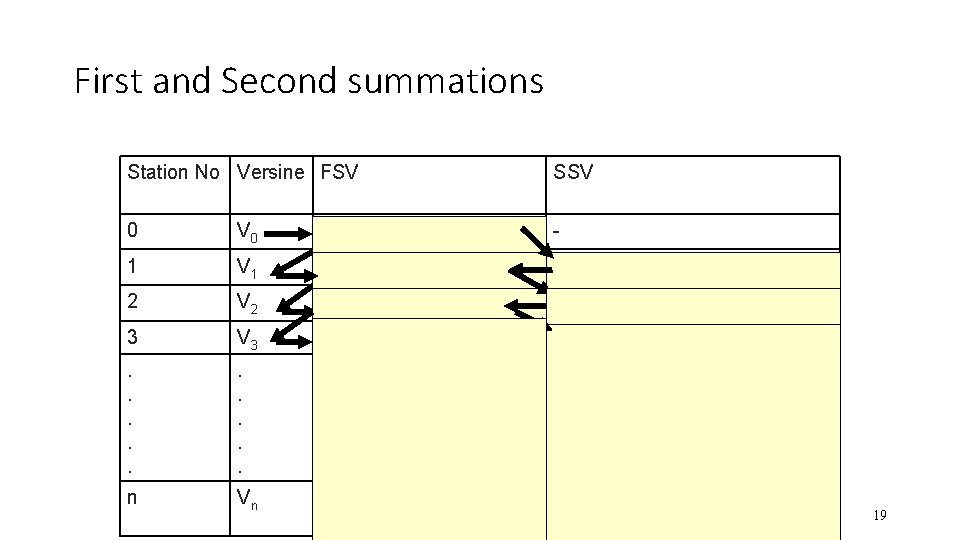
First and Second summations Station No Versine FSV SSV 0 V 0 - 1 V 0 + V 1 V 0 2 V 0 + V 1 + V 2 2* V 0 + V 1 3 V 0+ V 1+ V 2+V 3 3* V 0+2* V 1+ V 2 . . . . n Vn V 0+ V 1+ V 2 ……. +Vn-2+ n *V 0+(n-1) *V 1+ (n-2) *V 2+ …. . Vn + 2 *Vn-2+ Vn-1 19
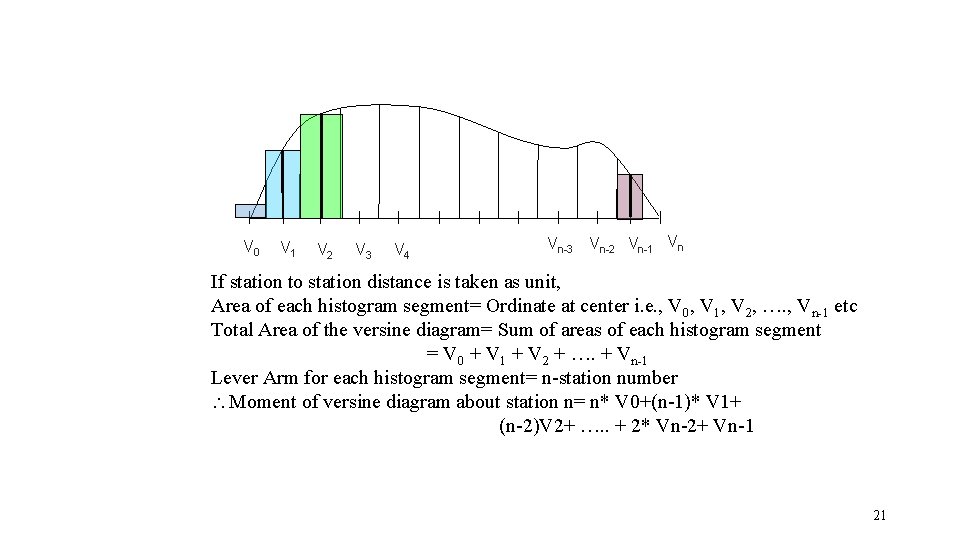
3 rd PRINCIPLE • “First summation of versines represents the area of versine diagram (in station distance units) • Summation means the sum of all the items above a certain station in the table 20
V 0 V 1 V 2 V 3 V 4 Vn-3 Vn-2 Vn-1 Vn If station to station distance is taken as unit, Area of each histogram segment= Ordinate at center i. e. , V 0, V 1, V 2, …. , Vn-1 etc Total Area of the versine diagram= Sum of areas of each histogram segment = V 0 + V 1 + V 2 + …. + Vn-1 Lever Arm for each histogram segment= n-station number Moment of versine diagram about station n= n* V 0+(n-1)* V 1+ (n-2)V 2+ …. . + 2* Vn-2+ Vn-1 21
4 th PRINCIPLE • “Second summation of versines represents the moment of versine diagram about the last station ( in station distance units). ” 22
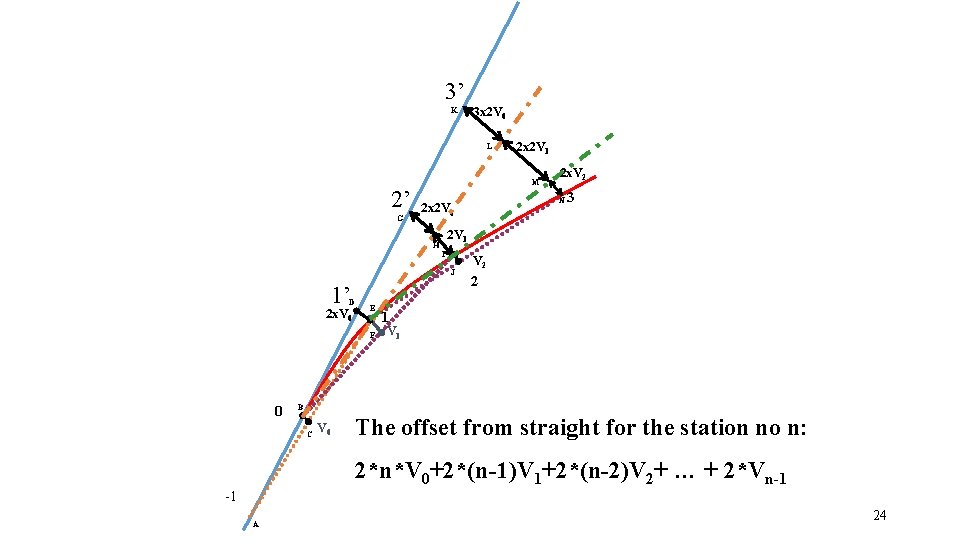
5 th PRINCIPLE • Twice the second summation of the difference of proposed and existing versines up to a point gives the slew at a station. OR • “The second summation of versine difference represents half the slew at any station” 23
3’ K 3 x 2 V 0 L 2’ G M J D E F 0 3 2 V 1 I 2 x. V 0 2 x. V 2 N 2 x 2 V 0 H 1’ 2 x 2 V 1 V 2 2 1 V 1 B C V 0 The offset from straight for the station no n: 2*n*V 0+2*(n-1)V 1+2*(n-2)V 2+ … + 2*Vn-1 -1 A 24
COROLLARY TO 5 TH PRINCIPLE • The second summation of the difference of proposed and existing versines at first and last stations shall be zero. • Means there should not be any residual slew value if any than should be distributed through correcting couple. 25
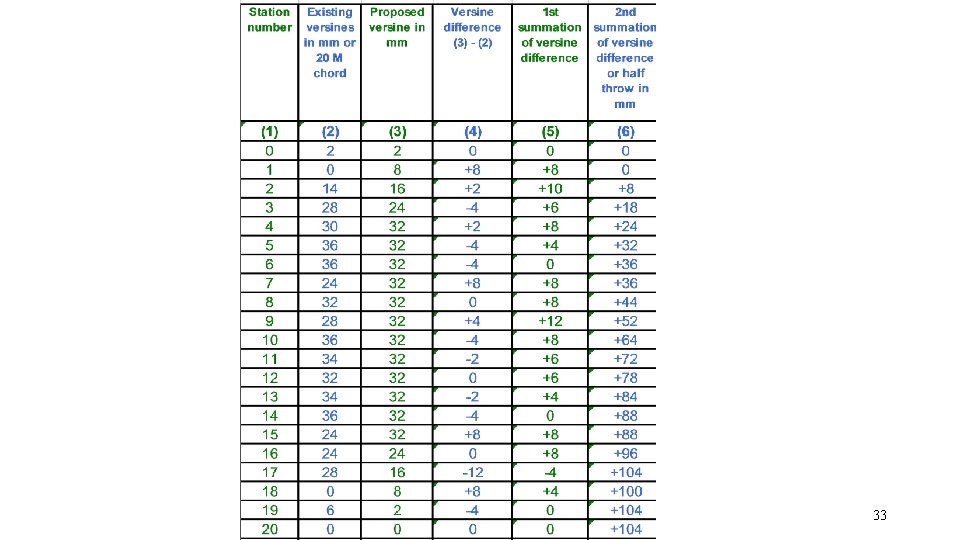
PRINCIPLES APPLIED IN ROC • Existing versines are available from measurements and the solution has to be ‘proposed’ • Take the difference between the existing and proposed versines and then work out first and second summation • The second summation of versine difference at the first and the last station should be zero. [Slew at the first and last stations shall be zero] • The first summation of versine difference shall be zero at last station • ROC AS DONE IN FIELD IS ALSO CALLED “STRING LINING OPERATIONS” 26
3. 5 Steps involved in Curve Realignment 27
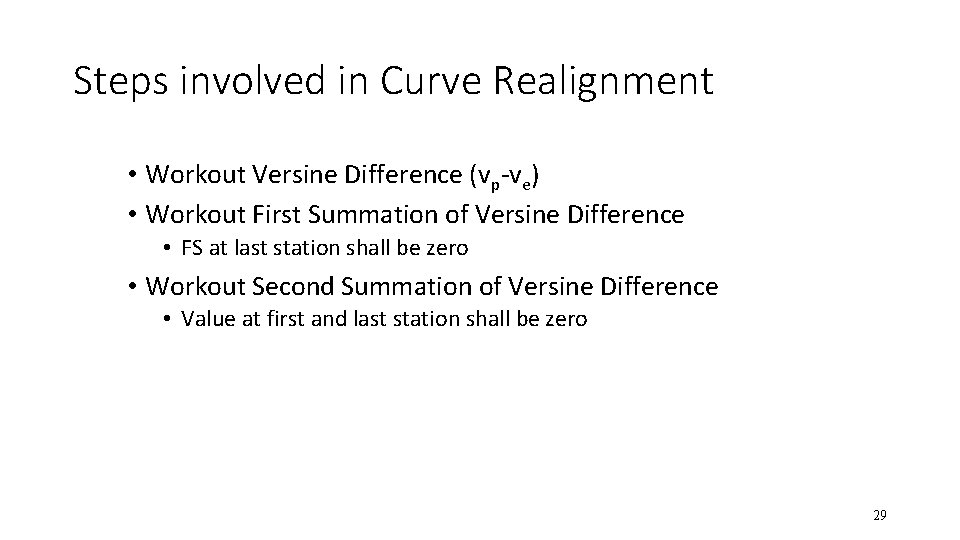
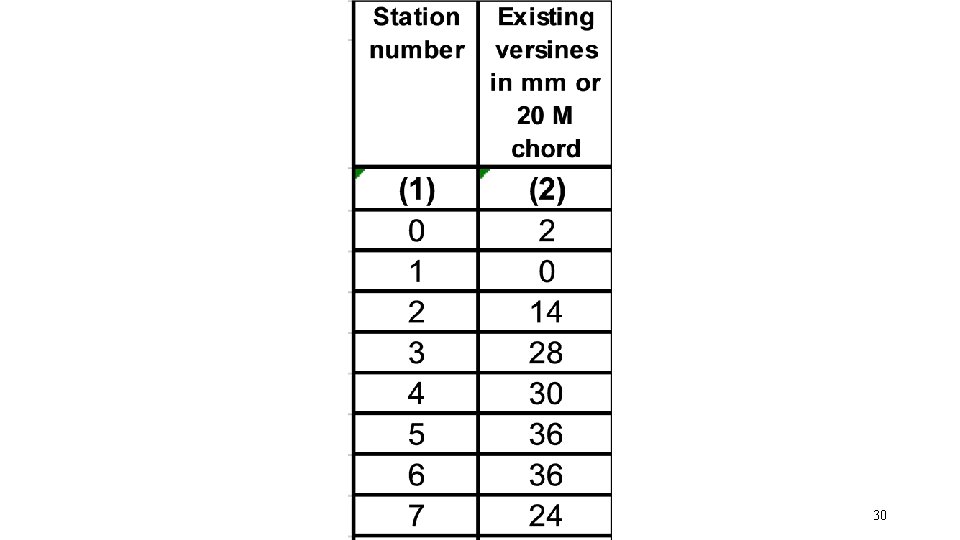
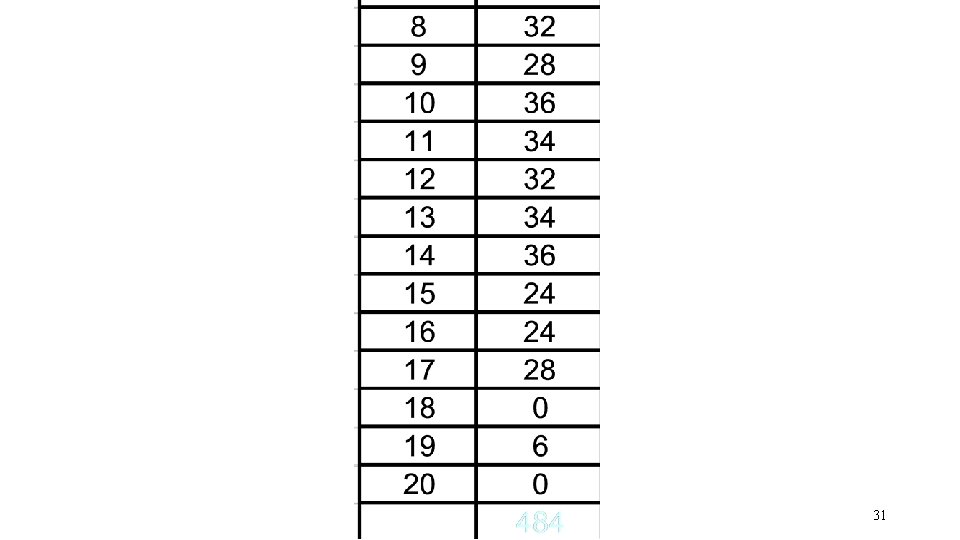
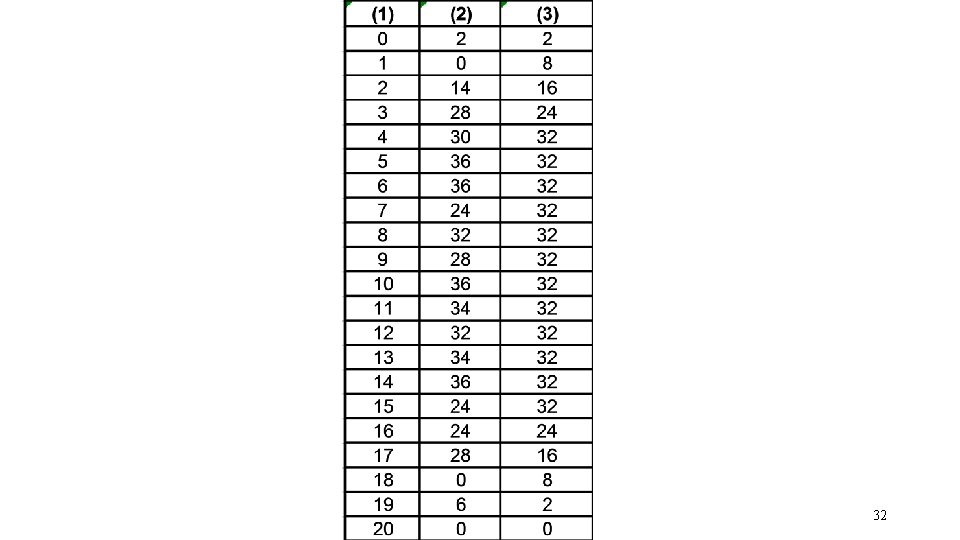
Steps involved in Curve Realignment • Survey existing versines • Find sum of existing versines and get an idea of the average versines • Propose new versines for the curve according to the principles : • Sum of existing versines = Sum of proposed versines • Uniform rate of change of versine in transition portion • Uniform versine over circular portion 28
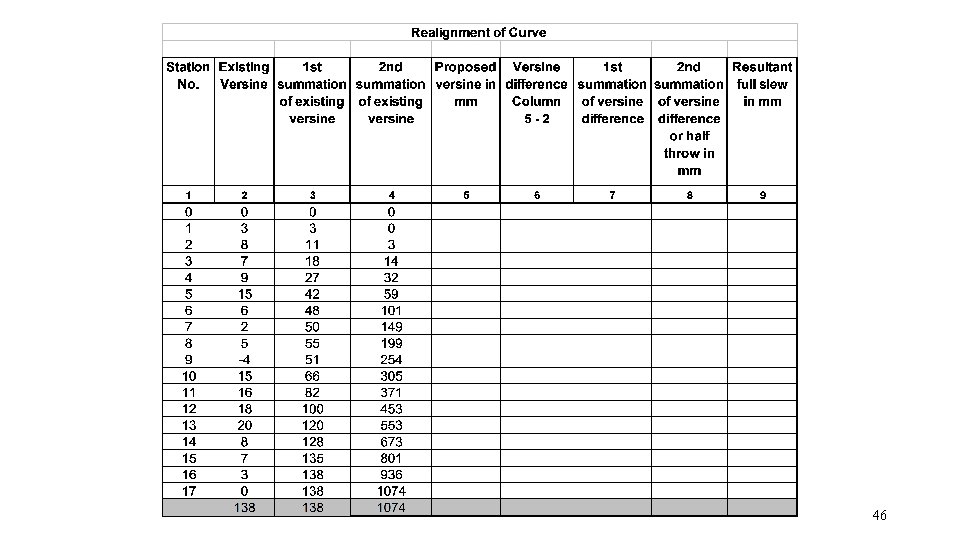
Steps involved in Curve Realignment • Workout Versine Difference (vp-ve) • Workout First Summation of Versine Difference • FS at last station shall be zero • Workout Second Summation of Versine Difference • Value at first and last station shall be zero 29
30
31
32
33
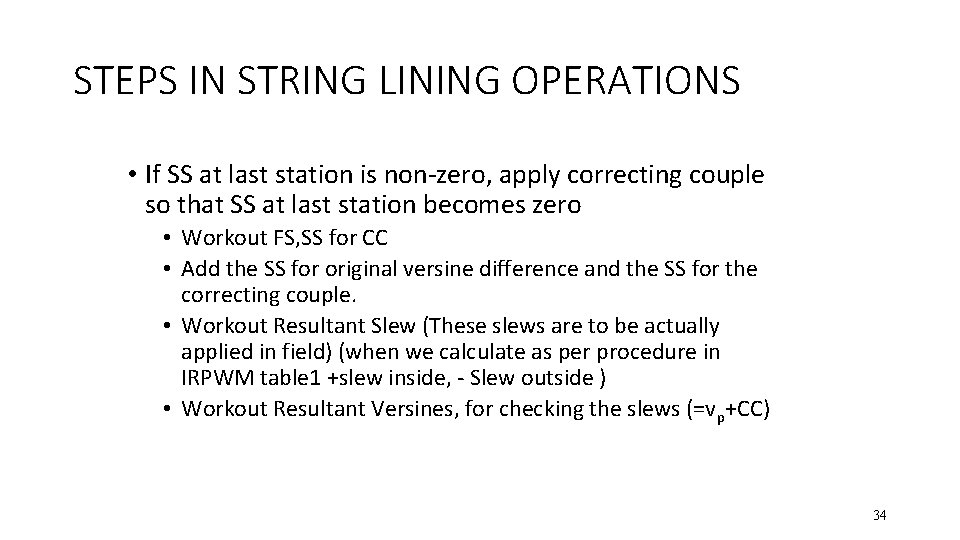
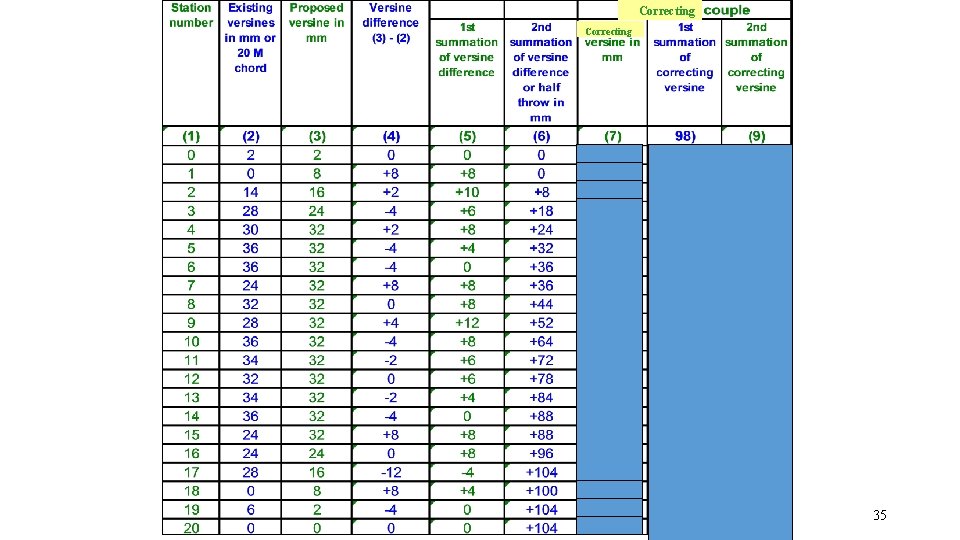
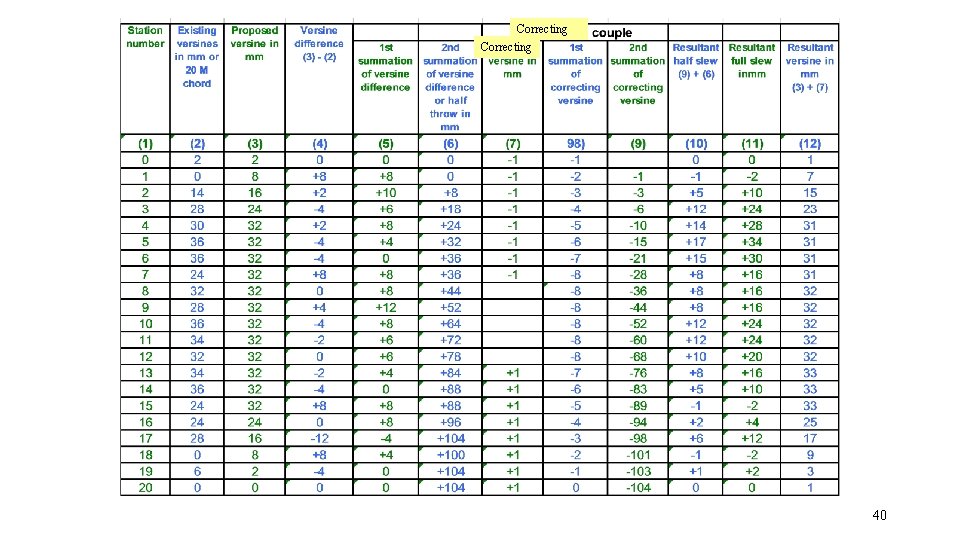
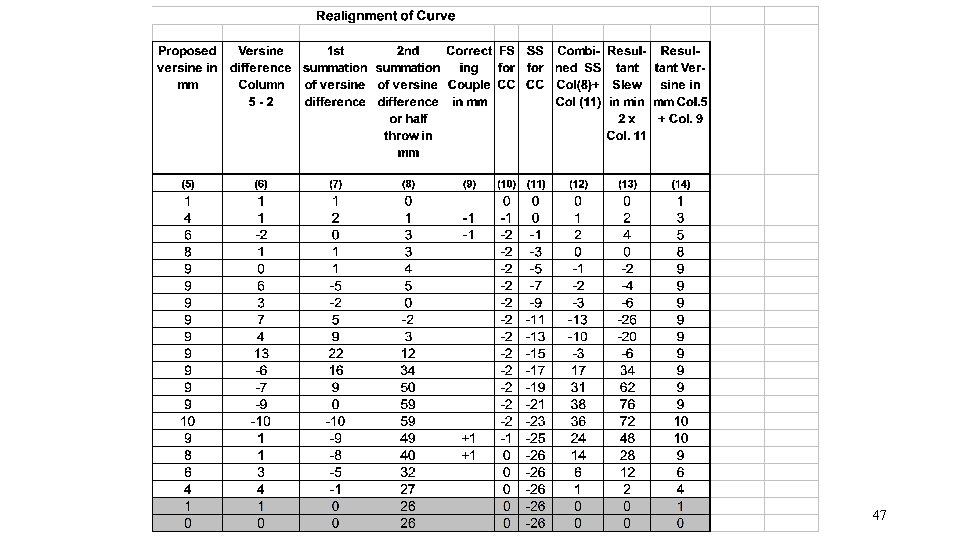
STEPS IN STRING LINING OPERATIONS • If SS at last station is non-zero, apply correcting couple so that SS at last station becomes zero • Workout FS, SS for CC • Add the SS for original versine difference and the SS for the correcting couple. • Workout Resultant Slew (These slews are to be actually applied in field) (when we calculate as per procedure in IRPWM table 1 +slew inside, - Slew outside ) • Workout Resultant Versines, for checking the slews (=vp+CC) 34
Correcting 35
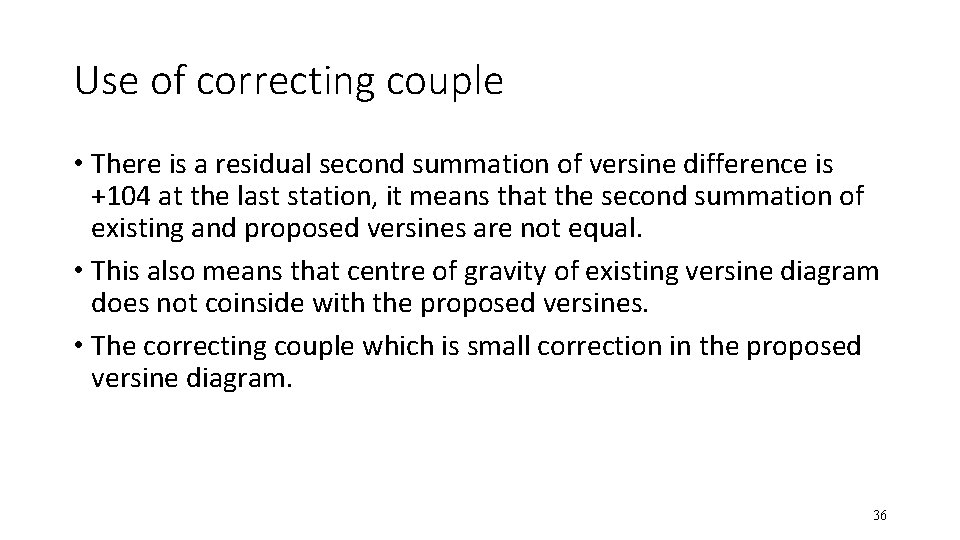
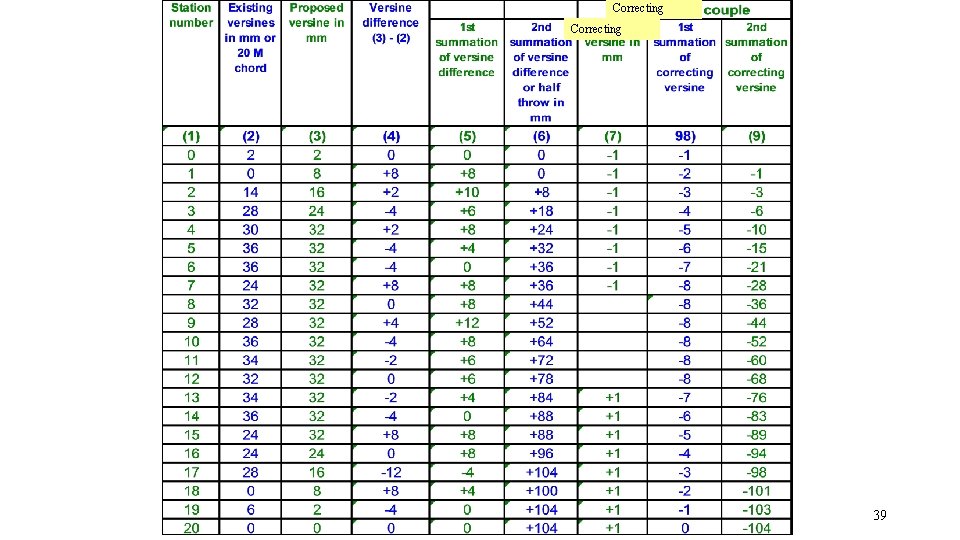
Use of correcting couple • There is a residual second summation of versine difference is +104 at the last station, it means that the second summation of existing and proposed versines are not equal. • This also means that centre of gravity of existing versine diagram does not coinside with the proposed versines. • The correcting couple which is small correction in the proposed versine diagram. 36
Principles of choosing correcting couple. • These are equal and opposite. • If the residual second summation of versine difference at the last station is positive, a negative correction is applied at the initial stations of the curve and positive correction is applied at the later station of the curve. So SS will be negative. Similarly vice versa for negative residual value. 37
Principle contd. . • The correcting couple disturbed trapezoidal distribution of the proposed versines , and consequently correction shall be as small as possible in value. • If the correction are applied farther apart , the second summation of the correcting couple will be higher. 38
Correcting 39
Correcting 40
SHORTCOMINGS IN METHOD • Difficult to decide proposed versines, especially when the stations are more. • There is no way to know if the length of existing curve was ok • Curve may increase or decrease in length during service • affects assumed proposed versines • Correct beginning of curve is not known 41
OPTIMISATION METHOD Optimization • • By finding out the • • correct beginning and end of the curve Correct length of curve Control by keeping slew at centre of curve as zero. Used in computer programs as calculations tedious by hand. 42
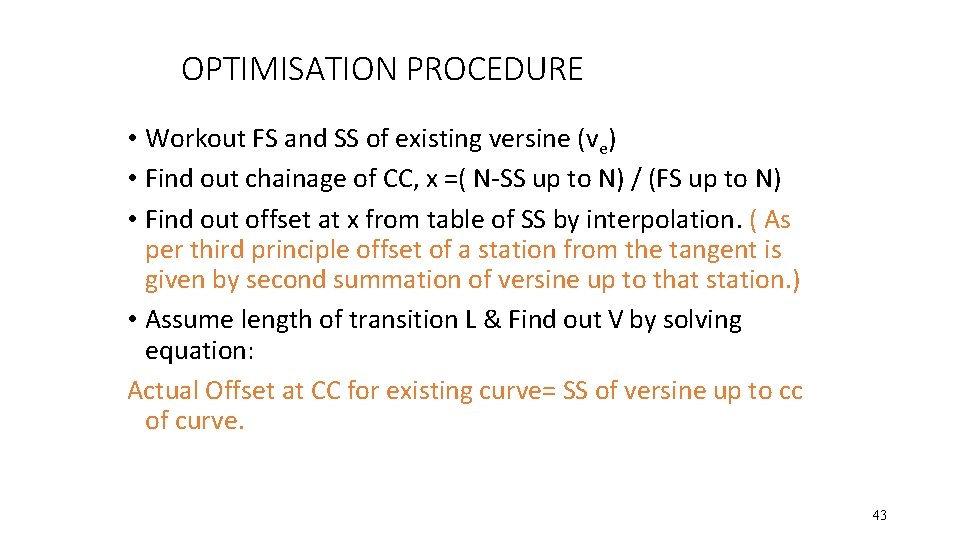
OPTIMISATION PROCEDURE • Workout FS and SS of existing versine (ve) • Find out chainage of CC, x =( N-SS up to N) / (FS up to N) • Find out offset at x from table of SS by interpolation. ( As per third principle offset of a station from the tangent is given by second summation of versine up to that station. ) • Assume length of transition L & Find out V by solving equation: Actual Offset at CC for existing curve= SS of versine up to cc of curve. 43
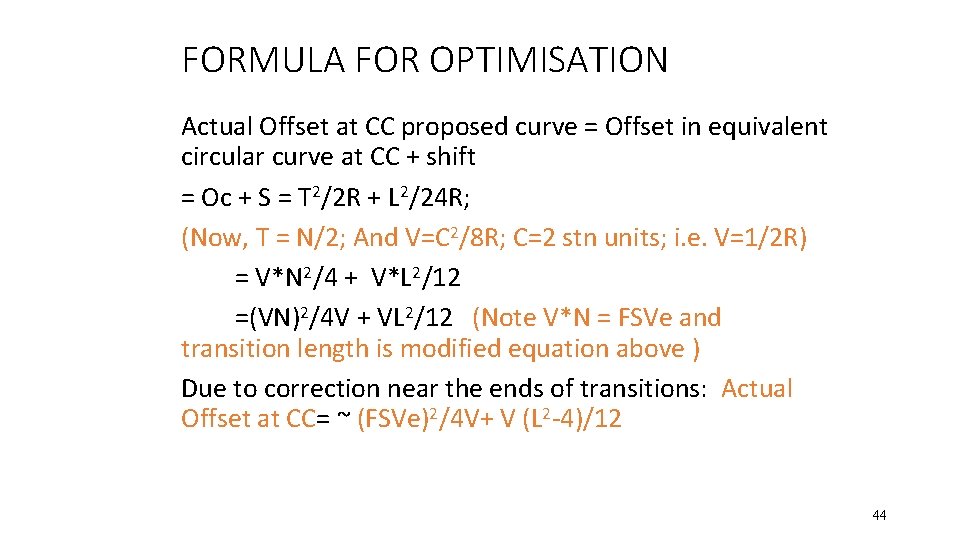
FORMULA FOR OPTIMISATION Actual Offset at CC proposed curve = Offset in equivalent circular curve at CC + shift = Oc + S = T 2/2 R + L 2/24 R; (Now, T = N/2; And V=C 2/8 R; C=2 stn units; i. e. V=1/2 R) = V*N 2/4 + V*L 2/12 =(VN)2/4 V + VL 2/12 (Note V*N = FSVe and transition length is modified equation above ) Due to correction near the ends of transitions: Actual Offset at CC= ~ (FSVe)2/4 V+ V (L 2 -4)/12 44
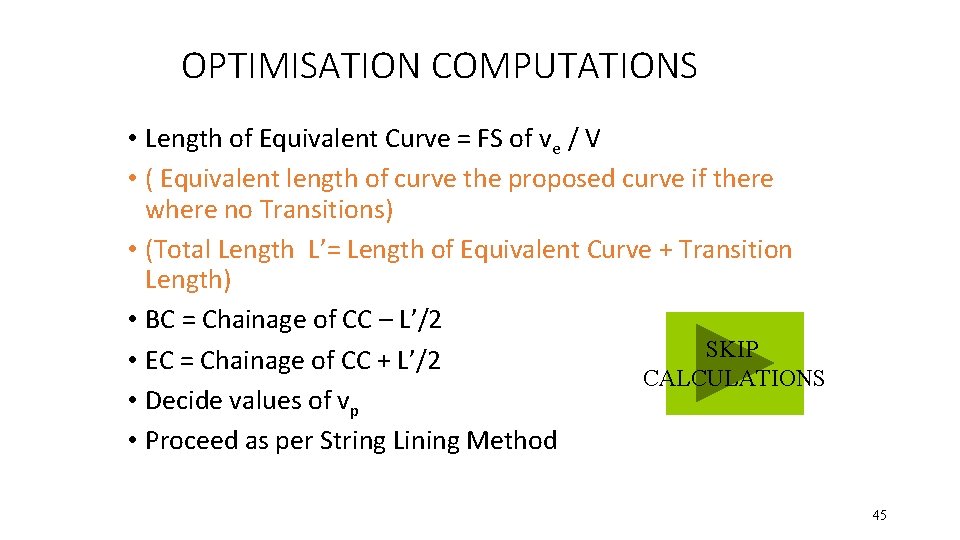
OPTIMISATION COMPUTATIONS • Length of Equivalent Curve = FS of ve / V • ( Equivalent length of curve the proposed curve if there where no Transitions) • (Total Length L’= Length of Equivalent Curve + Transition Length) • BC = Chainage of CC – L’/2 SKIP • EC = Chainage of CC + L’/2 CALCULATIONS • Decide values of vp • Proceed as per String Lining Method 45
46
47
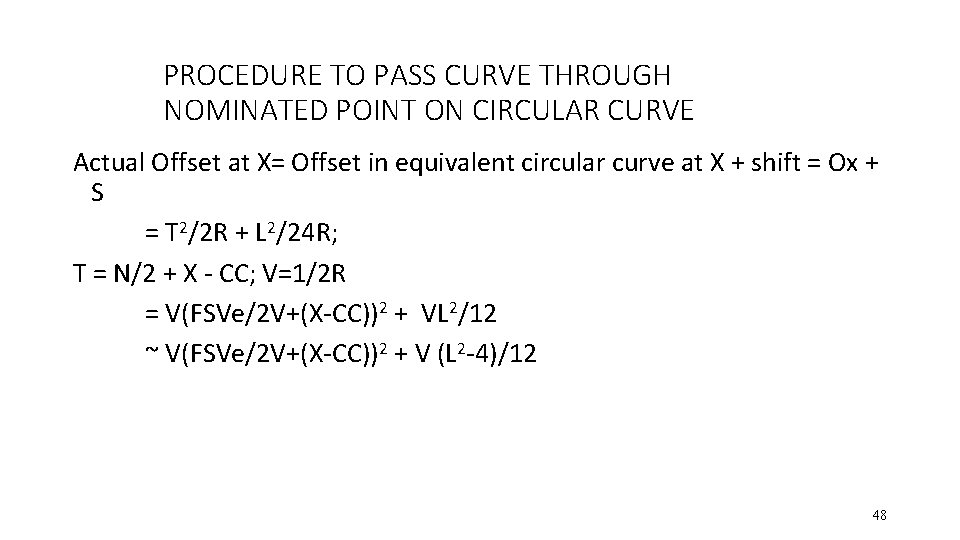
PROCEDURE TO PASS CURVE THROUGH NOMINATED POINT ON CIRCULAR CURVE Actual Offset at X= Offset in equivalent circular curve at X + shift = Ox + S = T 2/2 R + L 2/24 R; T = N/2 + X - CC; V=1/2 R = V(FSVe/2 V+(X-CC))2 + VL 2/12 ~ V(FSVe/2 V+(X-CC))2 + V (L 2 -4)/12 48
REALIGNMENT PROGRAMS AVAILABLE • RECUR 100 or RC 101 (Not suitable for reverse curve) • Program by Mr Sheshagiri Rao (Least slews) • Program by Sh M S Ekbote • Program by Sh Venkateshwara Rao (By iterations, only simple curves) • Program in MX Rail • Program with 3 X machine 49
REALIGNMENT PROGRAMS AVAILABLE Program by Sh M S Ekbote • Available in IRICEN website Member’s Download Area • Has modules for ROC of simple curves by • • Pure trapezoidal solution Realignment in segments Averaging method Limited maximum slews Incorporates obligatory points Check need for complete realignment required Attention to transitions only if required Contd… 50
REALIGNMENT PROGRAMS AVAILABLE Program by Sh M S Ekbote • Has modules for ROC of • Reverse curves • Only transitions • Vertical curves • Algorithm based on equating the maximum inward and outward slews (Shifts the curve inwards or outwards to equalize the maximum values of slews) 51
THANK YOU 52