
2 1 PRINCIPLES OF MARKETING Chapter 2 Strategic

- Slides: 16
2 - 1 PRINCIPLES OF MARKETING Chapter 2 Strategic Planning and the Marketing Process
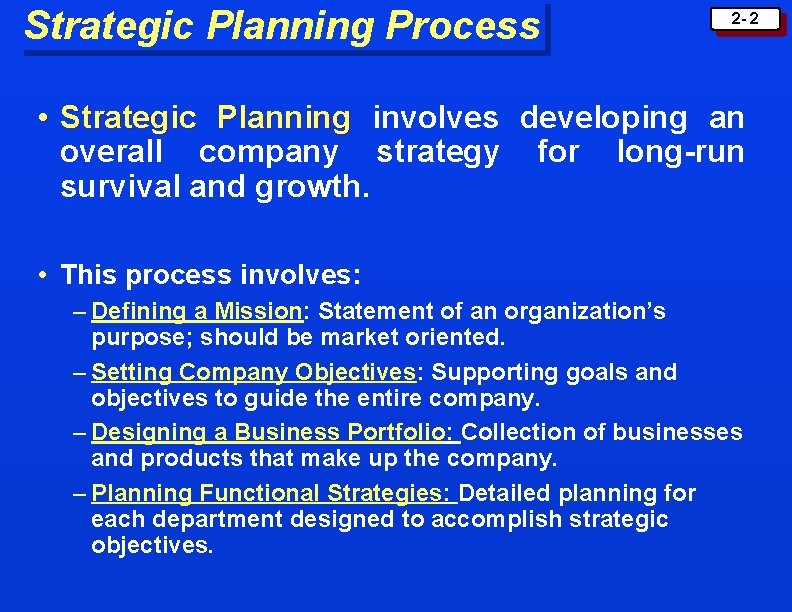
Strategic Planning Process 2 - 2 • Strategic Planning involves developing an overall company strategy for long-run survival and growth. • This process involves: – Defining a Mission: Statement of an organization’s purpose; should be market oriented. – Setting Company Objectives: Supporting goals and objectives to guide the entire company. – Designing a Business Portfolio: Collection of businesses and products that make up the company. – Planning Functional Strategies: Detailed planning for each department designed to accomplish strategic objectives.
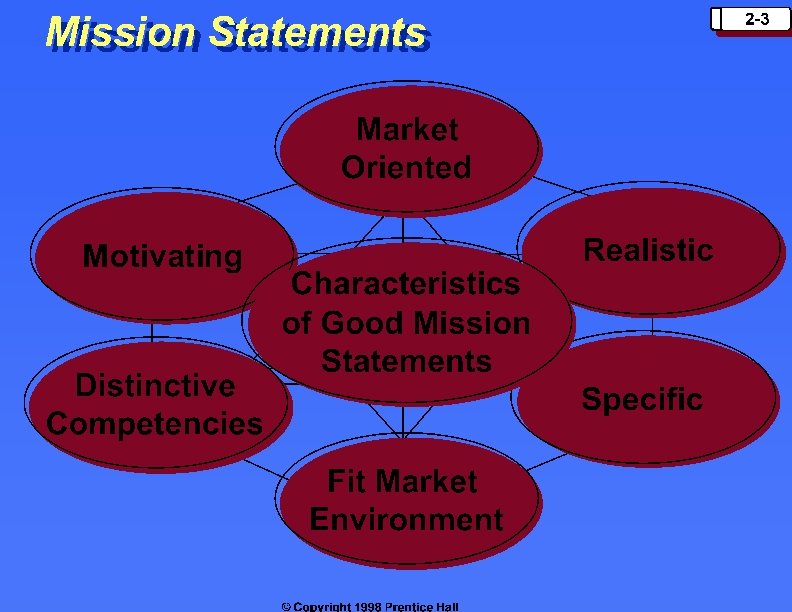
2 - 3
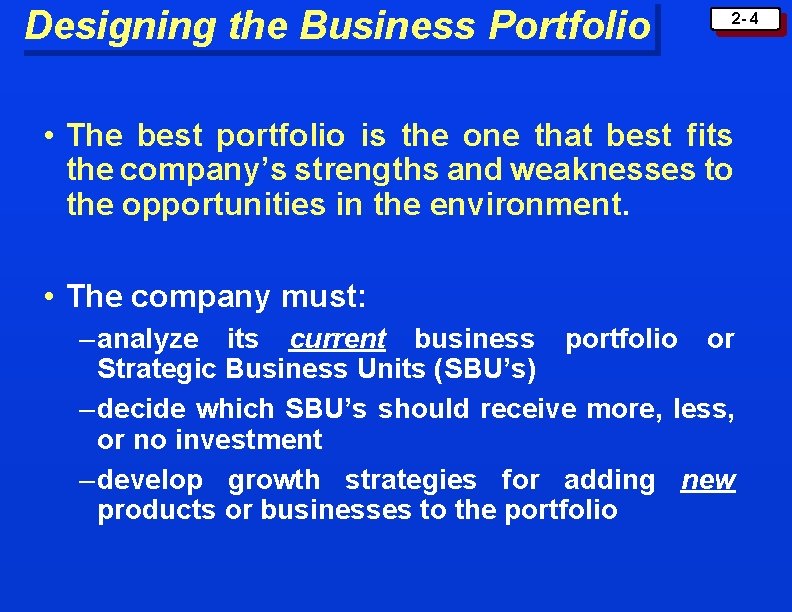
Designing the Business Portfolio 2 - 4 • The best portfolio is the one that best fits the company’s strengths and weaknesses to the opportunities in the environment. • The company must: – analyze its current business portfolio or Strategic Business Units (SBU’s) – decide which SBU’s should receive more, less, or no investment – develop growth strategies for adding new products or businesses to the portfolio
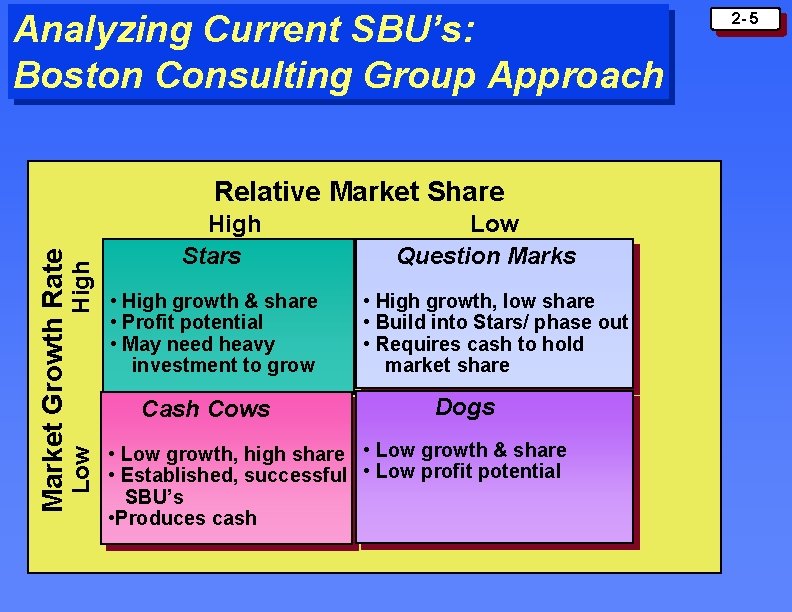
Analyzing Current SBU’s: Boston Consulting Group Approach Low High Market Growth Rate Relative Market Share High Stars Low Question Marks • High growth & share • Profit potential • May need heavy investment to grow • High growth, low share • Build into Stars/ phase out • Requires cash to hold market share Dogs Cash Cows • Low growth, high share • Low growth & share • Established, successful • Low profit potential SBU’s • Produces cash 2 - 5
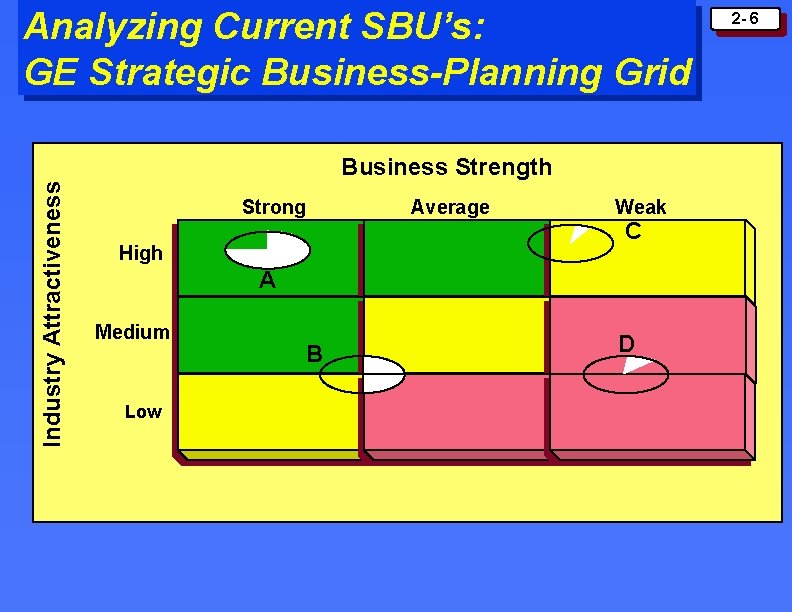
Analyzing Current SBU’s: GE Strategic Business-Planning Grid Industry Attractiveness Business Strength Strong High Average Weak C A Medium B Low D 2 - 6
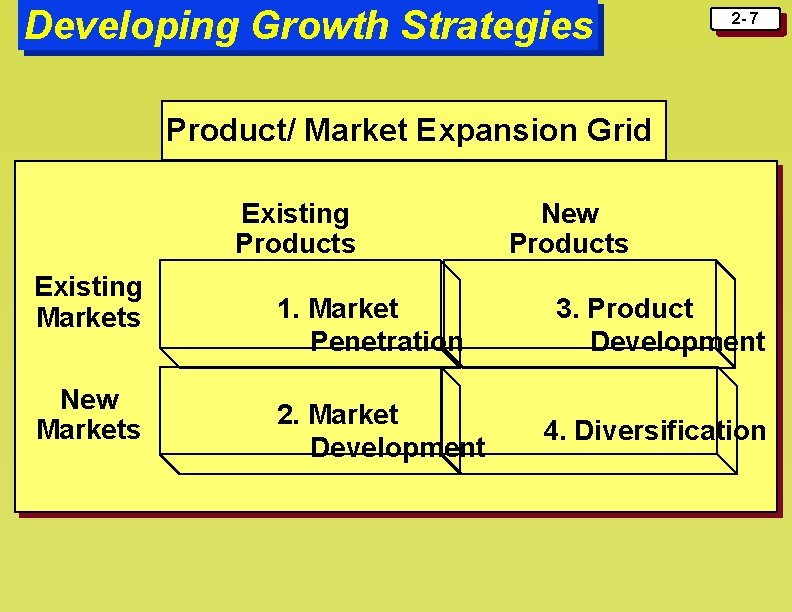
Developing Growth Strategies 2 - 7 Product/ Market Expansion Grid Existing Products Existing Markets New Markets 1. Market Penetration 2. Market Development New Products 3. Product Development 4. Diversification
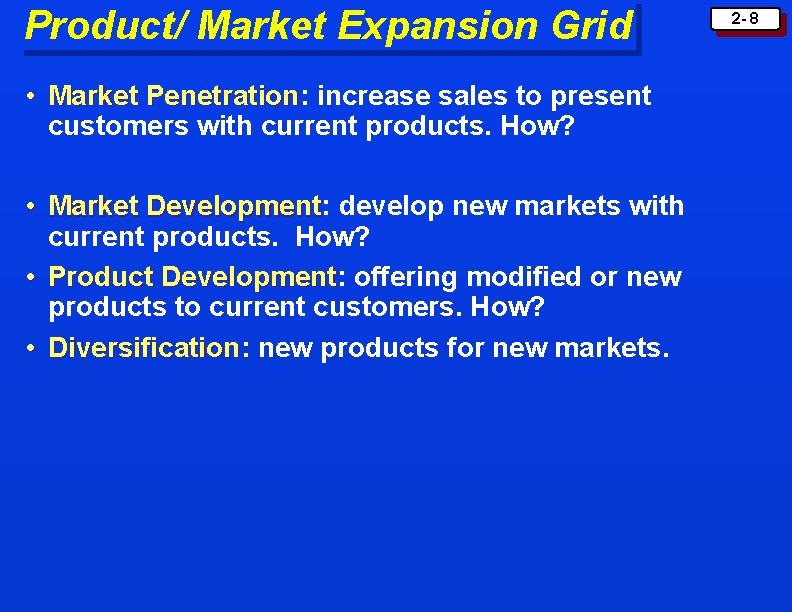
Product/ Market Expansion Grid • Market Penetration: Penetration increase sales to present customers with current products. How? • Market Development: Development develop new markets with current products. How? • Product Development: Development offering modified or new products to current customers. How? • Diversification: Diversification new products for new markets. 2 - 8
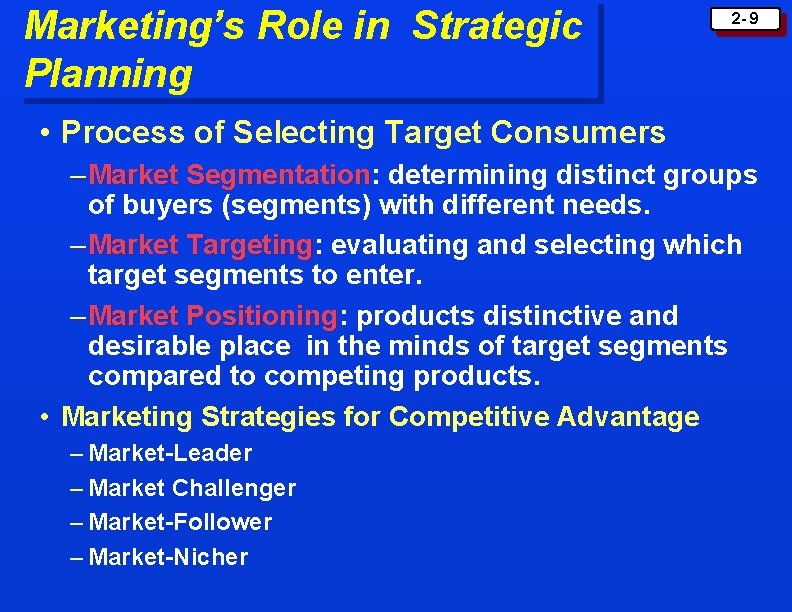
Marketing’s Role in Strategic Planning 2 - 9 • Process of Selecting Target Consumers – Market Segmentation: Segmentation determining distinct groups of buyers (segments) with different needs. – Market Targeting: Targeting evaluating and selecting which target segments to enter. – Market Positioning: Positioning products distinctive and desirable place in the minds of target segments compared to competing products. • Marketing Strategies for Competitive Advantage – Market-Leader – Market Challenger – Market-Follower – Market-Nicher
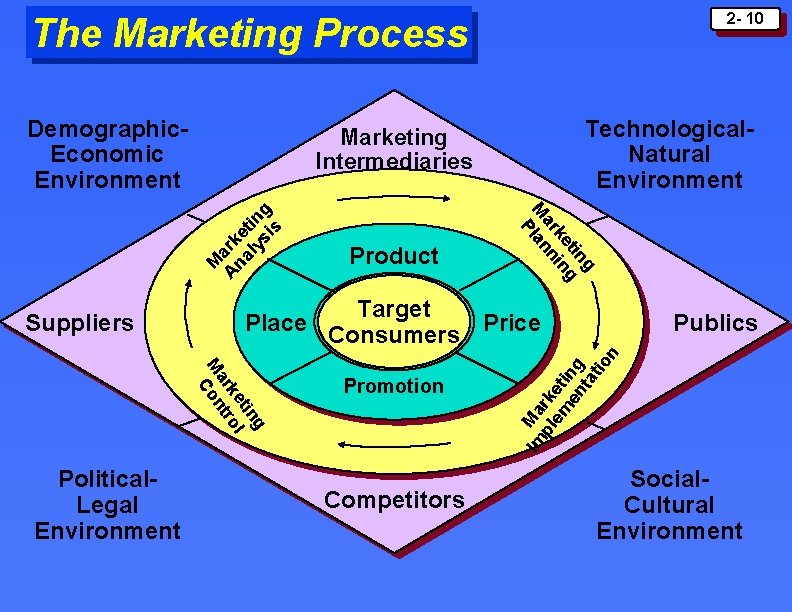
2 - 10 The Marketing Process Demographic. Economic Environment M A ark na e ly tin si g s Product g tin g ke in ar n M lan P Target Place Consumers Price g tin ke ol ar tr M Con Promotion Political. Legal Environment Competitors Publics Im Ma pl rk em et en ing ta tio n Suppliers Technological. Natural Environment Marketing Intermediaries Social. Cultural Environment
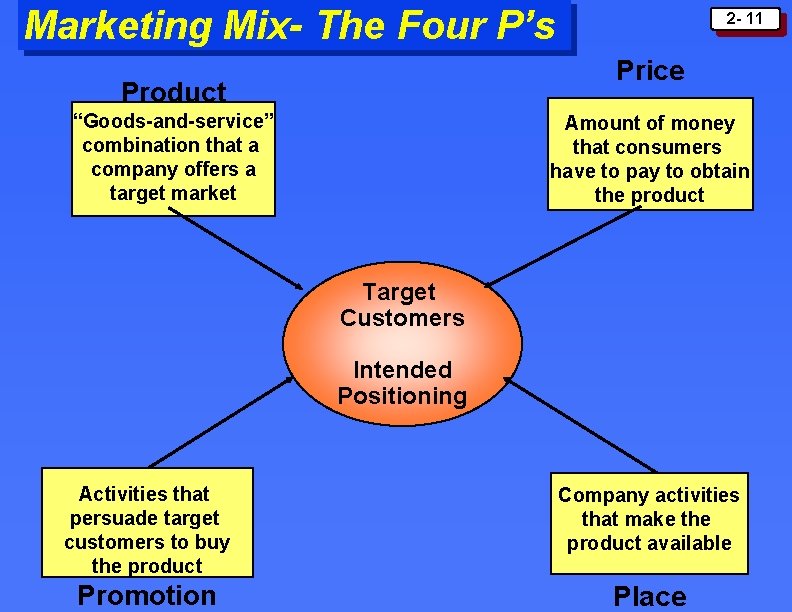
Marketing Mix- The Four P’s 2 - 11 Price Product “Goods-and-service” combination that a company offers a target market Amount of money that consumers have to pay to obtain the product Target Customers Intended Positioning Activities that persuade target customers to buy the product Promotion Company activities that make the product available Place
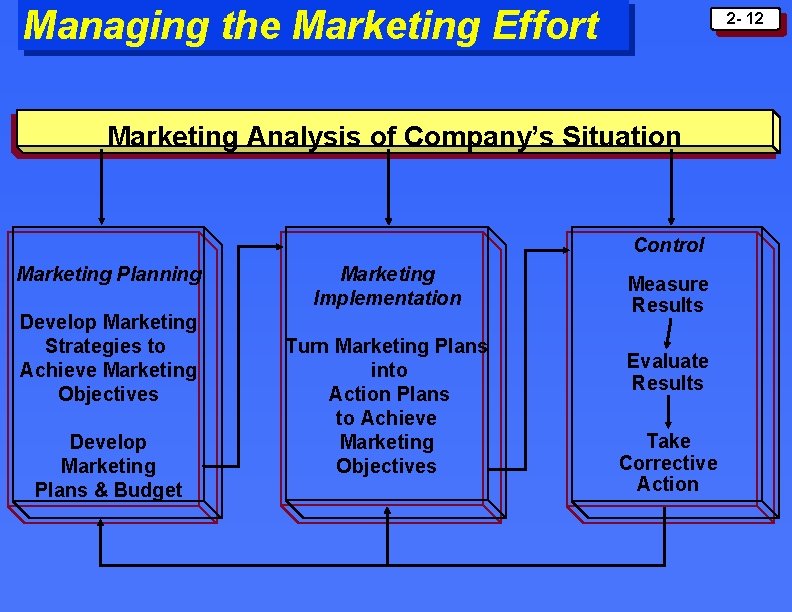
Managing the Marketing Effort 2 - 12 Marketing Analysis of Company’s Situation Control Marketing Planning Marketing Implementation Develop Marketing Strategies to Achieve Marketing Objectives Turn Marketing Plans into Action Plans to Achieve Marketing Objectives Develop Marketing Plans & Budget Measure Results Evaluate Results Take Corrective Action
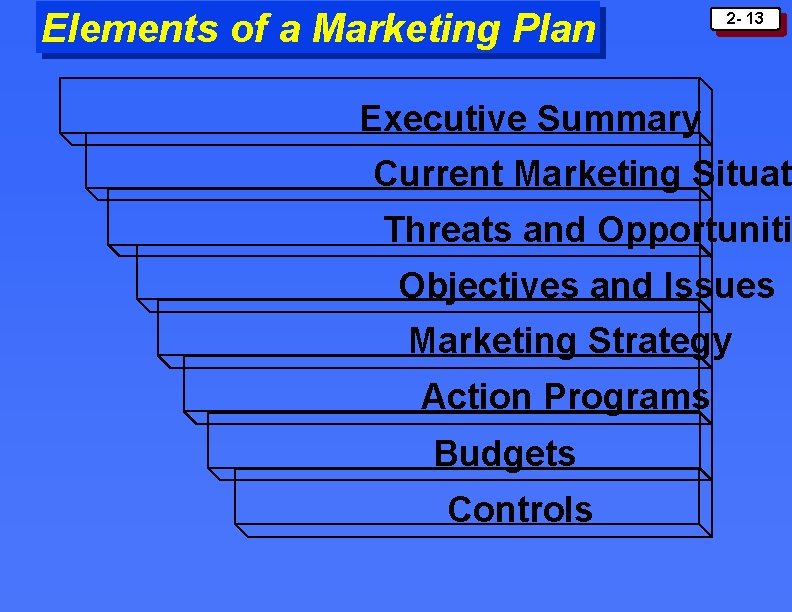
Elements of a Marketing Plan 2 - 13 Executive Summary Current Marketing Situat Threats and Opportuniti Objectives and Issues Marketing Strategy Action Programs Budgets Controls
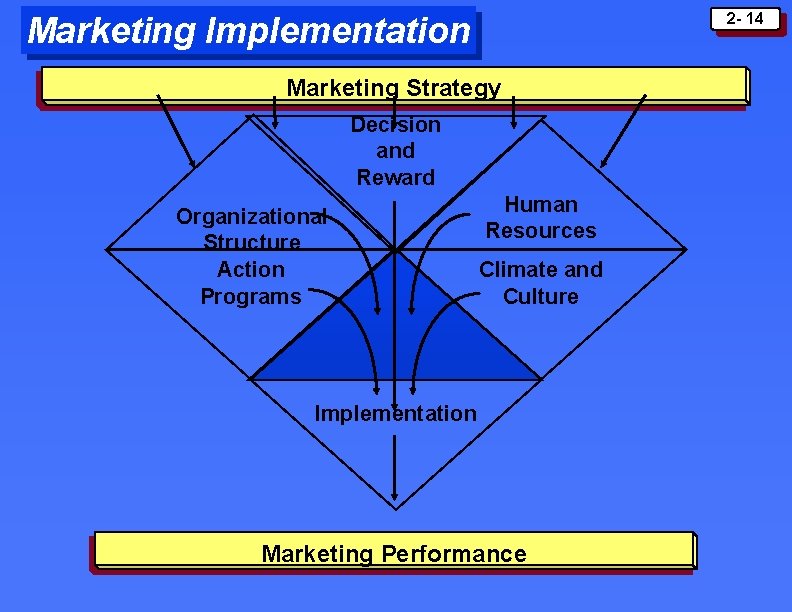
2 - 14 Marketing Implementation Marketing Strategy Decision and Reward Organizational Structure Action Programs Human Resources Climate and Culture Implementation Marketing Performance
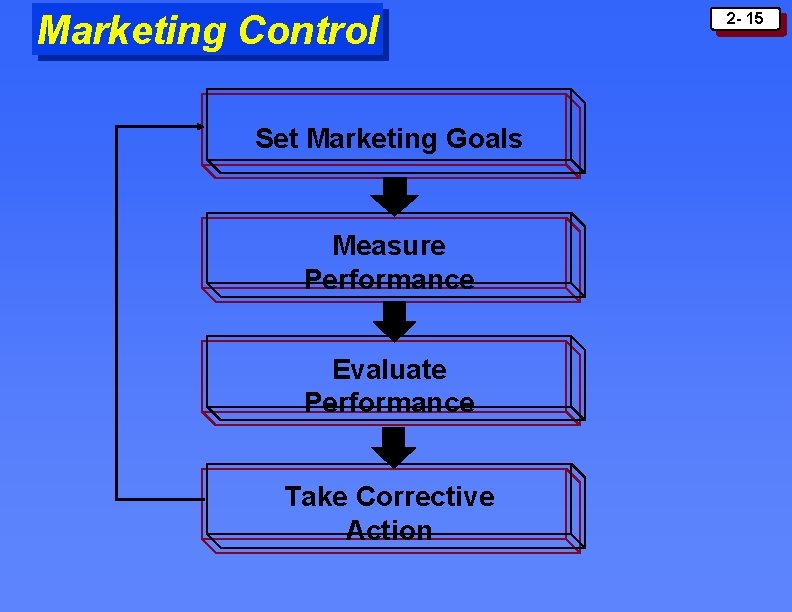
Marketing Control Set Marketing Goals Measure Performance Evaluate Performance Take Corrective Action 2 - 15
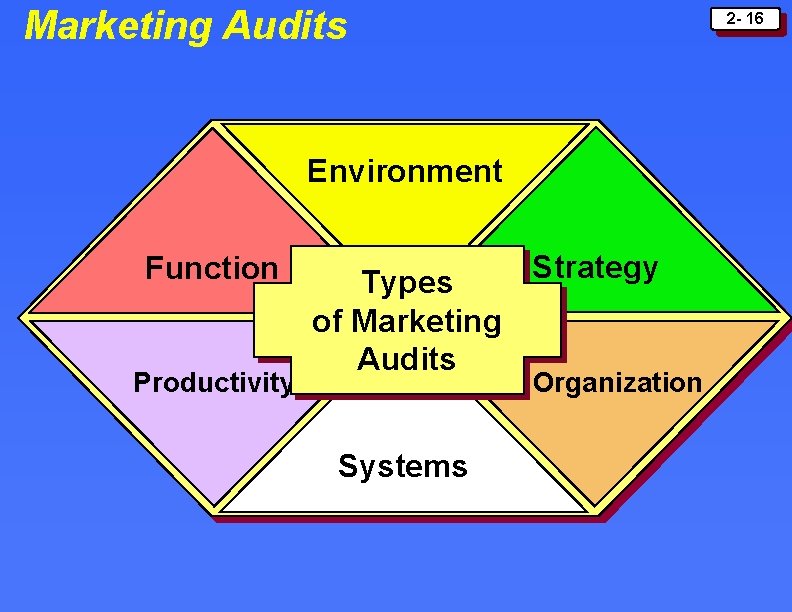
Marketing Audits 2 - 16 Environment Function Productivity Types of Marketing Audits Systems Strategy Organization