
2 1 Parenting and Families RESPONSIBILITIES OF PARENTING
2. 1 Parenting and Families RESPONSIBILITIES OF PARENTING
Parenting �The process of caring for children and helping them grow and develop. �Can be very complicated. �Impacts individuals, families, and societies �One of the most important roles in a person’s life.
Making a Positive Difference �Treat others with kindness and consideration �Some neighborhood children can benefit from having a teen friend. �Volunteer or work with children
Learning About Child Development �What to expect when raising children �What to expect when you are expecting �Parenting skills �Discipline options �Learn and understand what the child may be going through (developmental stages) �Interacting with children positively
Parenthood Readiness �Parenting Skills- can be learned!! �Take classes in child development and parenting in school, at hospitals, community groups, and private instructors. �Read reliable books, magazine articles, etc. �Gain experience �Ask for advice �Observe parents and children
Stages of Parenthood �Psychologist Ellen Galinsky �Between Generations: The Six Stages of Parenthood �Research finding based on interviews with parents �Galinsky describes how parents develop through their interaction with their children.
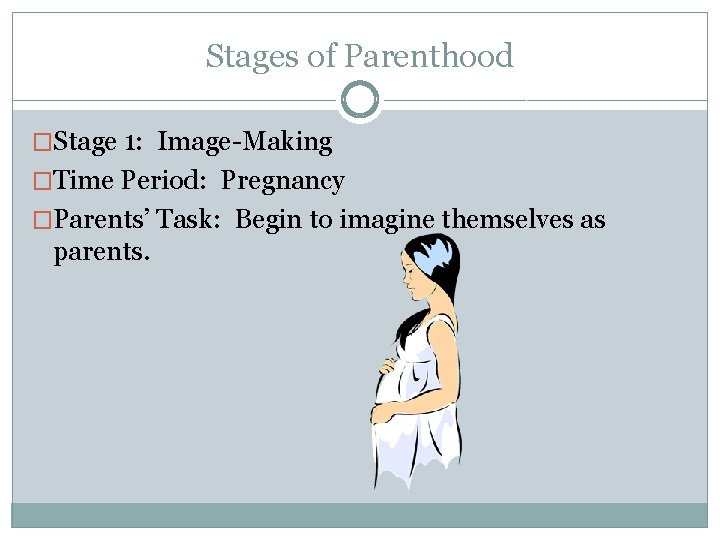
Stages of Parenthood �Stage 1: Image-Making �Time Period: Pregnancy �Parents’ Task: Begin to imagine themselves as parents.
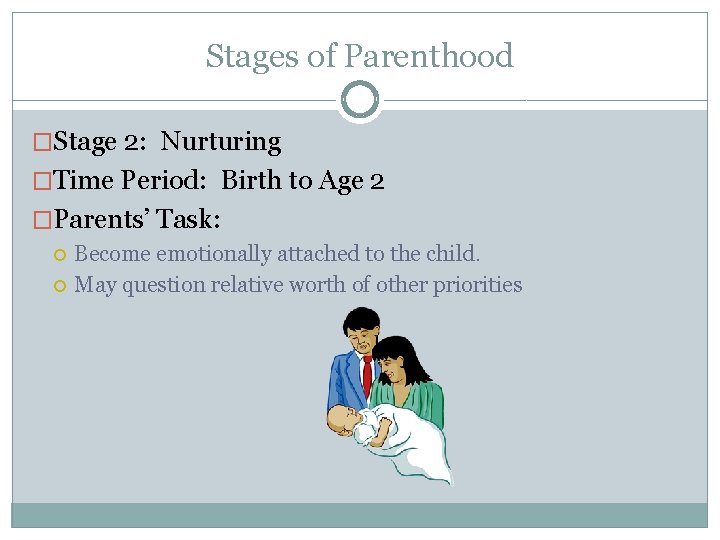
Stages of Parenthood �Stage 2: Nurturing �Time Period: Birth to Age 2 �Parents’ Task: Become emotionally attached to the child. May question relative worth of other priorities
Stages of Parenthood �Stage 3: Authority �Time Period: Age 2 to 4 or 5 �Parents’ Task: Determine rules Clarify role as authority figure
Stages of Parenthood �Stage 4: Interpretive �Time Period: Age 4 -5 to Age 13 �Parents’ Task: Rethink their role as parents Decide what knowledge, skills, and values the child needs
Stages of Parenthood �Stage 5: Interdependent �Time Period: Adolescence �Parents’ Task: Establish boundaries Find disciplinary methods appropriate for teens
Stages of Parenthood �Stage 6 - Departure �Time Period: Child leaves home �Parents’ Task: Evaluate their parenting
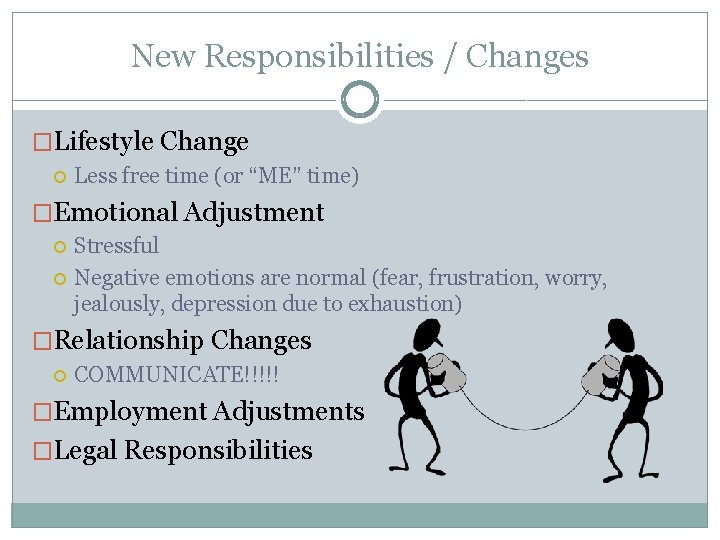
New Responsibilities / Changes �Lifestyle Change Less free time (or “ME” time) �Emotional Adjustment Stressful Negative emotions are normal (fear, frustration, worry, jealously, depression due to exhaustion) �Relationship Changes COMMUNICATE!!!!! �Employment Adjustments �Legal Responsibilities
Rewards �Can bring a lot of joy and happiness �See the world differently �Enrich an already strong marriage / family �Great sense of accomplishment and pride
What are the five area’s of parenthood readiness? �Emotional Maturity �Desire to be a parent �Health �Financial Responsibility �Resource Management
Parenthood Readiness �Emotional Maturity- being responsible enough to consistently put someone else’s needs before your own needs.
Parenthood Readiness �Desire for Parenthood Do you want to have children? Why do you want children? Are you ready to handle the challenges of parenthood?
Parenthood Readiness �Health Consideration- get a medical check up. Some medical problems can affect the health of the baby or the parents’ ability to care for a child. � Consider Age: under 17 or over 35 pregnancy is riskier for both the mother and baby.
Parenthood Readiness �Financial Concerns- Raising a child is expensive. How will you pay for clothes, health care, food, equipment, toys, childcare, etc.
Parenthood Readiness �Resource Management Skills- parents need to use their resources wisely. �Five Key Steps: 1. 2. 3. 4. 5. Set Goals- what is important. Identify Resources- make a list Make a Plan- decide how you will use your resources Put the Plan in Action- start working towards the goal. Re-Evaluate from Time to Time- step back and take a look at progress.
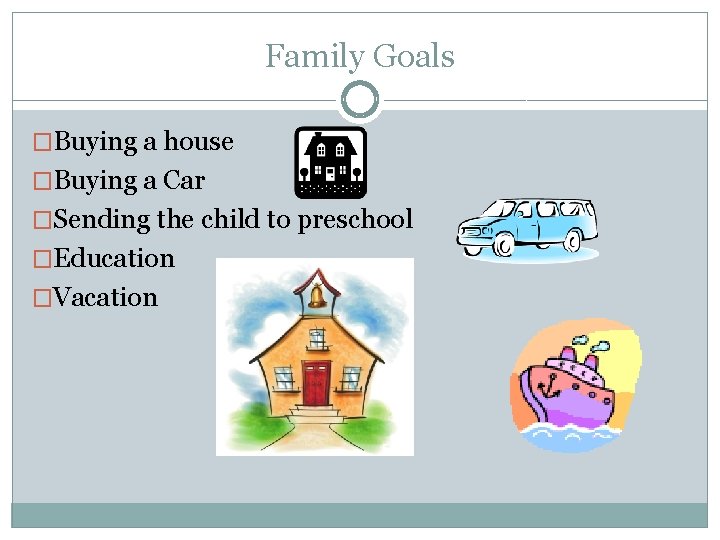
Family Goals �Buying a house �Buying a Car �Sending the child to preschool �Education �Vacation
- Slides: 21