
2 1 List the environmental factors which can
- Slides: 19
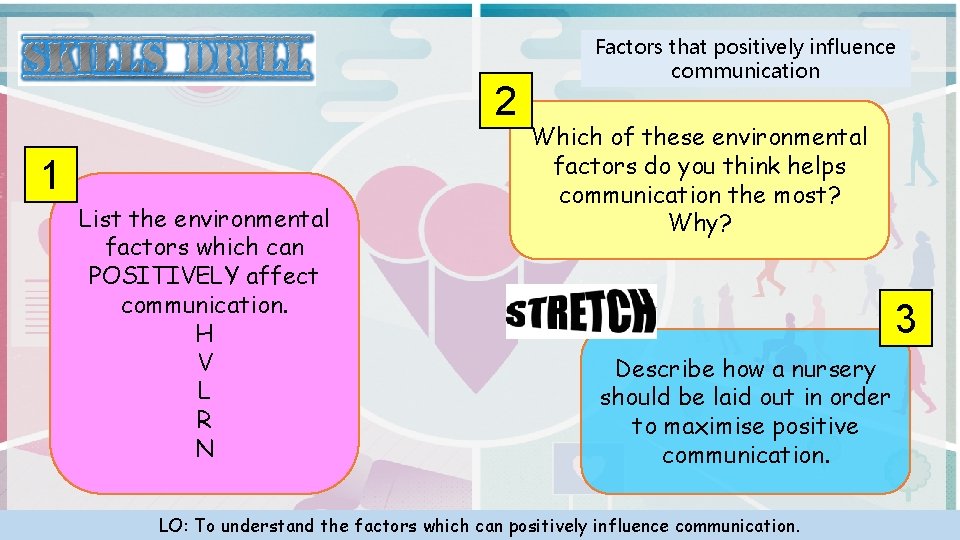
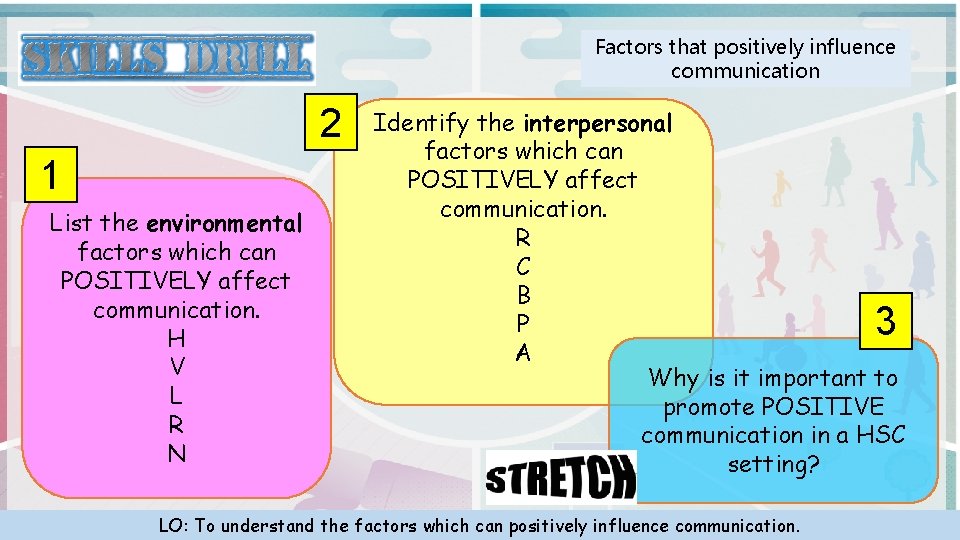
2 1 List the environmental factors which can POSITIVELY affect communication. H V L R N Factors that positively influence communication Which of these environmental factors do you think helps communication the most? Why? 3 Describe how a nursery should be laid out in order to maximise positive communication. LO: To understand the factors which can positively influence communication.
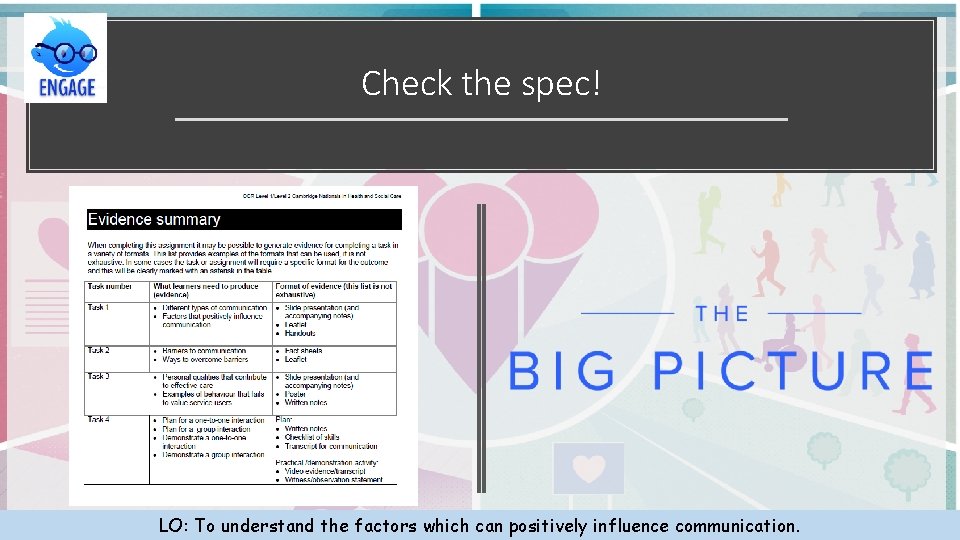
Check the spec! LO: To understand the factors which can positively influence communication.
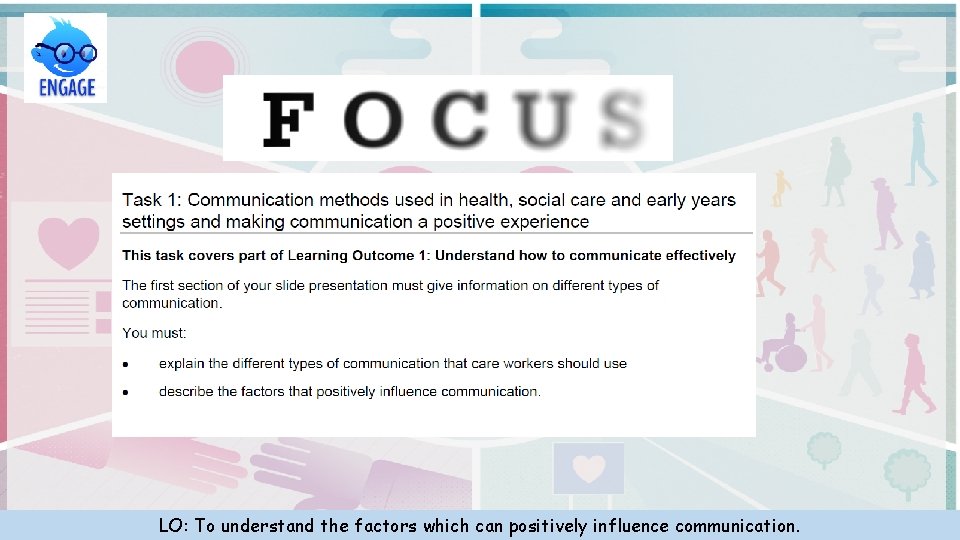
LO: To understand the factors which can positively influence communication.
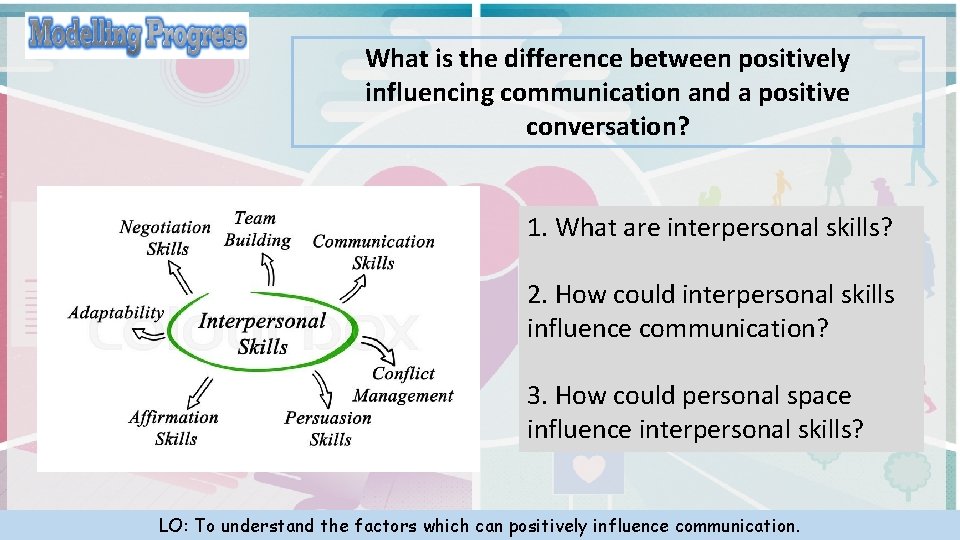
What is the difference between positively influencing communication and a positive conversation? 1. What are interpersonal skills? 2. How could interpersonal skills influence communication? 3. How could personal space influence interpersonal skills? LO: To understand the factors which can positively influence communication.
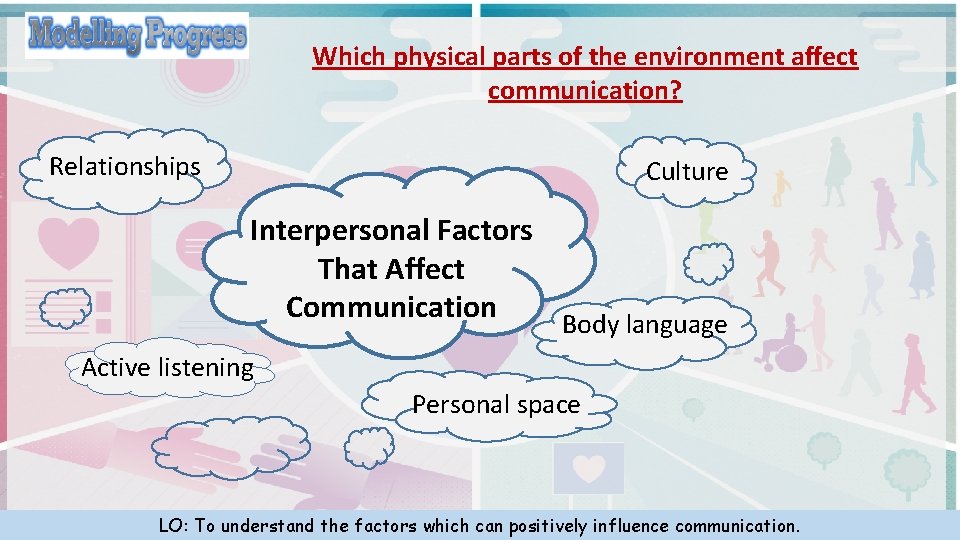
Which physical parts of the environment affect communication? Relationships Culture Interpersonal Factors That Affect Communication Body language Active listening Personal space LO: To understand the factors which can positively influence communication.
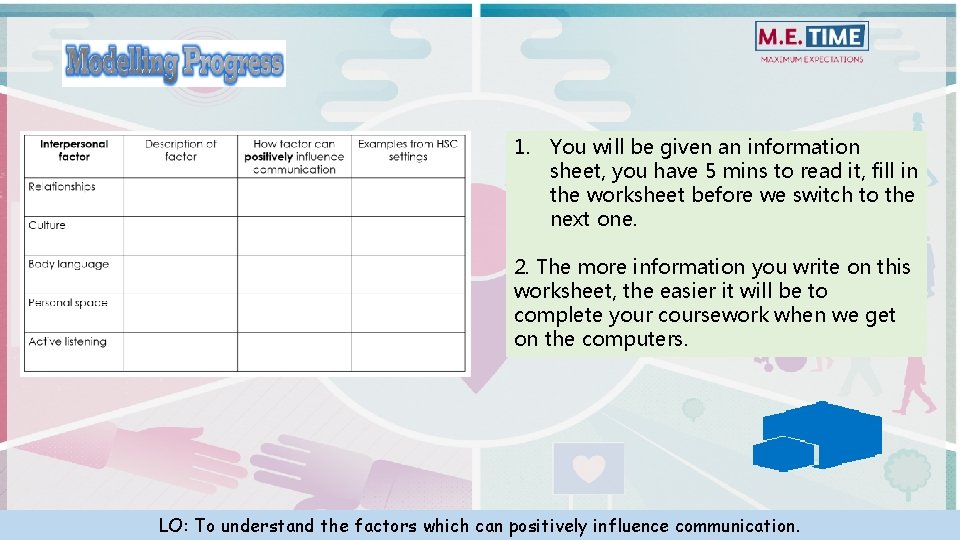
1. You will be given an information sheet, you have 5 mins to read it, fill in the worksheet before we switch to the next one. 2. The more information you write on this worksheet, the easier it will be to complete your coursework when we get on the computers. LO: To understand the factors which can positively influence communication.
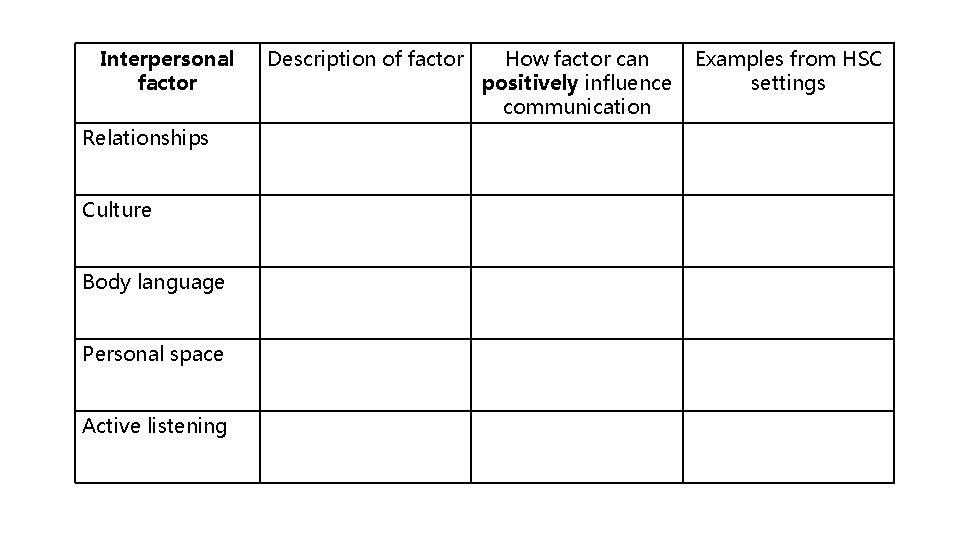
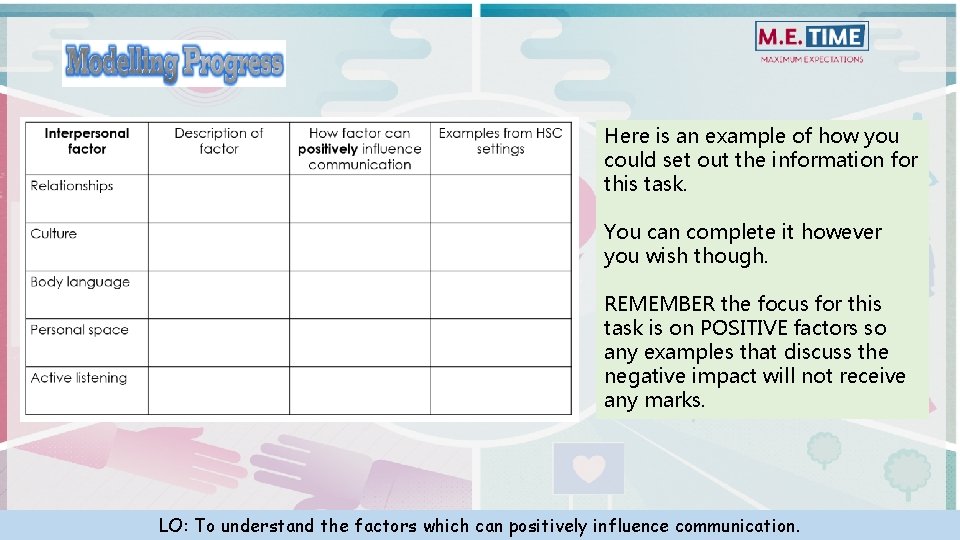
Interpersonal factor Relationships Culture Body language Personal space Active listening Description of factor How factor can positively influence communication Examples from HSC settings
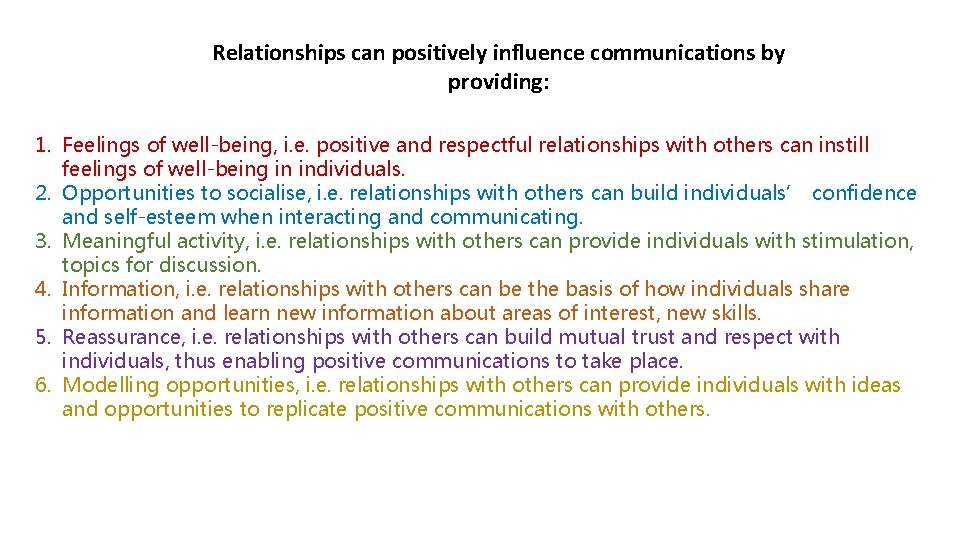
Relationships can positively influence communications by providing: 1. Feelings of well-being, i. e. positive and respectful relationships with others can instill feelings of well-being in individuals. 2. Opportunities to socialise, i. e. relationships with others can build individuals’ confidence and self-esteem when interacting and communicating. 3. Meaningful activity, i. e. relationships with others can provide individuals with stimulation, topics for discussion. 4. Information, i. e. relationships with others can be the basis of how individuals share information and learn new information about areas of interest, new skills. 5. Reassurance, i. e. relationships with others can build mutual trust and respect with individuals, thus enabling positive communications to take place. 6. Modelling opportunities, i. e. relationships with others can provide individuals with ideas and opportunities to replicate positive communications with others.
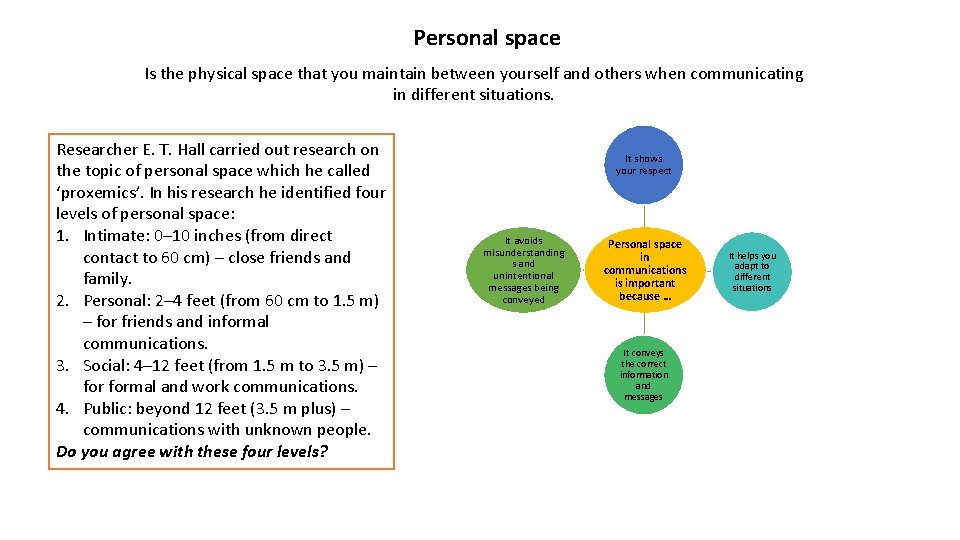
Personal space Is the physical space that you maintain between yourself and others when communicating in different situations. Researcher E. T. Hall carried out research on the topic of personal space which he called ‘proxemics’. In his research he identified four levels of personal space: 1. Intimate: 0– 10 inches (from direct contact to 60 cm) – close friends and family. 2. Personal: 2– 4 feet (from 60 cm to 1. 5 m) – for friends and informal communications. 3. Social: 4– 12 feet (from 1. 5 m to 3. 5 m) – formal and work communications. 4. Public: beyond 12 feet (3. 5 m plus) – communications with unknown people. Do you agree with these four levels? It shows your respect It avoids misunderstanding s and unintentional messages being conveyed Personal space in communications is important because … It conveys the correct information and messages It helps you adapt to different situations
Respecting differences in culture can: Encourage respectful and therefore positive communications, e. g. be aware of how maintaining eye contact can be seen as a sign of genuine interest in Western cultures and how avoiding eye contact in Asian cultures can be seen as respectful. Avoid misunderstandings and therefore encourage positive communications, i. e. be aware of how touching an adult on the head in Hispanic cultures can be seen as caring and compassionate, in Western cultures as patronising and in Asian cultures as inappropriate. Vary between individuals and groups of individuals depending on their background, experiences, views and preferences, so it is important to not make assumptions about what an individual prefers based on their background or culture. Ask first – doing so will ensure positive communications. Require time and a willingness to find out what the differences are and how they can be respected for every individual.
Body language Positive body language can convey feelings of genuine interest and help with developing relationships and engaging individuals – e. g. if a child approaches a childcare assistant with their painting, the childcare assistant can show their genuine interest by lowering themselves down to the child’s eye level, leaning towards the child and smiling while looking at the painting. The child in turn will feel pleased, their skill and ability recognised and valued. Positive body language can convey feelings of reassurance and help with developing relationships and engaging individuals – e. g. if a young person wants to speak to an activities worker about a personal issue, the activities worker can provide reassurance and understanding by not looking shocked, by using small, calm movements and adopting a slightly forward stance, leaning towards the individual while respecting their personal space. The child in turn will feel less awkward/anxious about speaking.
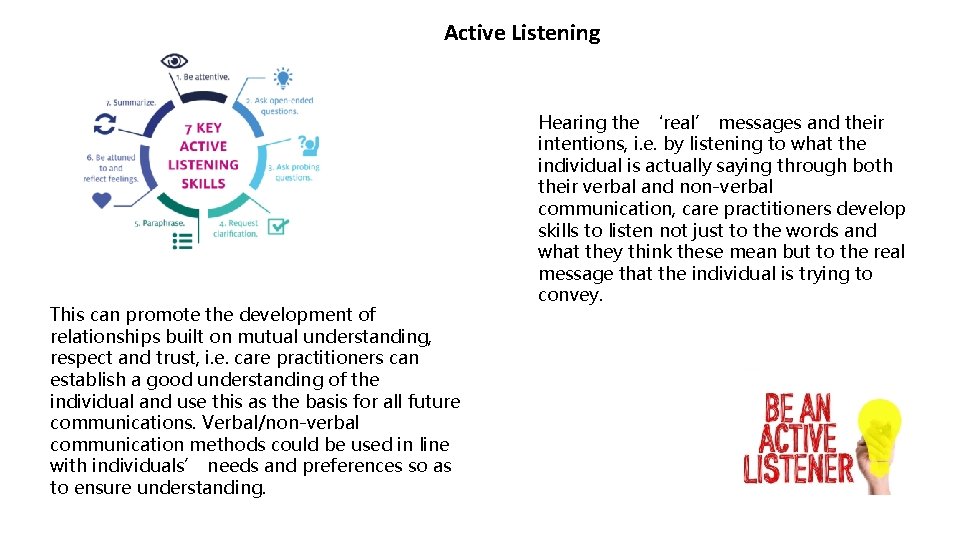
Active Listening This can promote the development of relationships built on mutual understanding, respect and trust, i. e. care practitioners can establish a good understanding of the individual and use this as the basis for all future communications. Verbal/non-verbal communication methods could be used in line with individuals’ needs and preferences so as to ensure understanding. Hearing the ‘real’ messages and their intentions, i. e. by listening to what the individual is actually saying through both their verbal and non-verbal communication, care practitioners develop skills to listen not just to the words and what they think these mean but to the real message that the individual is trying to convey.
Give one example of how you are going to apply what you learned today. LO: To understand the factors which can positively influence communication.
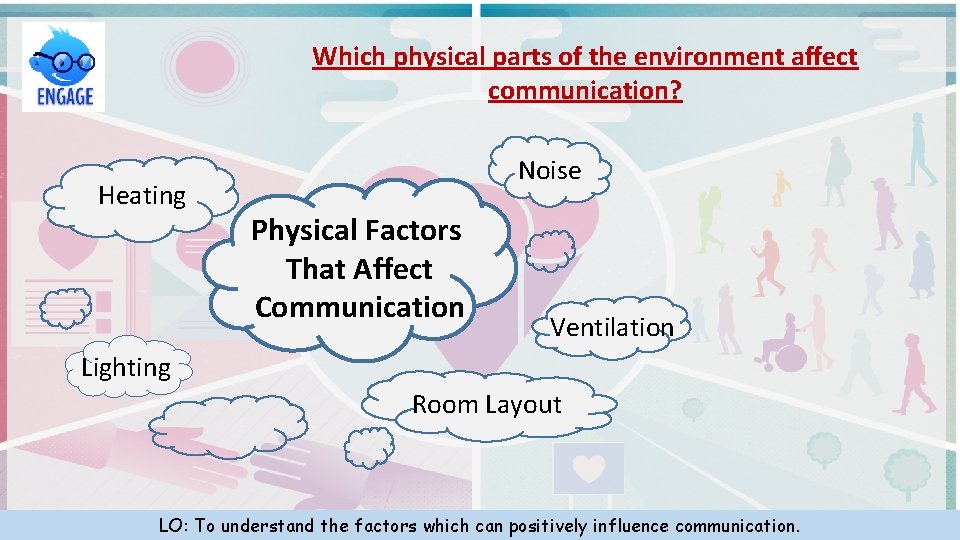
Which physical parts of the environment affect communication? Heating Noise Physical Factors That Affect Communication Ventilation Lighting Room Layout LO: To understand the factors which can positively influence communication.
TIPS: Using your notes from last lesson, design a room which will provide the maximum amount of positive communications. The settings that you have to choose from are: • A nursery • A retirement home living room • A doctor’s office waiting room • You must label and annotate the different elements of your room. • You must provide details of how: - Heating - Ventilation - Noise - Room Layout - Lighting are used and why/how you have designed your room with these in mind. LO: To understand the factors which can positively influence communication.
If you have not completed the first task – Types of communication – you MUST come back after school on THURSDAY to complete it. If you fall too far behind and you are not making an effort to catch up, I will be informing Mrs Green and phoning parents/carers to make arrangements for you to stay behind and complete it. LO: To understand the different types of communication.
Factors that positively influence communication 2 1 List the environmental factors which can POSITIVELY affect communication. H V L R N Identify the interpersonal factors which can POSITIVELY affect communication. R C B P A Why is it important to promote POSITIVE communication in a HSC setting? LO: To understand the factors which can positively influence communication. 3
Here is an example of how you could set out the information for this task. You can complete it however you wish though. REMEMBER the focus for this task is on POSITIVE factors so any examples that discuss the negative impact will not receive any marks. LO: To understand the factors which can positively influence communication.
Mock examination Friday 27 th November session 5 and Form. Please make sure that you revise over that content! Any questions? LO: To understand the factors which can positively influence communication.