
2 1 Inductive Reasoning Objectives I CAN use
2. 1 Inductive Reasoning Objectives: • I CAN use patterns to make conjectures. • I CAN disprove geometric conjectures using counterexamples. 1
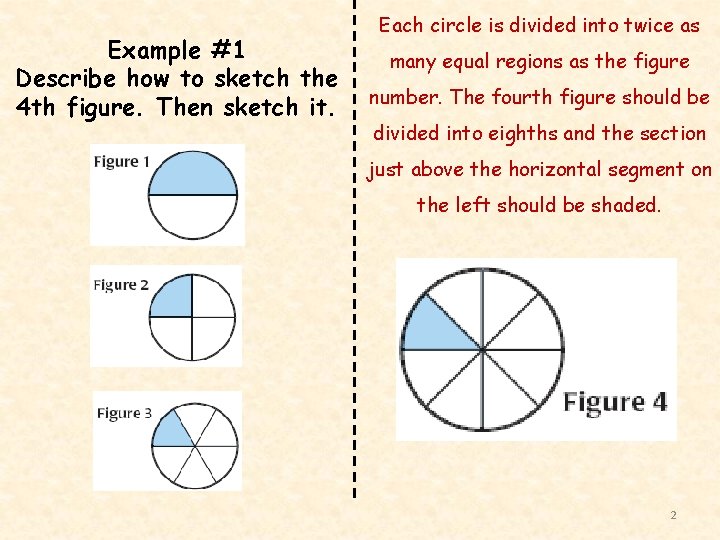
Example #1 Describe how to sketch the 4 th figure. Then sketch it. Each circle is divided into twice as many equal regions as the figure number. The fourth figure should be divided into eighths and the section just above the horizontal segment on the left should be shaded. 2
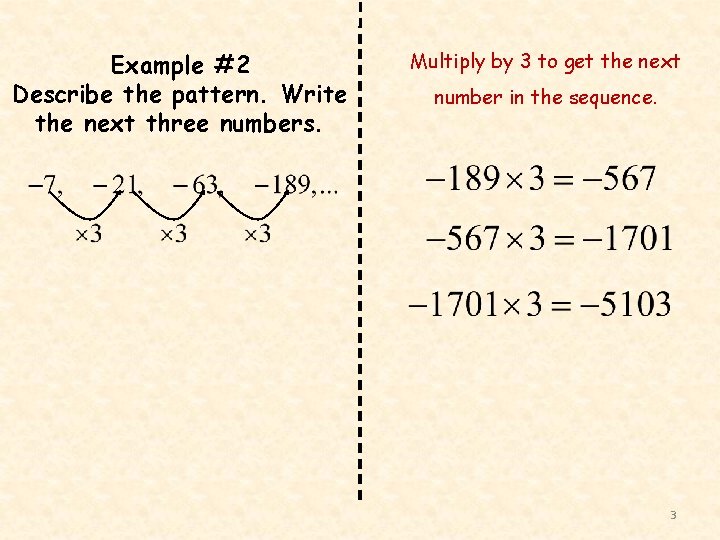
Example #2 Describe the pattern. Write the next three numbers. Multiply by 3 to get the next number in the sequence. 3
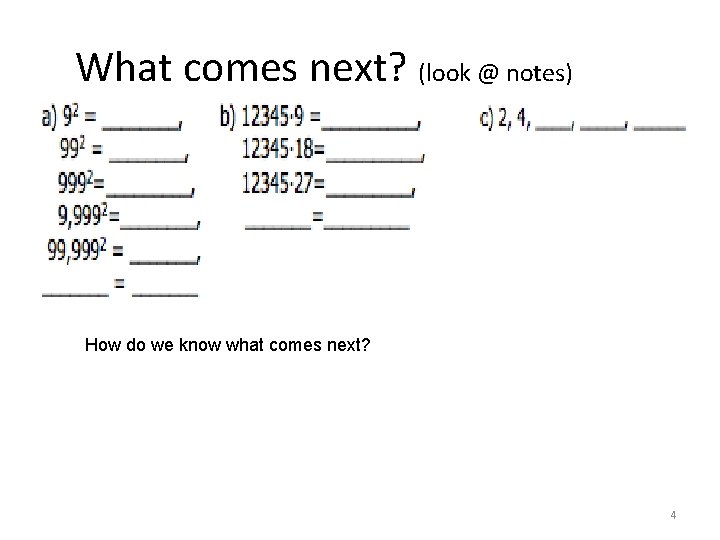
What comes next? (look @ notes) How do we know what comes next? 4
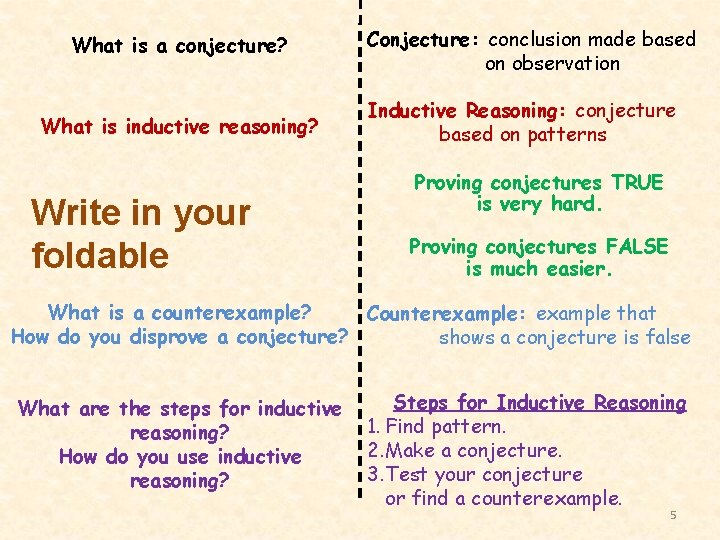
What is a conjecture? What is inductive reasoning? Write in your foldable Conjecture: conclusion made based on observation Inductive Reasoning: conjecture based on patterns Proving conjectures TRUE is very hard. Proving conjectures FALSE is much easier. What is a counterexample? Counterexample: example that How do you disprove a conjecture? shows a conjecture is false What are the steps for inductive reasoning? How do you use inductive reasoning? Steps for Inductive Reasoning 1. Find pattern. 2. Make a conjecture. 3. Test your conjecture or find a counterexample. 5
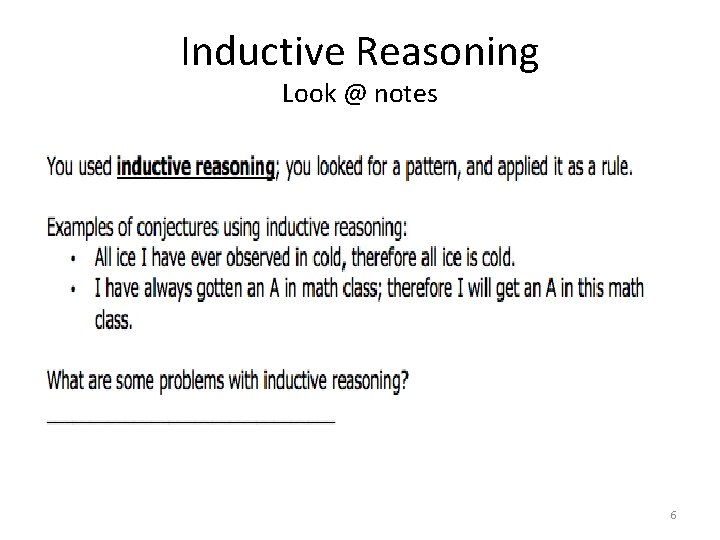
Inductive Reasoning Look @ notes 6
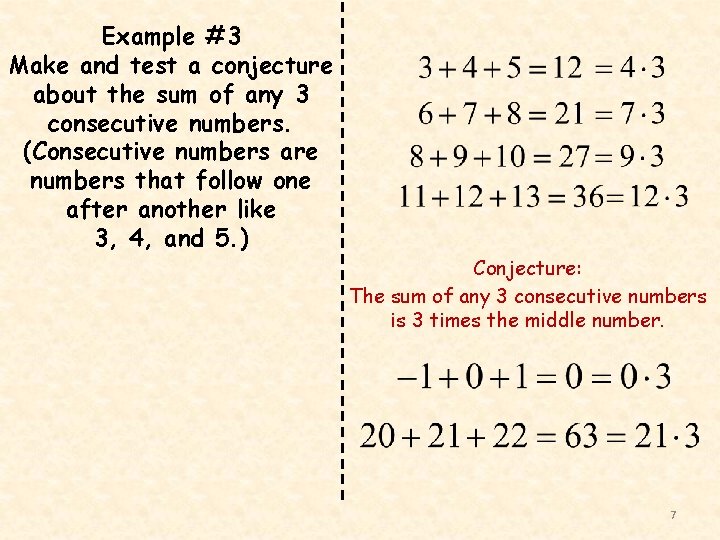
Example #3 Make and test a conjecture about the sum of any 3 consecutive numbers. (Consecutive numbers are numbers that follow one after another like 3, 4, and 5. ) Conjecture: The sum of any 3 consecutive numbers is 3 times the middle number. 7
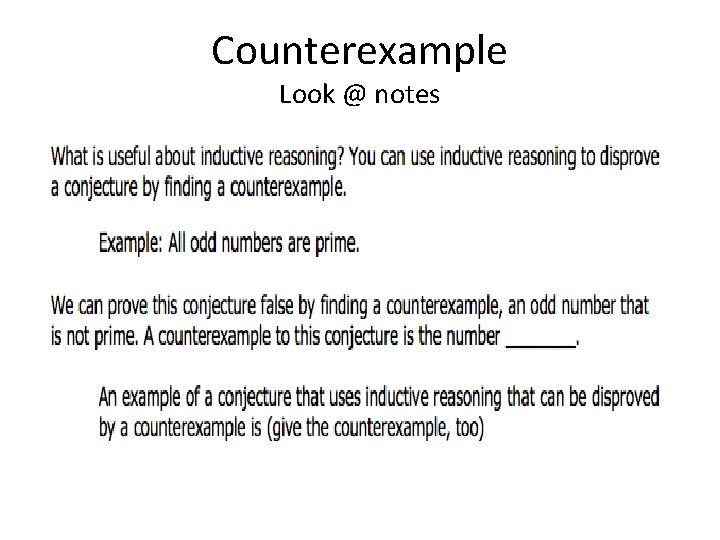
Counterexample Look @ notes
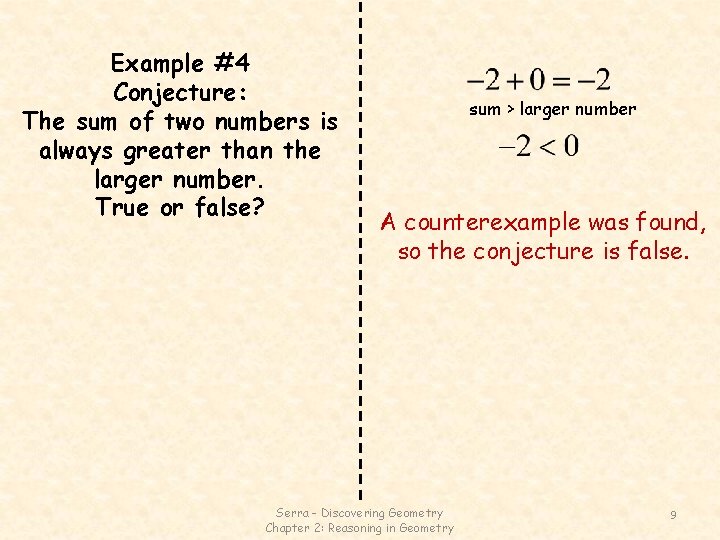
Example #4 Conjecture: The sum of two numbers is always greater than the larger number. True or false? sum > larger number A counterexample was found, so the conjecture is false. Serra - Discovering Geometry Chapter 2: Reasoning in Geometry 9
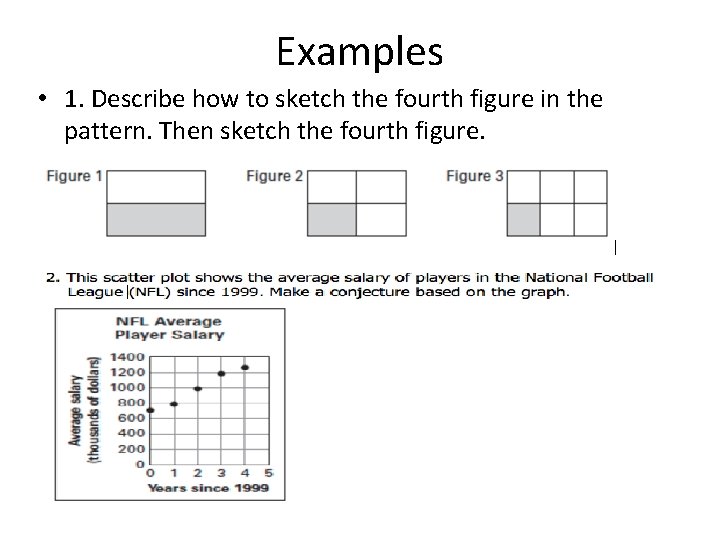
Examples • 1. Describe how to sketch the fourth figure in the pattern. Then sketch the fourth figure.
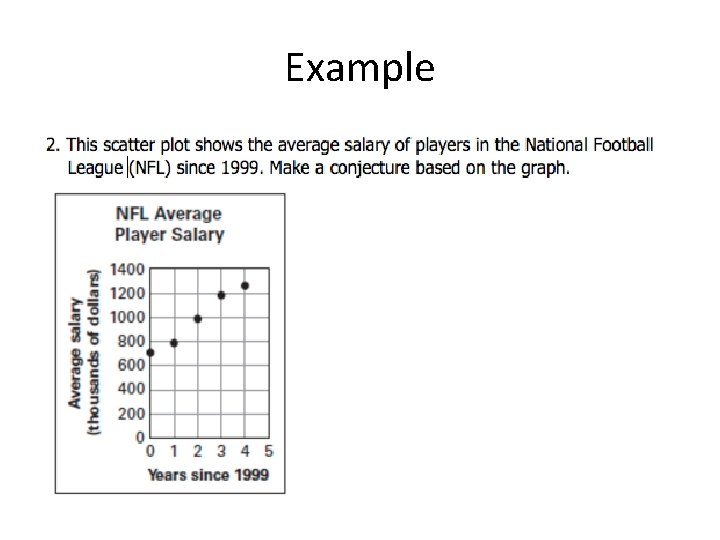
Example
- Slides: 11