
2 1 CLASSIFYING LAW 12 Sources of Law
- Slides: 12
2. 1 – CLASSIFYING LAW 12
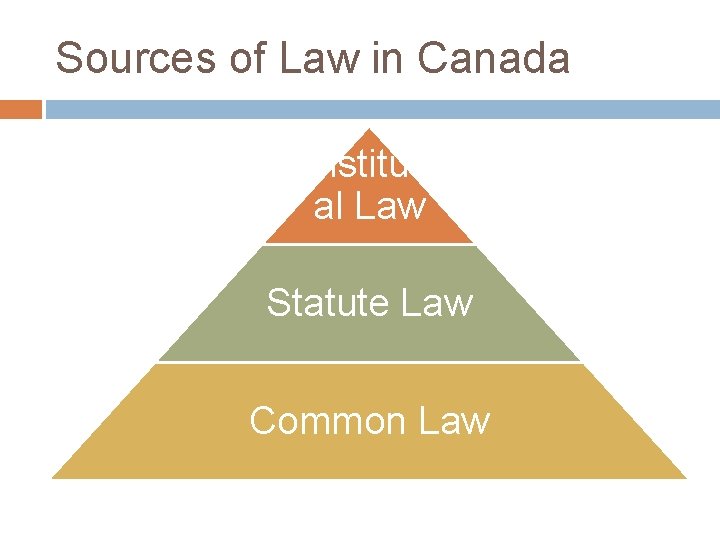
Sources of Law in Canada Constitution al Law Statute Law Common Law
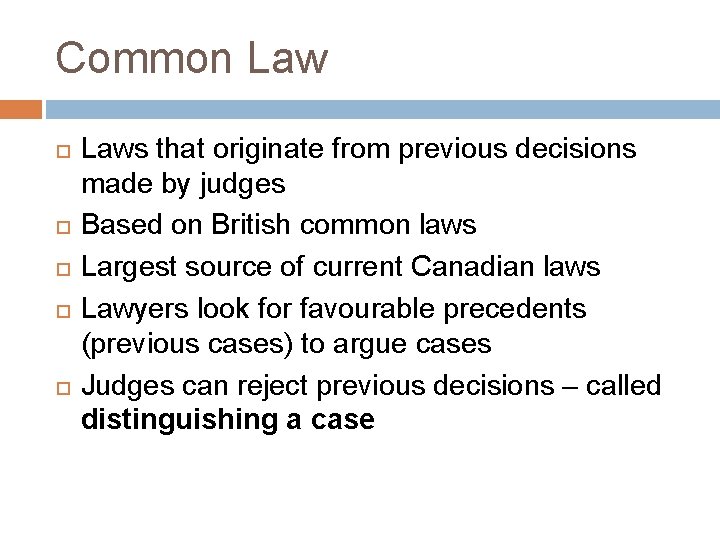
Common Law Laws that originate from previous decisions made by judges Based on British common laws Largest source of current Canadian laws Lawyers look for favourable precedents (previous cases) to argue cases Judges can reject previous decisions – called distinguishing a case
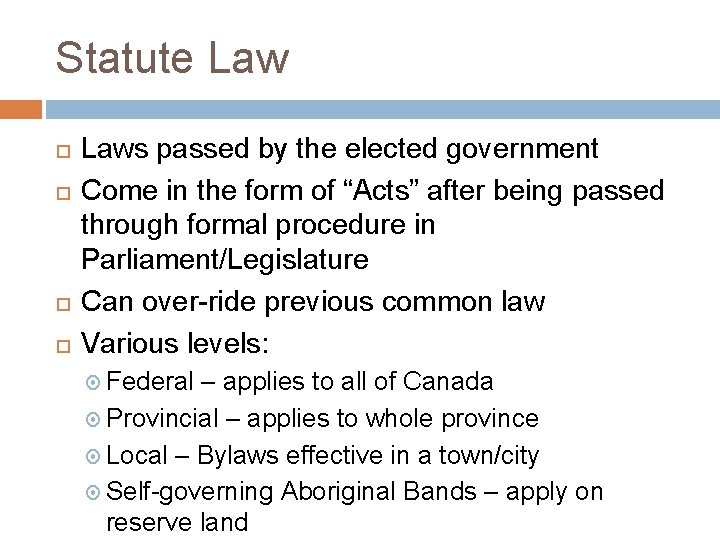
Statute Laws passed by the elected government Come in the form of “Acts” after being passed through formal procedure in Parliament/Legislature Can over-ride previous common law Various levels: Federal – applies to all of Canada Provincial – applies to whole province Local – Bylaws effective in a town/city Self-governing Aboriginal Bands – apply on reserve land
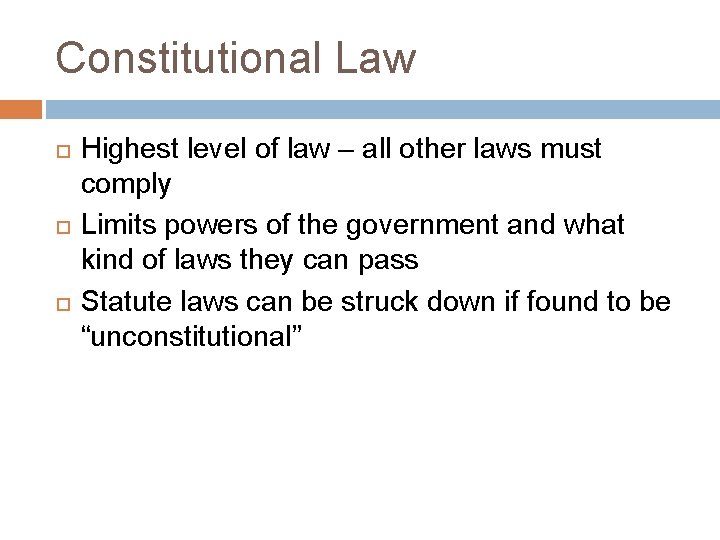
Constitutional Law Highest level of law – all other laws must comply Limits powers of the government and what kind of laws they can pass Statute laws can be struck down if found to be “unconstitutional”
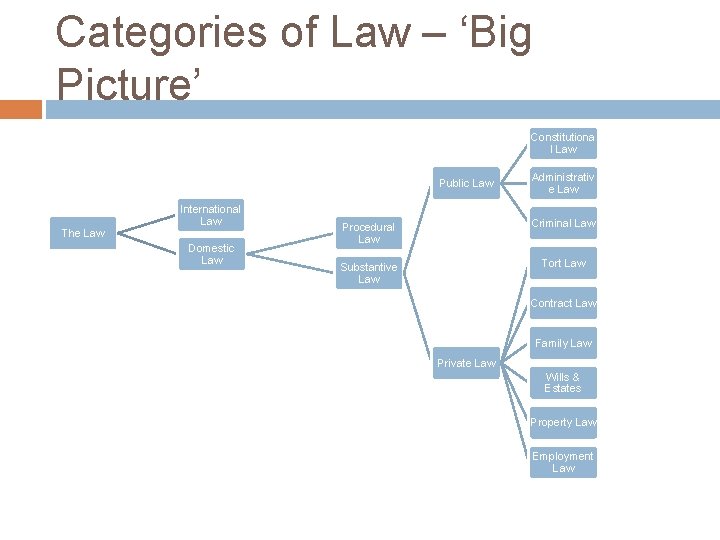
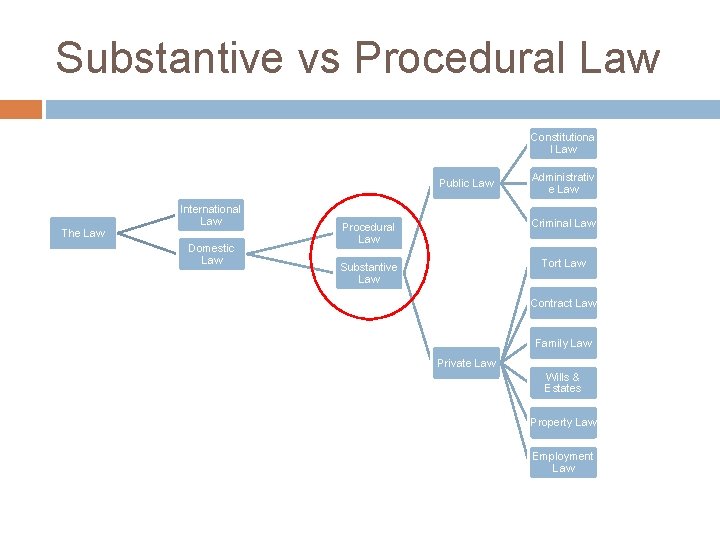
Categories of Law – ‘Big Picture’ Constitutiona l Law Public Law The Law International Law Domestic Law Administrativ e Law Procedural Law Criminal Law Substantive Law Tort Law Contract Law Family Law Private Law Wills & Estates Property Law Employment Law
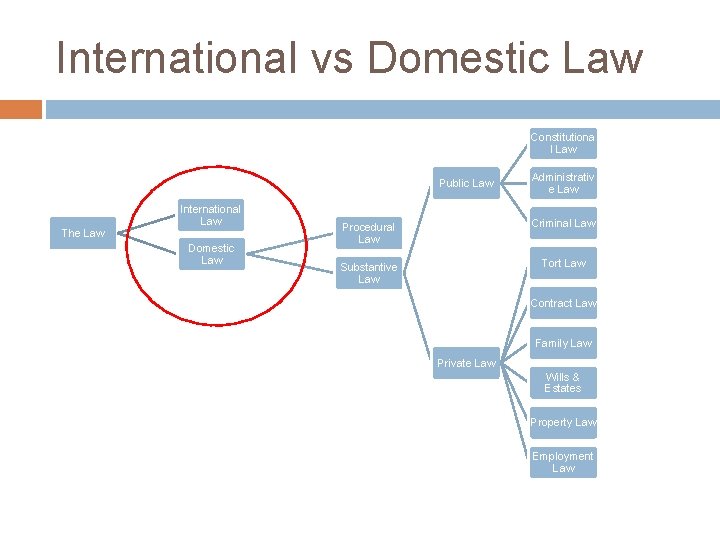
International vs Domestic Law Constitutiona l Law Public Law The Law International Law Domestic Law Administrativ e Law Procedural Law Criminal Law Substantive Law Tort Law Contract Law Family Law Private Law Wills & Estates Property Law Employment Law
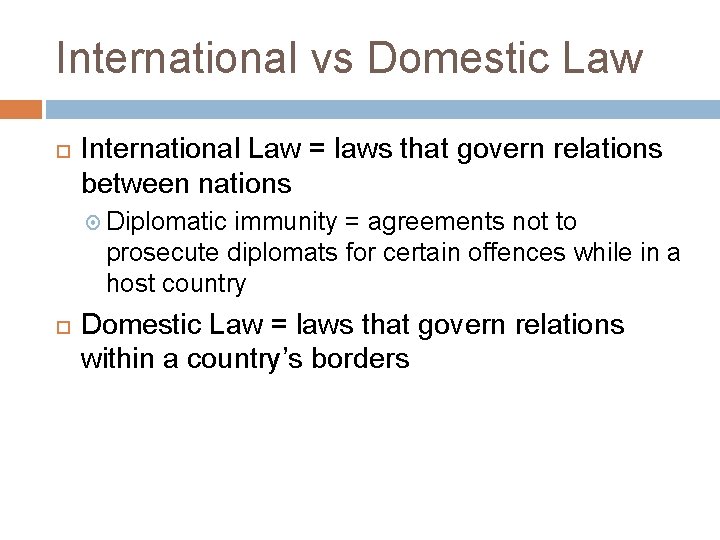
International vs Domestic Law International Law = laws that govern relations between nations Diplomatic immunity = agreements not to prosecute diplomats for certain offences while in a host country Domestic Law = laws that govern relations within a country’s borders
Substantive vs Procedural Law Constitutiona l Law Public Law The Law International Law Domestic Law Administrativ e Law Procedural Law Criminal Law Substantive Law Tort Law Contract Law Family Law Private Law Wills & Estates Property Law Employment Law
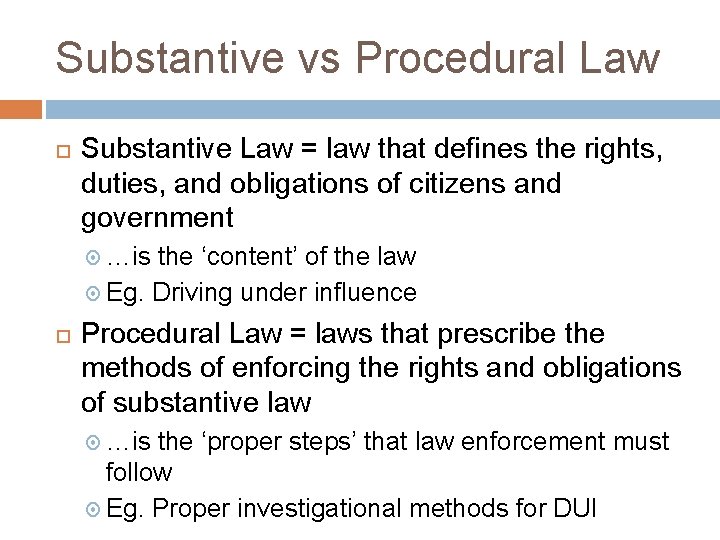
Substantive vs Procedural Law Substantive Law = law that defines the rights, duties, and obligations of citizens and government …is the ‘content’ of the law Eg. Driving under influence Procedural Law = laws that prescribe the methods of enforcing the rights and obligations of substantive law …is the ‘proper steps’ that law enforcement must follow Eg. Proper investigational methods for DUI
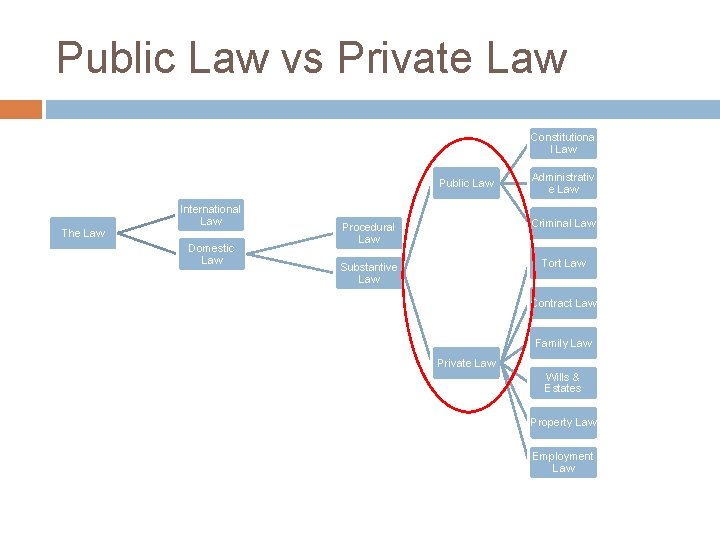
Public Law vs Private Law Constitutiona l Law Public Law The Law International Law Domestic Law Administrativ e Law Procedural Law Criminal Law Substantive Law Tort Law Contract Law Family Law Private Law Wills & Estates Property Law Employment Law
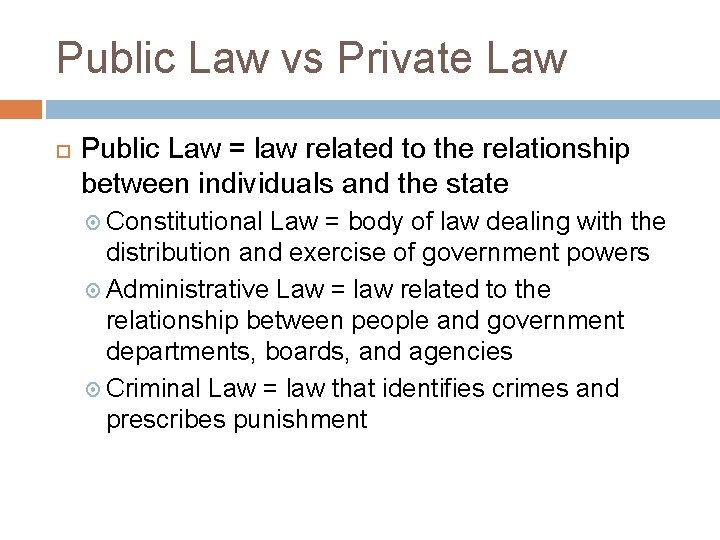
Public Law vs Private Law Public Law = law related to the relationship between individuals and the state Constitutional Law = body of law dealing with the distribution and exercise of government powers Administrative Law = law related to the relationship between people and government departments, boards, and agencies Criminal Law = law that identifies crimes and prescribes punishment