
2 1 Chapter 2 Perception 2 2 Perception

- Slides: 23
2 -1 Chapter 2 Perception
2 -2 “Perception is Reality” Louis Cheskin
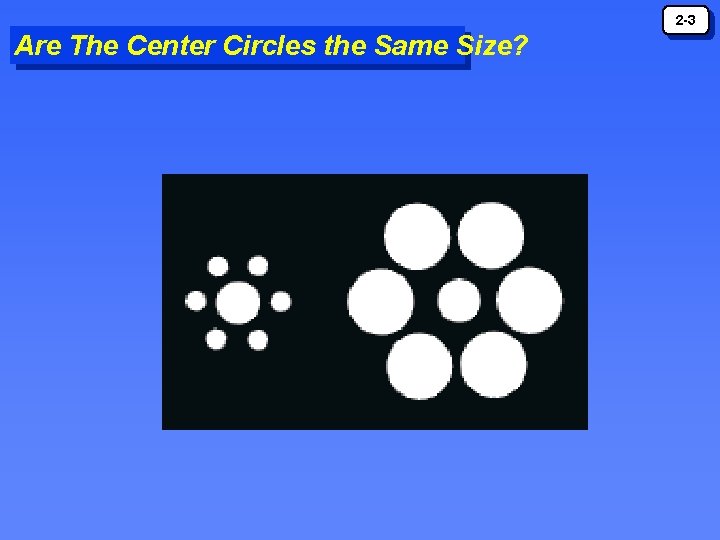
2 -3 Are The Center Circles the Same Size?
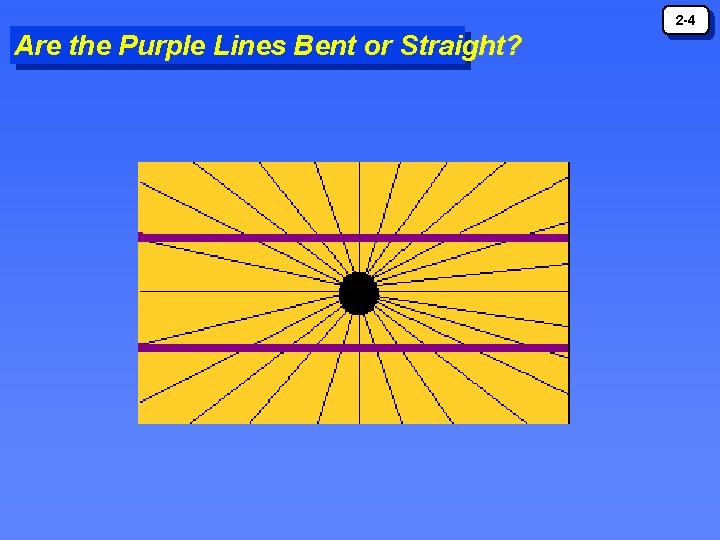
2 -4 Are the Purple Lines Bent or Straight?
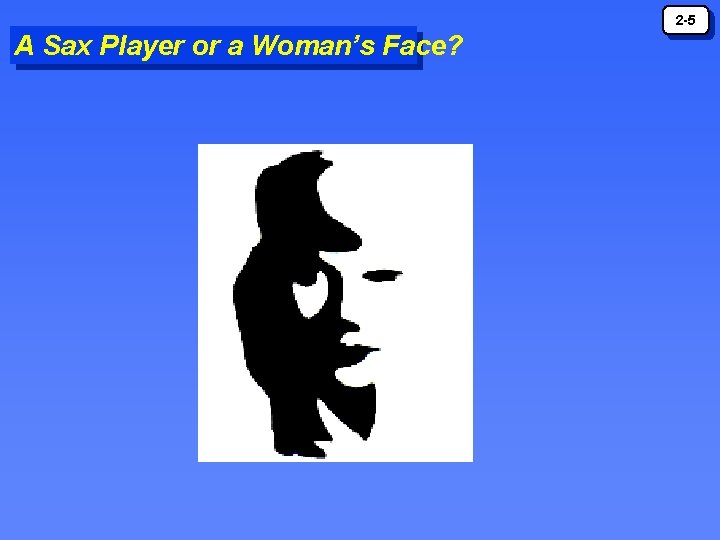
2 -5 A Sax Player or a Woman’s Face?
Sensation and Perception • Sensation – Refers to the immediate response of our sensory receptors (eyes, ears, nose, mouth, fingers) to such basic stimuli as light, color, and sound. • Perception – Process by which these sensations are selected, organized, and interpreted. – People only process a small amount of information (stimuli). – An even smaller amount is attended to and given meaning. 2 -6
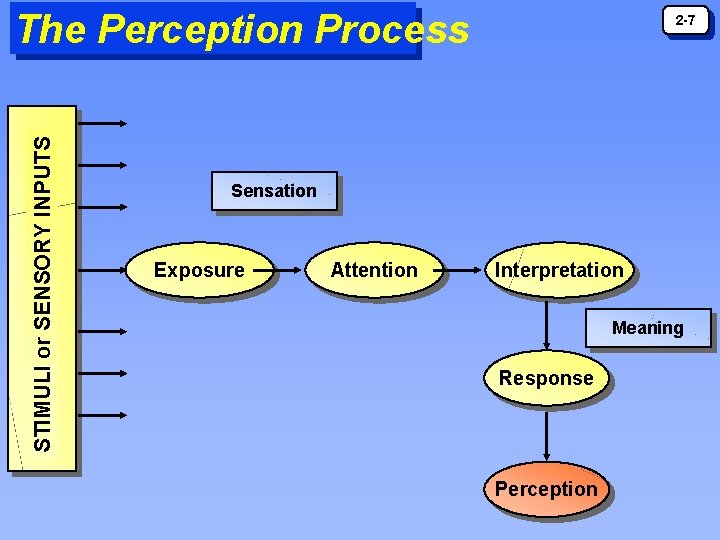
STIMULI or SENSORY INPUTS The Perception Process 2 -7 Sensation Exposure Attention Interpretation Meaning Response Perception
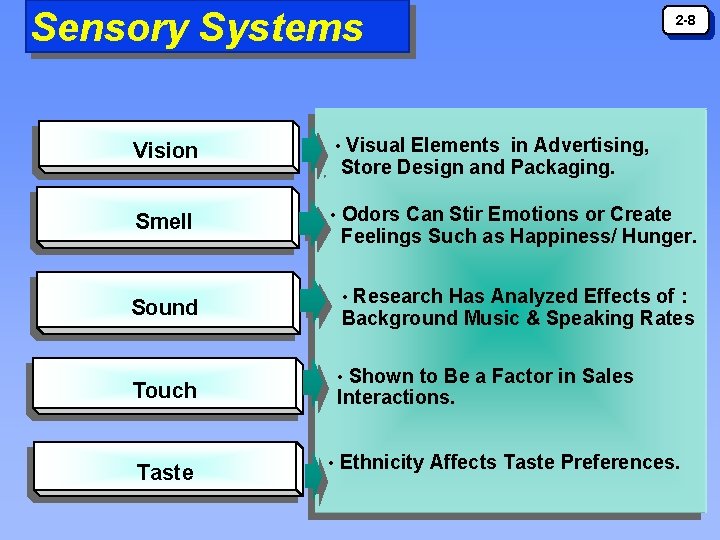
Sensory Systems Vision • Visual Elements in Advertising, Smell • Odors Can Stir Emotions or Create Sound Touch Taste 2 -8 Store Design and Packaging. Feelings Such as Happiness/ Hunger. • Research Has Analyzed Effects of : Background Music & Speaking Rates • Shown to Be a Factor in Sales Interactions. • Ethnicity Affects Taste Preferences.
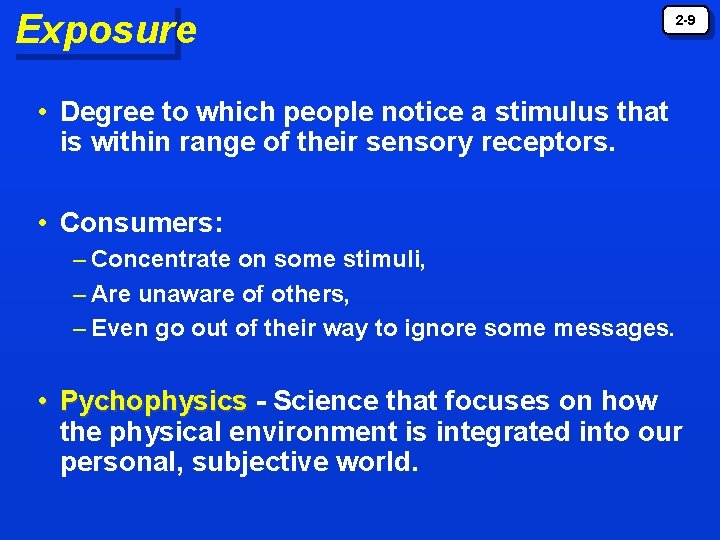
Exposure 2 -9 • Degree to which people notice a stimulus that is within range of their sensory receptors. • Consumers: – Concentrate on some stimuli, – Are unaware of others, – Even go out of their way to ignore some messages. • Pychophysics - Science that focuses on how the physical environment is integrated into our personal, subjective world.
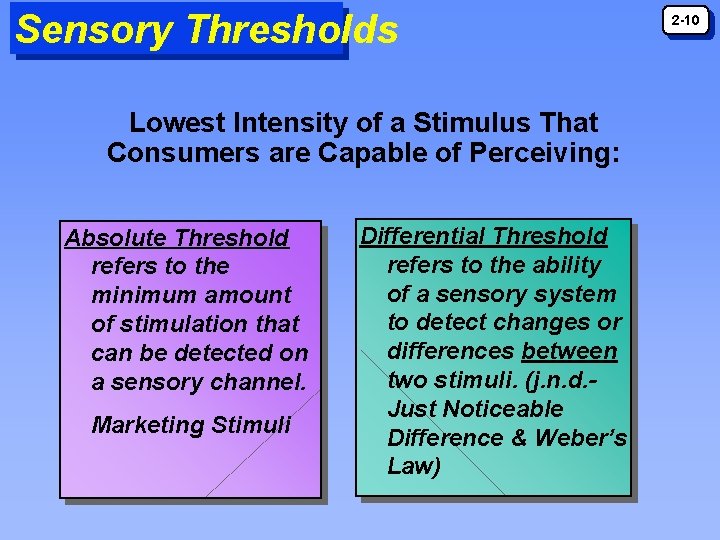
Sensory Thresholds Lowest Intensity of a Stimulus That Consumers are Capable of Perceiving: Absolute Threshold refers to the minimum amount of stimulation that can be detected on a sensory channel. Marketing Stimuli Differential Threshold refers to the ability of a sensory system to detect changes or differences between two stimuli. (j. n. d. Just Noticeable Difference & Weber’s Law) 2 -10
2 -11
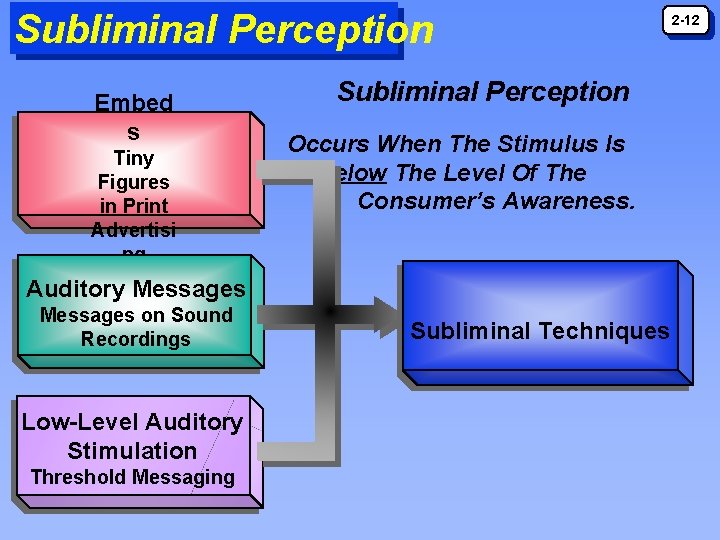
Subliminal Perception Embed s Tiny Figures in Print Advertisi ng Subliminal Perception Occurs When The Stimulus Is Below The Level Of The Consumer’s Awareness. Auditory Messages on Sound Recordings Low-Level Auditory Stimulation Threshold Messaging Subliminal Techniques 2 -12
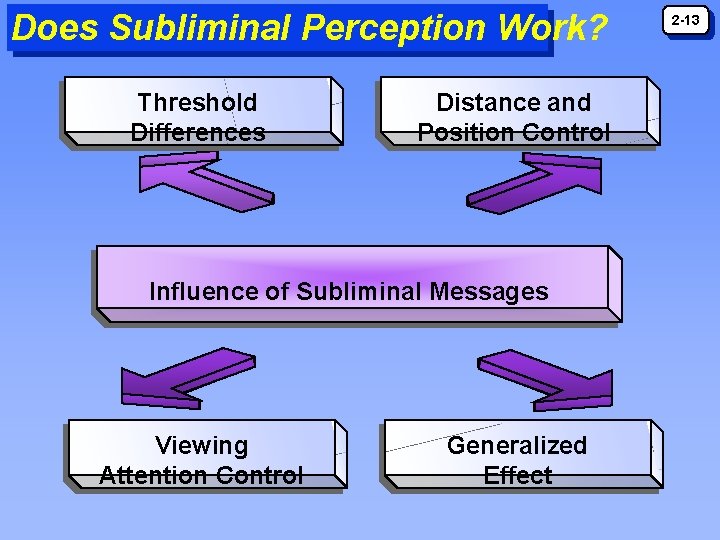
Does Subliminal Perception Work? Threshold Differences Distance and Position Control Influence of Subliminal Messages Viewing Attention Control Generalized Effect 2 -13
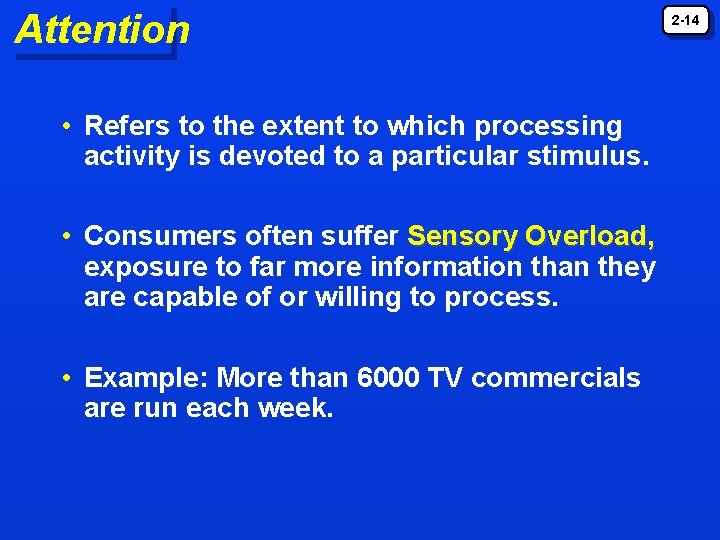
Attention • Refers to the extent to which processing activity is devoted to a particular stimulus. • Consumers often suffer Sensory Overload, exposure to far more information than they are capable of or willing to process. • Example: More than 6000 TV commercials are run each week. 2 -14
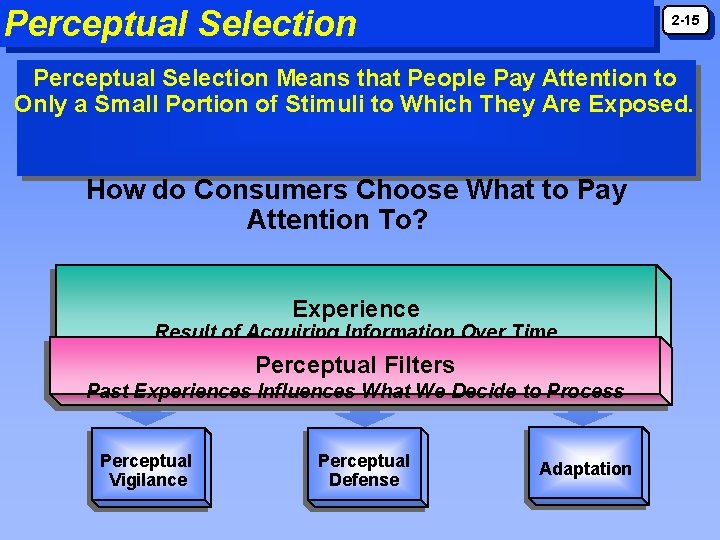
Perceptual Selection 2 -15 Perceptual Selection Means that People Pay Attention to Only a Small Portion of Stimuli to Which They Are Exposed. How do Consumers Choose What to Pay Attention To? Experience Result of Acquiring Information Over Time Perceptual Filters Past Experiences Influences What We Decide to Process Perceptual Vigilance Perceptual Defense Adaptation
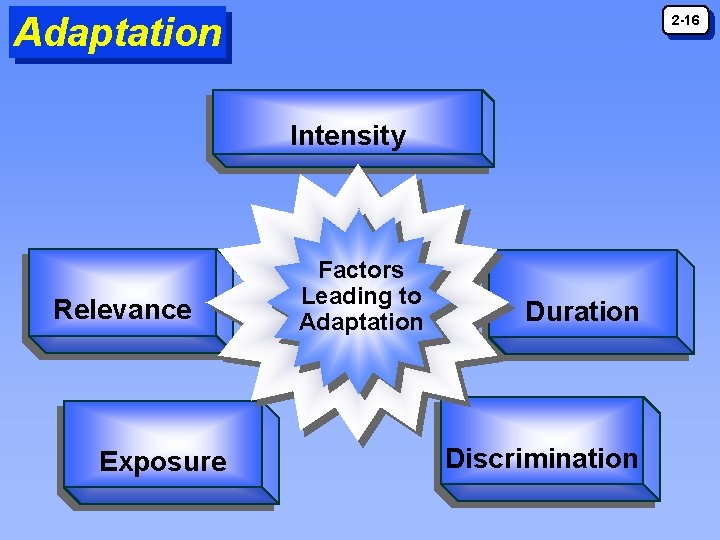
Adaptation 2 -16 Intensity Relevance Exposure Factors Leading to Adaptation Duration Discrimination
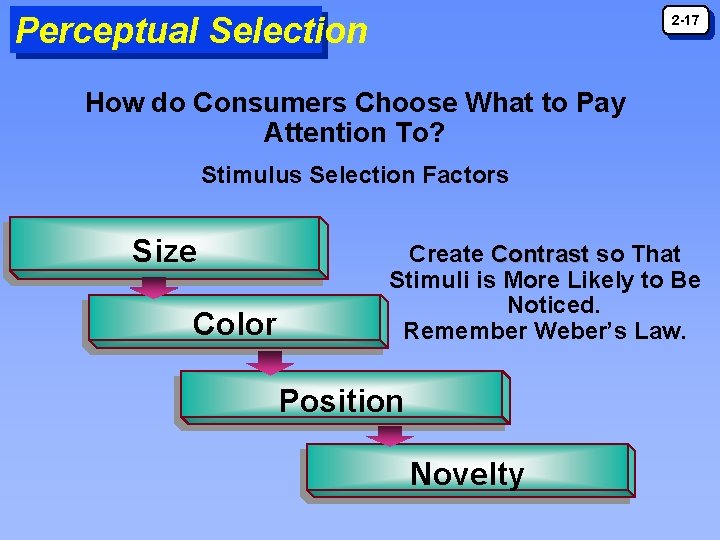
Perceptual Selection 2 -17 How do Consumers Choose What to Pay Attention To? Stimulus Selection Factors Size Color Create Contrast so That Stimuli is More Likely to Be Noticed. Remember Weber’s Law. Position Novelty
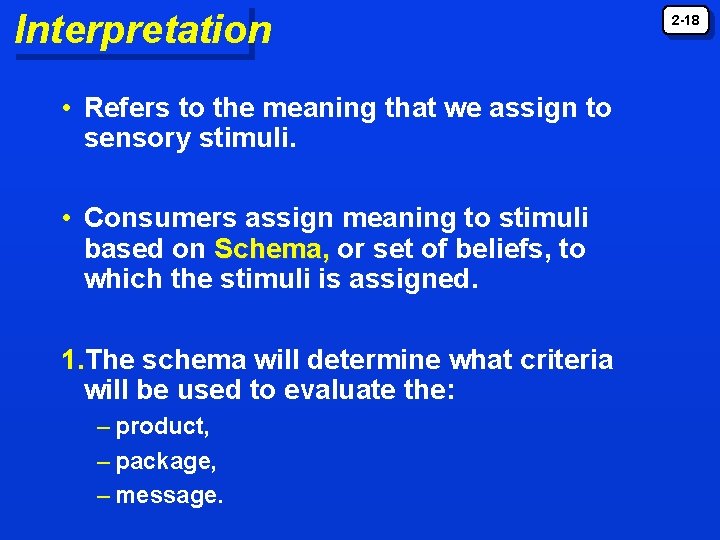
Interpretation • Refers to the meaning that we assign to sensory stimuli. • Consumers assign meaning to stimuli based on Schema, or set of beliefs, to which the stimuli is assigned. 1. The schema will determine what criteria will be used to evaluate the: – product, – package, – message. 2 -18
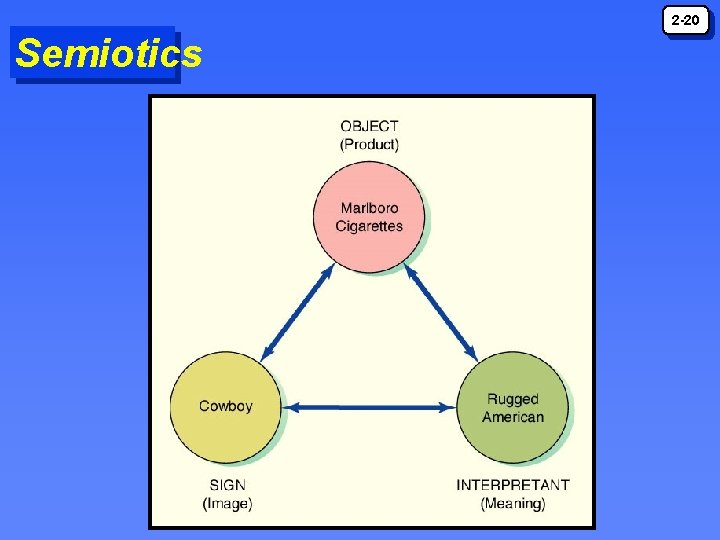
Interpretation • Semiotics: The Symbols Around Us – The study of how consumers interpret the meanings of symbols » Object » Sign » Interpretant 2 -19
2 -20 Semiotics
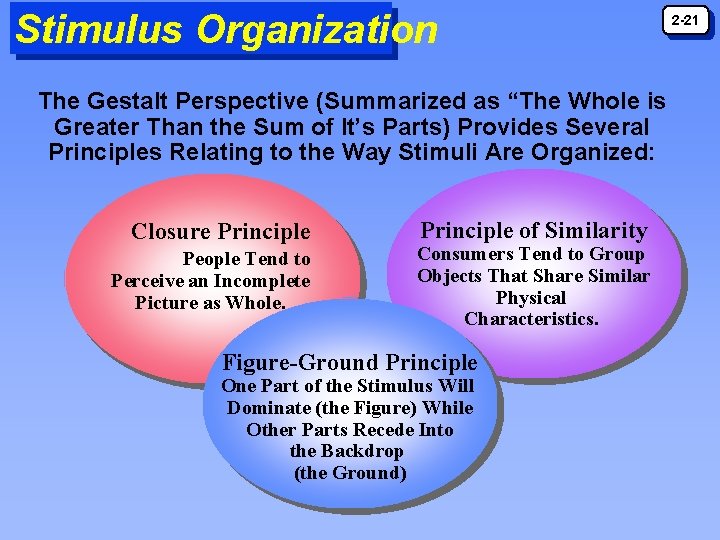
Stimulus Organization The Gestalt Perspective (Summarized as “The Whole is Greater Than the Sum of It’s Parts) Provides Several Principles Relating to the Way Stimuli Are Organized: Closure Principle People Tend to Perceive an Incomplete Picture as Whole. Principle of Similarity Consumers Tend to Group Objects That Share Similar Physical Characteristics. Figure-Ground Principle One Part of the Stimulus Will Dominate (the Figure) While Other Parts Recede Into the Backdrop (the Ground) 2 -21
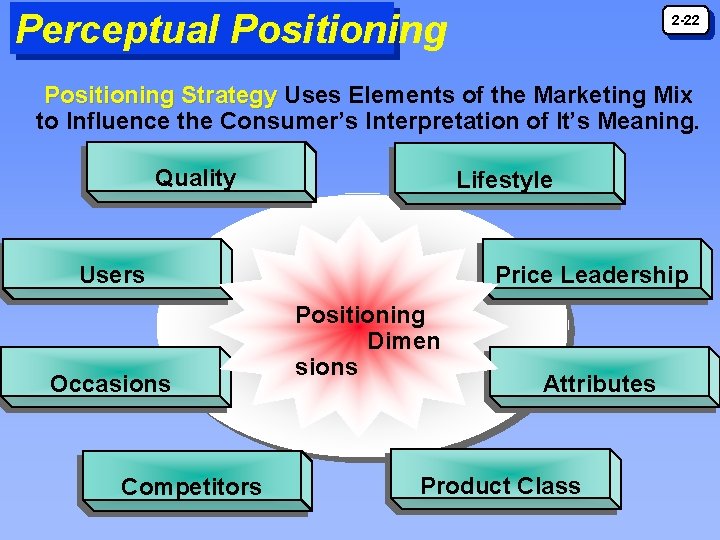
Perceptual Positioning 2 -22 Positioning Strategy Uses Elements of the Marketing Mix to Influence the Consumer’s Interpretation of It’s Meaning. Quality Lifestyle Users Occasions Competitors Price Leadership Positioning Dimen sions Attributes Product Class
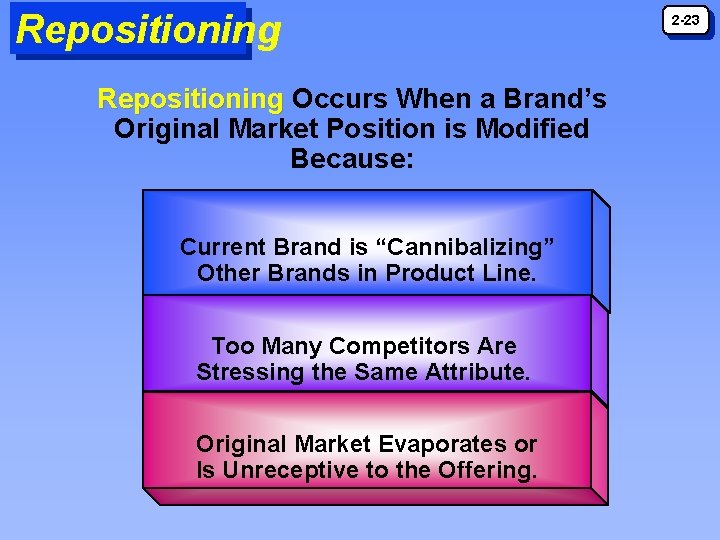
Repositioning Occurs When a Brand’s Original Market Position is Modified Because: Current Brand is “Cannibalizing” Other Brands in Product Line. Too Many Competitors Are Stressing the Same Attribute. Original Market Evaporates or Is Unreceptive to the Offering. 2 -23