
1991 Pinatubo Volcanic Simulation Using ATHAM Model Song
1991 Pinatubo Volcanic Simulation Using ATHAM Model Song Guo, William I Rose, Gregg J S Bluth Michigan Technological University, Houghton, Michigan Co-Workers Christiane Textor 1, Hans-F. Graf 1, Michael Herzorg 2 1 Max-Planck Institute for Meteorology, Hamburg, Germany 2 University of Michigan, Ann Arbor, Michigan
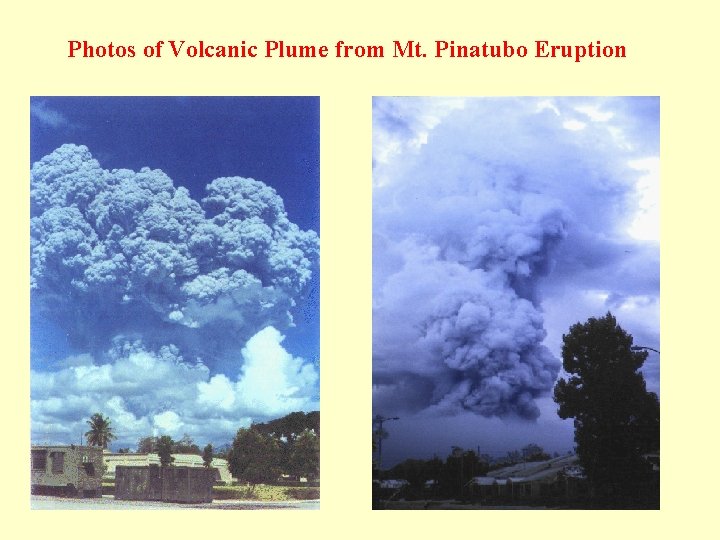
Photos of Volcanic Plume from Mt. Pinatubo Eruption
Outline • Introduction and Motivation • Summary of initial input parameters for ATHAM model simulation • Simulation results from model ATHAM • Comparison with satellite observation • Future Work and Outlook
Introduction and Motivation • Why is remote sensing useful to study volcanic plumes and their interaction with the atmosphere? • Why is modeling work needed to study volcanic plumes and their interaction with atmosphere?
Why Pinatubo? (Objective) • Pinatubo eruption is the largest eruption of the satellite remote sensing era (Hourly GMS, AVHRR, TOMS) • Pinatubo eruption had the largest global environmental and climatic impacts • Pinatubo eruption had the largest impact on stratospheric ozone depletion
Objective (continue) • Some results from ATHAM can be compared with satellite observations – shape of the plume – movement of the plume – gas phase SO 2 amount – gas and particle separation • Some model results cannot be measured by satellite observations - H 2 O entrained from the ambient air - microphysics process - ash-hydrometer aggregation - volcanic gas scavenging
Brief Introduction to ATHAM (Active Tracer High Resolution Atmospheric Model) • 3 d formulated (2 d Cartesian coordinates, 2 d cylindrical coordinates) • 127 × 127 (× 127) grid points • model domain: 50 km vertical, 200 km horizontal • simulation time: several hours
Brief Introduction to ATHAM (Assumptions) • Dynamic equilibrium • Thermal equilibrium • Ash is an active cloud or ice condensation nuclei • Ash is covered with water or ice is treated as a pure hydrometeors
Brief Introduction to ATHAM (Modules) • Dynamics: transport of gas-particle-mixture including tracers (advection and thermodynamics) • Turbulence: entrainment of ambient air • Microphysics: development of ashhydrometeorss • Scavenging: redistribution of volcanic gases in hydrometeors
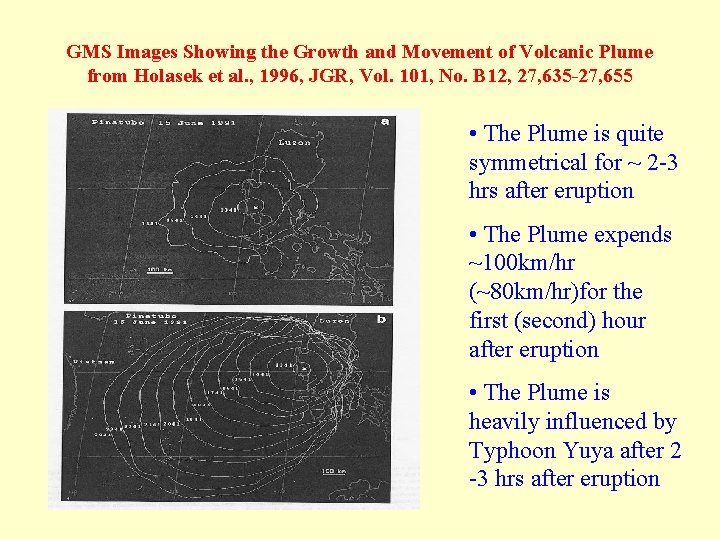
GMS Images Showing the Growth and Movement of Volcanic Plume from Holasek et al. , 1996, JGR, Vol. 101, No. B 12, 27, 635 -27, 655 • The Plume is quite symmetrical for ~ 2 -3 hrs after eruption • The Plume expends ~100 km/hr (~80 km/hr)for the first (second) hour after eruption • The Plume is heavily influenced by Typhoon Yuya after 2 -3 hrs after eruption

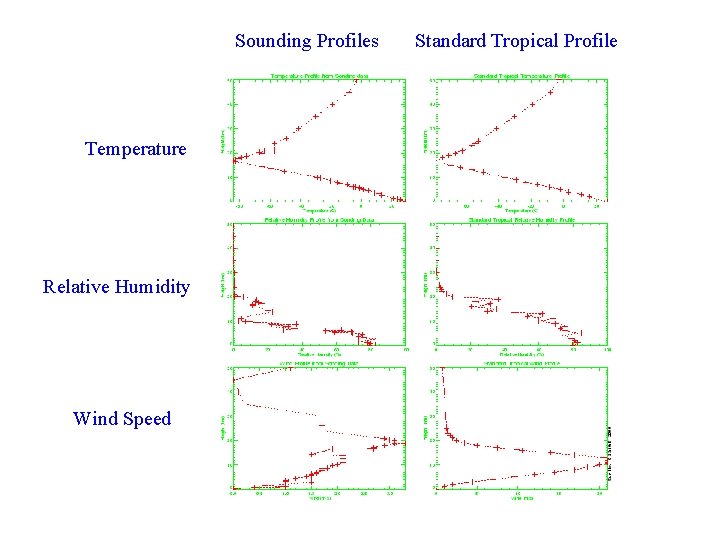
Summary of Input Parameters to ATHAM 2 d cylindrical coordinate simulation is used: Ash size distribution: • simulation time : 120 min. • 2 classes of gamma distribution • duration of eruption: 180 min • radius of smaller ash particle: 25 m Geometry of the volcano: • radius of larger ash particle: 90 m • mountain height: 1200 m Weight percentage: • diameter of the crater: 680 m • small and large particles : 46% each Volcanic forcing: • gas (water vapor): 8% (6. 4%) • magma temperature: 1073 K Atmospheric Profile: • eruption velocity: 360 m/s • no real time observation • mass eruption rate: 4. 5× 10⁸ kg/s • combine pre-eruption in-situ and nearby real-time sounding observation (no hurricane effect is considered for first 2 hours simulation) • density of ash: 1100 kg/m 3
Sounding Profiles Temperature Relative Humidity Wind Speed Standard Tropical Profile
Mt. Pinatubo Volcanic Plume Altitude from Holasek et al. , (1996)
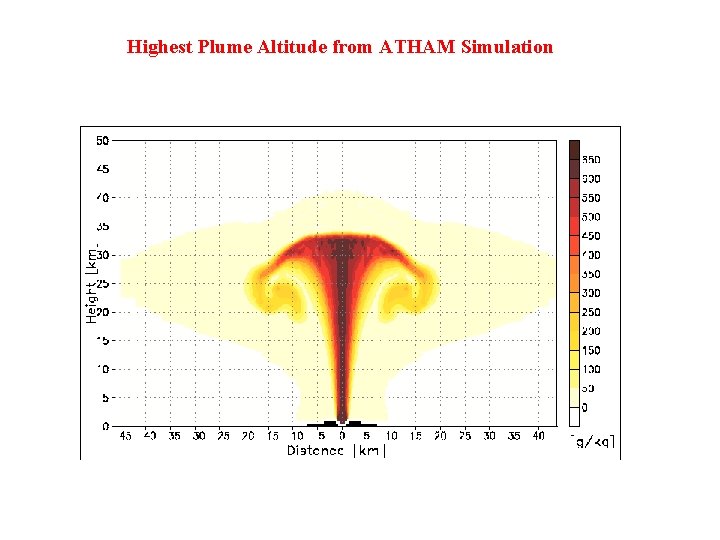
Highest Plume Altitude from ATHAM Simulation
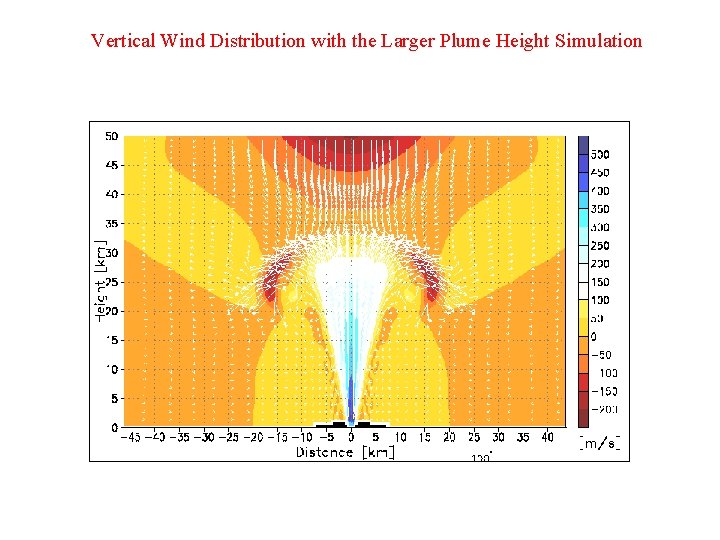
Vertical Wind Distribution with the Larger Plume Height Simulation
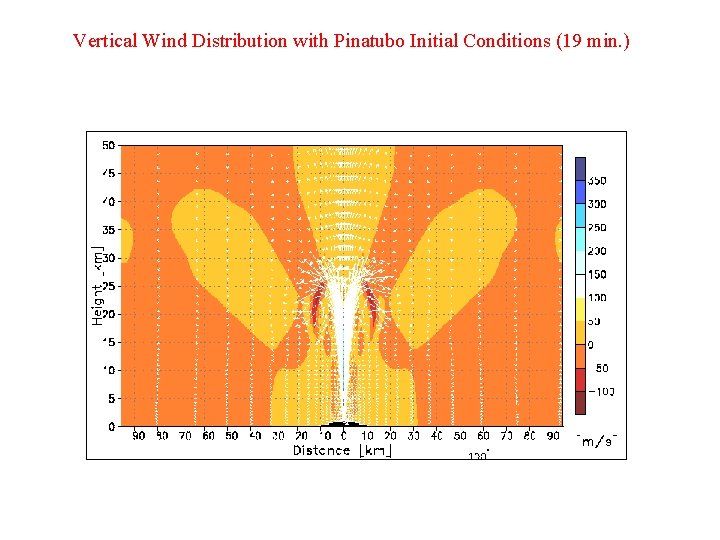
Vertical Wind Distribution with Pinatubo Initial Conditions (19 min. )
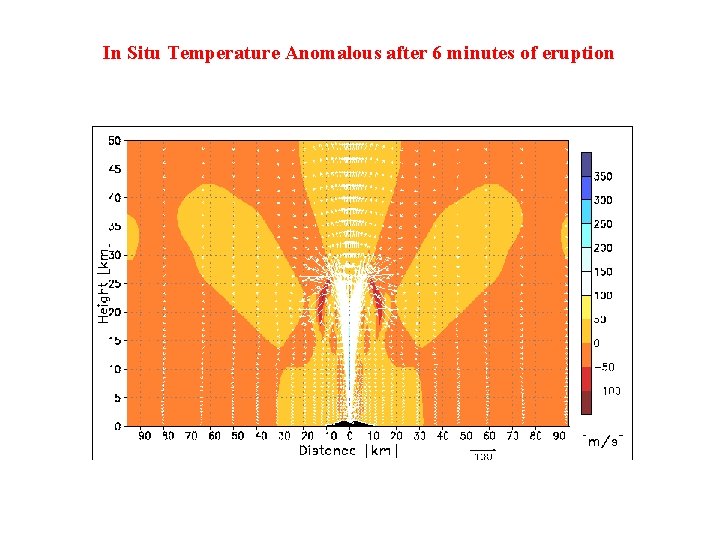
In Situ Temperature Anomalous after 6 minutes of eruption
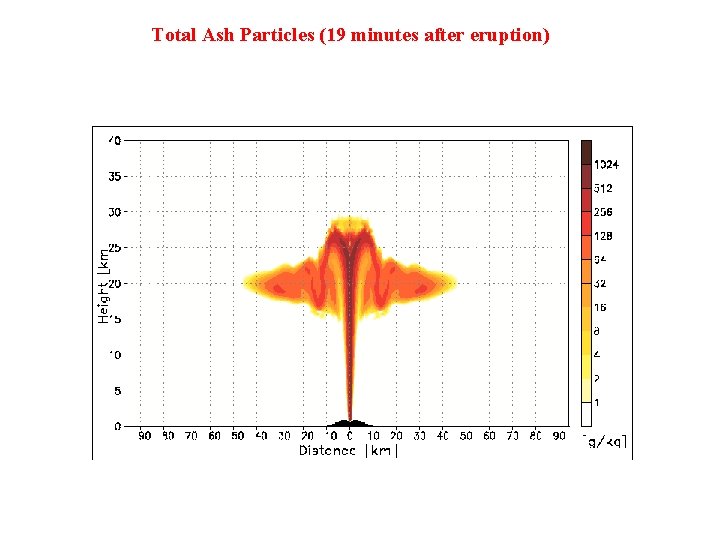
Total Ash Particles (19 minutes after eruption)
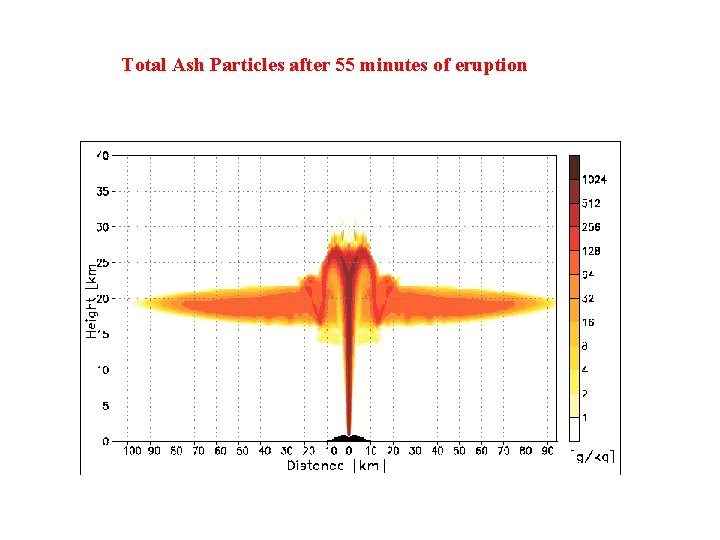
Total Ash Particles after 55 minutes of eruption
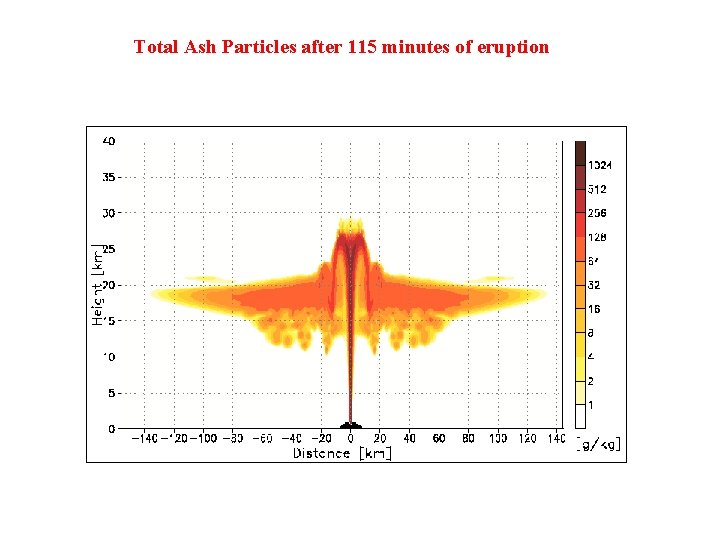
Total Ash Particles after 115 minutes of eruption
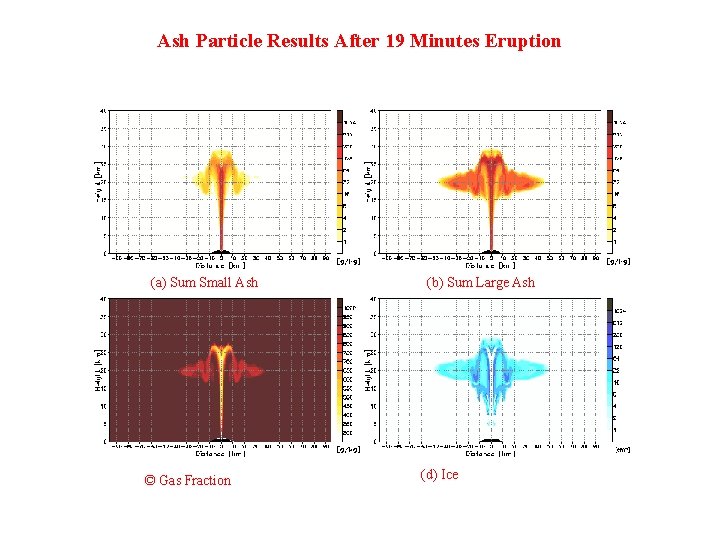
Ash Particle Results After 19 Minutes Eruption (a) Sum Small Ash © Gas Fraction (b) Sum Large Ash (d) Ice
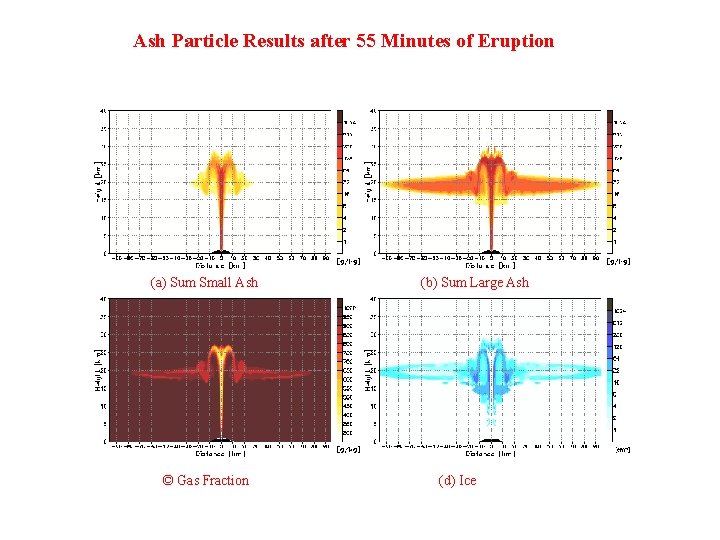
Ash Particle Results after 55 Minutes of Eruption (a) Sum Small Ash © Gas Fraction (b) Sum Large Ash (d) Ice
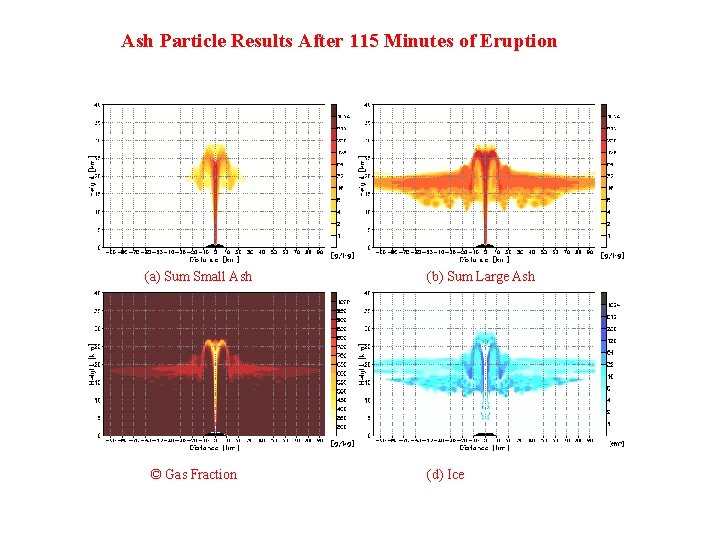
Ash Particle Results After 115 Minutes of Eruption (a) Sum Small Ash © Gas Fraction (b) Sum Large Ash (d) Ice
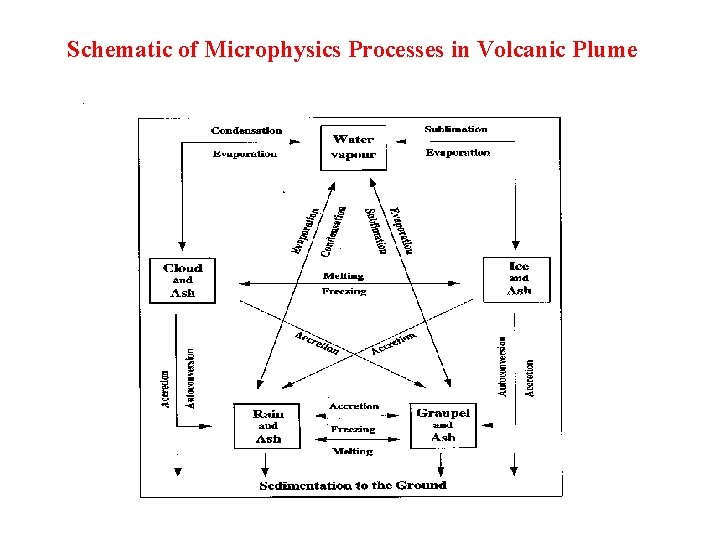
Schematic of Microphysics Processes in Volcanic Plume
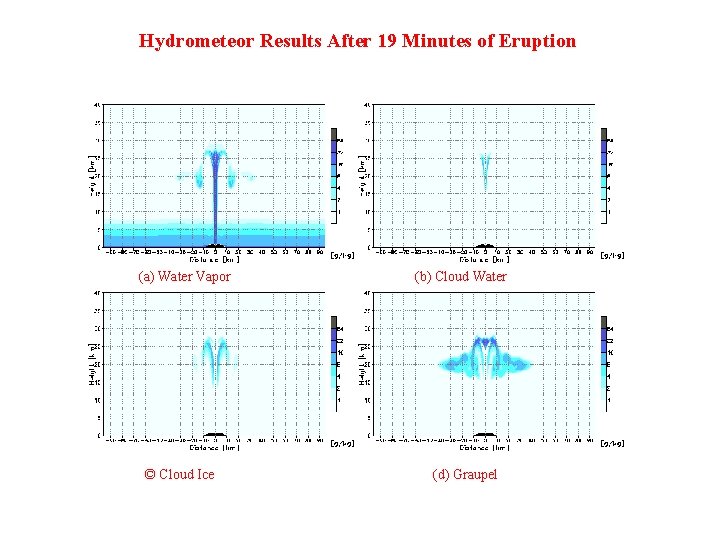
Hydrometeor Results After 19 Minutes of Eruption (a) Water Vapor © Cloud Ice (b) Cloud Water (d) Graupel
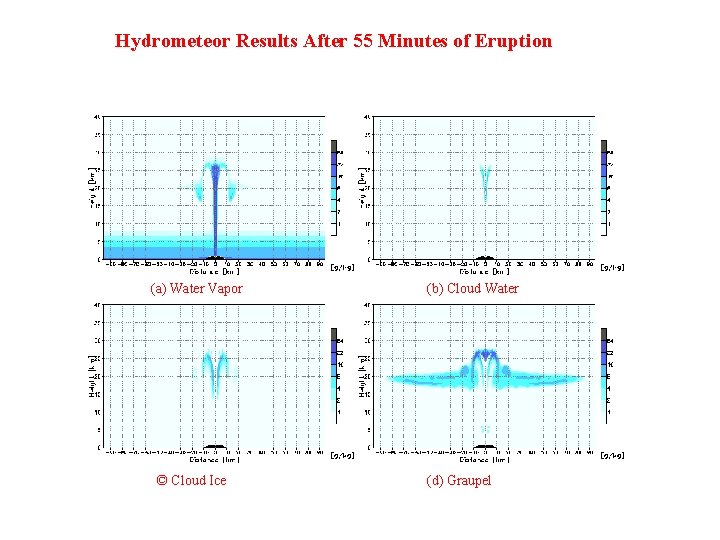
Hydrometeor Results After 55 Minutes of Eruption (a) Water Vapor © Cloud Ice (b) Cloud Water (d) Graupel
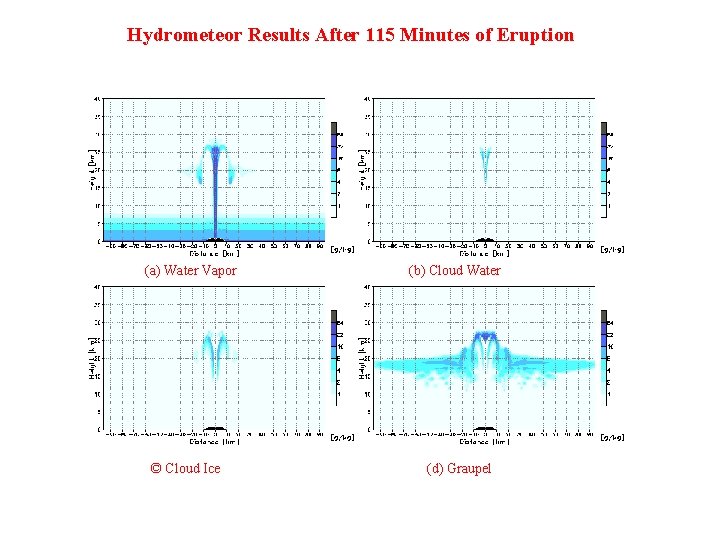
Hydrometeor Results After 115 Minutes of Eruption (a) Water Vapor © Cloud Ice (b) Cloud Water (d) Graupel
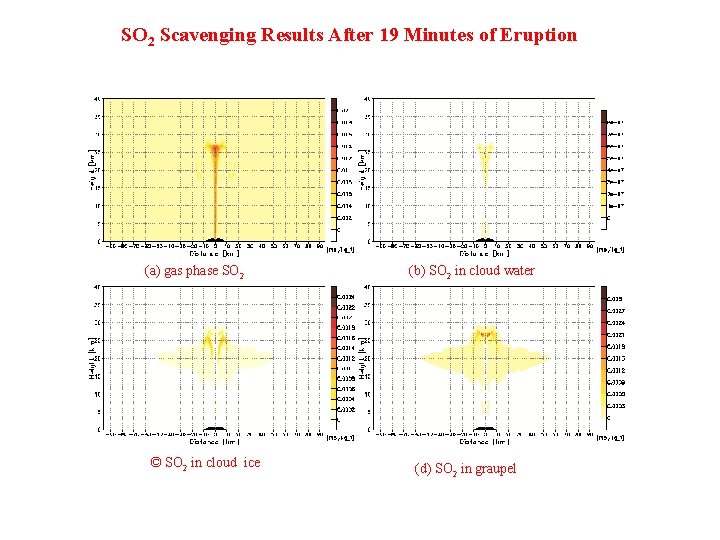
SO 2 Scavenging Results After 19 Minutes of Eruption (a) gas phase SO 2 © SO 2 in cloud ice (b) SO 2 in cloud water (d) SO 2 in graupel
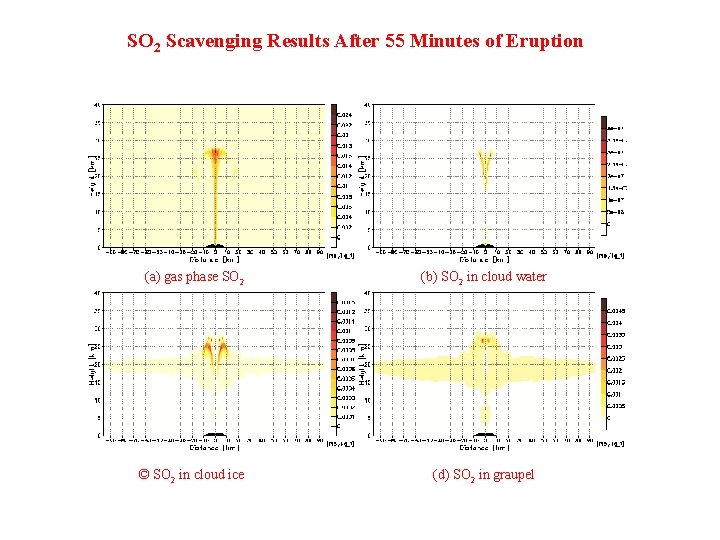
SO 2 Scavenging Results After 55 Minutes of Eruption (a) gas phase SO 2 (b) SO 2 in cloud water © SO 2 in cloud ice (d) SO 2 in graupel
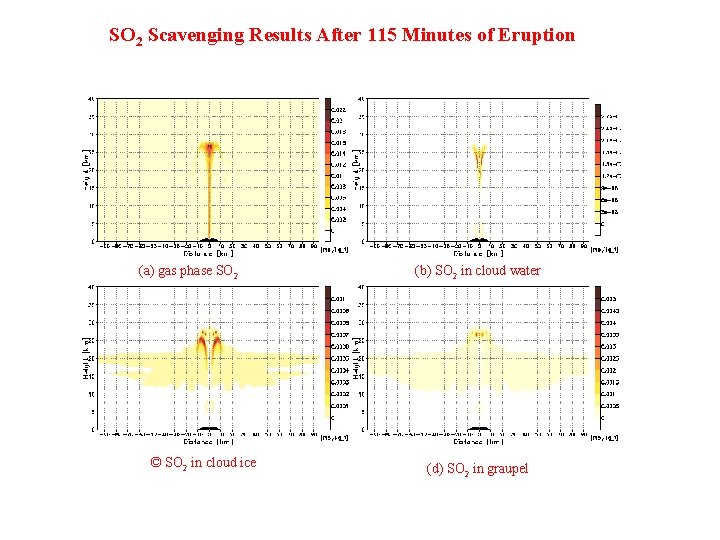
SO 2 Scavenging Results After 115 Minutes of Eruption (a) gas phase SO 2 © SO 2 in cloud ice (b) SO 2 in cloud water (d) SO 2 in graupel
Summary of intermediate results • Ice phase hydrometeors (ash-hydrometeor aggregations) are dominant, larger ash particles travel horizontally faster than small ones • The Plume’s horizontal travelling velocity (most probably caused by gravity) is quite consistent with the satellite image • Gas phase volcanic gases (SO 2, HCl, H 2 S) coexist with different gas-hydrometeor mixtures • Vertical falling particle velocity increases due to the ashhydrometeor aggregation
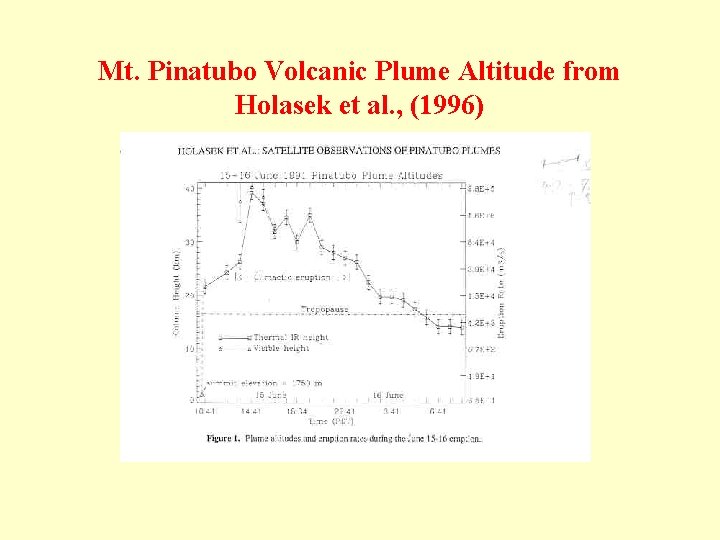
Summary of intermediate results (continue) • No significant gas-particle separation is observed. • Possible explanations: - 2 d symmetrical simulation (no wind effect included) - simulation time is too short - no typhoon Yunya influence yet • Plume height is lower than Holasek et al. (1996) suggest. • Possible explanations: - according to the dynamic, turbulent, microphysics processes considered, the plume cannot reach ~40 km with the known eruption rate - uncertainties from initial input conditions (atmospheric temperature profile, vent temperature and diameter, weight percentage …)
Outlook and Future Work • 2 d cartesian coordinate simulation (wind effect) is needed, especially for longer simulation with potential influence from typhoon Yunya • 3 d simulation is necessary for a more realistic and better description • assemble and confirm initial input conditions more precisely, with sensitivity tests to match the plume with the satellite results • laboratory study of incorporation and adsorption of volcanic gases into ash-hydrometeor aggregates • comparison of gas phase SO 2 with TOMS results, and considering SO 2 releases due to ice sublimation, to study the variation and fate of SO 2 in the volcanic cloud • comparison of ash property results with AVHRR and TOMS results more in detail • study the large particle removal rate by increasing the particle size • if possible, use a regional chemical model to further study SO 2 transportation • add more tracers (? )
- Slides: 33