
1960 S JOHN F KENNEDY New Frontier Kennedys

- Slides: 28
1960 S
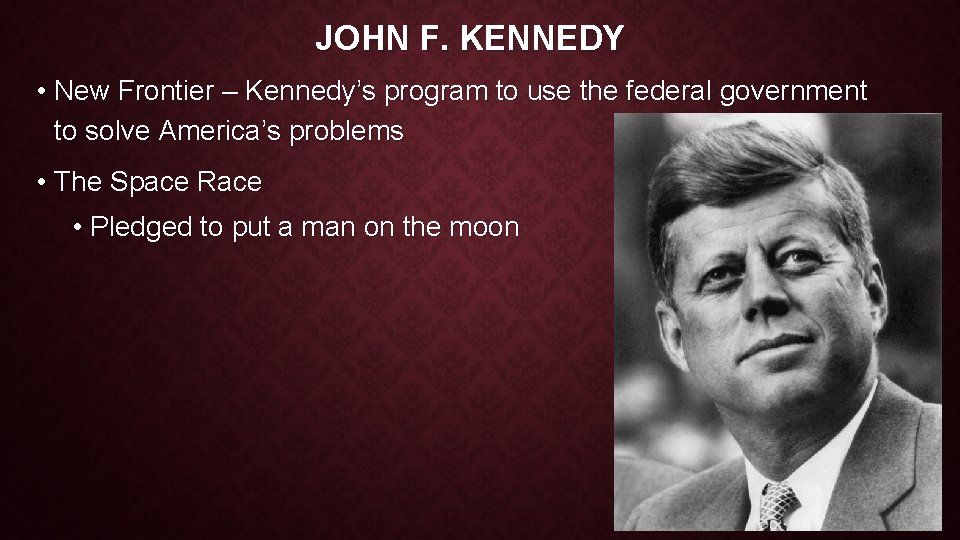
JOHN F. KENNEDY • New Frontier – Kennedy’s program to use the federal government to solve America’s problems • The Space Race • Pledged to put a man on the moon
• Rights for the Disabled • Started the Special Olympics • Rights for Women • Equal Pay Act of 1963
LYNDON B. JOHNSON • The “War on Poverty” • Economic Opportunity Act of 1964 • Jobs Corp • VISTA (Volunteers in Service to America) – to help poor areas
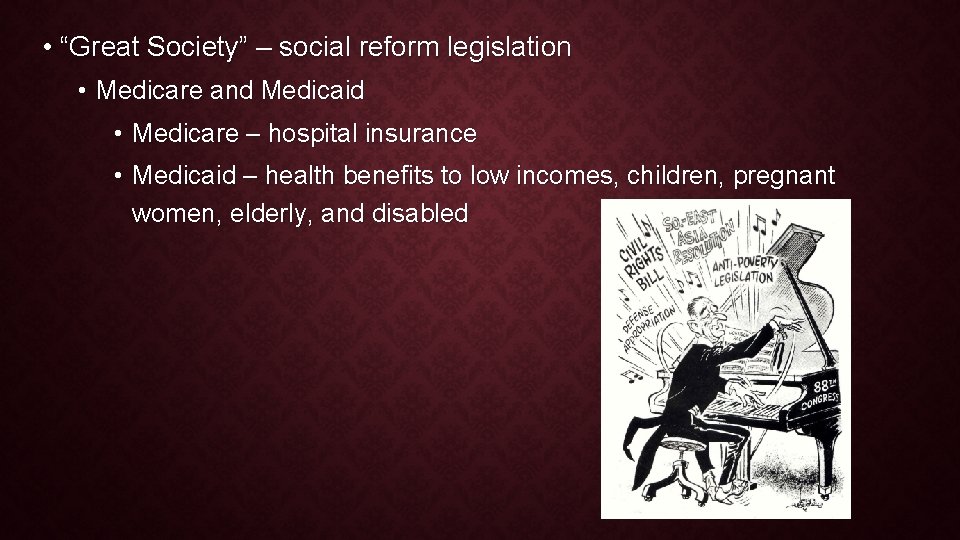
• “Great Society” – social reform legislation • Medicare and Medicaid • Medicare – hospital insurance • Medicaid – health benefits to low incomes, children, pregnant women, elderly, and disabled
• Federal Aid to Education • Project Head Start • Aid to Cities • Housing and Urban Development Act • Immigration Act of 1965 • Ended discriminatory “national origins” system
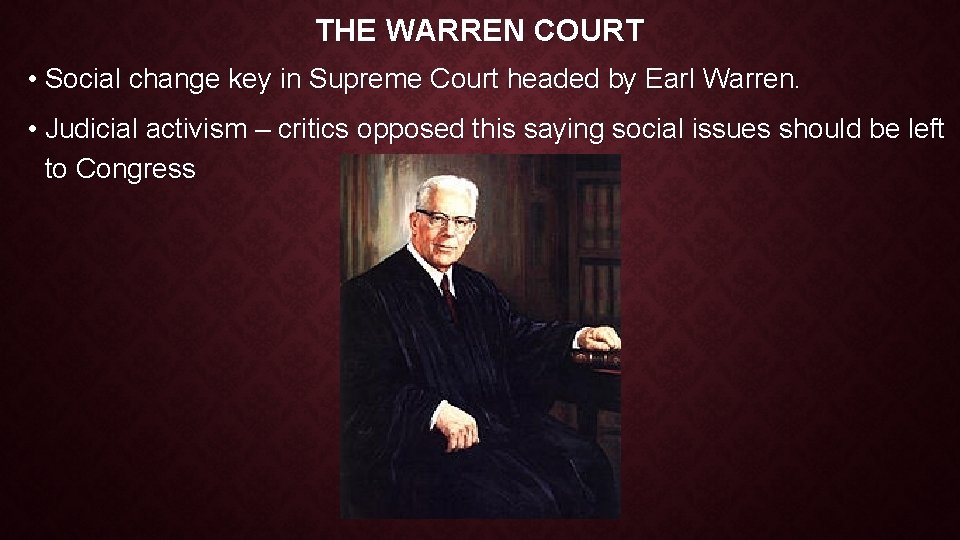
THE WARREN COURT • Social change key in Supreme Court headed by Earl Warren. • Judicial activism – critics opposed this saying social issues should be left to Congress
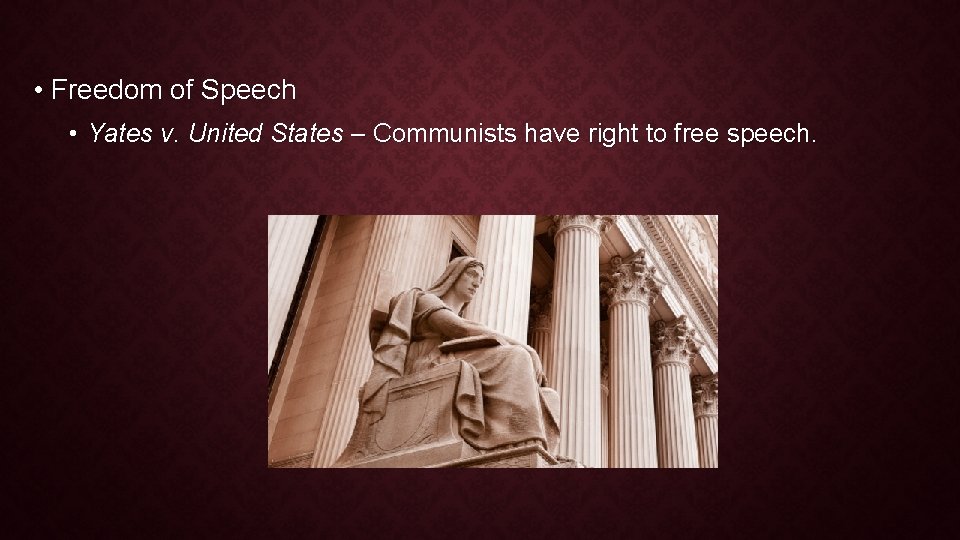
• Freedom of Speech • Yates v. United States – Communists have right to free speech.
• Freedom of Speech • Tinker v. Des Moines – students have freedom of speech as long as it doesn’t disrupt classroom instruction.
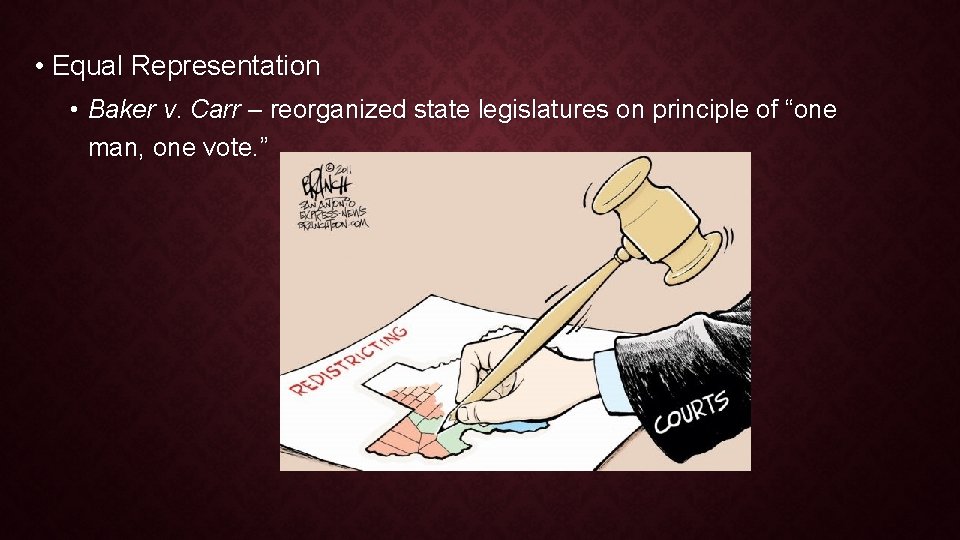
• Equal Representation • Baker v. Carr – reorganized state legislatures on principle of “one man, one vote. ”
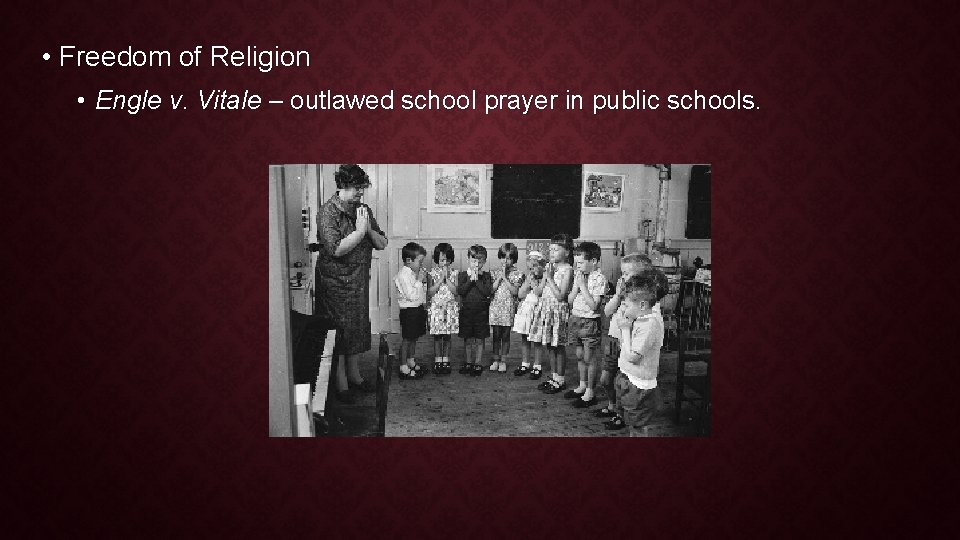
• Freedom of Religion • Engle v. Vitale – outlawed school prayer in public schools.
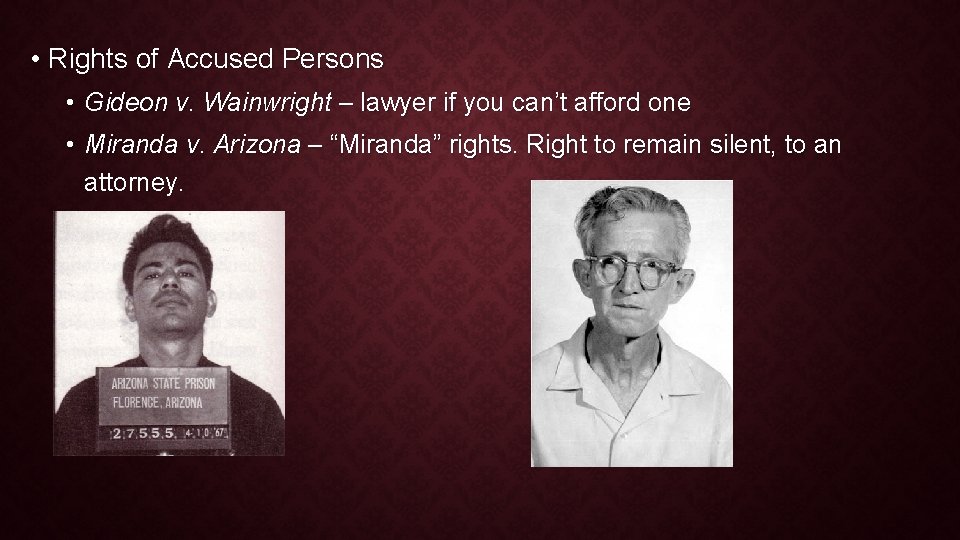
• Rights of Accused Persons • Gideon v. Wainwright – lawyer if you can’t afford one • Miranda v. Arizona – “Miranda” rights. Right to remain silent, to an attorney.
VIETNAM WAR • Vietnam, a former French colony, was divided into two sections in 1954 by the Geneva Accords.
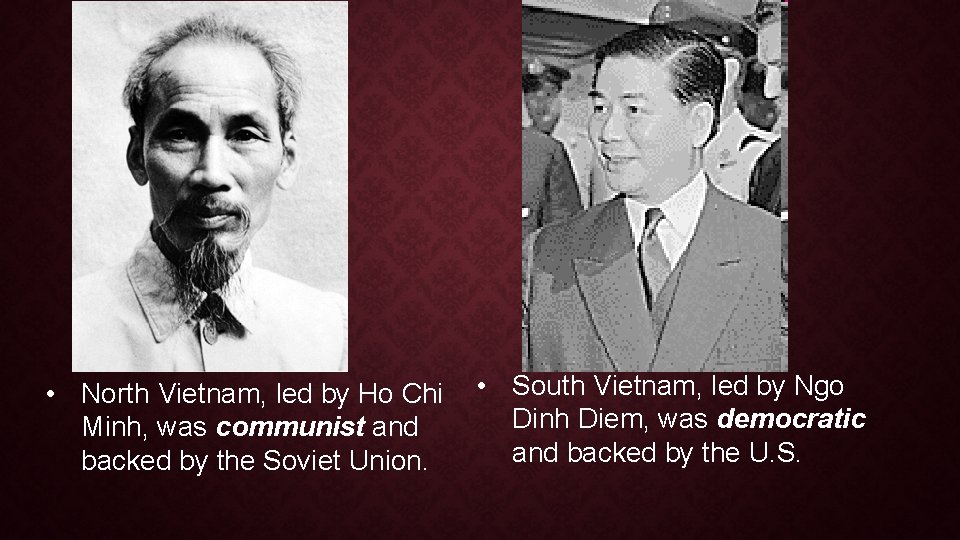
• North Vietnam, led by Ho Chi Minh, was communist and backed by the Soviet Union. • South Vietnam, led by Ngo Dinh Diem, was democratic and backed by the U. S.
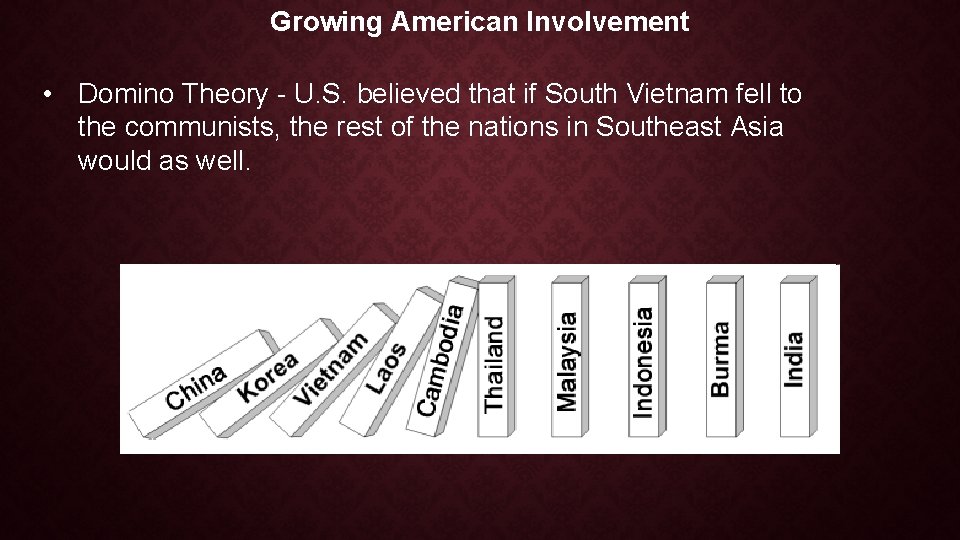
Growing American Involvement • Domino Theory - U. S. believed that if South Vietnam fell to the communists, the rest of the nations in Southeast Asia would as well.
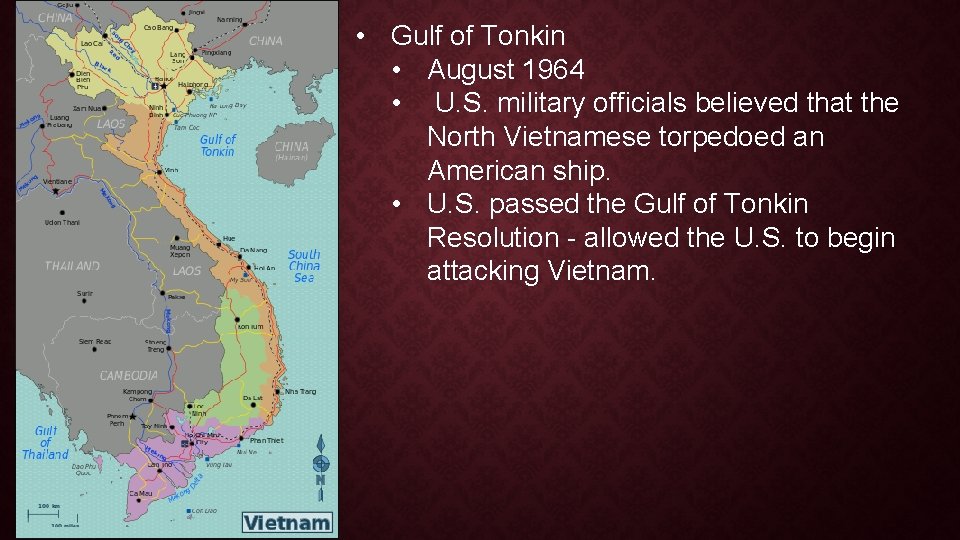
• Gulf of Tonkin • August 1964 • U. S. military officials believed that the North Vietnamese torpedoed an American ship. • U. S. passed the Gulf of Tonkin Resolution - allowed the U. S. to begin attacking Vietnam.
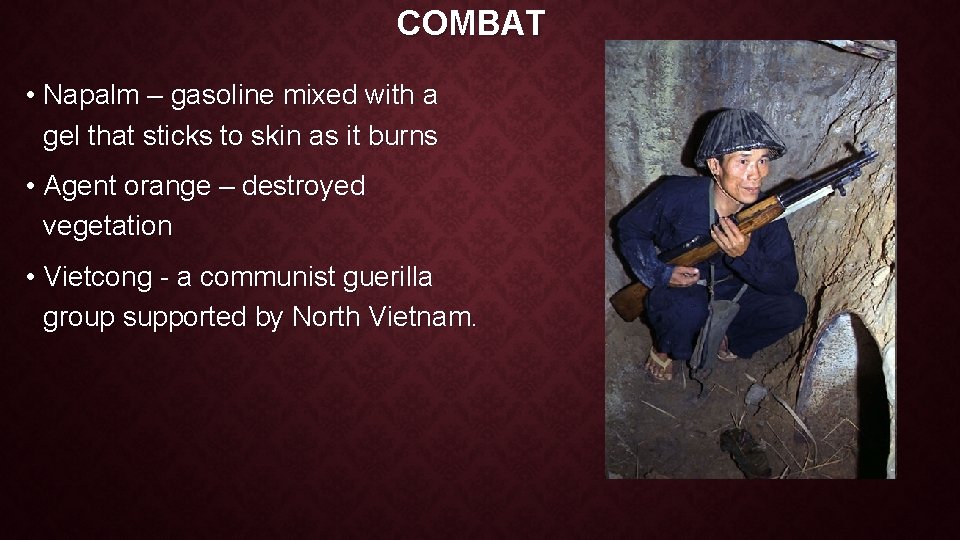
COMBAT • Napalm – gasoline mixed with a gel that sticks to skin as it burns • Agent orange – destroyed vegetation • Vietcong - a communist guerilla group supported by North Vietnam.
• My Lai • American destruction of the village of My Lai.
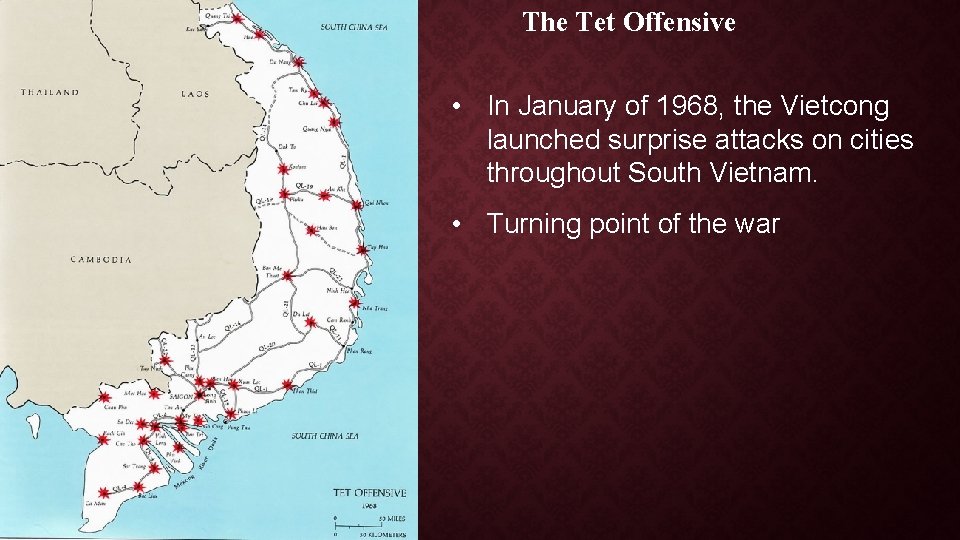
The Tet Offensive • In January of 1968, the Vietcong launched surprise attacks on cities throughout South Vietnam. • Turning point of the war
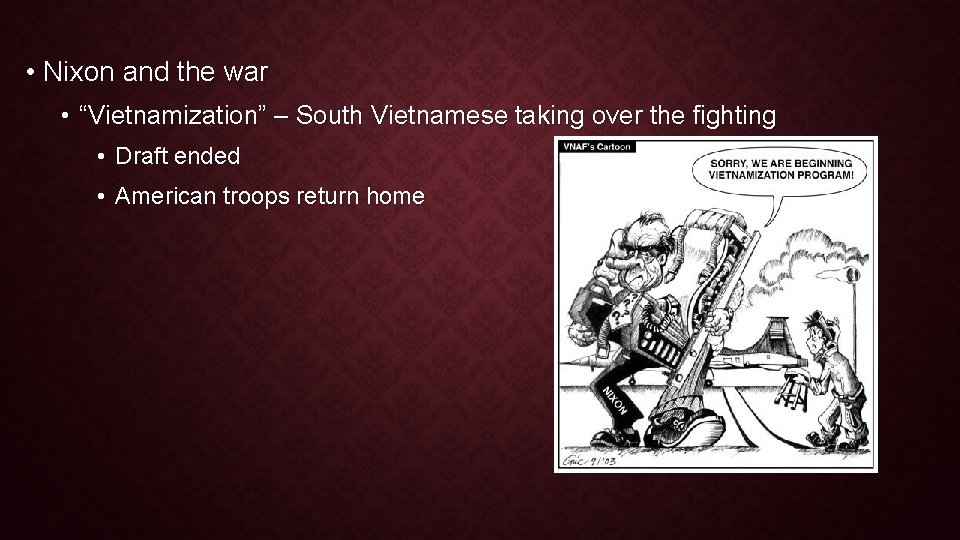
• Nixon and the war • “Vietnamization” – South Vietnamese taking over the fighting • Draft ended • American troops return home
• Paris Peace Accords • January 1973 • Dr. Henry Kissinger negotiated • April 1975, North Vietnam took Saigon – ending the war. • https: //www. youtube. com/watch? v=og 6 bi 3 cgf 5 g&t=76 s
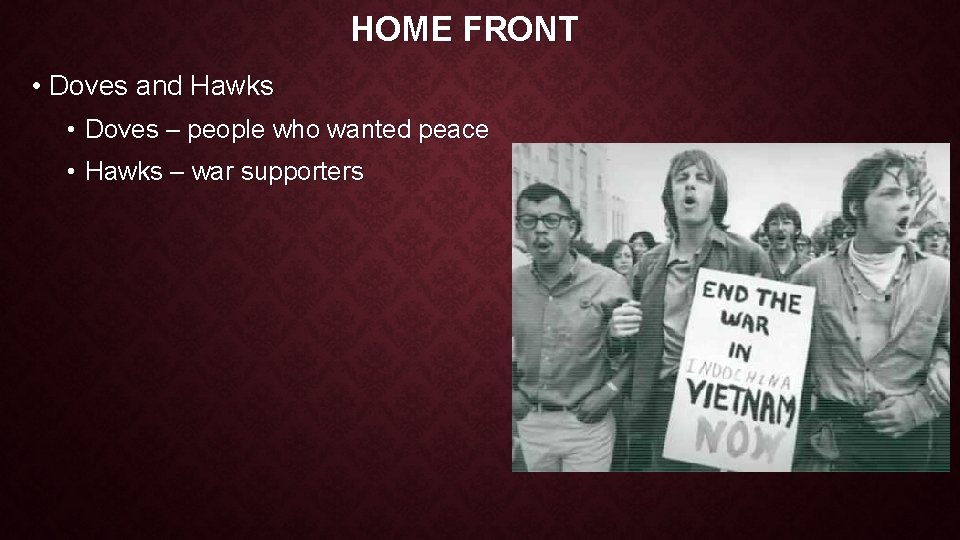
HOME FRONT • Doves and Hawks • Doves – people who wanted peace • Hawks – war supporters
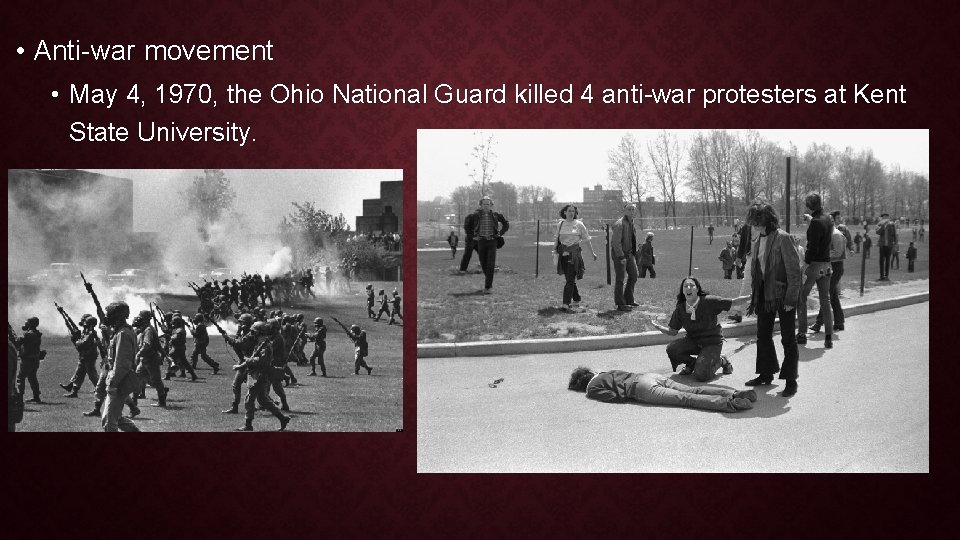
• Anti-war movement • May 4, 1970, the Ohio National Guard killed 4 anti-war protesters at Kent State University.
CONSEQUENCES OF THE WAR • 58, 000 Americans killed • War extended into Cambodia • Khmer Rouge – murder of 2 -4 million Cambodians • War Powers Act – limit president’s power to send troops overseas
WOMEN • Women’s Liberation Movement • Focused on economic and social equality • The Feminine Mystique – Betty Friedan. Challenged belief women just wanted to be housewives and mothers • National Organization of Women (NOW)
• Goals • Education • Equal Opportunity in Education Act (Title IX) – no sexual discrimination in educational facilities. • Employment
• Equal Rights Amendment (ERA) • Guarantees women the same rights as men • Opposed by women who preferred traditional roles • Phyllis Schlafly • Did not pass
• Abortion • Roe v. Wade • Made abortions for the first three months of pregnancy legal. • SC ruled women had a constitutional right to privacy.