
1954 1975 THE VIETNAM WAR BACKGROUND TO THE
1954 -1975 THE VIETNAM WAR
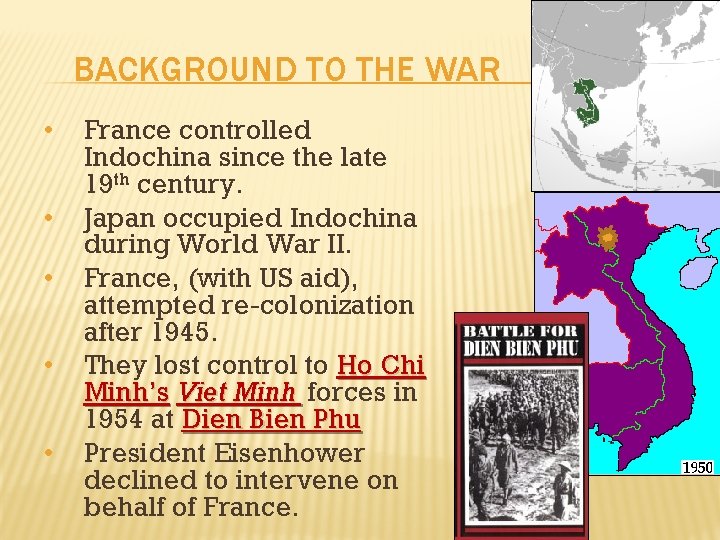
BACKGROUND TO THE WAR • • • France controlled Indochina since the late 19 th century. Japan occupied Indochina during World War II. France, (with US aid), attempted re-colonization after 1945. They lost control to Ho Chi Minh’s Viet Minh forces in 1954 at Dien Bien Phu President Eisenhower declined to intervene on behalf of France.
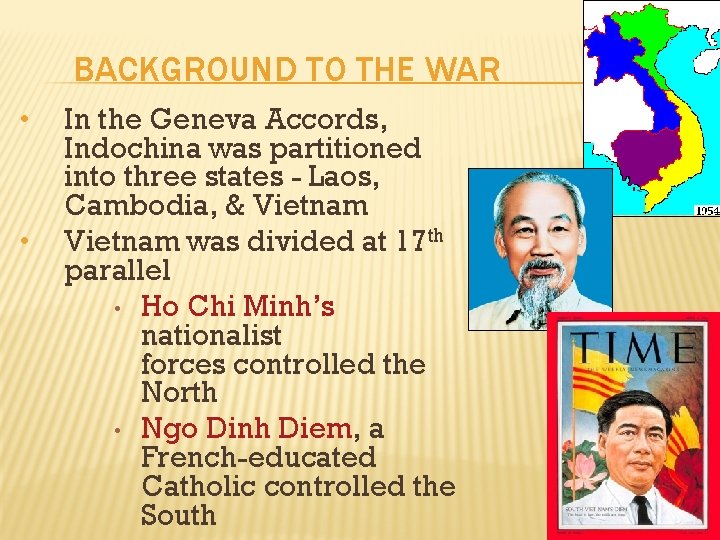
BACKGROUND TO THE WAR • • In the Geneva Accords, Indochina was partitioned into three states - Laos, Cambodia, & Vietnam was divided at 17 th parallel • Ho Chi Minh’s nationalist forces controlled the North • Ngo Dinh Diem, a French-educated Catholic controlled the South
U. S. MILITARY INVOLVEMENT BEGINS • A date was set for democratic elections to reunify Vietnam • Diem backed out of the elections, leading to military conflict between North and South • The U. S. aided Diem’s government • Eisenhower sent financial and military aid • 675 U. S. Army advisors sent by 1960.
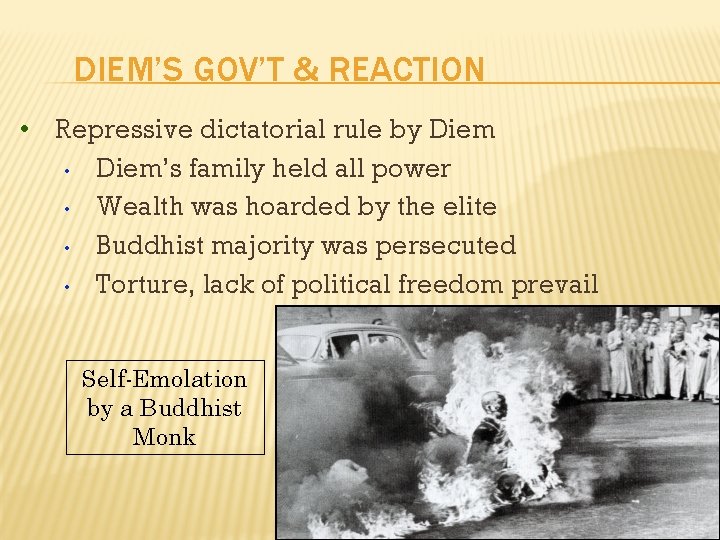
DIEM’S GOV’T & REACTION • Repressive dictatorial rule by Diem • Diem’s family held all power • Wealth was hoarded by the elite • Buddhist majority was persecuted • Torture, lack of political freedom prevail Self-Emolation by a Buddhist Monk
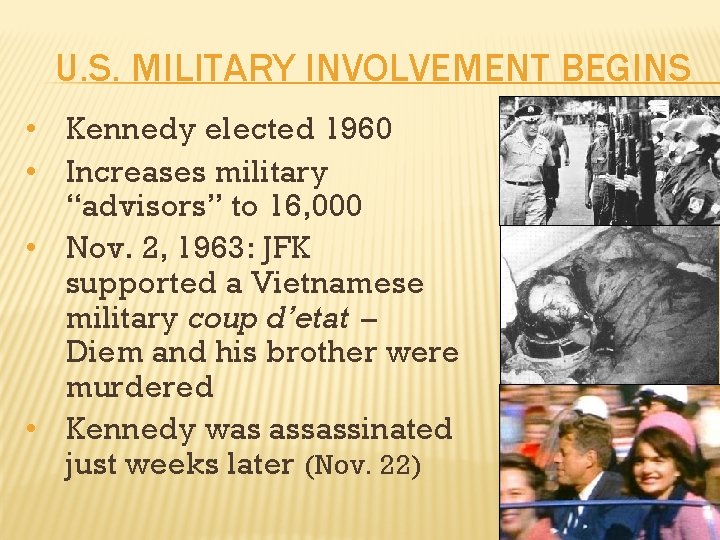
U. S. MILITARY INVOLVEMENT BEGINS • Kennedy elected 1960 • Increases military “advisors” to 16, 000 • Nov. 2, 1963: JFK supported a Vietnamese military coup d’etat – Diem and his brother were murdered • Kennedy was assassinated just weeks later (Nov. 22)
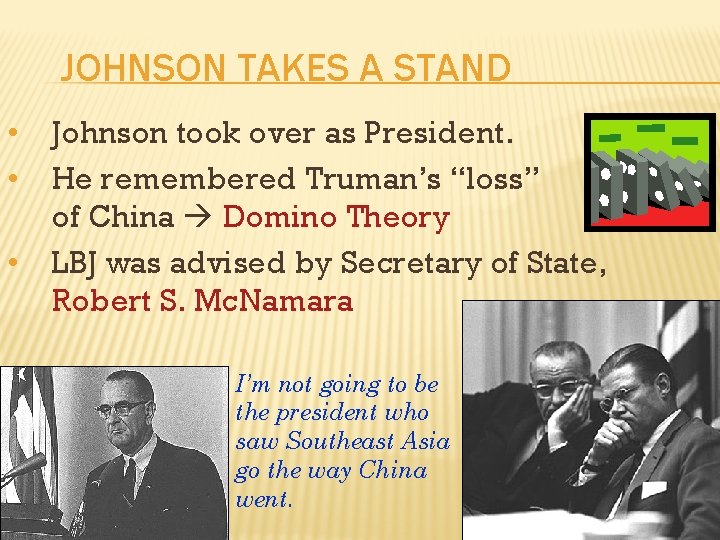
JOHNSON TAKES A STAND • • • Johnson took over as President. He remembered Truman’s “loss” of China Domino Theory LBJ was advised by Secretary of State, Robert S. Mc. Namara I’m not going to be the president who saw Southeast Asia go the way China went.
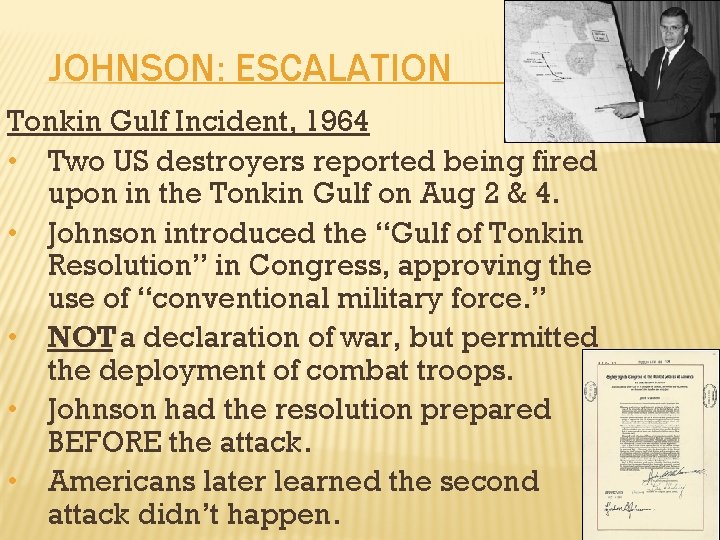
JOHNSON: ESCALATION Tonkin Gulf Incident, 1964 • Two US destroyers reported being fired upon in the Tonkin Gulf on Aug 2 & 4. • Johnson introduced the “Gulf of Tonkin Resolution” in Congress, approving the use of “conventional military force. ” • NOT a declaration of war, but permitted the deployment of combat troops. • Johnson had the resolution prepared BEFORE the attack. • Americans later learned the second attack didn’t happen.
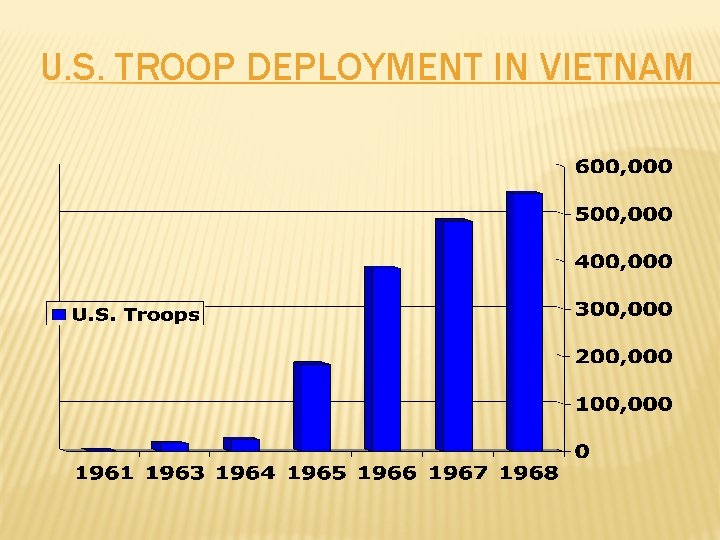
U. S. TROOP DEPLOYMENT IN VIETNAM
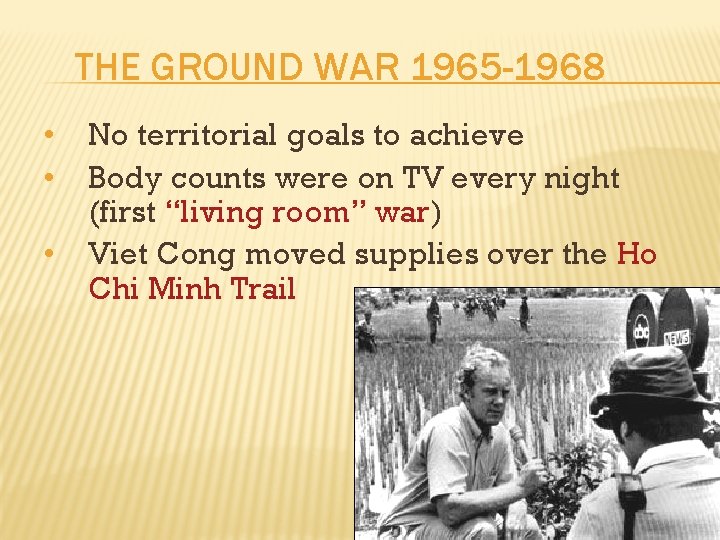
THE GROUND WAR 1965 -1968 • • • No territorial goals to achieve Body counts were on TV every night (first “living room” war) Viet Cong moved supplies over the Ho Chi Minh Trail
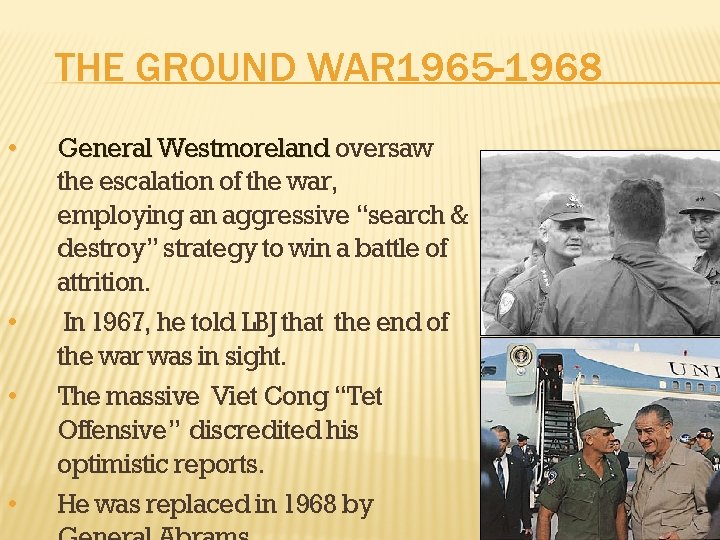
THE GROUND WAR 1965 -1968 • • General Westmoreland oversaw the escalation of the war, employing an aggressive “search & destroy” strategy to win a battle of attrition. In 1967, he told LBJ that the end of the war was in sight. The massive Viet Cong “Tet Offensive” discredited his optimistic reports. He was replaced in 1968 by
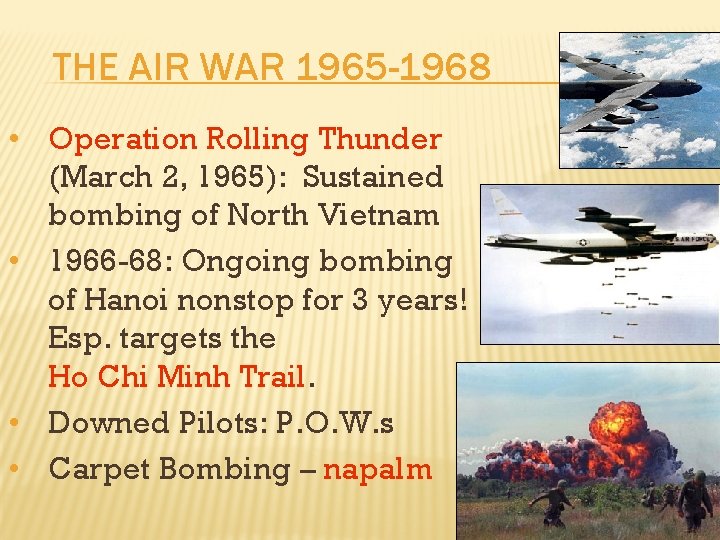
THE AIR WAR 1965 -1968 • Operation Rolling Thunder (March 2, 1965): Sustained bombing of North Vietnam • 1966 -68: Ongoing bombing of Hanoi nonstop for 3 years! Esp. targets the Ho Chi Minh Trail. • Downed Pilots: P. O. W. s • Carpet Bombing – napalm
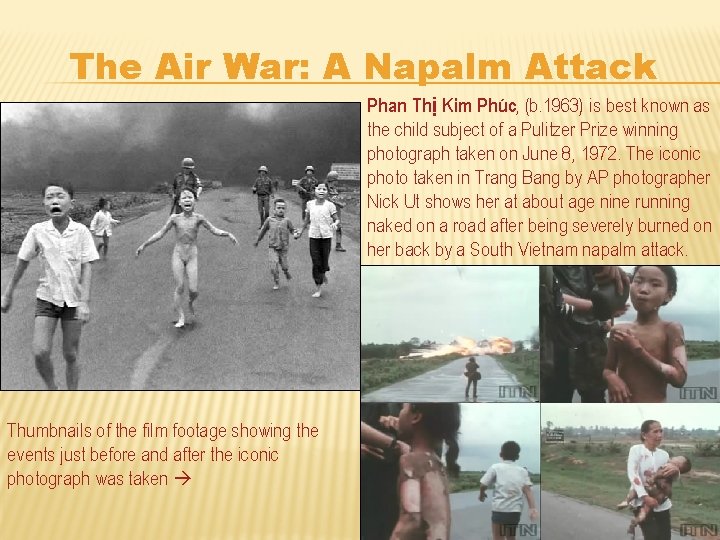
The Air War: A Napalm Attack Phan Thị Kim Phúc, (b. 1963) is best known as the child subject of a Pulitzer Prize winning photograph taken on June 8, 1972. The iconic photo taken in Trang Bang by AP photographer Nick Ut shows her at about age nine running naked on a road after being severely burned on her back by a South Vietnam napalm attack. Thumbnails of the film footage showing the events just before and after the iconic photograph was taken
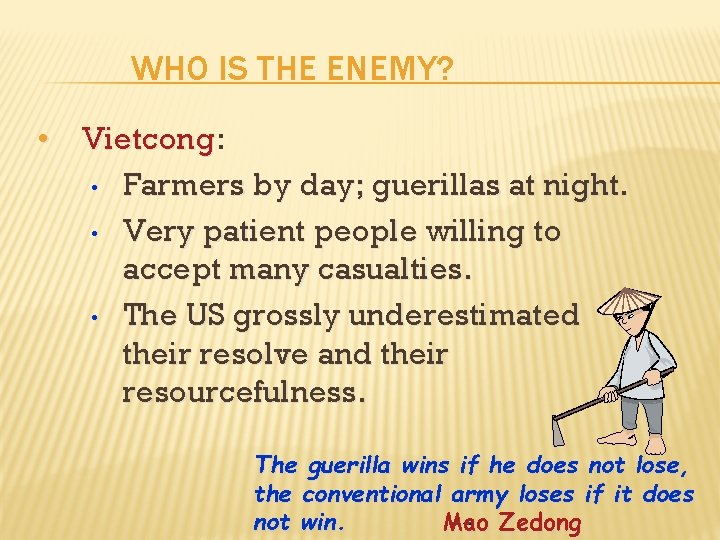
WHO IS THE ENEMY? • Vietcong: Vietcong • Farmers by day; guerillas at night. • Very patient people willing to accept many casualties. • The US grossly underestimated their resolve and their resourcefulness. The guerilla wins if he does not lose, the conventional army loses if it does not win. Mao -- Zedong
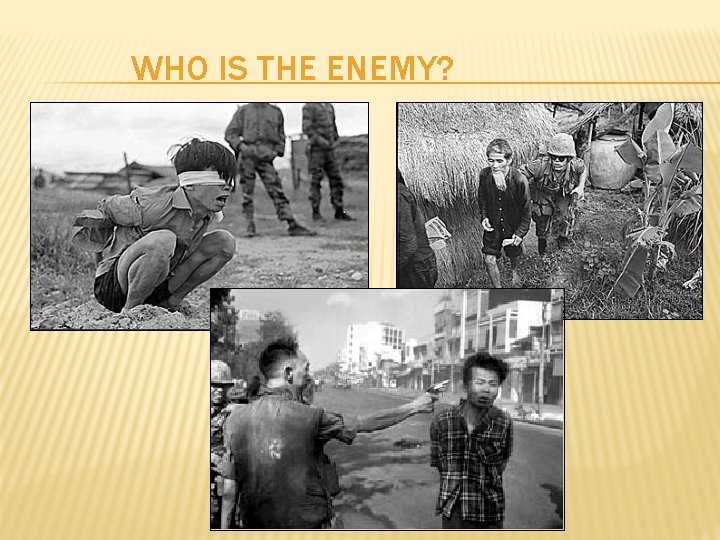
WHO IS THE ENEMY?
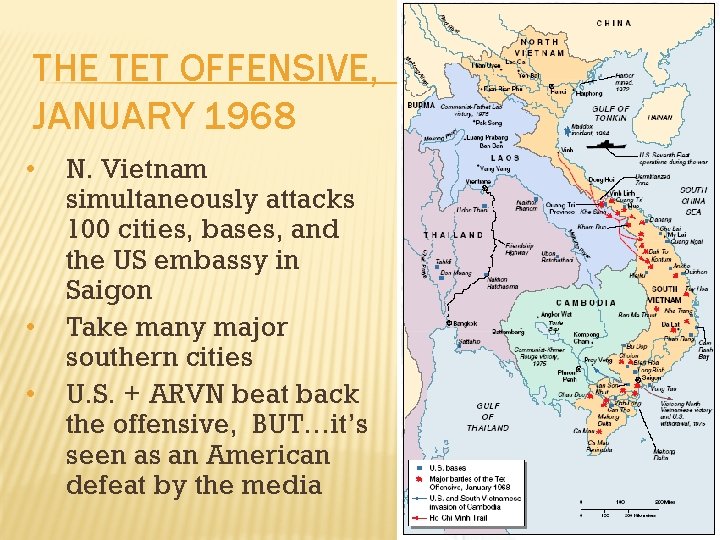
THE TET OFFENSIVE, JANUARY 1968 • • • N. Vietnam simultaneously attacks 100 cities, bases, and the US embassy in Saigon Take many major southern cities U. S. + ARVN beat back the offensive, BUT…it’s seen as an American defeat by the media
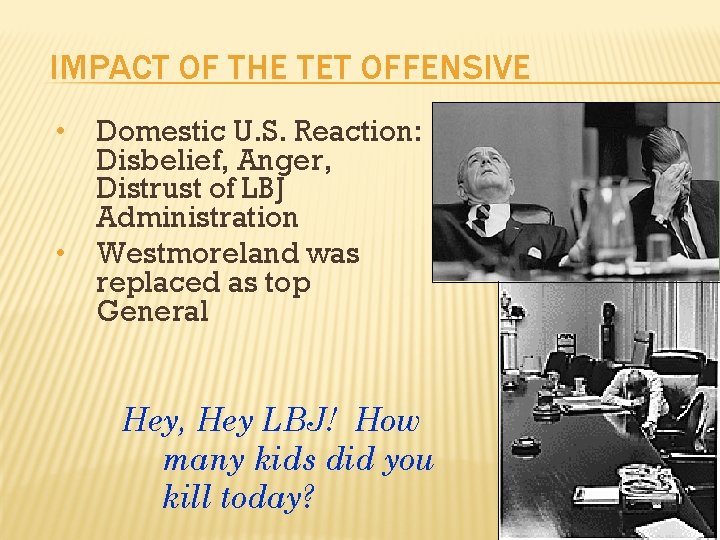
IMPACT OF THE TET OFFENSIVE • Domestic U. S. Reaction: Disbelief, Anger, Distrust of LBJ Administration • Westmoreland was replaced as top General Hey, Hey LBJ! How many kids did you kill today?
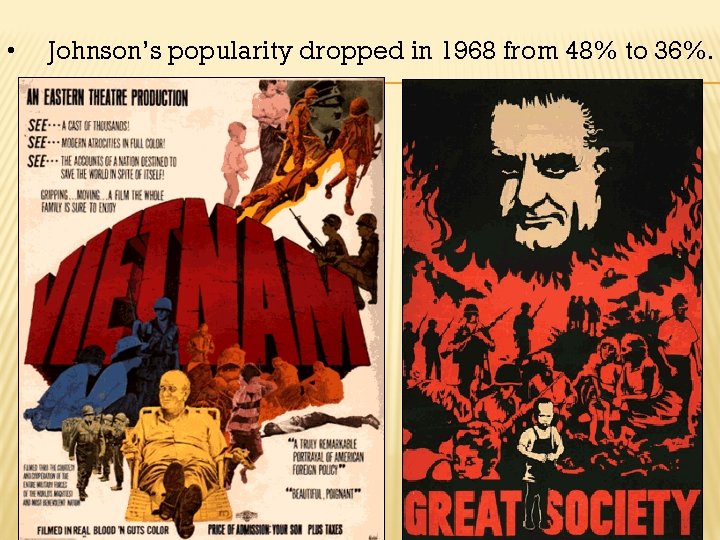
• Johnson’s popularity dropped in 1968 from 48% to 36%.
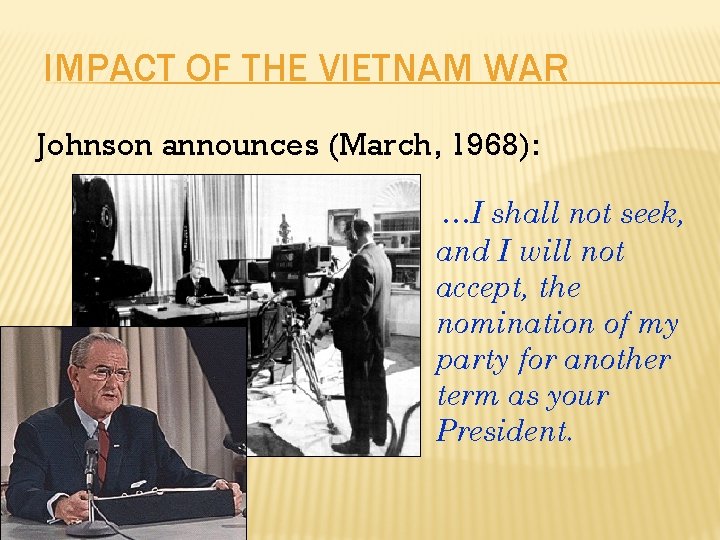
IMPACT OF THE VIETNAM WAR Johnson announces (March, 1968): …I shall not seek, and I will not accept, the nomination of my party for another term as your President.
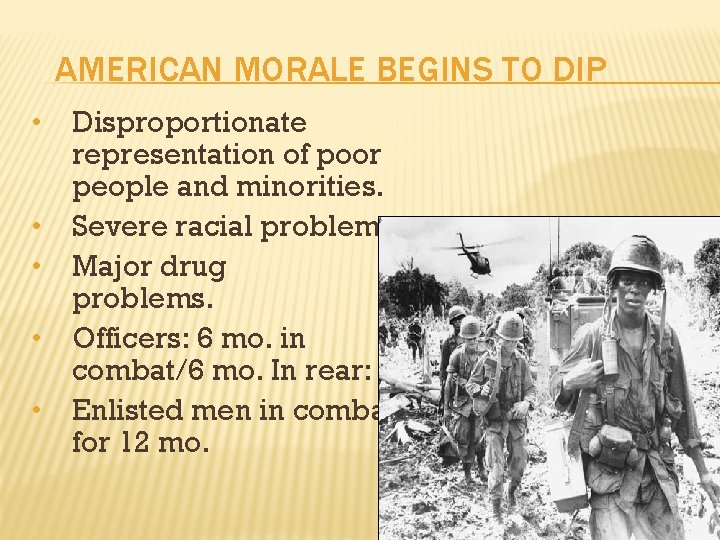
AMERICAN MORALE BEGINS TO DIP • Disproportionate representation of poor people and minorities. • Severe racial problems. • Major drug problems. • Officers: 6 mo. in combat/6 mo. In rear: • Enlisted men in combat for 12 mo.
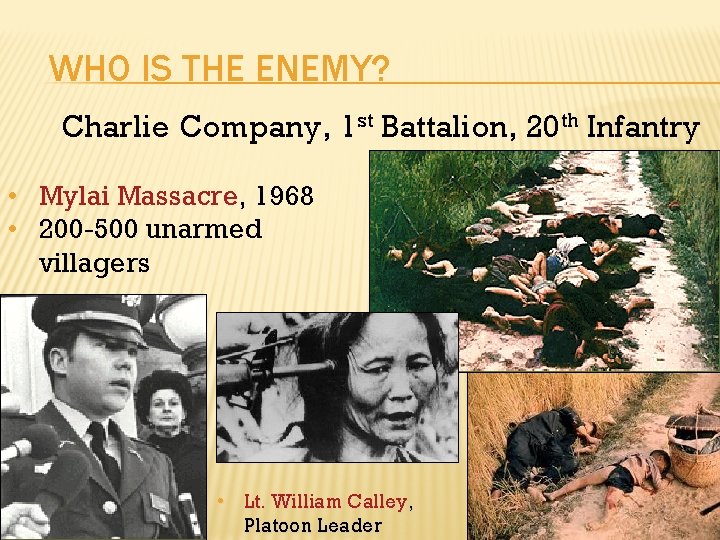
WHO IS THE ENEMY? Charlie Company, 1 st Battalion, 20 th Infantry • Mylai Massacre, 1968 • 200 -500 unarmed villagers • Lt. William Calley, Platoon Leader
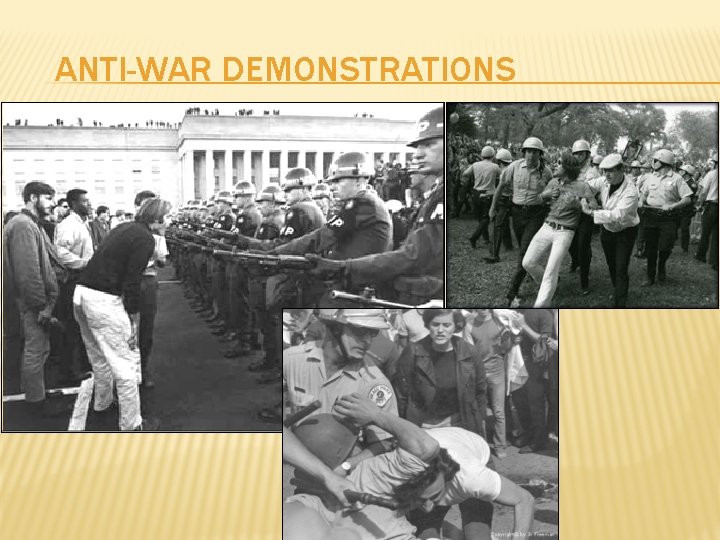
ANTI-WAR DEMONSTRATIONS
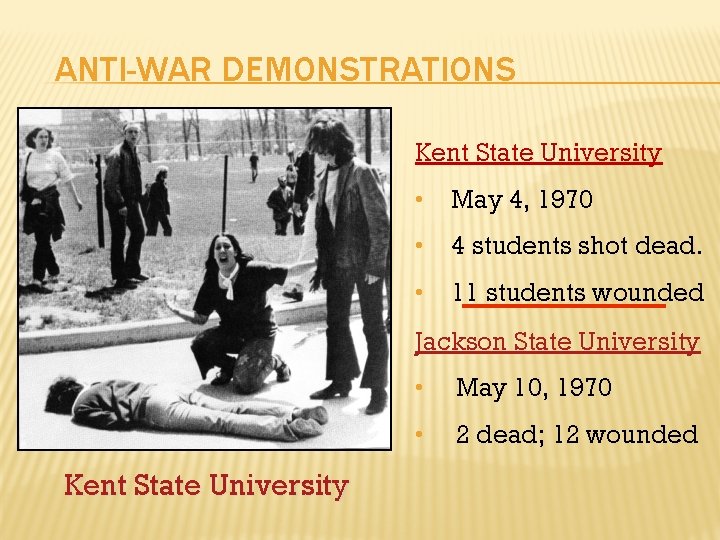
ANTI-WAR DEMONSTRATIONS Kent State University • May 4, 1970 • 4 students shot dead. • 11 students wounded Jackson State University Kent State University • May 10, 1970 • 2 dead; 12 wounded
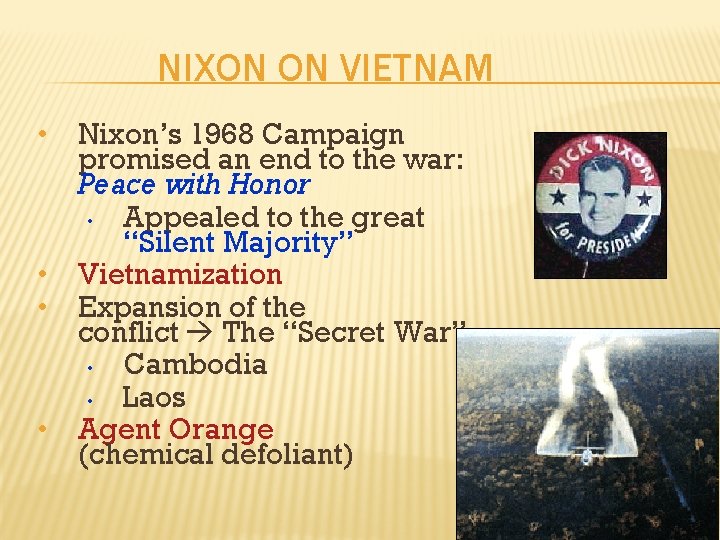
NIXON ON VIETNAM • Nixon’s 1968 Campaign promised an end to the war: Peace with Honor • Appealed to the great “Silent Majority” • Vietnamization • Expansion of the conflict The “Secret War” • Cambodia • Laos • Agent Orange (chemical defoliant)
“PENTAGON PAPERS, ” 1971 • • Former defense analyst Daniel Ellsberg leaked govt. docs. regarding war efforts during Johnson’s administration to the New York Times. Docs. Govt. misled Congress & Amer. People regarding its intentions in Vietnam during mid 1960 s. • Primary reason for fighting not to eliminate communism, but to avoid humiliating defeat.
THE CEASEFIRE, 1973 • Peace is at hand Kissinger, 1972 • • North Vietnam attacks South Most Massive U. S. bombing commences • 1973: Ceasefire signed between • U. S. , South Vietnam, & North Vietnam • Peace with honor (President Nixon)
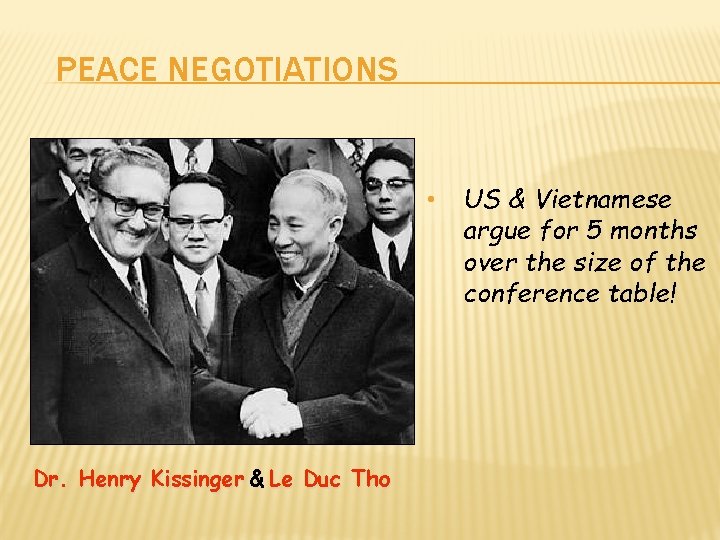
PEACE NEGOTIATIONS • Dr. Henry Kissinger & Le Duc Tho US & Vietnamese argue for 5 months over the size of the conference table!
THE CEASEFIRE, 1973 • Conditions: • U. S. to remove all troops • North Vietnam could leave troops already in S. V. • North Vietnam wouldn’t resume war • US POW’s would be released. • Last American troops left South Vietnam on March 29, 1973
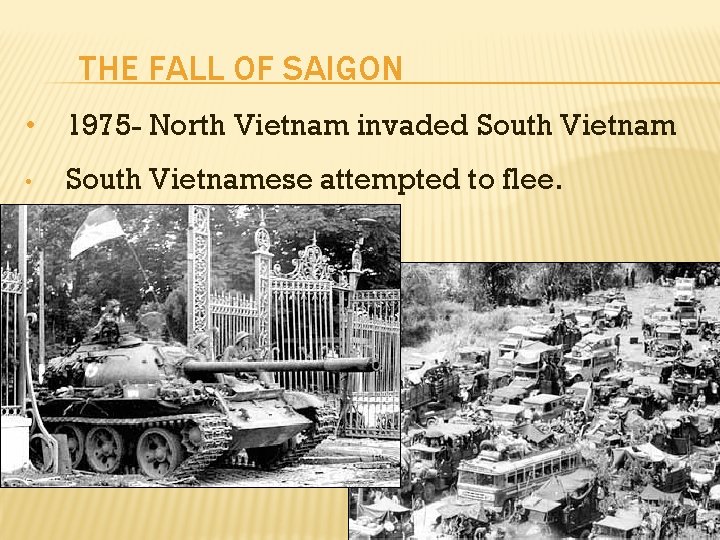
THE FALL OF SAIGON • 1975 - North Vietnam invaded South Vietnam • South Vietnamese attempted to flee.
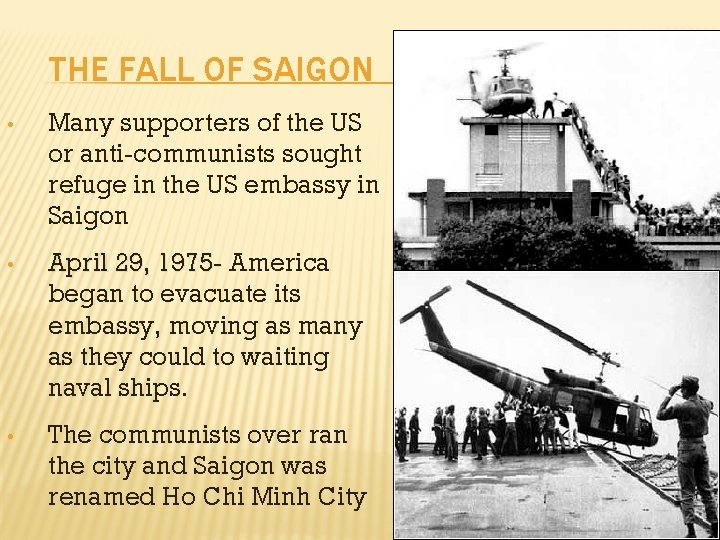
THE FALL OF SAIGON • Many supporters of the US or anti-communists sought refuge in the US embassy in Saigon • April 29, 1975 - America began to evacuate its embassy, moving as many as they could to waiting naval ships. • The communists over ran the city and Saigon was renamed Ho Chi Minh City
THE COST 1. 3, 000 Vietnamese killed 2. 58, 000 Americans killed; 300, 000 wounded 3. Under-funding of Great Society programs 4. $150, 000, 000 in U. S. spending 5. U. S. morale, self-confidence, trust of government, decimated
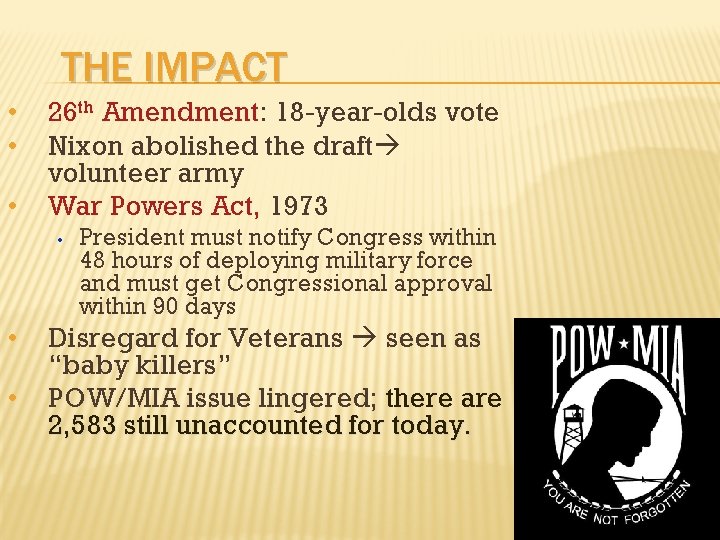
THE IMPACT • • • 26 th Amendment: 18 -year-olds vote Nixon abolished the draft volunteer army War Powers Act, 1973 • • • President must notify Congress within 48 hours of deploying military force and must get Congressional approval within 90 days Disregard for Veterans seen as “baby killers” POW/MIA issue lingered; there are 2, 583 still unaccounted for today.
LESSONS FOR FUTURE PRESIDENTS 1. 2. 3. 4. Wars must be of short duration. Wars must yield few American casualties. Restrict media access to battlefields. Develop and maintain Congressional and public support. 5. Set clear, winnable goals. 6. Set deadline for troop withdrawals.
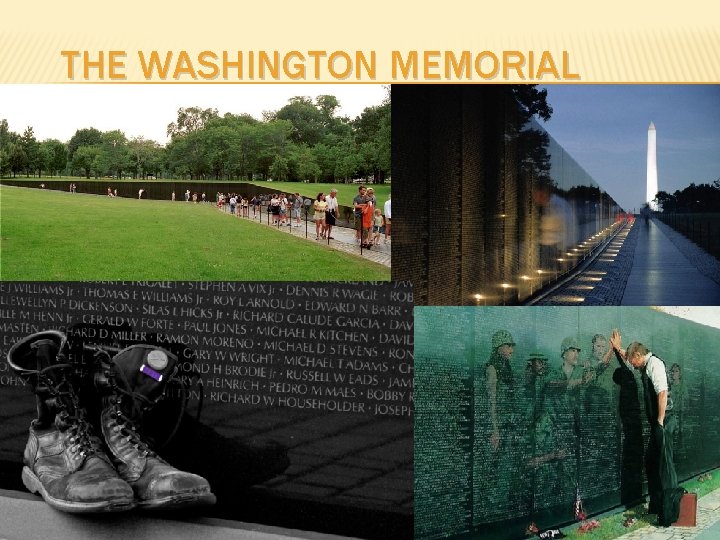
THE WASHINGTON MEMORIAL
- Slides: 34