
1920 s 5 4 1 1920 s Although
- Slides: 25
1920 s 5 -4. 1
1920 s • Although the 1920 s are often called the “Roaring Twenties”, it was not a good time for all Americans.
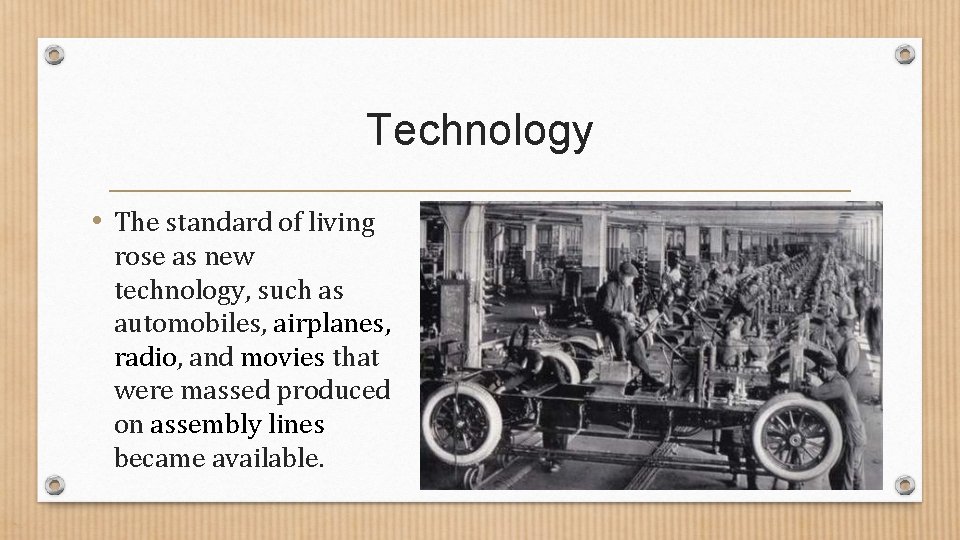
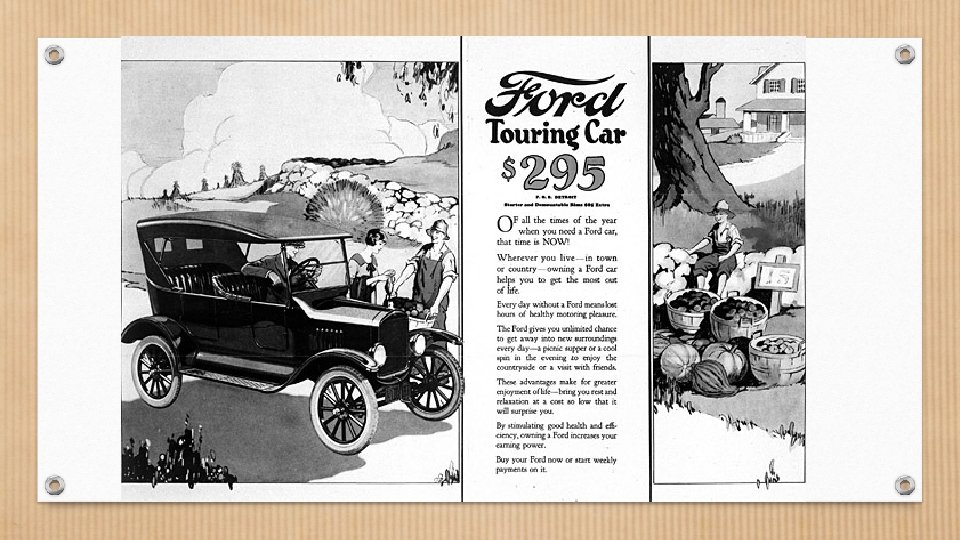
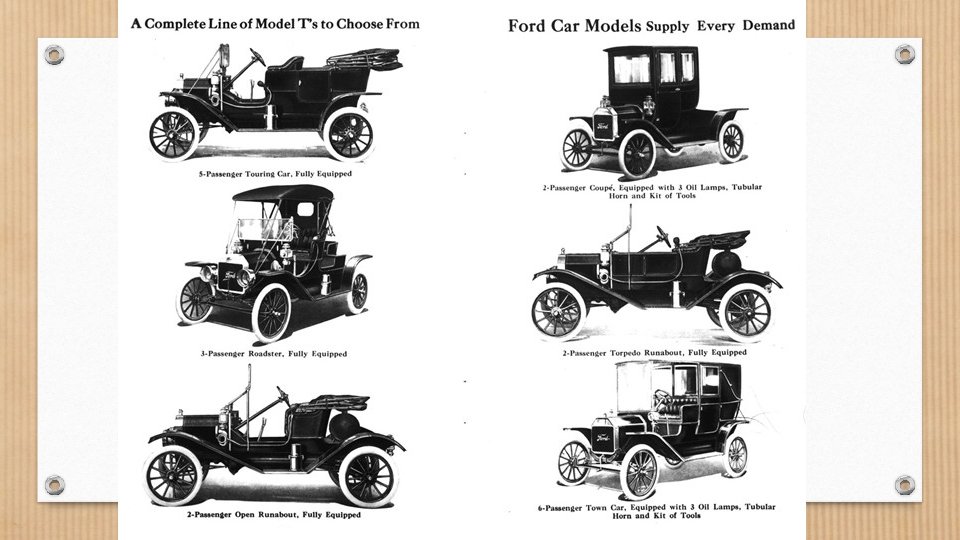
Technology • The standard of living rose as new technology, such as automobiles, airplanes, radio, and movies that were massed produced on assembly lines became available.
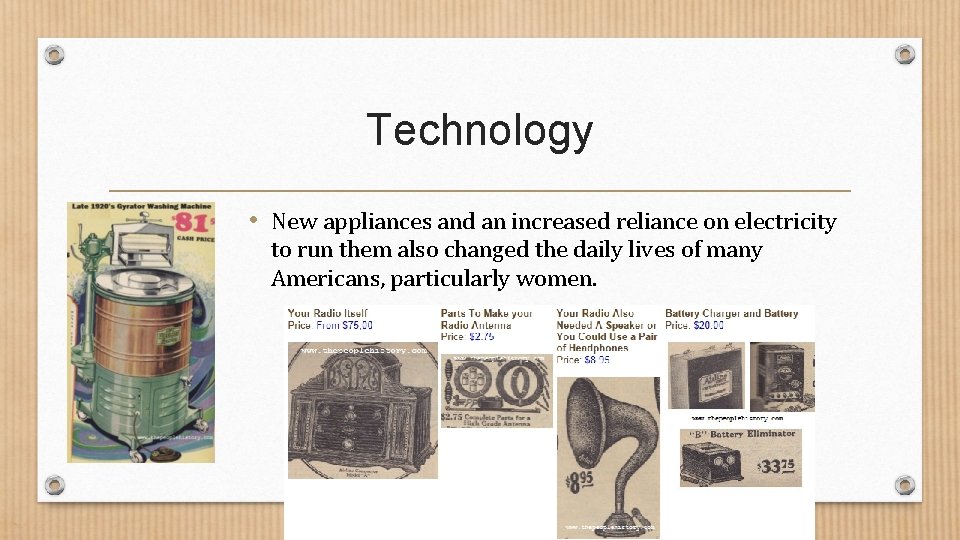
Technology • New appliances and an increased reliance on electricity to run them also changed the daily lives of many Americans, particularly women.
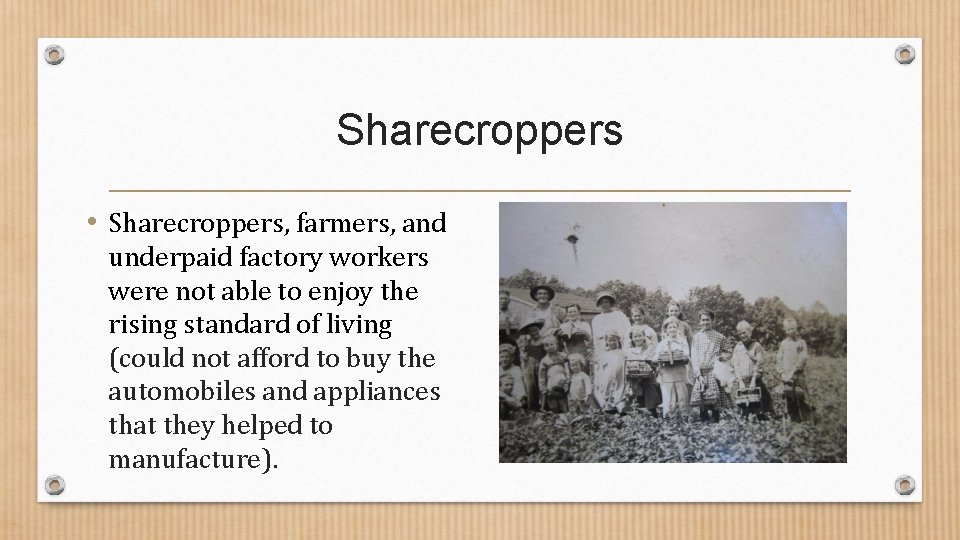
Sharecroppers • Sharecroppers, farmers, and underpaid factory workers were not able to enjoy the rising standard of living (could not afford to buy the automobiles and appliances that they helped to manufacture).
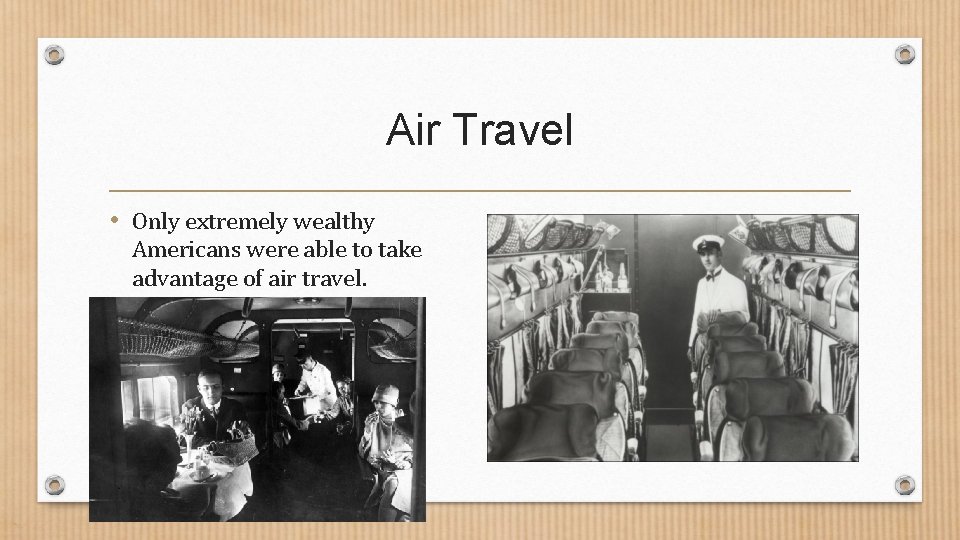
Air Travel • Only extremely wealthy Americans were able to take advantage of air travel.
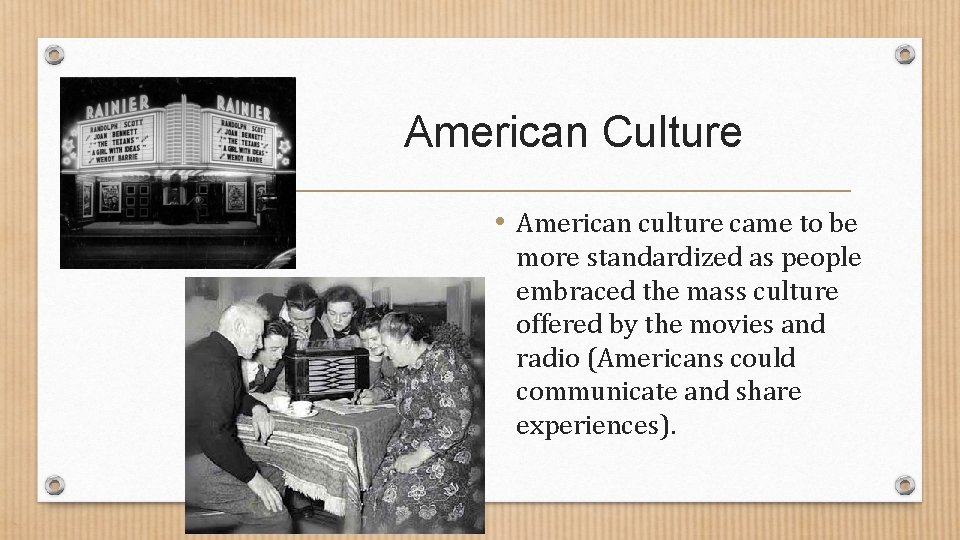
American Culture • American culture came to be more standardized as people embraced the mass culture offered by the movies and radio (Americans could communicate and share experiences).
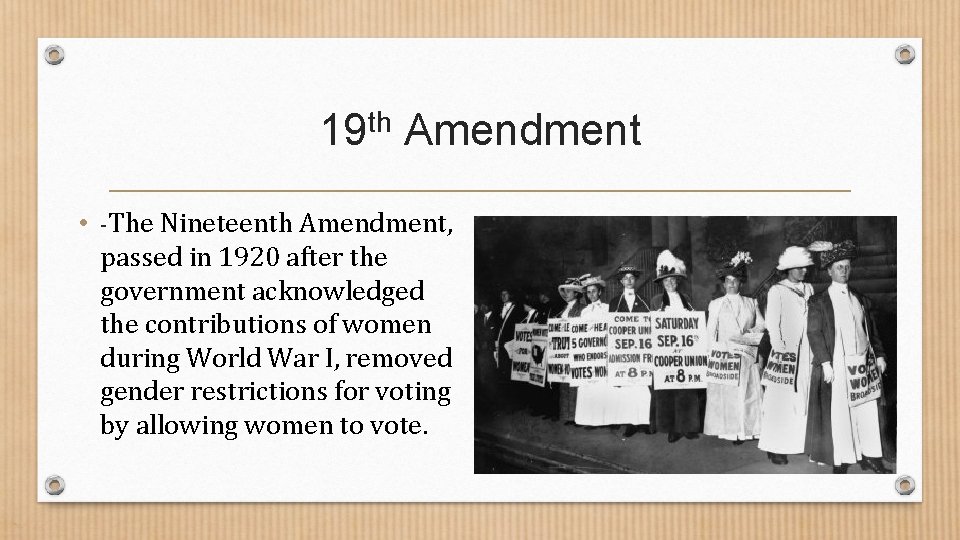
th 19 Amendment • -The Nineteenth Amendment, passed in 1920 after the government acknowledged the contributions of women during World War I, removed gender restrictions for voting by allowing women to vote.
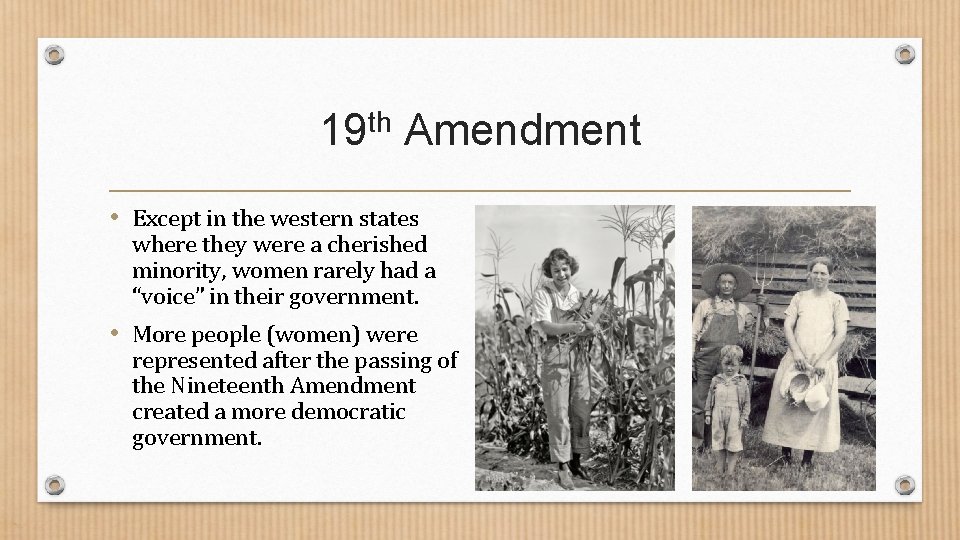
th 19 Amendment • Except in the western states where they were a cherished minority, women rarely had a “voice” in their government. • More people (women) were represented after the passing of the Nineteenth Amendment created a more democratic government.
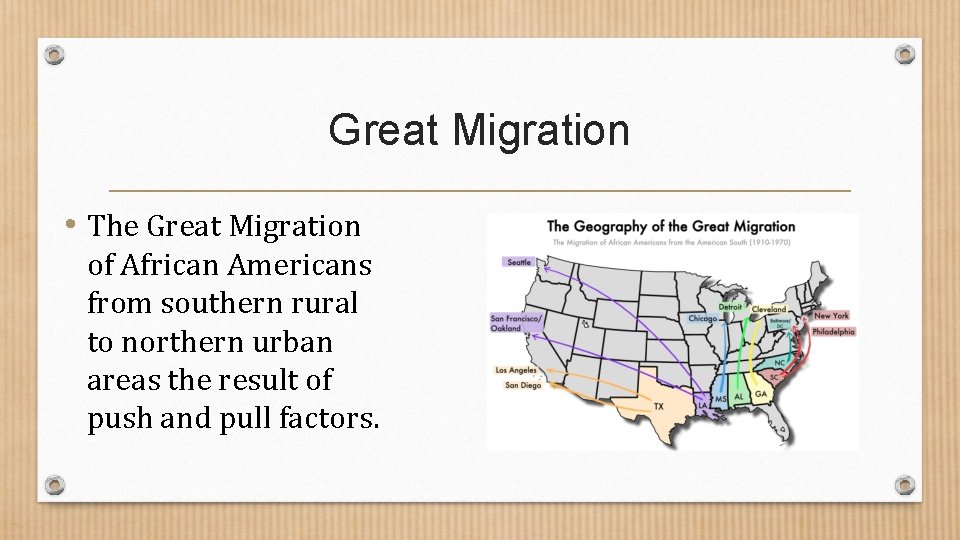
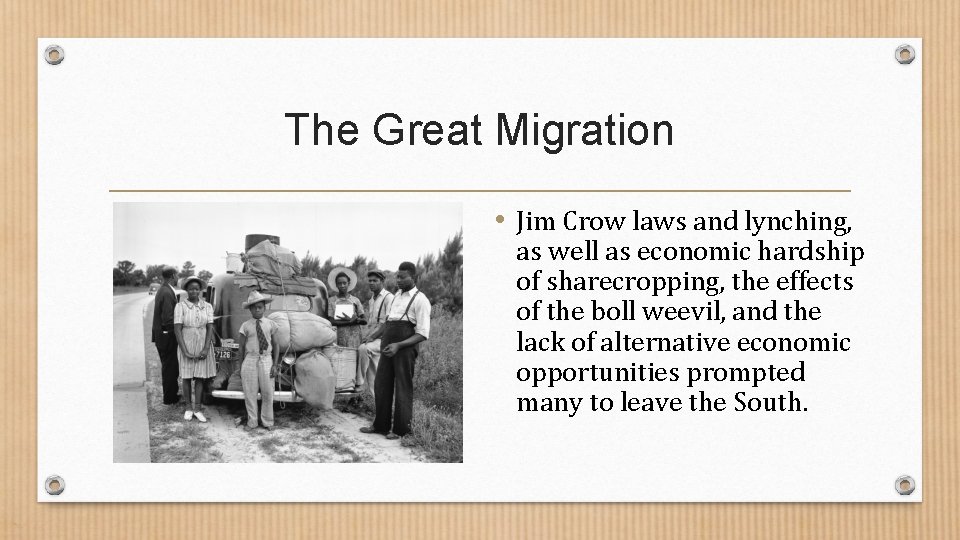
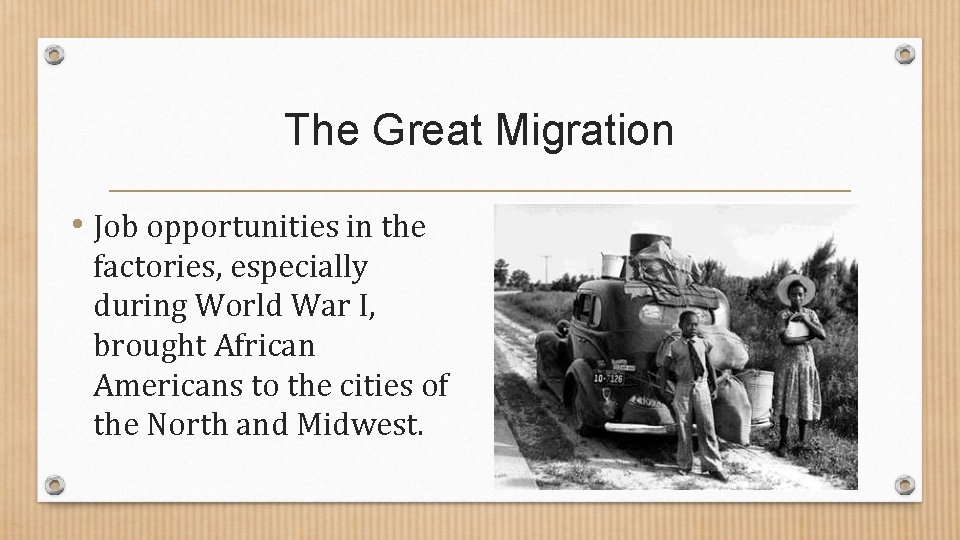
Great Migration • The Great Migration of African Americans from southern rural to northern urban areas the result of push and pull factors.
The Great Migration • Jim Crow laws and lynching, as well as economic hardship of sharecropping, the effects of the boll weevil, and the lack of alternative economic opportunities prompted many to leave the South.
The Great Migration • Job opportunities in the factories, especially during World War I, brought African Americans to the cities of the North and Midwest.
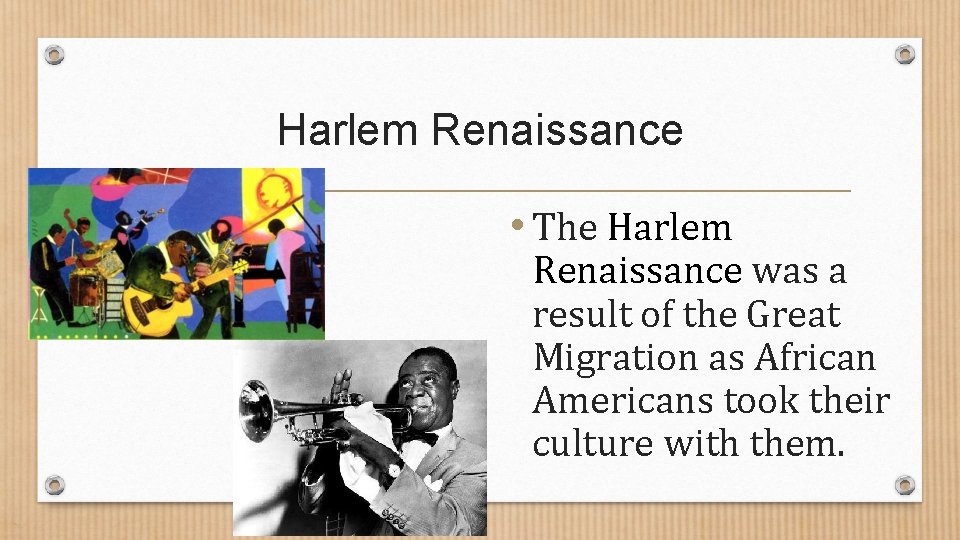
Harlem Renaissance • The Harlem Renaissance was a result of the Great Migration as African Americans took their culture with them.
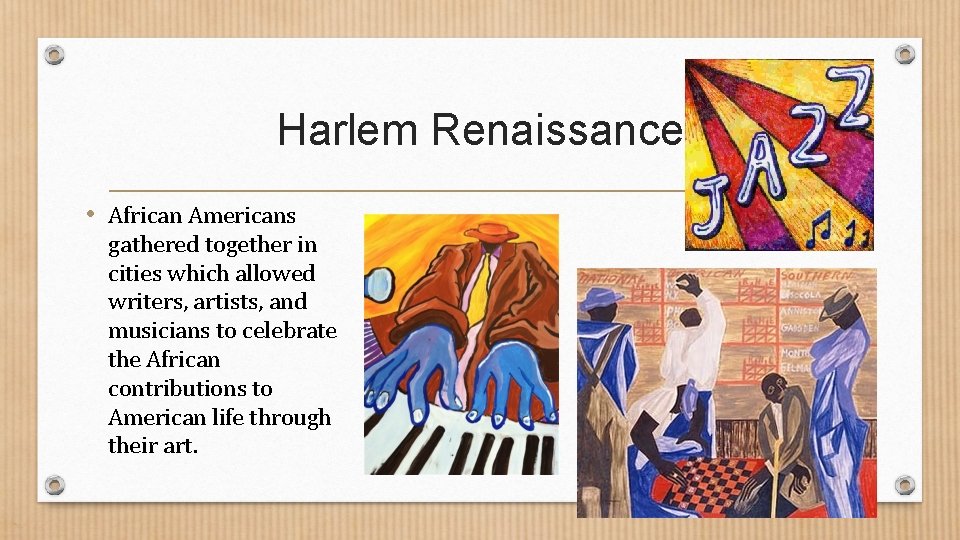
Harlem Renaissance • African Americans gathered together in cities which allowed writers, artists, and musicians to celebrate the African contributions to American life through their art.
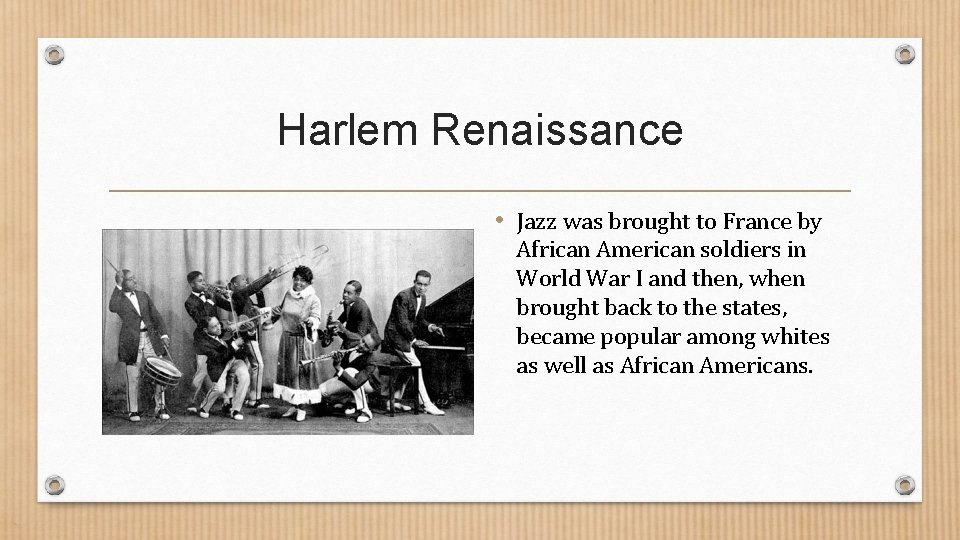
Harlem Renaissance • Jazz was brought to France by African American soldiers in World War I and then, when brought back to the states, became popular among whites as well as African Americans.
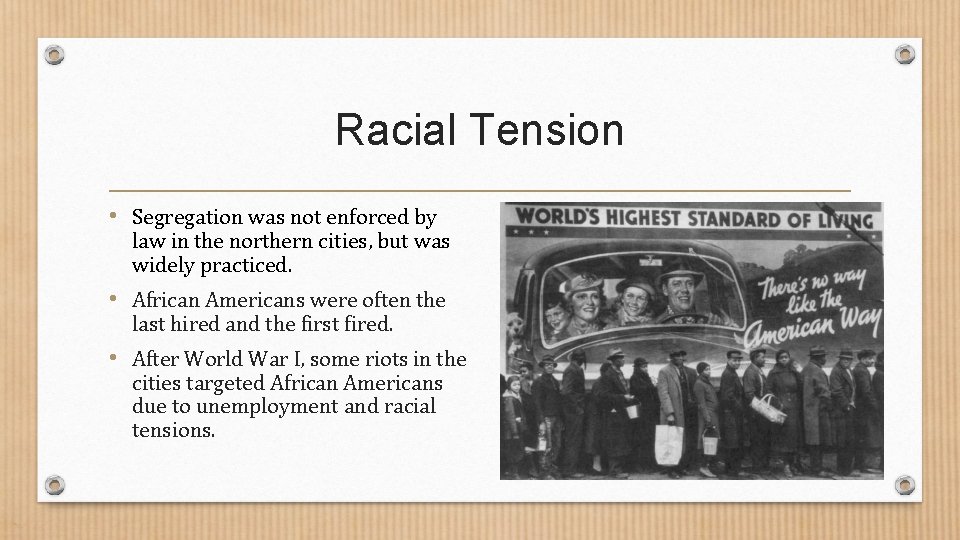
Racial Tension • Segregation was not enforced by law in the northern cities, but was widely practiced. • African Americans were often the last hired and the first fired. • After World War I, some riots in the cities targeted African Americans due to unemployment and racial tensions.
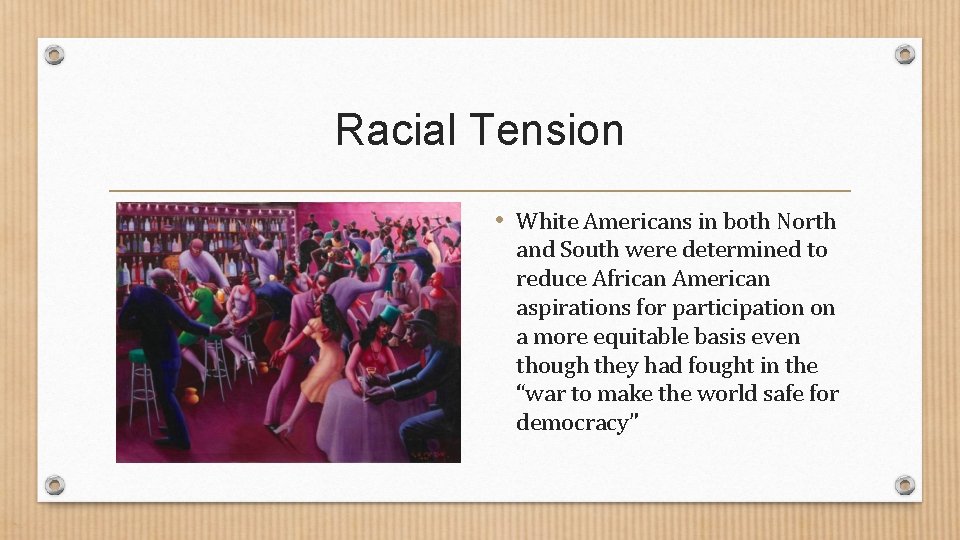
Racial Tension • White Americans in both North and South were determined to reduce African American aspirations for participation on a more equitable basis even though they had fought in the “war to make the world safe for democracy”
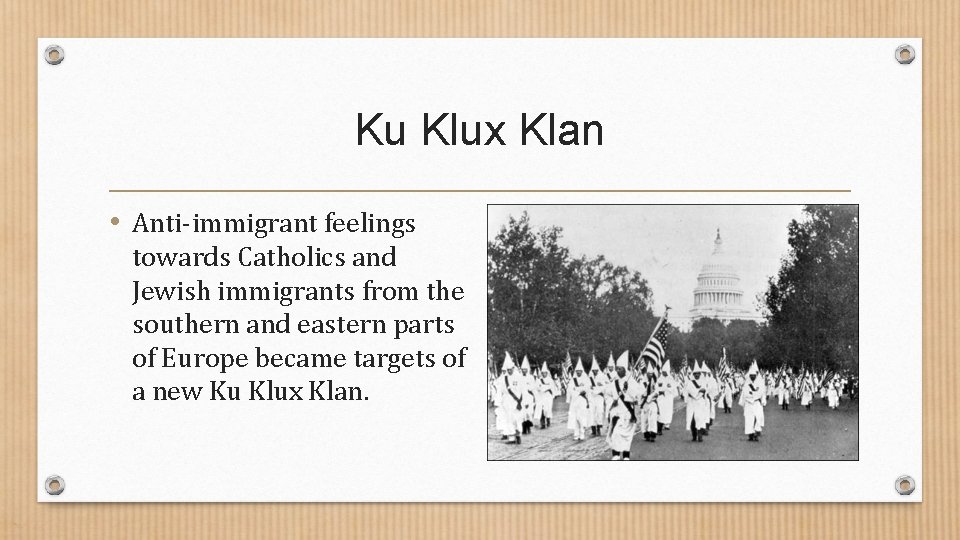
Ku Klux Klan • Anti-immigrant feelings towards Catholics and Jewish immigrants from the southern and eastern parts of Europe became targets of a new Ku Klux Klan.
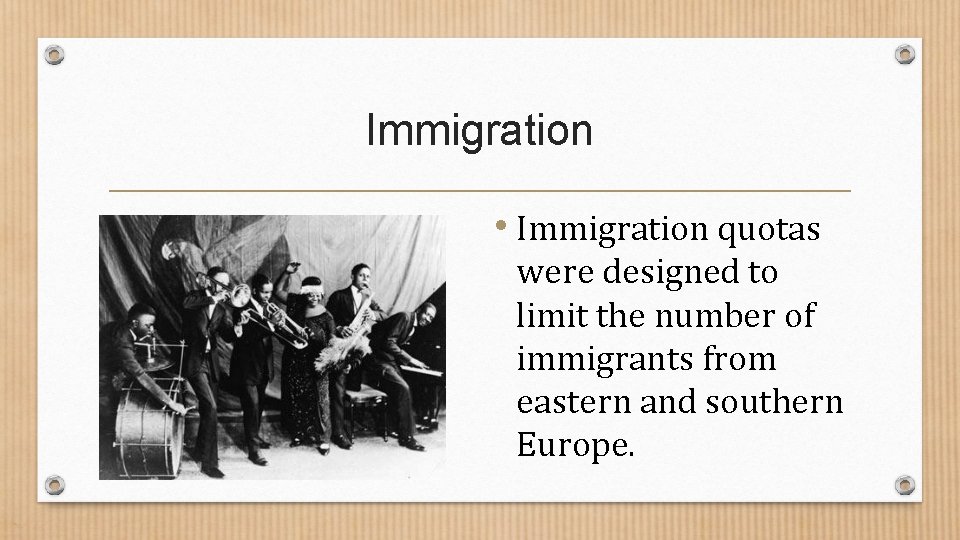
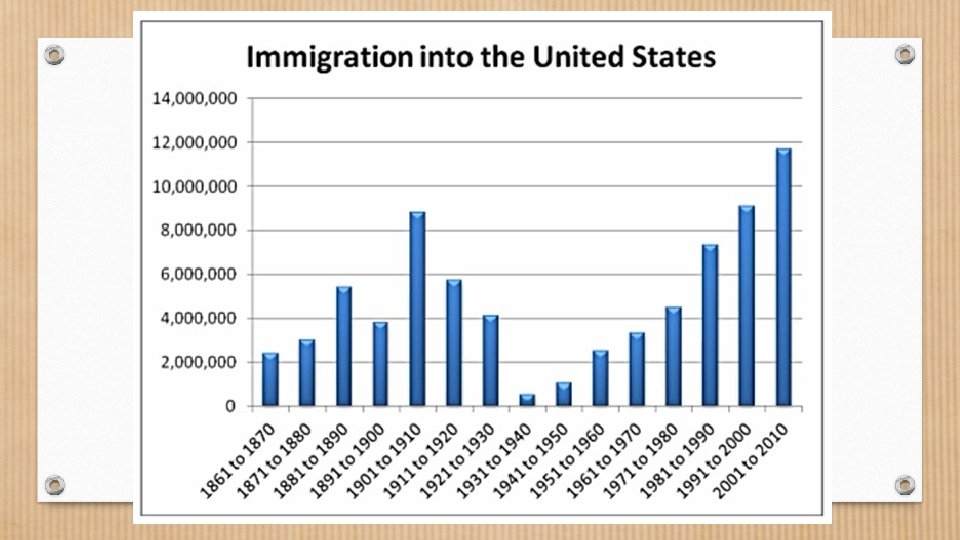
Immigration • Immigration quotas were designed to limit the number of immigrants from eastern and southern Europe.
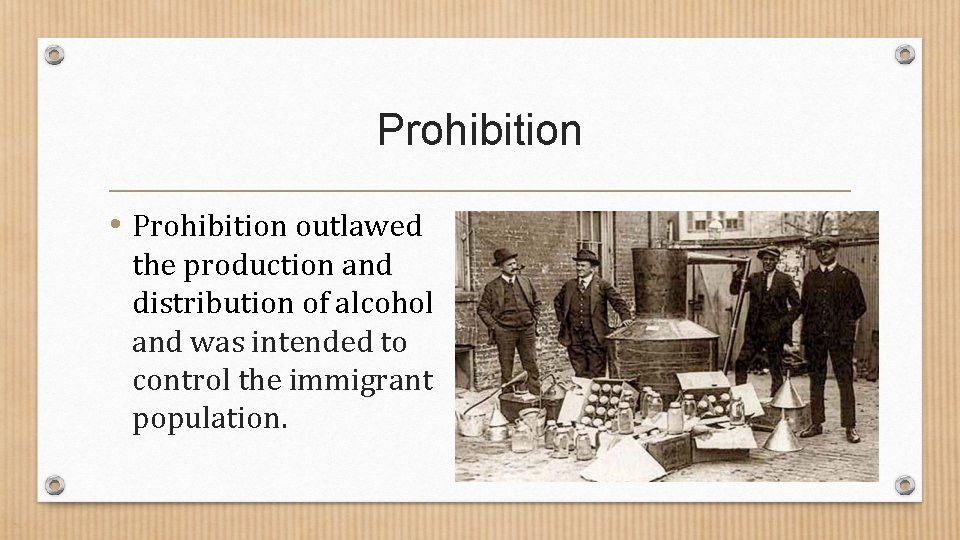
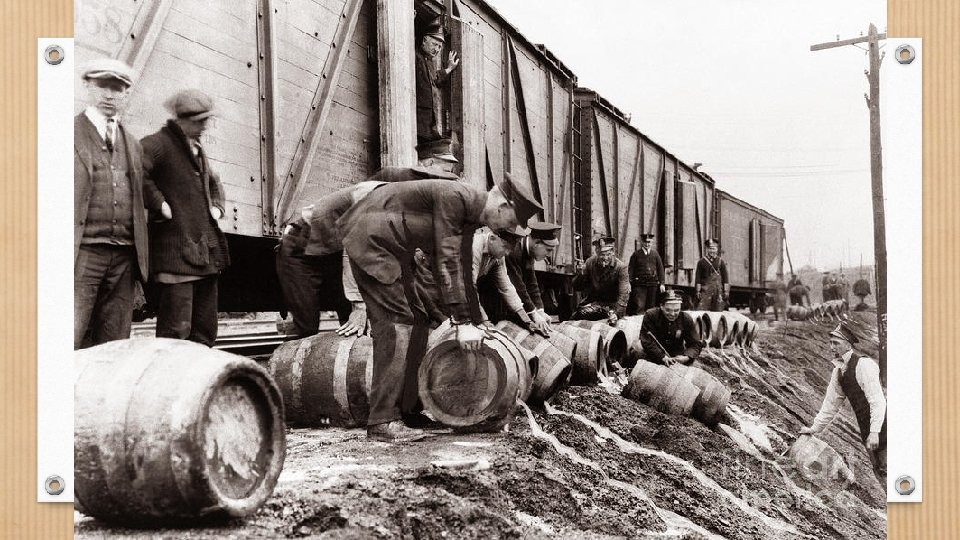
Prohibition • Prohibition outlawed the production and distribution of alcohol and was intended to control the immigrant population.
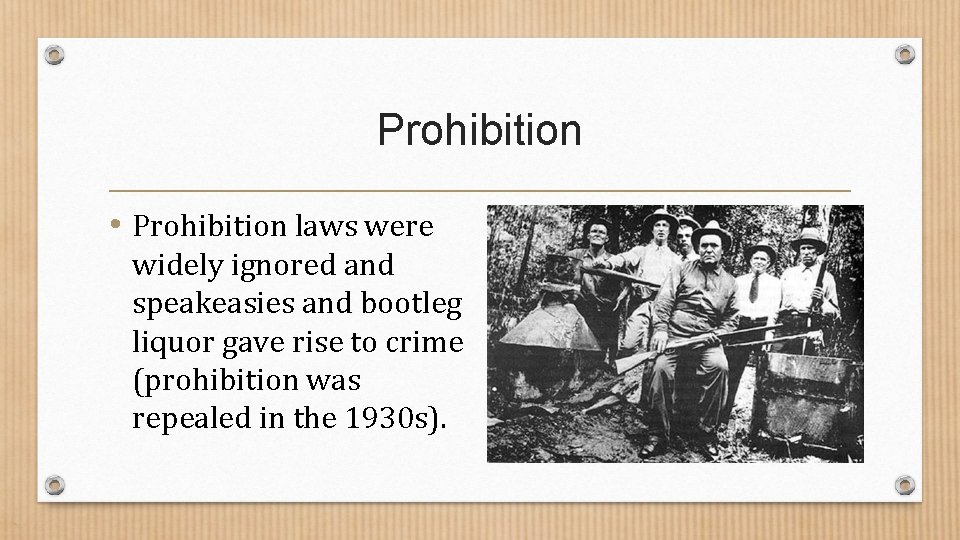
Prohibition • Prohibition laws were widely ignored and speakeasies and bootleg liquor gave rise to crime (prohibition was repealed in the 1930 s).