
1916 Ancestry Project By Aisling Doherty 4 th
1916 Ancestry Project By Aisling Doherty, 4 th Class Pupil in St Baithin’s N. S. St Johnston, Co Donegal
ROBERT QUINN 1889 - 1972
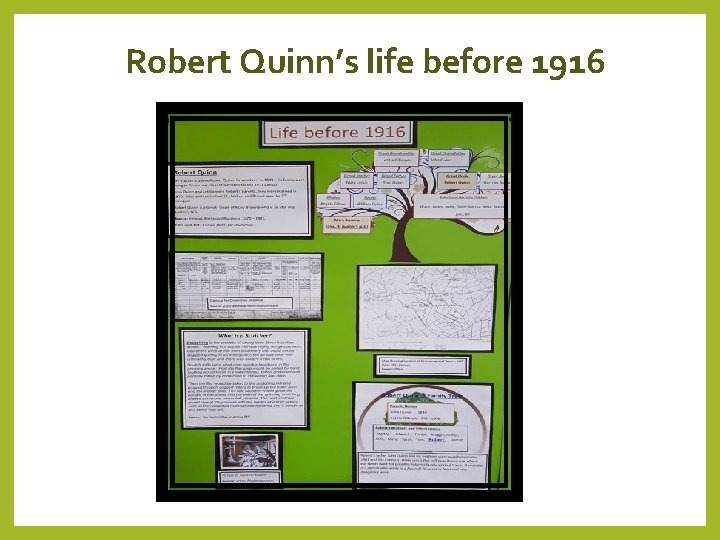
Robert Quinn’s life before 1916
Robert Quinn ØRobert Quinn was born in 1889. ØHis family were living in Drumcrow, near St Johnston for the 1901 census. ØJohn Quinn and Letitia Gillespie were Robert’s parents, they were married in 1870. ØJohn and Letitia had 12 children and Robert was the second youngest. ØRobert Quinn was a great-uncle of Mary Browne, who is an SNA in St Baithin’s N. S. Øsource: Ireland, Births and Baptisms , 1960 – 1881 1901 census and 1911 census
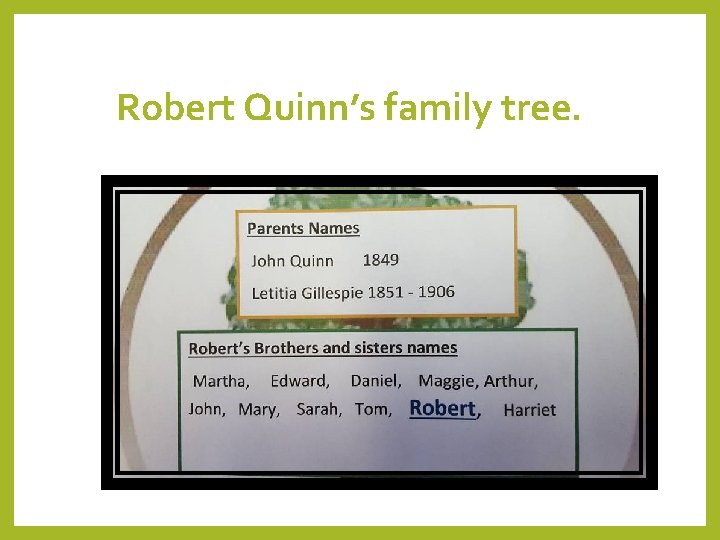
Robert Quinn’s family tree.
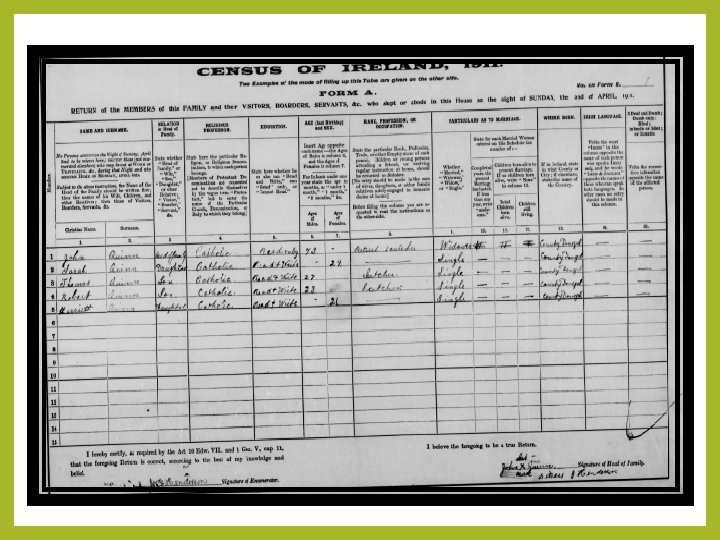
1911 Census for Drumcrow. Source; National Archives
Information from the 1911 Census. ØRobert’s father and brother were scutchers on the 1901 and 1911 census. ØA Scutcher was a person who worked in a Flax Mill. ØIt was very hard and dangerous work. ØThere was a flax mill near Drumcrow where the family lived. ØRobert’s family may have worked in this Flax Mill. ØSource: www. osi. ie
Robert, his father John and his brother Thomas were Scutchers in the 1911 Census. What is a Scutcher? ØScutching is the process of taking linen fibres from flax stems. ØWorking in a flax mill was highly dangerous work. ØScutchers were at risk from machinery that could not be stopped quickly in an emergency, the air was thick with dust and there was always a risk of fire. ØScutch mills were sited near suitable lake/pond in flax growing areas.
What did a Scutcher do? ØFirst the flax crop would be pulled by hand (cutting would result in shorter fibres) retted (softened and partially rotted by immersion in still water) and dried. ØThen the flax would be taken to the scutching mill and passed through cogged rollers to break up the outer layer and the woody core. ØThe first scutcher would guide the bundle of flax stems into the path of the spinning scutching blades to remove unwanted material. ØThe next scutcher would repeat the process with the blades at a finer setting until all the unwanted material was removed and a bundle of flax fibres was left. ØSource: Gorticashel-Flax-scutching- Mill
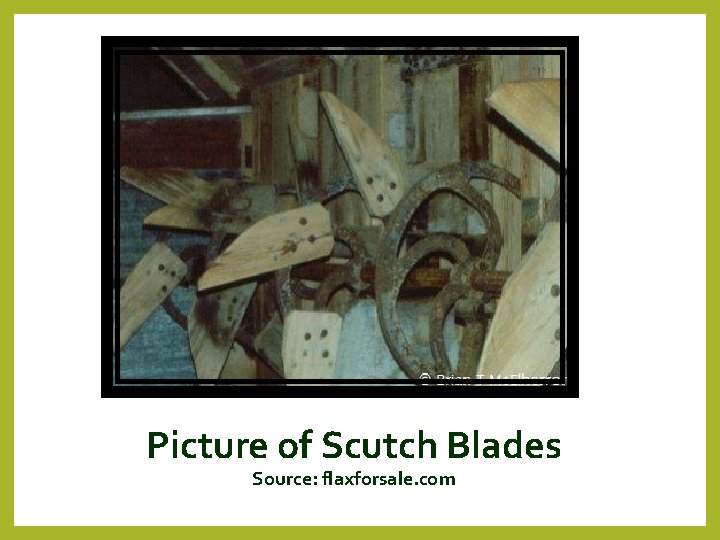
Picture of Scutch Blades Source: flaxforsale. com
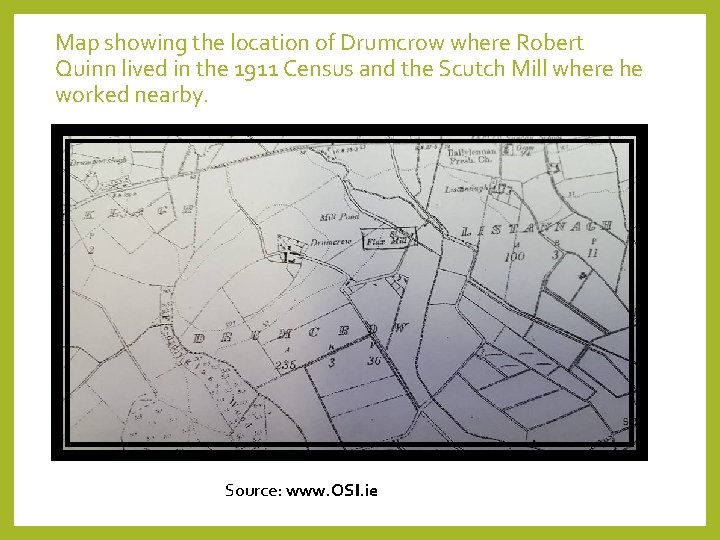
Map showing the location of Drumcrow where Robert Quinn lived in the 1911 Census and the Scutch Mill where he worked nearby. Source: www. OSI. ie
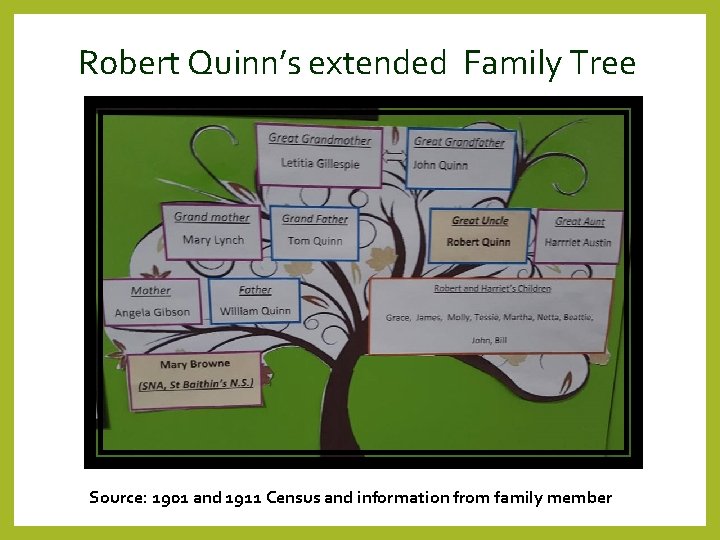
Robert Quinn’s extended Family Tree Source: 1901 and 1911 Census and information from family member
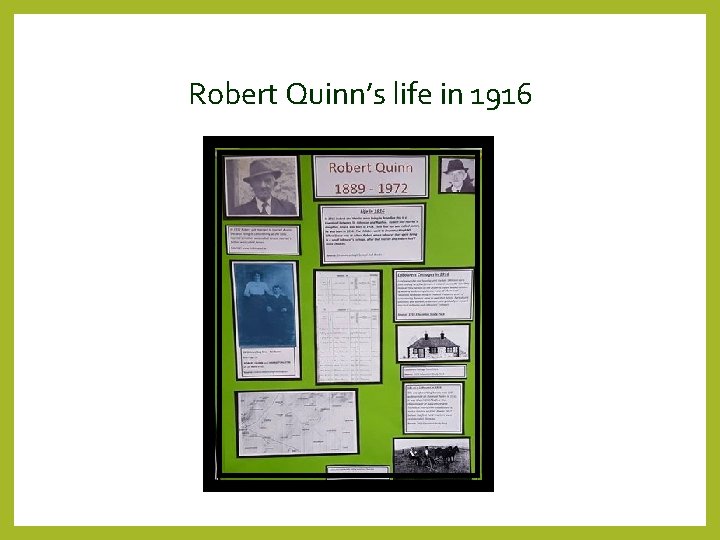
Robert Quinn’s life in 1916
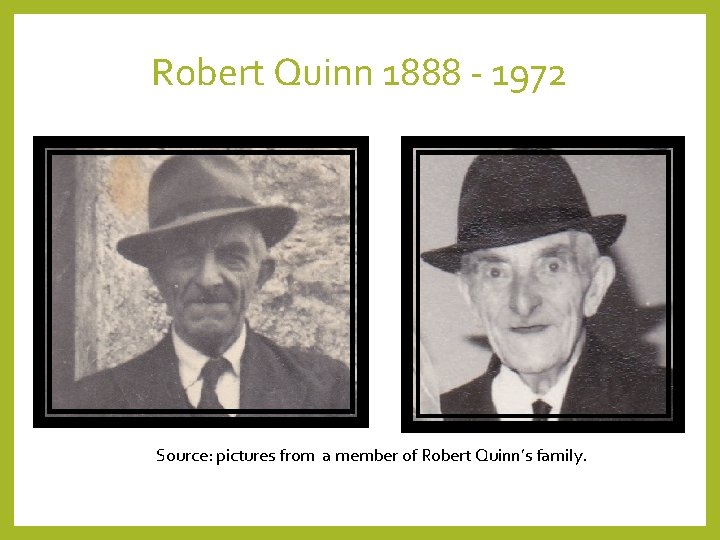
Robert Quinn 1888 - 1972 Source: pictures from a member of Robert Quinn’s family.
Early Married Life ØIn 1912 Robert Quinn got married to Harriet Austin. ØShe was living in Sallaghagrane, Letterkenny. ØHarriet’s mother was called Grace and her father was called James. Ø(Note: Harriet’s name was spelled ‘Harriot’ on the 1901 census form. ) ØSource: www. census. nationalarchives. ie
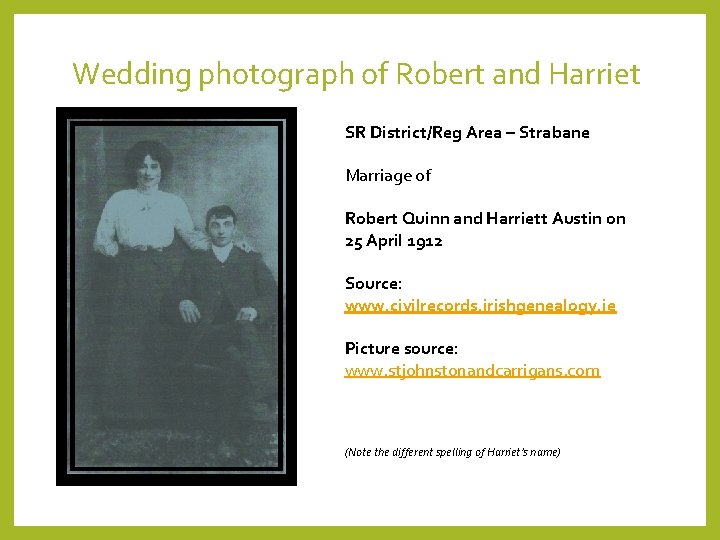
Wedding photograph of Robert and Harriet SR District/Reg Area – Strabane Marriage of Robert Quinn and Harriett Austin on 25 April 1912 Source: www. civilrecords. irishgenealogy. ie Picture source: www. stjohnstonandcarrigans. com (Note the different spelling of Harriet’s name)
Family Life in 1916 ØIn 1916 Robert and Harriet were living in Broadlea, this is a townland between St Johnston and Raphoe. ØRobert worked as a labourer. ØRobert and Harriet had a daughter, Letitia (Tessie) in 1913. ØThey had another daughter, Grace, in 1914. ØTheir son James was born in 1916. ØThe three children went to Drummucklagh N. S. ØSource: Drummucklagh N. S. Roll Book.
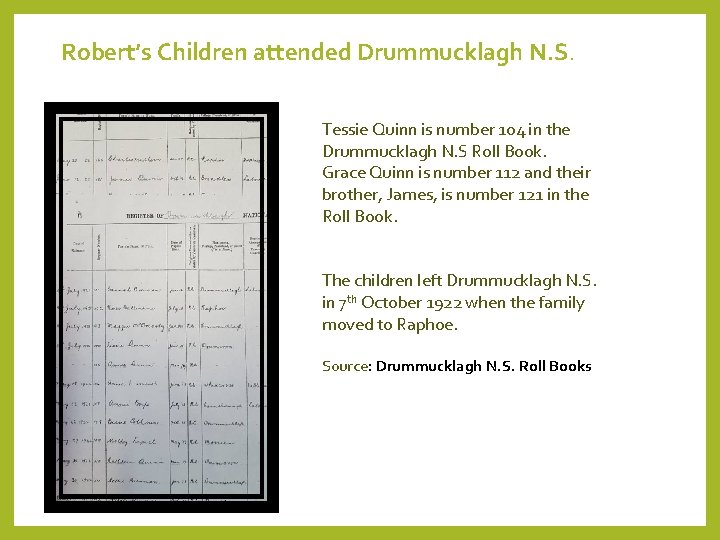
Robert’s Children attended Drummucklagh N. S. Tessie Quinn is number 104 in the Drummucklagh N. S Roll Book. Grace Quinn is number 112 and their brother, James, is number 121 in the Roll Book. The children left Drummucklagh N. S. in 7 th October 1922 when the family moved to Raphoe. Source: Drummucklagh N. S. Roll Books
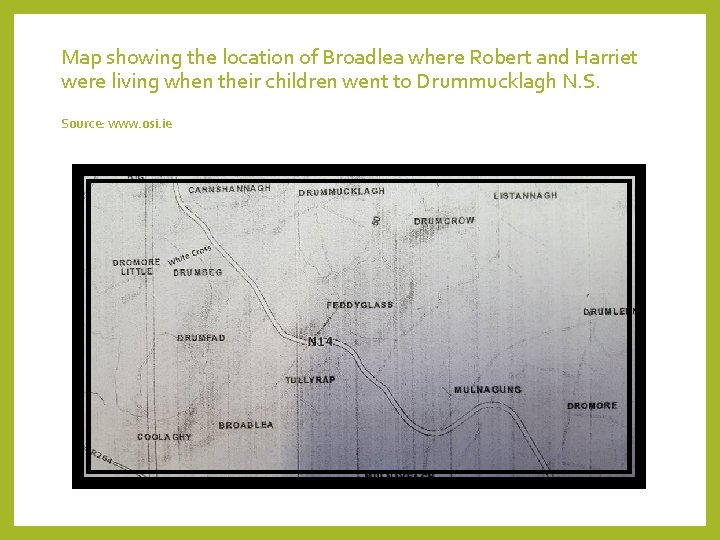
Map showing the location of Broadlea where Robert and Harriet were living when their children went to Drummucklagh N. S. Source: www. osi. ie
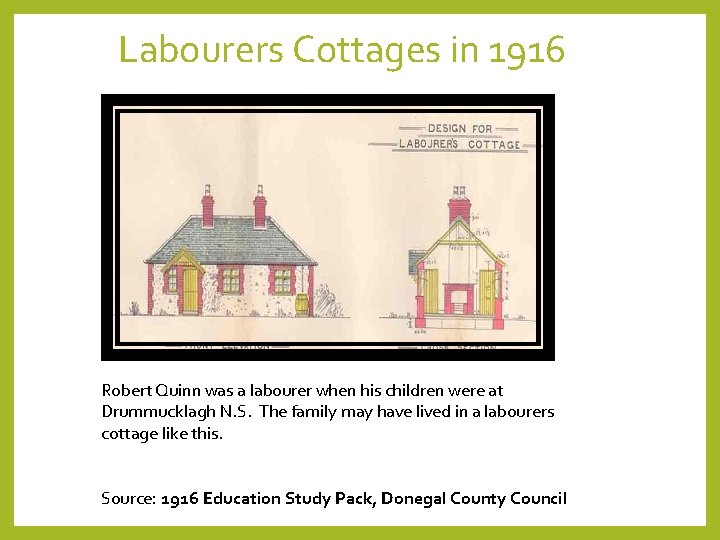
Labourers Cottages in 1916 Robert Quinn was a labourer when his children were at Drummucklagh N. S. The family may have lived in a labourers cottage like this. Source: 1916 Education Study Pack, Donegal County Council
Labourers Cottages in 1916 ØIn the late 19 th and early 20 th century very few farmers in Ireland owned the land they farmed on. ØThey farmed on the property, called ‘Landed Estates’ of wealthy landowning classes. ØMany of whom were ‘Absentee Landlords’ living in England ØFollowing years of campaigning, farmers came to own their own farms. ØAgricultural labourers who worked for farmers were gradually re- housed into local authority built labourers’ cottages. ØSource: 1916 Education Study Pack, Donegal County Council
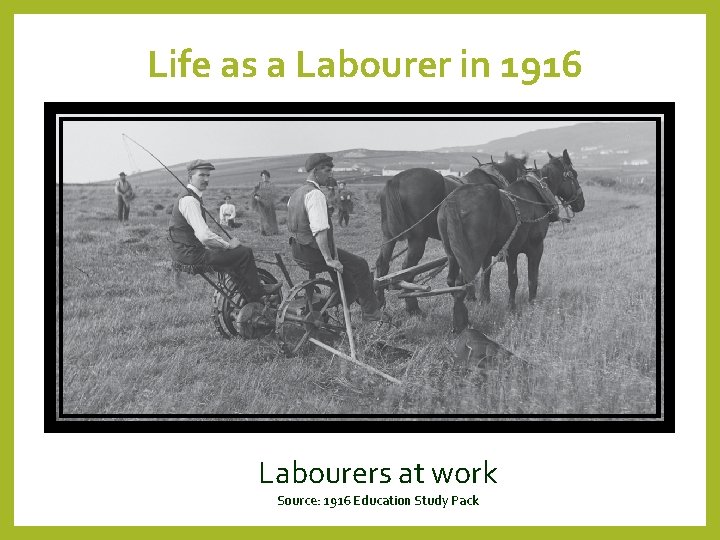
Life as a Labourer in 1916 Labourers at work Source: 1916 Education Study Pack
Labourers Work in 1916 ØThe use of working horses was still widespread on Donegal farms in 1916. ØIt was March 1917 before the Department of Agriculture and Technical Instruction established a motor tractor section. ØIt was 1917 before the first Ford Tractors were registered in Donegal. ØSource 1916 Education Study Pack, Donegal County Council
Life after 1916
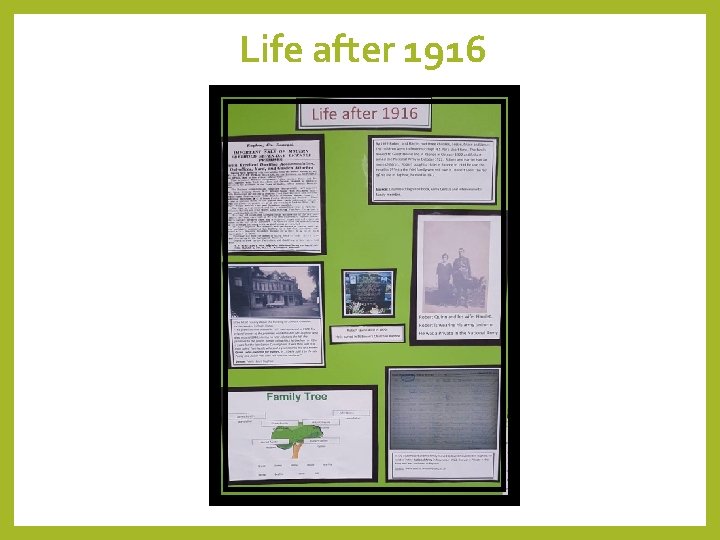
Life after 1916. ØIn October 1922 Robert and Harriet moved to Guest House End in Raphoe. ØRobert joined the National Army in October 1922. ØRobert and Harriet had six more children. ØThey bought a Hotel in the Diamond in Raphoe in 1939. ØRobert sold the hotel in 1954 to the Friel Family who still own it. ØRobert spent the rest of his life in Raphoe. ØHe died in 1972 and is buried in St Eunan’s Church in Raphoe. ØSource: Drummucklagh School Roll Book, interview with family member and www. census. militaryarchives. ie
Robert Quinn’s Army Life ØThe Army census was taken on 13 November 1922. ØRobert Quinn was a Private in the Infantry Corp of the National Army. ØHe served in the 1 st Northern Division in Raphoe. ØRobert was 35 years old in the Army census. ØHis address was Guest House End Raphoe. ØSource: www. census. militaryarchives. ie
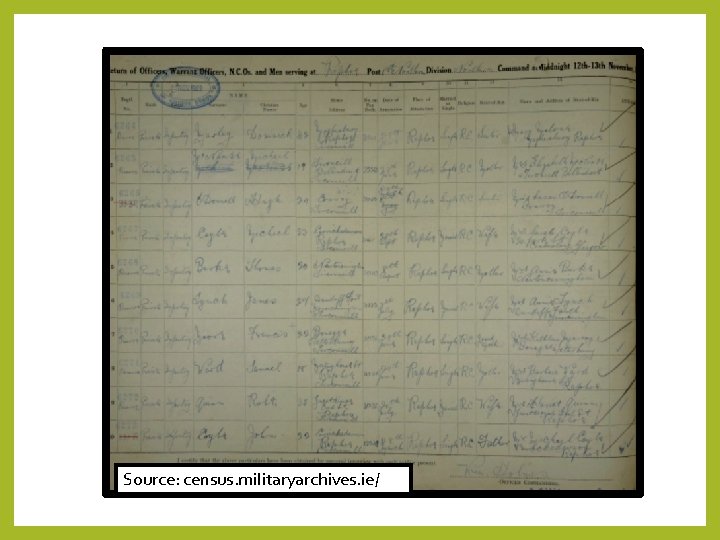
Source: census. militaryarchives. ie/
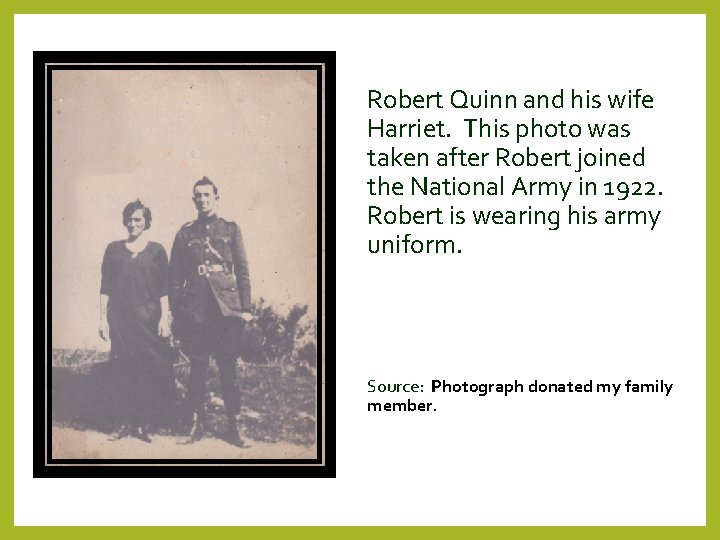
Robert Quinn and his wife Harriet. This photo was taken after Robert joined the National Army in 1922. Robert is wearing his army uniform. Source: Photograph donated my family member.
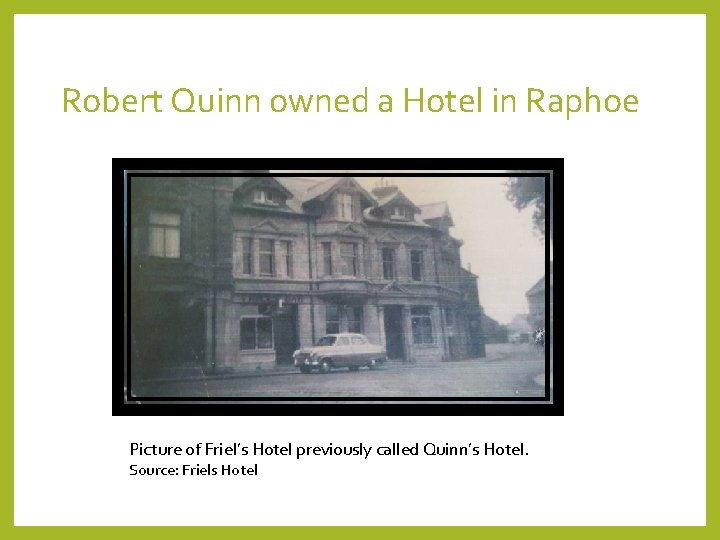
Robert Quinn owned a Hotel in Raphoe Picture of Friel’s Hotel previously called Quinn’s Hotel. Source: Friels Hotel
A little bit of history about Friels Hotel “The premises was burned in 1922 and reopened in 1924. The original owner of the premises was Katie. Ann Mc. Laughlin, who died around 1940. Having no near relations who left the premises to the parish. A man called Mick Mc. Geehan ran it for 3 years for the late canon Cunningham. It was then sold to a man called Tom Nestle who sold it a year later to the late Robert Quinn who owned it for 9 years. In 1954 he sold it to Paddy and Annie Friel who still run the business today” Source: Ambrose Gormley former worker in Friels Hotel Raphoe
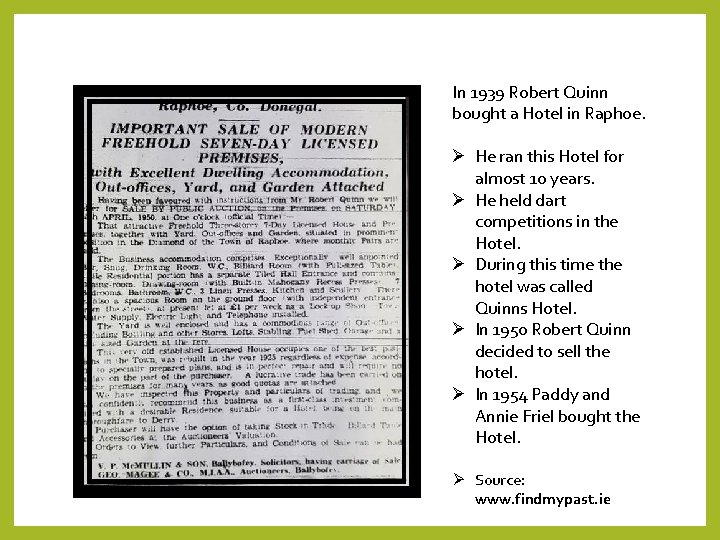
In 1939 Robert Quinn bought a Hotel in Raphoe. Ø He ran this Hotel for almost 10 years. Ø He held dart competitions in the Hotel. Ø During this time the hotel was called Quinns Hotel. Ø In 1950 Robert Quinn decided to sell the hotel. Ø In 1954 Paddy and Annie Friel bought the Hotel. Ø Source: www. findmypast. ie
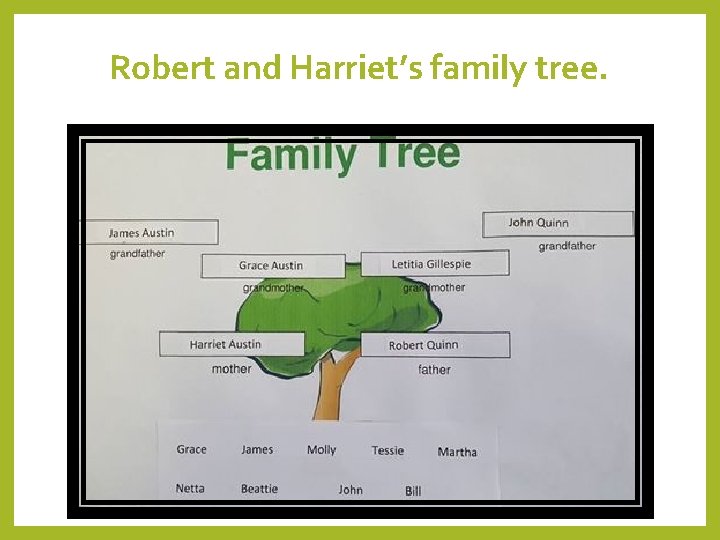
Robert and Harriet’s family tree.
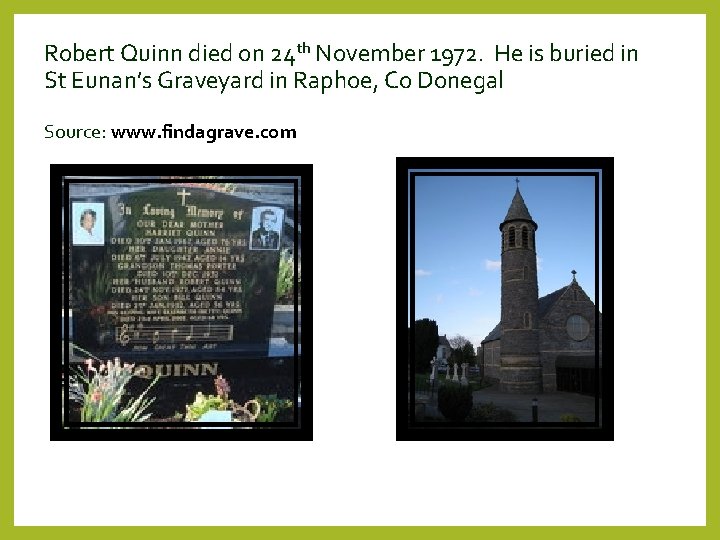
Robert Quinn died on 24 th November 1972. He is buried in St Eunan’s Graveyard in Raphoe, Co Donegal Source: www. findagrave. com
- Slides: 33