
19 Microbial Taxonomy and the Evolution of Diversity
19 Microbial Taxonomy and the Evolution of Diversity 1 Copyright © Mc. Graw-Hill Global Education Holdings, LLC. Permission required for reproduction or display.
19. 1 Introduction to Microbial Taxonomy 1. Explain the utility of taxonomy and systematics 2. Draw a concept map illustrating the differences between phenetic, phylogenetic, and genotypic classification 2
Introduction to Microbial Taxonomy • Taxonomy – science of biological classification – consists of three separate but interrelated parts • classification – arrangement of organisms into groups (taxa; s. , taxon) • nomenclature – assignment of names to taxa • identification – determination of taxon to which an isolate belongs 3
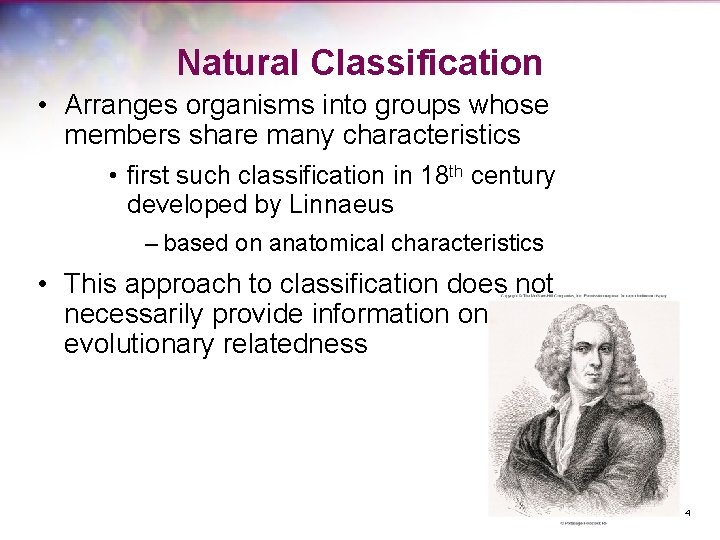
Natural Classification • Arranges organisms into groups whose members share many characteristics • first such classification in 18 th century developed by Linnaeus – based on anatomical characteristics • This approach to classification does not necessarily provide information on evolutionary relatedness 4

Polyphasic Taxonomy • Used to determine the genus and species of a newly discovered prokaryote • Incorporates information from genetic, phenotypic, and phylogenetic analysis 5
Phenetic Classification • Groups organisms together based on mutual similarity of phenotypes • Can reveal evolutionary relationships, but not dependent on phylogenetic analysis – i. e. , doesn’t weigh characters • Best systems compare as many attributes as possible 6
Phylogenetic Classification • Also called phyletic classification systems • Phylogeny – evolutionary development of a species • Usually based on direct comparison of genetic material and gene products – Woese and Fox proposed using small subunit (SSU) r. RNA nucleotide sequences to assess evolutionary relatedness of organisms 7
Genotypic Classification • Comparison of genetic similarity between organisms – individual genes or whole genomes can be compared – 70% homologous belong to the same species 8
19. 2 Taxonomic Ranks 1. Outline the general scheme of taxonomic hierarchy 2. Explain how the binomial system of Linnaeus is used in microbial taxonomy 9
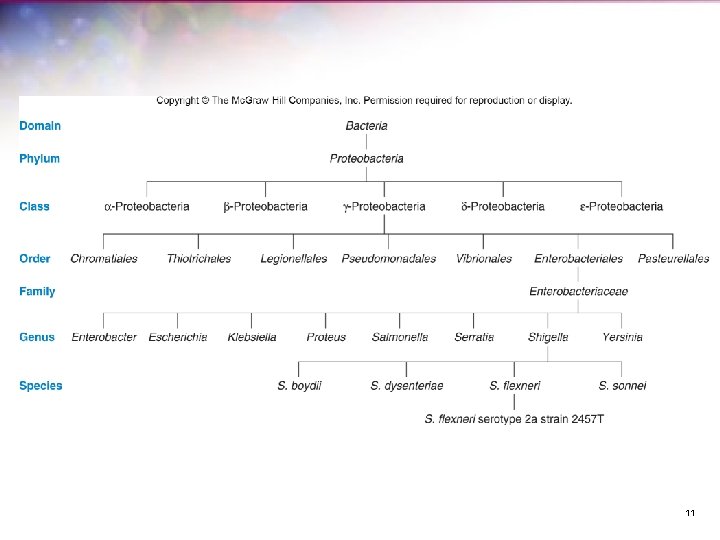
Taxonomic Ranks - 1 • Microbes are placed in hierarchical taxonomic levels with each level or rank sharing a common set of specific features • Highest rank is domain – Bacteria and Archaea – microbes only – Eukarya – microbes and macroorganisms • Within domain – phylum, class, order, family, genus, species epithet, some microbes have subspecies 10
11
Species • Definition – collection of strains that share many stable properties and differ significantly from other groups of strains • Also suggested as a definition of species – collection of organisms that share the same sequences in their core housekeeping genes 12
Strains • Descended from a single, pure microbial culture • Vary from each other in many ways – biovars – differ biochemically and physiologically – morphovars – differ morphologically – serovars – differ in antigenic properties 13
Type Strain • Usually one of first strains of a species studied • Often most fully characterized • Not necessarily most representative member of species 14
Genus • Well-defined group of one or more strains • Clearly separate from other genera • Often disagreement among taxonomists about the assignment of a specific species to a genus 15
Binomial System of Nomenclature • Devised by Carl von Linné (Carolus Linnaeus) • Each organism has two names – genus name – italicized and capitalized (e. g. , Escherichia) – species epithet – italicized but not capitalized (e. g. , coli) • Can be abbreviated after first use (e. g. , E. coli) • A new species cannot be recognized until it has been published in the International Journal of Systematic and Evolutionary Microbiology 16
19. 3 Exploring Microbial Taxonomy and Phylogeny 1. Review the approaches commonly used to determine taxonomic classification 2. Assess the impact molecular methods have had on the field of microbial taxonomy and phylogeny 3. Compare and contrast nucleotide sequencing and nonsequencing based molecular approaches use in microbial taxonomy and phylogeny 4. Select an appropriate technique to identify a microbial genus, species, and strain 5. Predict the basic biological as well as public health implications of microbial taxonomic identification 17
Techniques for Determining Microbial Taxonomy and Phylogeny • Classical characteristics – morphological – physiological – biochemical – ecological – genetic 18
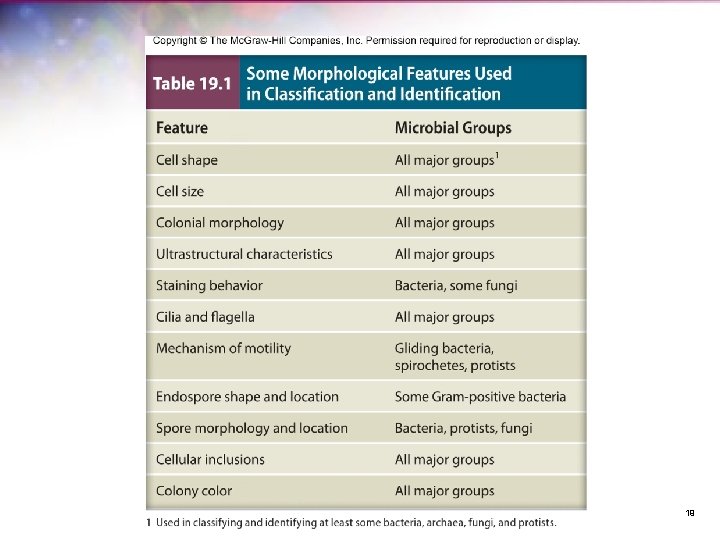
19
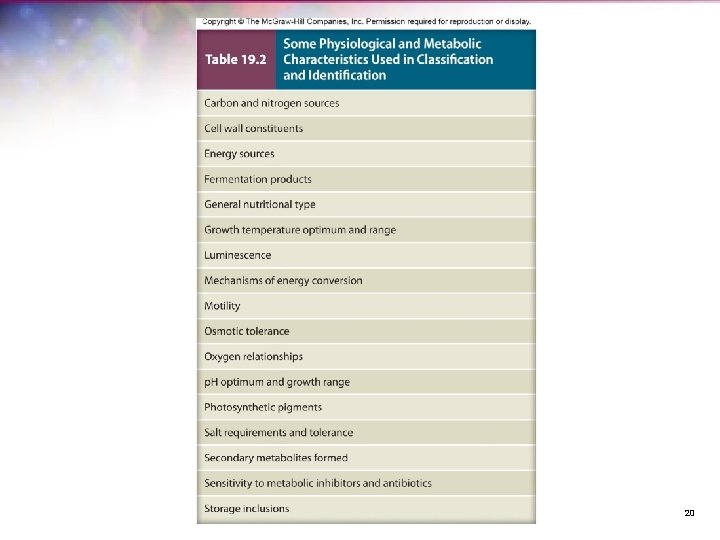
20
Ecological Characteristics • Life-cycle patterns • Symbiotic relationships • Ability to cause disease • Habitat preferences • Growth requirements 21
Molecular Approaches • Extremely important because almost no fossil record was left by microbes • Allows for the collection of a large and accurate data set from many organisms • Phylogenetic inferences based on these provide the best analysis of microbial evolution currently available 22
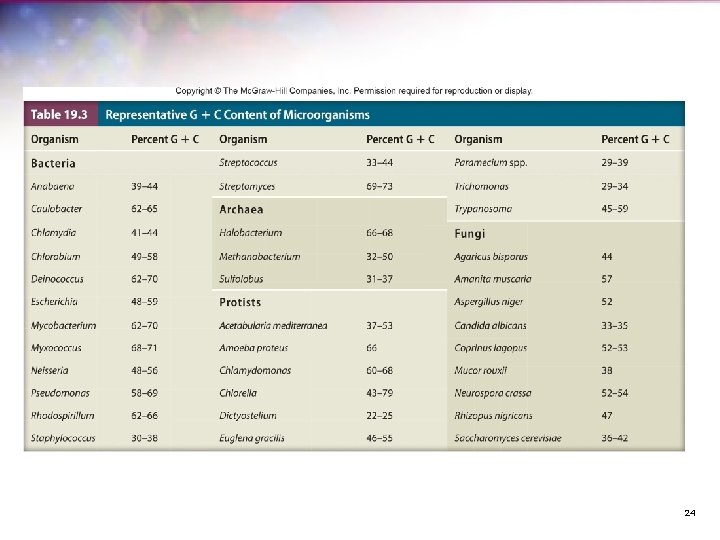
Molecular Characteristics • Nucleic acid base composition • Nucleic acid hybridization • Nucleic acid sequencing • Genomic fingerprinting • Amino acid sequencing 23
24
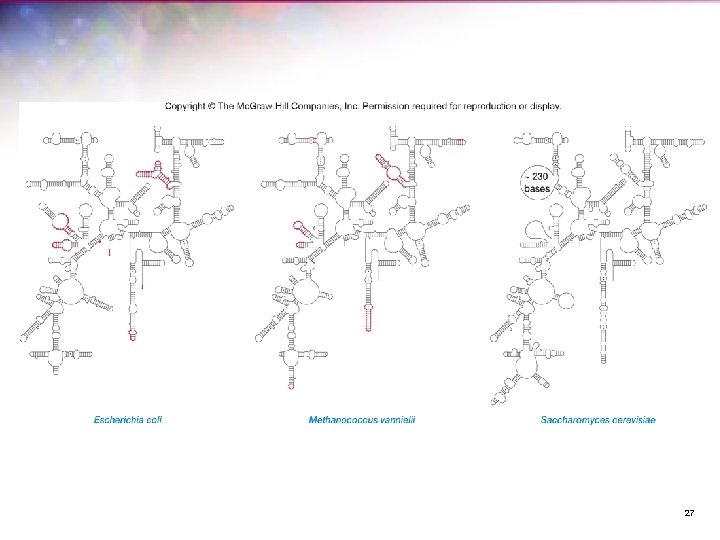
Nucleic Acid Sequencing • Small subunit r. RNAs (SSU r. RNAs) – sequences of 16 S and 18 S r. RNA most powerful and direct method for inferring microbial phylogenies and making taxonomic assignments at genus level 25
Comparative Analysis of 16 S r. RNA Sequences • Oligonucleotide signature sequences found – short conserved sequences specific for a phylogenetically defined group of organisms • Either complete or, more often, specific r. RNA fragments can be compared • When comparing r. RNA sequences between 2 organisms, their relatedness is represented by percent sequence homology – 70% is cutoff value for species definition 26
27
The Concept and Definition of a Microbial Species • Can’t use species definition based on interbreeding because bacteria and archaea are asexual • “Gold standard” for species assignment may not be applicable for microorganisms 28
19. 6 Bergey’s Manual of Systematic Bacteriology 1. Employ Bergey’s Manual to investigate the defining taxonomic elements used for a bacterium or archaeon that is unfamiliar to you 29
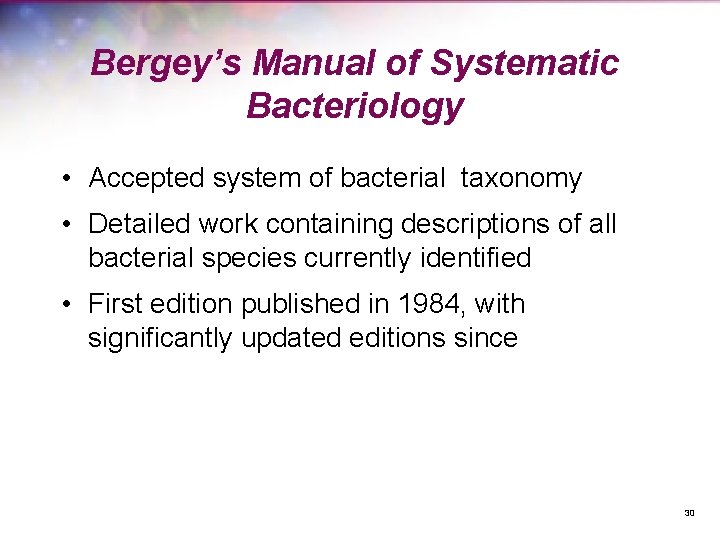
Bergey’s Manual of Systematic Bacteriology • Accepted system of bacterial taxonomy • Detailed work containing descriptions of all bacterial species currently identified • First edition published in 1984, with significantly updated editions since 30
31
- Slides: 31