
19 Microbial Taxonomy and the Evolution of Diversity
19 Microbial Taxonomy and the Evolution of Diversity 1 Copyright © Mc. Graw-Hill Global Education Holdings, LLC. Permission required for reproduction or display.

19. 1 Introduction to Microbial Taxonomy 1. Explain the utility of taxonomy and systematics 2. Draw a concept map illustrating the differences between phenetic, phylogenetic, and genotypic classification 2
Introduction to Microbial Taxonomy • Taxonomy – science of biological classification – consists of three separate but interrelated parts • classification – arrangement of organisms into groups (taxa; s. , taxon) • nomenclature – assignment of names to taxa • identification – determination of taxon to which an isolate belongs 3
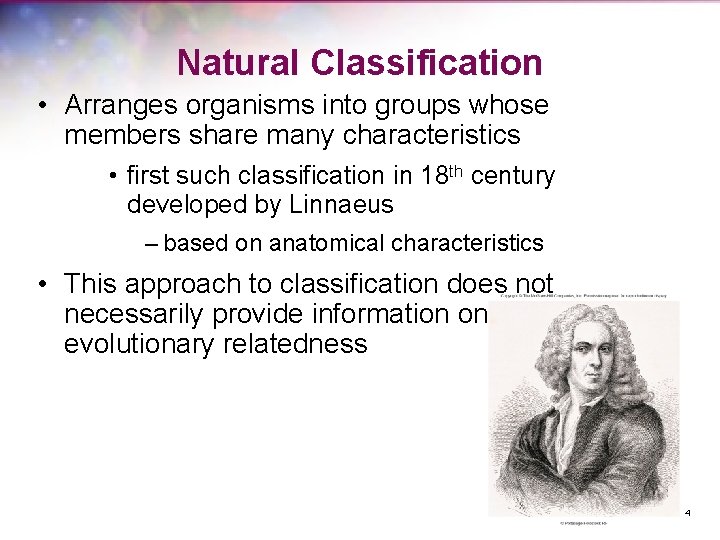
Natural Classification • Arranges organisms into groups whose members share many characteristics • first such classification in 18 th century developed by Linnaeus – based on anatomical characteristics • This approach to classification does not necessarily provide information on evolutionary relatedness 4
Polyphasic Taxonomy • Used to determine the genus and species of a newly discovered prokaryote • Incorporates information from genetic, phenotypic, and phylogenetic analysis 5
Phenetic Classification • Groups organisms together based on mutual similarity of phenotypes • Can reveal evolutionary relationships, but not dependent on phylogenetic analysis – i. e. , doesn’t weigh characters • Best systems compare as many attributes as possible 6
Phylogenetic Classification • Also called phyletic classification systems • Phylogeny – evolutionary development of a species • Usually based on direct comparison of genetic material and gene products – Woese and Fox proposed using small subunit (SSU) r. RNA nucleotide sequences to assess evolutionary relatedness of organisms 7
Genotypic Classification • Comparison of genetic similarity between organisms – individual genes or whole genomes can be compared – 70% homologous belong to the same species 8
19. 2 Taxonomic Ranks 1. Outline the general scheme of taxonomic hierarchy 2. Explain how the binomial system of Linnaeus is used in microbial taxonomy 9
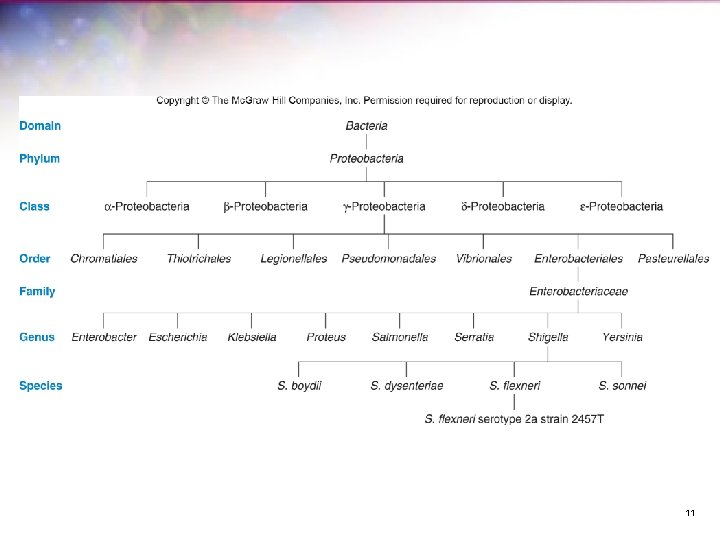
Taxonomic Ranks - 1 • Microbes are placed in hierarchical taxonomic levels with each level or rank sharing a common set of specific features • Highest rank is domain – Bacteria and Archaea – microbes only – Eukarya – microbes and macroorganisms • Within domain – phylum, class, order, family, genus, species epithet, some microbes have subspecies 10
11
Species • Definition – collection of strains that share many stable properties and differ significantly from other groups of strains • Also suggested as a definition of species – collection of organisms that share the same sequences in their core housekeeping genes 12
Strains • Descended from a single, pure microbial culture • Vary from each other in many ways – biovars – differ biochemically and physiologically – morphovars – differ morphologically – serovars – differ in antigenic properties 13
Type Strain • Usually one of first strains of a species studied • Often most fully characterized • Not necessarily most representative member of species 14
Genus • Well-defined group of one or more strains • Clearly separate from other genera • Often disagreement among taxonomists about the assignment of a specific species to a genus 15
Binomial System of Nomenclature • Devised by Carl von Linné (Carolus Linnaeus) • Each organism has two names – genus name – italicized and capitalized (e. g. , Escherichia) – species epithet – italicized but not capitalized (e. g. , coli) • Can be abbreviated after first use (e. g. , E. coli) • A new species cannot be recognized until it has been published in the International Journal of Systematic and Evolutionary Microbiology 16
19. 3 Exploring Microbial Taxonomy and Phylogeny 1. Review the approaches commonly used to determine taxonomic classification 2. Assess the impact molecular methods have had on the field of microbial taxonomy and phylogeny 3. Compare and contrast nucleotide sequencing and nonsequencing based molecular approaches use in microbial taxonomy and phylogeny 4. Select an appropriate technique to identify a microbial genus, species, and strain 5. Predict the basic biological as well as public health implications of microbial taxonomic identification 17
Techniques for Determining Microbial Taxonomy and Phylogeny • Classical characteristics – morphological – physiological – biochemical – ecological – genetic 18
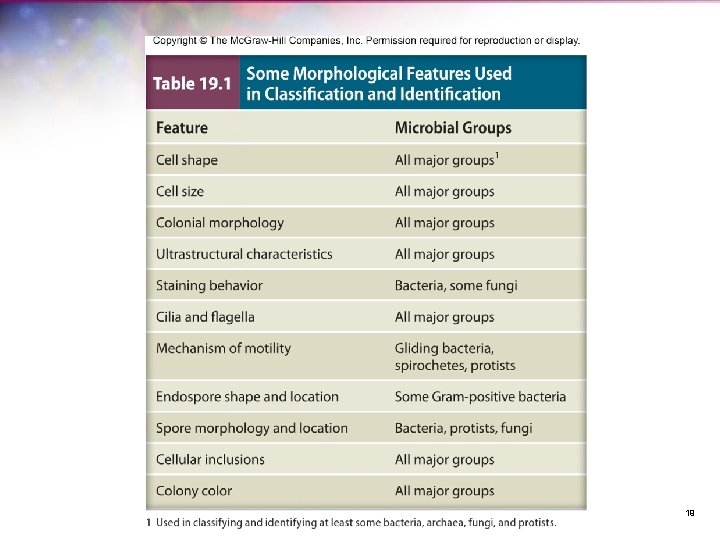
19
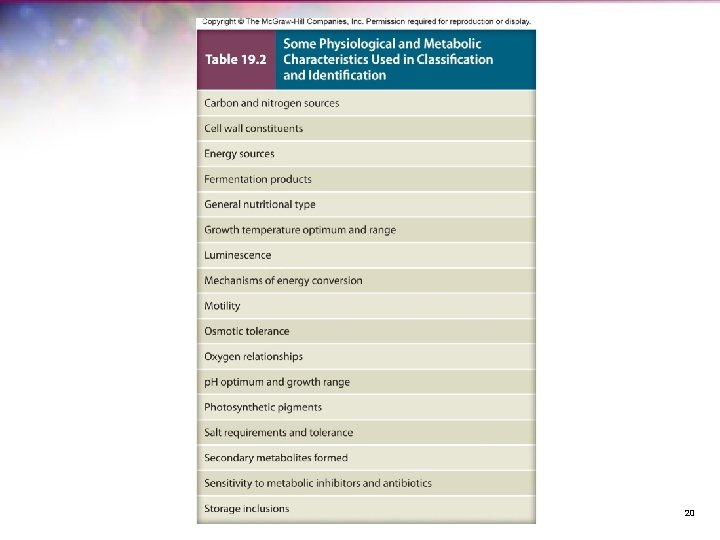
20
Ecological Characteristics • Life-cycle patterns • Symbiotic relationships • Ability to cause disease • Habitat preferences • Growth requirements 21
Molecular Approaches • Extremely important because almost no fossil record was left by microbes • Allows for the collection of a large and accurate data set from many organisms • Phylogenetic inferences based on these provide the best analysis of microbial evolution currently available 22
Molecular Characteristics • Nucleic acid base composition • Nucleic acid hybridization • Nucleic acid sequencing • Genomic fingerprinting • Amino acid sequencing 23
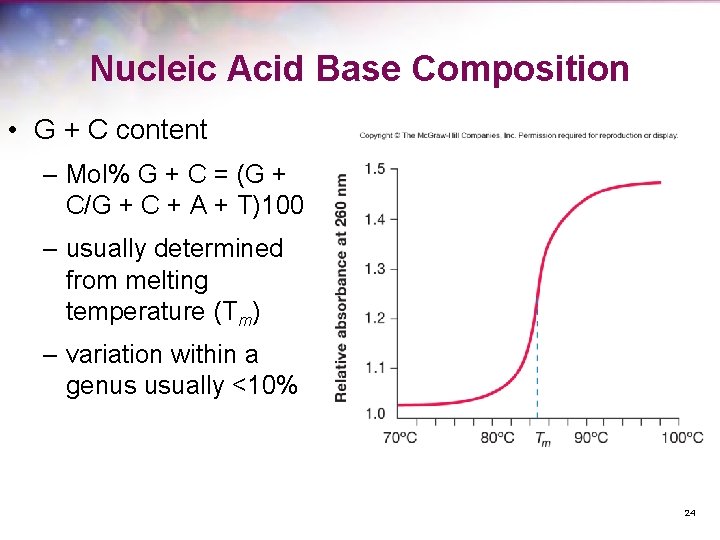
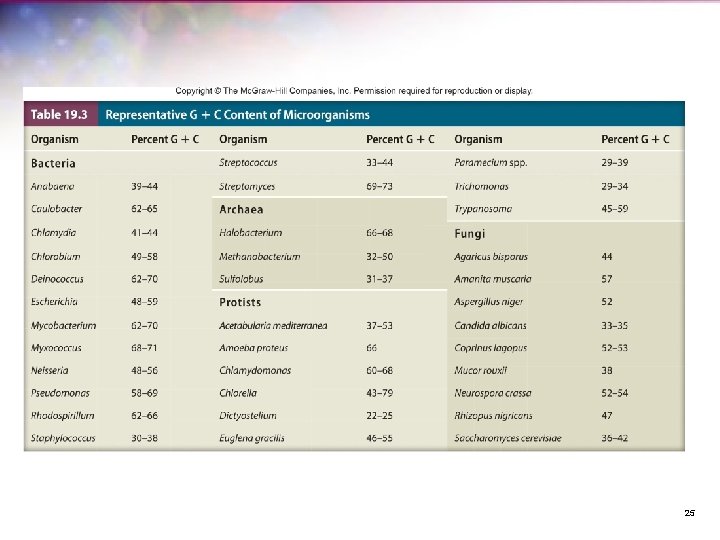
Nucleic Acid Base Composition • G + C content – Mol% G + C = (G + C/G + C + A + T)100 – usually determined from melting temperature (Tm) – variation within a genus usually <10% 24
25
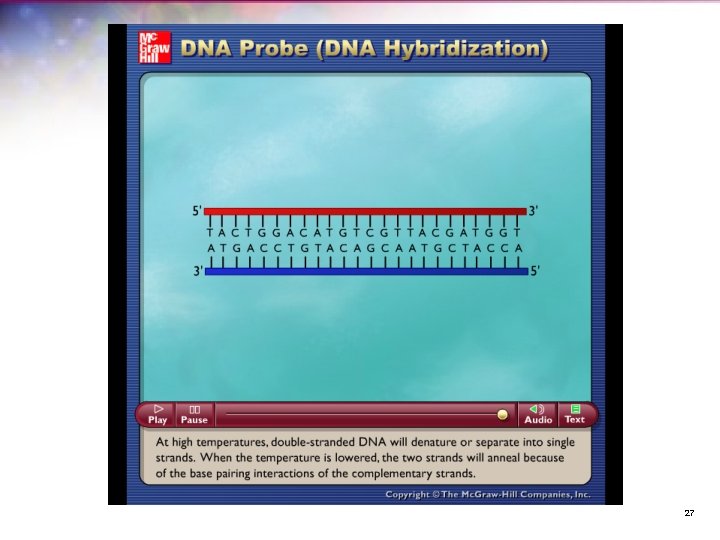
Nucleic Acid Hybridization • DNA-DNA hybridization – measure of sequence homology • Common procedure – bind nonradioactive DNA to nitrocellulose filter – incubate filter with radioactive single-stranded DNA – measure amount of radioactive DNA attached to filter 26
27
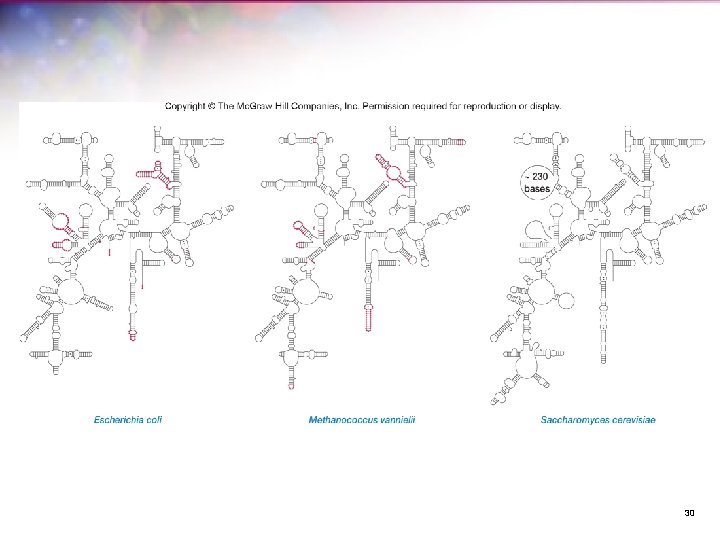
Nucleic Acid Sequencing • Small subunit r. RNAs (SSU r. RNAs) – sequences of 16 S and 18 S r. RNA most powerful and direct method for inferring microbial phylogenies and making taxonomic assignments at genus level 28
Comparative Analysis of 16 S r. RNA Sequences • Oligonucleotide signature sequences found – short conserved sequences specific for a phylogenetically defined group of organisms • Either complete or, more often, specific r. RNA fragments can be compared • When comparing r. RNA sequences between 2 organisms, their relatedness is represented by percent sequence homology – 70% is cutoff value for species definition 29
30
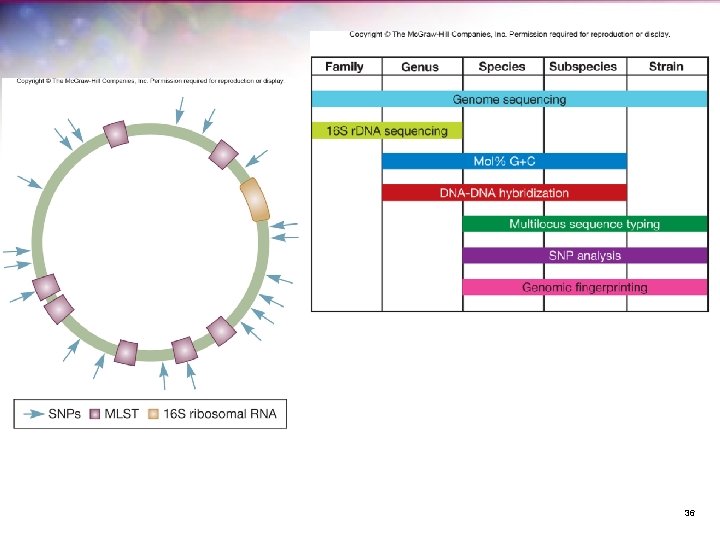
Genomic Fingerprinting • Used for microbial classification and determination of phylogenetic relationships • Requires analysis of genes that evolve more quickly than r. RNA encoding genes – multilocus sequence analysis (MSLA) • the sequencing and comparison of 5 to 7 housekeeping genes is done to prevent misleading results from analysis of one gene – multilocus sequence typing (MLST) • discriminates among strains 31
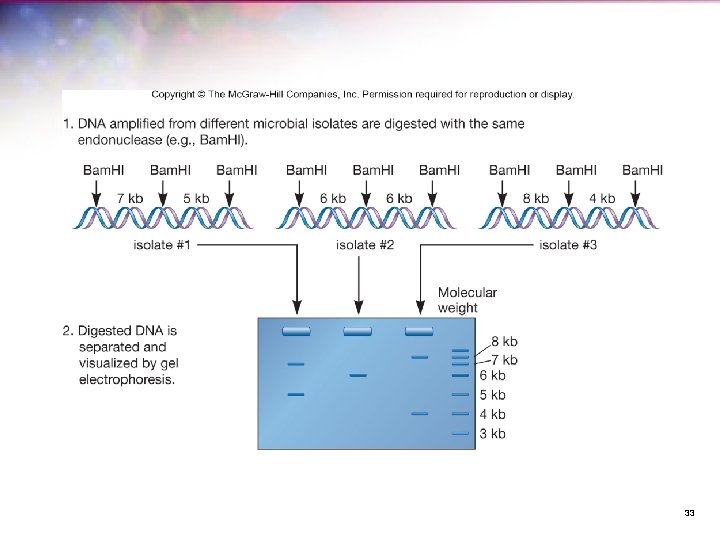
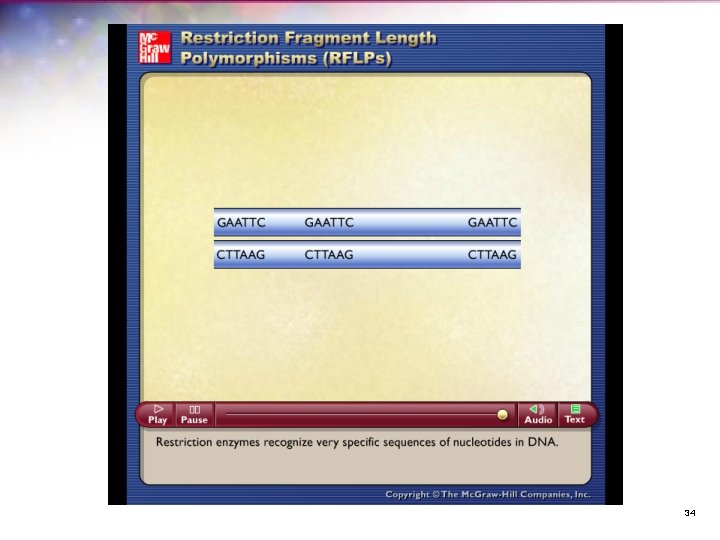
Restriction Fragment Length Polymorphism (RFLP) • Uses restriction enzymes to recognize specific nucleotide sequences – cleavage patterns are compared • Ribotyping – similarity between r. RNA genes is determined by RFLP rather than sequencing 32
33
34
Single Nucleotide Polymorphism (SNP) • Looks at single nucleotide changes, or polymorphisms, in specific genes • 16 S r. RNA focuses on one specific gene • Regions targeted because they are normally conserved, so single changes in a base pair reveal evolutionary change 35
36
19. 4 Phylogenetic Trees 1. Paraphrase the rationale underpinning the construction of phylogenetic trees 2. Compare and contrast rooted and unrooted trees 3. Outline the general considerations used in building a phylogenetic tree 4. Characterize the challenges horizontal gene transfer introduces in the study of microbial evolution 37
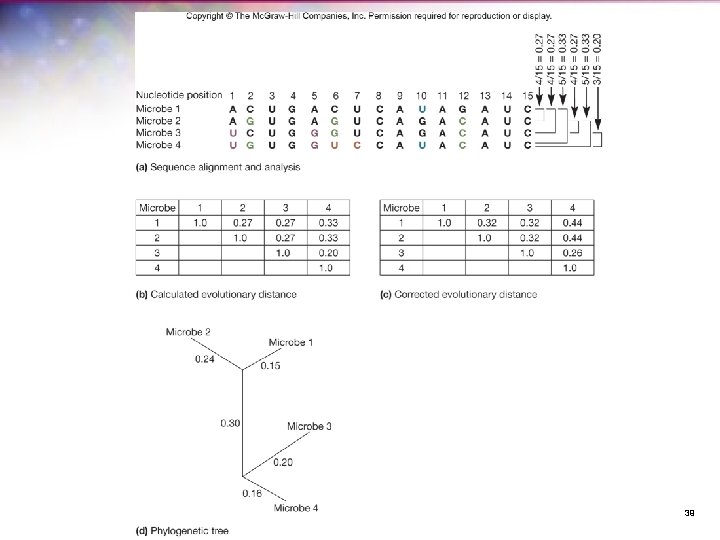
Phylogenetic Trees • Show inferred evolutionary relationships in the form of multiple branching lineages connected by nodes • Identified sequences at tip of branches – operational taxonomic unit • Nodes represent a divergence event • Length of branch represents number of molecular changes between two nodes 38
39
Creating Phylogenetic Trees from Molecular Data • Align sequences • Determine number of positions that are different • Express difference – e. g. , evolutionary distance • Use measure of difference to create tree – organisms clustered based on relatedness – parsimony – fewest changes from ancestor to organism in question 40
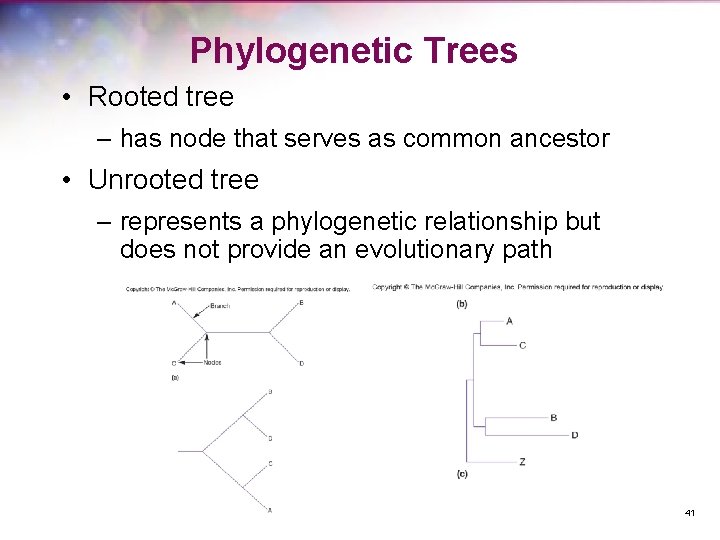
Phylogenetic Trees • Rooted tree – has node that serves as common ancestor • Unrooted tree – represents a phylogenetic relationship but does not provide an evolutionary path 41
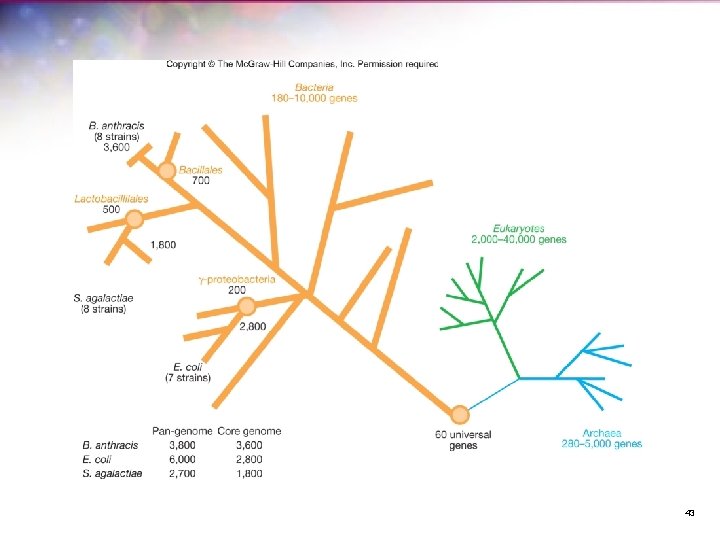
Phylogenetic Trees • Extensive horizontal gene transfer has occurred within/between domains • Pattern of microbial evolution is not as linear and treelike as once thought • Some trees attempt to display HGT – resemble web or network with many lateral branches linking various trunks – each branch representing the transfer of one or a few genes 42
43
19. 5 Evolutionary Processes and the Concept of a Microbial Species 1. Diagram the endosymbiotic theory of the origin of mitochondria and chloroplasts 2. Compare and contrast the two theories that address the origin of the nucleus 3. Explain why the concept of a microbial species is difficult to define 4. List the “gold standard” data currently applied to species designation 5. Explain the importance of adaptive mutations in giving rise to new ecotypes 44
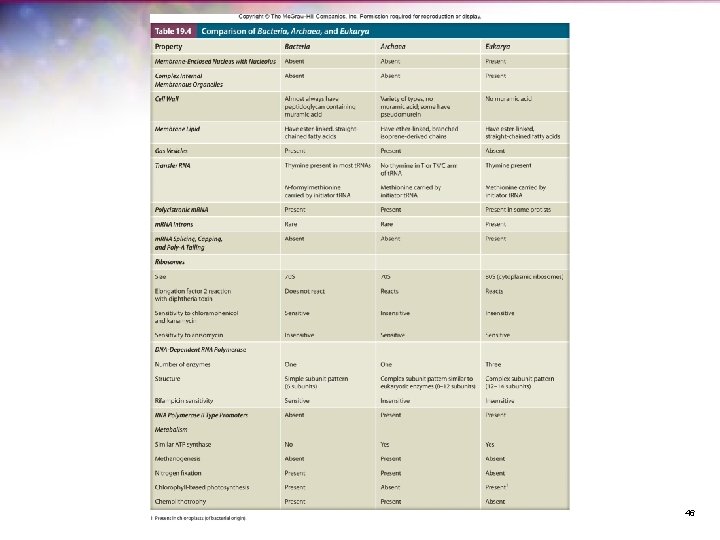
Evolution of the Three Domains of Life • Hypothesized that when RNA became enclosed in a lipid sphere, the first primitive life forms were generated • Last universal common ancestor (LUCA) – the root of the tree of life, based on SSU r. RNA, shows the earliest region is on the bacterial branch – thought that Archaea and Eukarya evolved independently of Bacteria 45
46
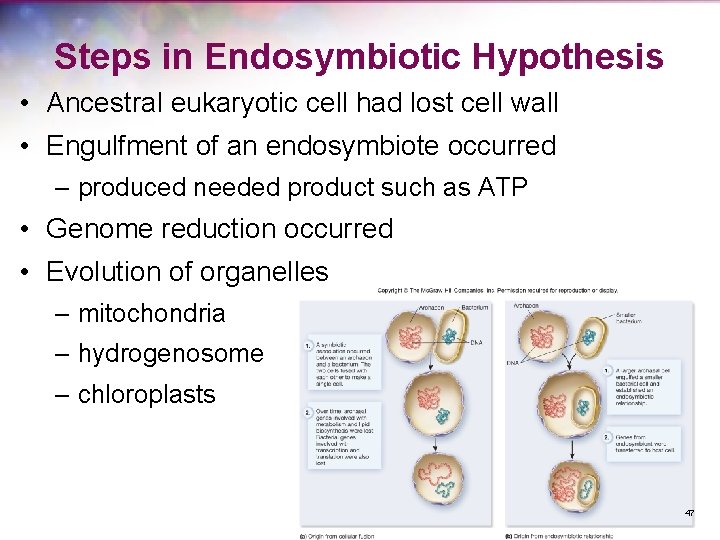
Steps in Endosymbiotic Hypothesis • Ancestral eukaryotic cell had lost cell wall • Engulfment of an endosymbiote occurred – produced needed product such as ATP • Genome reduction occurred • Evolution of organelles – mitochondria – hydrogenosome – chloroplasts 47
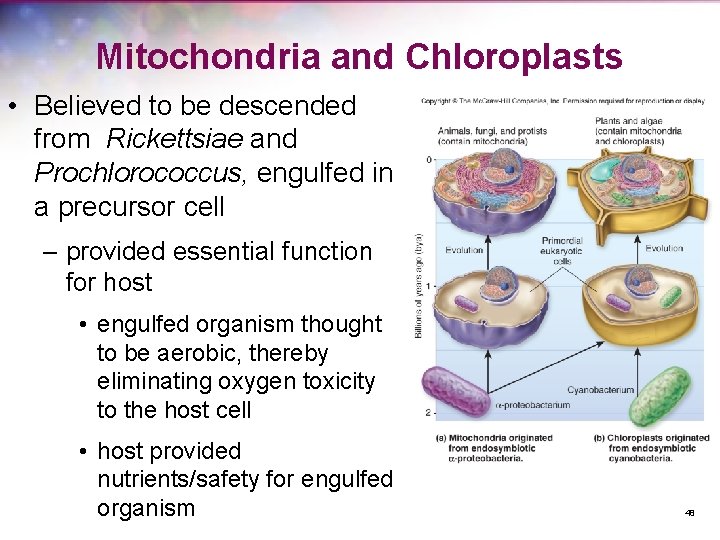
Mitochondria and Chloroplasts • Believed to be descended from Rickettsiae and Prochlorococcus, engulfed in a precursor cell – provided essential function for host • engulfed organism thought to be aerobic, thereby eliminating oxygen toxicity to the host cell • host provided nutrients/safety for engulfed organism 48
Hydrogenosomes • Asserts that the a-proteobacterium endosymbiont was an anaerobic bacterium that produced H 2 and CO 2 as fermentation end products – hosts lacking external H 2 source became dependent on endosymbiont which made ATP by substrate level phosphorylation – symbiont ultimately evolved into a mitochondrion or a hydrogenosome • organelle found in protists that produce ATP by fermentation 49
The Concept and Definition of a Microbial Species • Can’t use species definition based on interbreeding because bacteria and archaea are asexual • “Gold standard” for species assignment may not be applicable for microorganisms 50
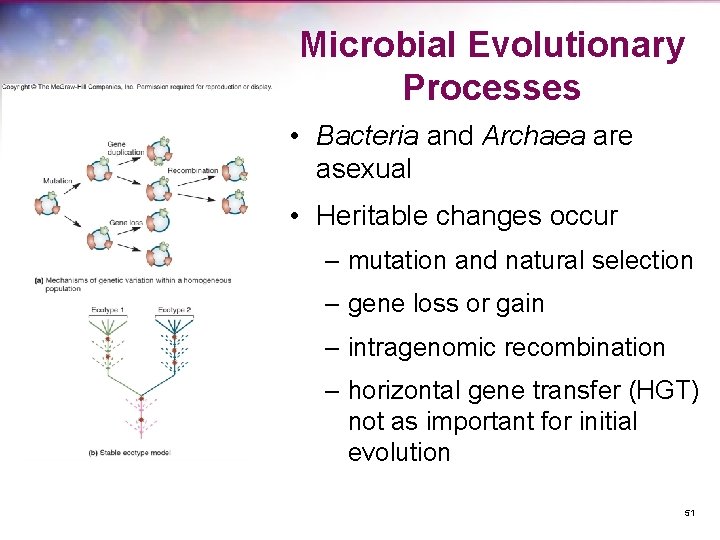
Microbial Evolutionary Processes • Bacteria and Archaea are asexual • Heritable changes occur – mutation and natural selection – gene loss or gain – intragenomic recombination – horizontal gene transfer (HGT) not as important for initial evolution 51
Anagenesis Model of Microbial Diversity • Microevolution – also known as genetic drift • Small, random genetic changes over generations which slowly drive either speciation or extinction, both of which are forms of macroevolution – only adaptive mutants are selected 52
Ecotype Model for Microbial Diversity • Genetically similar population of microbes is ecologically distinct • Members of specific ecosystem diversify and gain adaptive mutation to compete for resources • Extinction occurs in other ecosystems and reduced genetic variation • Punctuated equilibria 53
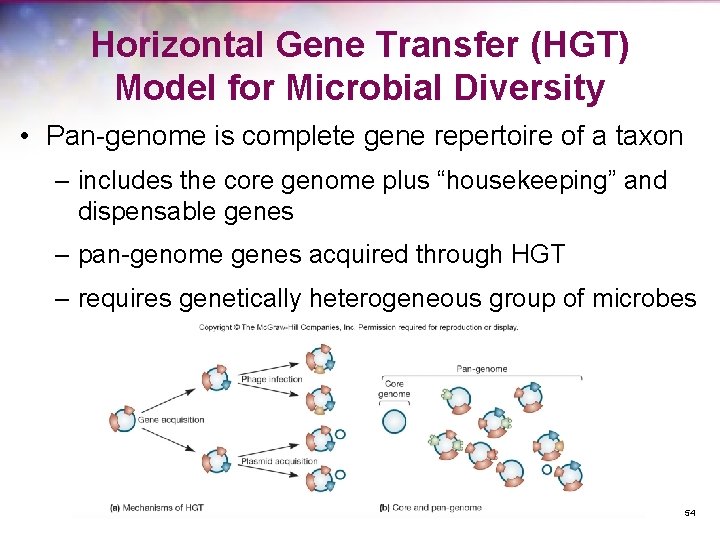
Horizontal Gene Transfer (HGT) Model for Microbial Diversity • Pan-genome is complete gene repertoire of a taxon – includes the core genome plus “housekeeping” and dispensable genes – pan-genome genes acquired through HGT – requires genetically heterogeneous group of microbes 54
19. 6 Bergey’s Manual of Systematic Bacteriology 1. Employ Bergey’s Manual to investigate the defining taxonomic elements used for a bacterium or archaeon that is unfamiliar to you 55
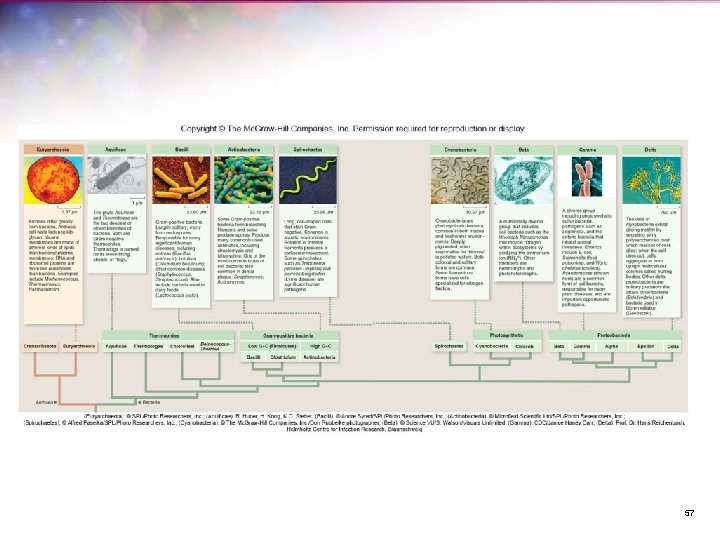
Bergey’s Manual of Systematic Bacteriology • Accepted system of bacterial taxonomy • Detailed work containing descriptions of all bacterial species currently identified • First edition published in 1984, with significantly updated editions since 56
57
- Slides: 57