
19 ISMOR Formulating the Problem and the Strategy
19 ISMOR: Formulating the Problem and the Strategy for Solution Jim Moffat, Dstl, UK jmoffat@dstl. gov. uk
Context: NATO Code of Best Practice for C 2 Assessment • Previous version available as downloadable pdf file from www. dodccrp. org under ‘NATO Support’ • New version (including a whole new chapter on Problem Formulation) will be released for unlimited circulation by NATO. • This talk is a preview of the Problem Formulation Chapter 01 December 2020 © Dstl 2001 Dstl is part of the Ministry of Defence
Problem Formulation • “First find out what the question is– then find out what the real question is” – Vince Roske 01 December 2020 © Dstl 2001 Dstl is part of the Ministry of Defence

Problem Formulation - Why Do It? • Effective problem formulation is fundamental to the success of all analysis • In C 2 assessment the problems are often ill-defined and complex, involving many dimensions and a rich context • The problem formulation phase should identify the Context of the Study and aspects of the Problem related issues - the what and the why 01 December 2020 © Dstl 2001 Dstl is part of the Ministry of Defence
Problem Formulation - Context · Geopolitical context that bounds the problem space · Aim and Objectives of the analysis - including the decisions to be supported · Generic C 2 issues · Relevant previous studies 01 December 2020 © Dstl 2001 Dstl is part of the Ministry of Defence
Problem Formulation - Aspects of the Problem · Issues to be Addressed · Assumptions · High Level Measures of Merit (Outputs) · Independent Variables (Inputs) (controllable and uncontrollable) · Constraints on the Values of the Variables (domain and range) – The problem is not formulated until the Assessment Team has specified each aspect of the problem. 01 December 2020 © Dstl 2001 Dstl is part of the Ministry of Defence
In Simple Terms…. . • Begin with the real problem • Identify the variables bounding the problem space • Determine which are outputs (dependent) • Determine which are inputs (independent) • Build an understanding of how these relate – A voyage of discovery 01 December 2020 © Dstl 2001 Dstl is part of the Ministry of Defence
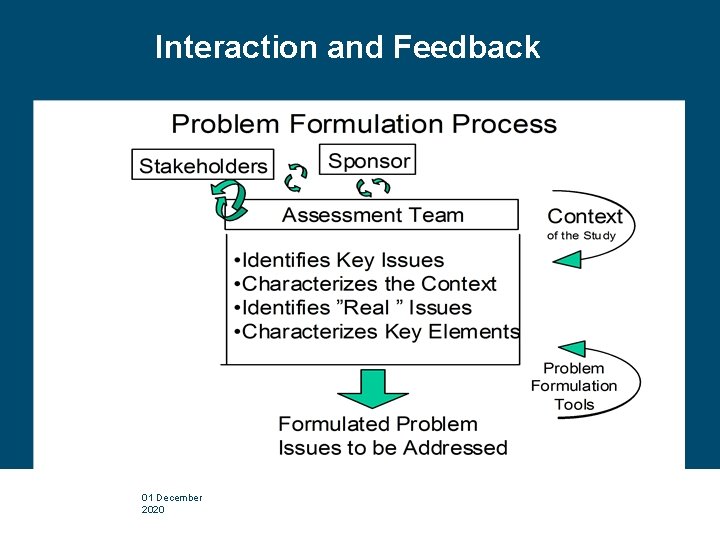
Interaction and Feedback 01 December 2020 © Dstl 2001 Dstl is part of the Ministry of Defence
Principles of Problem Formulation • Do it before developing concepts for analysis or model selection • Understand the decisions to be supported and stakeholder viewpoints • Carefully review previous work • Do analysis and synthesis • Be broad and iterative • Practical constraints are modifiers not drivers • Address risks to the study explicitly 01 December 2020 © Dstl 2001 Dstl is part of the Ministry of Defence
Additional Principles for OOTW C 2 Assessment • Address the Geopolitical Context and generic C 2 issues • Look at Policy level impacts - Mo. PE • History can be important • Do not focus in too soon A broad range of disciplines (e. g. social scientists, historians, and regional experts in OOTW assessment) is required 01 December 2020 © Dstl 2001 Dstl is part of the Ministry of Defence
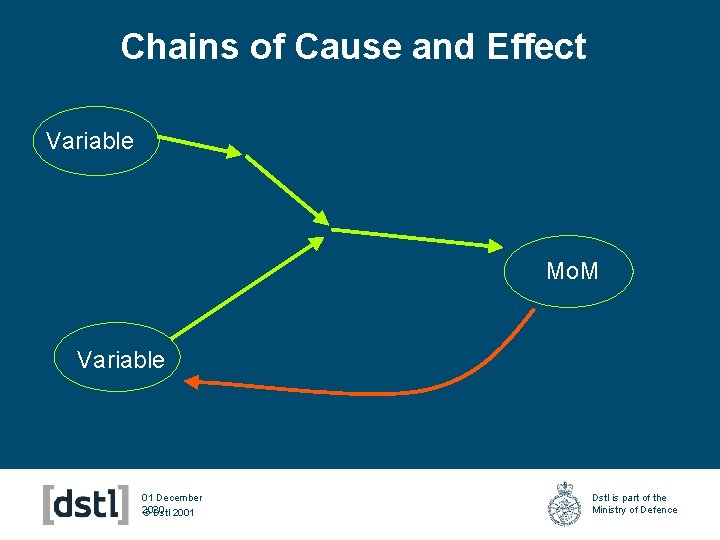
Chains of Cause and Effect Variable Mo. M Variable 01 December 2020 © Dstl 2001 Dstl is part of the Ministry of Defence
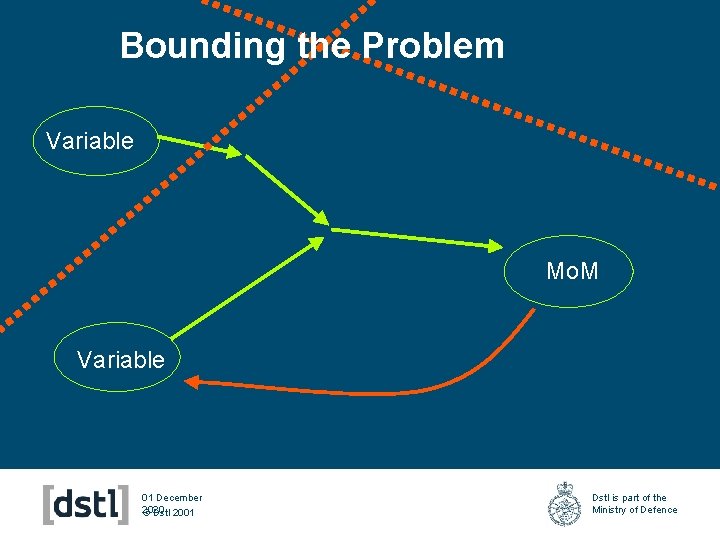
Bounding the Problem Variable Mo. M Variable 01 December 2020 © Dstl 2001 Dstl is part of the Ministry of Defence
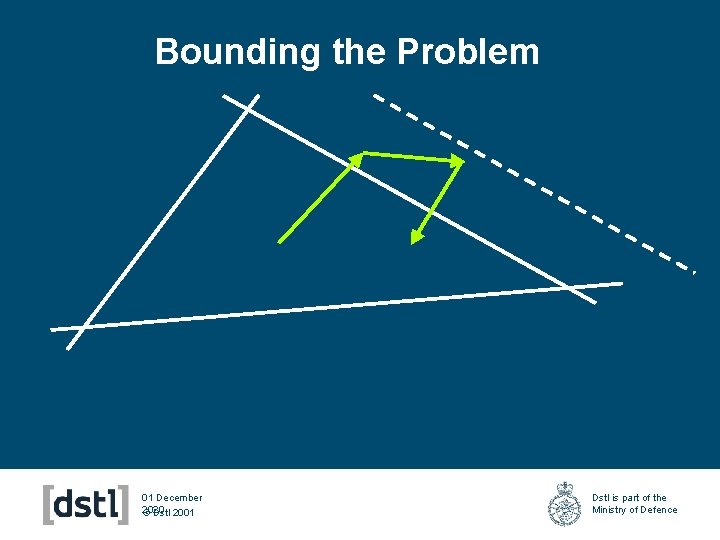
Bounding the Problem 01 December 2020 © Dstl 2001 Dstl is part of the Ministry of Defence
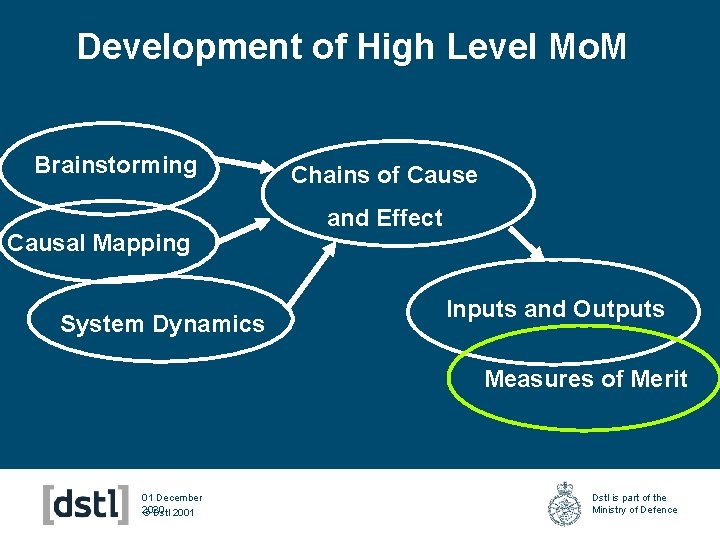
Development of High Level Mo. M Brainstorming Causal Mapping System Dynamics Chains of Cause and Effect Inputs and Outputs Measures of Merit 01 December 2020 © Dstl 2001 Dstl is part of the Ministry of Defence
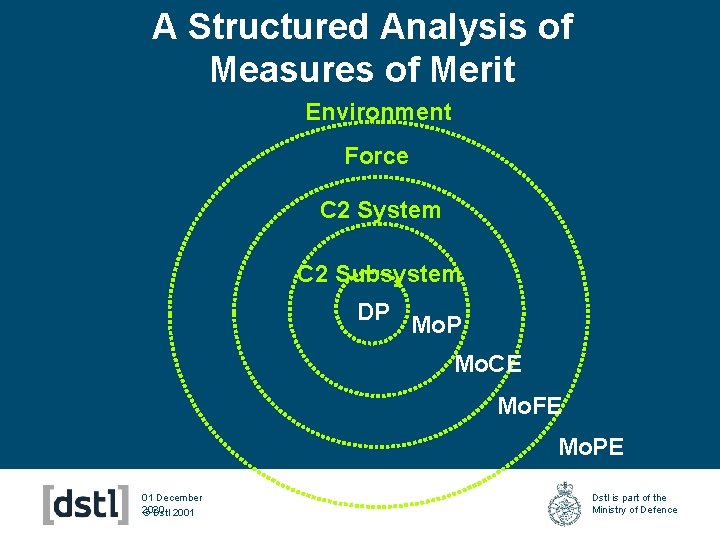
A Structured Analysis of Measures of Merit Environment Force C 2 System C 2 Subsystem DP Mo. CE Mo. FE Mo. PE 01 December 2020 © Dstl 2001 Dstl is part of the Ministry of Defence
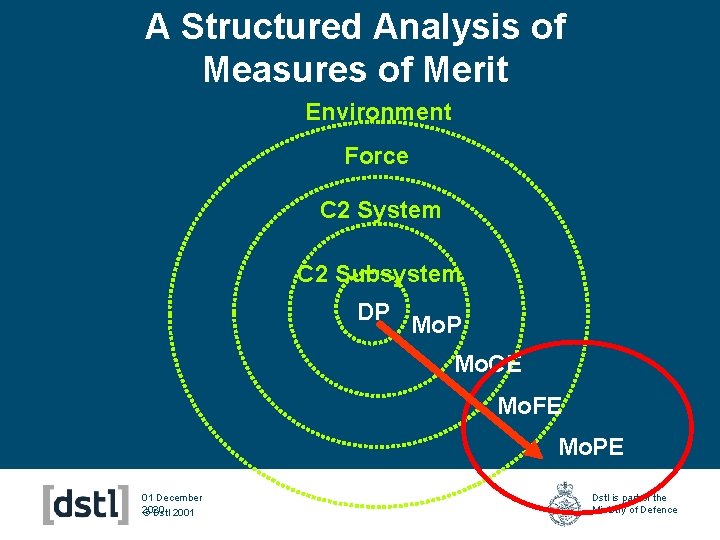
A Structured Analysis of Measures of Merit Environment Force C 2 System C 2 Subsystem DP Mo. CE Mo. FE Mo. PE 01 December 2020 © Dstl 2001 Dstl is part of the Ministry of Defence
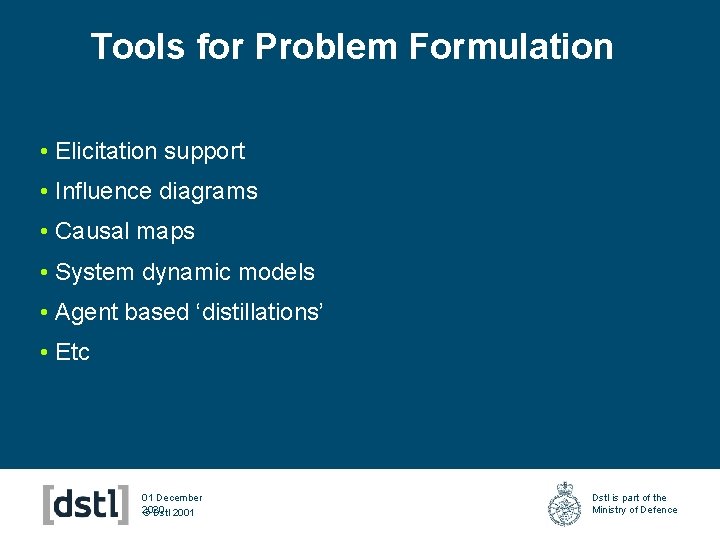
Tools for Problem Formulation • Elicitation support • Influence diagrams • Causal maps • System dynamic models • Agent based ‘distillations’ • Etc 01 December 2020 © Dstl 2001 Dstl is part of the Ministry of Defence
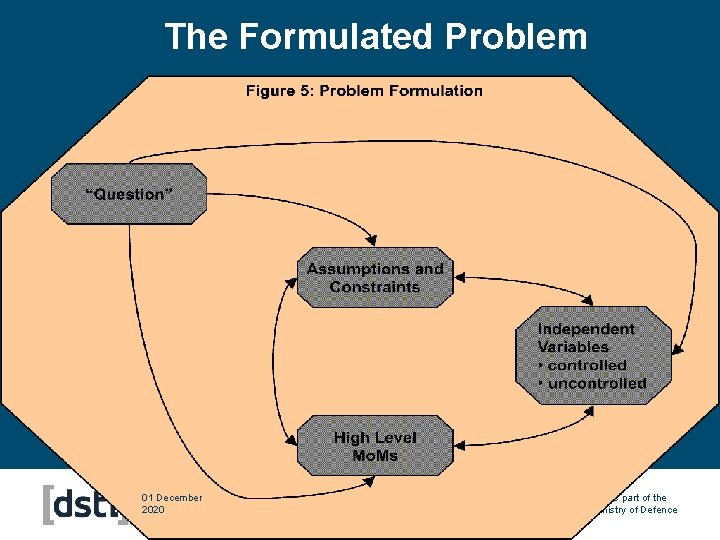
The Formulated Problem 01 December 2020 © Dstl 2001 Dstl is part of the Ministry of Defence
Final Thoughts • Effort spent ‘up front’ in formulating the problem will pay off later • It is better to be approximately right than precisely wrong • ‘A theory should be a simple as possible - but no simpler’ (Albert Einstein) 01 December 2020 © Dstl 2001 Dstl is part of the Ministry of Defence
- Slides: 19