
19 20 2 Classification of Plants KEY CONCEPT

- Slides: 9
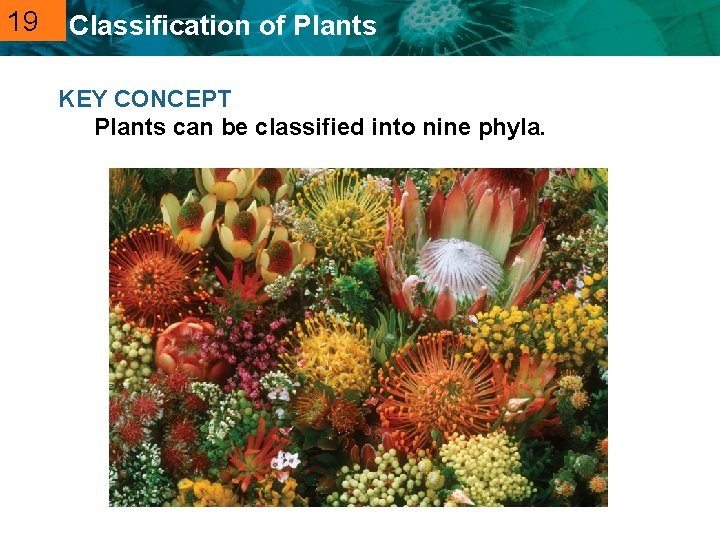
19 20. 2 Classification of Plants KEY CONCEPT Plants can be classified into nine phyla.
20. 2 Classification of Plants Fig. 19 -5 Figure 19 -5 Fossil evidence indicates that bryophytes are the oldest and angiosperms the youngest of the four major plant groups.
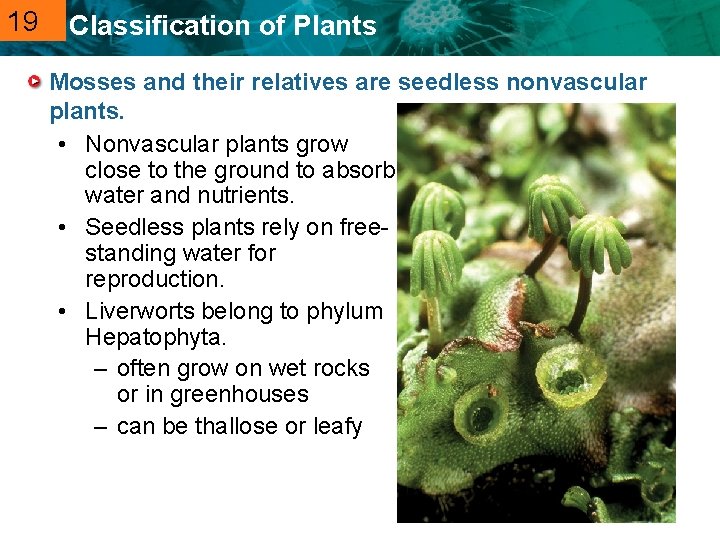
19 20. 2 Classification of Plants Mosses and their relatives are seedless nonvascular plants. • Nonvascular plants grow close to the ground to absorb water and nutrients. • Seedless plants rely on freestanding water for reproduction. • Liverworts belong to phylum Hepatophyta. – often grow on wet rocks or in greenhouses – can be thallose or leafy
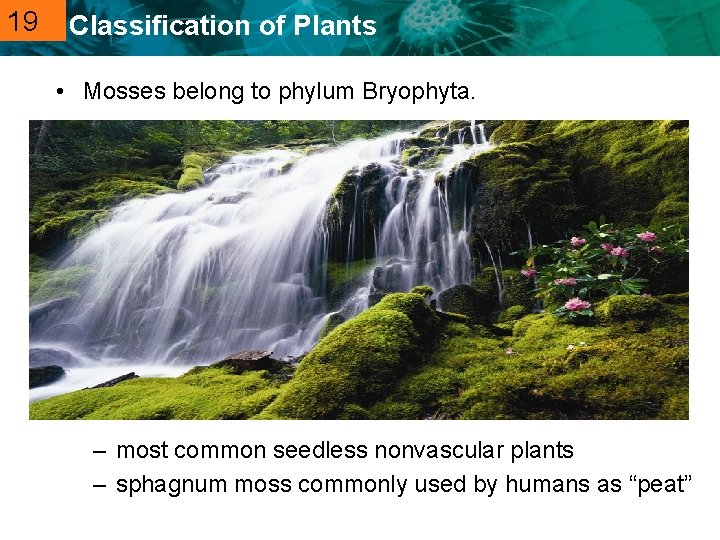
19 20. 2 Classification of Plants • Mosses belong to phylum Bryophyta. – most common seedless nonvascular plants – sphagnum moss commonly used by humans as “peat”
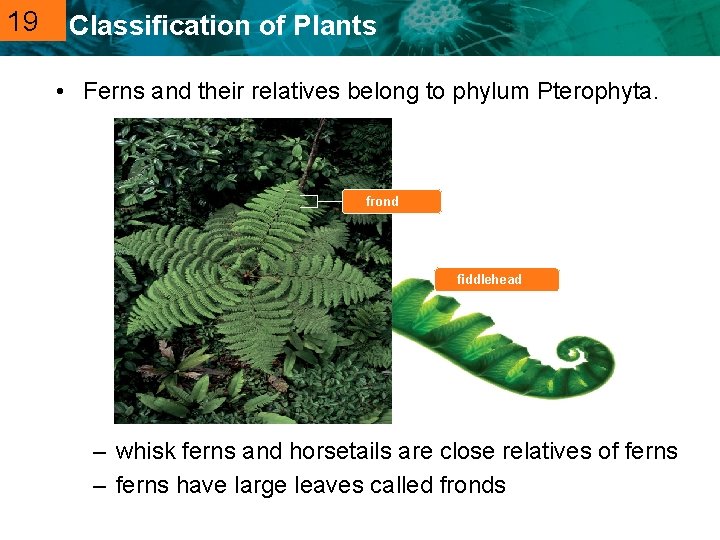
19 20. 2 Classification of Plants • Ferns and their relatives belong to phylum Pterophyta. frond fiddlehead – whisk ferns and horsetails are close relatives of ferns – ferns have large leaves called fronds
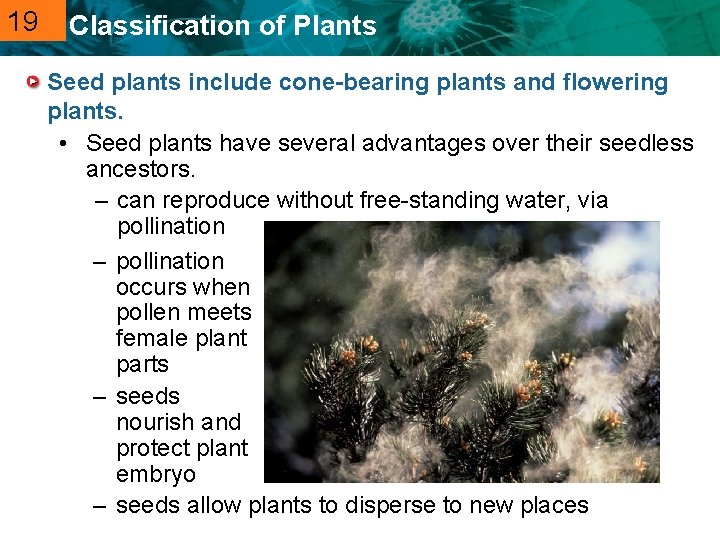
19 20. 2 Classification of Plants Seed plants include cone-bearing plants and flowering plants. • Seed plants have several advantages over their seedless ancestors. – can reproduce without free-standing water, via pollination – pollination occurs when pollen meets female plant parts – seeds nourish and protect plant embryo – seeds allow plants to disperse to new places
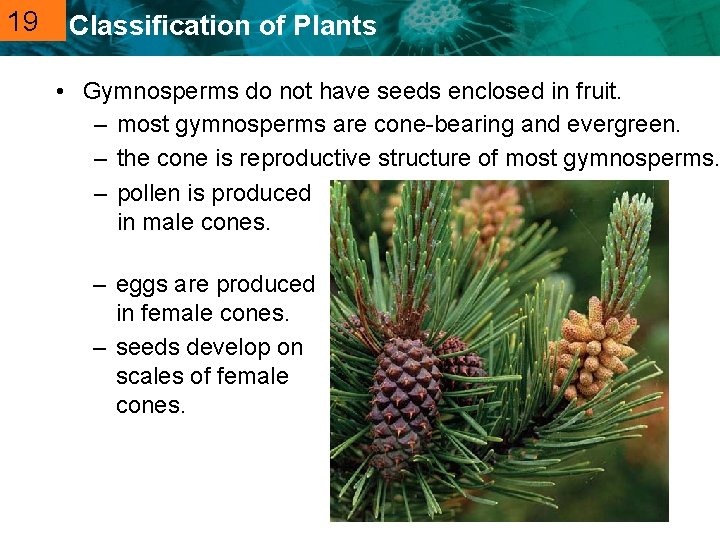
19 20. 2 Classification of Plants • Gymnosperms do not have seeds enclosed in fruit. – most gymnosperms are cone-bearing and evergreen. – the cone is reproductive structure of most gymnosperms. – pollen is produced in male cones. – eggs are produced in female cones. – seeds develop on scales of female cones.
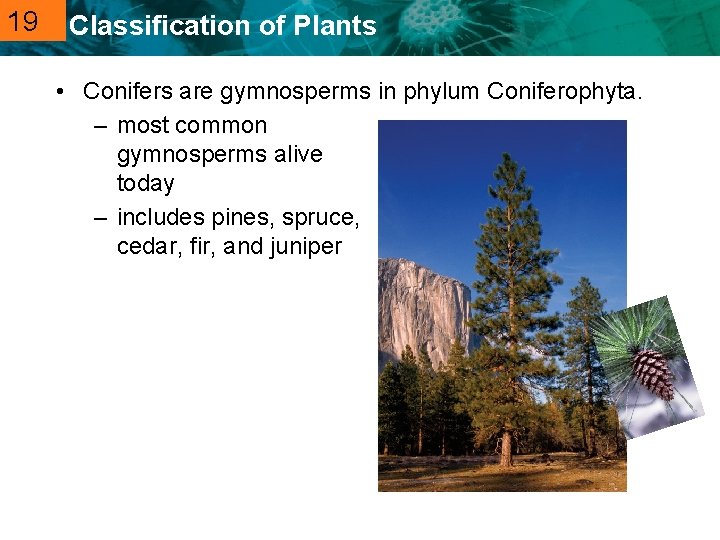
19 20. 2 Classification of Plants • Conifers are gymnosperms in phylum Coniferophyta. – most common gymnosperms alive today – includes pines, spruce, cedar, fir, and juniper
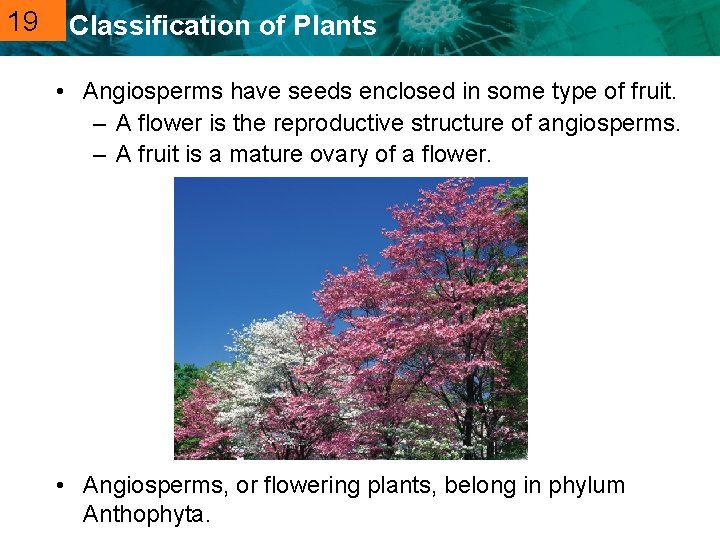
19 20. 2 Classification of Plants • Angiosperms have seeds enclosed in some type of fruit. – A flower is the reproductive structure of angiosperms. – A fruit is a mature ovary of a flower. • Angiosperms, or flowering plants, belong in phylum Anthophyta.