
19 1 Understanding Air Pressure Wind What is
- Slides: 21
19. 1 Understanding Air Pressure & Wind
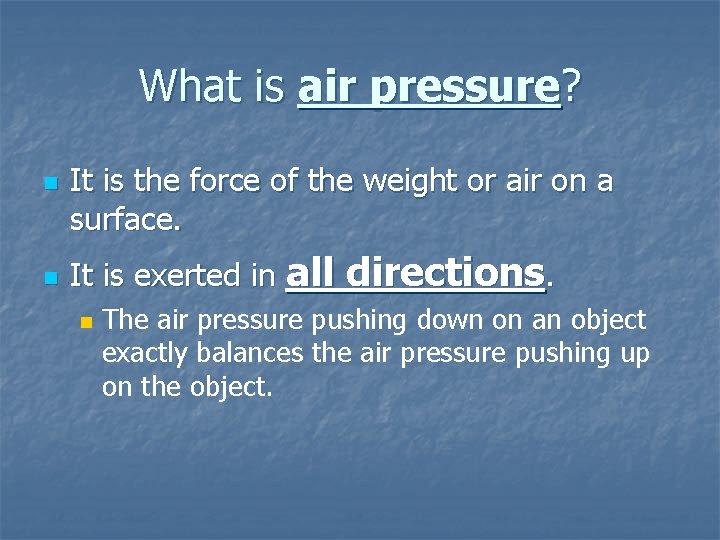
What is air pressure? n n It is the force of the weight or air on a surface. It is exerted in all n directions. The air pressure pushing down on an object exactly balances the air pressure pushing up on the object.
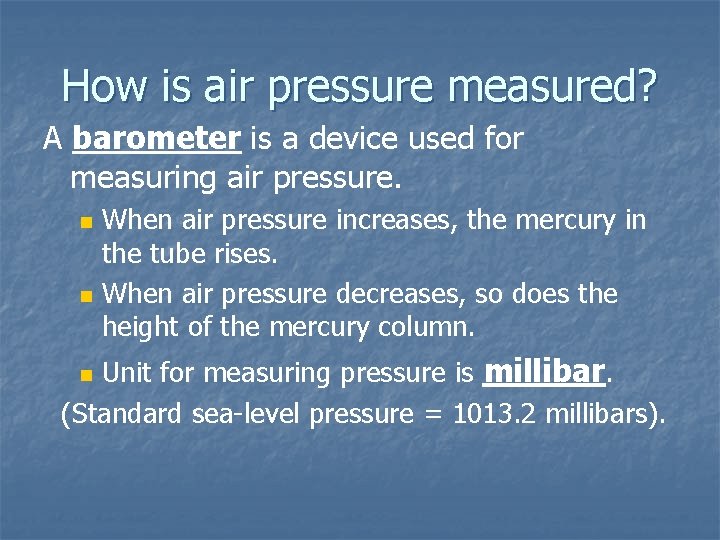
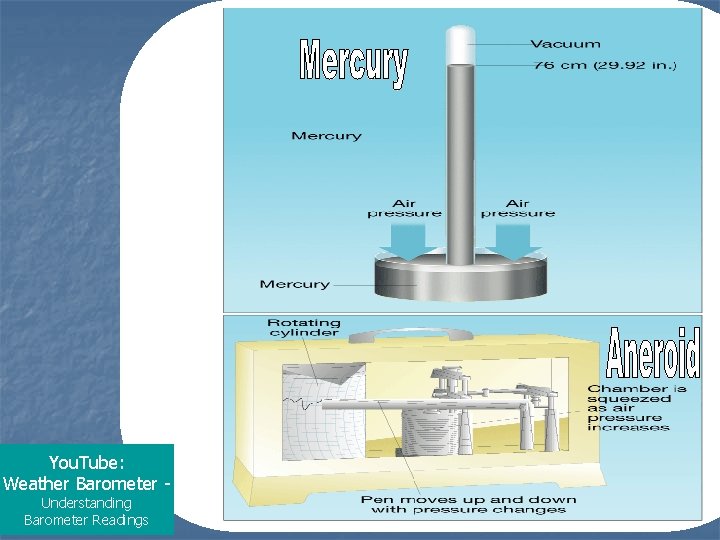
How is air pressure measured? A barometer is a device used for measuring air pressure. n n When air pressure increases, the mercury in the tube rises. When air pressure decreases, so does the height of the mercury column. Unit for measuring pressure is millibar. (Standard sea-level pressure = 1013. 2 millibars). n
You. Tube: Weather Barometer Understanding Barometer Readings
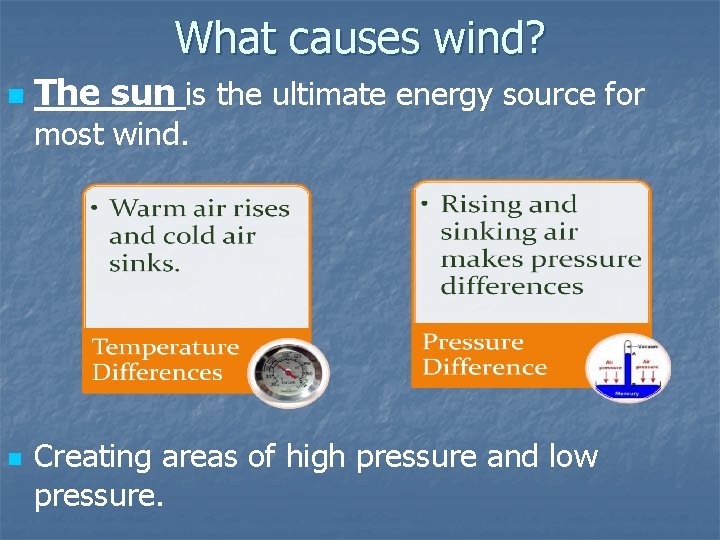
What causes wind? n The sun is the ultimate energy source for most wind. n Creating areas of high pressure and low pressure.
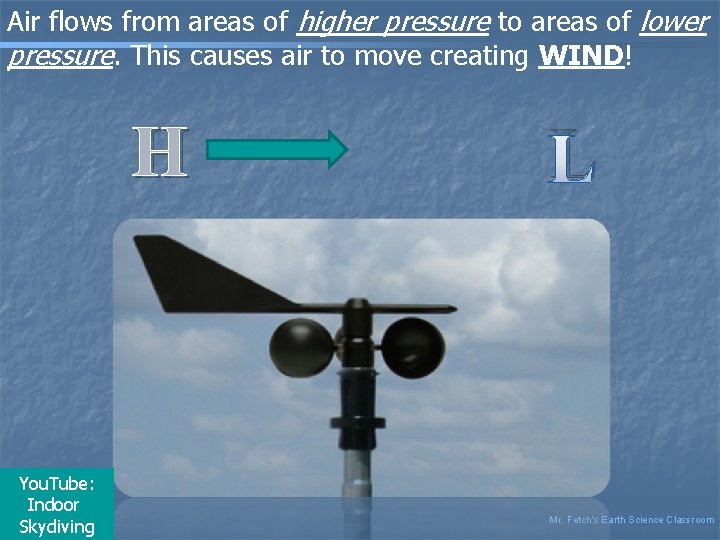
Air flows from areas of higher pressure to areas of lower pressure. This causes air to move creating WIND! H You. Tube: Indoor Skydiving L Mr. Fetch’s Earth Science Classroom
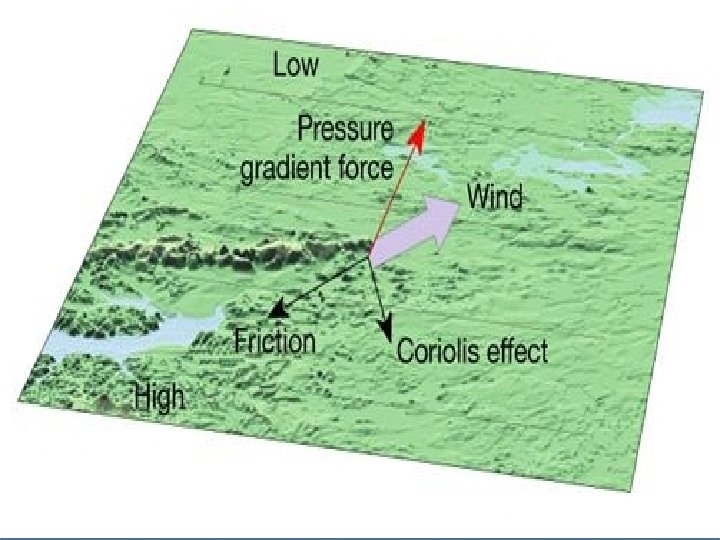
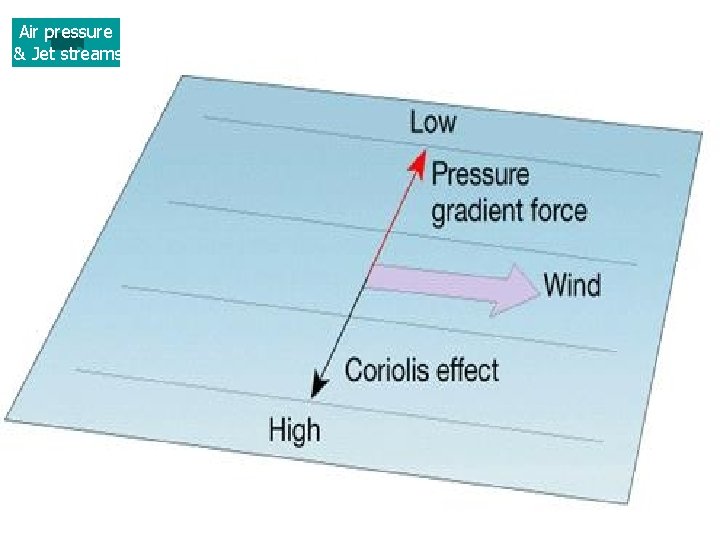
What factors affect wind? n Three factors combine to control wind: npressure differences (pressure gradient), nthe Coriolis effect, nfriction.
How do pressure differences affect wind? n n n Wind is created from differences in pressure. Pressure differences make wind stronger or weaker. The greater the differences in pressure, the greater the wind speed.
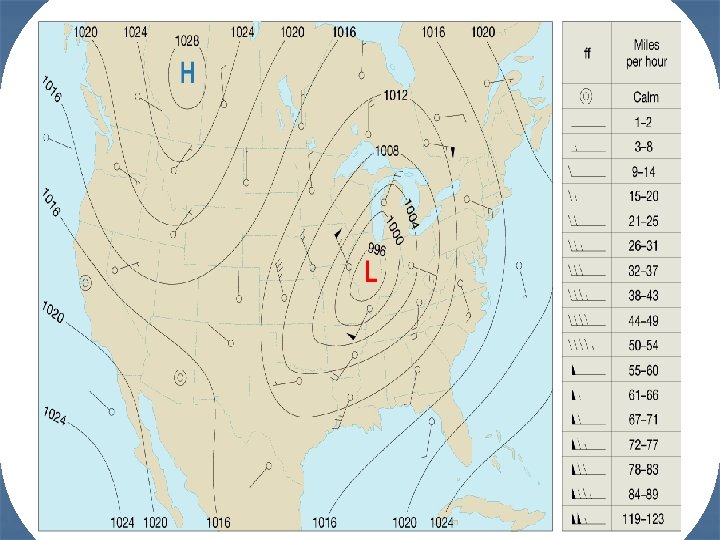
What are isobars? n n Barometers in weather stations collect pressure data. This data is shown on weather maps using isobars. Isobars are lines on a map that connect places of equal air pressure.
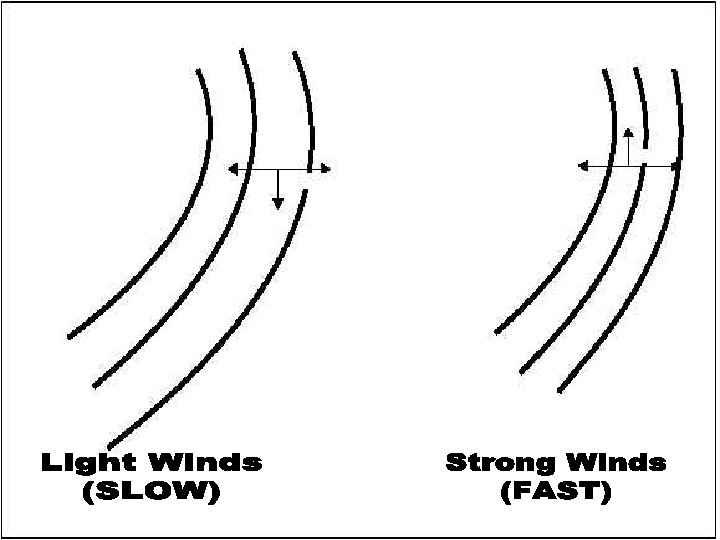
What is a pressure gradient? n n The spacing between isobars shows the pressure gradient. Remember that wind moves from higher pressure to lower pressure. n n Closely spaced isobars indicate a steep pressure gradient and strong winds. Widely spaced isobars indicate a weak pressure gradient and light winds.
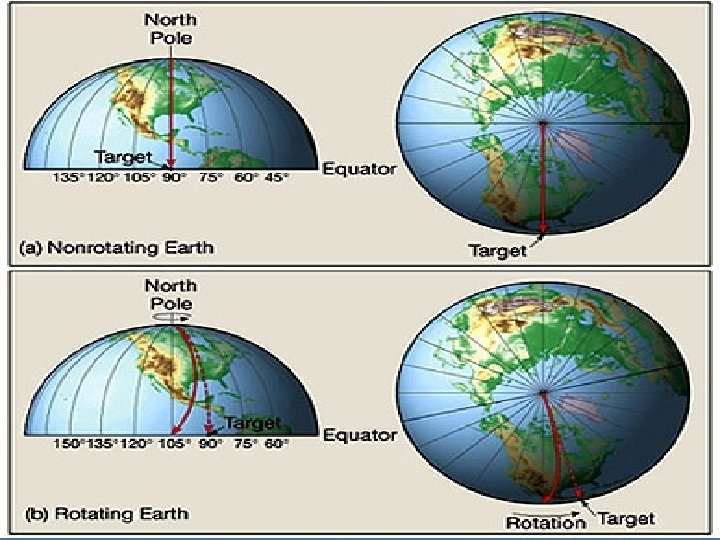
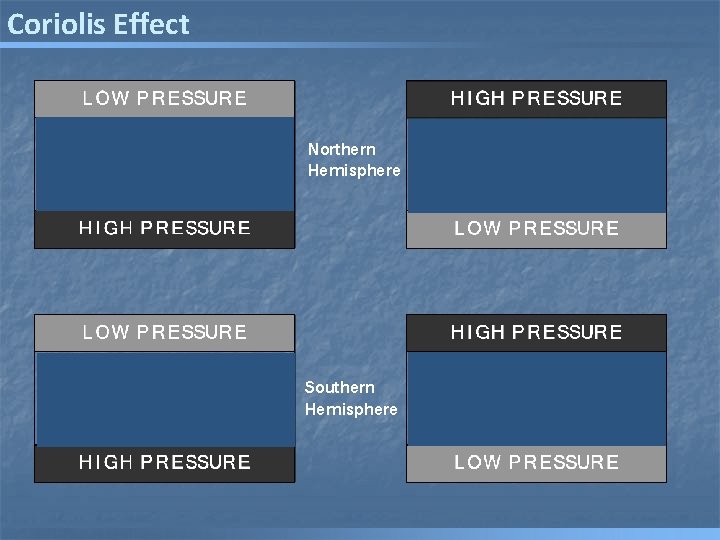
What is the Coriolis effect? © The Coriolis effect describes how Earth’s rotation deflects all free-moving objects or fluids, including wind & water. • Air does not move in a straight line because of Earth’s rotation. Coriolis Effect
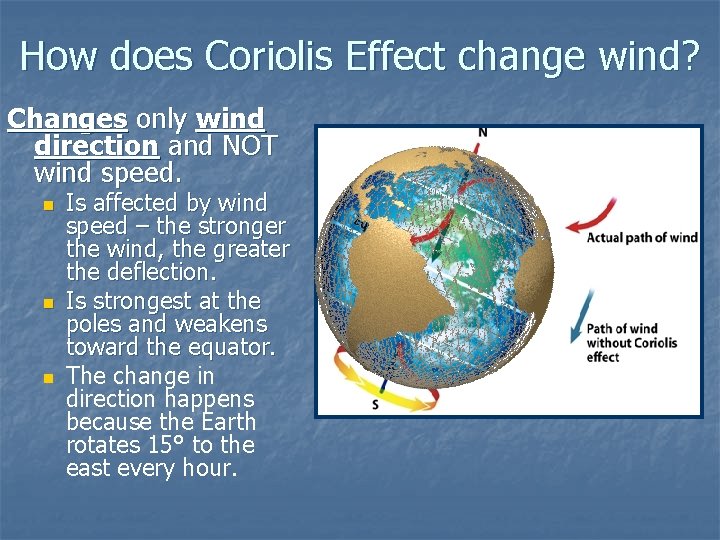
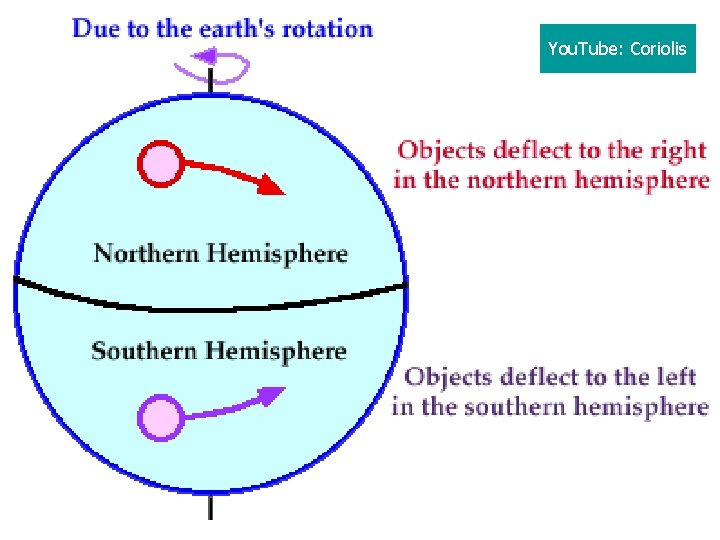
How does Coriolis Effect change wind? Changes only wind direction and NOT wind speed. n n n Is affected by wind speed – the stronger the wind, the greater the deflection. Is strongest at the poles and weakens toward the equator. The change in direction happens because the Earth rotates 15° to the east every hour.
You. Tube: Coriolis
Coriolis Effect Northern Hemisphere Southern Hemisphere
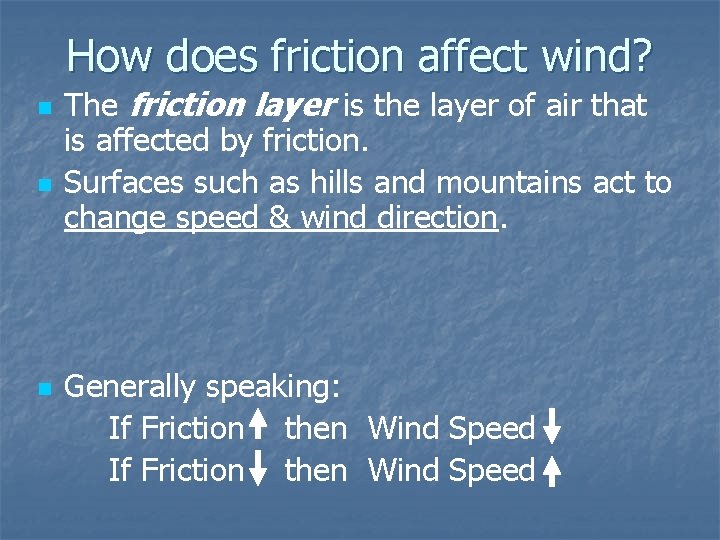
How does friction affect wind? n n n The friction layer is the layer of air that is affected by friction. Surfaces such as hills and mountains act to change speed & wind direction. Generally speaking: If Friction then Wind Speed
What are jet streams? n n Above the "friction layer", winds tend to blow parallel to isobars. These are jet streams. Jet streams are fast-moving rivers of air that travel between 320 and 480 kilometers per hour (200 -300 mph) in a west-to-east direction.
Air pressure & Jet streams