
19 1 Finding Order in Biodiversity Learning Objectives
19. 1 Finding Order in Biodiversity
Learning Objectives § Describe the goals of binomial nomenclature and taxonomy. § Explain how Linnaeus grouped species into larger taxa. § Identify the six kingdoms of life as they are now identified. Vocabulary § taxonomy-the scientific discipline that names and classifies organisms. § binomial nomenclature-a two-part naming system developed by Carolus Linnaeus. Scientific name. The first part is the Genus and is capitalized, the second is the species and it is lower case. Usually in Latin, appear as italics in print. § Genus-a group of similar species.
Vocabulary § taxon-group or category used for classification purposes. § family-a group of similar genera. § order-a group of similar families. § class-a group of similar orders. § phylum-a group of similar classes. § kingdom-a group of similar phyla. Currently 6 kingdoms: Eubacteria, Archaebacteria, Protista, Fungi, Plantae & Animalia.
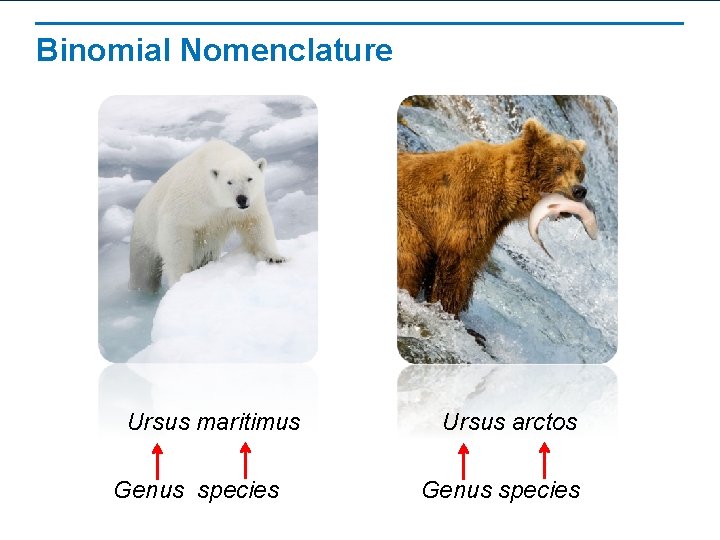
Binomial Nomenclature Ursus maritimus Genus species Ursus arctos Genus species
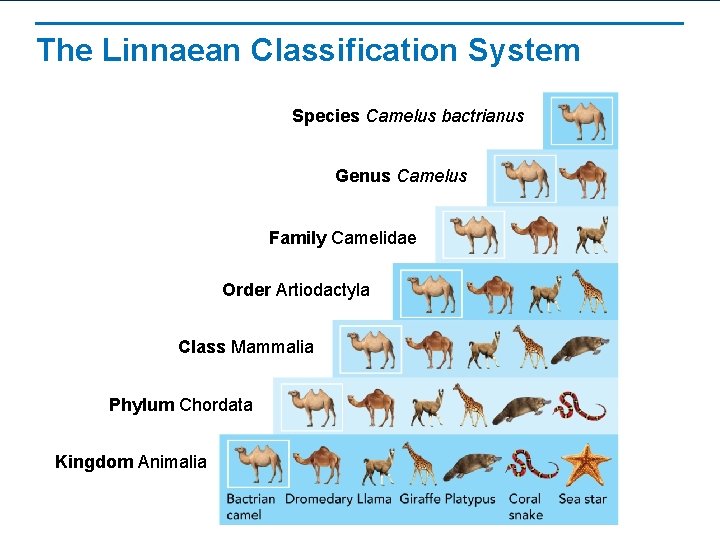
The Linnaean Classification System Species Camelus bactrianus Genus Camelus Family Camelidae Order Artiodactyla Class Mammalia Phylum Chordata Kingdom Animalia
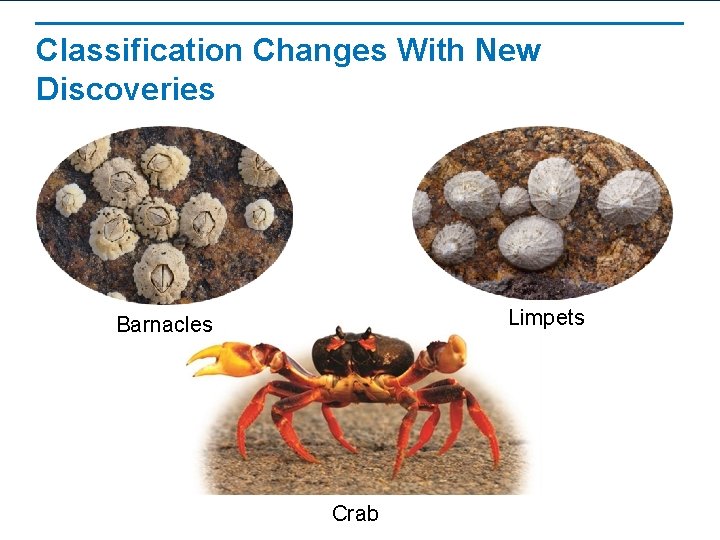
Classification Changes With New Discoveries Limpets Barnacles Crab
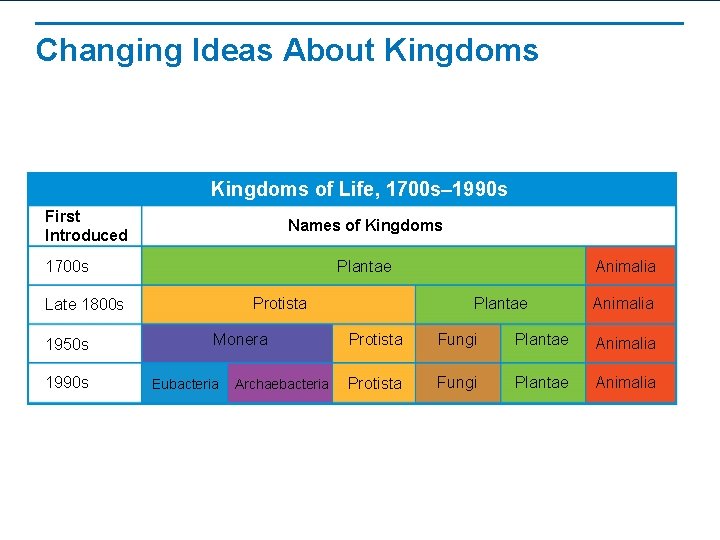
Changing Ideas About Kingdoms of Life, 1700 s– 1990 s First Introduced Names of Kingdoms 1700 s Plantae Protista Late 1800 s 1950 s 1990 s Monera Eubacteria Archaebacteria Animalia Plantae Animalia Protista Fungi Plantae Animalia
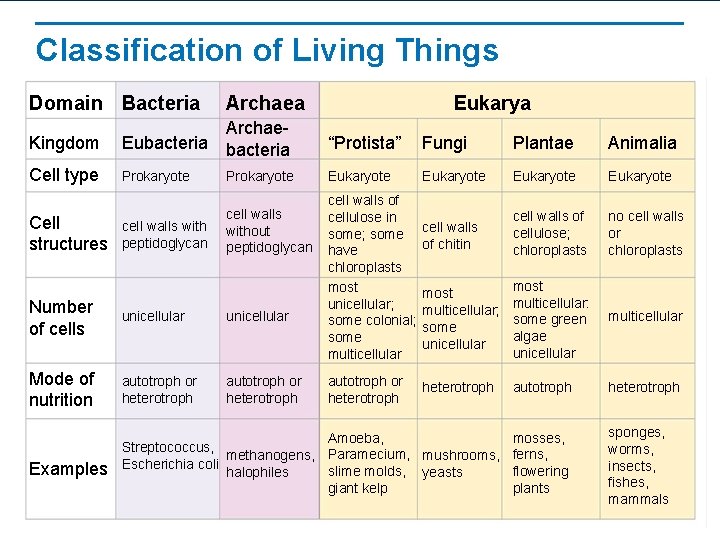
Classification of Living Things Domain Bacteria Archaea Kingdom Eubacteria Archaebacteria “Protista” Fungi Plantae Animalia Cell type Prokaryote Eukaryote cell walls with peptidoglycan cell walls without peptidoglycan cell walls of chitin cell walls of cellulose; chloroplasts no cell walls or chloroplasts most multicellular: multicellular; some green some algae unicellular multicellular heterotroph Cell structures Eukarya cell walls of cellulose in some; some have chloroplasts most unicellular; some colonial; some multicellular Number of cells unicellular Mode of nutrition autotroph or heterotroph Examples Amoeba, mosses, Streptococcus, methanogens, Paramecium, mushrooms, ferns, Escherichia coli slime molds, yeasts flowering halophiles giant kelp plants autotroph or heterotroph autotroph sponges, worms, insects, fishes, mammals
- Slides: 8