
18734 Foundations of Privacy Differentially Private Recommendation Systems
- Slides: 42
18734: Foundations of Privacy Differentially Private Recommendation Systems Anupam Datta Fall 2017
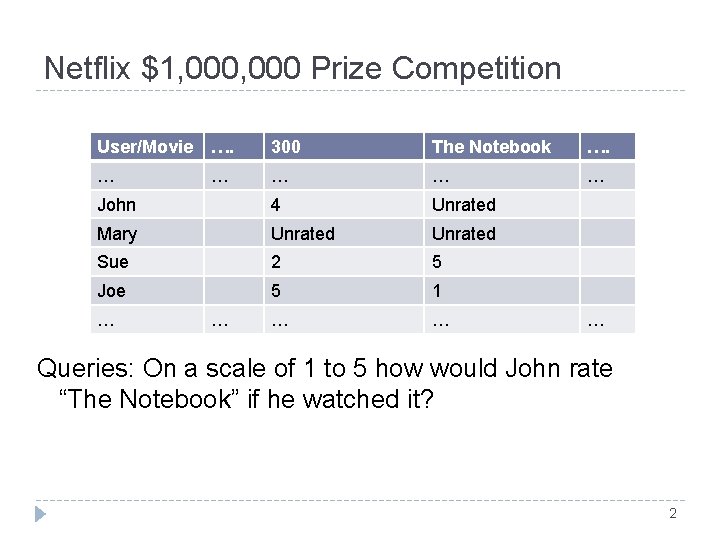
Netflix $1, 000 Prize Competition User/Movie …. 300 The Notebook …. … … … John 4 Unrated Mary Unrated Sue 2 5 Joe 5 1 … … … Queries: On a scale of 1 to 5 how would John rate “The Notebook” if he watched it? 2
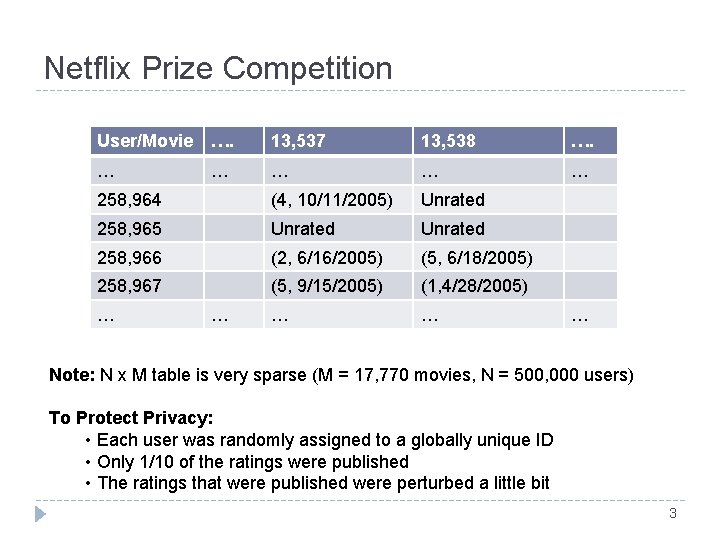
Netflix Prize Competition User/Movie …. 13, 537 13, 538 …. … … … 258, 964 (4, 10/11/2005) Unrated 258, 965 Unrated 258, 966 (2, 6/16/2005) (5, 6/18/2005) 258, 967 (5, 9/15/2005) (1, 4/28/2005) … … … Note: N x M table is very sparse (M = 17, 770 movies, N = 500, 000 users) To Protect Privacy: • Each user was randomly assigned to a globally unique ID • Only 1/10 of the ratings were published • The ratings that were published were perturbed a little bit 3
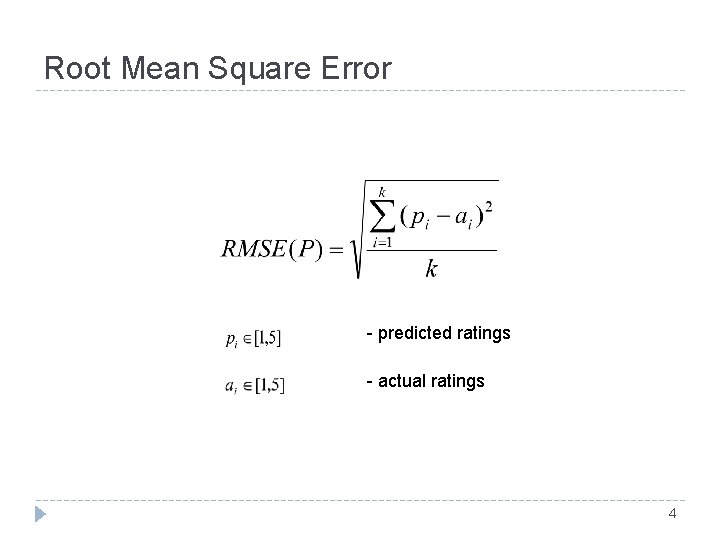
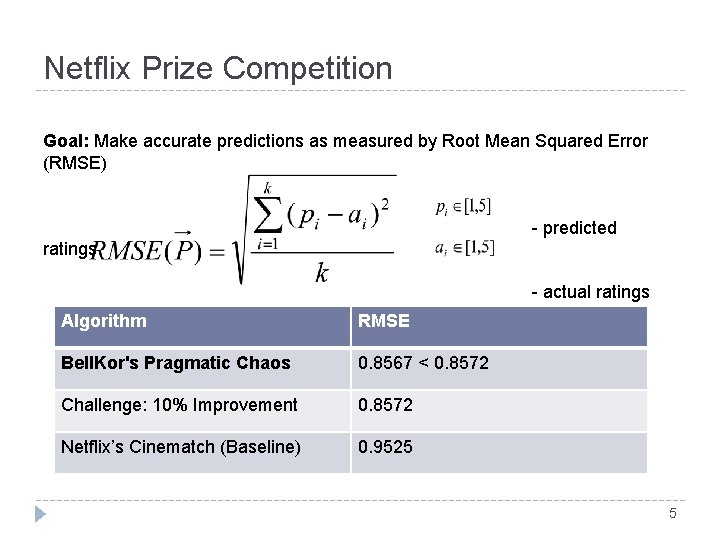
Root Mean Square Error - predicted ratings - actual ratings 4
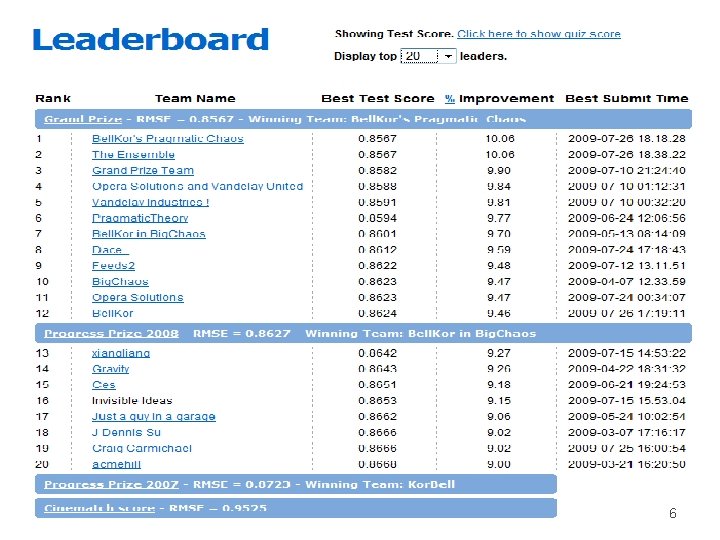
Netflix Prize Competition Goal: Make accurate predictions as measured by Root Mean Squared Error (RMSE) - predicted ratings - actual ratings Algorithm RMSE Bell. Kor's Pragmatic Chaos 0. 8567 < 0. 8572 Challenge: 10% Improvement 0. 8572 Netflix’s Cinematch (Baseline) 0. 9525 5
6
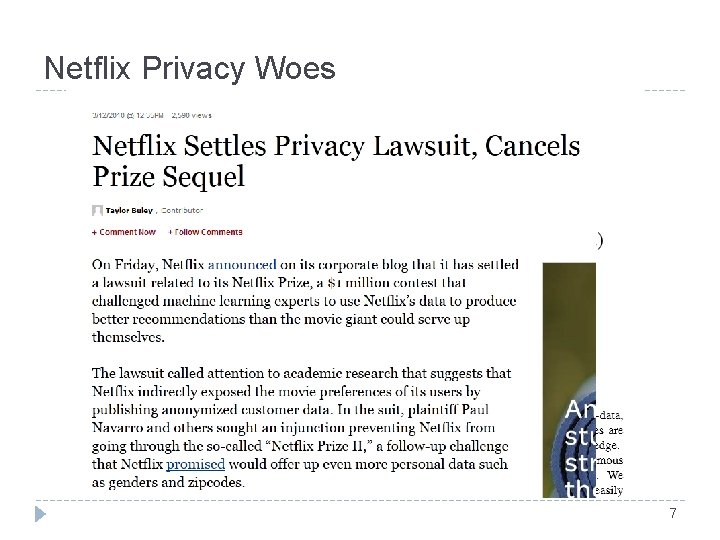
Netflix Privacy Woes 7
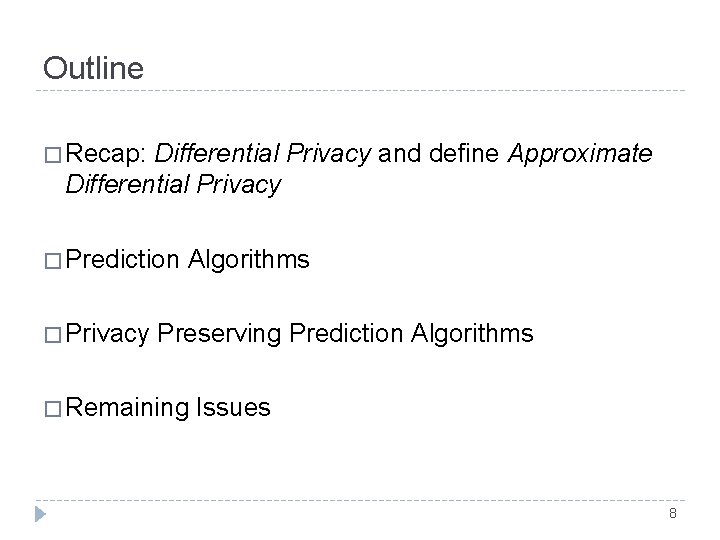
Outline � Recap: Differential Privacy and define Approximate Differential Privacy � Prediction Algorithms � Privacy Preserving Prediction Algorithms � Remaining Issues 8
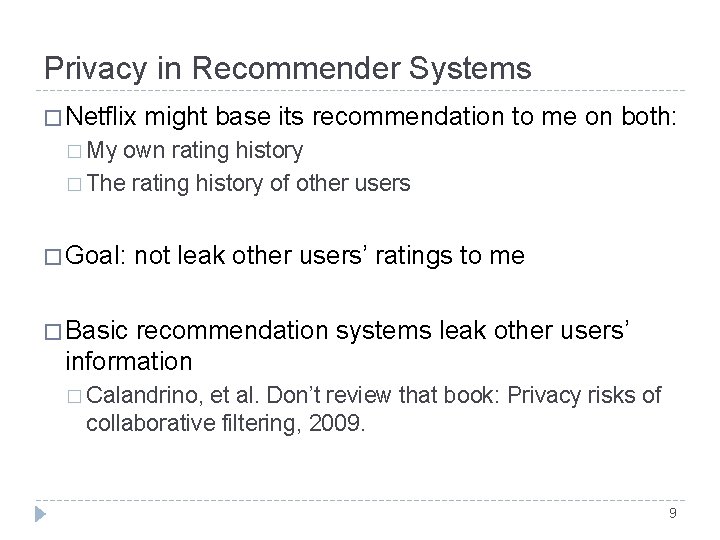
Privacy in Recommender Systems � Netflix might base its recommendation to me on both: � My own rating history � The rating history of other users � Goal: not leak other users’ ratings to me � Basic recommendation systems leak other users’ information � Calandrino, et al. Don’t review that book: Privacy risks of collaborative filtering, 2009. 9
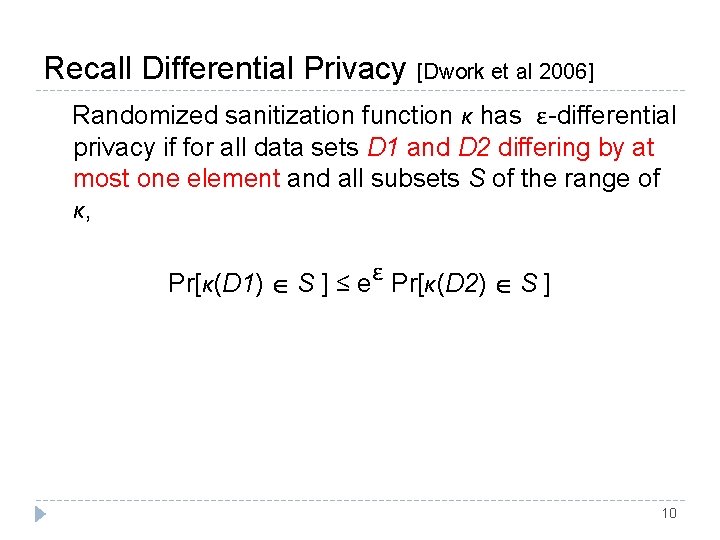
Recall Differential Privacy [Dwork et al 2006] Randomized sanitization function κ has ε-differential privacy if for all data sets D 1 and D 2 differing by at most one element and all subsets S of the range of κ, Pr[κ(D 1) S ] ≤ eε Pr[κ(D 2) S ] 10
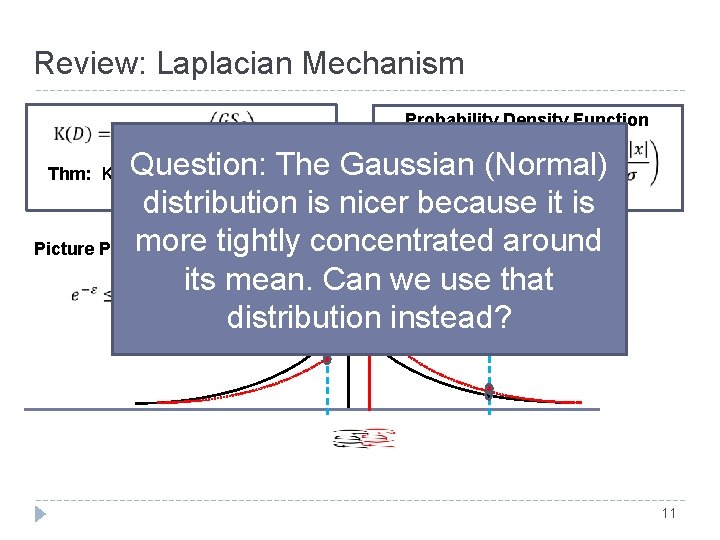
Review: Laplacian Mechanism Probability Density Function Question: The Gaussian (Normal) distribution is nicer because it is more tightly concentrated around Picture Proof: its mean. Can we use that distribution instead? Thm: K is �� -differentially private 11
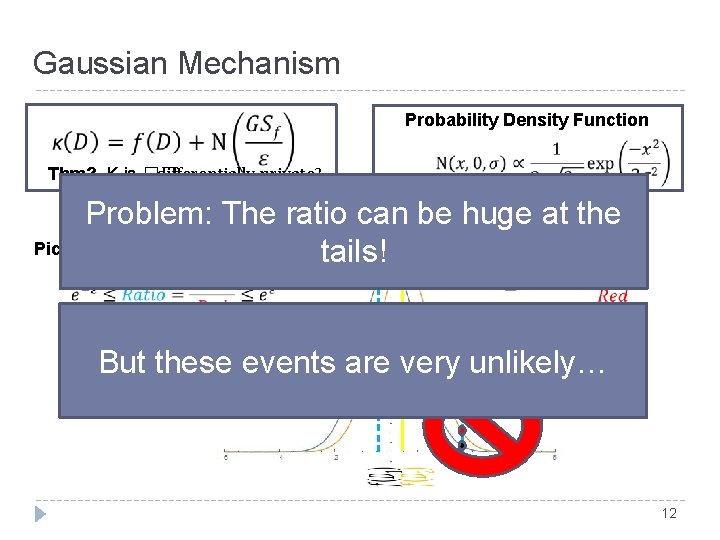
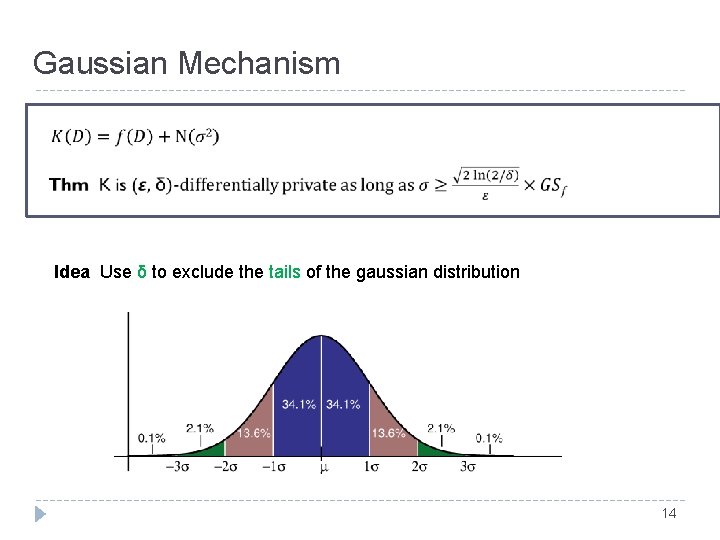
Gaussian Mechanism Probability Density Function Thm? K is �� -differentially private? Problem: The ratio can be huge at the Picture Proof? tails! But these events are very unlikely… 12
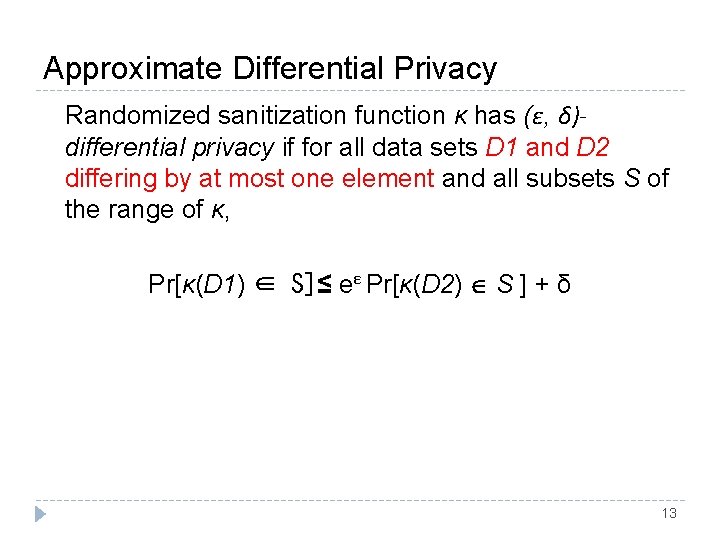
Approximate Differential Privacy Randomized sanitization function κ has (ε, δ)differential privacy if for all data sets D 1 and D 2 differing by at most one element and all subsets S of the range of κ, Pr[κ(D 1) ∈ S]≤ eε Pr[κ(D 2) S ] + δ 13
Gaussian Mechanism Idea Use δ to exclude the tails of the gaussian distribution 14
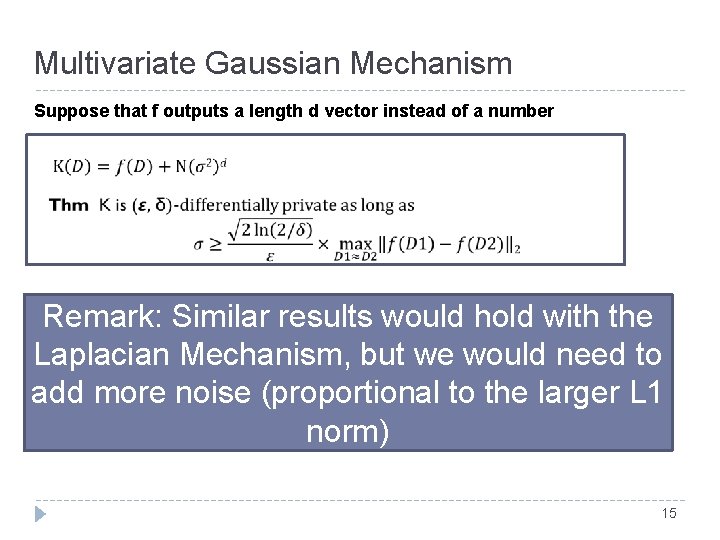
Multivariate Gaussian Mechanism Suppose that f outputs a length d vector instead of a number Remark: Similar results would hold with the Laplacian Mechanism, but we would need to add more noise (proportional to the larger L 1 norm) 15
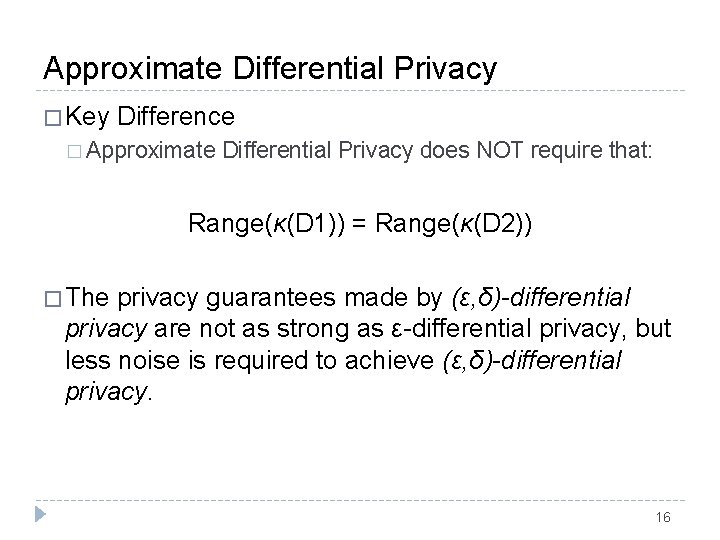
Approximate Differential Privacy � Key Difference � Approximate Differential Privacy does NOT require that: Range(κ(D 1)) = Range(κ(D 2)) � The privacy guarantees made by (ε, δ)-differential privacy are not as strong as ε-differential privacy, but less noise is required to achieve (ε, δ)-differential privacy. 16
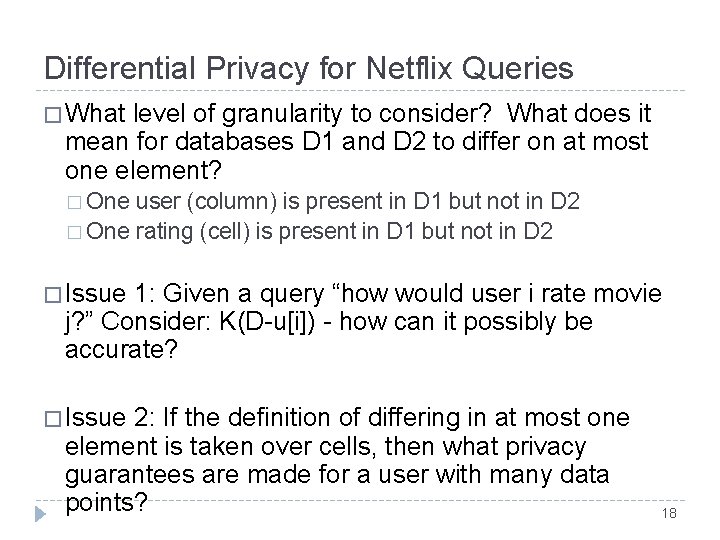
Differential Privacy for Netflix Queries � What level of granularity to consider? What does it mean for databases D 1 and D 2 to differ on at most one element? � One user (column) is present in D 1 but not in D 2 � One rating (cell) is present in D 1 but not in D 2 � Issue 1: Given a query “how would user i rate movie j? ” Consider: K(D-u[i]) - how can it possibly be accurate? � Issue 2: If the definition of differing in at most one element is taken over cells, then what privacy guarantees are made for a user with many data points? 18
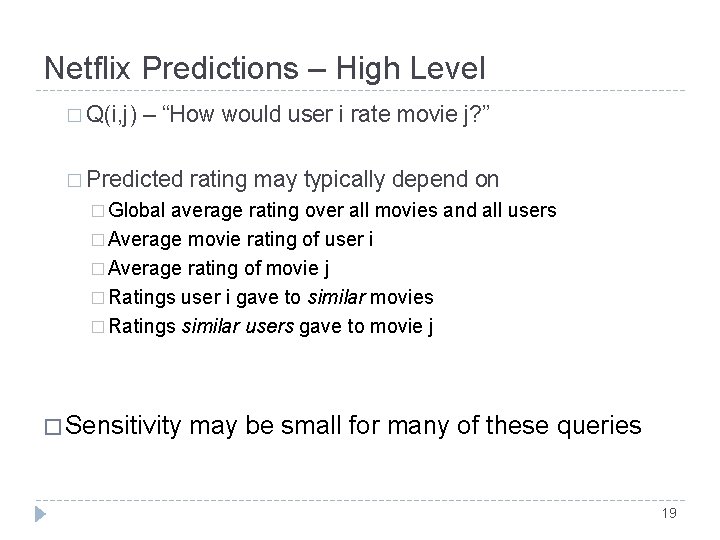
Netflix Predictions – High Level � Q(i, j) – “How would user i rate movie j? ” � Predicted rating may typically depend on � Global average rating over all movies and all users � Average movie rating of user i � Average rating of movie j � Ratings user i gave to similar movies � Ratings similar users gave to movie j � Sensitivity may be small for many of these queries 19
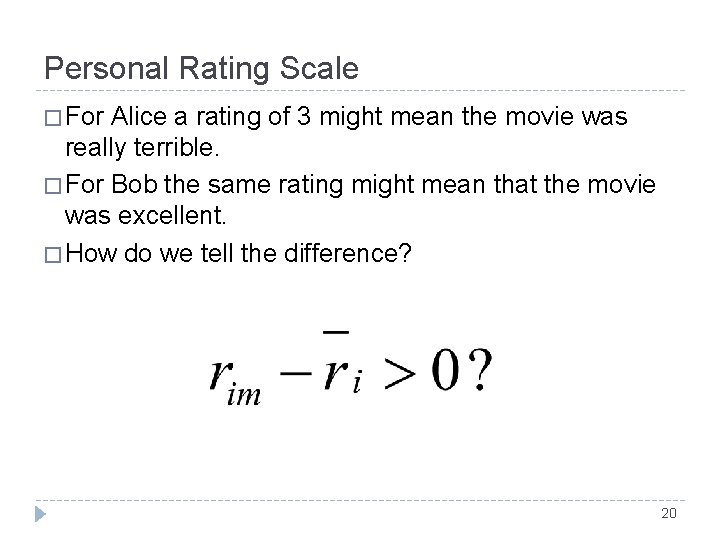
Personal Rating Scale � For Alice a rating of 3 might mean the movie was really terrible. � For Bob the same rating might mean that the movie was excellent. � How do we tell the difference? 20
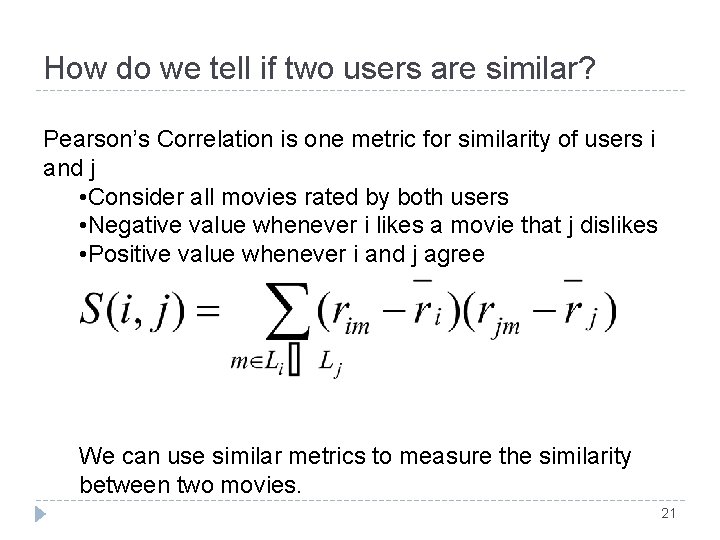
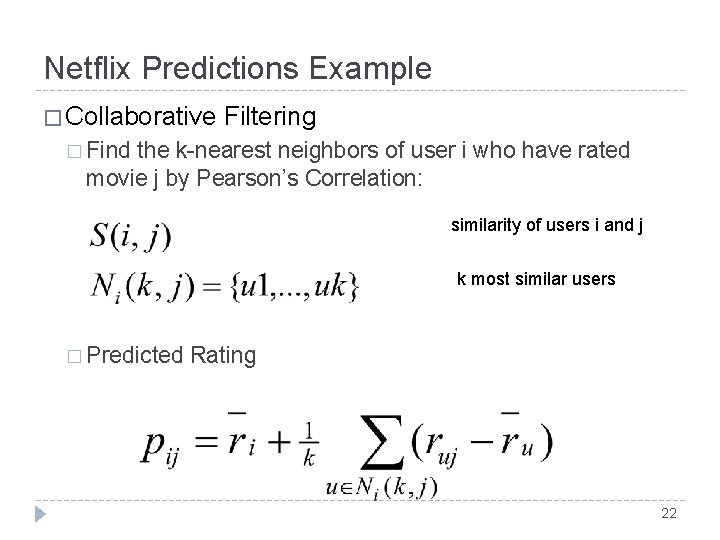
How do we tell if two users are similar? Pearson’s Correlation is one metric for similarity of users i and j • Consider all movies rated by both users • Negative value whenever i likes a movie that j dislikes • Positive value whenever i and j agree We can use similar metrics to measure the similarity between two movies. 21
Netflix Predictions Example � Collaborative Filtering � Find the k-nearest neighbors of user i who have rated movie j by Pearson’s Correlation: similarity of users i and j k most similar users � Predicted Rating 22
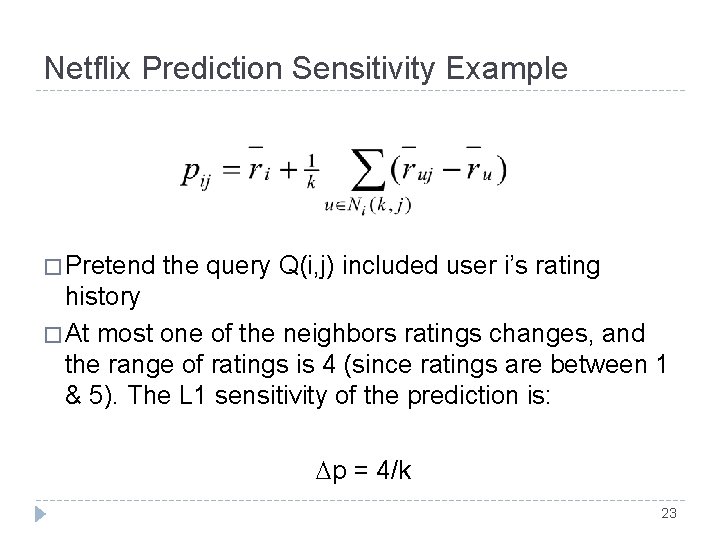
Netflix Prediction Sensitivity Example � Pretend the query Q(i, j) included user i’s rating history � At most one of the neighbors ratings changes, and the range of ratings is 4 (since ratings are between 1 & 5). The L 1 sensitivity of the prediction is: p = 4/k 23
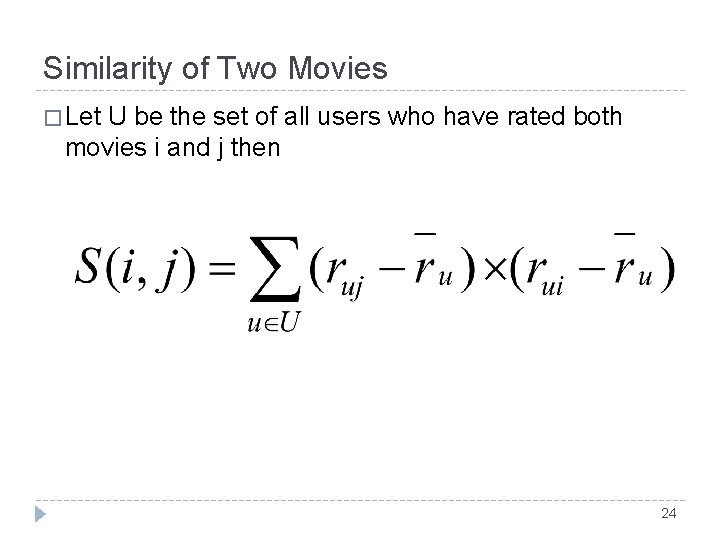
Similarity of Two Movies � Let U be the set of all users who have rated both movies i and j then 24
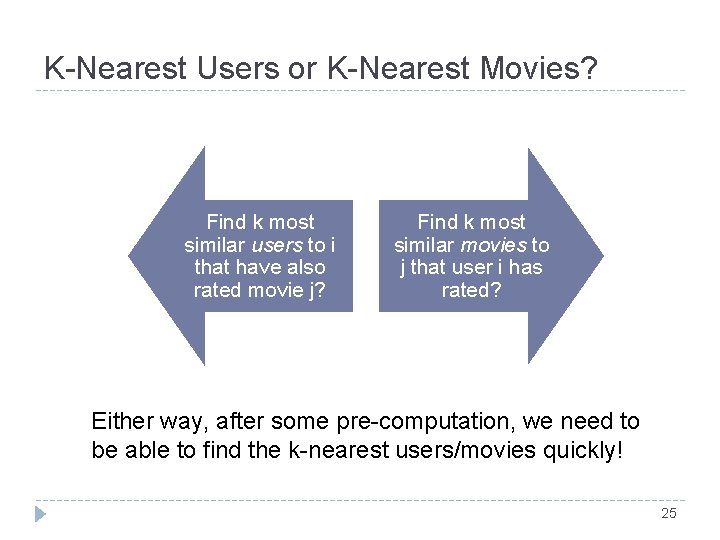
K-Nearest Users or K-Nearest Movies? Find k most similar users to i that have also rated movie j? Find k most similar movies to j that user i has rated? Either way, after some pre-computation, we need to be able to find the k-nearest users/movies quickly! 25
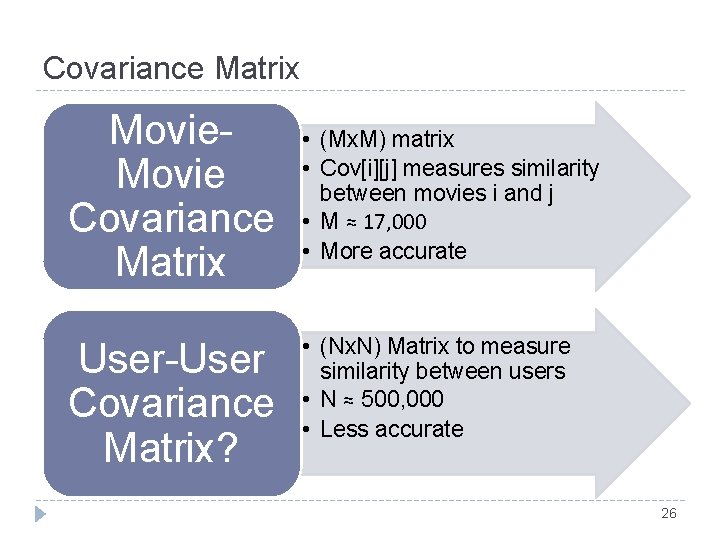
Covariance Matrix Movie Covariance Matrix User-User Covariance Matrix? • (Mx. M) matrix • Cov[i][j] measures similarity between movies i and j • M ≈ 17, 000 • More accurate • (Nx. N) Matrix to measure similarity between users • N ≈ 500, 000 • Less accurate 26
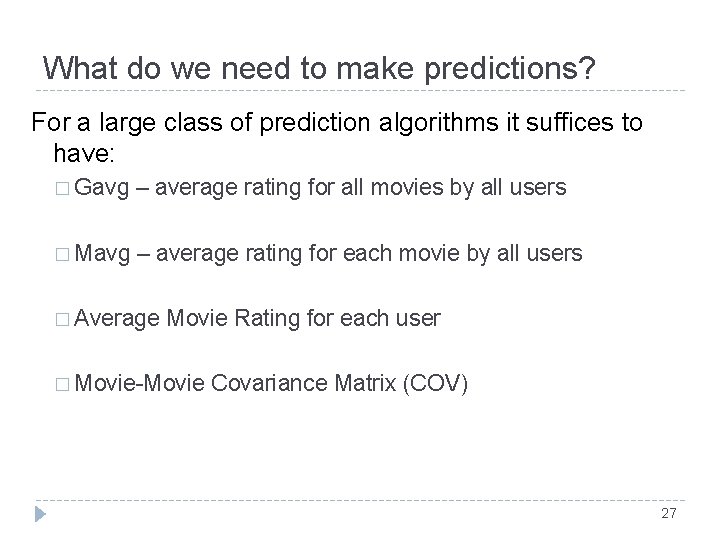
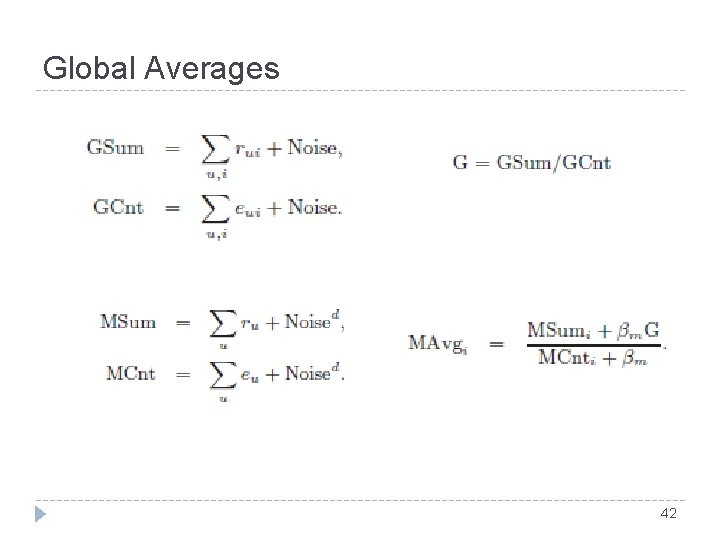
What do we need to make predictions? For a large class of prediction algorithms it suffices to have: � Gavg – average rating for all movies by all users � Mavg – average rating for each movie by all users � Average Movie Rating for each user � Movie-Movie Covariance Matrix (COV) 27
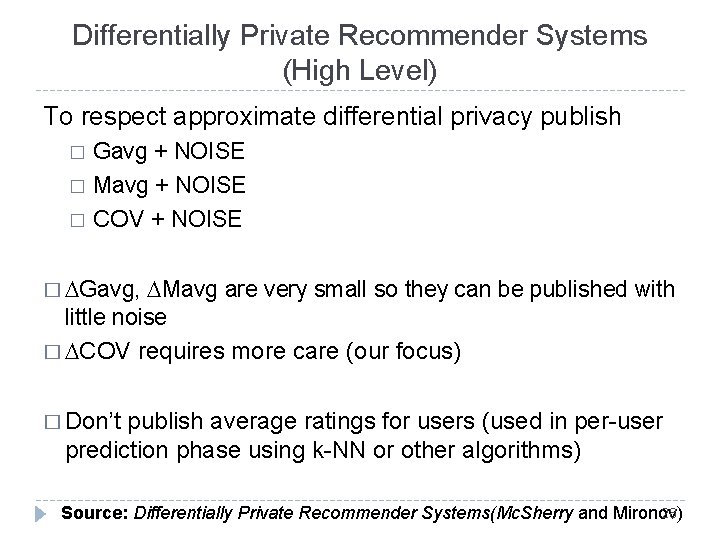
Differentially Private Recommender Systems (High Level) To respect approximate differential privacy publish � Gavg + NOISE � Mavg + NOISE � COV + NOISE � Gavg, Mavg are very small so they can be published with little noise � COV requires more care (our focus) � Don’t publish average ratings for users (used in per-user prediction phase using k-NN or other algorithms) 28 Source: Differentially Private Recommender Systems(Mc. Sherry and Mironov)
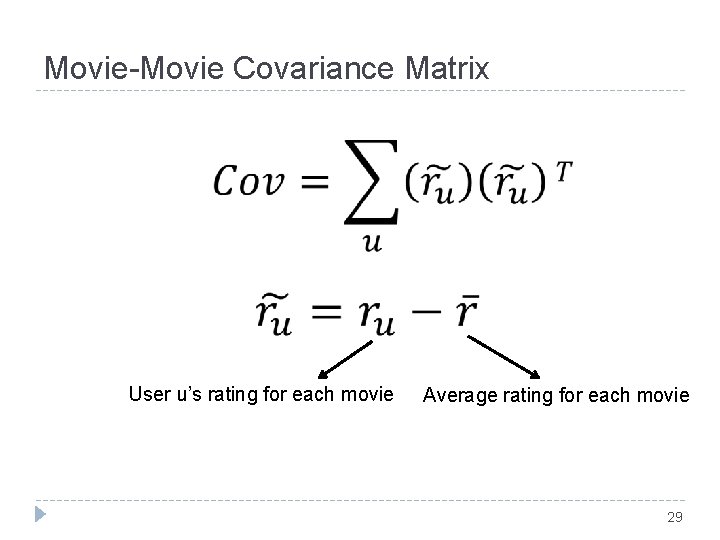
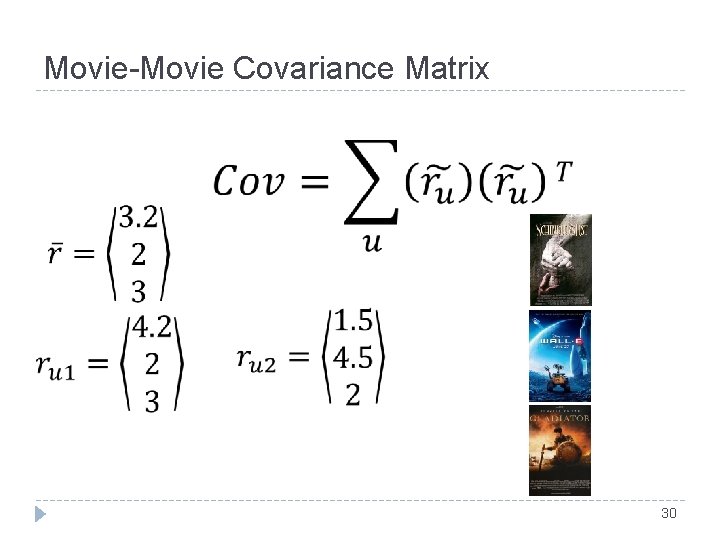
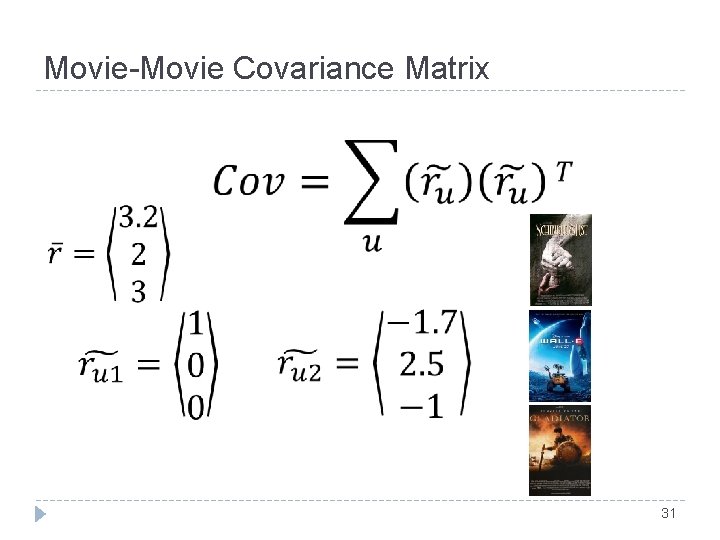
Movie-Movie Covariance Matrix User u’s rating for each movie Average rating for each movie 29
Movie-Movie Covariance Matrix 30
Movie-Movie Covariance Matrix 31
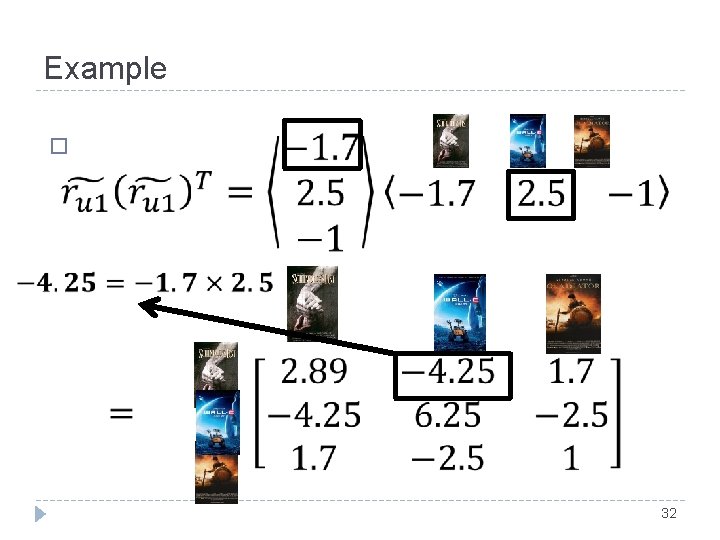
Example � 32
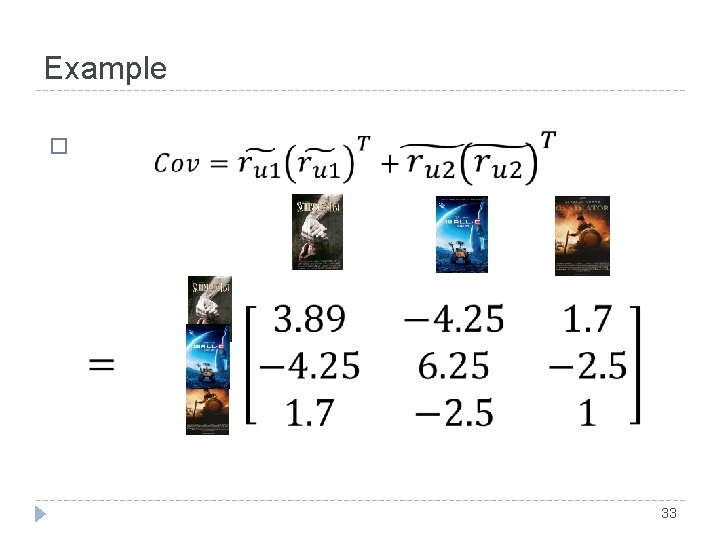
Example � 33
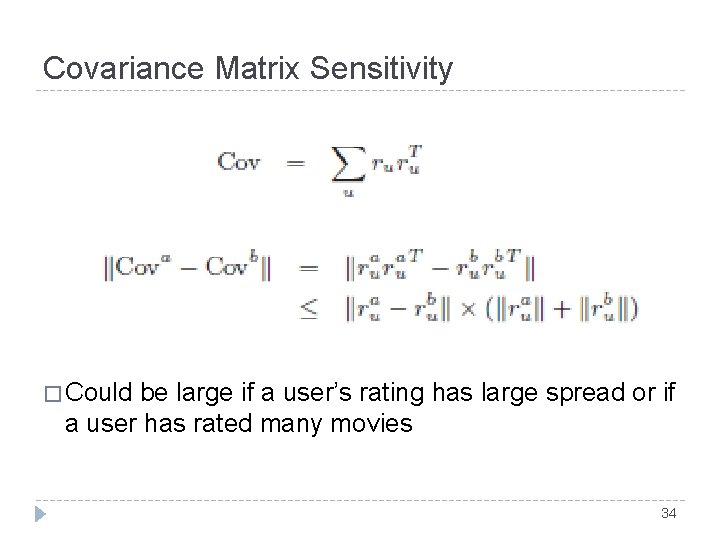
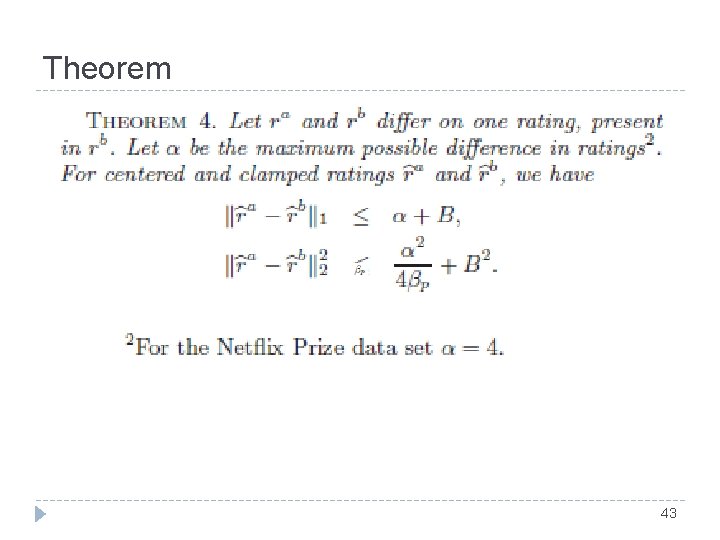
Covariance Matrix Sensitivity � Could be large if a user’s rating has large spread or if a user has rated many movies 34
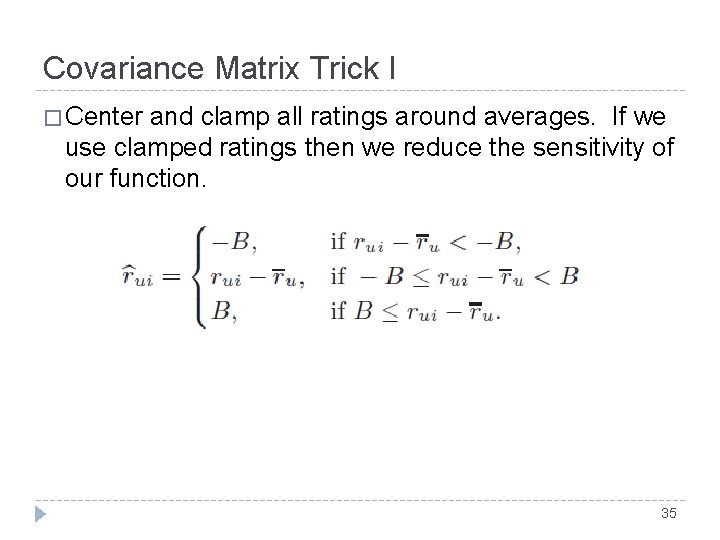
Covariance Matrix Trick I � Center and clamp all ratings around averages. If we use clamped ratings then we reduce the sensitivity of our function. 35
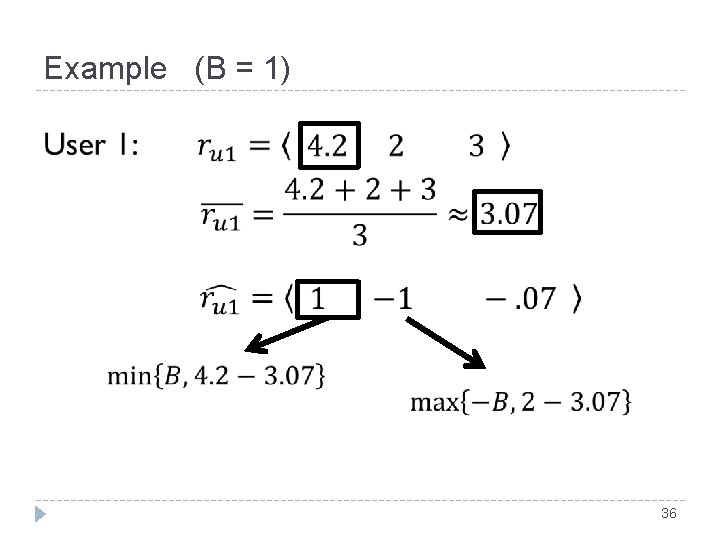
Example (B = 1) 36
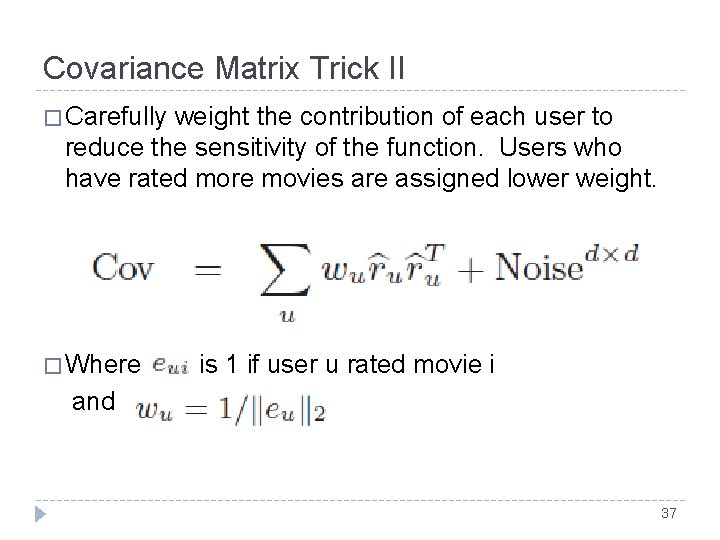
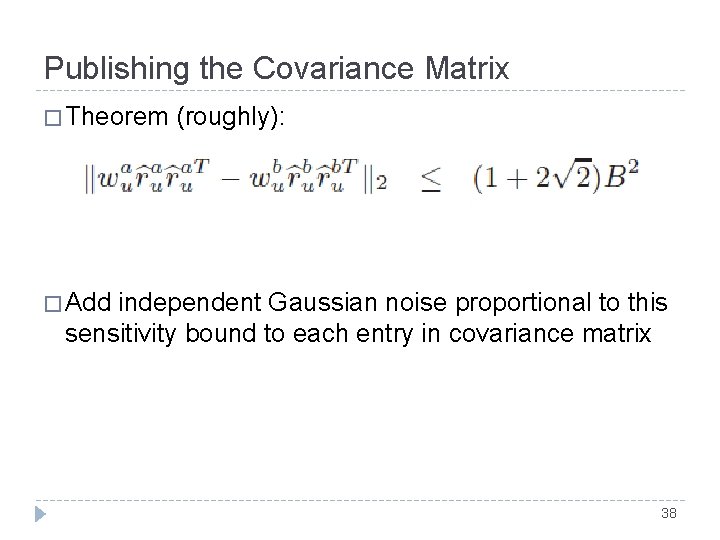
Covariance Matrix Trick II � Carefully weight the contribution of each user to reduce the sensitivity of the function. Users who have rated more movies are assigned lower weight. � Where is 1 if user u rated movie i and 37
Publishing the Covariance Matrix � Theorem (roughly): � Add independent Gaussian noise proportional to this sensitivity bound to each entry in covariance matrix 38
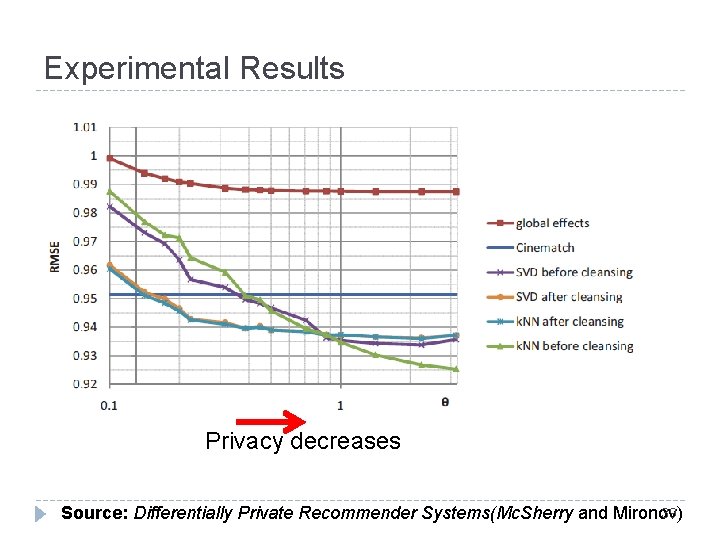
Experimental Results Privacy decreases 39 Source: Differentially Private Recommender Systems(Mc. Sherry and Mironov)
Note About Results � Granularity: One rating present in D 1 but not in D 2 � Accuracy is much lower when one user is present in D 1 but not in D 2 � Intuition: Given query Q(i, j) the database D-u[i] gives us no history about user i. � Approximate Differential Privacy � Gaussian Noise added according to L 2 Sensitivity � Clamped Ratings (B =1) to further reduce noise 40
Acknowledgment � A number of slides are from Jeremiah Blocki 41
Global Averages 42
Theorem 43