
1800 b c e 1280 1000 Abraham Moses
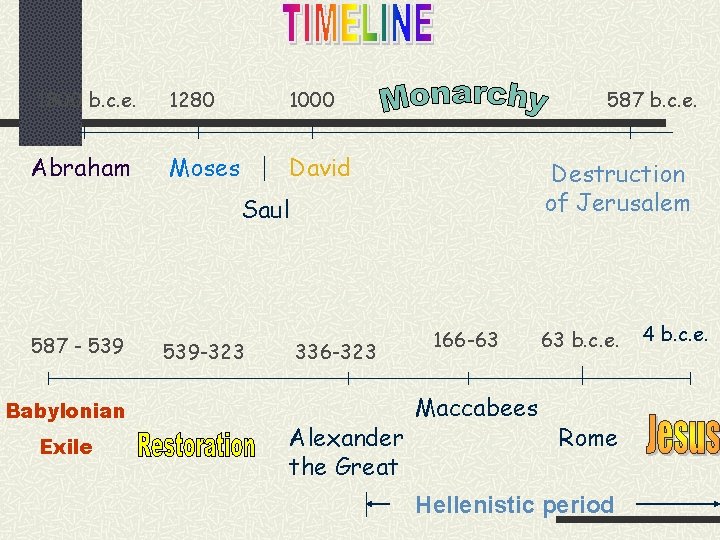
1800 b. c. e. 1280 1000 Abraham Moses David 587 b. c. e. Destruction of Jerusalem Saul 587 - 539 Babylonian Exile 539 -323 336 -323 Alexander the Great 166 -63 Maccabees 63 b. c. e. Rome Hellenistic period 4 b. c. e.
Judaism Early History and Development
INTRODUCTION TO THE PENTATEUCH / LAW / TORAH GENESIS Genesis 1 -11 = pre-history n Genesis 12 -50 = “history” n EXODUS LEVITICUS NUMBERS DEUTERONOMY
Genesis PRE-HISTORY: Creation 1 -2 The Fall 3 Cain and Abel 4 The Flood 6 -9 Tower of Babel 11 The Patriarchs/Matriarchs. Abraham & Sarah Isaac & Rebeccah Esau Jacob & Leah/Rachel Joseph

Father of the people of Israel
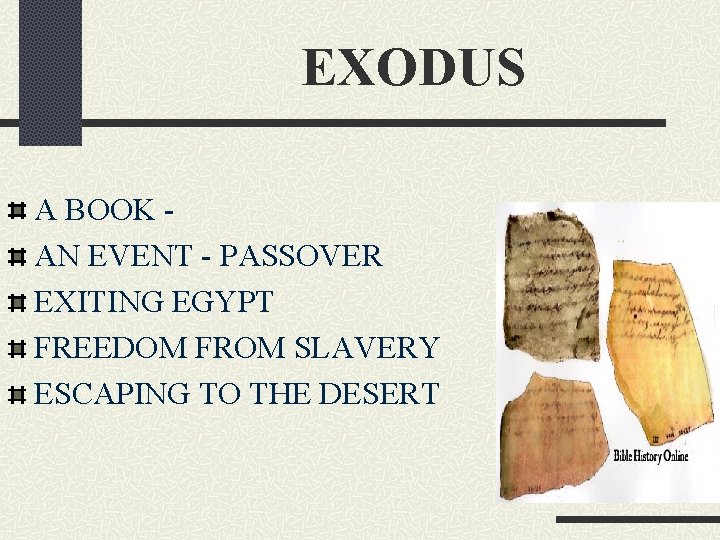
EXODUS A BOOK AN EVENT - PASSOVER EXITING EGYPT FREEDOM FROM SLAVERY ESCAPING TO THE DESERT
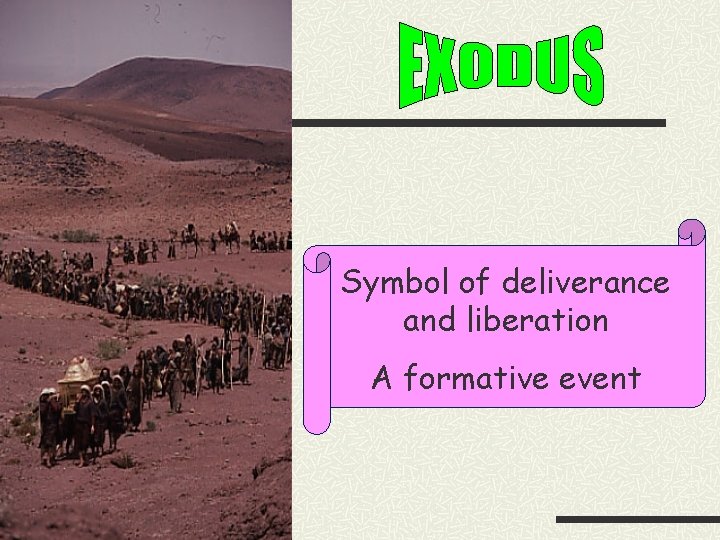
Symbol of deliverance and liberation A formative event


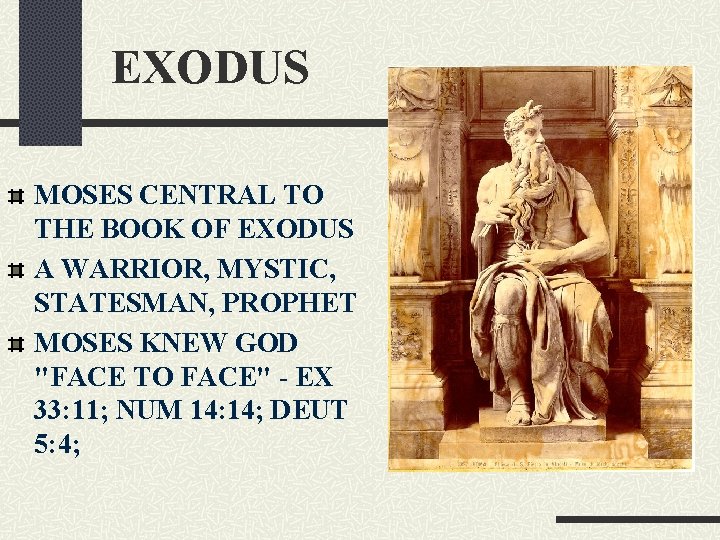
EXODUS MOSES CENTRAL TO THE BOOK OF EXODUS A WARRIOR, MYSTIC, STATESMAN, PROPHET MOSES KNEW GOD "FACE TO FACE" - EX 33: 11; NUM 14: 14; DEUT 5: 4;
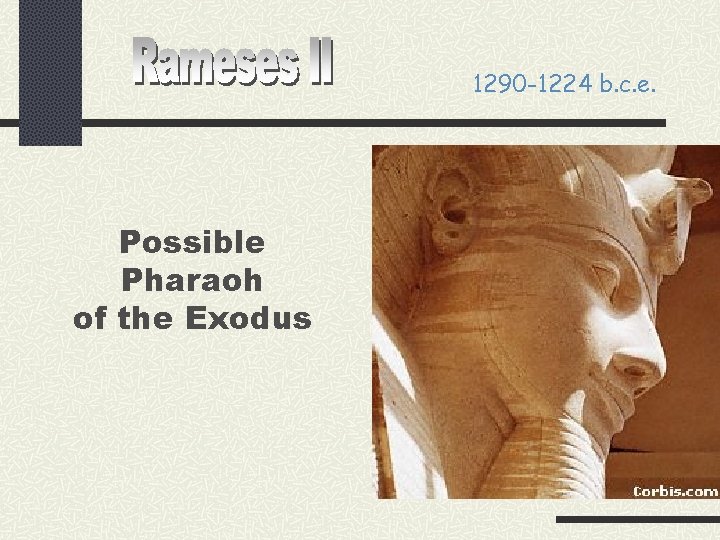
1290 -1224 b. c. e. Possible Pharaoh of the Exodus

Ancient Mindset Attributed the conquering defeats and victories on Earth as a replication of what occurs in heaven, that is, a mirror of peoples conquering an area equates to their gods defeating other gods in heaven. Biblical writings aim to change this mindset by instating how God allows them [the Israelites] to be conquered in response to their unfaithfulness.

THE MONARCHY IN ISRAEL LIVING WITH KINGS SAUL DAVID SOLOMON DIVISION OF KINGDOM NORTH – ISRAEL SOUTH - JUDAH
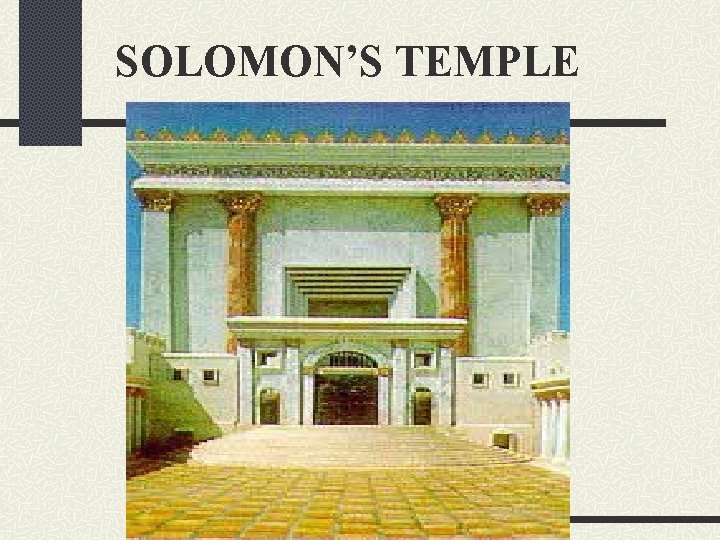
SOLOMON’S TEMPLE
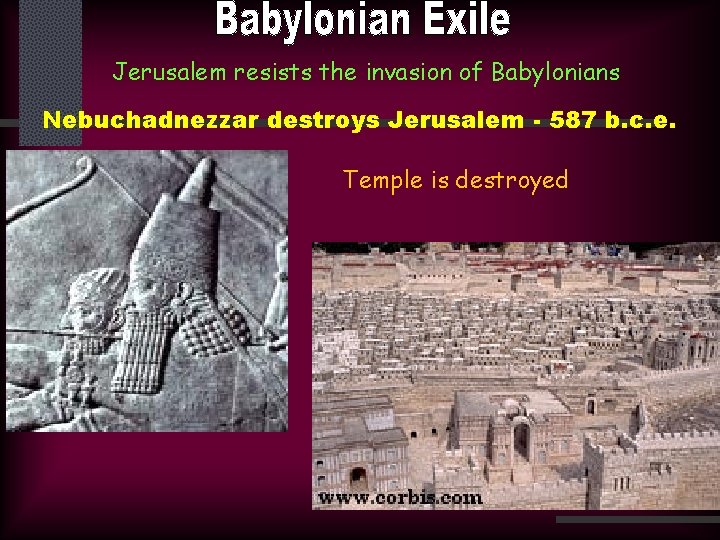
Jerusalem resists the invasion of Babylonians Nebuchadnezzar destroys Jerusalem - 587 b. c. e. Temple is destroyed
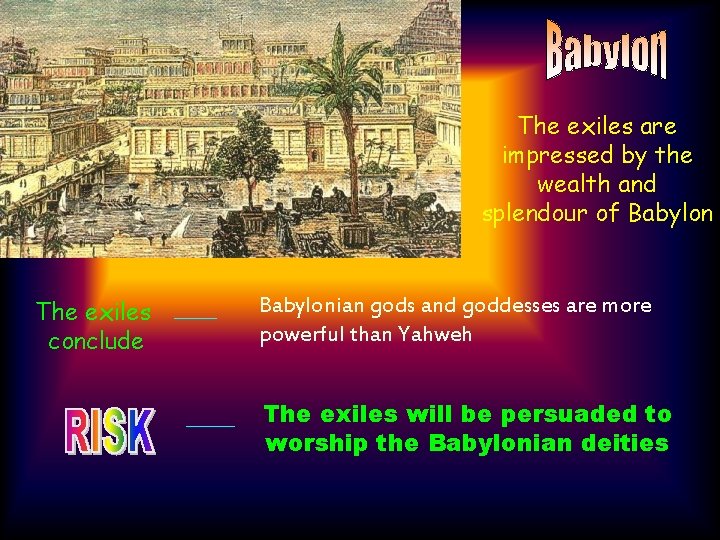
The exiles are impressed by the wealth and splendour of Babylon The exiles conclude Babylonian gods and goddesses are more powerful than Yahweh The exiles will be persuaded to worship the Babylonian deities
72 BCE: Council of Jamnia Discussed the books which were to be kept within the Torah (some additional books are contained within the Hebrew Scriptures of the Catholic Bible – not Protestant versions though). This council also led to the separation of Christianity from Judaism in response to the worship of Christ being considered as polytheistic.
72 BCE: Council of Jamnia This excluded the Christians from the blanket protection from the Romans which then turned their persecutions towards the Christians who refused to pay homage to Caesar and other Roman gods. Christians were excluded through prayer in the synagogue as ‘cursed followers of the Nazarene’.
- Slides: 21