
1800 1824 Cultural Nationalism p Education The Virtuous


- Slides: 50
1800 -1824
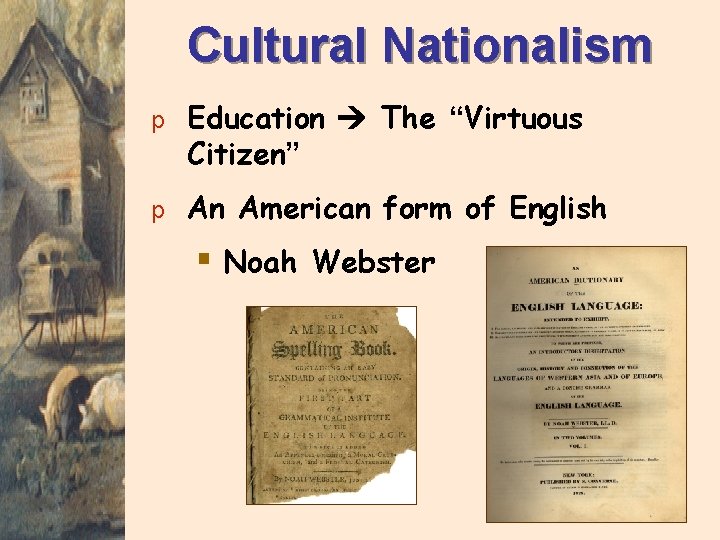
Cultural Nationalism p Education The “Virtuous Citizen” p An American form of English § Noah Webster
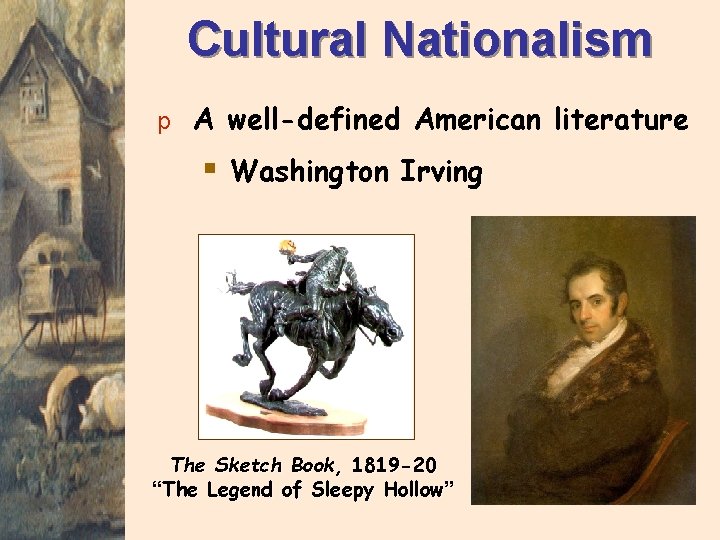
Cultural Nationalism p A well-defined American literature § Washington Irving The Sketch Book, 1819 -20 “The Legend of Sleepy Hollow”
Other signs of nationalism • Revived Bank of US (approved by Congress 1816) • Rebuilding of handsome new DC capital city • Larger army • Post-war patriotism – Star Spangled Banner; 4 th of July celebrations
Remaining issues w/ British: • Rush-Bagot Agreemt 1817: arms control of Great Lakes & Lake Champlain • Anglo-Amer Convention of 1818: – Canadian border demilitarized, – Settled issues of no. boundary of La Territ, – Established joint control of Oreg Territ, – Settled Newfoundland fishing disputes
Economic Nationalism p Encourage Creativity & Inventiveness. p Create a Transportation Infrastructure. p Create a Pro-Business Atmosphere. Jefferson’s Vision of America Role of Govt. Hamilton’s Vision of America
1 st Industrial Revolution • B/t 1815 -1840 • Farming began to change from “subsistence” to raising crops for sale far away • “Market economy” = people began to grow crops/produce goods for marketplace – $$ recvd from these sales went to purchase goods produced by others
Specialization • Regions now concentrating on specific crops more • Wheat had been main cash crop in North (NY, Pa); by 1820 s, more so in Midwest (Ohio, Ind, Ill) • Tobacco still in upper South (NC & Va), rice in SC, Sugar in parts of La
Factors stimulating industrialization • (1) US GOVT Econ Policy • Embargo Act 1807: merchants redirected their capital from foreign trade into factories • Tariffs (duties/taxes on imports) • 2 nd Bank of US
(2) Immigration • 5 m. from Europe to US b/t 1790 – 1860, mostly German & Irish, some Scandinavian • Small amount from Brits (but helpful in sharing knwldg about useful technology)
(3) Technological Innovation • Brit immigrant Samuel Slater – Brought textile industry secrets to US – 1 st Amer factory producing cotton thread
• Another British immigrant— Francis Cabot Lowell • “Borrowed” power loom technology from Brit • Led to mass production of textile
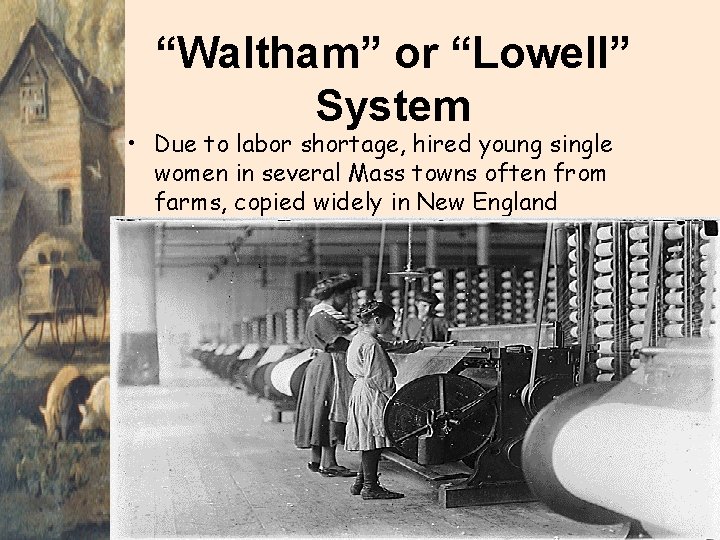
“Waltham” or “Lowell” System • Due to labor shortage, hired young single women in several Mass towns often from farms, copied widely in New England
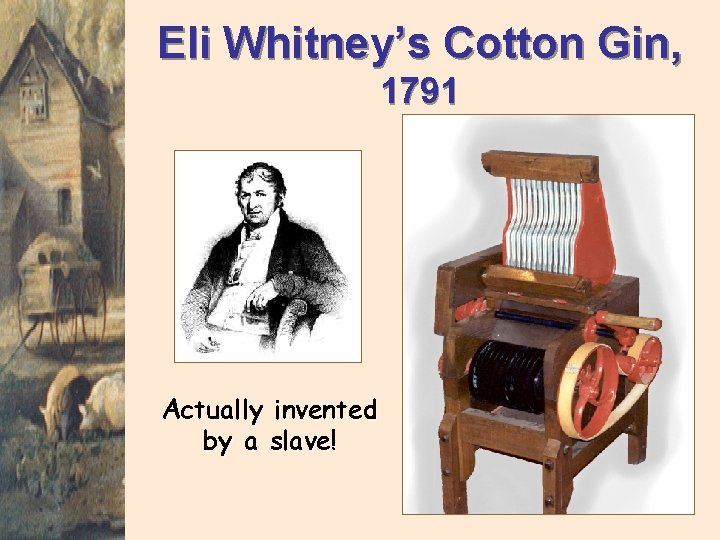
Eli Whitney’s Cotton Gin, 1791 Actually invented by a slave!
“COTTON IS KING” • Great demand for cotton-- New Engl & Brit textile mills • Huge labor needs filled by slaves • Natural resources in South
Effects of Cotton Boom? • (1) Helped pull up rest of Amer economy too; No. merchants involved in transport • More slaves = more food needed from Western farmers • (2) Huge internal slave trade from upper to lower South & from North
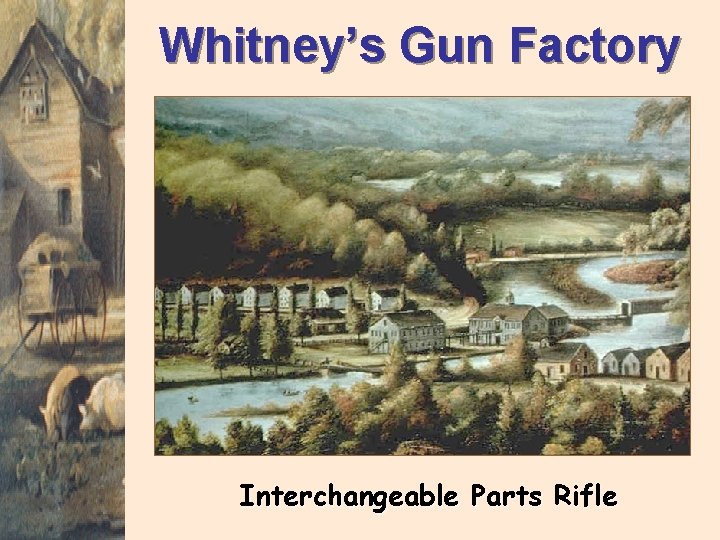
Whitney’s Gun Factory Interchangeable Parts Rifle
“American system of manufacturing” • Led to machine tool industry • Produced specialized machines for textile & transp industries • Helped promote assembly line production methods
TRANSPORTATION REVOLUTION
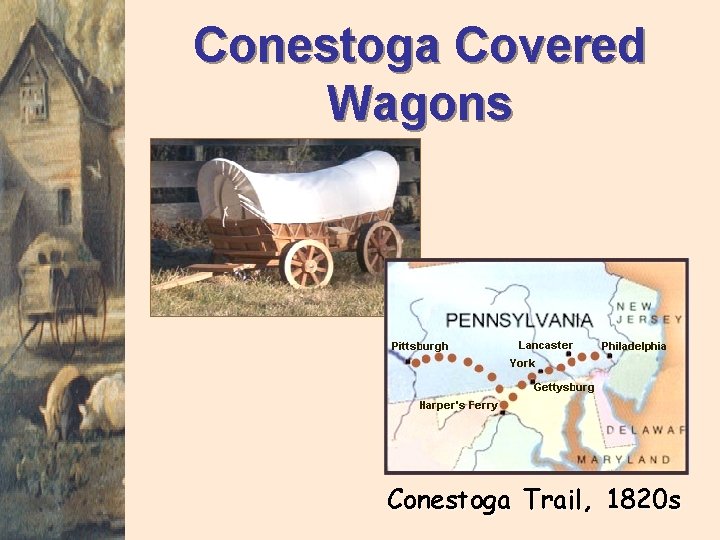
Conestoga Covered Wagons Conestoga Trail, 1820 s
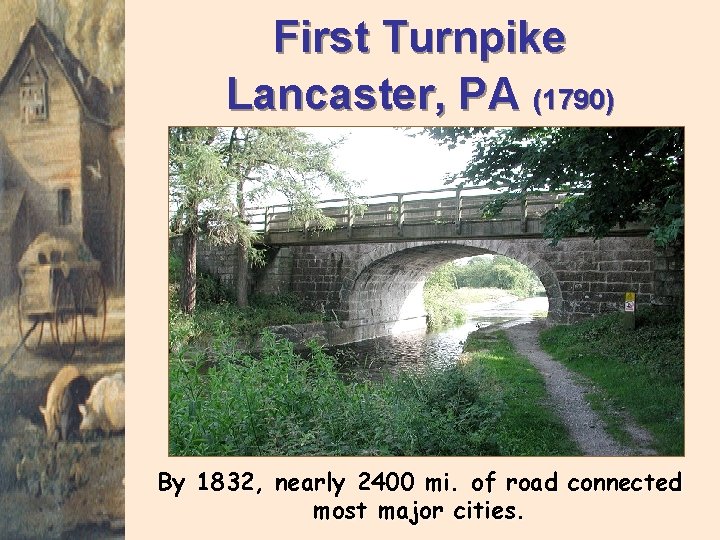
First Turnpike Lancaster, PA (1790) By 1832, nearly 2400 mi. of road connected most major cities.
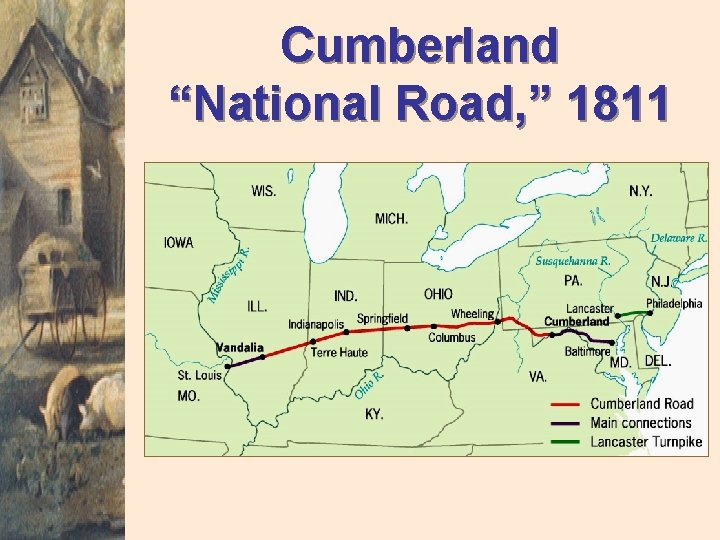
Cumberland “National Road, ” 1811
• US Govt helped support these “internal improvements” • But no real comprehensive hwy system sponsored by fed govt
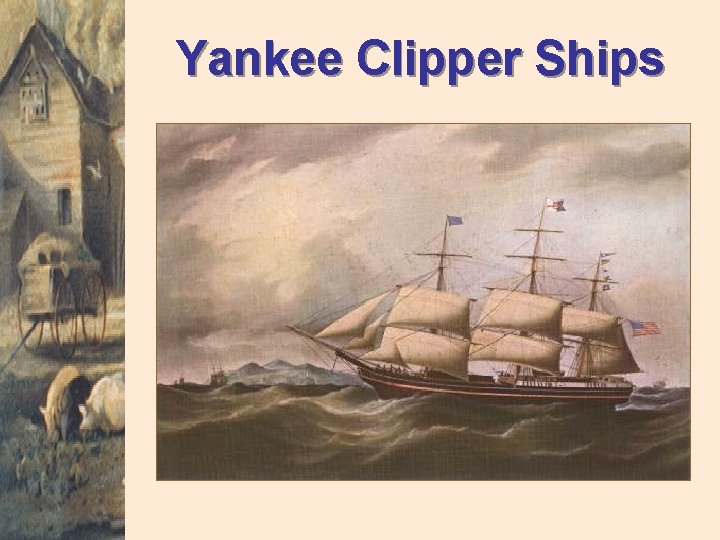
Yankee Clipper Ships
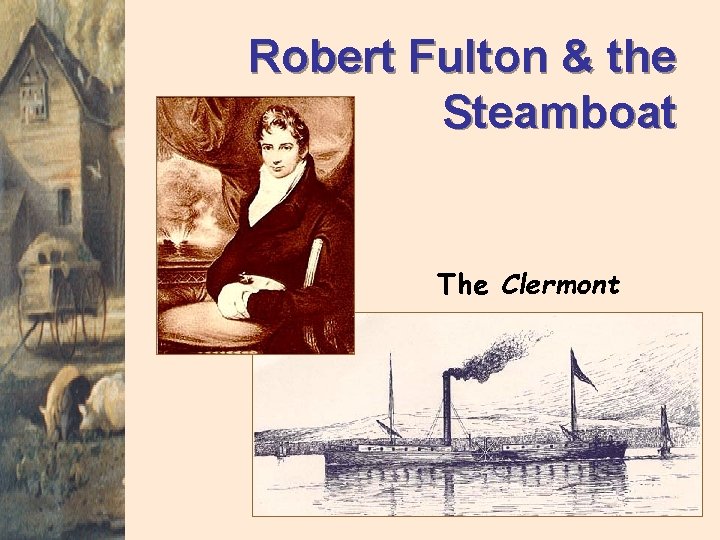
Robert Fulton & the Steamboat The Clermont
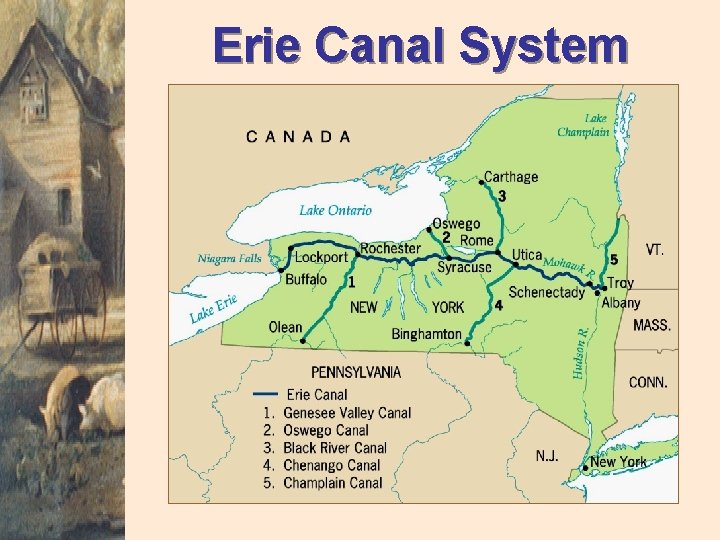
The Canal Era, 1820 -40 s • 1 st major project & most successful = Erie Canal in NY • Begun 1817 & done by 1825 • 10 X longer than any previous & longest by far in western world
Erie Canal System
• Symbol of Amer ingenuity & peaceful progress • Great financial success & huge boon to NY • Other states tried to compete w/NY in building canals in 1830 s (Mass, Pa, Md) but less successful
st 1 Railroads in 1830 s • Adv: faster, cheaper to build, more reach • Disadv: lots of maintenance & mostly privately financed. • Puts end to canal era by 1850 • North becoming US commercial center; farming less important there
SUPREME COURT DECISIONS: THE MARSHALL COURT
THEMES • Pro-business • Supported right to acquire property over polit, social or econ equality • Protecting private property thru preserving contracts • Supremacy of fed over state law • Nationalism
Dartmouth College v. Woodward, (1819) • Legal principle: can’t alter or cancel contract w/o both parties’ consent • Far reaching implications: Restricts states’ rts to regulate corporations (ex: textile or canal cos)
Mc. Culloch v. Md. (1819) • Finally resolved issue of fed power to charter bank • Also, state’s ability to tax an federal govt agency • Unpopular decision
Gibbons v. Ogden (1824) • State can only regulate intrastate commerce • Also broader interpretation of “commerce” • Opened door later for fed cts to allow fed regulation of…? • Supr Ct using its checks & balances on state legislatures.
Worcester v. Ga (1832) • Ga lacked authority to regulate Indian tribes b/c they were “sovereign nations” • Only fed govt could do so
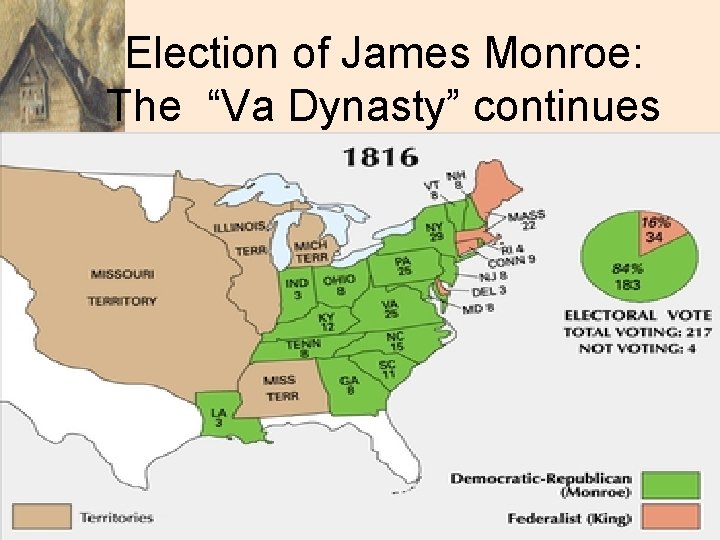
Election of James Monroe: The “Va Dynasty” continues
An “Era of Good Feelings”? • Nickname for period between 1815 & 1828 • WHY? • 1 -party rule • Expansion • Material progress • Peace & prosperity
Transcontinental (or Adams. Onis) Treaty w/ Spain, 1819 • US purchased Fla • Got La Territory boundaries to Pacific Ocean • Westward, ho!
Monroe Doctrine, 1823 • 2 basic features: • (1) Non-colonization of Americas by Europ powers – US worried about “Holy Alliance” (Spain/Russia/Prussia) • (2) Non-intervention by US in existing Eur colonies in Americas [But if Eurs tried to extend control, Amer would consider it a threat to US peace & safety]
• Really more of a self-defense policy statement • NOT a law or agreement • [Britain had tried for a joint statement, but US declined] • Expresses post-1812 nationalism & patriotism • But at same time – isolationism!
ECONOMIC & SOCIAL SECTIONAL CONTROVERSIES
• (1) TARIFF—which sections supported/opposed? • (2) NATIONAL BANK –opposition not necessarily acc’g to geographic region • Rep. Henry Clay of Ky : “American system” UNITY? • Effect of economic panic in 1819
• (3) Internal improvements – fed govt aid for infrastructure • (4) Land policy – min price & acreage of Western land
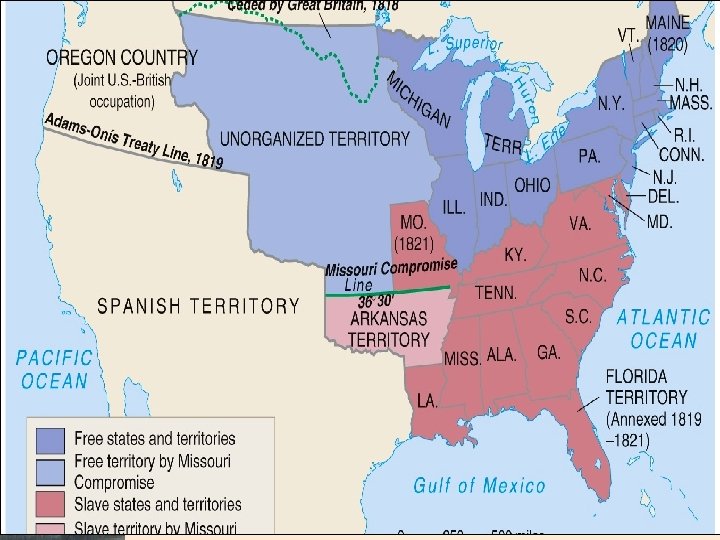
(5) Slavery: the biggest sectional controversy • Quiet until 1817… • Mo. Territory sought statehood • NY Repub James Talmadge proposed amendment: • No further intro of slaves in Mo. + emancipation of all slave children at age 25 born after Mo admission • Approved by US House but Senate rejected • Sparked huge debate!
• Previous sectional conflict more about AH’s econ program or Jay Treaty • NOT primarily about slavery • Why such uproar over Mo? • Admission as slave state would upset balance in Congr to South’s advantage
Mo. Compromise, 1820 • [Big assist from Henry Clay, “The Great Compromiser”] • (1) Mo admitted as slave state & Maine as free state • (2) Slavery forbidden in La Purch territ area north of 36 30’ latitude
Who wins in Mo. Compromise? • Southern victory? • Got Mo. in as slave state despite controversy • But. . . reinforced idea that Congress had power to ban slavery in territories (as NW Ordinance had)
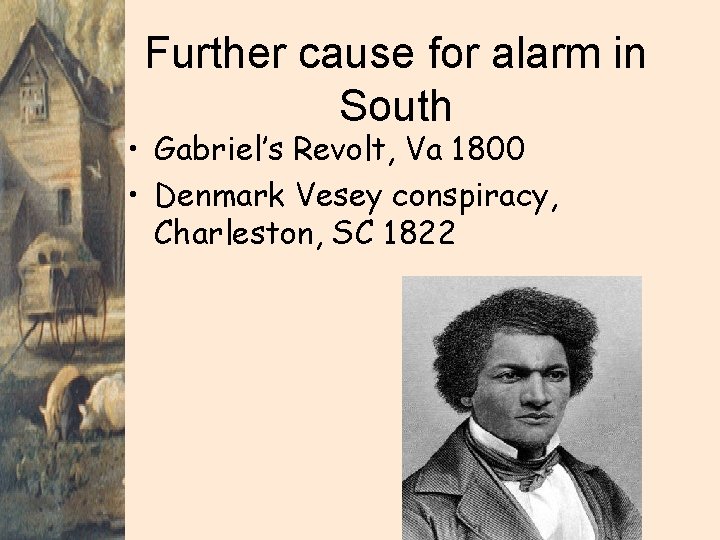
Further cause for alarm in South • Gabriel’s Revolt, Va 1800 • Denmark Vesey conspiracy, Charleston, SC 1822
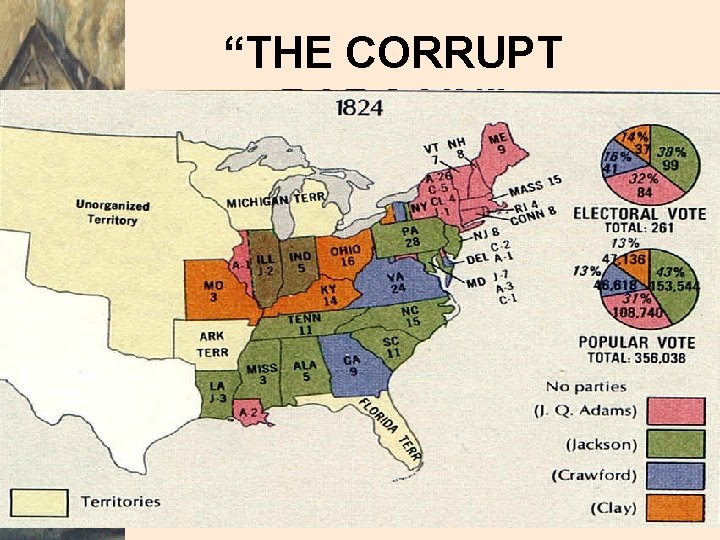
“THE CORRUPT BARGAIN”