
18 th Century Empiricism Mercantilism and the Spanish

- Slides: 12
18 th Century Empiricism, Mercantilism, and the Spanish Colonial System Copyright © 2010 Pearson Education, Inc. , Upper Saddle River, NJ 07458. All rights reserved.
Overview • European Transatlantic (Colonial) Economy • Mid-18 th c. renewal of European warfare: – Austria vs. Prussia over dominance of central Europe – Great Britain vs. France for commercial & colonial supremacy • Outcomes: Prussia emerges as great power, Great Britain gains world empire • Peace results in restructuring of taxation & finance, leading in turn to: – – American Revolution Continental enlightened absolutism Continuing French financial crisis Reform of Spanish South American empire Copyright © 2010 Pearson Education, Inc. , Upper Saddle River, NJ 07458. All rights reserved.
European Overseas Empires • Four phases of European contact with the New World: – Discovery, exploration, conquest, settlement—to end of 17 th c. – Mercantile empires & great power trade rivalries; slavery; colonial independence—to 1820 s – 19 th-c. empires in Africa & Asia – Decolonization, mid- to late-20 th c. • Source of European world domination: technology (ships & guns) Name: The economy system stretching between Chesapeake Bay and Brazil that produced crops, especially sugar, cotton, and tobacco, using slave labor on large estates. Plantation Economy Copyright © 2010 Pearson Education, Inc. , Upper Saddle River, NJ 07458. All rights reserved.
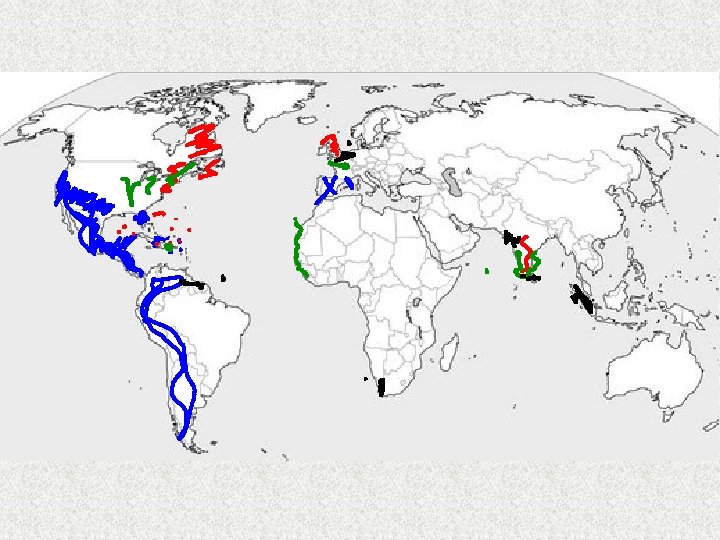
Mercantile Empires, Early 18 th c. — Boundaries Set by 1713 Treaty of Utrecht • Spain: South America except for Brazil; Florida, Mexico, California & N. American Southwest; Central America; Caribbean possessions • Britain: N. Atlantic seaboard, Nova Scotia, Newfoundland; Caribbean possessions; trading posts on Indian subcontinent • France: St. Lawrence, Ohio, & Mississippi river valleys; Caribbean possessions; trading posts in India & West Africa • Netherlands: Surinam (S. America); Cape Colony (S. Africa); trading posts in West Africa, Sri Lanka, & India; also controlled trade with Java in SE Pacific Copyright © 2010 Pearson Education, Inc. , Upper Saddle River, NJ 07458. All rights reserved.
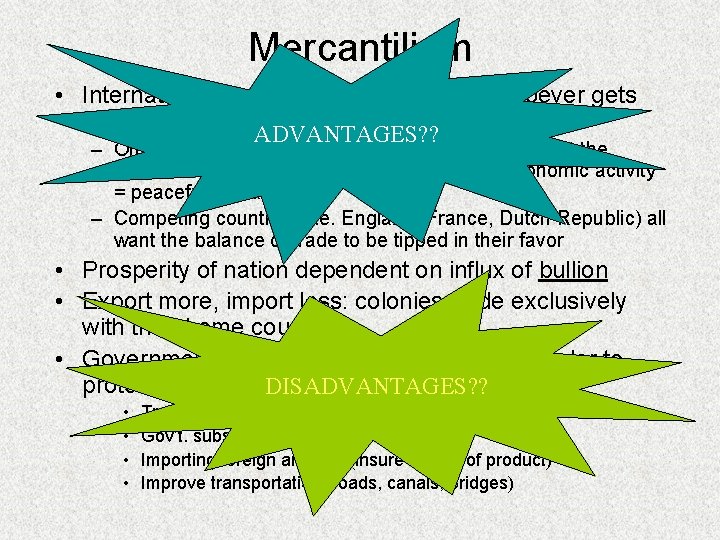
Mercantilism • International trade as zero-sum game; whoever gets the most gold wins ADVANTAGES? ? – One country can only increase its volume of trade at the detriment of another country, THEREFORE economic activity = peaceful warfare – Competing countries (i. e. England, France, Dutch Republic) all want the balance of trade to be tipped in their favor • Prosperity of nation dependent on influx of bullion • Export more, import less: colonies trade exclusively with their home country • Government regulation of trade required in order to protect export industries DISADVANTAGES? ? • • Trade monopolies Gov’t. subsidies Importing foreign artisans (insure quality of product) Improve transportation (roads, canals, bridges)
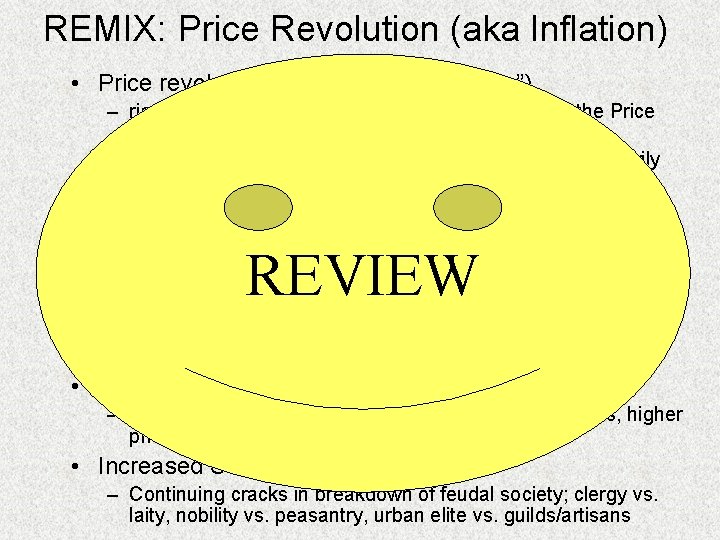
REMIX: Price Revolution (aka Inflation) • Price revolution (a very slow “revolution”) – rise in prices = fall in value of currency Causes for the Price Revolution – “Bullionism” influx of gold & silver bullion, provided primarily by Spain – Increase in population also increases demand for land food = higher prices REVIEW • Who suffers from higher prices? – Peasant and laborer wages rose the least = drop in standard of living – Some governments – excessive borrowing from bankers = new and higher taxes • Who benefits? – Landowners and Entrepreneurs profit from higher rents, higher prices, bigger markets, and cheap labor costs • Increased Social Tension – Continuing cracks in breakdown of feudal society; clergy vs. laity, nobility vs. peasantry, urban elite vs. guilds/artisans
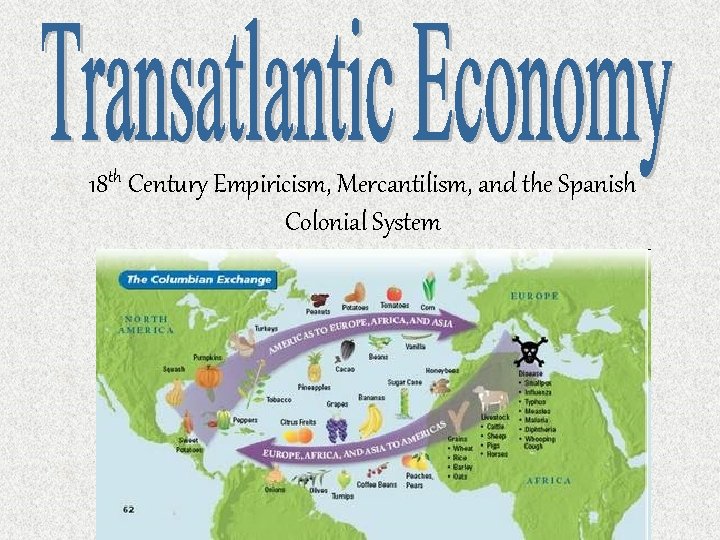
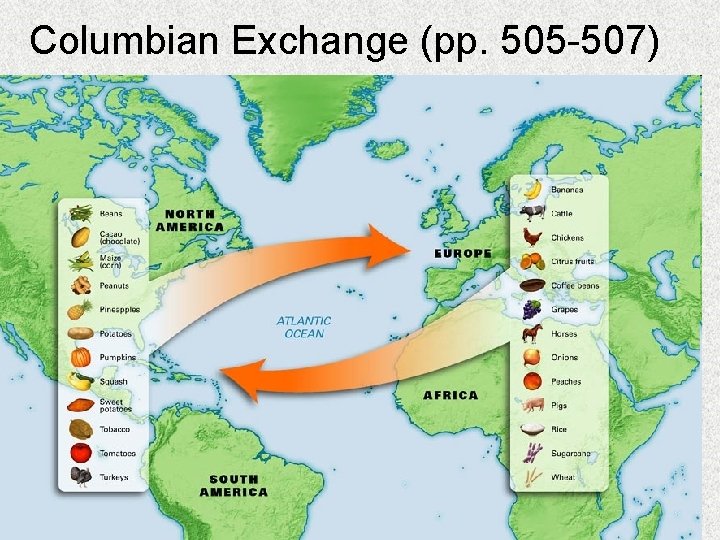
Columbian Exchange (pp. 505 -507)
French-British Rivalry • N. American colonial quarrels over St. Lawrence River valley, upper New England, Ohio River valley; fishing rights, fur trade, Native American alliances • Biggest area of rivalry: West Indies – Why? Explain. • Describe the role India played in French and British colonial rivalry? Copyright © 2010 Pearson Education, Inc. , Upper Saddle River, NJ 07458. All rights reserved.
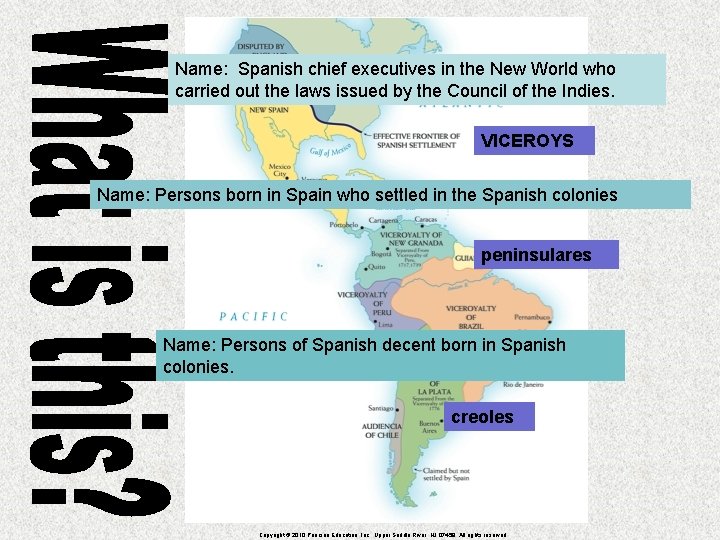
Name: Spanish chief executives in the New World who carried out the laws issued by the Council of the Indies. VICEROYS Name: Persons born in Spain who settled in the Spanish colonies peninsulares Name: Persons of Spanish decent born in Spanish colonies. creoles Copyright © 2010 Pearson Education, Inc. , Upper Saddle River, NJ 07458. All rights reserved.
Spanish Trade Regulation • Only one port authorized for use in American trade • Casa de Contración regulated all trade with New World • Functioned to serve Spanish commercial interests (precious-metal mines) • Flota system tried to ensure Spanish economic hegemony Copyright © 2010 Pearson Education, Inc. , Upper Saddle River, NJ 07458. All rights reserved.
Colonial Reform Under the Spanish Bourbon Monarchs • Crucial early 18 th-c. change: War of the Spanish Succession (1701– 1714) and Treaty of Utrecht replaced Spanish Habsburgs with Bourbons of France • Philip V (r. 1700– 1714) and successors tried to revive decaying trade monopoly, suppress smuggling • Charles III (r. 1759– 1788): most important imperial reformer—royal representatives favored over local councils; improved imperial economy, but introduced tensions between Spanish from Spain and creoles (Spanish born in America) Copyright © 2010 Pearson Education, Inc. , Upper Saddle River, NJ 07458. All rights reserved.