
18 Chapter Creating Effective Organizations n Definition and
- Slides: 17
18 Chapter Creating Effective Organizations: n. Definition and Perspectives n The Changing Shape of Organizations n Organizational Effectiveness (and the Threat of Decline) n The Contingency Approach to Organization Design n Three Important Contingency Variables: Technology, Size, and Strategic Choice n
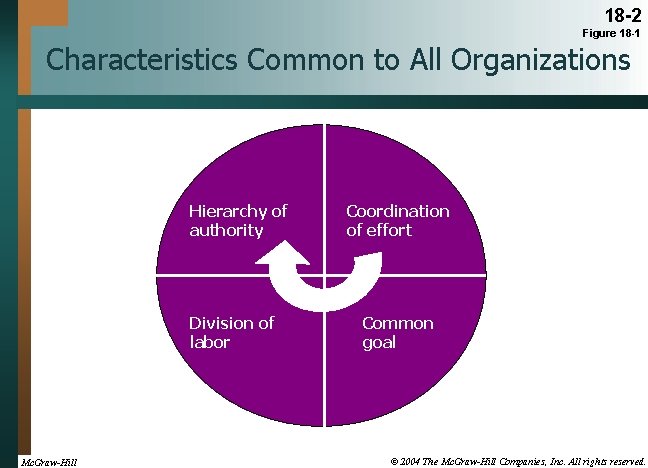
18 -2 Figure 18 -1 Characteristics Common to All Organizations Hierarchy of authority Division of labor Mc. Graw-Hill Coordination of effort Common goal © 2004 The Mc. Graw-Hill Companies, Inc. All rights reserved.
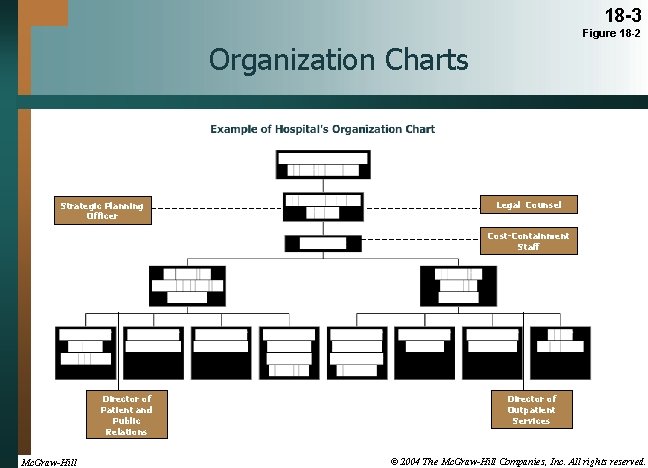
18 -3 Figure 18 -2 Organization Charts Strategic Planning Officer Legal Counsel Cost-Containment Staff Director of Patient and Public Relations Mc. Graw-Hill Director of Outpatient Services © 2004 The Mc. Graw-Hill Companies, Inc. All rights reserved.
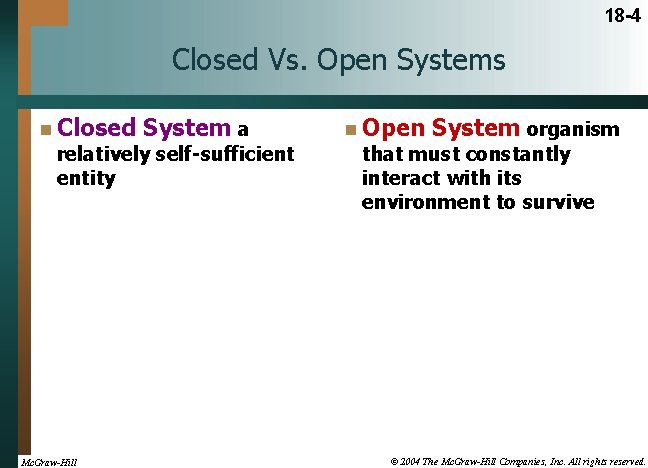
18 -4 Closed Vs. Open Systems n Closed System a relatively self-sufficient entity Mc. Graw-Hill n Open System organism that must constantly interact with its environment to survive © 2004 The Mc. Graw-Hill Companies, Inc. All rights reserved.
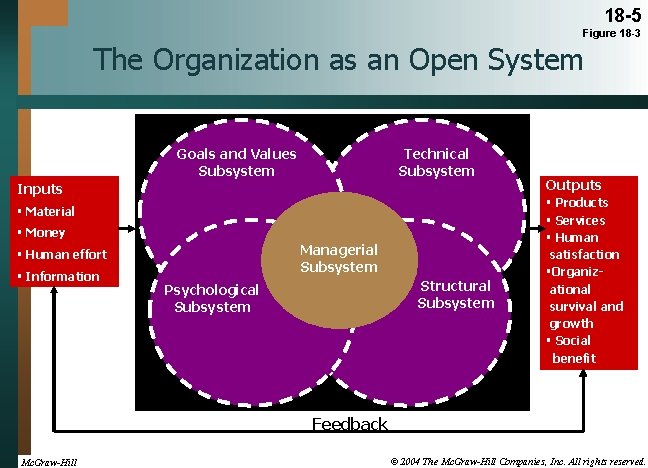
18 -5 Figure 18 -3 The Organization as an Open System Goals and Values Subsystem Technical Subsystem Inputs § Material § Money Managerial Subsystem § Human effort § Information Structural Subsystem Psychological Subsystem Outputs § Products § Services § Human satisfaction §Organizational survival and growth § Social benefit Feedback Mc. Graw-Hill © 2004 The Mc. Graw-Hill Companies, Inc. All rights reserved.
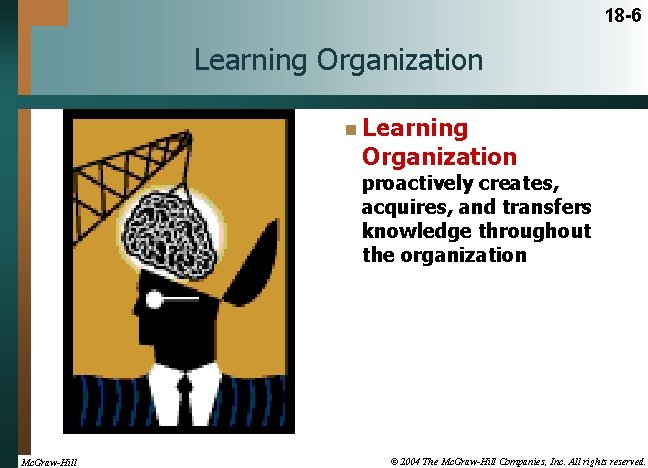
18 -6 Learning Organization n Learning Organization proactively creates, acquires, and transfers knowledge throughout the organization Mc. Graw-Hill © 2004 The Mc. Graw-Hill Companies, Inc. All rights reserved.
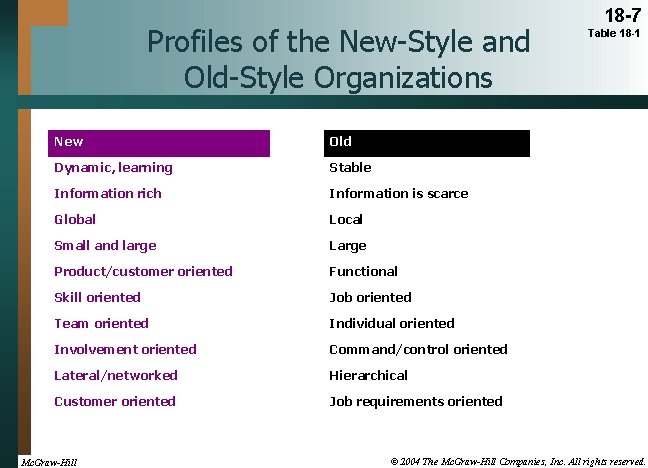
Profiles of the New-Style and Old-Style Organizations New Old Dynamic, learning Stable Information rich Information is scarce Global Local Small and large Large Product/customer oriented Functional Skill oriented Job oriented Team oriented Individual oriented Involvement oriented Command/control oriented Lateral/networked Hierarchical Customer oriented Job requirements oriented Mc. Graw-Hill 18 -7 Table 18 -1 © 2004 The Mc. Graw-Hill Companies, Inc. All rights reserved.
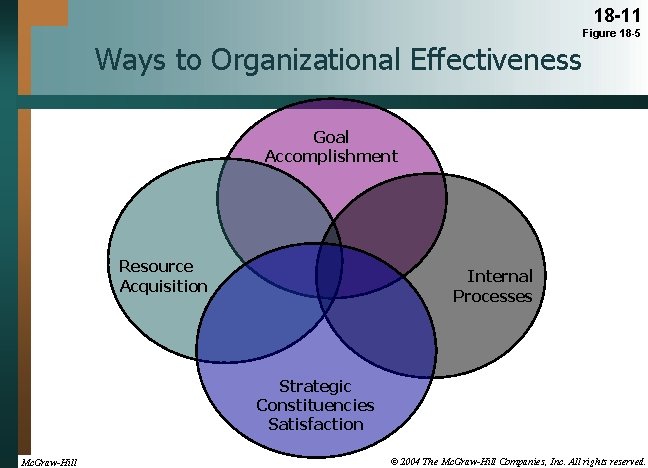
18 -11 Figure 18 -5 Ways to Organizational Effectiveness Goal Accomplishment Resource Acquisition Internal Processes Strategic Constituencies Satisfaction Mc. Graw-Hill © 2004 The Mc. Graw-Hill Companies, Inc. All rights reserved.
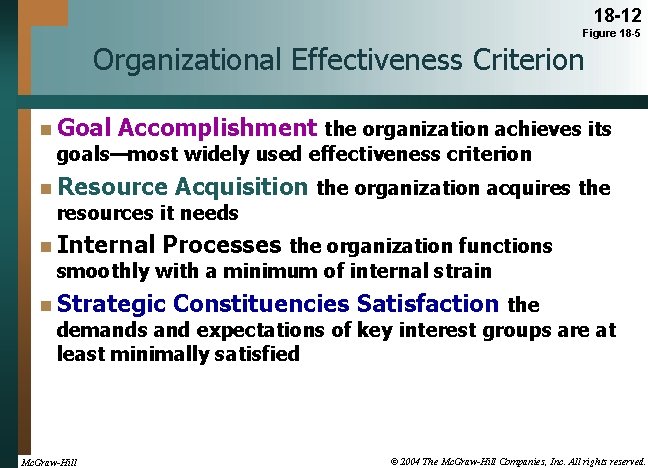
18 -12 Figure 18 -5 Organizational Effectiveness Criterion n Goal Accomplishment the organization achieves its goals—most widely used effectiveness criterion n Resource Acquisition the organization acquires the resources it needs n Internal Processes the organization functions smoothly with a minimum of internal strain n Strategic Constituencies Satisfaction the demands and expectations of key interest groups are at least minimally satisfied Mc. Graw-Hill © 2004 The Mc. Graw-Hill Companies, Inc. All rights reserved.
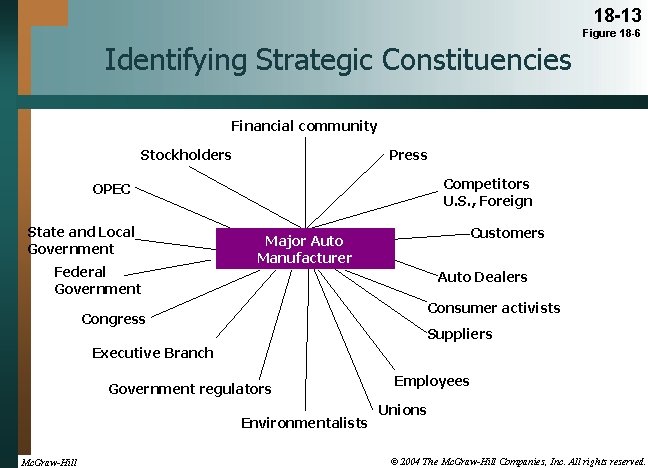
18 -13 Figure 18 -6 Identifying Strategic Constituencies Financial community Stockholders Press Competitors U. S. , Foreign OPEC State and Local Government Federal Government Customers Major Auto Manufacturer Auto Dealers Consumer activists Congress Suppliers Executive Branch Government regulators Environmentalists Mc. Graw-Hill Employees Unions © 2004 The Mc. Graw-Hill Companies, Inc. All rights reserved.
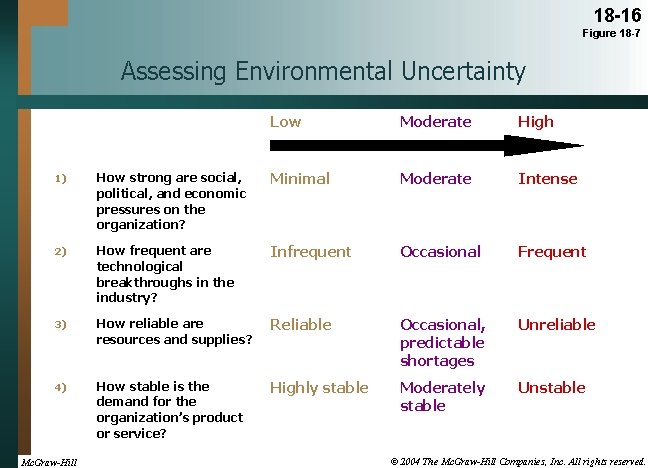
18 -16 Figure 18 -7 Assessing Environmental Uncertainty Low Moderate High 1) How strong are social, political, and economic pressures on the organization? Minimal Moderate Intense 2) How frequent are technological breakthroughs in the industry? Infrequent Occasional Frequent 3) How reliable are resources and supplies? Reliable Occasional, predictable shortages Unreliable 4) How stable is the demand for the organization’s product or service? Highly stable Moderately stable Unstable Mc. Graw-Hill © 2004 The Mc. Graw-Hill Companies, Inc. All rights reserved.
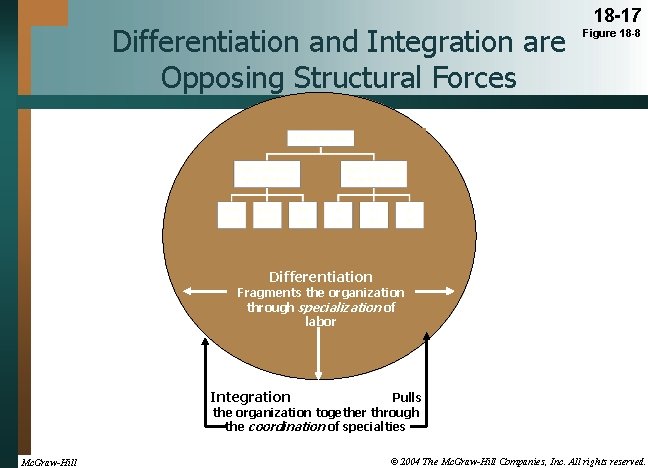
Differentiation and Integration are Opposing Structural Forces 18 -17 Figure 18 -8 Differentiation Fragments the organization through specialization of labor Integration Pulls the organization together through the coordination of specialties Mc. Graw-Hill © 2004 The Mc. Graw-Hill Companies, Inc. All rights reserved.
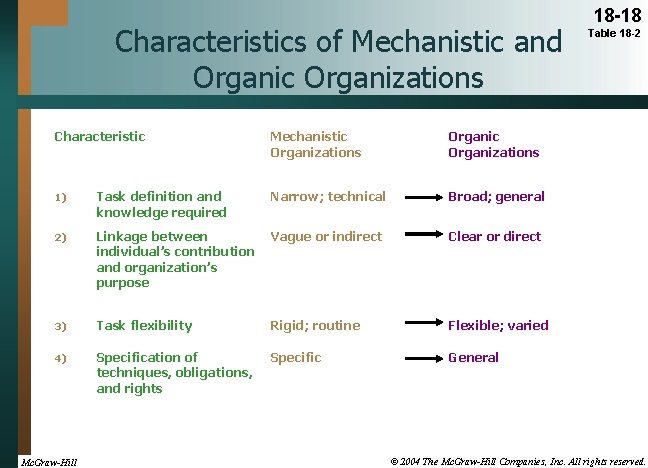
Characteristics of Mechanistic and Organic Organizations Characteristic Mechanistic Organizations Organic Organizations 1) Task definition and knowledge required Narrow; technical Broad; general 2) Linkage between individual’s contribution and organization’s purpose Vague or indirect Clear or direct 3) Task flexibility Rigid; routine Flexible; varied 4) Specification of techniques, obligations, and rights Specific General Mc. Graw-Hill 18 -18 Table 18 -2 © 2004 The Mc. Graw-Hill Companies, Inc. All rights reserved.
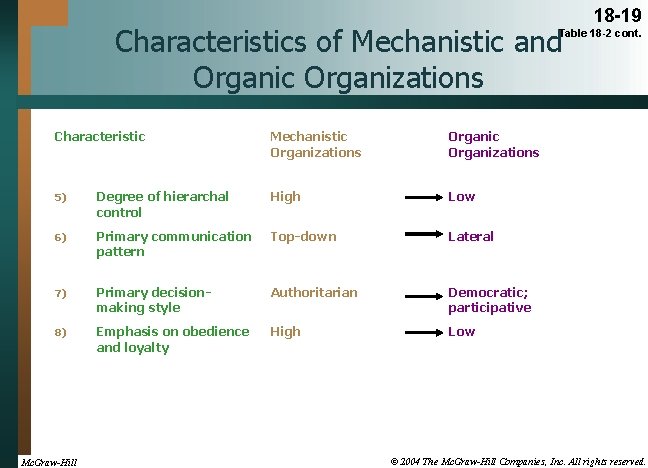
Characteristics of Mechanistic and Organic Organizations 18 -19 Table 18 -2 cont. Characteristic Mechanistic Organizations Organic Organizations 5) Degree of hierarchal control High Low 6) Primary communication pattern Top-down Lateral 7) Primary decisionmaking style Authoritarian Democratic; participative 8) Emphasis on obedience and loyalty High Low Mc. Graw-Hill © 2004 The Mc. Graw-Hill Companies, Inc. All rights reserved.
18 -20 The Effect of Technology on Structure n n Mc. Graw-Hill The more the technology requires interdependence between individuals and/or groups, the greater the need for coordination “As technology moves from routine to nonroutine, subunits adopt less formalized and centralized structures” © 2004 The Mc. Graw-Hill Companies, Inc. All rights reserved.
Organizational Size and Performance: Research Insights n n 18 -21 Larger organizations tended to be more productive There were “no positive relationships between organizational size and efficiency, suggesting the absence of net economy of scale effects” There were zero to slightly negative relationships between subunit size and productivity and efficiency According to a more recent study, turnover was not related to organizational size Mc. Graw-Hill © 2004 The Mc. Graw-Hill Companies, Inc. All rights reserved.
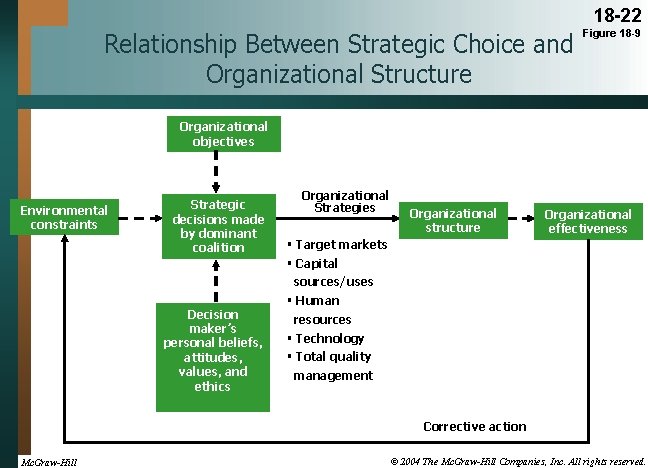
18 -22 Relationship Between Strategic Choice and Organizational Structure Figure 18 -9 Organizational objectives Environmental constraints Strategic decisions made by dominant coalition Decision maker’s personal beliefs, attitudes, values, and ethics Organizational Strategies Organizational structure Organizational effectiveness § Target markets § Capital sources/uses § Human resources § Technology § Total quality management Corrective action Mc. Graw-Hill © 2004 The Mc. Graw-Hill Companies, Inc. All rights reserved.