
18 20 Worker Safety WORKER SAFETY Head to
- Slides: 25
18 20 Worker Safety
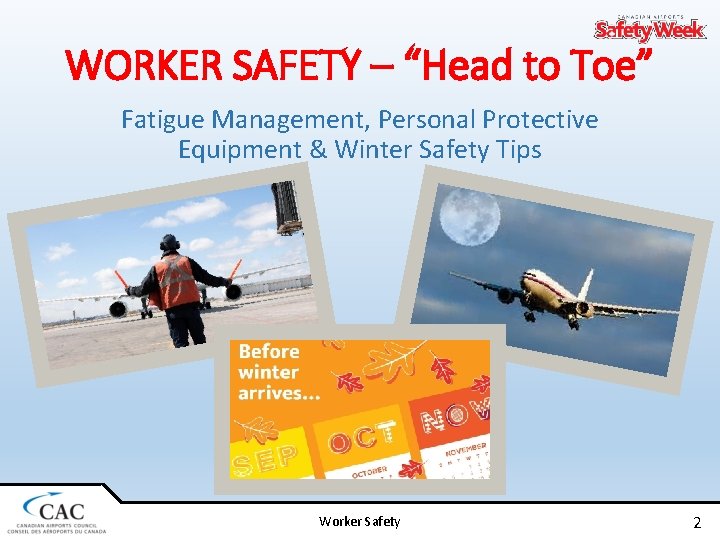
WORKER SAFETY – “Head to Toe” Fatigue Management, Personal Protective Equipment & Winter Safety Tips Worker Safety 2
Personal Fatigue Management Fatigue is a state of physical or mental weariness that results in reduced alertness. It is the result of inadequate quantity or quality of sleep. Worker Safety 3
DID YOU KNOW? • Being awake for 24 hours or more is equivalent to being legally too drunk to drive (Blood Alcohol Content = 0. 10%) • Fatigue can have a negative impact on your personal health and family/social life • Being fatigued can make you a risk to your own safety, to your co-workers, and to others Worker Safety 4
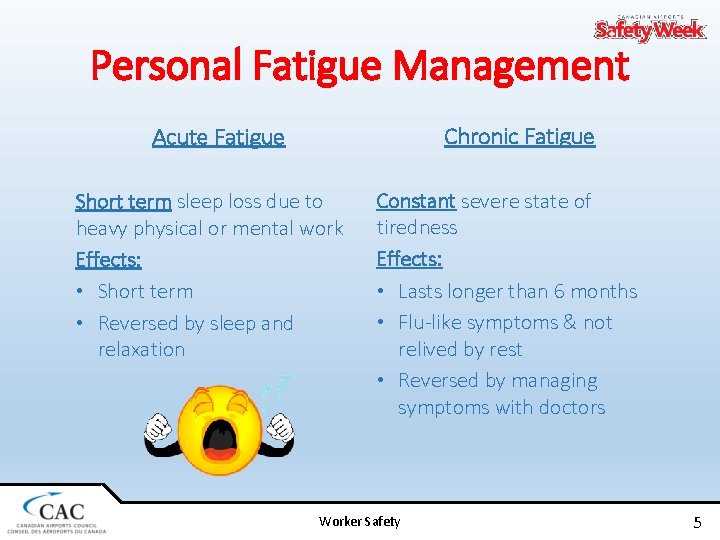
Personal Fatigue Management Chronic Fatigue Acute Fatigue Short term sleep loss due to heavy physical or mental work Effects: • Short term • Reversed by sleep and relaxation Constant severe state of tiredness Effects: • Lasts longer than 6 months • Flu-like symptoms & not relived by rest • Reversed by managing symptoms with doctors Worker Safety 5
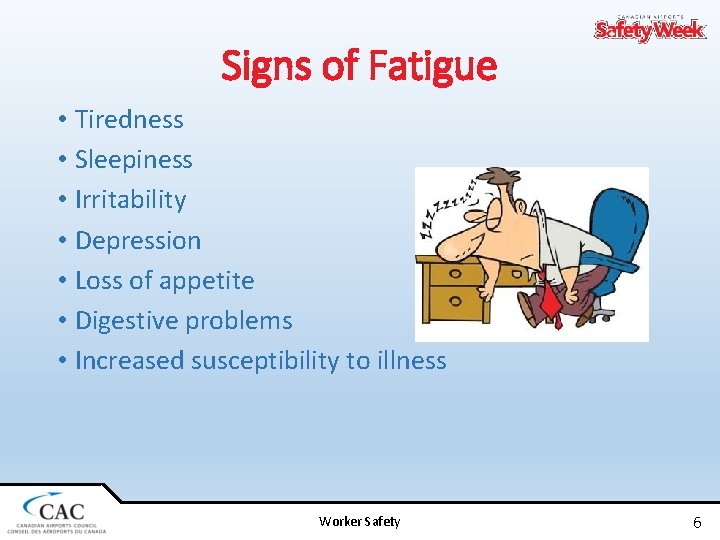
Signs of Fatigue • Tiredness • Sleepiness • Irritability • Depression • Loss of appetite • Digestive problems • Increased susceptibility to illness Worker Safety 6
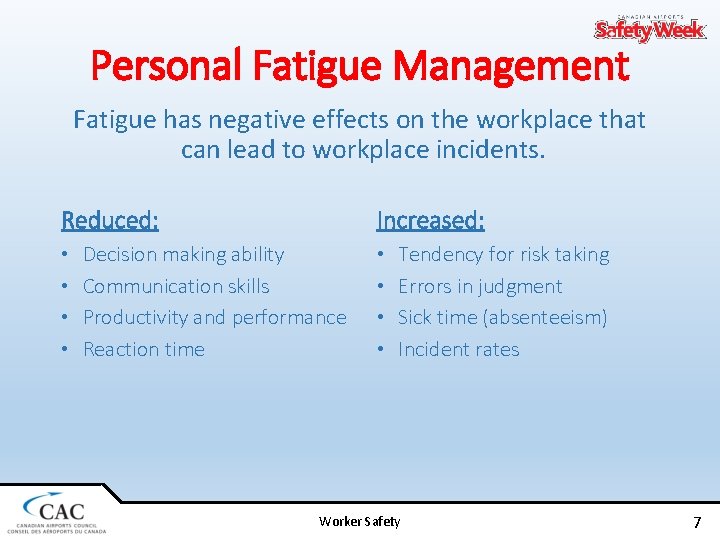
Personal Fatigue Management Fatigue has negative effects on the workplace that can lead to workplace incidents. Reduced: • • Increased: Decision making ability Communication skills Productivity and performance Reaction time • • Tendency for risk taking Errors in judgment Sick time (absenteeism) Incident rates Worker Safety 7
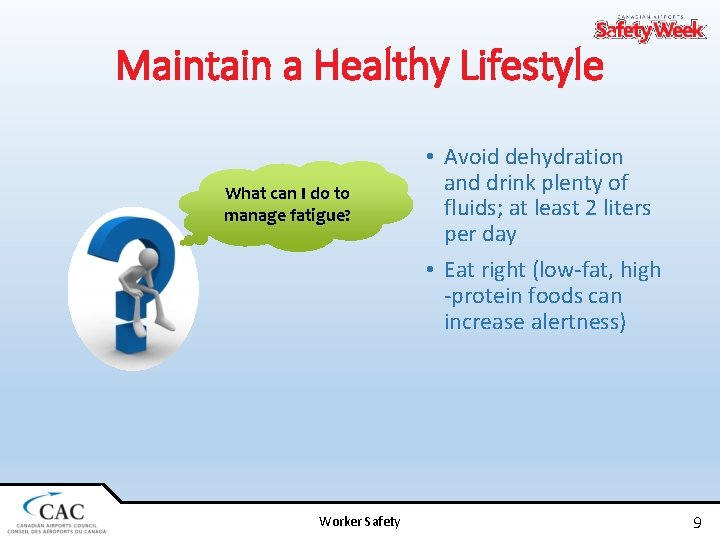
Adopt Good Sleeping Habits What can I do to manage fatigue? Worker Safety • Most people need 7 -9 hours of sleep per day. • Implement a regular bedtime routine and schedule • If your shift changes, adjust your bedtime gradually 8
Maintain a Healthy Lifestyle What can I do to manage fatigue? Worker Safety • Avoid dehydration and drink plenty of fluids; at least 2 liters per day • Eat right (low-fat, high -protein foods can increase alertness) 9
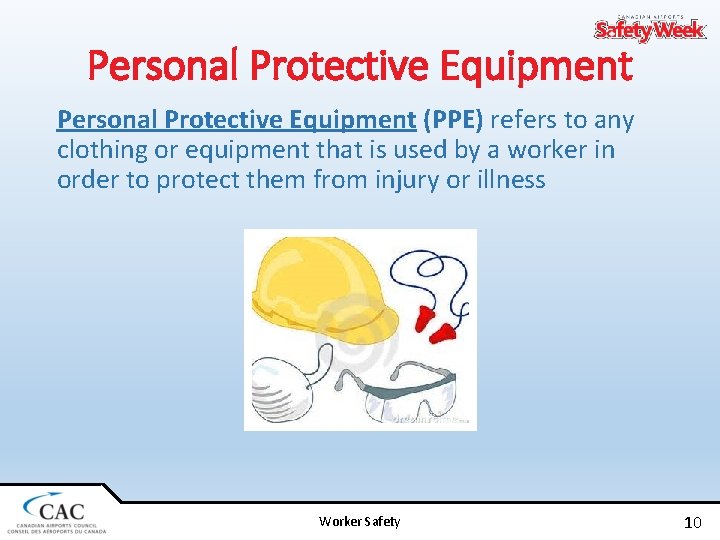
Personal Protective Equipment (PPE) refers to any clothing or equipment that is used by a worker in order to protect them from injury or illness Worker Safety 10
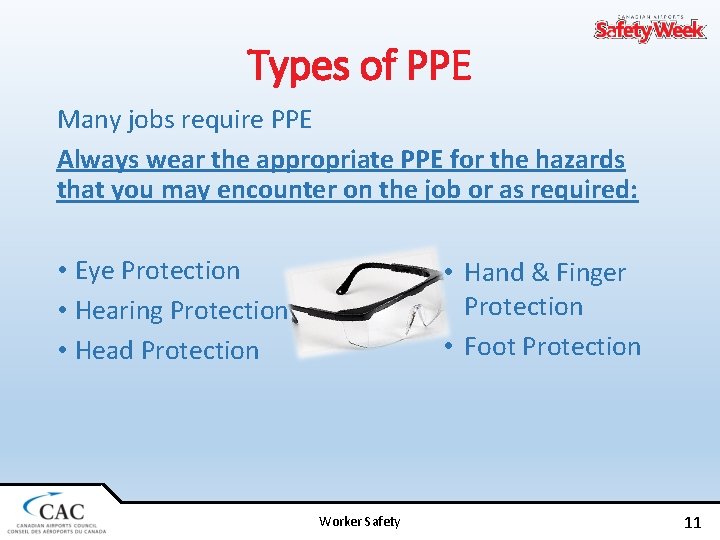
Types of PPE Many jobs require PPE Always wear the appropriate PPE for the hazards that you may encounter on the job or as required: • Eye Protection • Hearing Protection • Head Protection • Hand & Finger Protection • Foot Protection Worker Safety 11
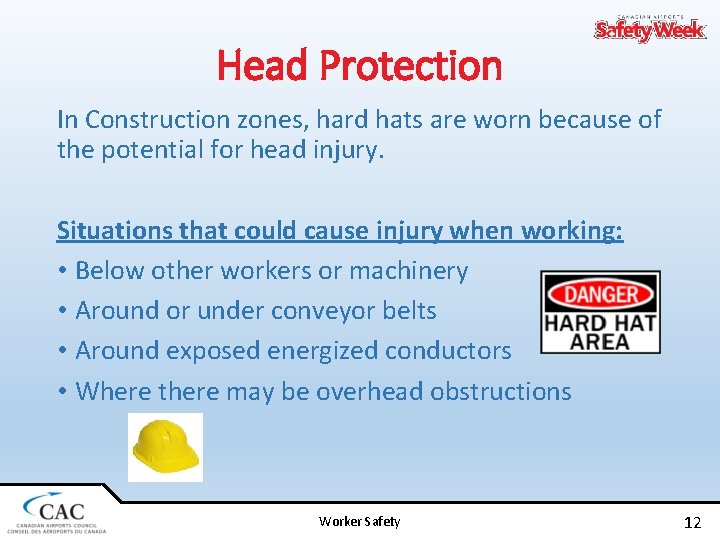
Head Protection In Construction zones, hard hats are worn because of the potential for head injury. Situations that could cause injury when working: • Below other workers or machinery • Around or under conveyor belts • Around exposed energized conductors • Where there may be overhead obstructions Worker Safety 12
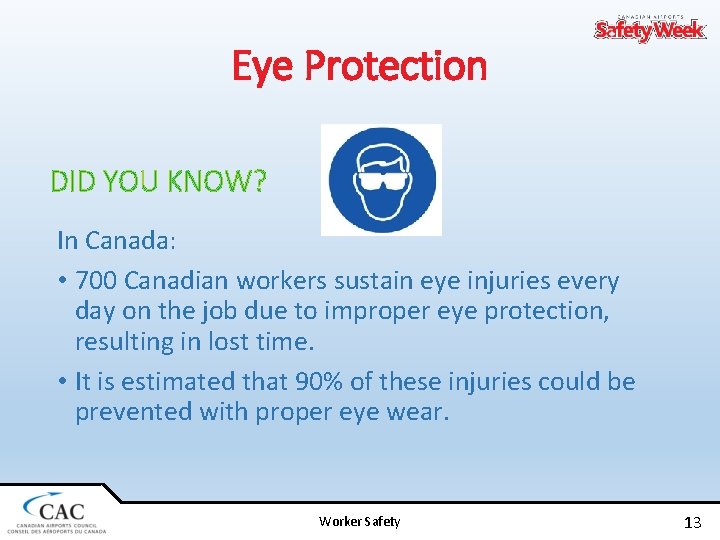
Eye Protection DID YOU KNOW? In Canada: • 700 Canadian workers sustain eye injuries every day on the job due to improper eye protection, resulting in lost time. • It is estimated that 90% of these injuries could be prevented with proper eye wear. Worker Safety 13
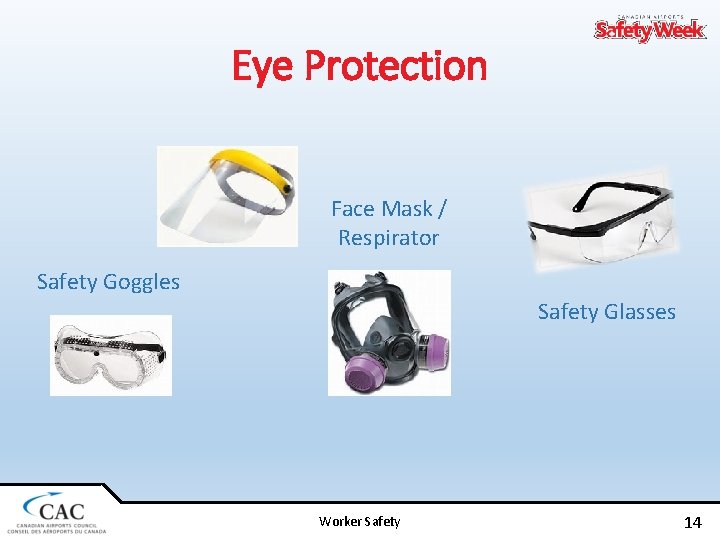
Eye Protection Face Mask / Respirator Safety Goggles Safety Glasses Worker Safety 14
Eye Protection Activities associated with wearing the appropriate level of eye protection: • Welding, cutting, and brazing our Note: See y or supervisor f • Sawing, grinding job specific eyewear. • Spray painting • Dusty environments • Chemical gases, vapours, or liquids • Sunlight or Harmful Light Worker Safety 15
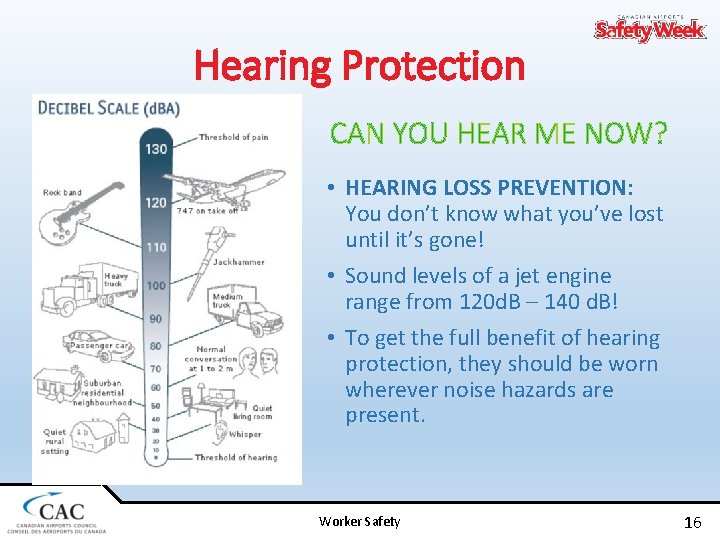
Hearing Protection CAN YOU HEAR ME NOW? • HEARING LOSS PREVENTION: You don’t know what you’ve lost until it’s gone! • Sound levels of a jet engine range from 120 d. B – 140 d. B! • To get the full benefit of hearing protection, they should be worn wherever noise hazards are present. Worker Safety 16
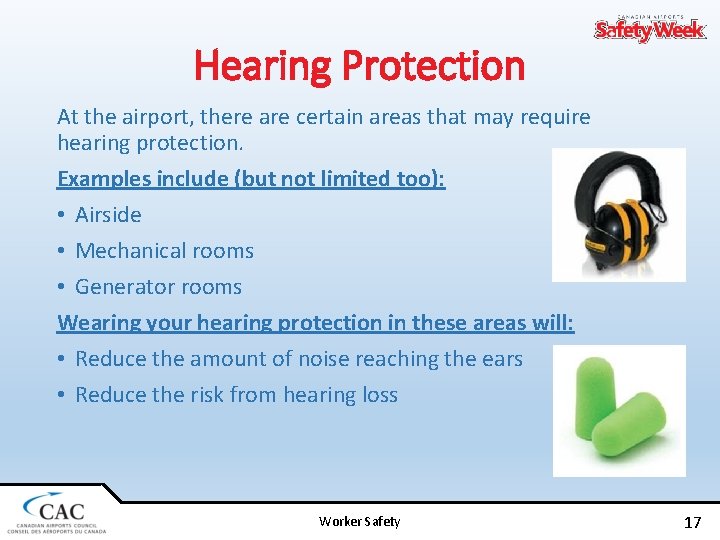
Hearing Protection At the airport, there are certain areas that may require hearing protection. Examples include (but not limited too): • Airside • Mechanical rooms • Generator rooms Wearing your hearing protection in these areas will: • Reduce the amount of noise reaching the ears • Reduce the risk from hearing loss Worker Safety 17
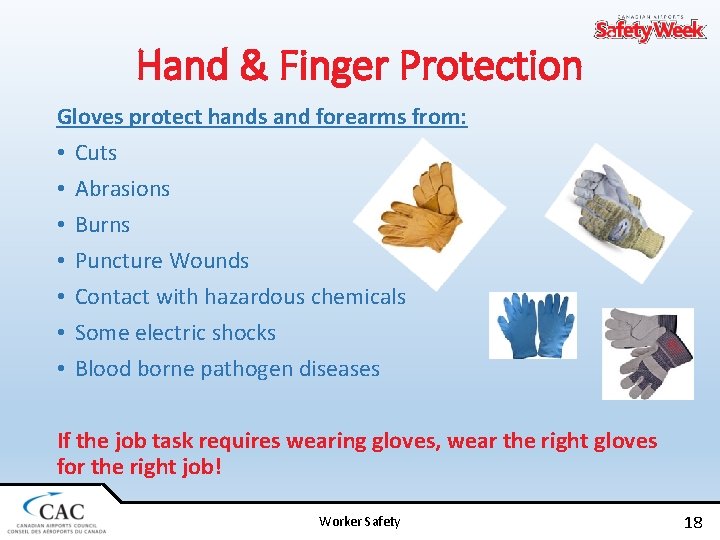
Hand & Finger Protection Gloves protect hands and forearms from: • Cuts • Abrasions • Burns • Puncture Wounds • Contact with hazardous chemicals • Some electric shocks • Blood borne pathogen diseases If the job task requires wearing gloves, wear the right gloves for the right job! Worker Safety 18
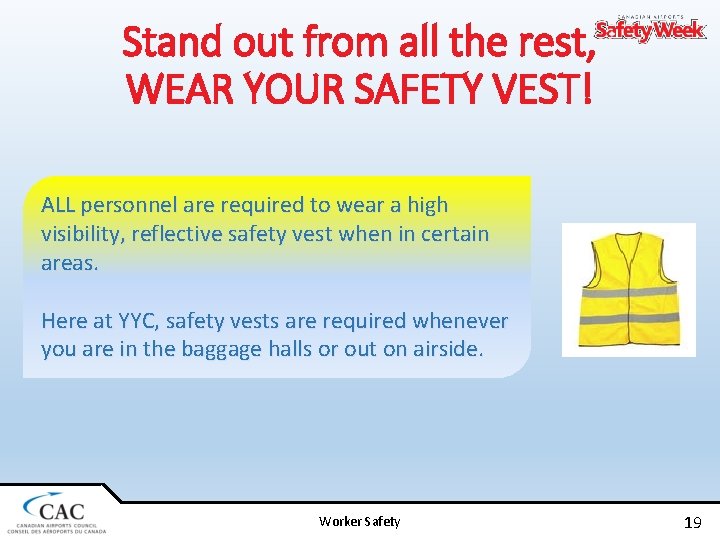
Stand out from all the rest, WEAR YOUR SAFETY VEST! ALL personnel are required to wear a high visibility, reflective safety vest when in certain areas. Here at YYC, safety vests are required whenever you are in the baggage halls or out on airside. Worker Safety 19
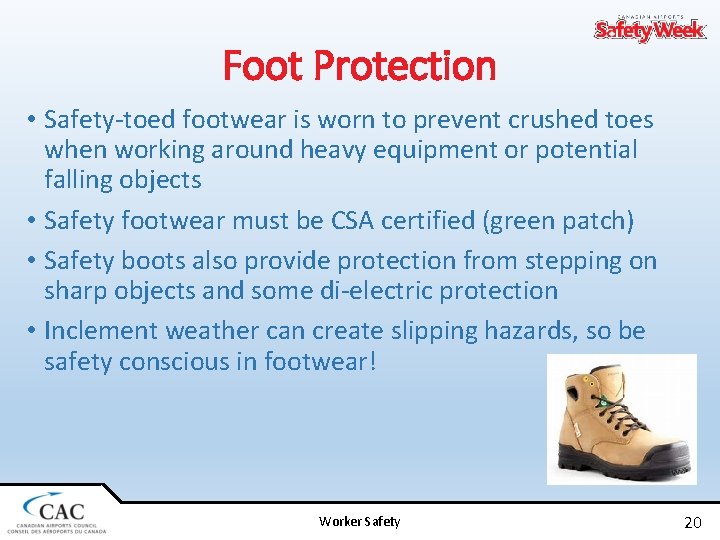
Foot Protection • Safety-toed footwear is worn to prevent crushed toes when working around heavy equipment or potential falling objects • Safety footwear must be CSA certified (green patch) • Safety boots also provide protection from stepping on sharp objects and some di-electric protection • Inclement weather can create slipping hazards, so be safety conscious in footwear! Worker Safety 20
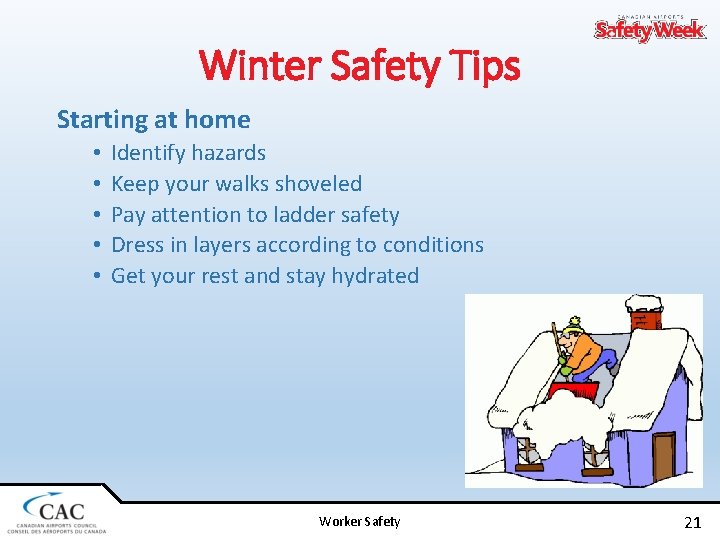
Winter Safety Tips Starting at home • • • Identify hazards Keep your walks shoveled Pay attention to ladder safety Dress in layers according to conditions Get your rest and stay hydrated Worker Safety 21
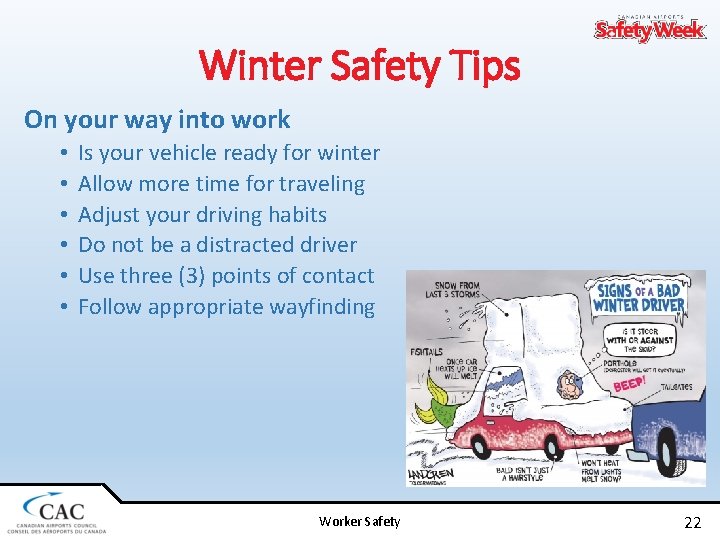
Winter Safety Tips On your way into work • • • Is your vehicle ready for winter Allow more time for traveling Adjust your driving habits Do not be a distracted driver Use three (3) points of contact Follow appropriate wayfinding Worker Safety 22
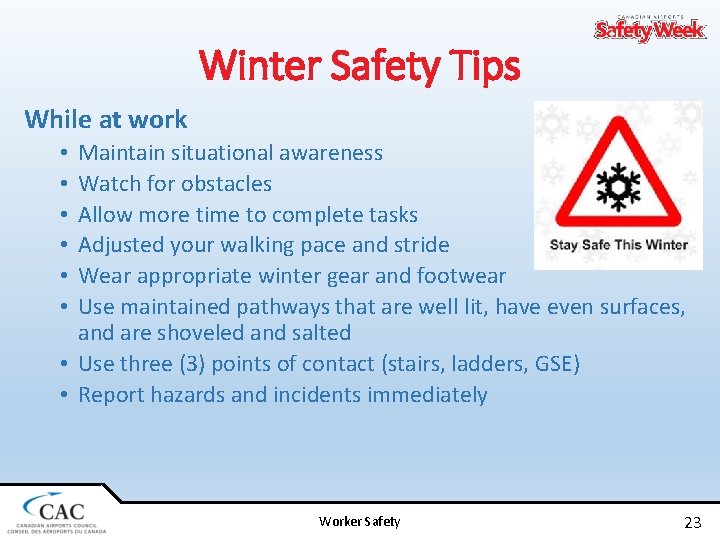
Winter Safety Tips While at work Maintain situational awareness Watch for obstacles Allow more time to complete tasks Adjusted your walking pace and stride Wear appropriate winter gear and footwear Use maintained pathways that are well lit, have even surfaces, and are shoveled and salted • Use three (3) points of contact (stairs, ladders, GSE) • Report hazards and incidents immediately • • • Worker Safety 23
REMINDER: Safety Reporting Methods Airport Emergencies: 911 and then 403 -735 -(1300) Airport Non-Emergencies: YYC’s Integrated Operations Centre (IOC) 403 -735 -(1300) Worker Safety 24
Thank You For Participating In The