
18 1 SYSTEMATICS The classification of life Introduction
- Slides: 34
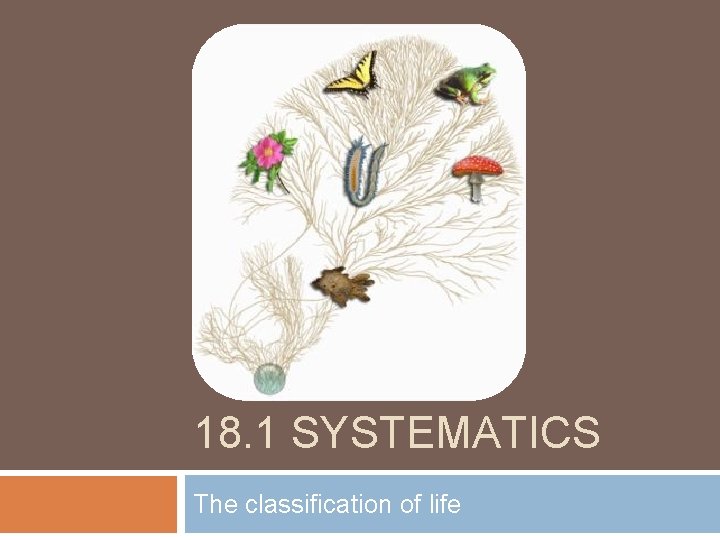
18. 1 SYSTEMATICS The classification of life
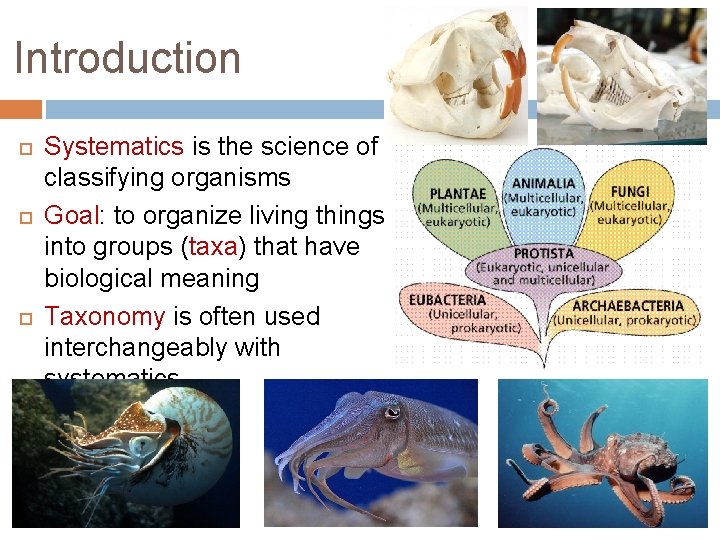
Introduction Systematics is the science of classifying organisms Goal: to organize living things into groups (taxa) that have biological meaning Taxonomy is often used interchangeably with systematics
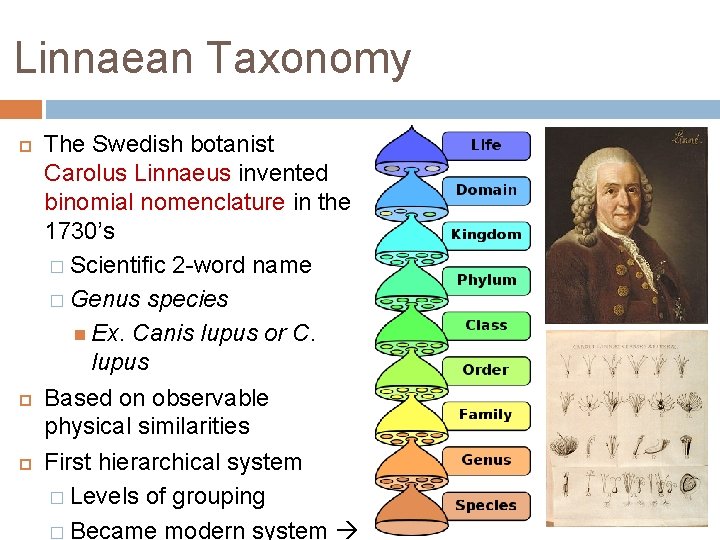
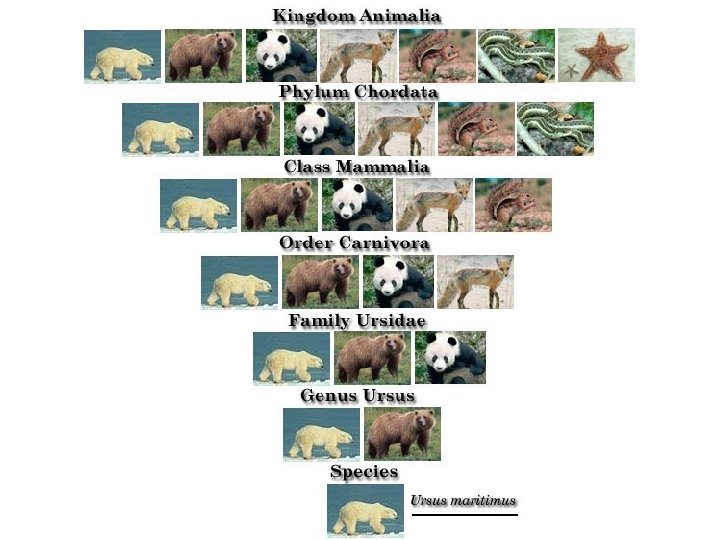
Linnaean Taxonomy The Swedish botanist Carolus Linnaeus invented binomial nomenclature in the 1730’s � Scientific 2 -word name � Genus species Ex. Canis lupus or C. lupus Based on observable physical similarities First hierarchical system � Levels of grouping � Became modern system
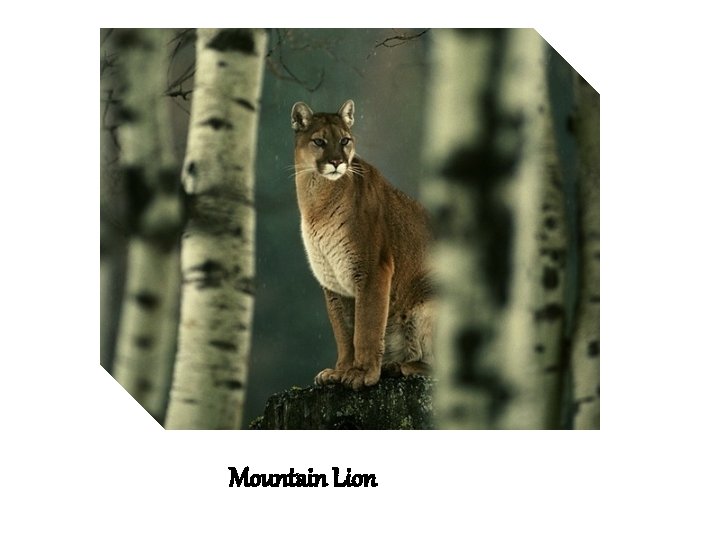
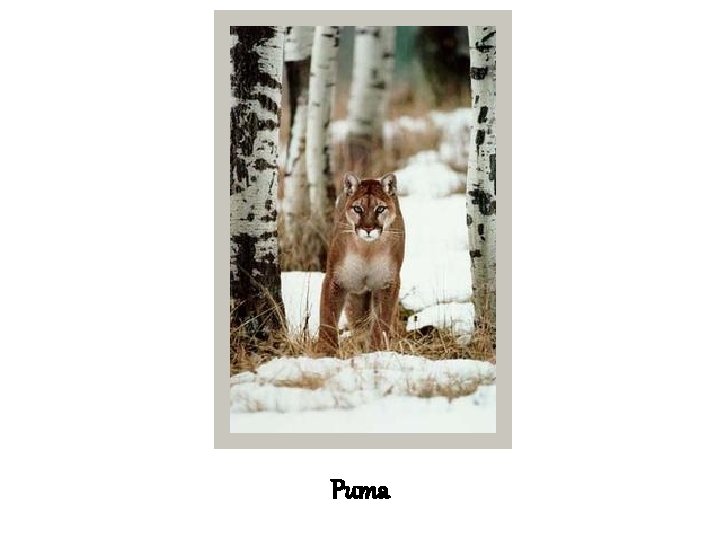
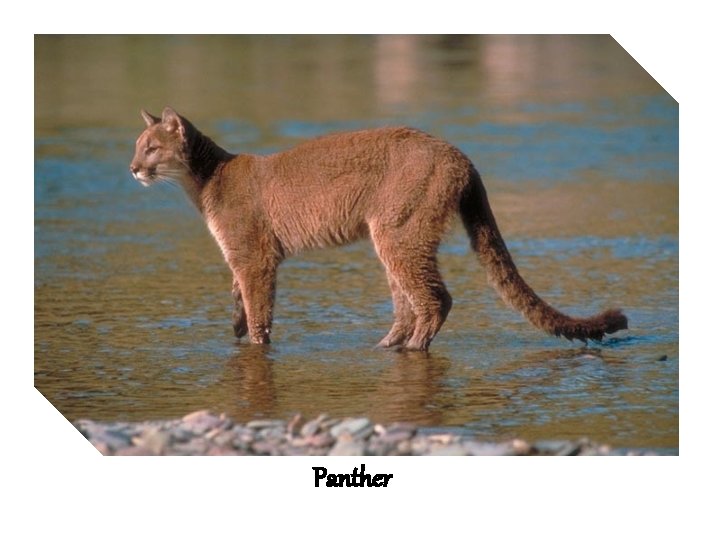
Why use confusing scientific names?
Mountain Lion
Puma
Panther
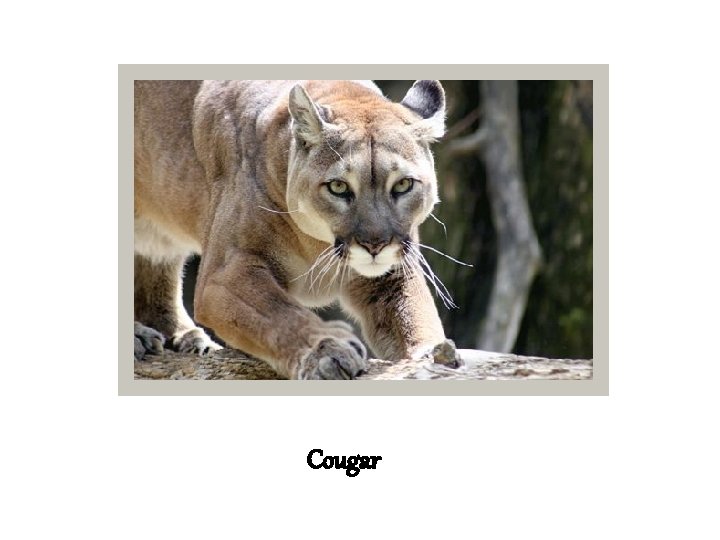
Cougar
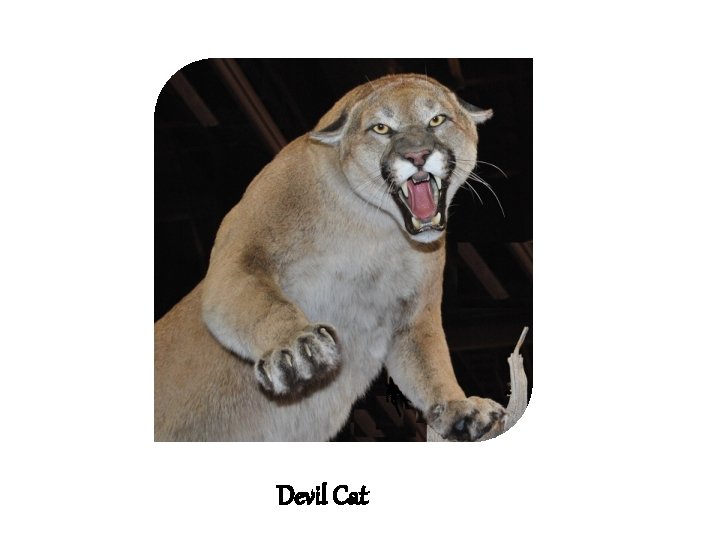
Devil Cat
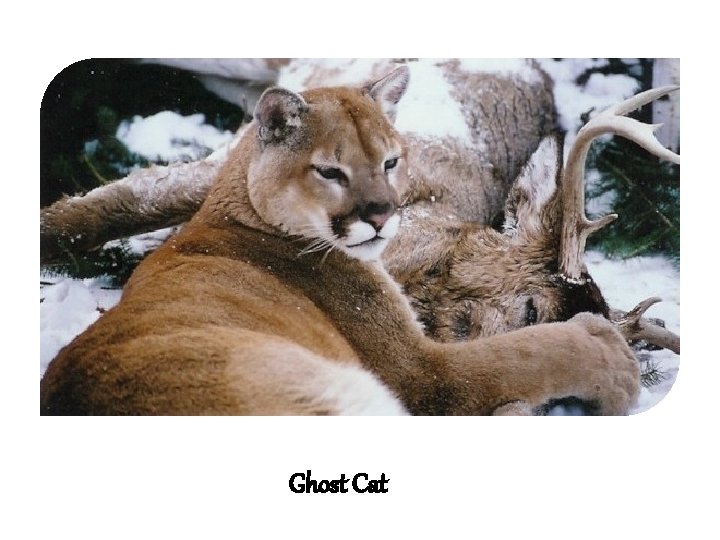
Ghost Cat
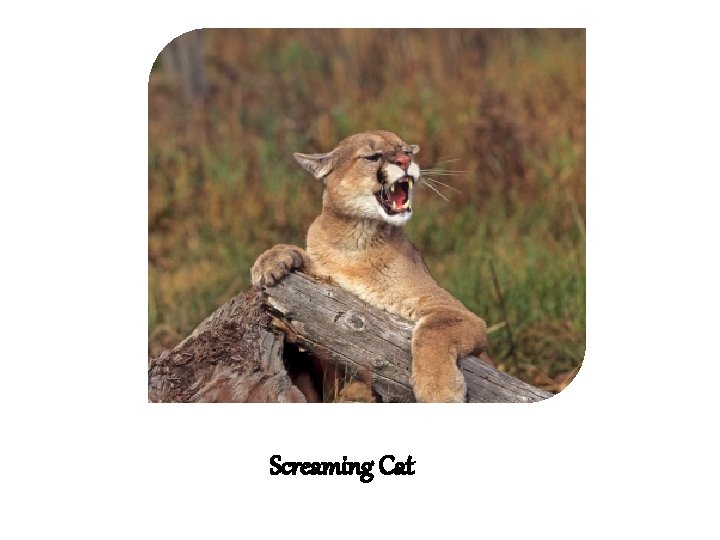
Screaming Cat
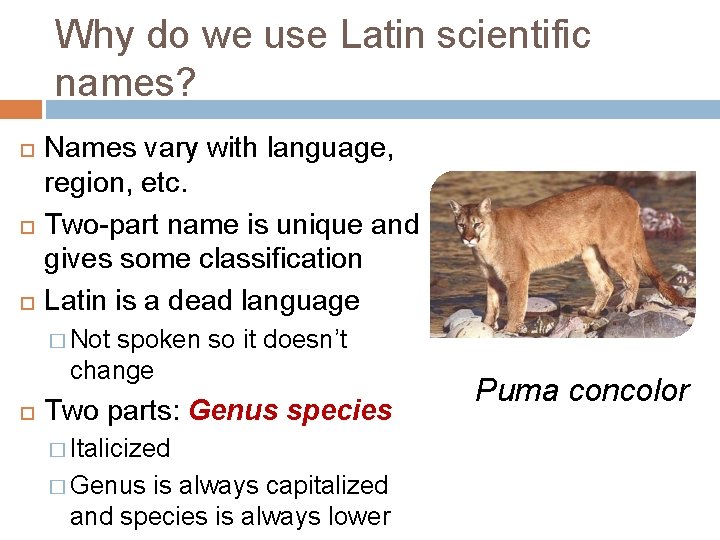
Why do we use Latin scientific names? Names vary with language, region, etc. Two-part name is unique and gives some classification Latin is a dead language � Not spoken so it doesn’t change Two parts: Genus species � Italicized � Genus is always capitalized and species is always lower Puma concolor
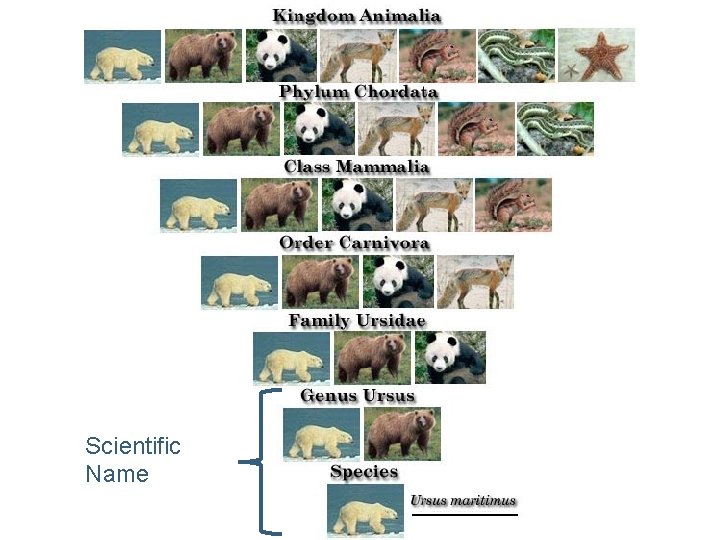
Scientific Name
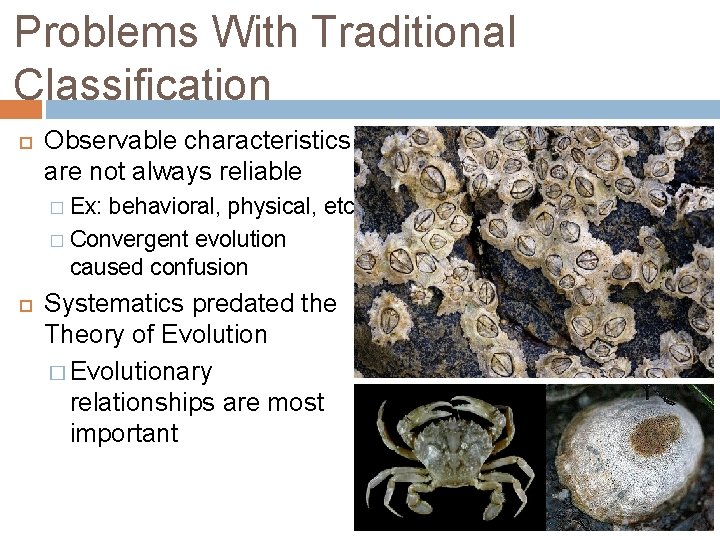
Problems With Traditional Classification Observable characteristics are not always reliable Ex: behavioral, physical, etc. � Convergent evolution caused confusion � Systematics predated the Theory of Evolution � Evolutionary relationships are most important
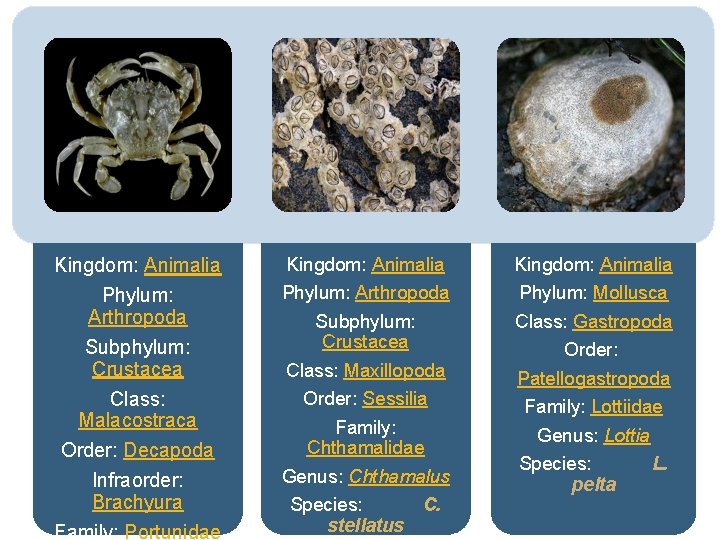
Kingdom: Animalia Phylum: Arthropoda Subphylum: Crustacea Class: Malacostraca Order: Decapoda Infraorder: Brachyura Family: Portunidae Kingdom: Animalia Phylum: Arthropoda Phylum: Mollusca Subphylum: Crustacea Class: Maxillopoda Order: Sessilia Family: Chthamalidae Genus: Chthamalus Class: Gastropoda Order: Patellogastropoda Family: Lottiidae Genus: Lottia Species: L. pelta Species: C. stellatus
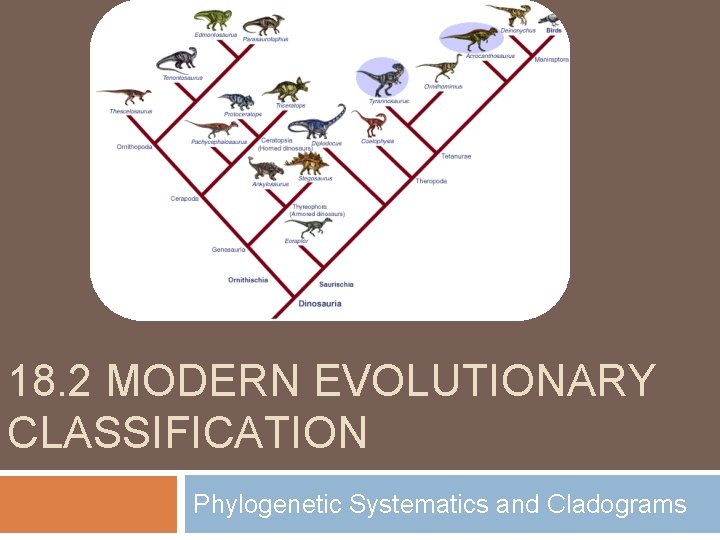
18. 2 MODERN EVOLUTIONARY CLASSIFICATION Phylogenetic Systematics and Cladograms
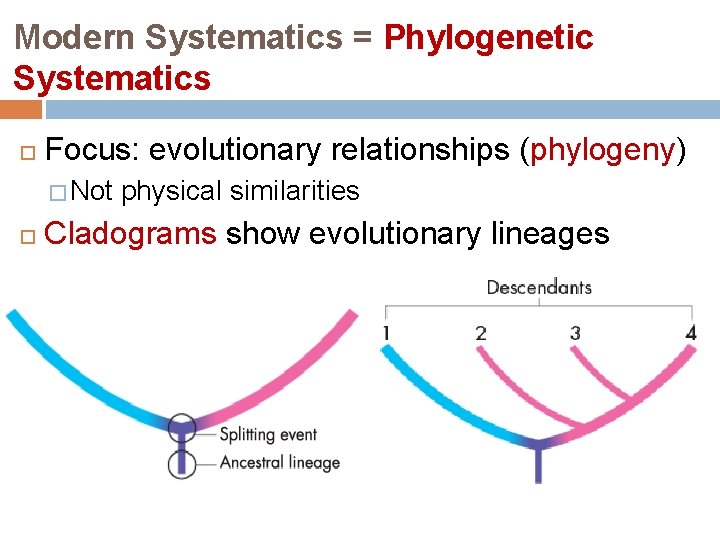
Modern Systematics = Phylogenetic Systematics Focus: evolutionary relationships (phylogeny) � Not physical similarities Cladograms show evolutionary lineages
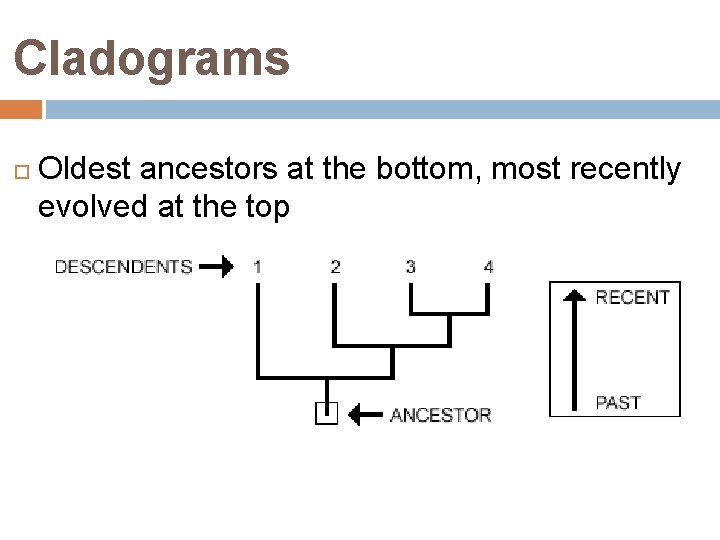
Cladograms Oldest ancestors at the bottom, most recently evolved at the top
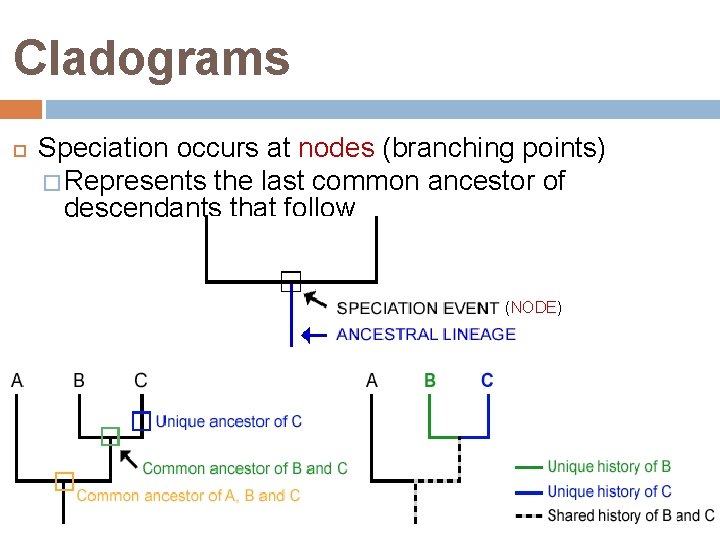
Cladograms Speciation occurs at nodes (branching points) � Represents the last common ancestor of descendants that follow (NODE)
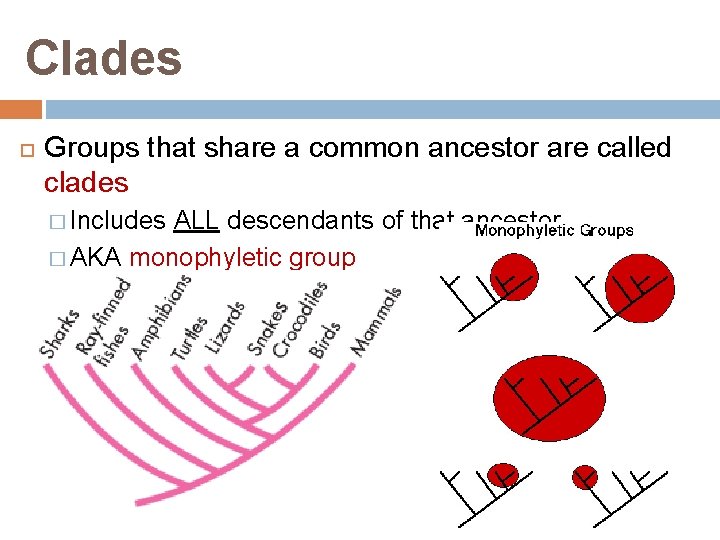
Clades Groups that share a common ancestor are called clades � Includes ALL descendants of that ancestor � AKA monophyletic group
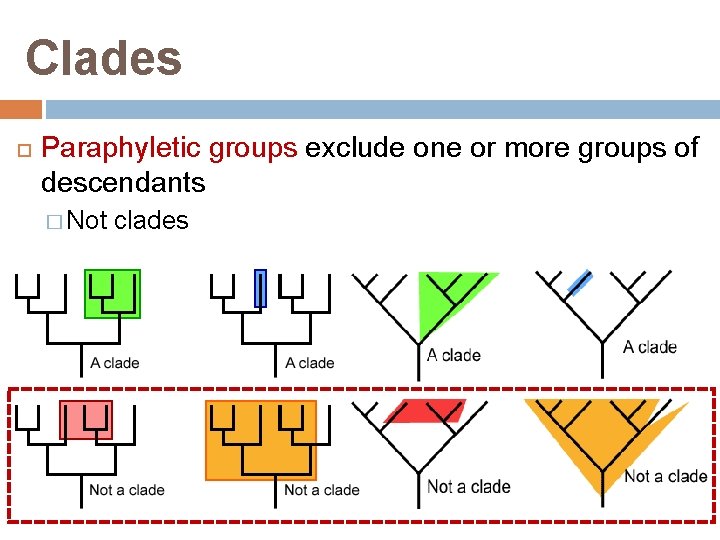
Clades Paraphyletic groups exclude one or more groups of descendants � Not clades
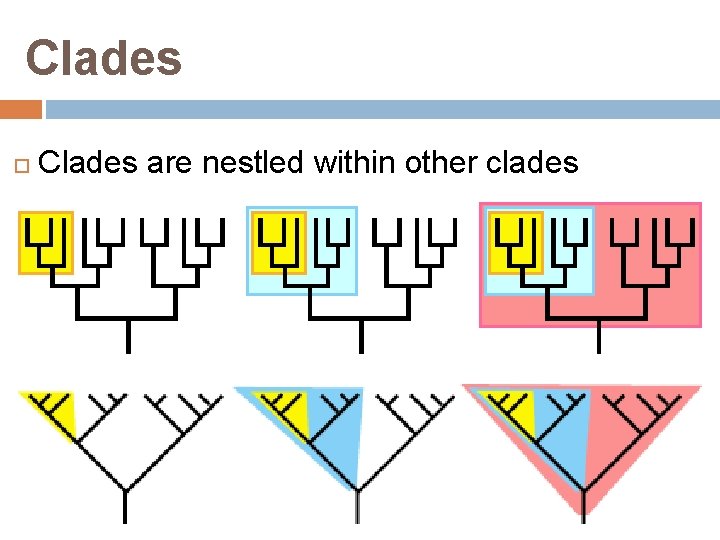
Clades are nestled within other clades
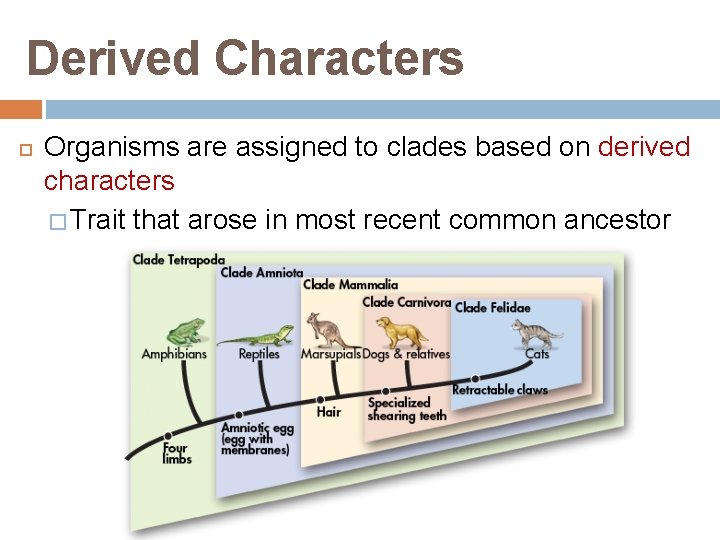
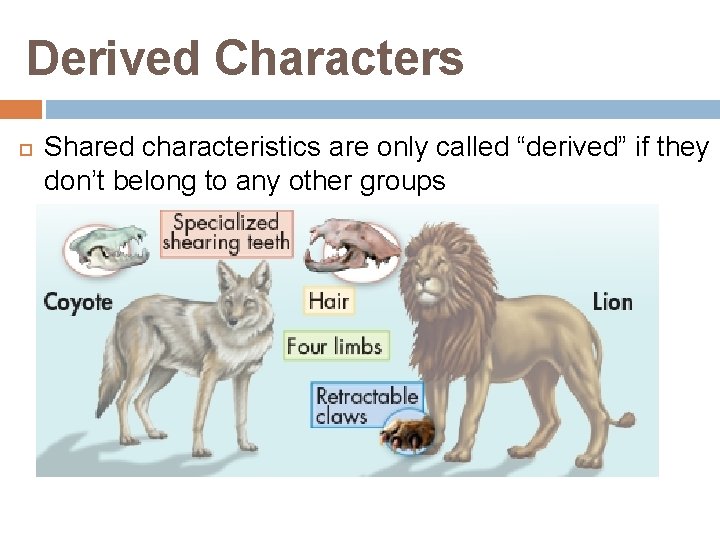
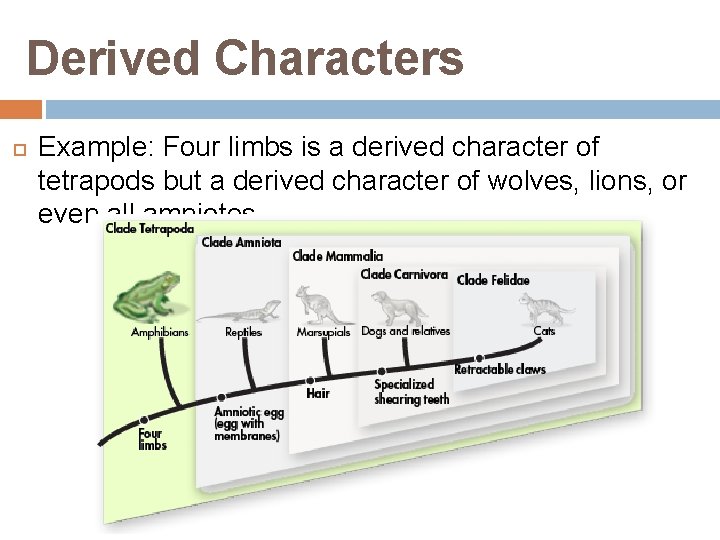
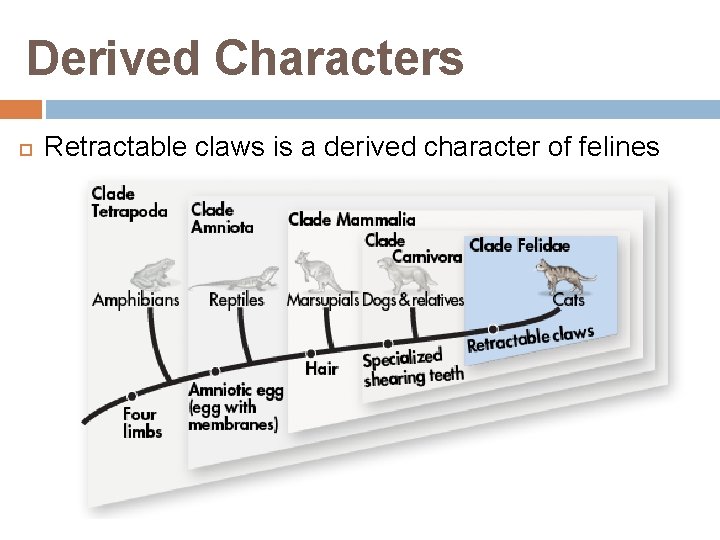
Derived Characters Organisms are assigned to clades based on derived characters � Trait that arose in most recent common ancestor
Derived Characters Shared characteristics are only called “derived” if they don’t belong to any other groups
Derived Characters Example: Four limbs is a derived character of tetrapods but a derived character of wolves, lions, or even all amniotes
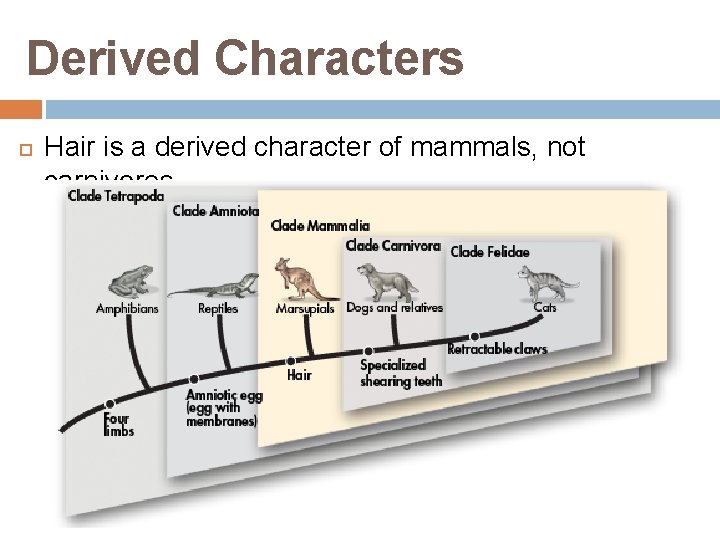
Derived Characters Hair is a derived character of mammals, not carnivores
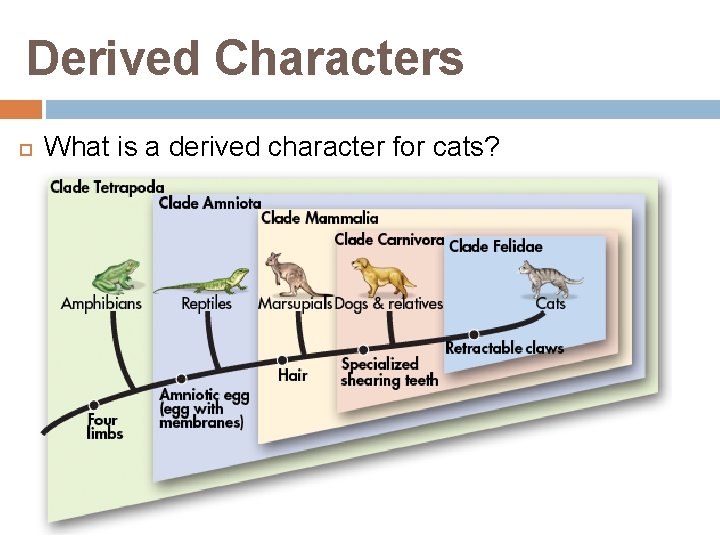
Derived Characters What is a derived character for cats?
Derived Characters Retractable claws is a derived character of felines
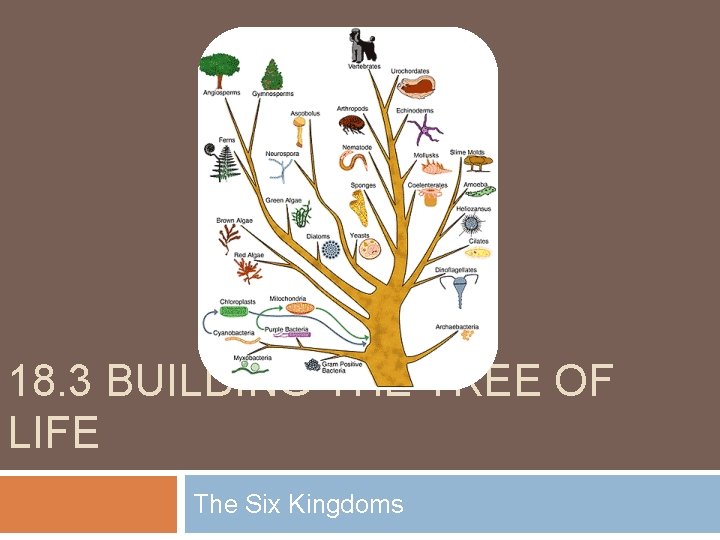
18. 3 BUILDING THE TREE OF LIFE The Six Kingdoms
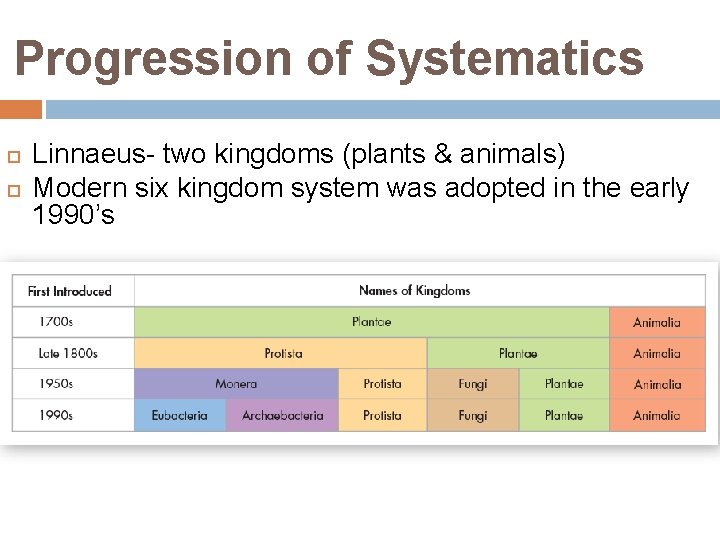
Progression of Systematics Linnaeus- two kingdoms (plants & animals) Modern six kingdom system was adopted in the early 1990’s
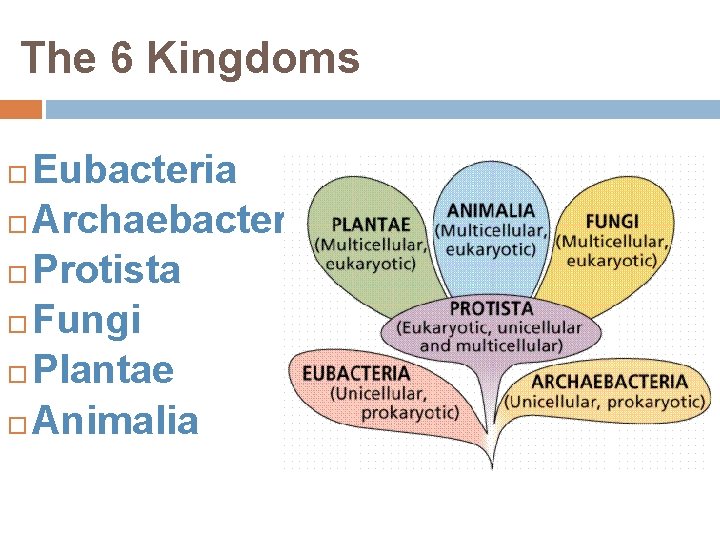
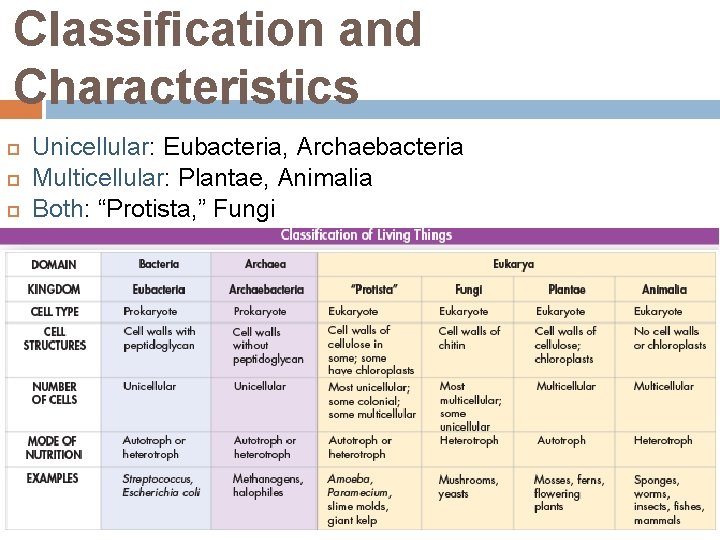
The 6 Kingdoms Eubacteria Archaebacteria Protista Fungi Plantae Animalia
Classification and Characteristics Unicellular: Eubacteria, Archaebacteria Multicellular: Plantae, Animalia Both: “Protista, ” Fungi
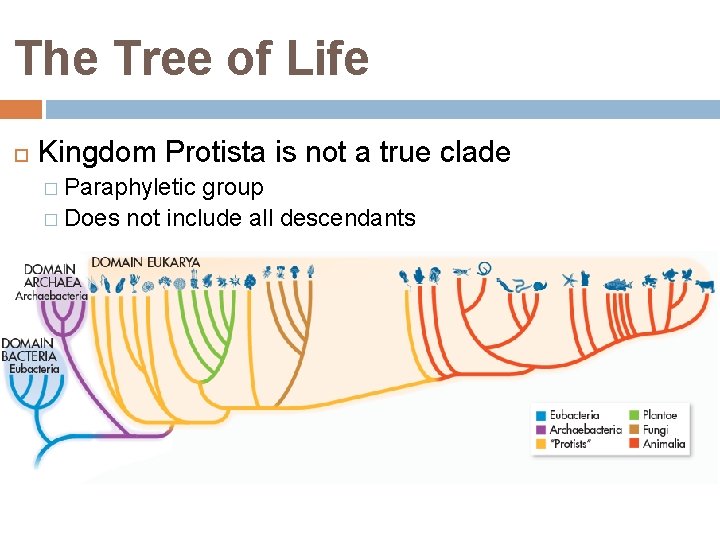
The Tree of Life Kingdom Protista is not a true clade � Paraphyletic group � Does not include all descendants