
17 th and 18 th Century Literature in
- Slides: 24
17 th and 18 th Century Literature in Great Britain
Snapshot of the Period • Writers experience social turmoil • The English Civil War pitting the king against the Parliament shaped the work of many poets. • The Industrial and Agricultural revolutions sparked the new machines in production and farming, led to the growth of cities, increased urban poverty and the rise of the middle class.
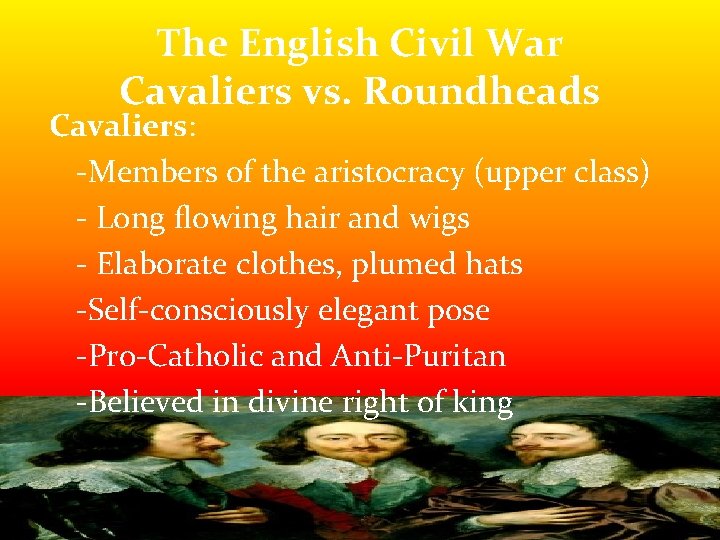
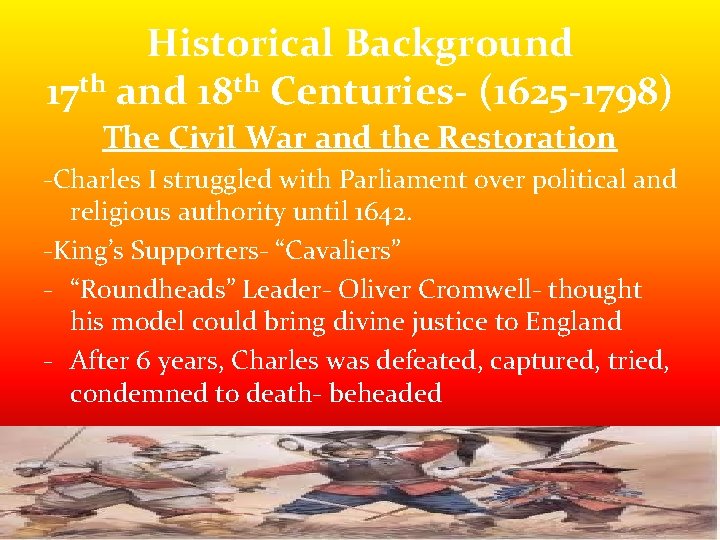
The English Civil War Cavaliers vs. Roundheads Cavaliers: -Members of the aristocracy (upper class) - Long flowing hair and wigs - Elaborate clothes, plumed hats -Self-consciously elegant pose -Pro-Catholic and Anti-Puritan -Believed in divine right of king
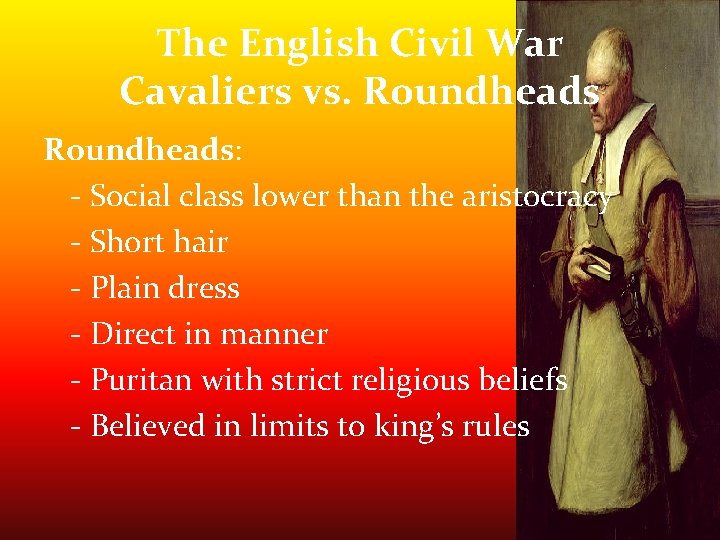
The English Civil War Cavaliers vs. Roundheads: - Social class lower than the aristocracy - Short hair - Plain dress - Direct in manner - Puritan with strict religious beliefs - Believed in limits to king’s rules
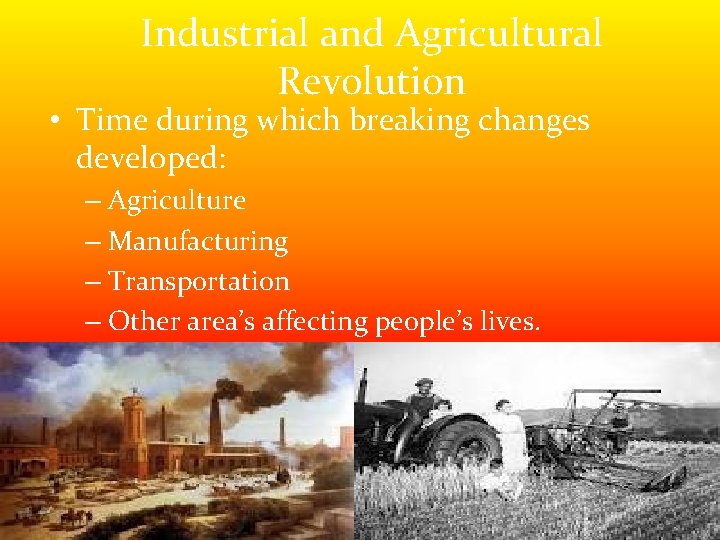
Industrial and Agricultural Revolution • Time during which breaking changes developed: – Agriculture – Manufacturing – Transportation – Other area’s affecting people’s lives.
Historical Background 17 th and 18 th Centuries- (1625 -1798) The Civil War and the Restoration -Charles I struggled with Parliament over political and religious authority until 1642. -King’s Supporters- “Cavaliers” - “Roundheads” Leader- Oliver Cromwell- thought his model could bring divine justice to England - After 6 years, Charles was defeated, captured, tried, condemned to death- beheaded
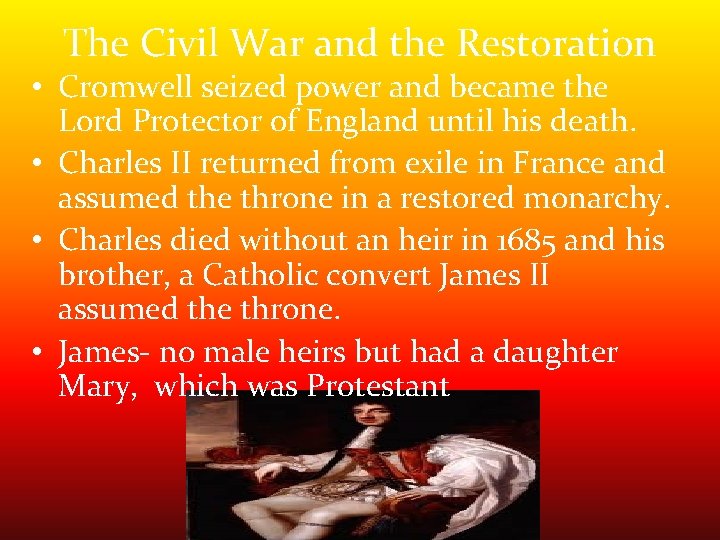
The Civil War and the Restoration • Cromwell seized power and became the Lord Protector of England until his death. • Charles II returned from exile in France and assumed the throne in a restored monarchy. • Charles died without an heir in 1685 and his brother, a Catholic convert James II assumed the throne. • James- no male heirs but had a daughter Mary, which was Protestant
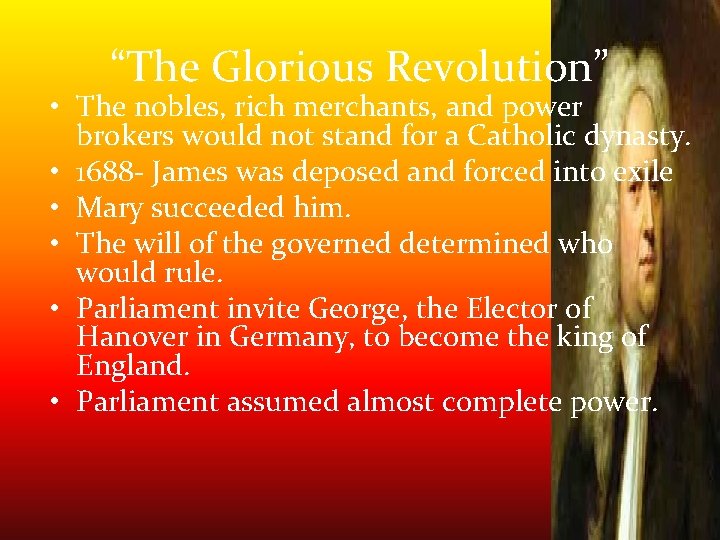
“The Glorious Revolution” • The nobles, rich merchants, and power brokers would not stand for a Catholic dynasty. • 1688 - James was deposed and forced into exile • Mary succeeded him. • The will of the governed determined who would rule. • Parliament invite George, the Elector of Hanover in Germany, to become the king of England. • Parliament assumed almost complete power.
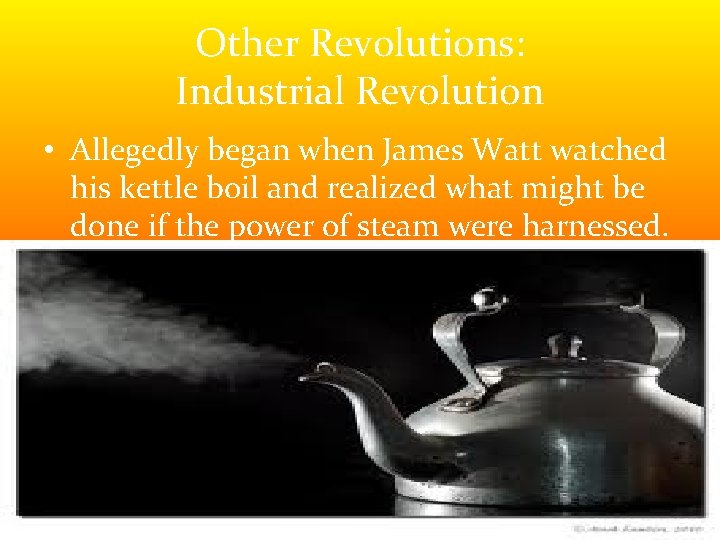
Other Revolutions: Industrial Revolution • Allegedly began when James Watt watched his kettle boil and realized what might be done if the power of steam were harnessed.
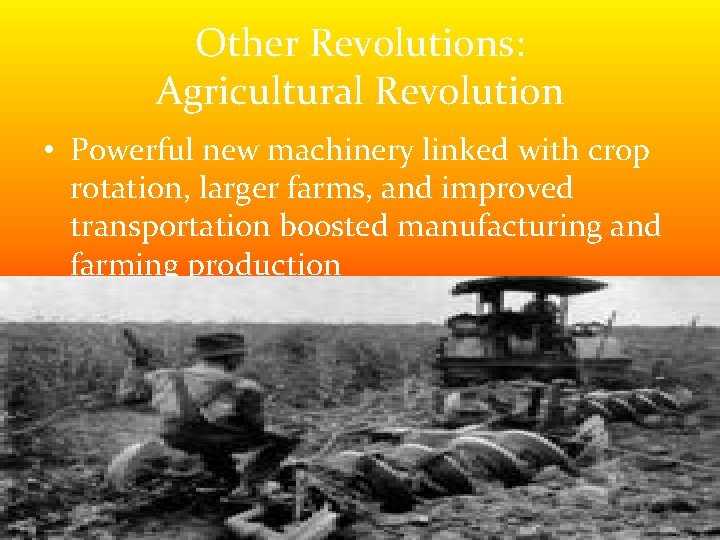
Other Revolutions: Agricultural Revolution • Powerful new machinery linked with crop rotation, larger farms, and improved transportation boosted manufacturing and farming production
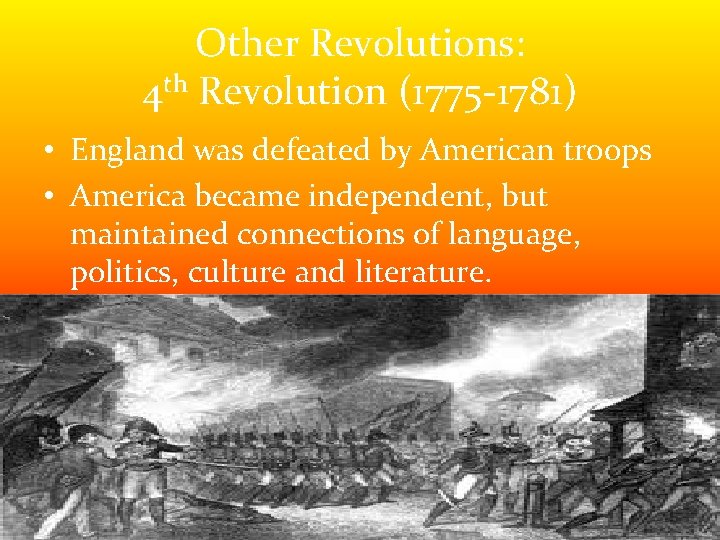
Other Revolutions: 4 th Revolution (1775 -1781) • England was defeated by American troops • America became independent, but maintained connections of language, politics, culture and literature.
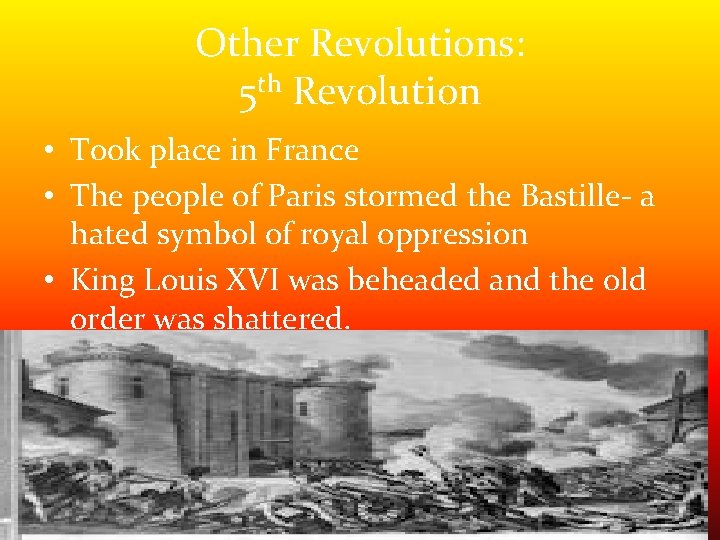
Other Revolutions: 5 th Revolution • Took place in France • The people of Paris stormed the Bastille- a hated symbol of royal oppression • King Louis XVI was beheaded and the old order was shattered.
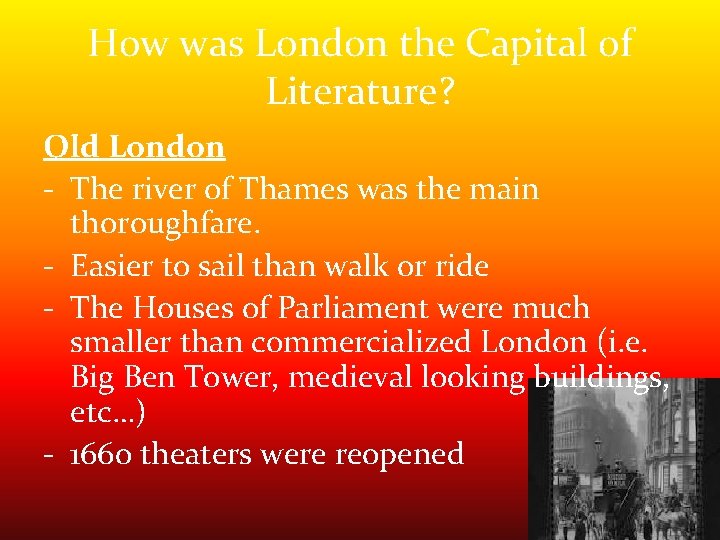
How was London the Capital of Literature? Old London - The river of Thames was the main thoroughfare. - Easier to sail than walk or ride - The Houses of Parliament were much smaller than commercialized London (i. e. Big Ben Tower, medieval looking buildings, etc…) - 1660 theaters were reopened
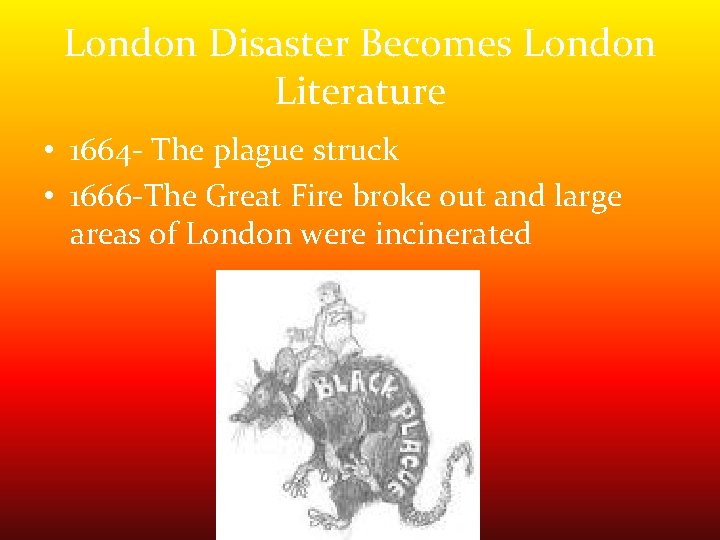
London Disaster Becomes London Literature • 1664 - The plague struck • 1666 -The Great Fire broke out and large areas of London were incinerated
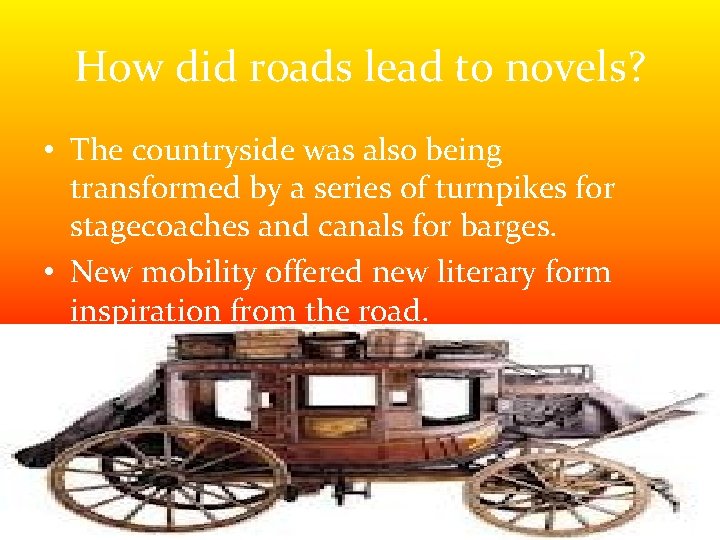
How did roads lead to novels? • The countryside was also being transformed by a series of turnpikes for stagecoaches and canals for barges. • New mobility offered new literary form inspiration from the road.
How did a new gathering place capture a new readership? • Spread of coffee houses • Coffee Houses offered: – Place to hang out – Meet friends – Smoke a Pipe – Read essays: • Famous Magazines- The Tatler & The Spectator
How did the countryside begin to influence literature? • Poets looked to landscapes for inspiration, moral examples and consolation. • The country replaced the city as the setting and subject for literature.
How did Milton’s Grace Become Newton’s Gravity? • This period marks a movement from an established church to separation of church and state. • People got tired of religious conflict. • Milton’s Grace- Believed politics and faith were inseparable. • Newton’s Gravity- the universe was governed by natural physical principles. Gravity replaced grace. • Deism- belief in a benevolent but detached God
How did literature focus on conduct? Satire and Proportion Satire ridicules conduct that is not rational, it is out of proportion. The “How-to” Genres Teach rational conduct
What effects did the Renaissance and Reformation have? From Love to Religion (John Donne) - Begins as a witty love poet and ends as the Dean of the old St. Paul’s Cathedral - Holy Sonnets change that love poem into a religious meditation Work Based on the Classics (Ben Johnson) -Poetry is restrained and graceful Renaissance and Reformation (John Milton) - Milton’s works embodies almost all traditions of both the Renaissance and Reformation -Wanted to give English an epic poem to match those of Homer and Virgil - Decided that the English epic was the Bible’s story of creation and fall
How did Milton create a new role for the poet? • Addressed the English as if he were an Old Testament prophet • Created the role of a poet as a prophet • Reminding the nation of the path from which it had strayed.
What new forms arose for new audiences? The Heroic Couplet -Iambic pentameters lines linked in rhyming pairs -perfectly suited an aristocratic society that valued clever talk The Essay and the Novel -requires a literate audience with enough good money to spend and leisure time to fill- an audience who wanted to read about people like themselves and people they would like to be. Secular Sermon -The essay is a secular sermon, making the reader understand teaching by example. - The essay needed the periodical to be printed, and the periodical needed the essay to be read. -Offspring- newspaper columnist and television commentators
Metaphysical Poetry • Characterized by intellectual displays concern with metaphysical, or philosophical (deep thinking), issues.
Characteristics of Metaphysical Poetry • Conceits- extended comparisons that used figurative language to link objects or ideas not commonly associated. • Paradoxes-images or descriptions that appear self- contradictory but that reveal a deeper truth.