
17 Nutrition Through the Life Cycle Childhood and







- Slides: 41
17 Nutrition Through the Life Cycle: Childhood and Adolescence © 2011 Pearson Education, Inc.
Toddlers • Age 12 to 36 months • Rapid growth rate of infancy begins to slow • Gain 5. 5 to 7. 5 inches, average 9 to 11 pounds • Higher energy expended for increased activity levels • Increased nutrient needs are based on their larger body size © 2011 Pearson Education, Inc.
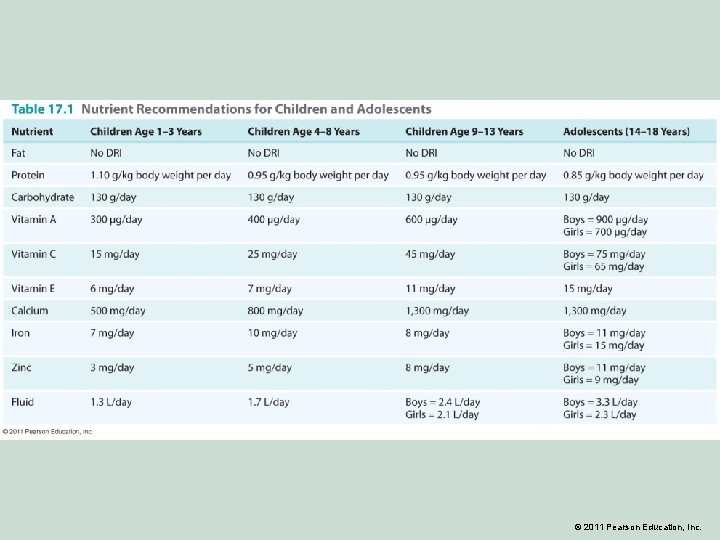
Toddlers • Macronutrients: • Estimated Energy Requirement (EER) varies according to the toddler’s age, body weight, and level of activity • 30− 40% of total kcal from fat • 1. 1 grams of protein per kg body weight • 130 grams carbohydrates per day (most of the carbohydrates should be complex) • 14 grams fiber per 1, 000 kcal/day © 2011 Pearson Education, Inc.
Toddlers • Micronutrients: • Ensure adequate intake of the micronutrients obtained from fruits and vegetables, including: vitamins A, C, E, calcium, iron, zinc, potassium • Until age 2, drink whole milk for calcium • Iron-deficiency anemia is the most common nutrient deficiency in young children © 2011 Pearson Education, Inc.
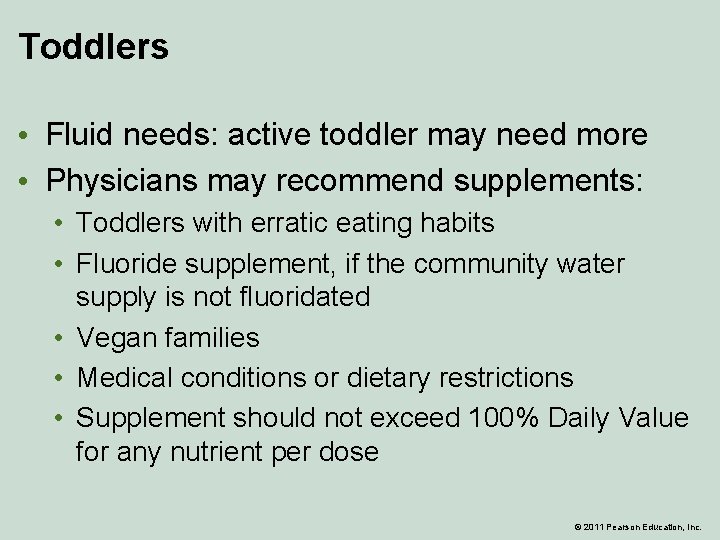
Toddlers • Fluid needs: active toddler may need more • Physicians may recommend supplements: • Toddlers with erratic eating habits • Fluoride supplement, if the community water supply is not fluoridated • Vegan families • Medical conditions or dietary restrictions • Supplement should not exceed 100% Daily Value for any nutrient per dose © 2011 Pearson Education, Inc.
© 2011 Pearson Education, Inc.
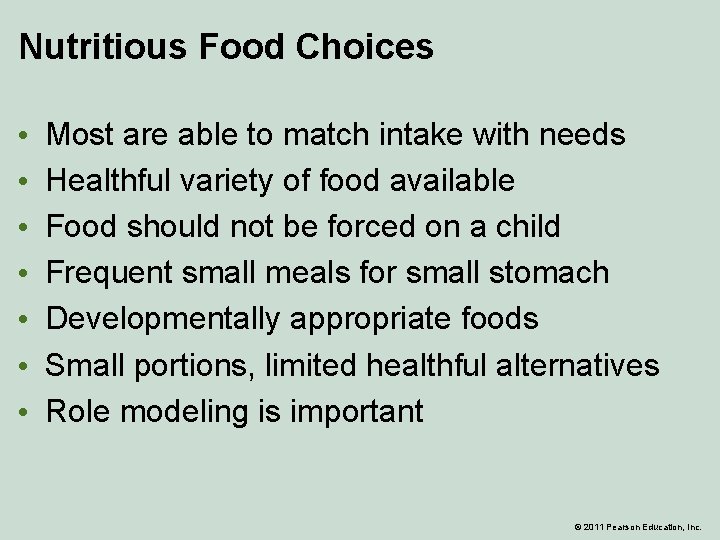
Nutritious Food Choices • • Most are able to match intake with needs Healthful variety of food available Food should not be forced on a child Frequent small meals for small stomach Developmentally appropriate foods Small portions, limited healthful alternatives Role modeling is important © 2011 Pearson Education, Inc.
© 2011 Pearson Education, Inc.
© 2011 Pearson Education, Inc.
© 2011 Pearson Education, Inc.
Allergy Watch • Continue to watch for common food allergies: wheat, peanuts, cow’s milk, soy, citrus, egg whites, seafood • Introduce one new food at a time © 2011 Pearson Education, Inc.
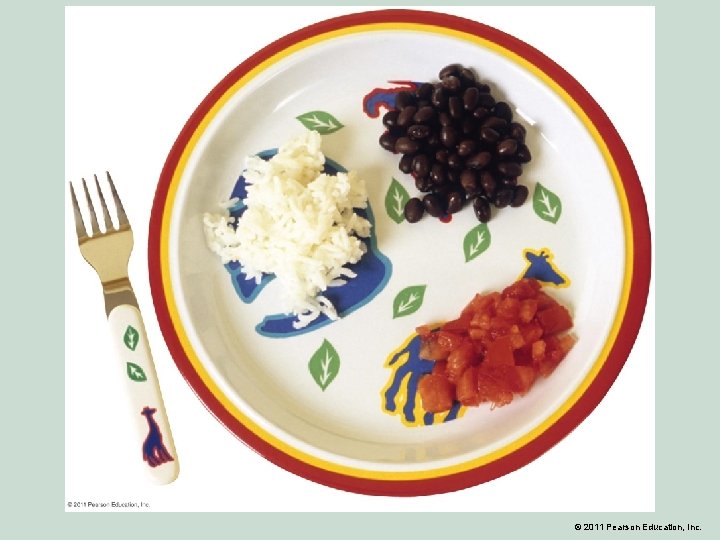
Vegetarian Families • Eggs and dairy: part of a healthful diet • Vegan diet may be low in protein, minerals (calcium, iron, zinc), vitamins (D and B 12) • High fiber may impair iron and zinc absorption and promote a premature sense of “fullness” at mealtimes • Fortified foods and supplement use to ensure adequate nutrition © 2011 Pearson Education, Inc.
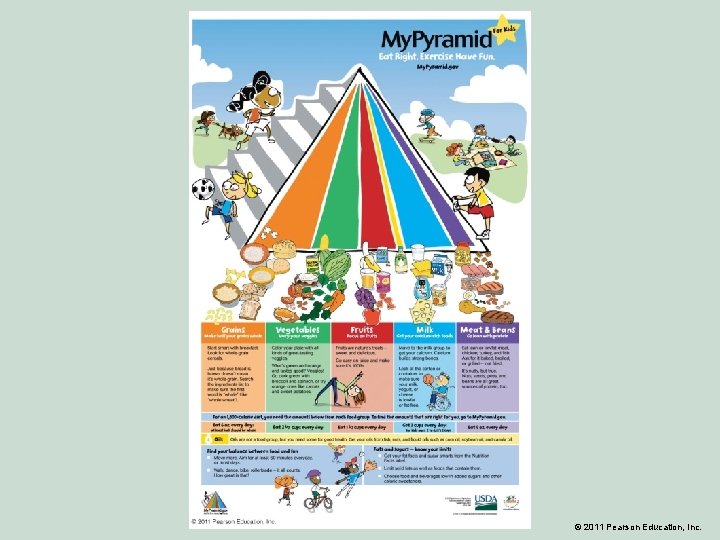
Children • Growth slows: average gain 2– 4 in. /year • Values for most nutrients increase • For children ages 6− 11 years: USDA developed a My. Pyramid for Kids • Sexual maturation begins ages of 8 and 9: DRI values are separately defined for boys and girls beginning at age 9 © 2011 Pearson Education, Inc.
© 2011 Pearson Education, Inc.
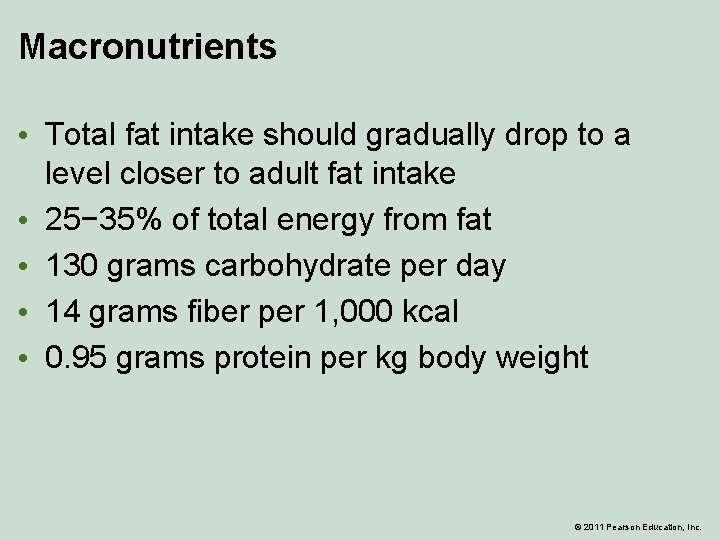
Macronutrients • Total fat intake should gradually drop to a level closer to adult fat intake • 25− 35% of total energy from fat • 130 grams carbohydrate per day • 14 grams fiber per 1, 000 kcal • 0. 95 grams protein per kg body weight © 2011 Pearson Education, Inc.
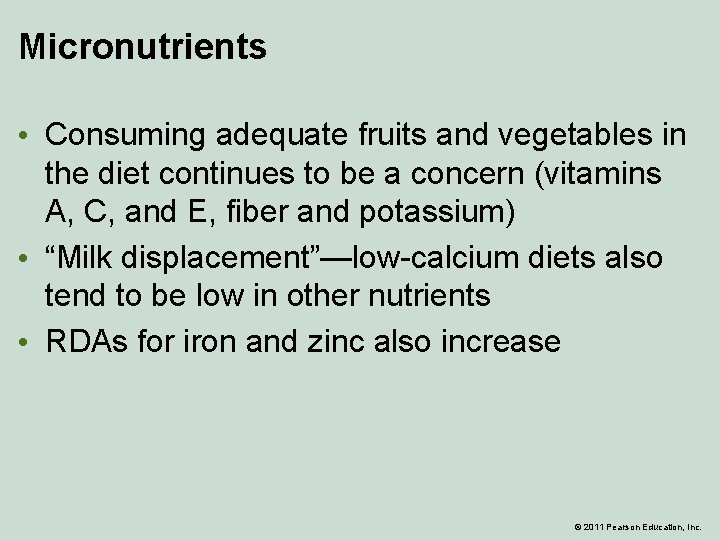
Micronutrients • Consuming adequate fruits and vegetables in the diet continues to be a concern (vitamins A, C, and E, fiber and potassium) • “Milk displacement”—low-calcium diets also tend to be low in other nutrients • RDAs for iron and zinc also increase © 2011 Pearson Education, Inc.
Nutritious Food Choices • Peer pressure encourages unhealthful food choices • Families who plan, prepare, and eat meals together are more successful at promoting good food choices © 2011 Pearson Education, Inc.
© 2011 Pearson Education, Inc.
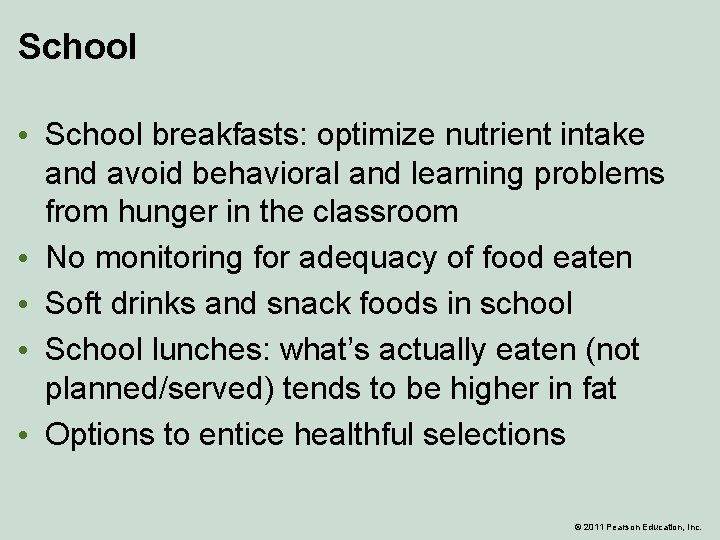
School • School breakfasts: optimize nutrient intake and avoid behavioral and learning problems from hunger in the classroom • No monitoring for adequacy of food eaten • Soft drinks and snack foods in school • School lunches: what’s actually eaten (not planned/served) tends to be higher in fat • Options to entice healthful selections © 2011 Pearson Education, Inc.
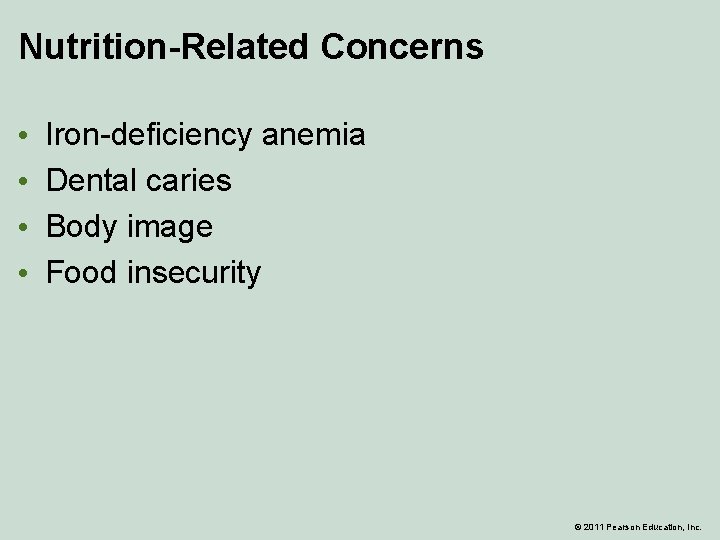
Nutrition-Related Concerns • • Iron-deficiency anemia Dental caries Body image Food insecurity © 2011 Pearson Education, Inc.
© 2011 Pearson Education, Inc.
Adolescents • Adolescence continues to 18 years • Puberty: secondary sexual characteristics develop; capacity for reproduction • Emotions and behaviors unpredictable and confusing © 2011 Pearson Education, Inc.
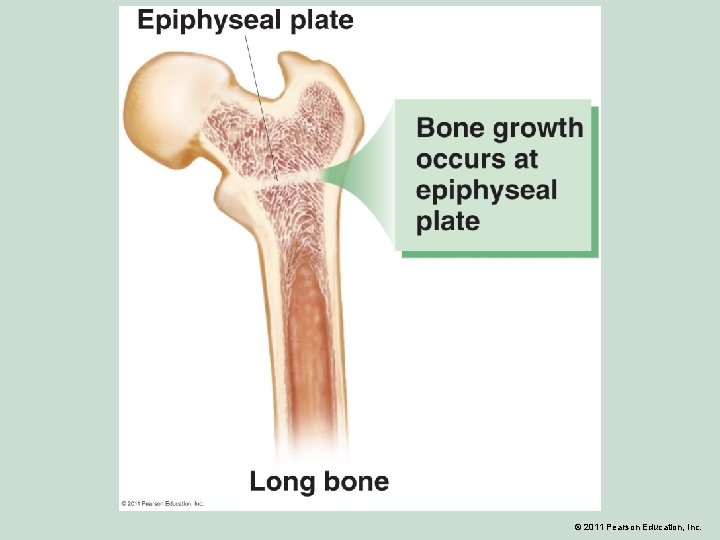
Adolescents • Growth spurts begin at age 10− 11 for girls, 12− 13 for boys • Average 20− 25% increase in height • Skeletal growth ceases closure of the epiphyseal plates • Weight and body composition also change © 2011 Pearson Education, Inc.
© 2011 Pearson Education, Inc.
Macronutrients • EER for adolescents is based on gender, age, activity level, height, and weight • 25− 35% of total energy from fat • <10% of total energy from saturated fat • 45− 65% of kcal from carbohydrates • 0. 85 grams protein per kg body weight • 26− 38 grams of fiber per day © 2011 Pearson Education, Inc.
Micronutrients • Calcium intakes must be sufficient for achieving peak bone density: 1, 300 mg/day • Iron needs are relatively high: 11 mg/day for boys, 15 mg/day for girls • Vitamin A is critical for supporting rapid growth and development • Supplement should not be considered a substitute for a balanced, healthful diet © 2011 Pearson Education, Inc.
Fluid Recommendations • The need to maintain fluid intake is increased with higher activity levels • Boys: 11 cups/day • Girls: 10 cups/day • Importance of including water © 2011 Pearson Education, Inc.
Nutritious Food Choices • Parents can act as role models • Strong influence of peers, mass media, personal preferences • Encourage whole grains, fruits, vegetables, and milk or calcium-rich beverages © 2011 Pearson Education, Inc.
Nutrition-Related Concerns • Adequate calcium maximizes bone calcium uptake and bone mineral density • Disordered eating and eating disorders can begin in these years • Acne and diet • Cigarette smoking, alcohol, and illegal drugs can have an impact on nutrition © 2011 Pearson Education, Inc.
Pediatric Obesity • Overweight: BMI above the 85 th percentile of the same age and gender • Obese: BMI above the 95 th percentile • Higher risk of health problems: • • • Exacerbates asthma Causes sleep apnea Impairs the child’s mobility Leads to intense teasing Low self-esteem Social isolation © 2011 Pearson Education, Inc.
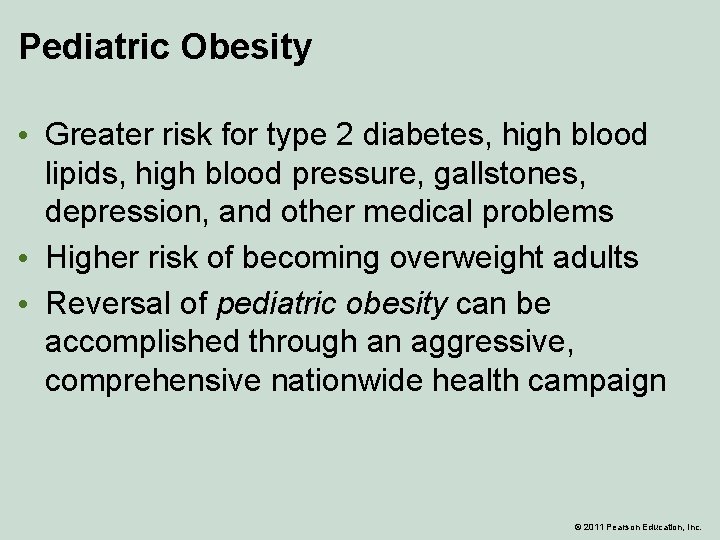
Pediatric Obesity • Greater risk for type 2 diabetes, high blood lipids, high blood pressure, gallstones, depression, and other medical problems • Higher risk of becoming overweight adults • Reversal of pediatric obesity can be accomplished through an aggressive, comprehensive nationwide health campaign © 2011 Pearson Education, Inc.
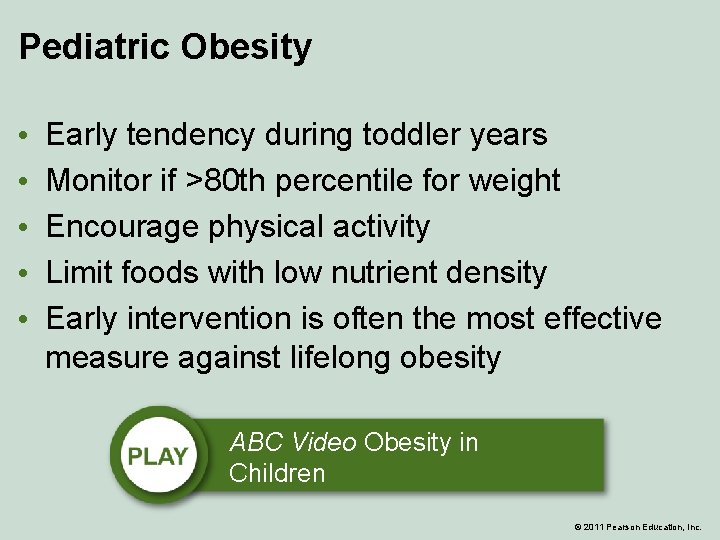
Pediatric Obesity • • • Early tendency during toddler years Monitor if >80 th percentile for weight Encourage physical activity Limit foods with low nutrient density Early intervention is often the most effective measure against lifelong obesity ABC Video Obesity in Children © 2011 Pearson Education, Inc.
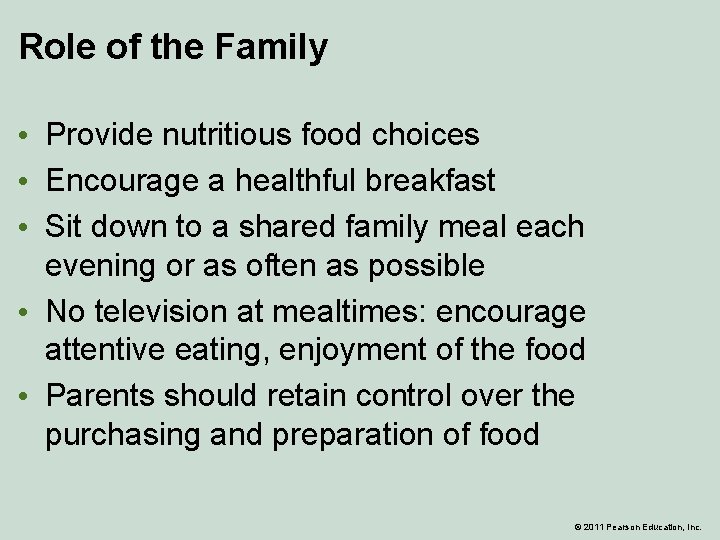
Role of the Family • Provide nutritious food choices • Encourage a healthful breakfast • Sit down to a shared family meal each evening or as often as possible • No television at mealtimes: encourage attentive eating, enjoyment of the food • Parents should retain control over the purchasing and preparation of food © 2011 Pearson Education, Inc.
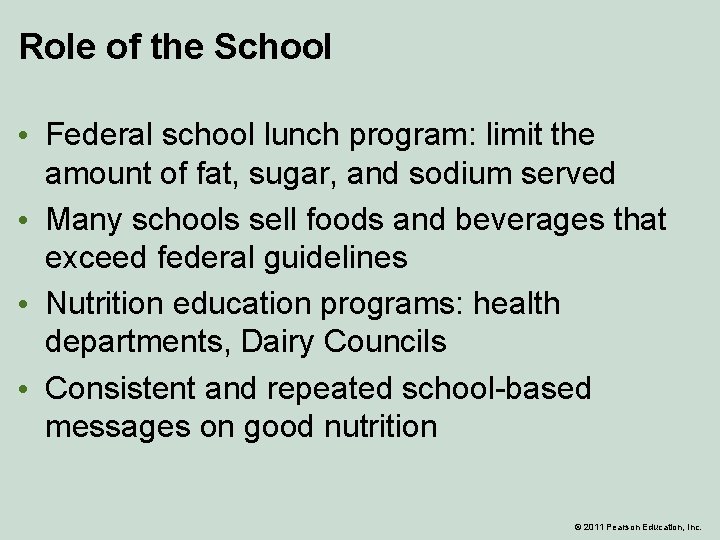
Role of the School • Federal school lunch program: limit the amount of fat, sugar, and sodium served • Many schools sell foods and beverages that exceed federal guidelines • Nutrition education programs: health departments, Dairy Councils • Consistent and repeated school-based messages on good nutrition © 2011 Pearson Education, Inc.
© 2011 Pearson Education, Inc.
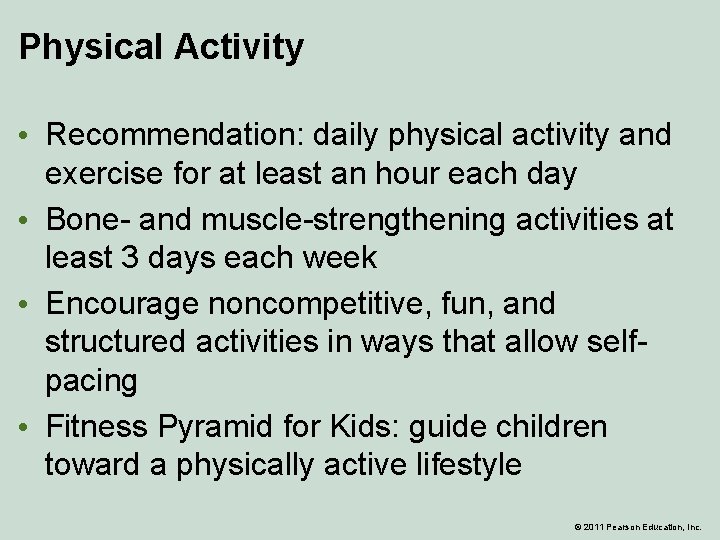
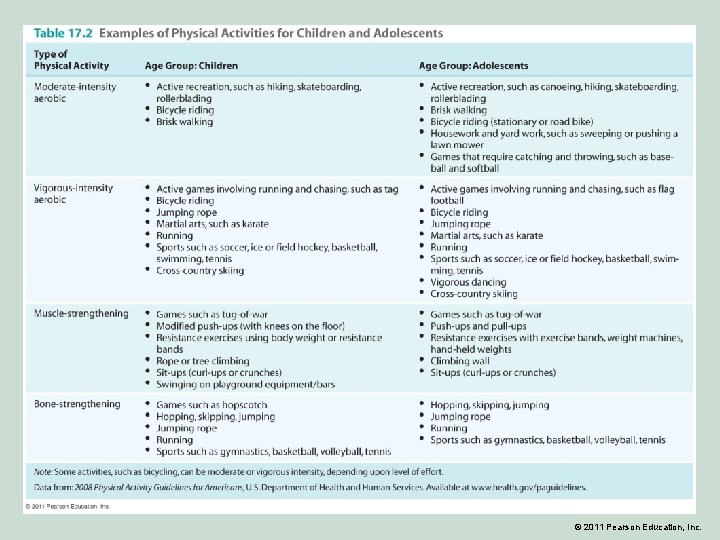
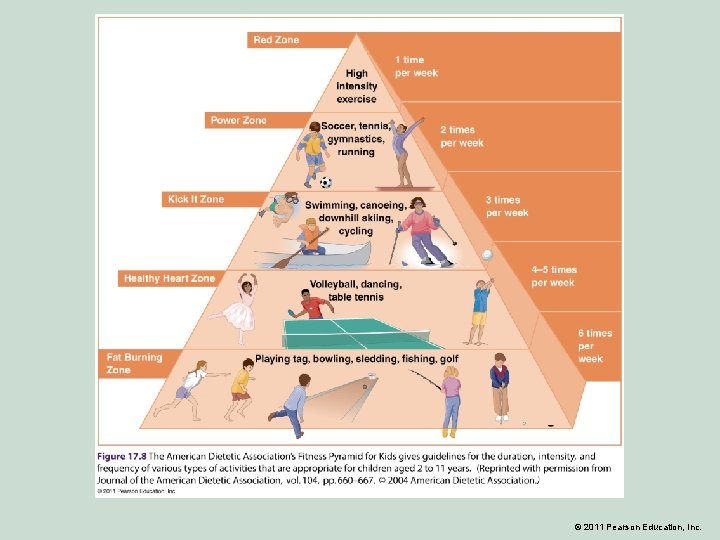
Physical Activity • Recommendation: daily physical activity and exercise for at least an hour each day • Bone- and muscle-strengthening activities at least 3 days each week • Encourage noncompetitive, fun, and structured activities in ways that allow selfpacing • Fitness Pyramid for Kids: guide children toward a physically active lifestyle © 2011 Pearson Education, Inc.
© 2011 Pearson Education, Inc.
© 2011 Pearson Education, Inc.
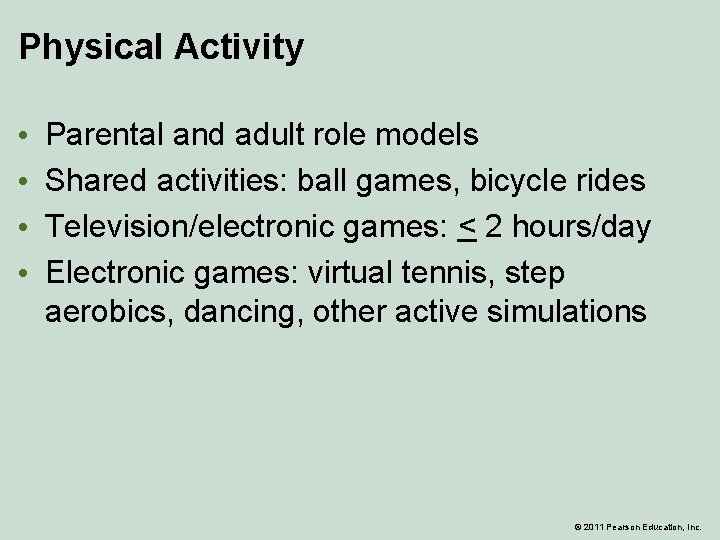
Physical Activity • • Parental and adult role models Shared activities: ball games, bicycle rides Television/electronic games: < 2 hours/day Electronic games: virtual tennis, step aerobics, dancing, other active simulations © 2011 Pearson Education, Inc.
Physical Activity • Overweight children can “catch up” to their weight as they grow taller without restricting food (nutrient) intake • Acquire motor skills and muscle strength • Establish good sleep patterns • Develop self-esteem; lower stress • Optimize bone mass • Enhance cardiovascular and respiratory function © 2011 Pearson Education, Inc.
Physical Activity • Physically fit children: • • Have improved behavior Are more attentive Are more focused Have higher levels of academic achievement • Parents, healthcare providers, and community members can work with school boards to optimize opportunities for physical activity © 2011 Pearson Education, Inc.