
17 Mating Systems Mating systems Mating systems form


- Slides: 41
17. Mating Systems
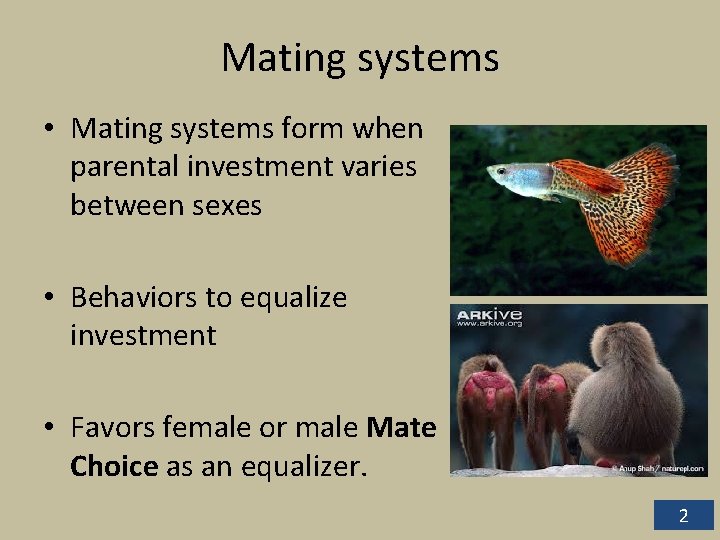
Mating systems • Mating systems form when parental investment varies between sexes • Behaviors to equalize investment • Favors female or male Mate Choice as an equalizer. 2
Mating systems • Monogamy - 1 male, 1 female • Polygyny – Polygamy - 1 male, >1 female – Polyandry - 1 female, >1 male 3
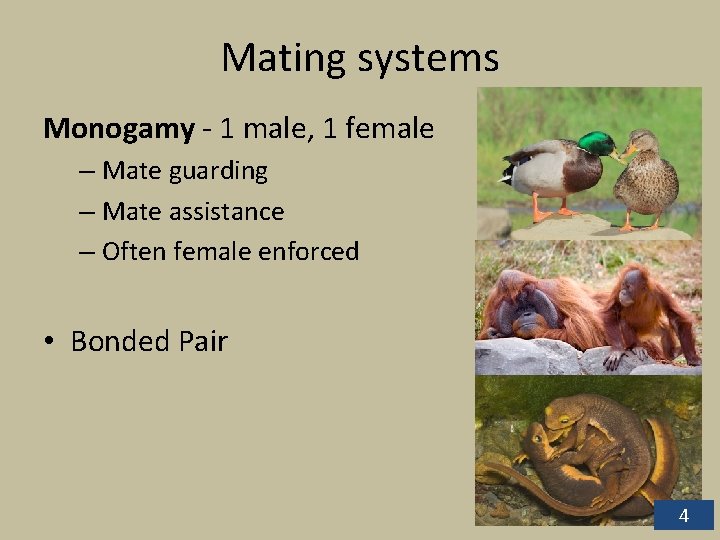
Mating systems Monogamy - 1 male, 1 female – Mate guarding – Mate assistance – Often female enforced • Bonded Pair 4
Mating systems Polygyny - 1 male, >1 female – Resource defense – Female defense – Scramble competition – Explosive breeding assemblage • Harem 5
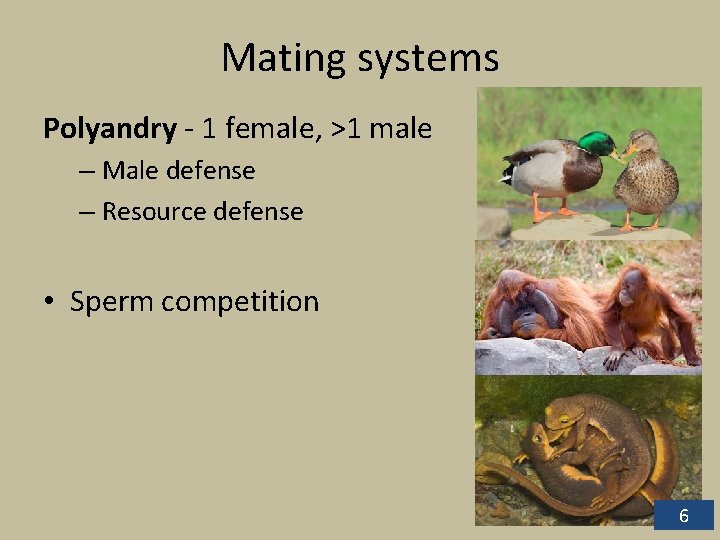
Mating systems Polyandry - 1 female, >1 male – Male defense – Resource defense • Sperm competition 6
Promiscuity • Individuals mate with multiple members of the opposite sex to increase reproductive success • Males – Fertilize as many eggs as possible • Females – Choose the best males genes – Sperm competition& Cryptic female choice 7
Why Monogamy? • Polygynous mating systems should be most common – Sexual selection theory (Intra- & Intersexual selection) – Low parental investment of males • Why are males monogamous? 8
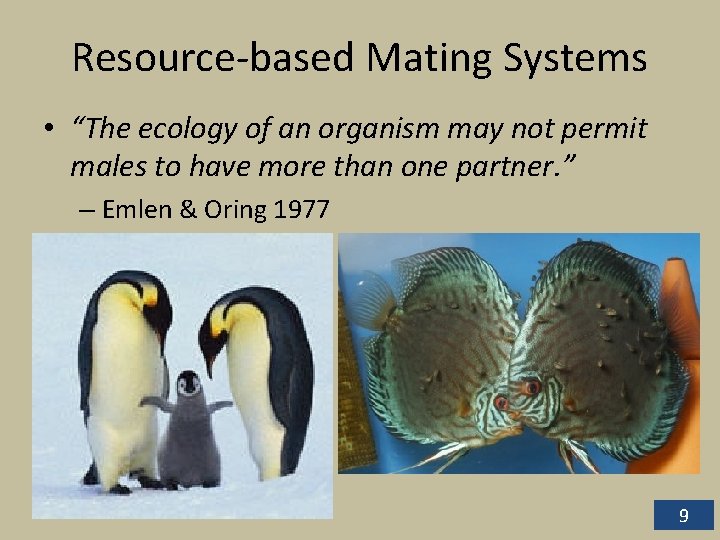
Resource-based Mating Systems • “The ecology of an organism may not permit males to have more than one partner. ” – Emlen & Oring 1977 9
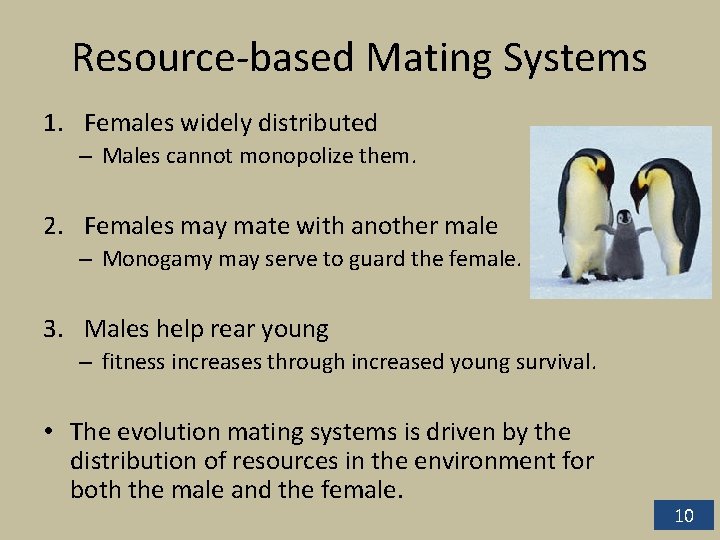
Resource-based Mating Systems 1. Females widely distributed – Males cannot monopolize them. 2. Females may mate with another male – Monogamy may serve to guard the female. 3. Males help rear young – fitness increases through increased young survival. • The evolution mating systems is driven by the distribution of resources in the environment for both the male and the female. 10
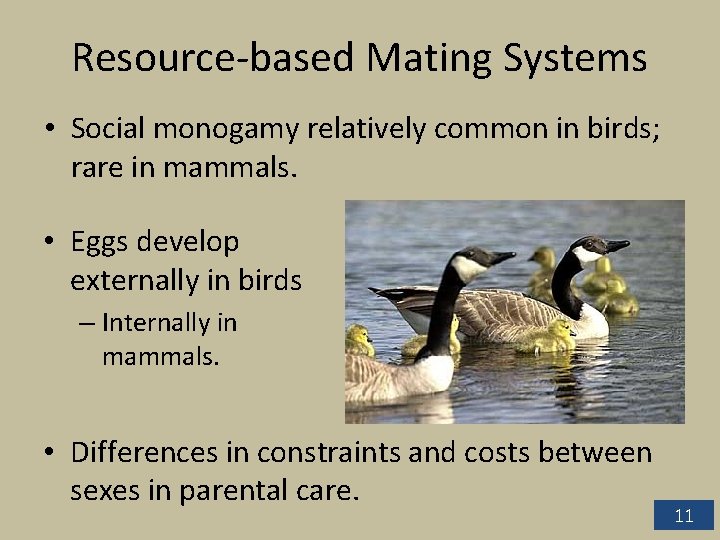
Resource-based Mating Systems • Social monogamy relatively common in birds; rare in mammals. • Eggs develop externally in birds – Internally in mammals. • Differences in constraints and costs between sexes in parental care. 11
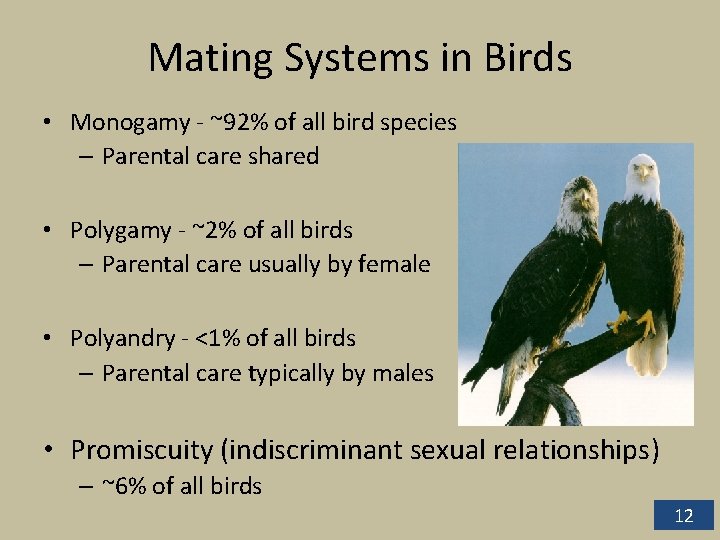
Mating Systems in Birds • Monogamy - ~92% of all bird species – Parental care shared • Polygamy - ~2% of all birds – Parental care usually by female • Polyandry - <1% of all birds – Parental care typically by males • Promiscuity (indiscriminant sexual relationships) – ~6% of all birds 12
13
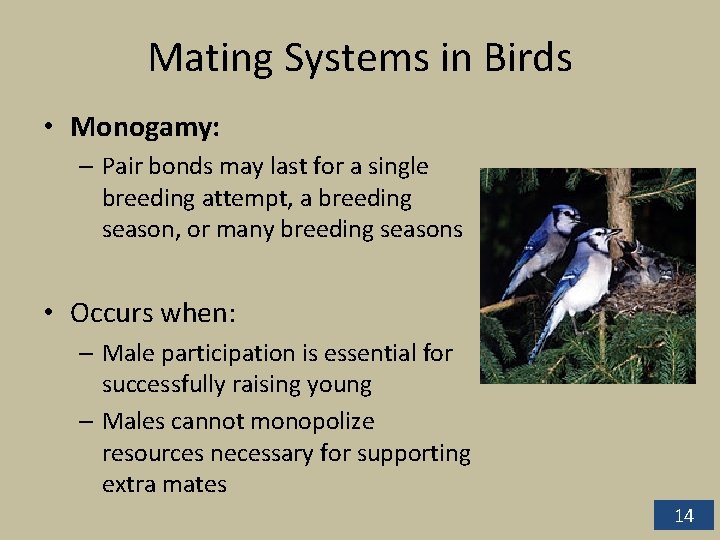
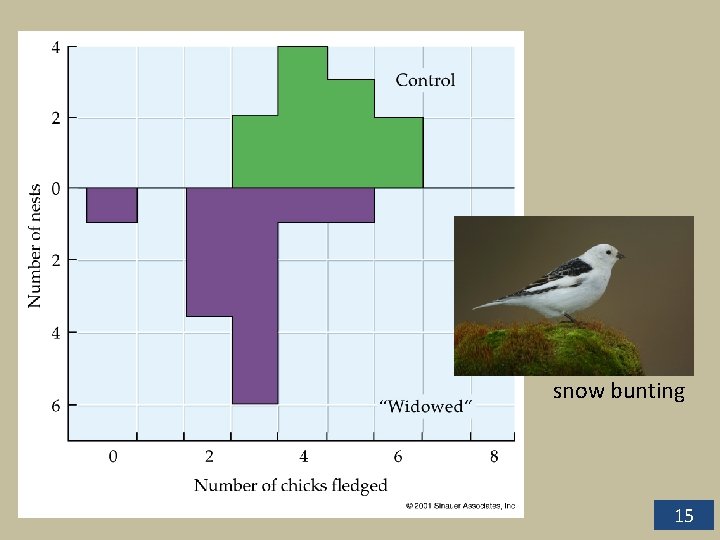
Mating Systems in Birds • Monogamy: – Pair bonds may last for a single breeding attempt, a breeding season, or many breeding seasons • Occurs when: – Male participation is essential for successfully raising young – Males cannot monopolize resources necessary for supporting extra mates 14
snow bunting 15
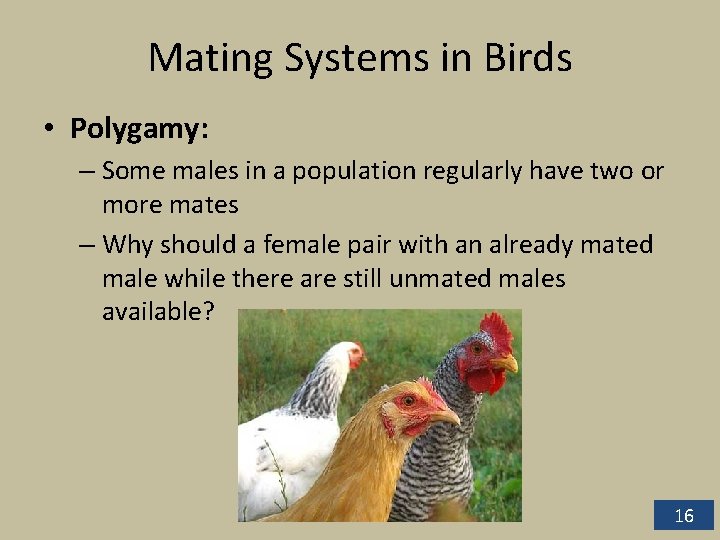
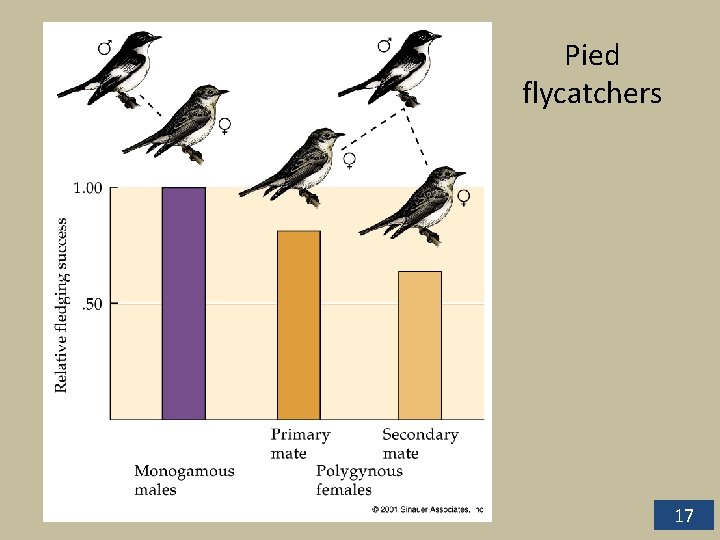
Mating Systems in Birds • Polygamy: – Some males in a population regularly have two or more mates – Why should a female pair with an already mated male while there are still unmated males available? 16
Pied flycatchers 17
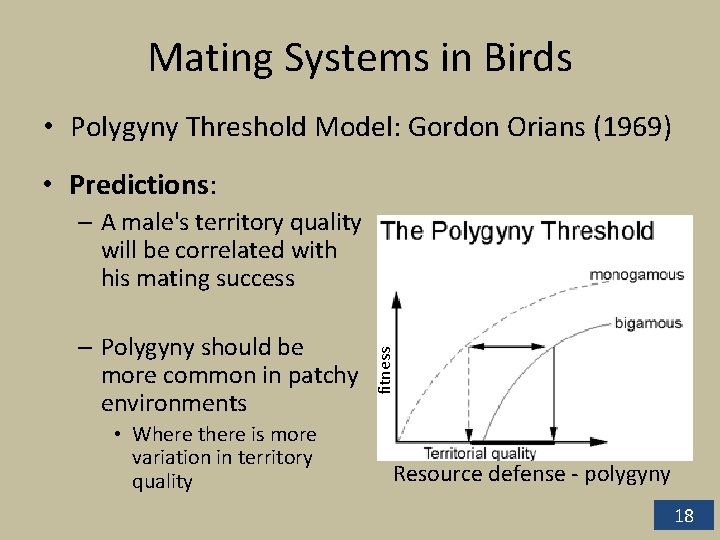
Mating Systems in Birds • Polygyny Threshold Model: Gordon Orians (1969) • Predictions: – Polygyny should be more common in patchy environments • Where there is more variation in territory quality fitness – A male's territory quality will be correlated with his mating success Resource defense - polygyny 18
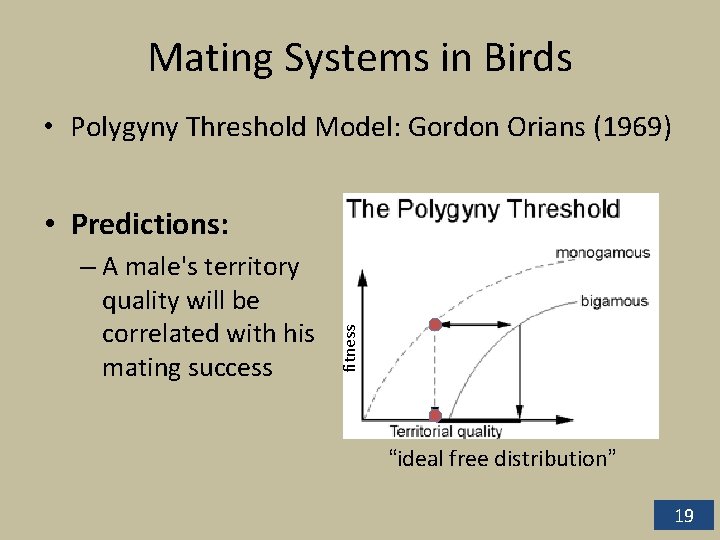
Mating Systems in Birds • Polygyny Threshold Model: Gordon Orians (1969) – A male's territory quality will be correlated with his mating success fitness • Predictions: “ideal free distribution” 19
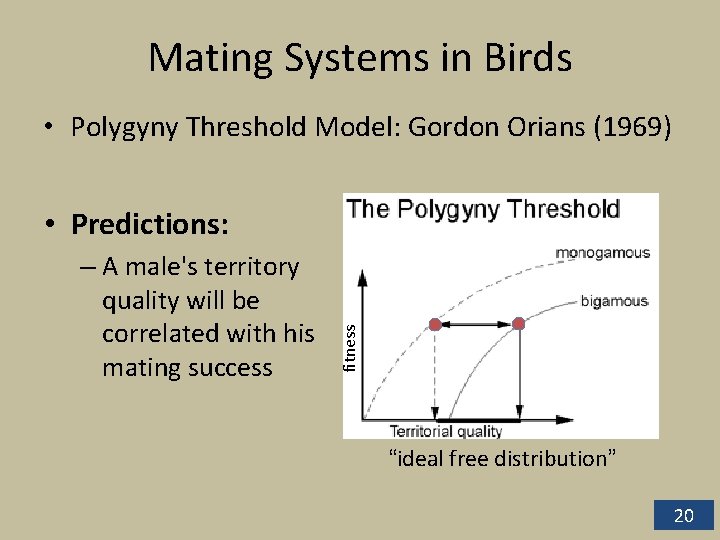
Mating Systems in Birds • Polygyny Threshold Model: Gordon Orians (1969) – A male's territory quality will be correlated with his mating success fitness • Predictions: “ideal free distribution” 20
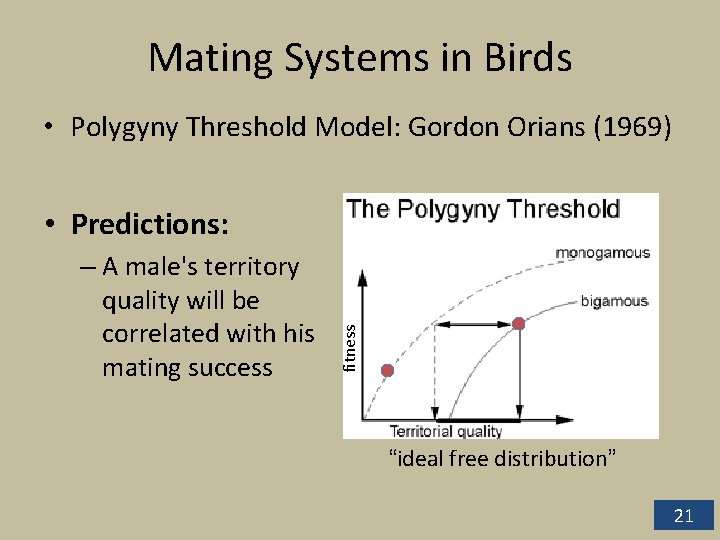
Mating Systems in Birds • Polygyny Threshold Model: Gordon Orians (1969) – A male's territory quality will be correlated with his mating success fitness • Predictions: “ideal free distribution” 21
Polygyny • Polygyny (non-resource based): – female defense – scramble competition – explosive breeding assemblage • Males compete for access to mates. • Females only get sperm from males – they raise young elsewhere unaided by males 22
Polygyny • In leks, males display 'status' in communal displays & females choose among males. • Much variation in male mating success (one or a few males copulate with many females; other males with none). 23
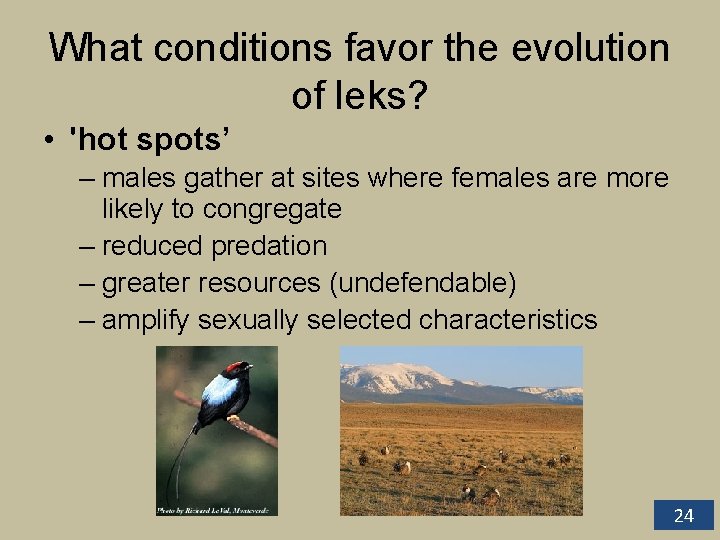
What conditions favor the evolution of leks? • 'hot spots’ – males gather at sites where females are more likely to congregate – reduced predation – greater resources (undefendable) – amplify sexually selected characteristics 24
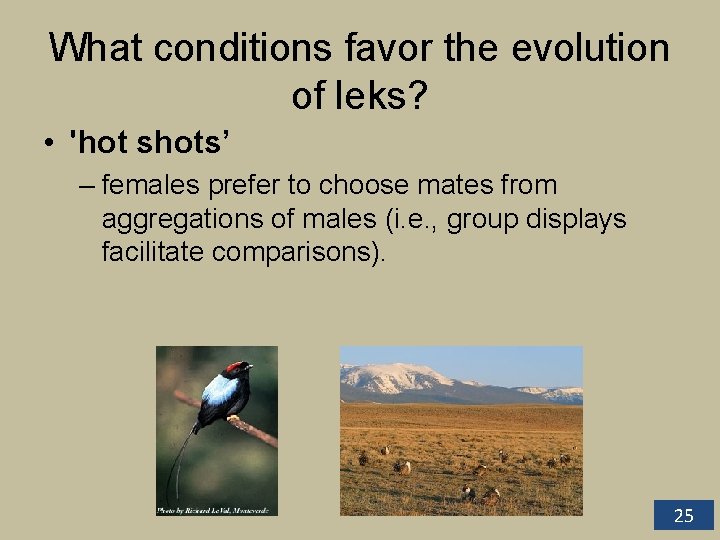
What conditions favor the evolution of leks? • 'hot shots’ – females prefer to choose mates from aggregations of males (i. e. , group displays facilitate comparisons). 25
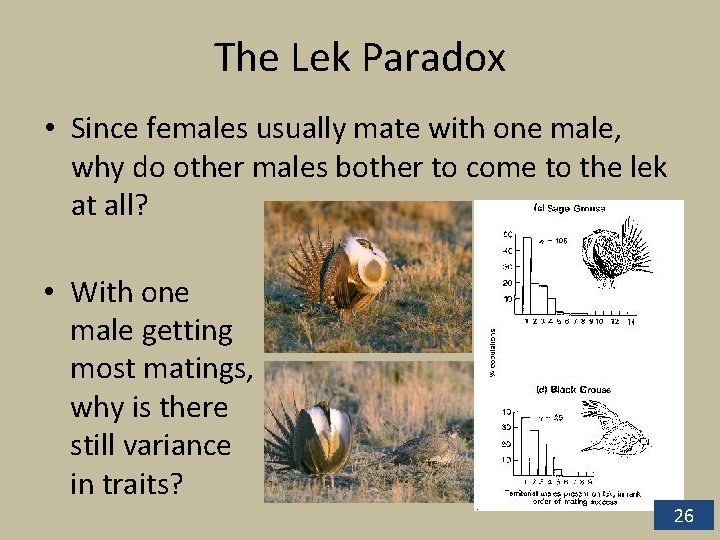
The Lek Paradox • Since females usually mate with one male, why do other males bother to come to the lek at all? • With one male getting most matings, why is there still variance in traits? 26
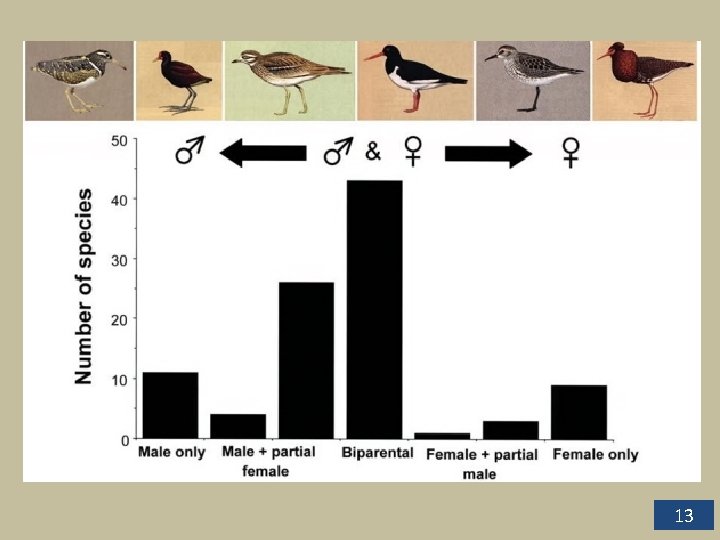
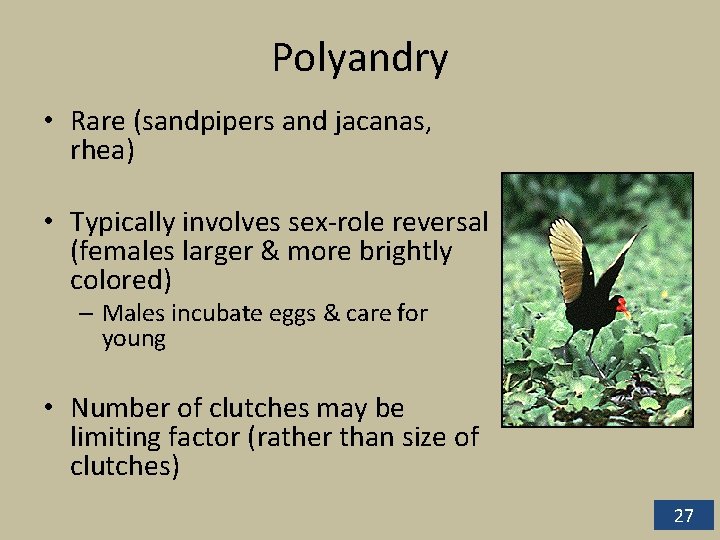
Polyandry • Rare (sandpipers and jacanas, rhea) • Typically involves sex-role reversal (females larger & more brightly colored) – Males incubate eggs & care for young • Number of clutches may be limiting factor (rather than size of clutches) 27
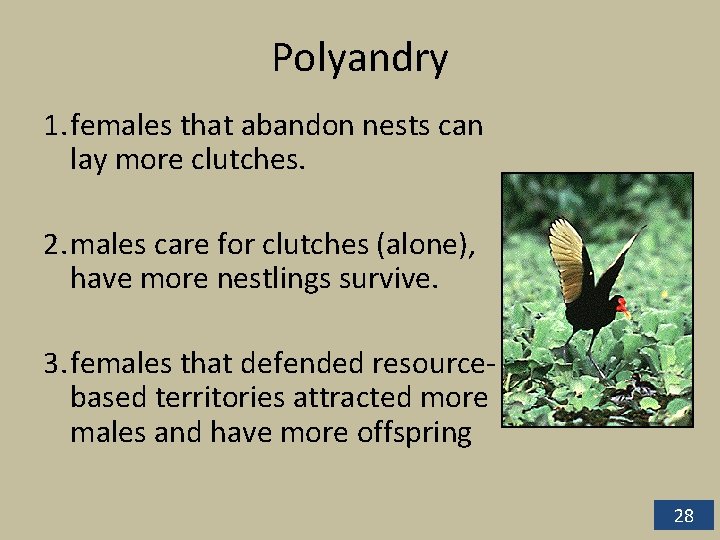
Polyandry 1. females that abandon nests can lay more clutches. 2. males care for clutches (alone), have more nestlings survive. 3. females that defended resourcebased territories attracted more males and have more offspring 28
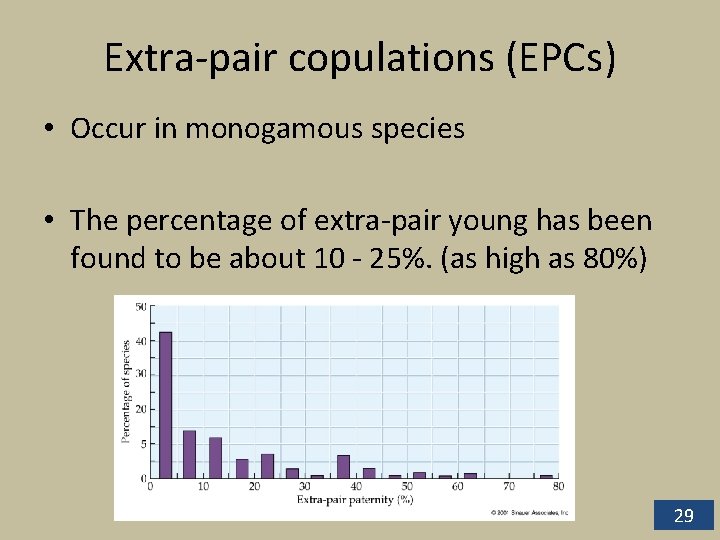
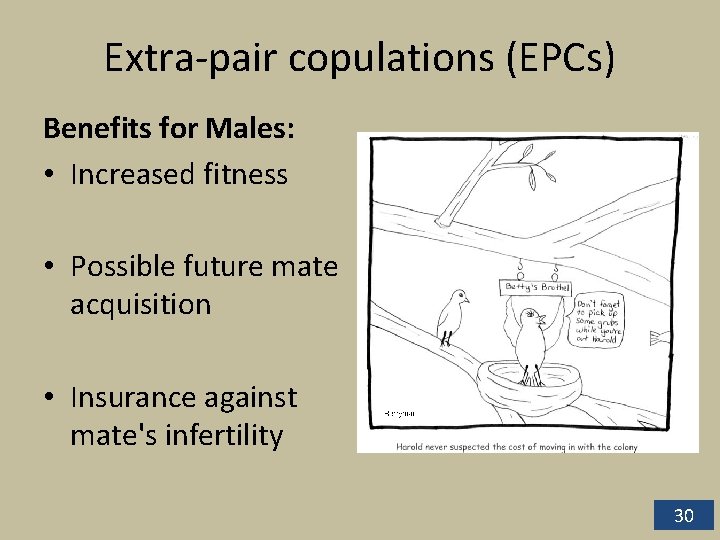
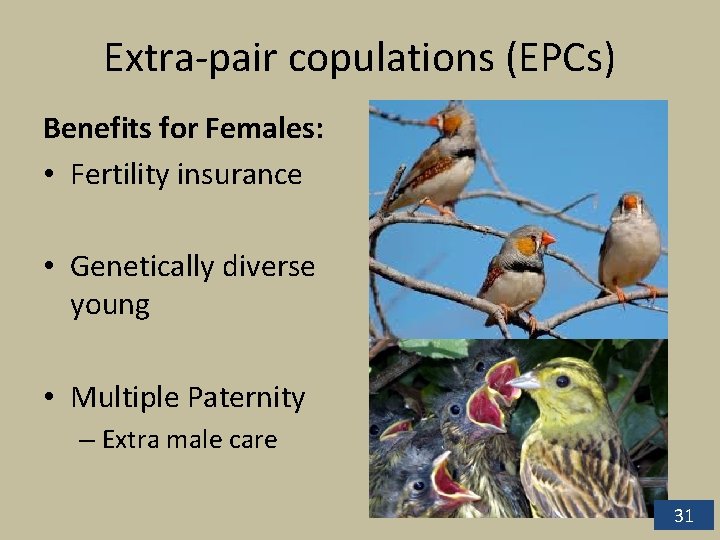
Extra-pair copulations (EPCs) • Occur in monogamous species • The percentage of extra-pair young has been found to be about 10 - 25%. (as high as 80%) 29
Extra-pair copulations (EPCs) Benefits for Males: • Increased fitness • Possible future mate acquisition • Insurance against mate's infertility 30
Extra-pair copulations (EPCs) Benefits for Females: • Fertility insurance • Genetically diverse young • Multiple Paternity – Extra male care 31
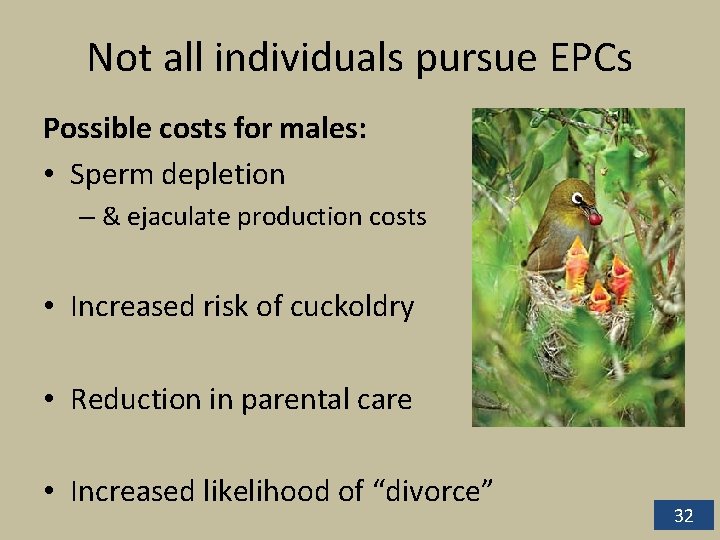
Not all individuals pursue EPCs Possible costs for males: • Sperm depletion – & ejaculate production costs • Increased risk of cuckoldry • Reduction in parental care • Increased likelihood of “divorce” 32
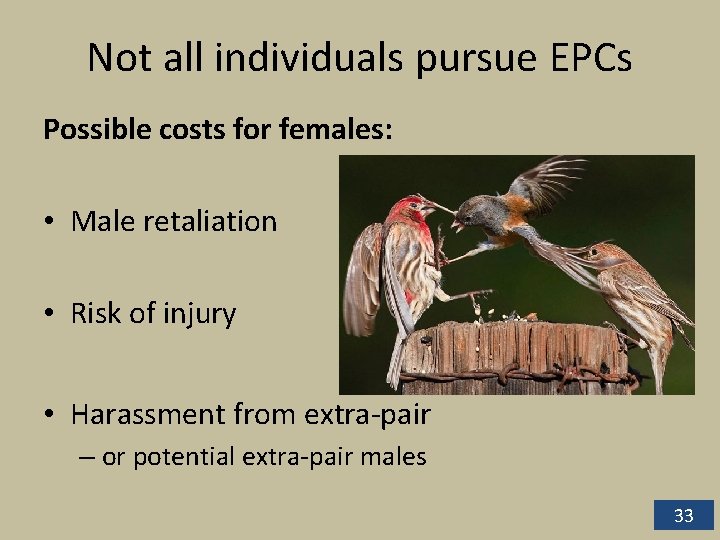
Not all individuals pursue EPCs Possible costs for females: • Male retaliation • Risk of injury • Harassment from extra-pair – or potential extra-pair males 33
Multiple Paternity (EPC) • The female gets offspring that are quite variable. • If females mate with multiple males, at the same nest, males may not know paternity of young – Easier to determine maternity • Males then invest in caring for young, even if they are not their own. 34
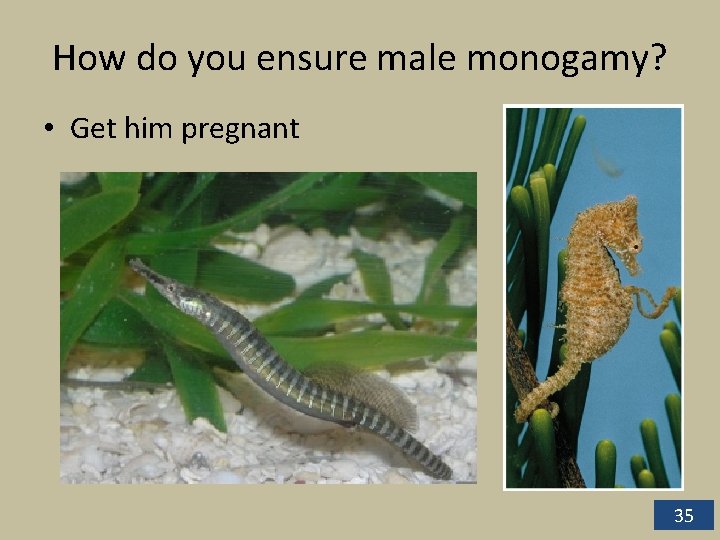
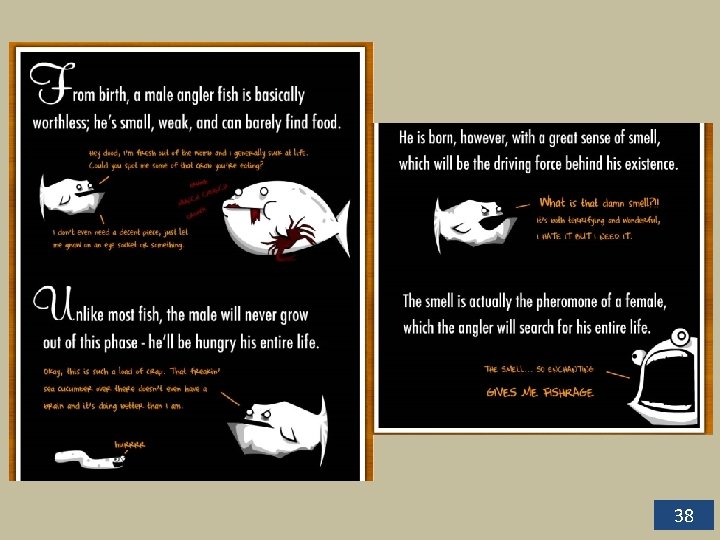
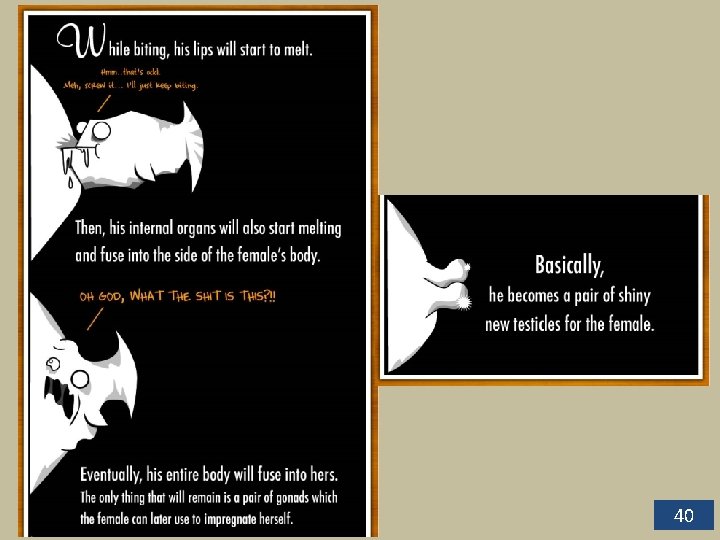
How do you ensure male monogamy? • Get him pregnant 35
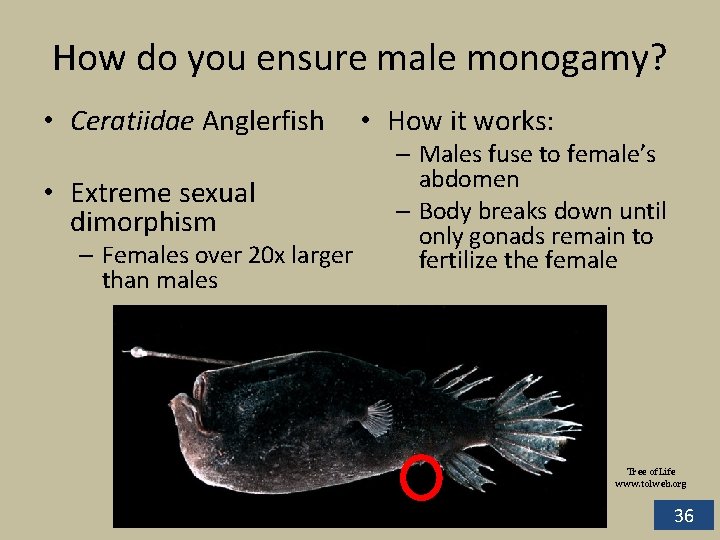
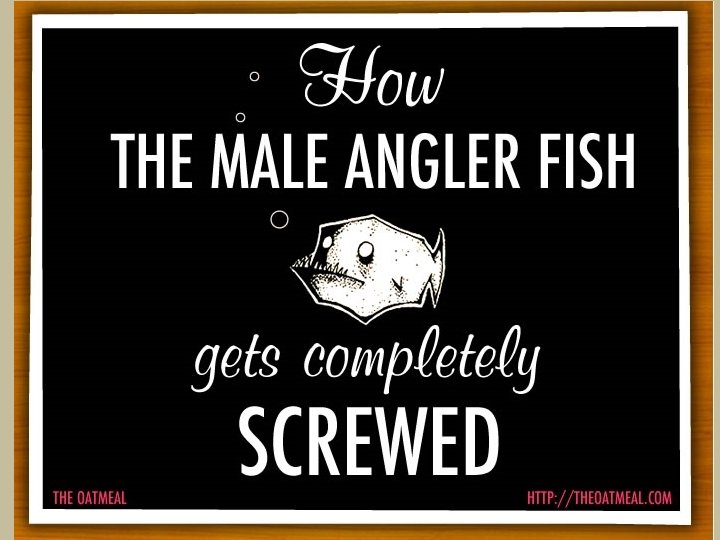
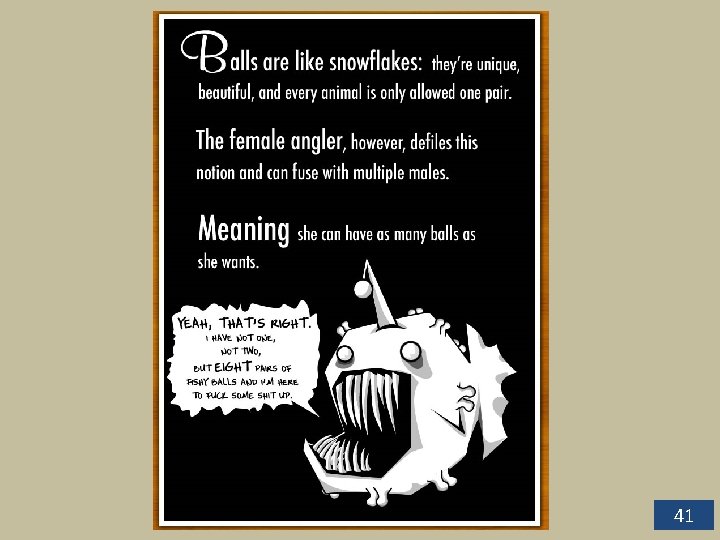
How do you ensure male monogamy? • Ceratiidae Anglerfish • Extreme sexual dimorphism – Females over 20 x larger than males • How it works: – Males fuse to female’s abdomen – Body breaks down until only gonads remain to fertilize the female Tree of Life www. tolweb. org 36
37
38
39
40
41