
17 Marketing Strategies for Emerging Markets Chapter Overview
- Slides: 25
17. Marketing Strategies for Emerging Markets
Chapter Overview 1. Emerging Markets 2. Competing with the New Champions 3. Targeting/Positioning Strategies in Emerging Markets— BOP or No BOP? 4. Entry Strategies for Emerging Markets 5. Product Policy 6. Pricing Strategy 7. The Distribution Challenge 8. Communication Strategies for Emerging Markets 2
Introduction • Emerging markets are becoming more attractive as developed markets are saturated. • Some emerging markets are already the top producers for MNCs—Mc. Donalds Moscow. • MNCs also are coming from emerging markets—Tata Motors from India, Zara clothing from Spain. • MNCs still face obstacles to trade in emerging markets. 3
1. Emerging Markets • Emerging markets feature rapid growth and industrialization. • Label is indistinct, and membership varies with source. Usual members are Brazil, China, Indonesia and India. • Transition economies—those changing from a centrally planned economy to free market—are also in this group. 4
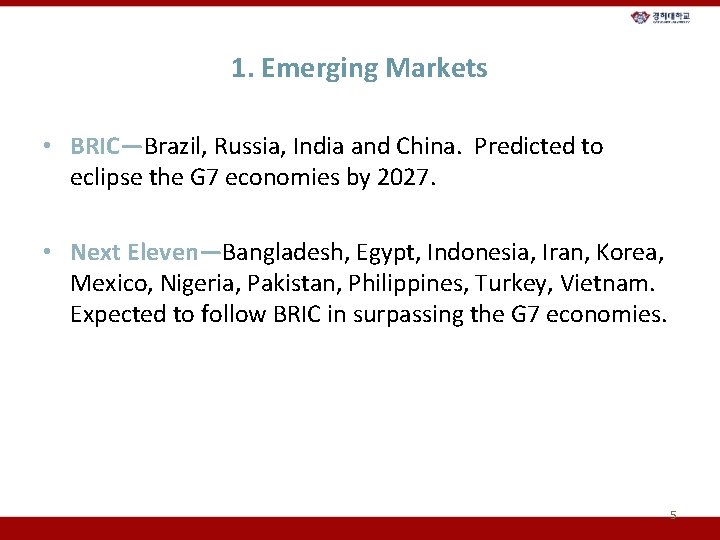
1. Emerging Markets • BRIC—Brazil, Russia, India and China. Predicted to eclipse the G 7 economies by 2027. • Next Eleven—Bangladesh, Egypt, Indonesia, Iran, Korea, Mexico, Nigeria, Pakistan, Philippines, Turkey, Vietnam. Expected to follow BRIC in surpassing the G 7 economies. 5
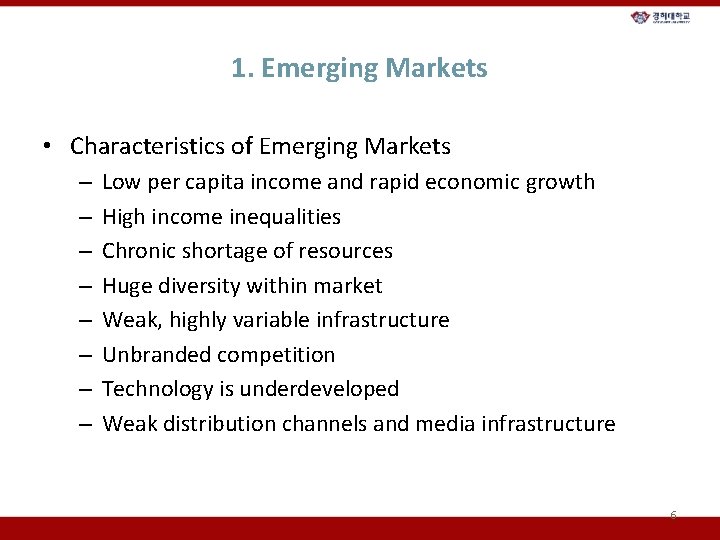
1. Emerging Markets • Characteristics of Emerging Markets – – – – Low per capita income and rapid economic growth High income inequalities Chronic shortage of resources Huge diversity within market Weak, highly variable infrastructure Unbranded competition Technology is underdeveloped Weak distribution channels and media infrastructure 6
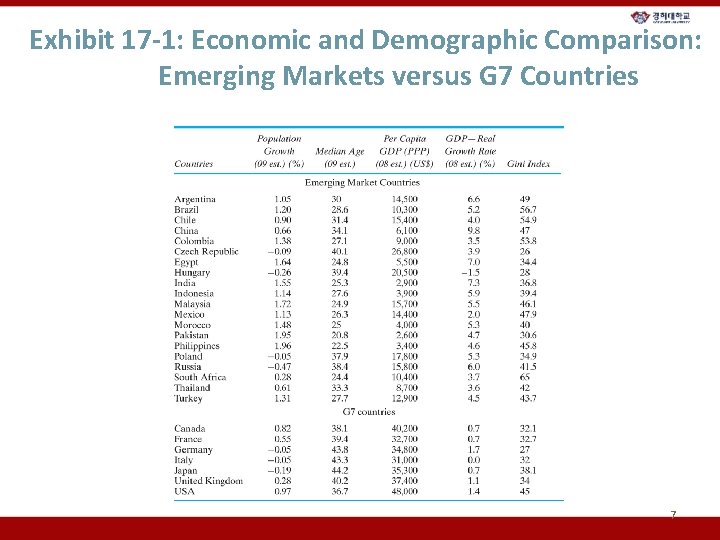
Exhibit 17 -1: Economic and Demographic Comparison: Emerging Markets versus G 7 Countries 7
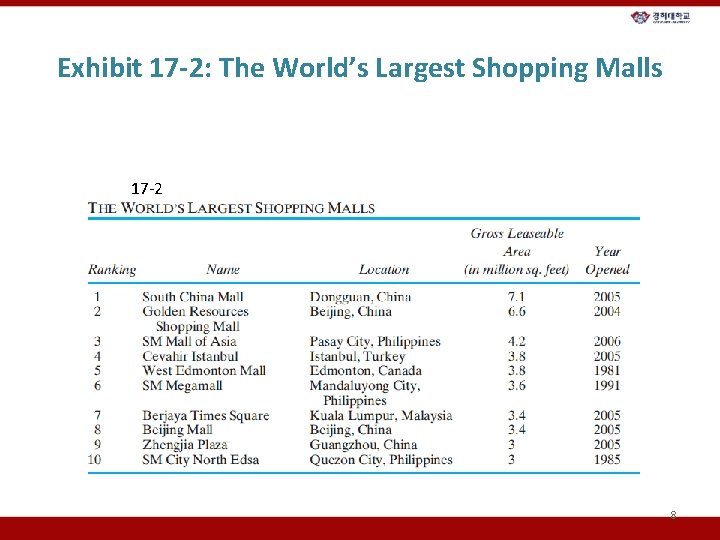
Exhibit 17 -2: The World’s Largest Shopping Malls 17 -2 8
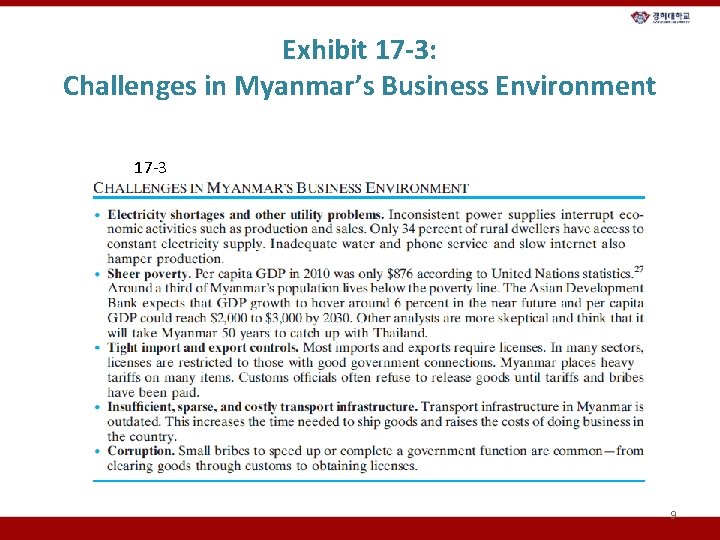
Exhibit 17 -3: Challenges in Myanmar’s Business Environment 17 -3 9
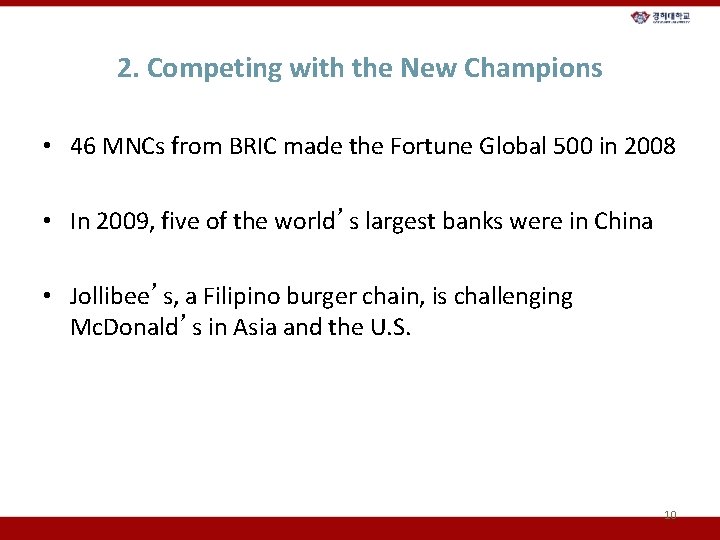
2. Competing with the New Champions • 46 MNCs from BRIC made the Fortune Global 500 in 2008 • In 2009, five of the world’s largest banks were in China • Jollibee’s, a Filipino burger chain, is challenging Mc. Donald’s in Asia and the U. S. 10
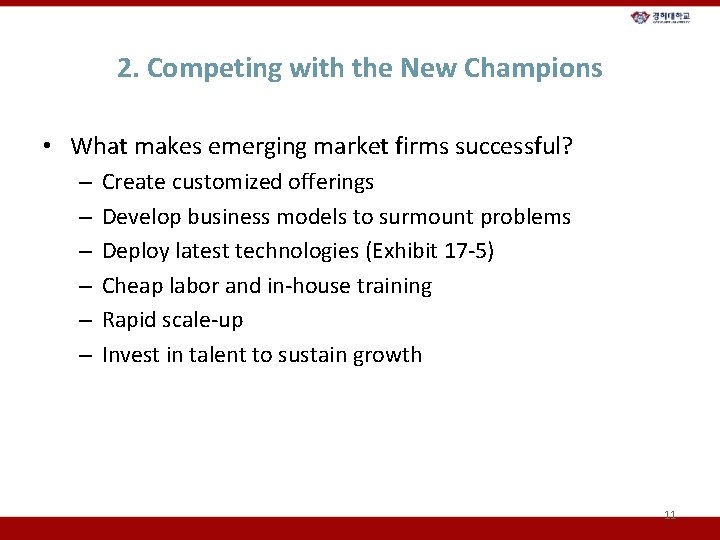
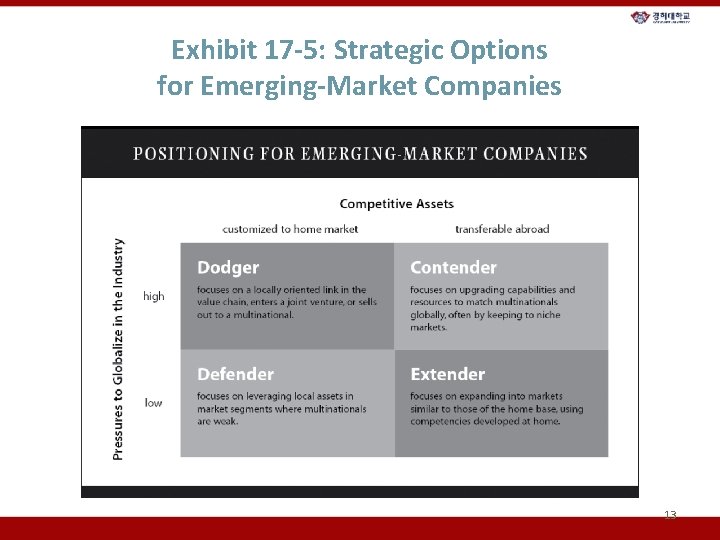
2. Competing with the New Champions • What makes emerging market firms successful? – – – Create customized offerings Develop business models to surmount problems Deploy latest technologies (Exhibit 17 -5) Cheap labor and in-house training Rapid scale-up Invest in talent to sustain growth 11
2. Competing with the New Champions • Strategic options for emerging market firms 12
Exhibit 17 -5: Strategic Options for Emerging-Market Companies 13
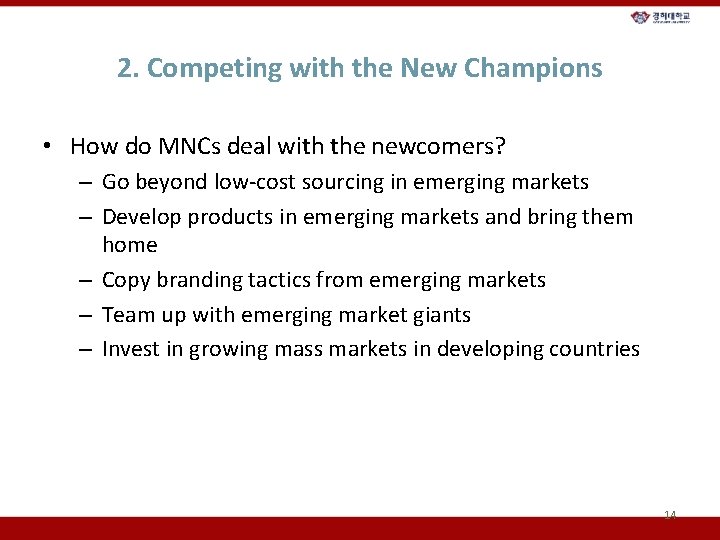
2. Competing with the New Champions • How do MNCs deal with the newcomers? – Go beyond low-cost sourcing in emerging markets – Develop products in emerging markets and bring them home – Copy branding tactics from emerging markets – Team up with emerging market giants – Invest in growing mass markets in developing countries 14
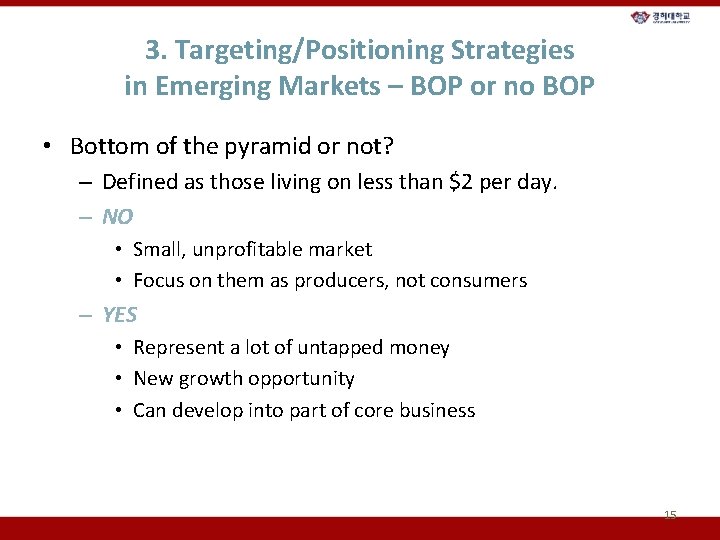
3. Targeting/Positioning Strategies in Emerging Markets – BOP or no BOP • Bottom of the pyramid or not? – Defined as those living on less than $2 per day. – NO • Small, unprofitable market • Focus on them as producers, not consumers – YES • Represent a lot of untapped money • New growth opportunity • Can develop into part of core business 15
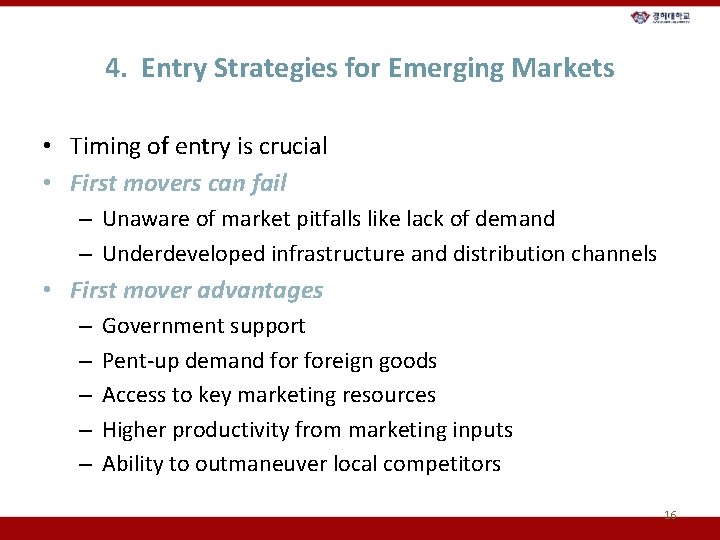
4. Entry Strategies for Emerging Markets • Timing of entry is crucial • First movers can fail – Unaware of market pitfalls like lack of demand – Underdeveloped infrastructure and distribution channels • First mover advantages – – – Government support Pent-up demand foreign goods Access to key marketing resources Higher productivity from marketing inputs Ability to outmaneuver local competitors 16
5. Product Policy • Products should be: – Affordable – Functional – Durable • Backward innovation—stripped-down version of developed market product – Not as well accepted as before Internet 17
5. Product Policy • Branding – The wealthy can be sold the global brand – The BOP group needs a brand that emulates local brands • Packaging – Smaller sizes advisable – Use local materials and be recyclable 18
6. Pricing • Thin margins and high volume generally successful • Saturate all price points to shut out local competition • Improve cost structure through frugal engineering • Be aware of demand pooling—combining resources to buy a product such as a cell phone or tractor 19
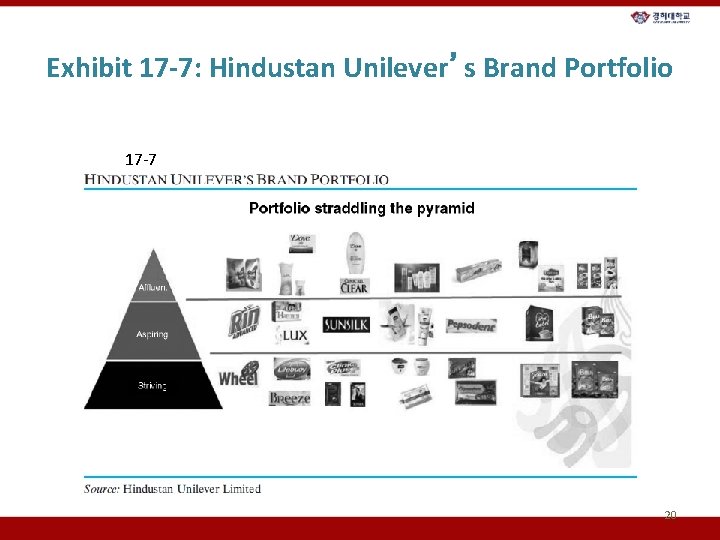
Exhibit 17 -7: Hindustan Unilever’s Brand Portfolio 17 -7 20
7. The Distribution Challenge • Be first on the shelf with rural retailers. • Be prepared to create your own distribution system. • Managing Distributor Relationships – – Select based on competence working with MNCs Consider direct selling Retain control of critical marketing decisions Resist exclusivity demands of local distributors 21
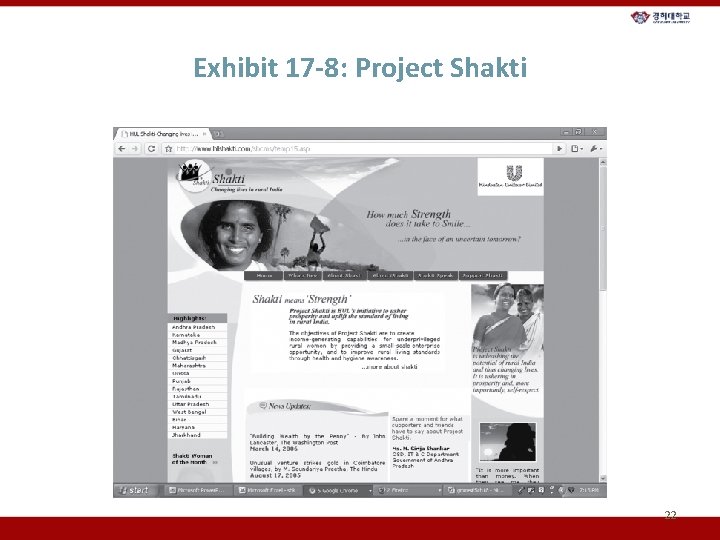
Exhibit 17 -8: Project Shakti 22
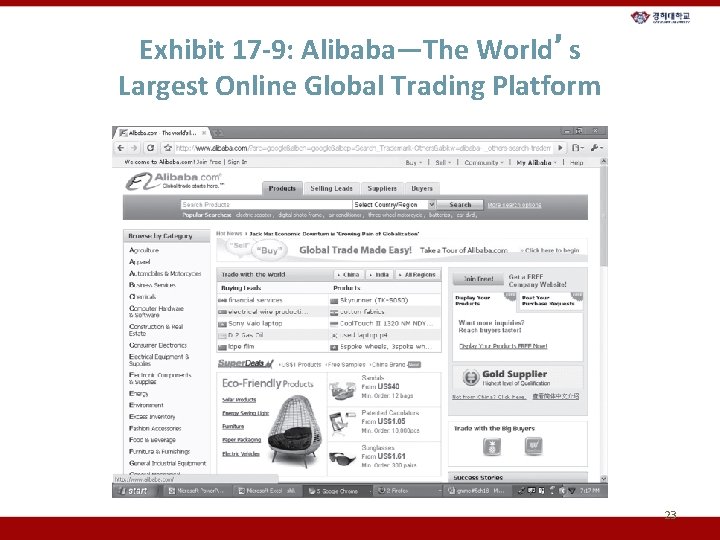
Exhibit 17 -9: Alibaba—The World’s Largest Online Global Trading Platform 23
8. Communication Strategies for Emerging Markets • Prioritizing promotion tasks—educating about product use, raising brand awareness, and creating brand image —is crucial. • Push strategies are very important. – Retailers have more power than in developed markets – People shop more frequently, hence get more exposure to push strategies 24
8. Communication Strategies for Emerging Markets • Pull strategies should be altered – Mass media typically less effective – Targeted media preferred • Be prepared to use non-traditional methods – Vans serving as ads on wheels – Loudspeakers on rivercraft – Movie trailers on films from traveling theaters in rural villages 25