
17 Designing and Managing Integrated Marketing Communications Marketing

- Slides: 37
17 Designing and Managing Integrated Marketing Communications Marketing Management, 13 th ed
Chapter Questions • What is the role of marketing communications? • How do marketing communications work? • What are the major steps in developing effective communications? • What is the communications mix and how should it be set? • What is an integrated marketing communications program? Copyright © 2009 Pearson Education, Inc. Publishing as Prentice Hall 17 -2
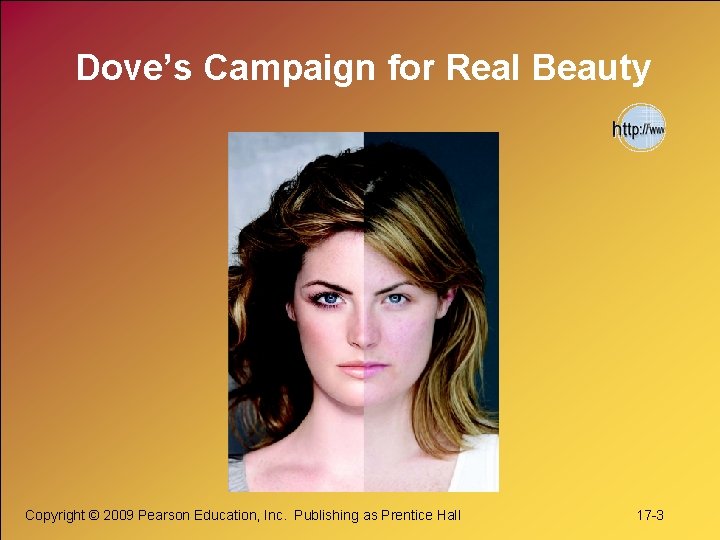
Dove’s Campaign for Real Beauty Copyright © 2009 Pearson Education, Inc. Publishing as Prentice Hall 17 -3
What are Marketing Communications? Marketing communications are the means by which firms attempt to inform, persuade, and remind consumers, directly or indirectly, about the products and brands they sell. Copyright © 2009 Pearson Education, Inc. Publishing as Prentice Hall 17 -4
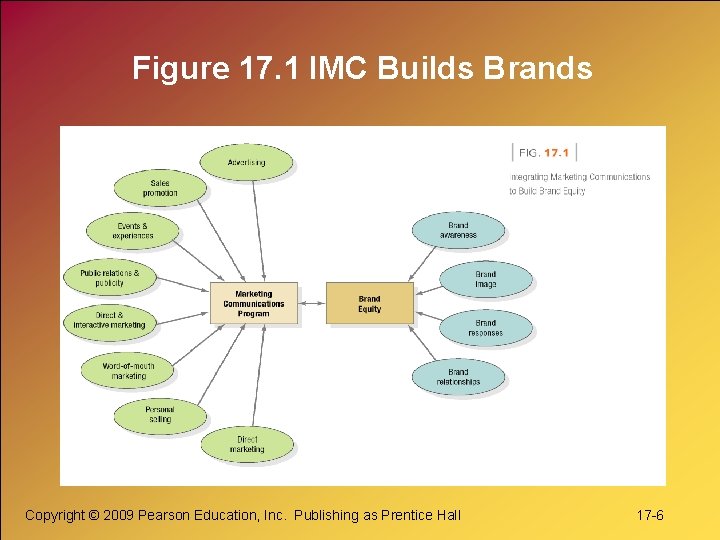
Modes of Marketing Communications • Advertising • Sales promotion • Events and experiences • Public relations and publicity • Direct marketing • Interactive marketing • Word-of-mouth marketing • Personal selling Copyright © 2009 Pearson Education, Inc. Publishing as Prentice Hall 17 -5
Figure 17. 1 IMC Builds Brands Copyright © 2009 Pearson Education, Inc. Publishing as Prentice Hall 17 -6
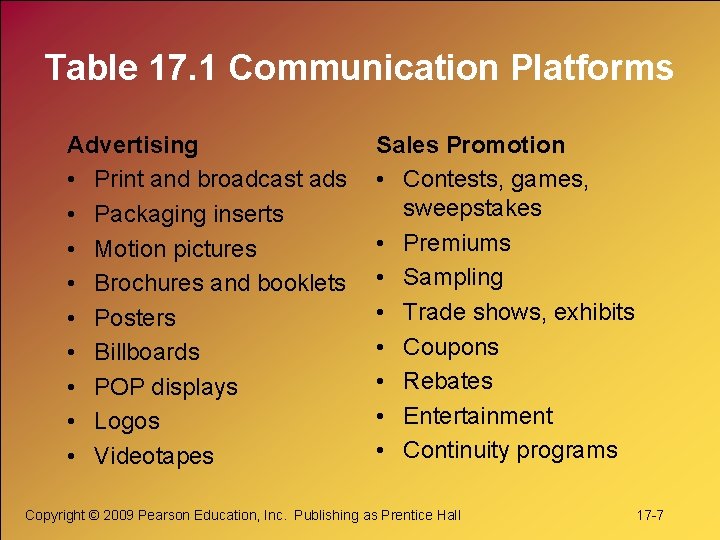
Table 17. 1 Communication Platforms Advertising • Print and broadcast ads • Packaging inserts • Motion pictures • Brochures and booklets • Posters • Billboards • POP displays • Logos • Videotapes Sales Promotion • Contests, games, sweepstakes • Premiums • Sampling • Trade shows, exhibits • Coupons • Rebates • Entertainment • Continuity programs Copyright © 2009 Pearson Education, Inc. Publishing as Prentice Hall 17 -7
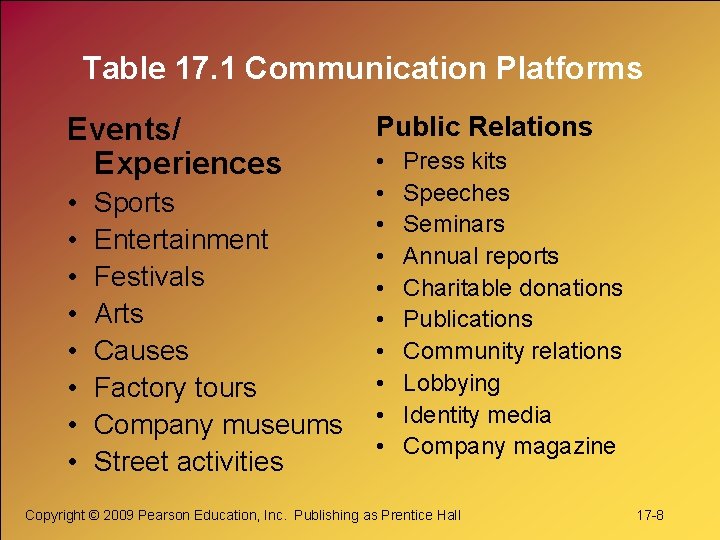
Table 17. 1 Communication Platforms Events/ Experiences • • Sports Entertainment Festivals Arts Causes Factory tours Company museums Street activities Public Relations • • • Press kits Speeches Seminars Annual reports Charitable donations Publications Community relations Lobbying Identity media Company magazine Copyright © 2009 Pearson Education, Inc. Publishing as Prentice Hall 17 -8
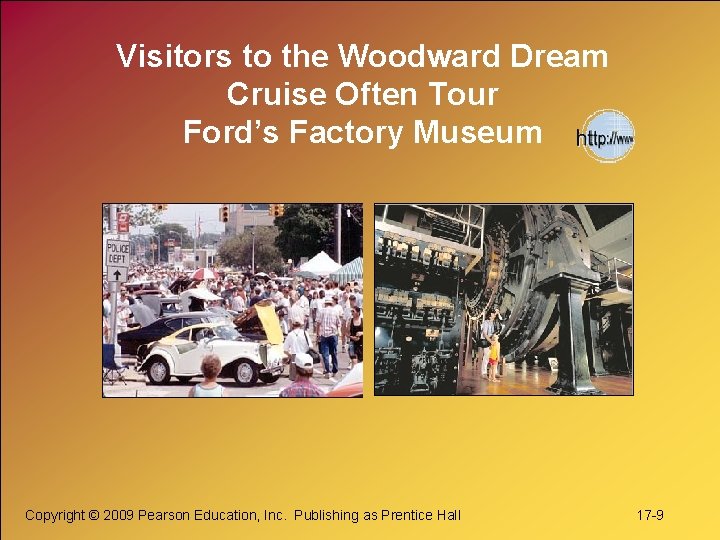
Visitors to the Woodward Dream Cruise Often Tour Ford’s Factory Museum Copyright © 2009 Pearson Education, Inc. Publishing as Prentice Hall 17 -9
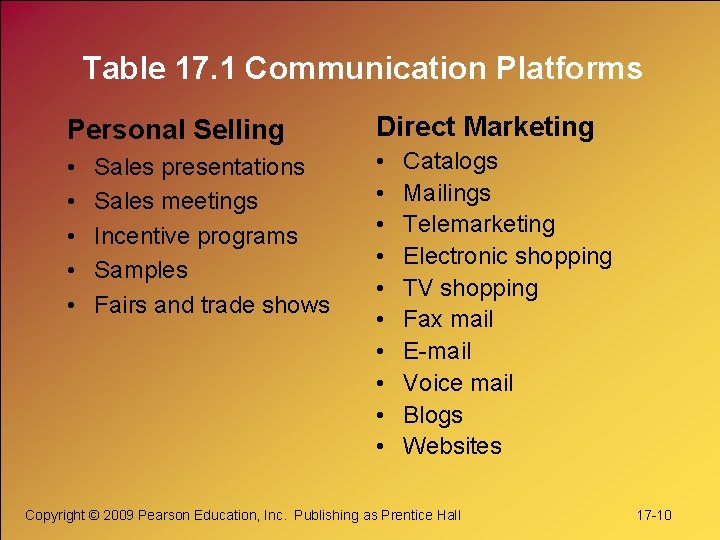
Table 17. 1 Communication Platforms Personal Selling Direct Marketing • • • • Sales presentations Sales meetings Incentive programs Samples Fairs and trade shows Catalogs Mailings Telemarketing Electronic shopping TV shopping Fax mail E-mail Voice mail Blogs Websites Copyright © 2009 Pearson Education, Inc. Publishing as Prentice Hall 17 -10
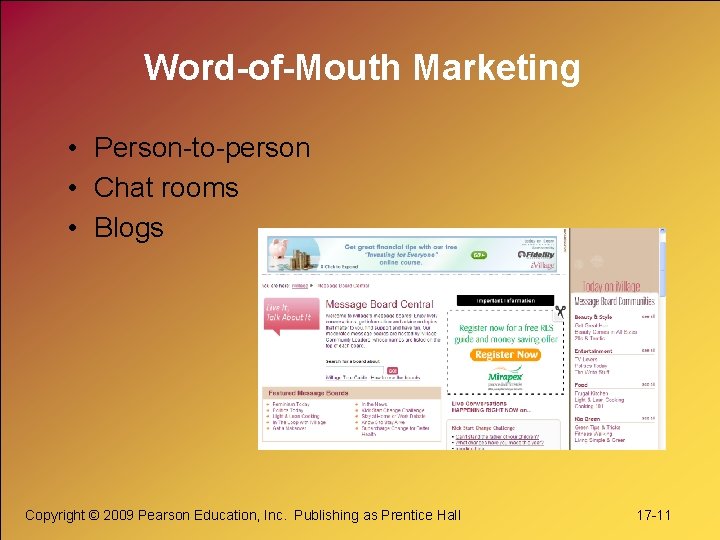
Word-of-Mouth Marketing • Person-to-person • Chat rooms • Blogs Copyright © 2009 Pearson Education, Inc. Publishing as Prentice Hall 17 -11
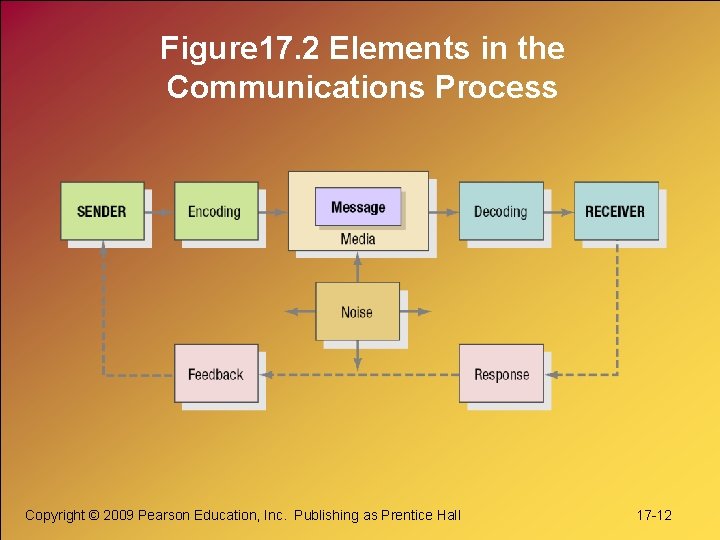
Figure 17. 2 Elements in the Communications Process Copyright © 2009 Pearson Education, Inc. Publishing as Prentice Hall 17 -12
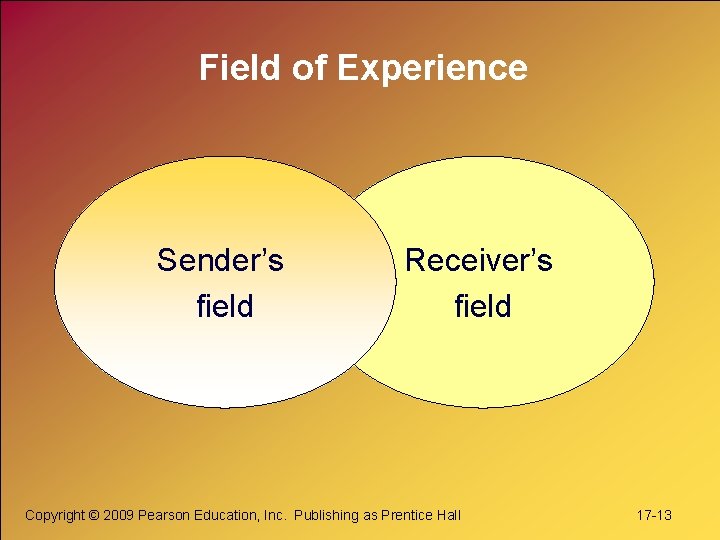
Field of Experience Sender’s field Receiver’s field Copyright © 2009 Pearson Education, Inc. Publishing as Prentice Hall 17 -13
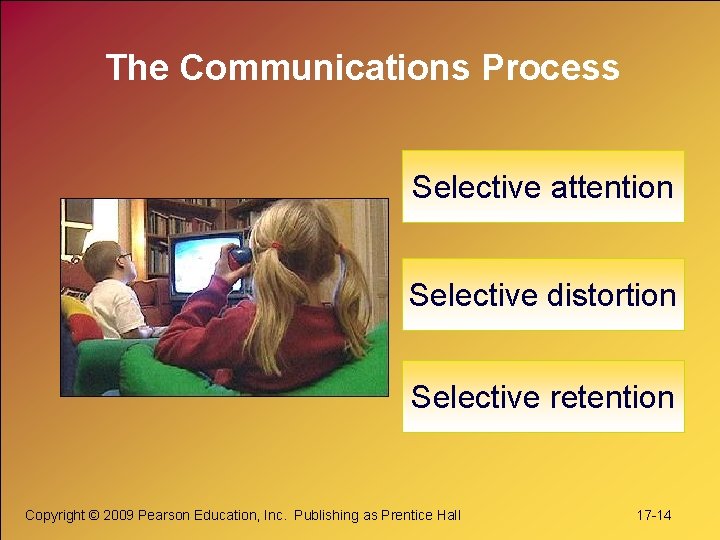
The Communications Process Selective attention Selective distortion Selective retention Copyright © 2009 Pearson Education, Inc. Publishing as Prentice Hall 17 -14
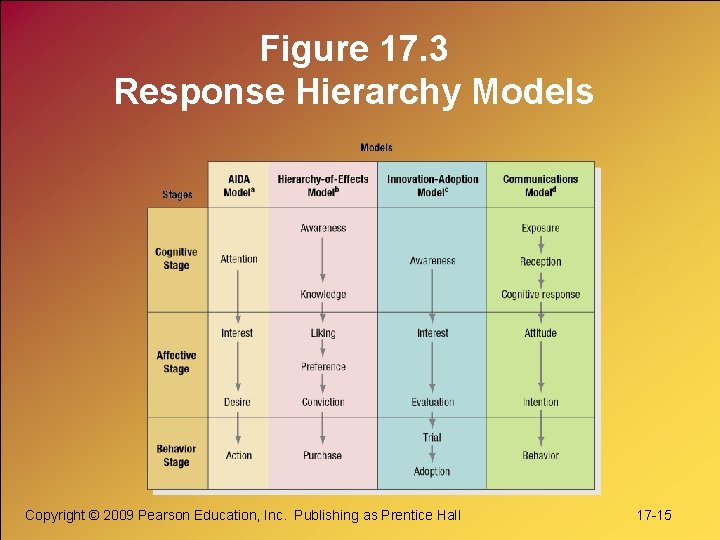
Figure 17. 3 Response Hierarchy Models Copyright © 2009 Pearson Education, Inc. Publishing as Prentice Hall 17 -15
An Ideal Ad Campaign • The right consumer is exposed to the message at the right time and place • The ad causes consumer to pay attention • The ad reflects consumer’s level of understanding and behaviors with product • The ad correctly positions brand in terms of points-of-difference and points-of-parity • The ad motivates consumers to consider purchase of the brand • The ad creates strong brand associations Copyright © 2009 Pearson Education, Inc. Publishing as Prentice Hall 17 -16
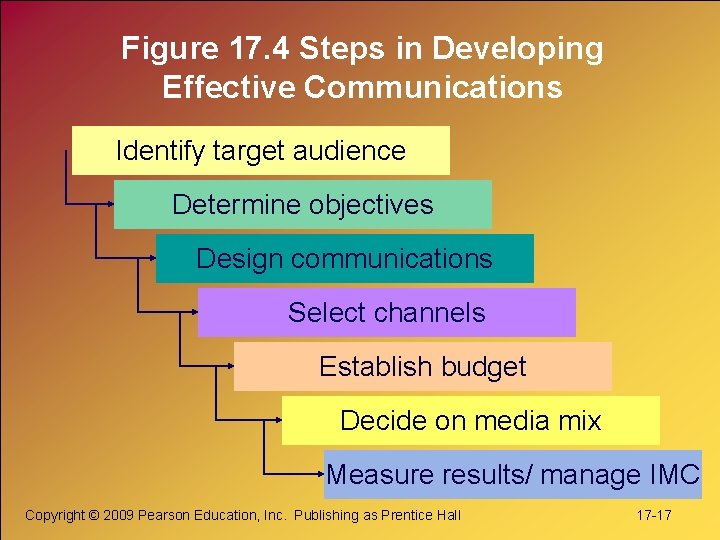
Figure 17. 4 Steps in Developing Effective Communications Identify target audience Determine objectives Design communications Select channels Establish budget Decide on media mix Measure results/ manage IMC Copyright © 2009 Pearson Education, Inc. Publishing as Prentice Hall 17 -17
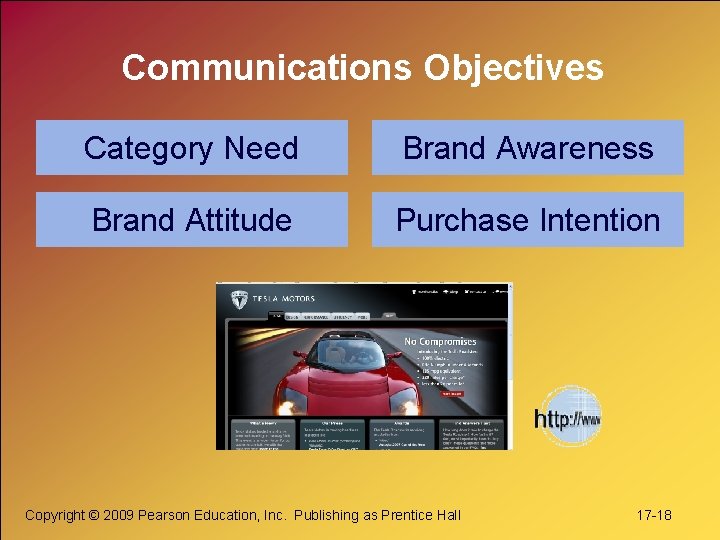
Communications Objectives Category Need Brand Awareness Brand Attitude Purchase Intention Copyright © 2009 Pearson Education, Inc. Publishing as Prentice Hall 17 -18
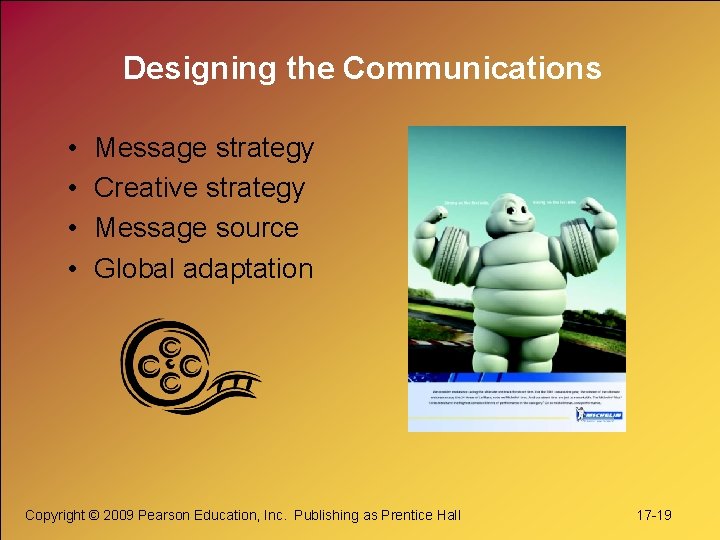
Designing the Communications • • Message strategy Creative strategy Message source Global adaptation Copyright © 2009 Pearson Education, Inc. Publishing as Prentice Hall 17 -19
Creative Strategy • Informational and transformational appeals • Positive and negative appeals • • Fear Guilt Shame Humor Love Pride Joy Copyright © 2009 Pearson Education, Inc. Publishing as Prentice Hall 17 -20
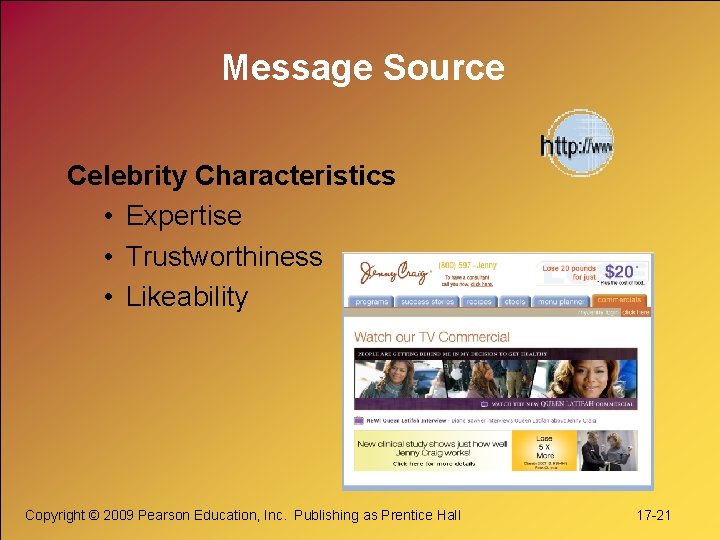
Message Source Celebrity Characteristics • Expertise • Trustworthiness • Likeability Copyright © 2009 Pearson Education, Inc. Publishing as Prentice Hall 17 -21
Issues Facing Global Adaptations • Is the product restricted in some countries? • Are there restrictions on advertising the product to a specific target market? • Can comparative ads be used? • Can the same advertising be used in all country markets? Copyright © 2009 Pearson Education, Inc. Publishing as Prentice Hall 17 -22
Select Communication Channels • Personal channels • Nonpersonal channels • Integration of channels Copyright © 2009 Pearson Education, Inc. Publishing as Prentice Hall 17 -23
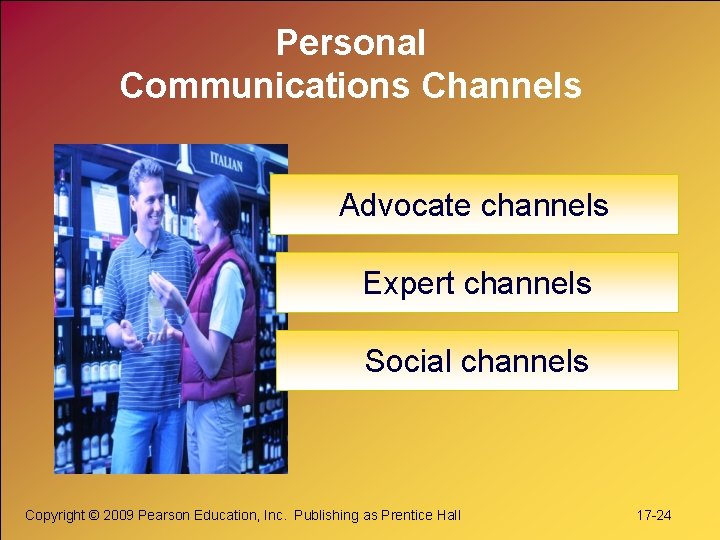
Personal Communications Channels Advocate channels Expert channels Social channels Copyright © 2009 Pearson Education, Inc. Publishing as Prentice Hall 17 -24
Stimulating Personal Influence Channels • Identify influential individuals and devote extra attention to them • Create opinion leaders • Use community influentials in testimonial advertising • Develop advertising with high “conversation value” • Develop WOM referral channels • Establish an electronic forum • Use viral marketing Copyright © 2009 Pearson Education, Inc. Publishing as Prentice Hall 17 -25
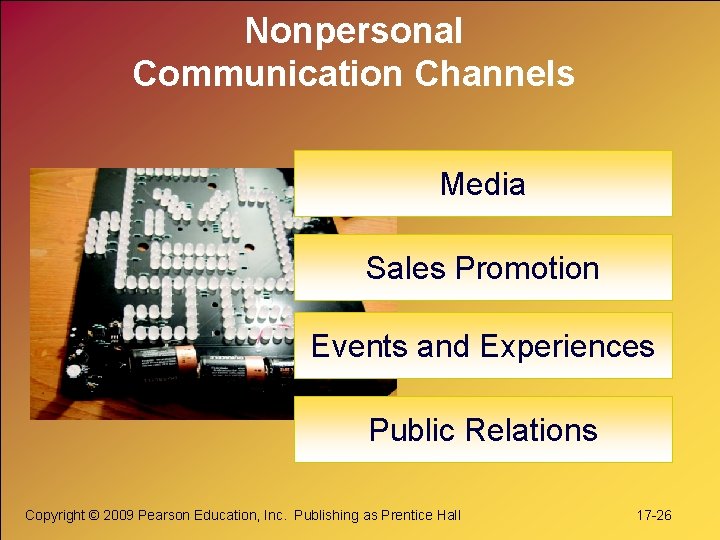
Nonpersonal Communication Channels Media Sales Promotion Events and Experiences Public Relations Copyright © 2009 Pearson Education, Inc. Publishing as Prentice Hall 17 -26
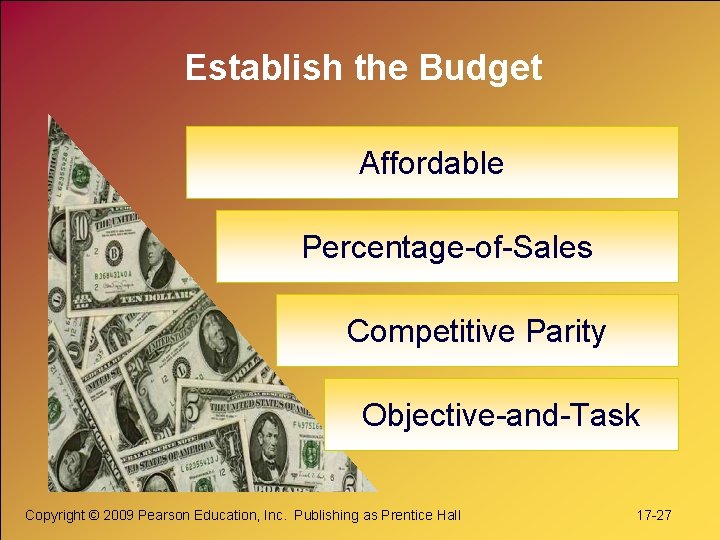
Establish the Budget Affordable Percentage-of-Sales Competitive Parity Objective-and-Task Copyright © 2009 Pearson Education, Inc. Publishing as Prentice Hall 17 -27
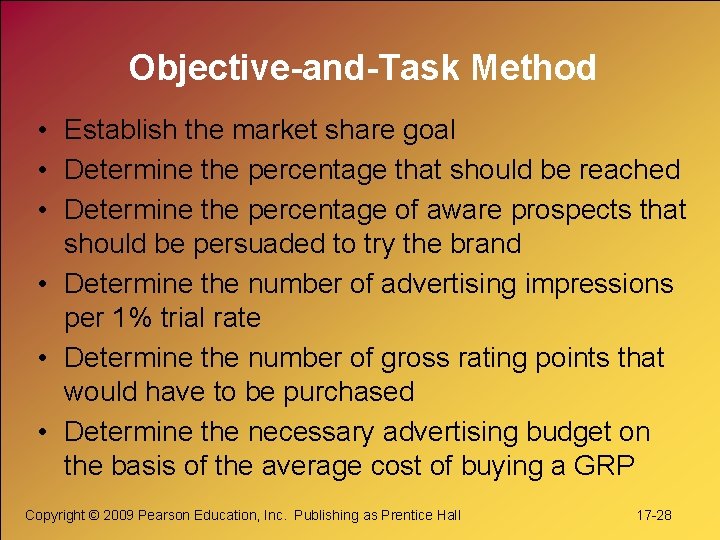
Objective-and-Task Method • Establish the market share goal • Determine the percentage that should be reached • Determine the percentage of aware prospects that should be persuaded to try the brand • Determine the number of advertising impressions per 1% trial rate • Determine the number of gross rating points that would have to be purchased • Determine the necessary advertising budget on the basis of the average cost of buying a GRP Copyright © 2009 Pearson Education, Inc. Publishing as Prentice Hall 17 -28
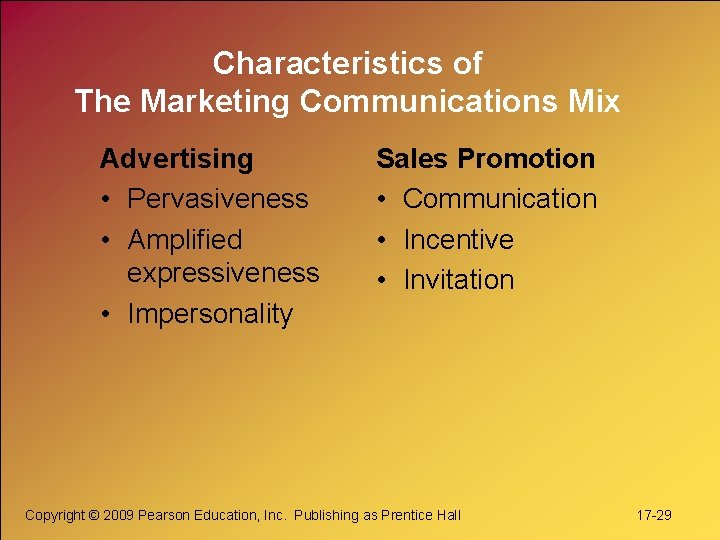
Characteristics of The Marketing Communications Mix Advertising • Pervasiveness • Amplified expressiveness • Impersonality Sales Promotion • Communication • Incentive • Invitation Copyright © 2009 Pearson Education, Inc. Publishing as Prentice Hall 17 -29
Characteristics of the Marketing Communications Mix Public Relations and Publicity • High credibility • Ability to catch buyers off guard • Dramatization Events and Experiences • Relevant • Involving • Implicit Copyright © 2009 Pearson Education, Inc. Publishing as Prentice Hall 17 -30
Characteristics of the Marketing Communications Mix Direct Marketing • Customized • Up-to-date • Interactive Personal Selling • Personal interaction • Cultivation • Response Word-of-Mouth Marketing • Credible • Personal • Timely Copyright © 2009 Pearson Education, Inc. Publishing as Prentice Hall 17 -31
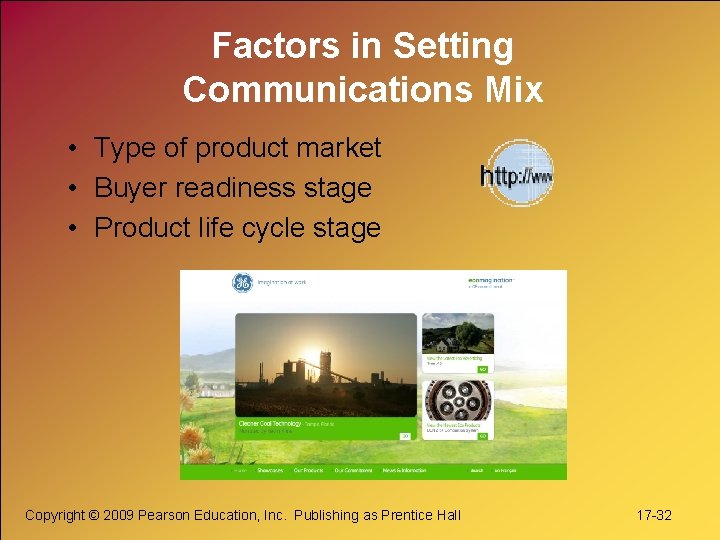
Factors in Setting Communications Mix • Type of product market • Buyer readiness stage • Product life cycle stage Copyright © 2009 Pearson Education, Inc. Publishing as Prentice Hall 17 -32
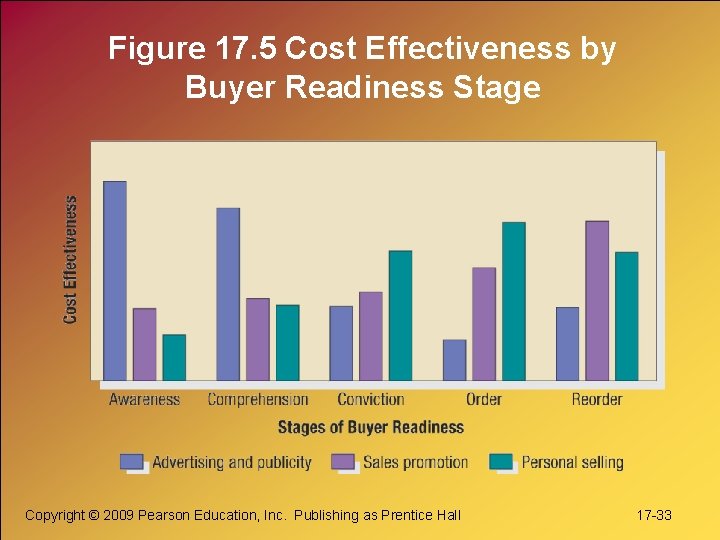
Figure 17. 5 Cost Effectiveness by Buyer Readiness Stage Copyright © 2009 Pearson Education, Inc. Publishing as Prentice Hall 17 -33
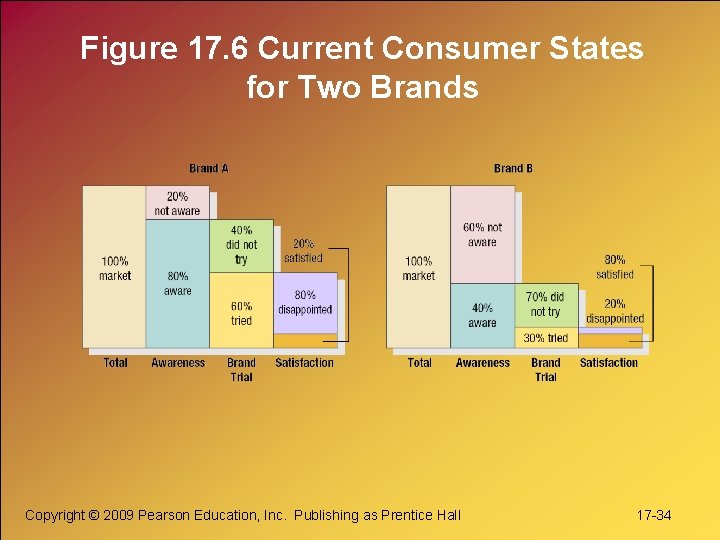
Figure 17. 6 Current Consumer States for Two Brands Copyright © 2009 Pearson Education, Inc. Publishing as Prentice Hall 17 -34
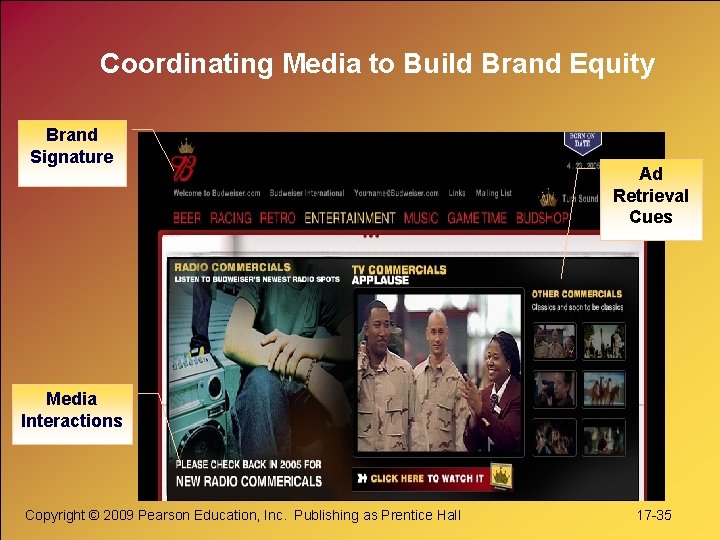
Coordinating Media to Build Brand Equity Brand Signature Ad Retrieval Cues Media Interactions Copyright © 2009 Pearson Education, Inc. Publishing as Prentice Hall 17 -35
Marketing Debate ü Has TV advertising lost power? Take a position: 1. TV advertising has faded in importance. 2. or 3. 2. TV advertising is still the most powerful 4. advertising medium. Copyright © 2009 Pearson Education, Inc. Publishing as Prentice Hall 17 -36
Marketing Discussion ü Pick a brand go to the Website. Locate as many forms of communication as you can find. ü Conduct an informal communications audit. What do you notice? How consistent are the different communications? Copyright © 2009 Pearson Education, Inc. Publishing as Prentice Hall 17 -37