
17 Adaptive Immunity Specific Defenses of the Host


- Slides: 33
17 Adaptive Immunity: Specific Defenses of the Host
SLOs Differentiate between innate and adaptive immunity, and humoral and cellular immunity. Define antigen, epitope, and hapten. Explain the function of antibodies and describe their structural and chemical characteristics. Name one function for each of the five classes of antibodies. Compare and contrast T-dependent antigens and T-independent antigens. Differentiate between plasma cell and memory cell. Describe clonal selection. Describe how a human can produce different antibodies. Describe four outcomes of an antigen-antibody reaction. Differentiate between helper T and cytotoxic T Define apoptosis. Define antigen-presenting cell. Describe the role of antibodies and natural killer cells in antibody-dependent cellmediated cytotoxicity. Identify at least one function of each of the following: cytokines, interleukins, interferons. Distinguish a primary from a secondary immune response. Contrast the four types of adaptive immunity. Copyright © 2010 Pearson Education, Inc.
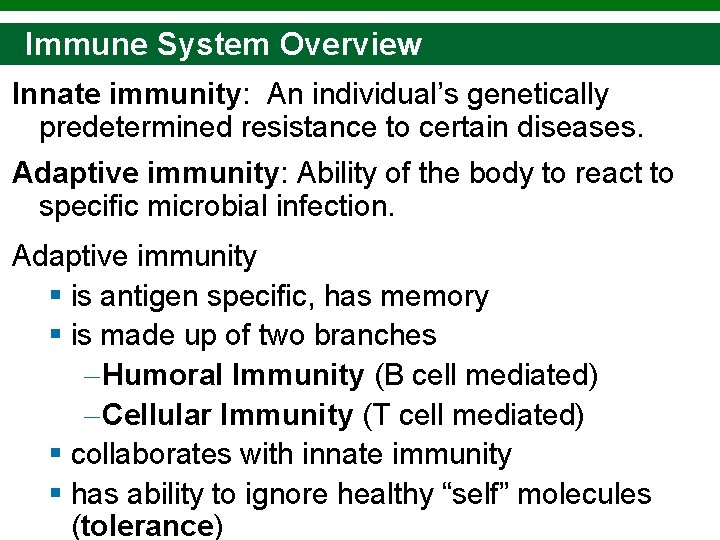
Immune System Overview Innate immunity: An individual’s genetically predetermined resistance to certain diseases. Adaptive immunity: Ability of the body to react to specific microbial infection. Adaptive immunity § is antigen specific, has memory § is made up of two branches Humoral Immunity (B cell mediated) Cellular Immunity (T cell mediated) § collaborates with innate immunity § has ability to ignore healthy “self” molecules (tolerance) Copyright © 2010 Pearson Education, Inc.
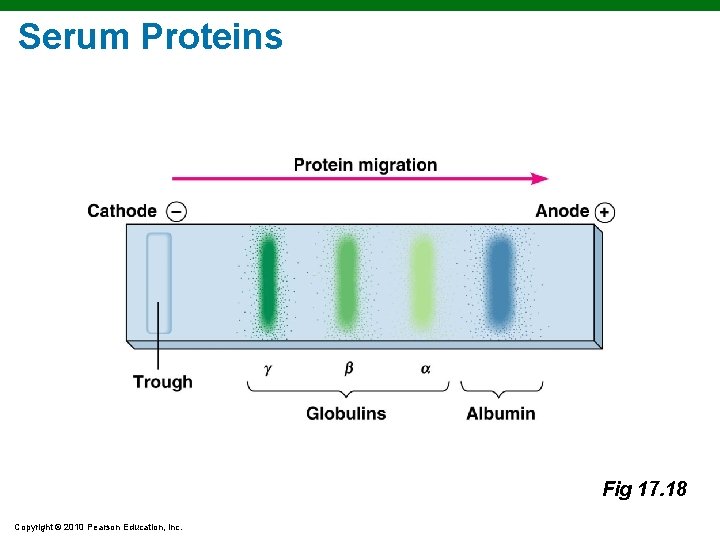
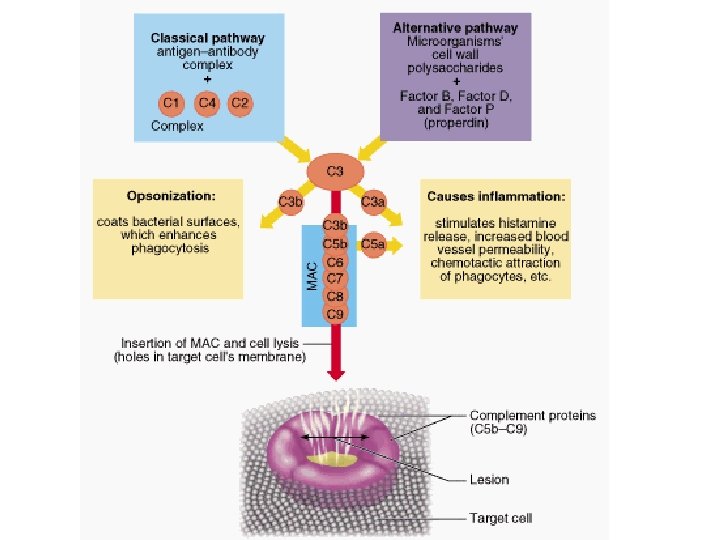
Vocabulary § Antigen (Ag): A substance that causes the body to produce specific antibodies or sensitized T cells. § Antibody (Ab): Proteins made in response to an Ag; can combine with that Ag. § Serology: The study of reactions between antibodies and antigens. § Antiserum: A generic term for serum because it contains Ab. § Globulins: Serum proteins § Immunoglobulins (= Gamma ( ) globulins): Serum antibodies § Complement: Copyright © 2010 Pearson Education, Inc.
Serum Proteins Fig 17. 18 Copyright © 2010 Pearson Education, Inc.
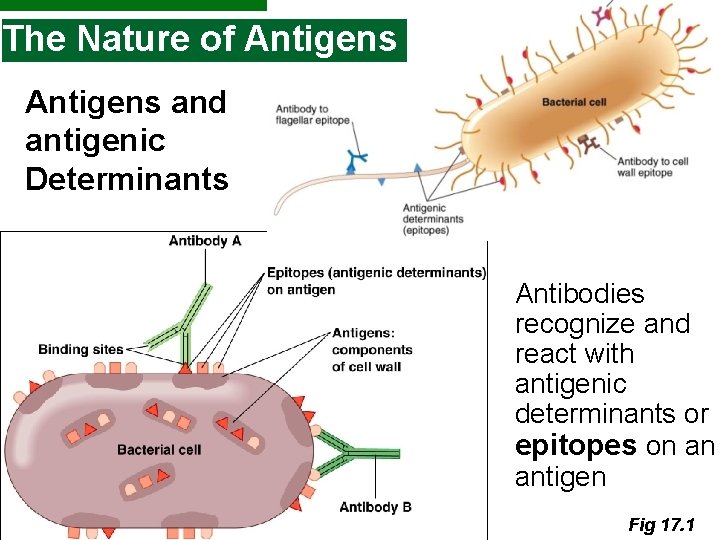
The Nature of Antigens and antigenic Determinants Antibodies recognize and react with antigenic determinants or epitopes on an antigen Copyright © 2010 Pearson Education, Inc. Fig 17. 1
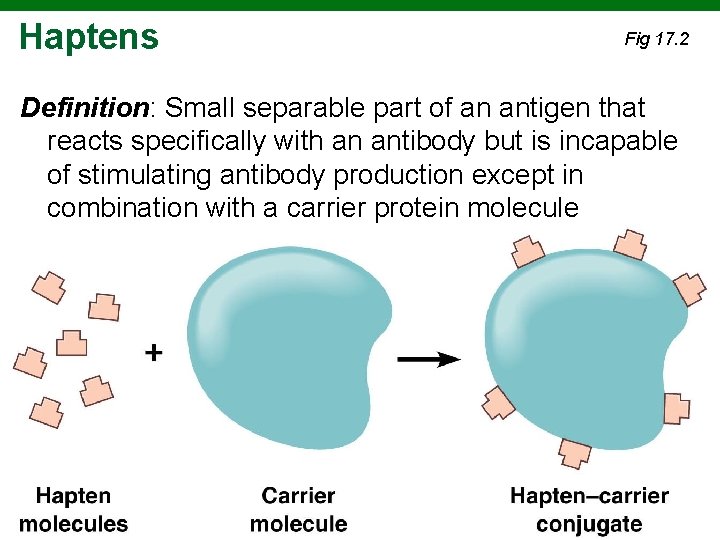
Haptens Fig 17. 2 Definition: Small separable part of an antigen that reacts specifically with an antibody but is incapable of stimulating antibody production except in combination with a carrier protein molecule Copyright © 2010 Pearson Education, Inc.
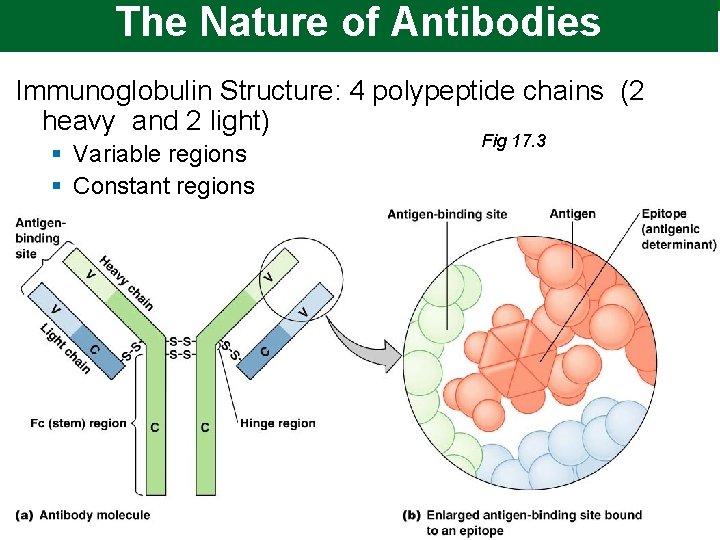
The Nature of Antibodies Immunoglobulin Structure: 4 polypeptide chains (2 heavy and 2 light) § Variable regions § Constant regions Copyright © 2010 Pearson Education, Inc. Fig 17. 3
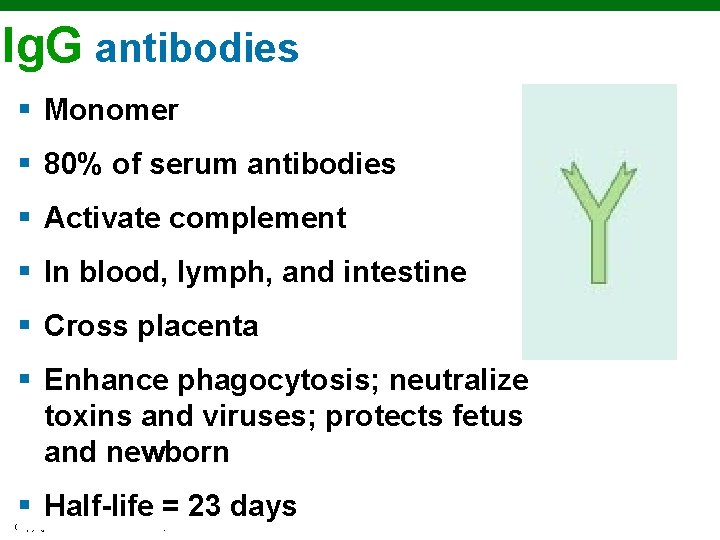
Ig. G antibodies § Monomer § 80% of serum antibodies § Activate complement § In blood, lymph, and intestine § Cross placenta § Enhance phagocytosis; neutralize toxins and viruses; protects fetus and newborn § Half-life = 23 days Copyright © 2010 Pearson Education, Inc.
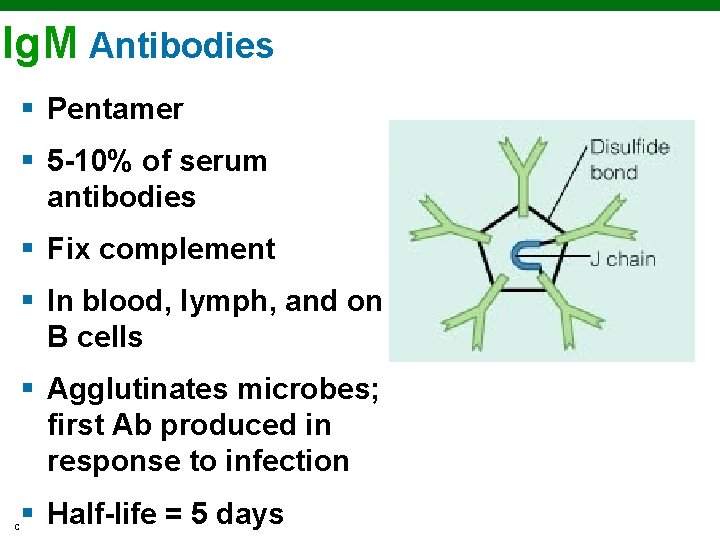
Ig. M Antibodies § Pentamer § 5 -10% of serum antibodies § Fix complement § In blood, lymph, and on B cells § Agglutinates microbes; first Ab produced in response to infection § Half-life = 5 days Copyright © 2010 Pearson Education, Inc.
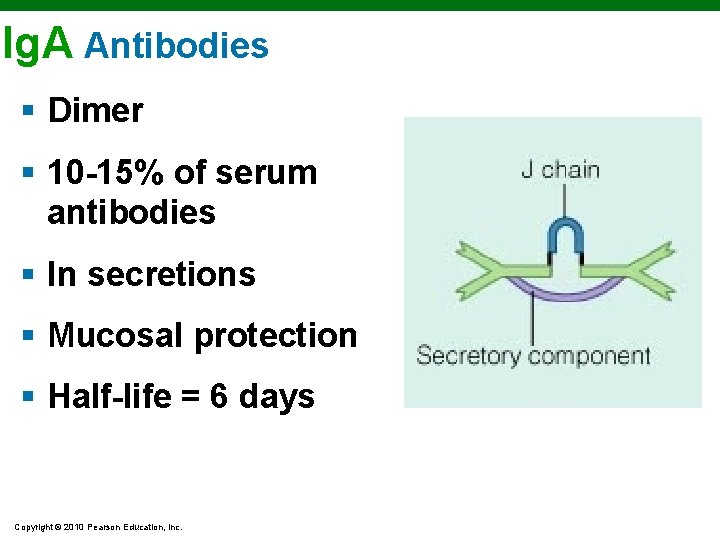
Ig. A Antibodies § Dimer § 10 -15% of serum antibodies § In secretions § Mucosal protection § Half-life = 6 days Copyright © 2010 Pearson Education, Inc.
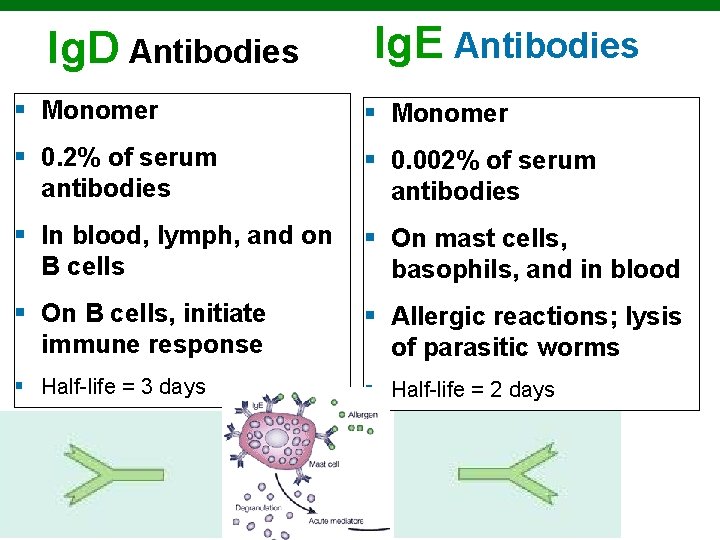
Ig. D Antibodies Ig. E Antibodies § Monomer § 0. 2% of serum antibodies § 0. 002% of serum antibodies § In blood, lymph, and on B cells § On mast cells, basophils, and in blood § On B cells, initiate immune response § Allergic reactions; lysis of parasitic worms § Half-life = 3 days § Half-life = 2 days Copyright © 2010 Pearson Education, Inc.
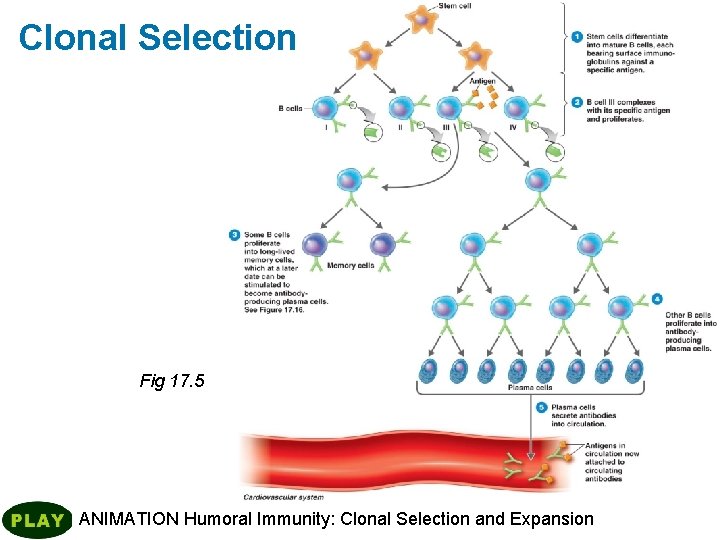
B cells and Humoral Immunity Effective against free antigen (toxins, bacterial surface structures, viruses in between cells) B cell receptors (mostly Ig. M and Ig. D) Activated B-cells go through clonal expansion leading to 1. Plasma cells (effector cell for antibody production) and 2. Memory cells Copyright © 2010 Pearson Education, Inc.
Clonal Selection Fig 17. 5 ANIMATION Humoral Immunity: Clonal Selection and Expansion
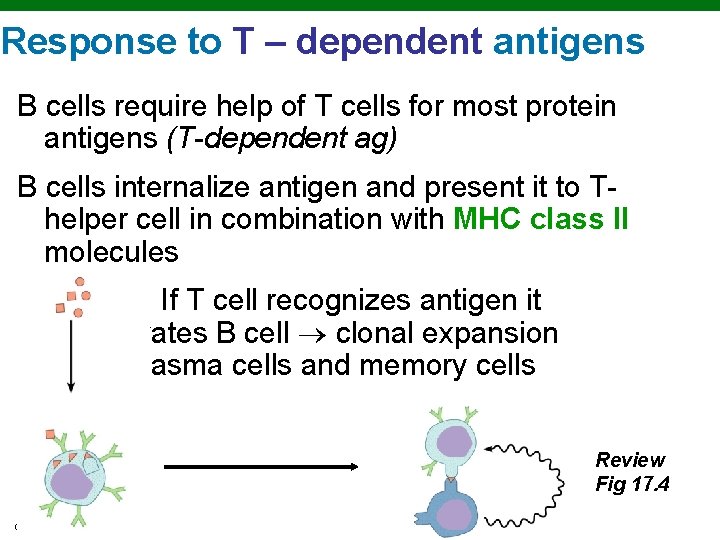
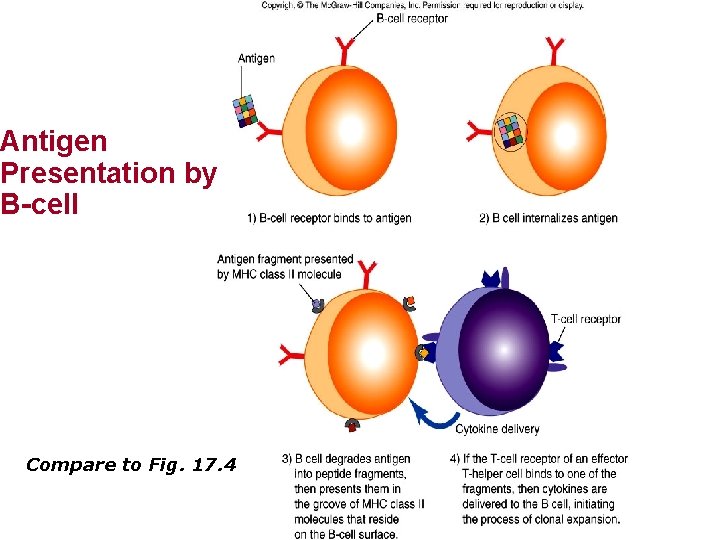
Response to T – dependent antigens B cells require help of T cells for most protein antigens (T-dependent ag) B cells internalize antigen and present it to Thelper cell in combination with MHC class II molecules If T cell recognizes antigen it activates B cell clonal expansion plasma cells and memory cells Review Fig 17. 4 Copyright © 2010 Pearson Education, Inc.
Antigen Presentation by B-cell Compare to Fig. 17. 4
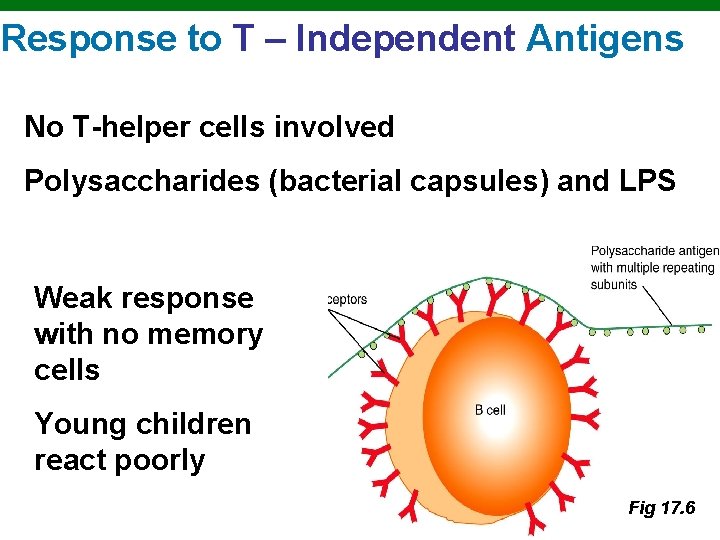
Response to T – Independent Antigens No T-helper cells involved Polysaccharides (bacterial capsules) and LPS Weak response with no memory cells Young children react poorly Fig 17. 6 Copyright © 2010 Pearson Education, Inc.
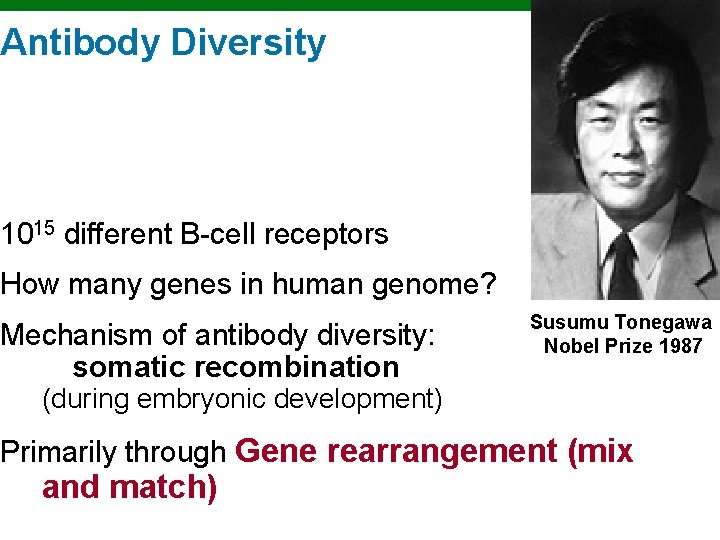
Antibody Diversity 1015 different B-cell receptors How many genes in human genome? Mechanism of antibody diversity: somatic recombination Susumu Tonegawa Nobel Prize 1987 (during embryonic development) Primarily through Gene rearrangement (mix and match) Copyright © 2010 Pearson Education, Inc.
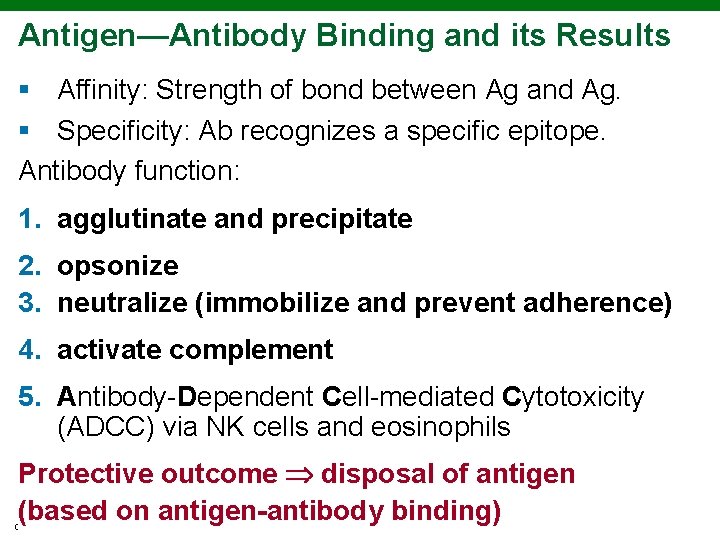
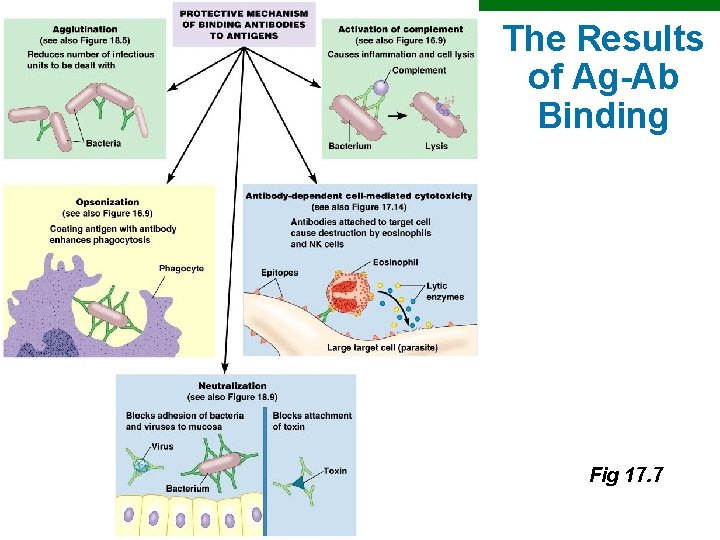
Antigen—Antibody Binding and its Results § Affinity: Strength of bond between Ag and Ag. § Specificity: Ab recognizes a specific epitope. Antibody function: 1. agglutinate and precipitate 2. opsonize 3. neutralize (immobilize and prevent adherence) 4. activate complement 5. Antibody-Dependent Cell-mediated Cytotoxicity (ADCC) via NK cells and eosinophils Protective outcome disposal of antigen (based on antigen-antibody binding) Copyright © 2010 Pearson Education, Inc.
The Results of Ag-Ab Binding Fig 17. 7 Copyright © 2010 Pearson Education, Inc.
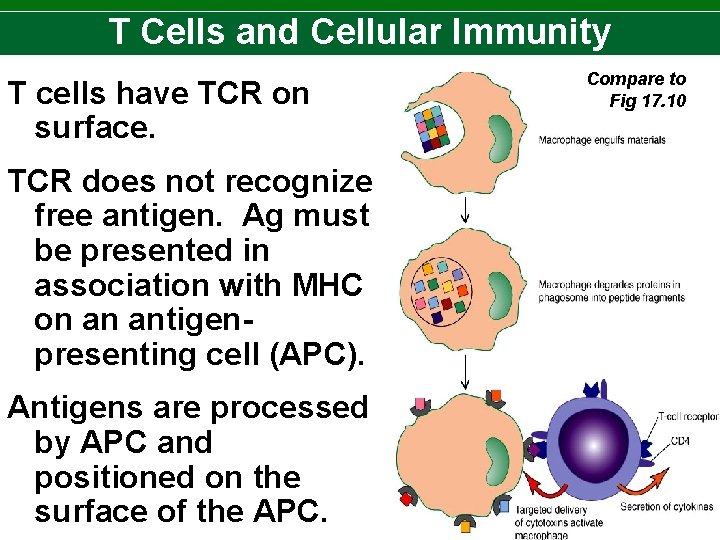
T Cells and Cellular Immunity T cells have TCR on surface. TCR does not recognize free antigen. Ag must be presented in association with MHC on an antigenpresenting cell (APC). Antigens are processed by APC and positioned on the surface of the APC. Copyright © 2010 Pearson Education, Inc. Compare to Fig 17. 10
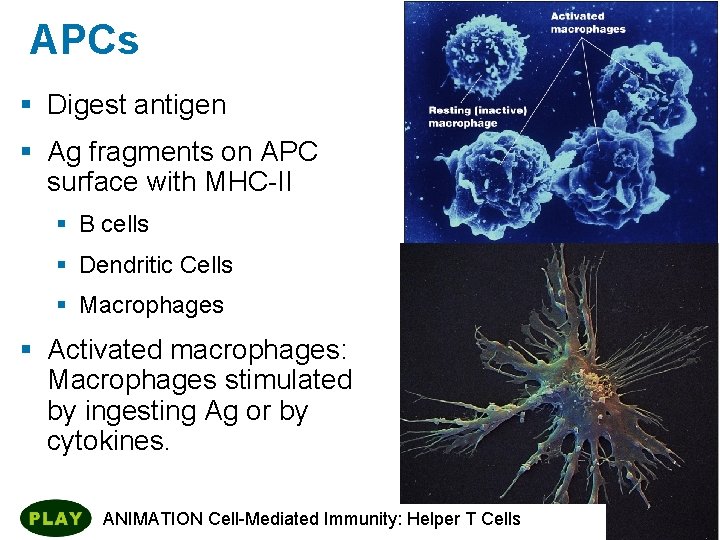
APCs § Digest antigen § Ag fragments on APC surface with MHC-II § B cells § Dendritic Cells § Macrophages § Activated macrophages: Macrophages stimulated by ingesting Ag or by cytokines. ANIMATION Cell-Mediated Immunity: Helper T Cells
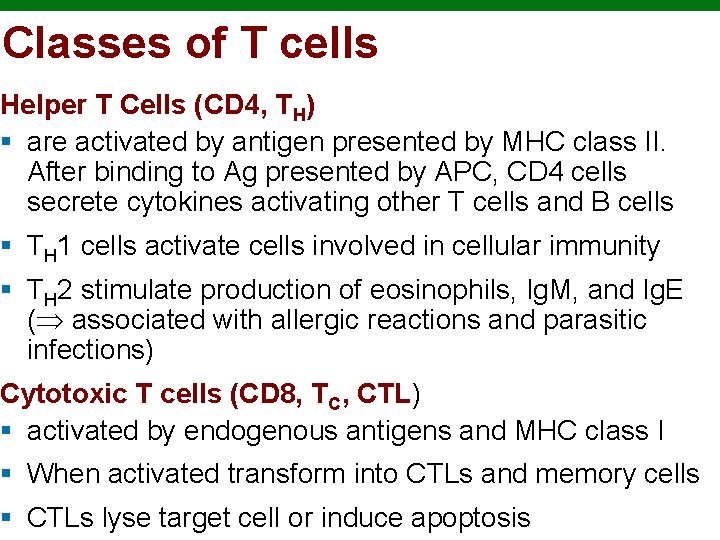
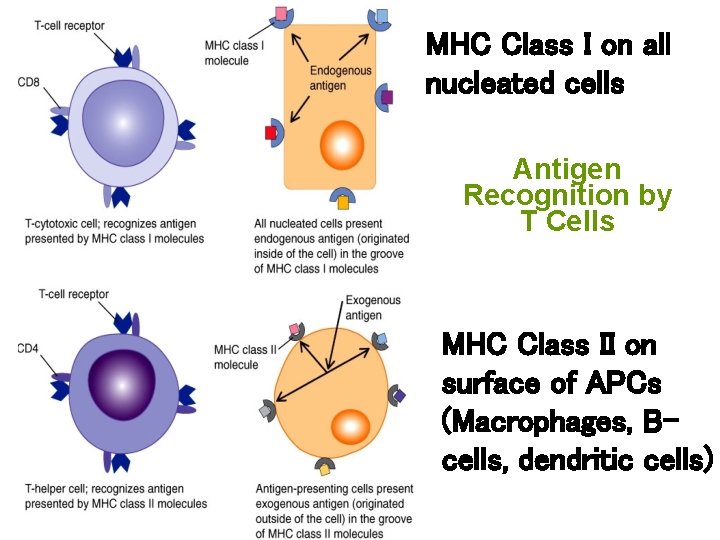
Classes of T cells Helper T Cells (CD 4, TH) § are activated by antigen presented by MHC class II. After binding to Ag presented by APC, CD 4 cells secrete cytokines activating other T cells and B cells § TH 1 cells activate cells involved in cellular immunity § TH 2 stimulate production of eosinophils, Ig. M, and Ig. E ( associated with allergic reactions and parasitic infections) Cytotoxic T cells (CD 8, TC, CTL) § activated by endogenous antigens and MHC class I § When activated transform into CTLs and memory cells § CTLs lyse target cell or induce apoptosis Copyright © 2010 Pearson Education, Inc.
MHC Class I on all nucleated cells Antigen Recognition by T Cells MHC Class II on surface of APCs (Macrophages, Bcells, dendritic cells)
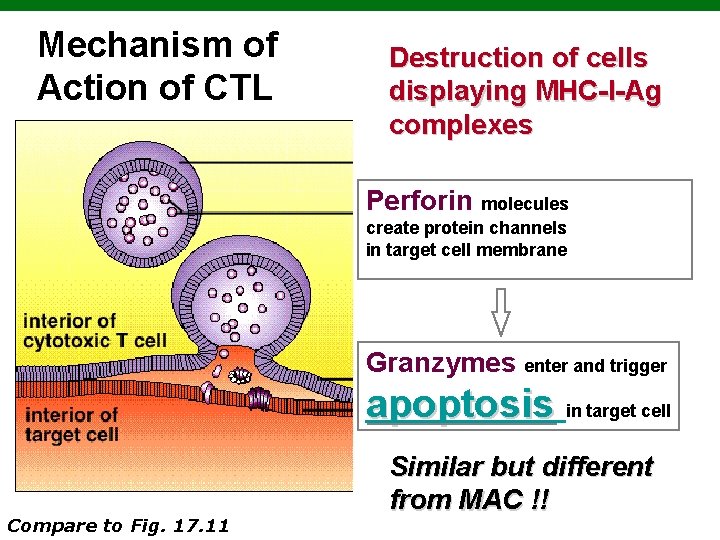
Mechanism of Action of CTL Destruction of cells displaying MHC-I-Ag complexes Perforin molecules create protein channels in target cell membrane Granzymes enter and trigger apoptosis in target cell Copyright © 2010 Pearson Compare to. Education, Fig. Inc. 17. 11 Similar but different from MAC !!
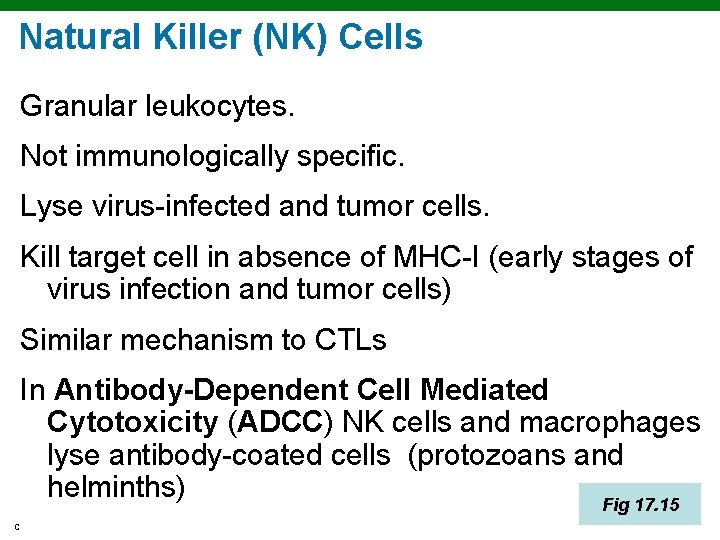
Natural Killer (NK) Cells Granular leukocytes. Not immunologically specific. Lyse virus-infected and tumor cells. Kill target cell in absence of MHC-I (early stages of virus infection and tumor cells) Similar mechanism to CTLs In Antibody-Dependent Cell Mediated Cytotoxicity (ADCC) NK cells and macrophages lyse antibody-coated cells (protozoans and helminths) Fig 17. 15 Copyright © 2010 Pearson Education, Inc.
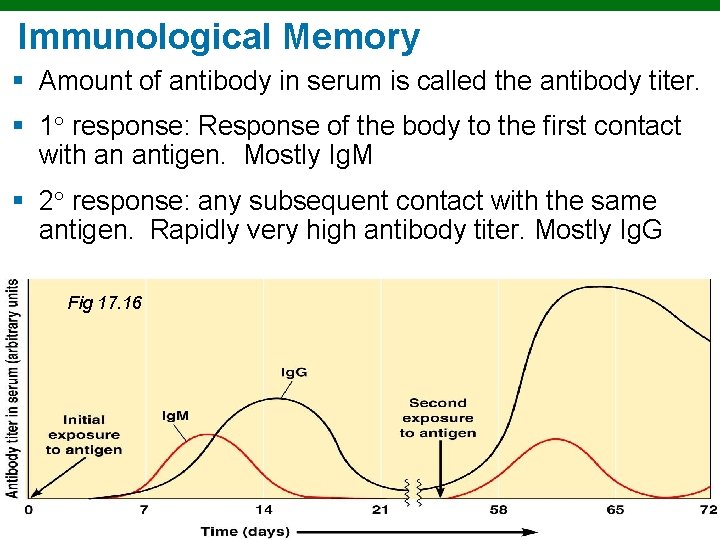
Immunological Memory § Amount of antibody in serum is called the antibody titer. § 1 response: Response of the body to the first contact with an antigen. Mostly Ig. M § 2 response: any subsequent contact with the same antigen. Rapidly very high antibody titer. Mostly Ig. G Fig 17. 16 Copyright © 2010 Pearson Education, Inc.
Self Tolerance: Negative Selection Goal: eliminate B and T cells, recognizing “self” molecules Clonal deletion of B cells taking place in bone marrow apoptosis Negative selection of T cells in thymus Failure results in auto-antibodies and autoimmune disease Copyright © 2010 Pearson Education, Inc.
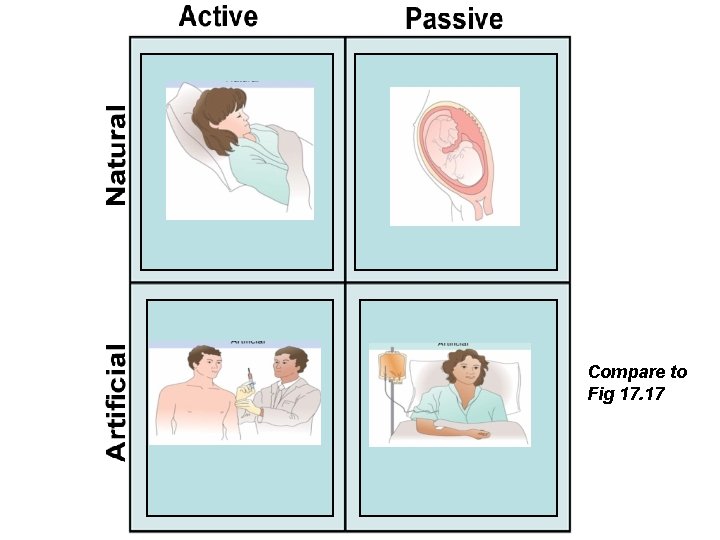
Types of Specific Immunity Active immunity Protection via introduction of antigen into responsive host, e. g. : § Naturally acquired via infection or § Artificially acquired via vaccination Copyright © 2010 Pearson Education, Inc.
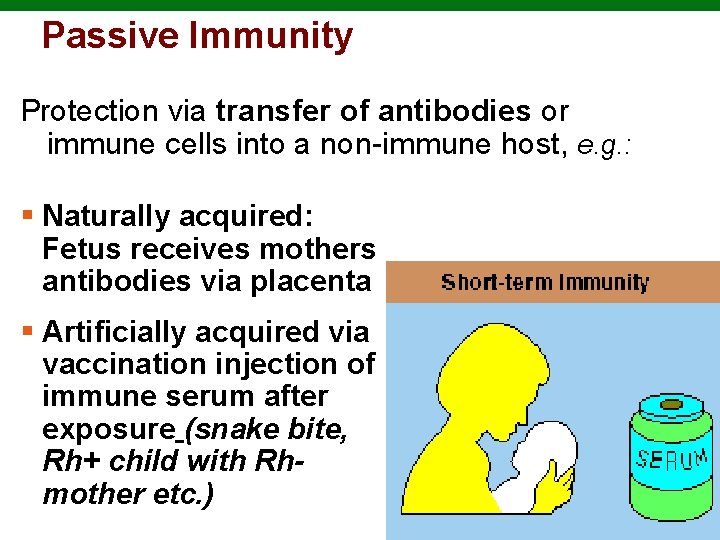
Passive Immunity Protection via transfer of antibodies or immune cells into a non-immune host, e. g. : § Naturally acquired: Fetus receives mothers antibodies via placenta § Artificially acquired via vaccination injection of immune serum after exposure (snake bite, Rh+ child with Rhmother etc. ) Copyright © 2010 Pearson Education, Inc.
Compare to Fig 17. 17
Cellular Immunity Review T-cells specific surface receptors (TCRs) TCR cannot bind free ag. Ag must be presented by APCs Activated T-cells go through clonal expansion effector and memory T cells. CTLs directly kill virus infected and tumor cells T-helper cells help the humoral and cellular immunity Copyright © 2010 Pearson Education, Inc.