
17 3 CONTROLLING CHEMICAL REACTIONS Getting Reactions Started
- Slides: 5
17 -3 CONTROLLING CHEMICAL REACTIONS
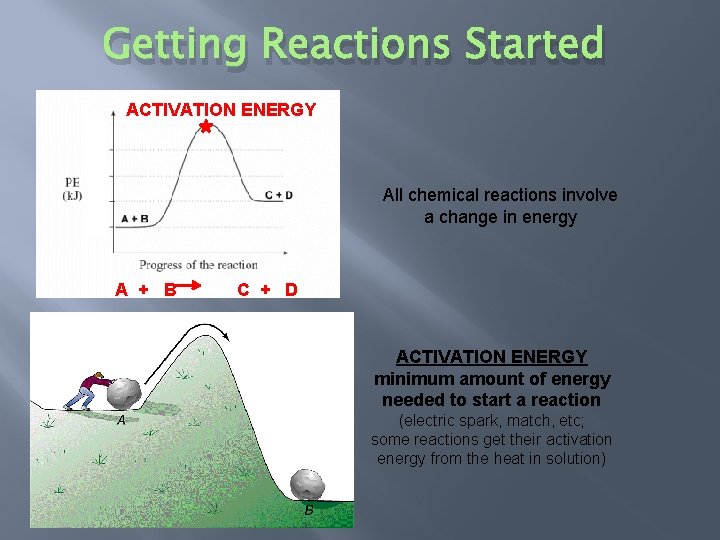
Getting Reactions Started ACTIVATION ENERGY All chemical reactions involve a change in energy A + B C + D ACTIVATION ENERGY minimum amount of energy needed to start a reaction (electric spark, match, etc; some reactions get their activation energy from the heat in solution)
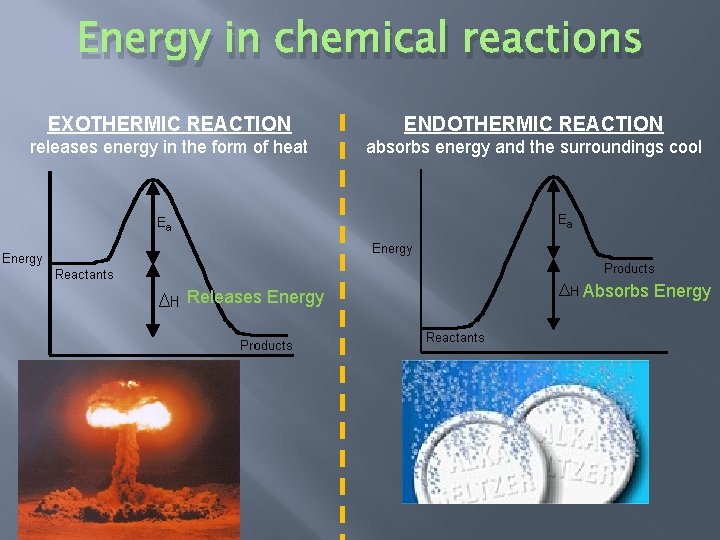
Energy in chemical reactions EXOTHERMIC REACTION ENDOTHERMIC REACTION releases energy in the form of heat absorbs energy and the surroundings cool Releases Energy Absorbs Energy
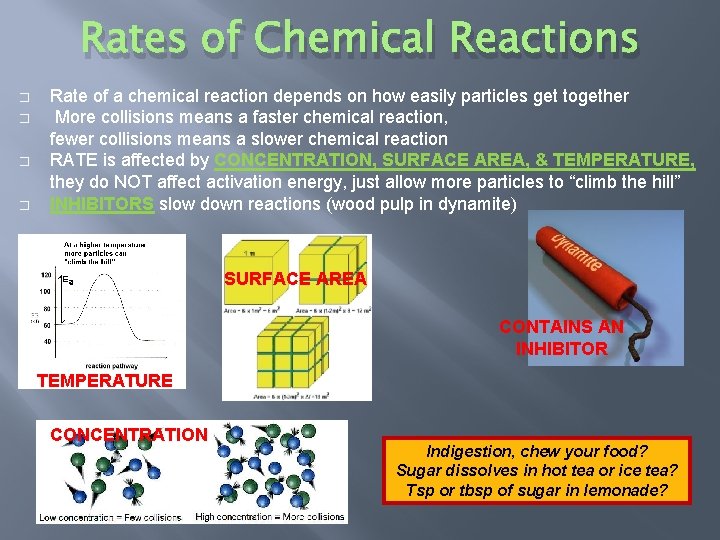
Rates of Chemical Reactions � � Rate of a chemical reaction depends on how easily particles get together More collisions means a faster chemical reaction, fewer collisions means a slower chemical reaction RATE is affected by CONCENTRATION, SURFACE AREA, & TEMPERATURE, they do NOT affect activation energy, just allow more particles to “climb the hill” INHIBITORS slow down reactions (wood pulp in dynamite) SURFACE AREA CONTAINS AN INHIBITOR TEMPERATURE CONCENTRATION Indigestion, chew your food? Sugar dissolves in hot tea or ice tea? Tsp or tbsp of sugar in lemonade?
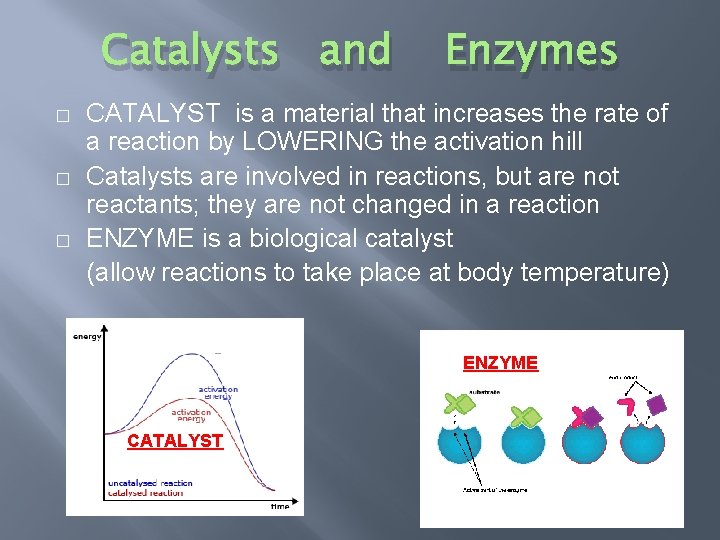
Catalysts and � � � Enzymes CATALYST is a material that increases the rate of a reaction by LOWERING the activation hill Catalysts are involved in reactions, but are not reactants; they are not changed in a reaction ENZYME is a biological catalyst (allow reactions to take place at body temperature) ENZYME CATALYST