
17 1 The Flow of Energy Part one

- Slides: 26
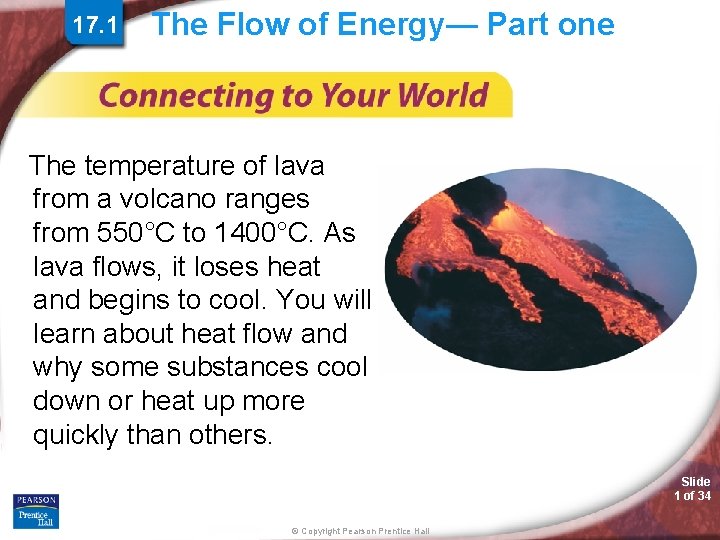
17. 1 The Flow of Energy— Part one The temperature of lava from a volcano ranges from 550°C to 1400°C. As lava flows, it loses heat and begins to cool. You will learn about heat flow and why some substances cool down or heat up more quickly than others. Slide 1 of 34 © Copyright Pearson Prentice Hall
17. 1 The Flow of Energy—Heat and Work > Energy Transformations In what direction does heat flow? Slide 2 of 34 © Copyright Pearson Prentice Hall
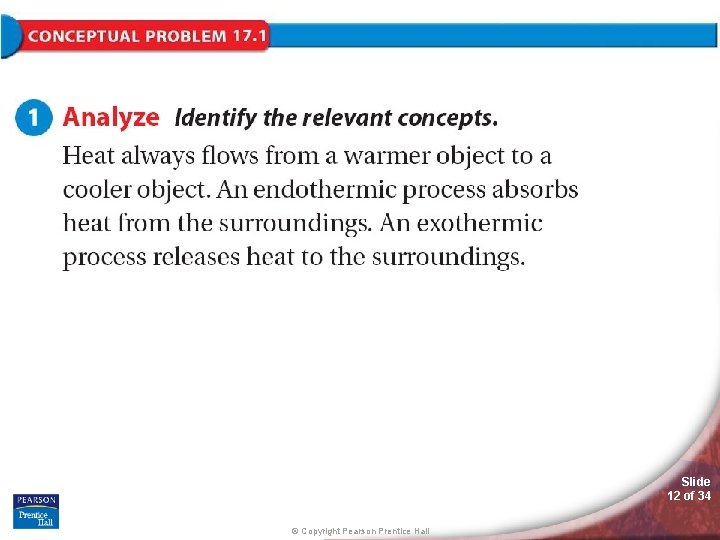
17. 1 The Flow of Energy—Heat and Work > Energy Transformations Heat, represented by q, is energy that transfers from one object to another because of a temperature difference between them. Heat always flows from a warmer object to a cooler object. Slide 3 of 34 © Copyright Pearson Prentice Hall
17. 1 The Flow of Energy—Heat and Work > Energy Transformations Thermochemistry is the study of energy changes that occur during chemical reactions and changes in state. The energy stored in the chemical bonds of a substance is called chemical potential energy. Slide 4 of 34 © Copyright Pearson Prentice Hall
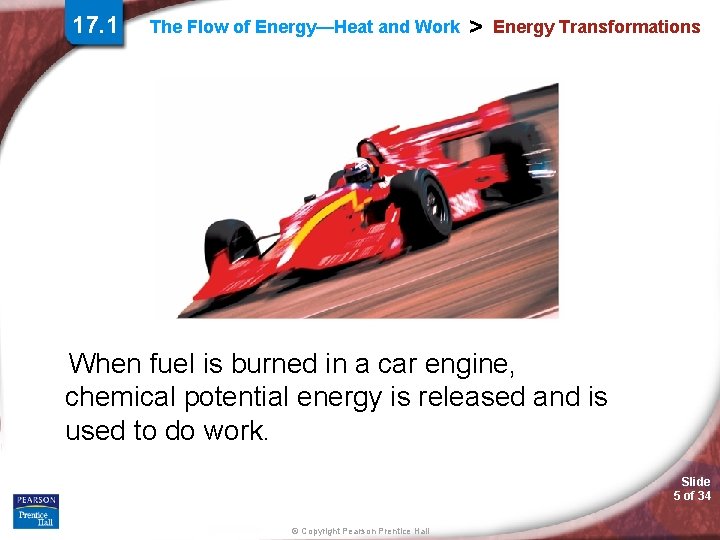
17. 1 The Flow of Energy—Heat and Work > Energy Transformations When fuel is burned in a car engine, chemical potential energy is released and is used to do work. Slide 5 of 34 © Copyright Pearson Prentice Hall
17. 1 The Flow of Energy—Heat and Work > Exothermic and Endothermic Processes What happens in endothermic and exothermic processes? Slide 6 of 34 © Copyright Pearson Prentice Hall
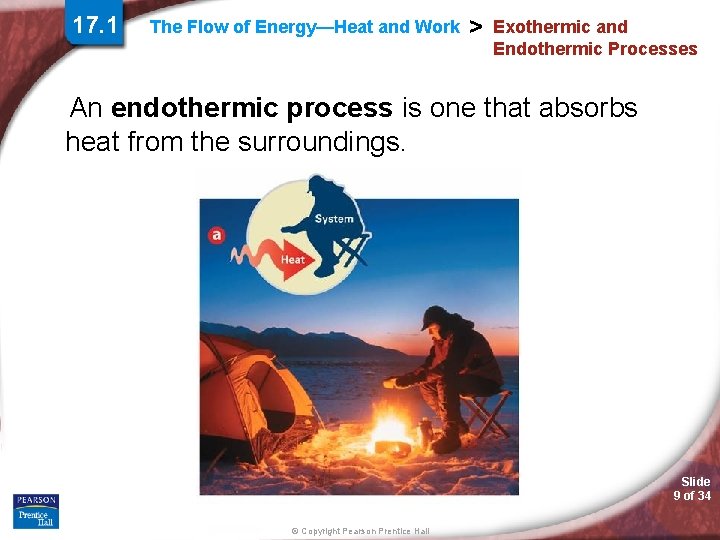
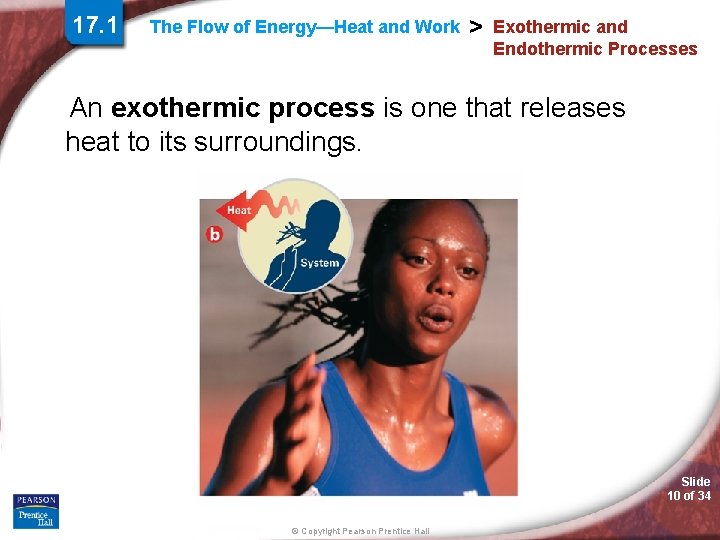
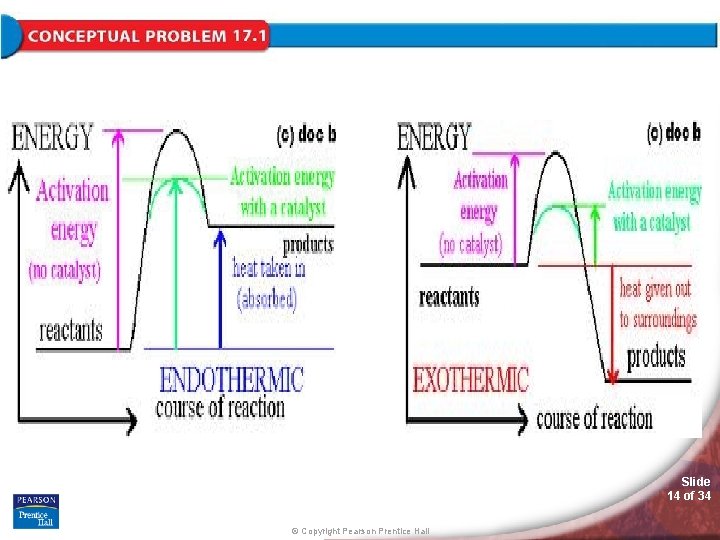
17. 1 The Flow of Energy—Heat and Work > Exothermic and Endothermic Processes In an endothermic process, the system gains heat as the surroundings cool down. In an exothermic process, the system loses heat as the surroundings heat up. Slide 7 of 34 © Copyright Pearson Prentice Hall
17. 1 The Flow of Energy—Heat and Work > Exothermic and Endothermic Processes In studying energy changes, you can define a system as the part of the universe on which you focus your attention. The surroundings include everything else in the universe. The law of conservation of energy states that in any chemical or physical process, energy is neither created nor destroyed. Slide 8 of 34 © Copyright Pearson Prentice Hall
17. 1 The Flow of Energy—Heat and Work > Exothermic and Endothermic Processes An endothermic process is one that absorbs heat from the surroundings. Slide 9 of 34 © Copyright Pearson Prentice Hall
17. 1 The Flow of Energy—Heat and Work > Exothermic and Endothermic Processes An exothermic process is one that releases heat to its surroundings. Slide 10 of 34 © Copyright Pearson Prentice Hall
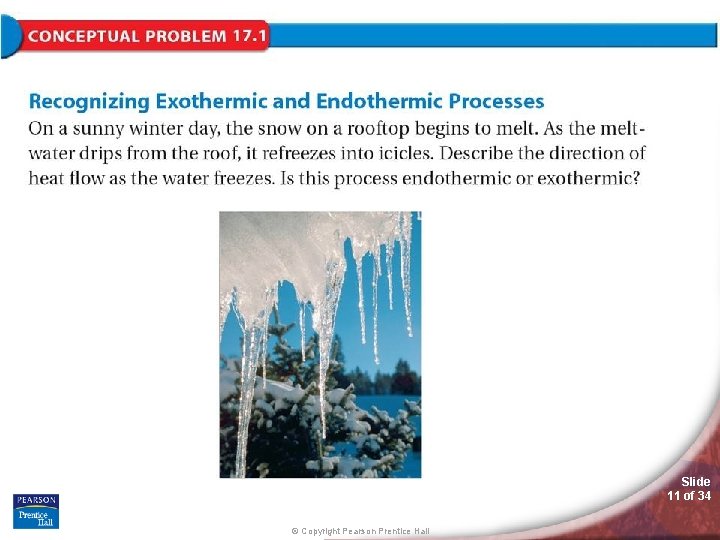
Conceptual Problem 17. 1 Slide 11 of 34 © Copyright Pearson Prentice Hall
Conceptual Problem 17. 1 Slide 12 of 34 © Copyright Pearson Prentice Hall
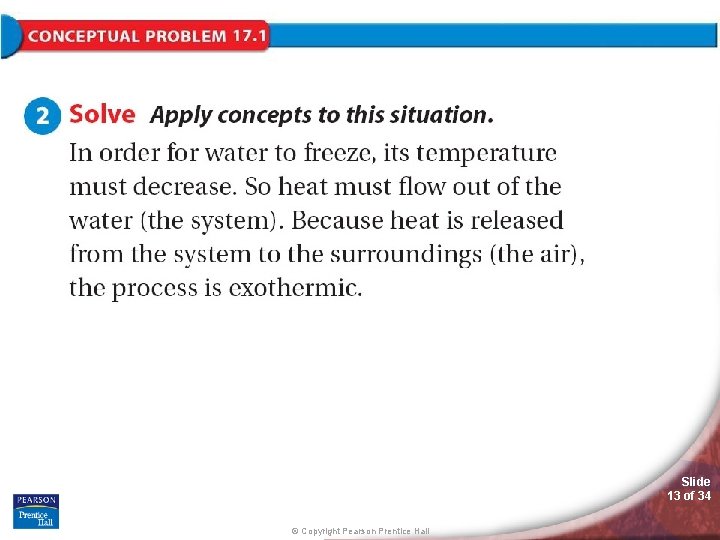
Conceptuall Problem 17. 1 Slide 13 of 34 © Copyright Pearson Prentice Hall
Slide 14 of 34 © Copyright Pearson Prentice Hall
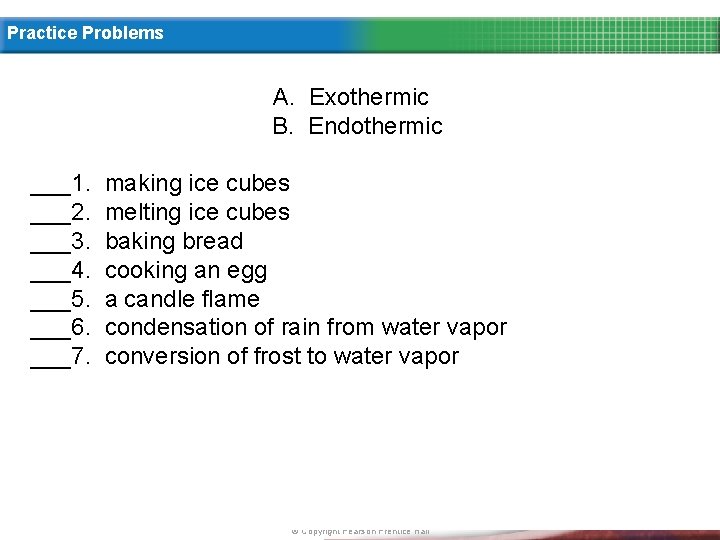
Practice Problems A. Exothermic B. Endothermic ___1. ___2. ___3. ___4. ___5. ___6. ___7. making ice cubes melting ice cubes baking bread cooking an egg a candle flame condensation of rain from water vapor conversion of frost to water vapor Slide 15 of 34 © Copyright Pearson Prentice Hall
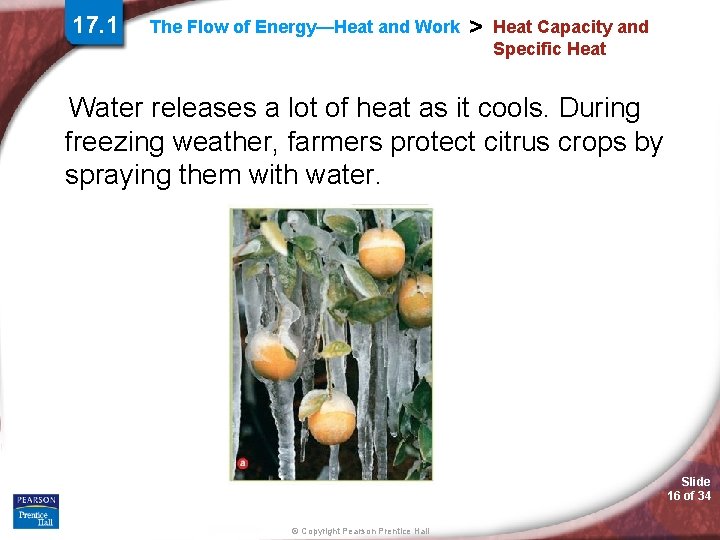
17. 1 The Flow of Energy—Heat and Work > Heat Capacity and Specific Heat Water releases a lot of heat as it cools. During freezing weather, farmers protect citrus crops by spraying them with water. Slide 16 of 34 © Copyright Pearson Prentice Hall
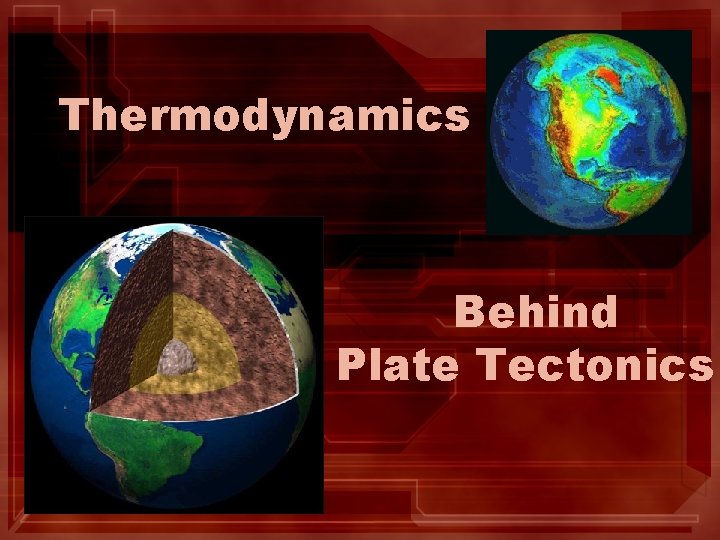
Thermodynamics Behind Plate Tectonics
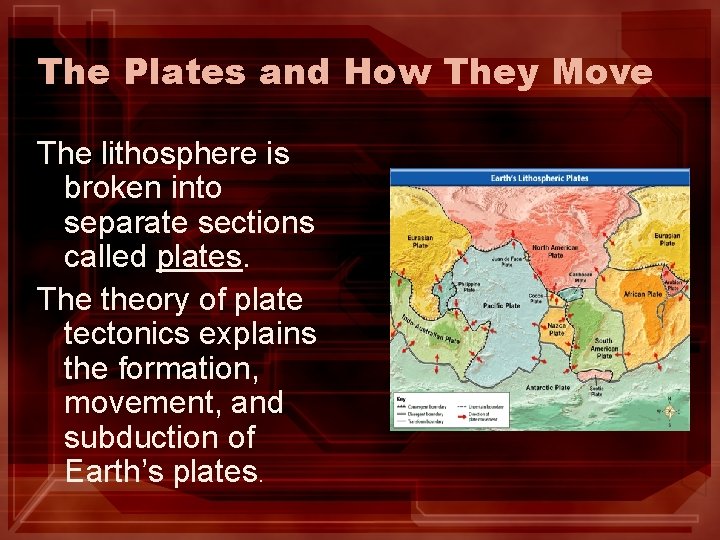
The Plates and How They Move The lithosphere is broken into separate sections called plates. The theory of plate tectonics explains the formation, movement, and subduction of Earth’s plates.
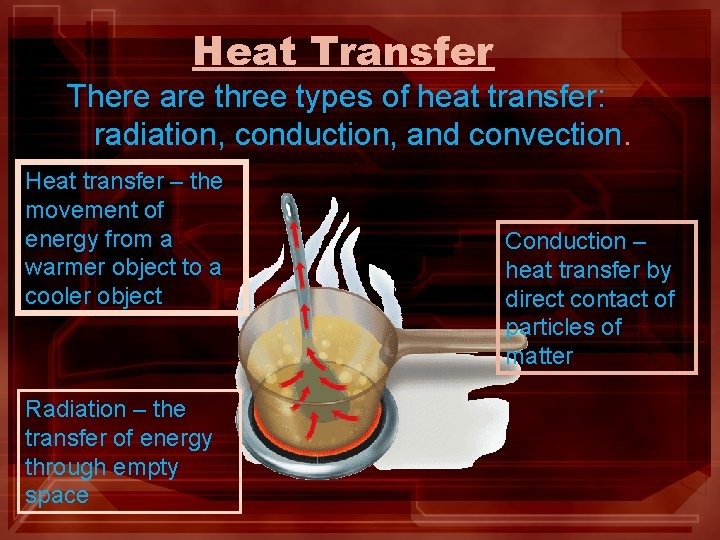
Heat Transfer There are three types of heat transfer: radiation, conduction, and convection. Heat transfer – the movement of energy from a warmer object to a cooler object Radiation – the transfer of energy through empty space Conduction – heat transfer by direct contact of particles of matter
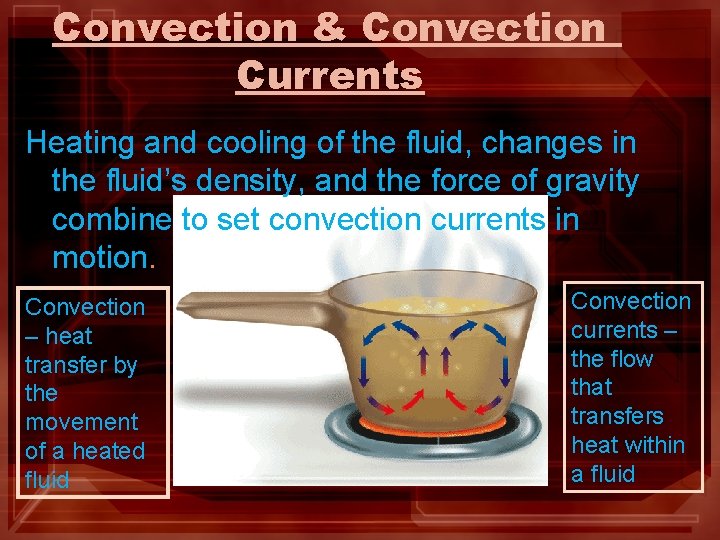
Convection & Convection Currents Heating and cooling of the fluid, changes in the fluid’s density, and the force of gravity combine to set convection currents in motion. Convection – heat transfer by the movement of a heated fluid Convection currents – the flow that transfers heat within a fluid
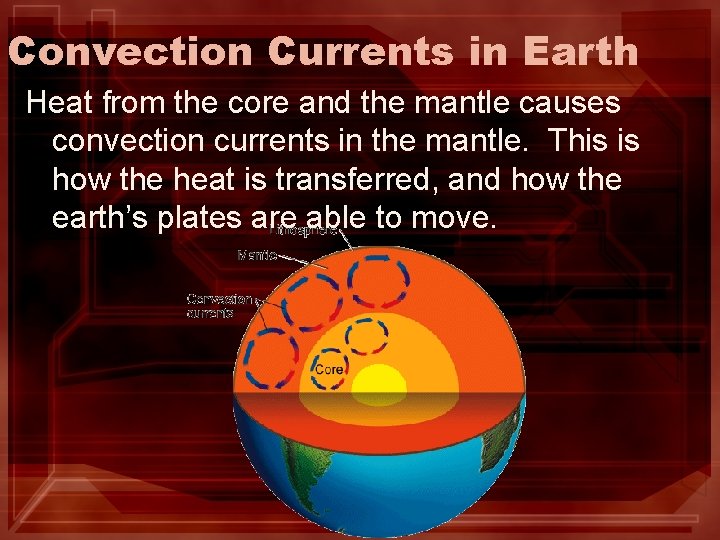
Convection Currents in Earth Heat from the core and the mantle causes convection currents in the mantle. This is how the heat is transferred, and how the earth’s plates are able to move.
Heat The higher the temperature, the faster the particles (atoms/molecules) are moving, i. e. more Kinetic Energy. We will take heat to mean thermal energy in a body OR thermal energy transferred into/out of a body
First law of Thermodymanics • The change in internal energy of a system equals the sum of the heat and work. • Energy can neither be created or destroyed.
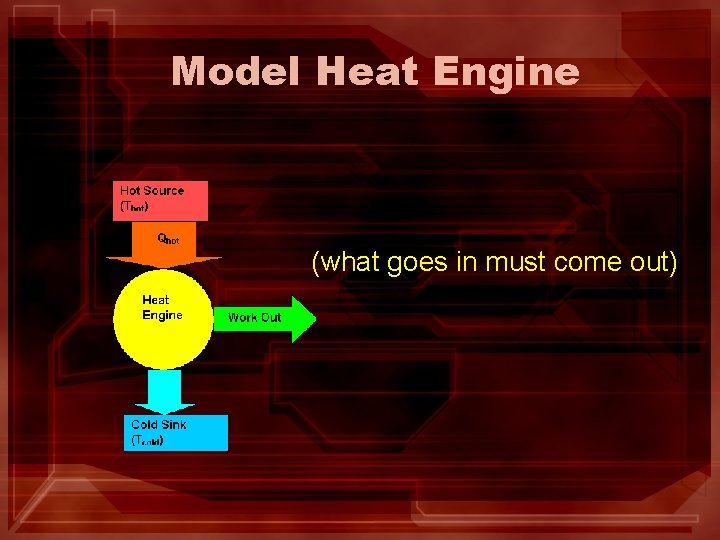
Model Heat Engine (what goes in must come out)
Second Law of Thermodynamics • Energy transforms form one form to another. • The universe tend to favor entropy or disorder.
END OF SHOW