
16032015 DIARRHEAL DISEASES Dr Syed Waleem Pasha Assistant
- Slides: 24
16/03/2015 DIARRHEAL DISEASES Dr. Syed Waleem Pasha Assistant Professor Dept. of Medicine
• Three lecture series • 1 st (16/3/2015) – Acute diarrhea - general • 2 nd – Specific causes of diarrhea – viral and bacterial • 3 rd – Specific causes of diarrhea – bacterial and protozoal
Objectives • Definition • Acute diarrhea • Causes – Infectious vs noninfectious • Epidemiology • Clinical features • Management – Fluid therapy • Brief note on chronic diarrhea
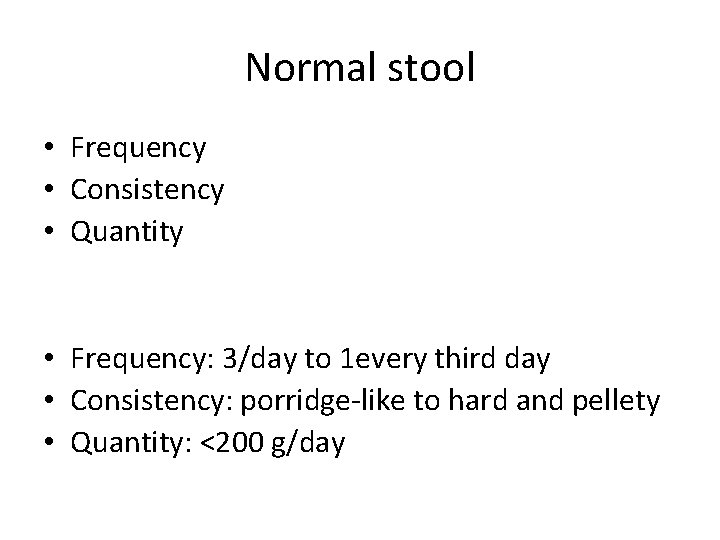
Normal stool • Frequency • Consistency • Quantity • Frequency: 3/day to 1 every third day • Consistency: porridge-like to hard and pellety • Quantity: <200 g/day
Diarrhea - definition • Different for different people • Increased frequency • Loose or watery consistency • Increased quantity >200 g/day
Duration of diarrhea • Acute diarrhea – <2 weeks • Chronic diarrhea – >4 weeks • Persistent diarrhea – 2 -4 weeks
Acute diarrhea
• gastoenteritis vs food poisoning
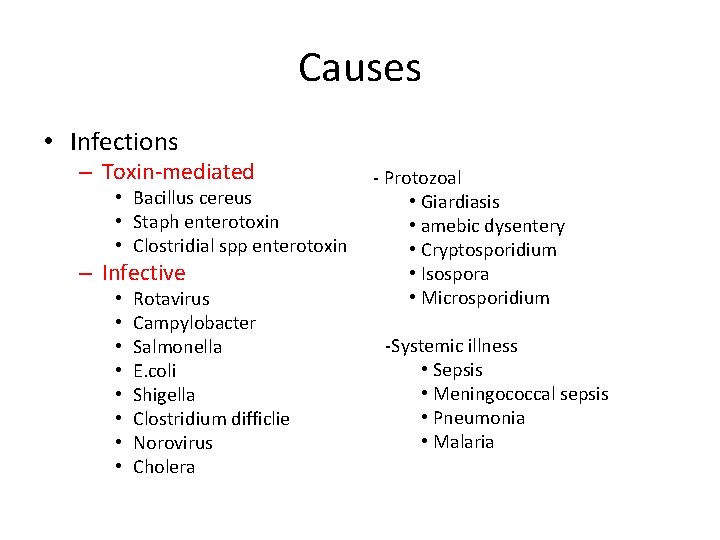
Causes • Infections – Toxin-mediated • Bacillus cereus • Staph enterotoxin • Clostridial spp enterotoxin – Infective • • Rotavirus Campylobacter Salmonella E. coli Shigella Clostridium difficlie Norovirus Cholera - Protozoal • Giardiasis • amebic dysentery • Cryptosporidium • Isospora • Microsporidium -Systemic illness • Sepsis • Meningococcal sepsis • Pneumonia • Malaria
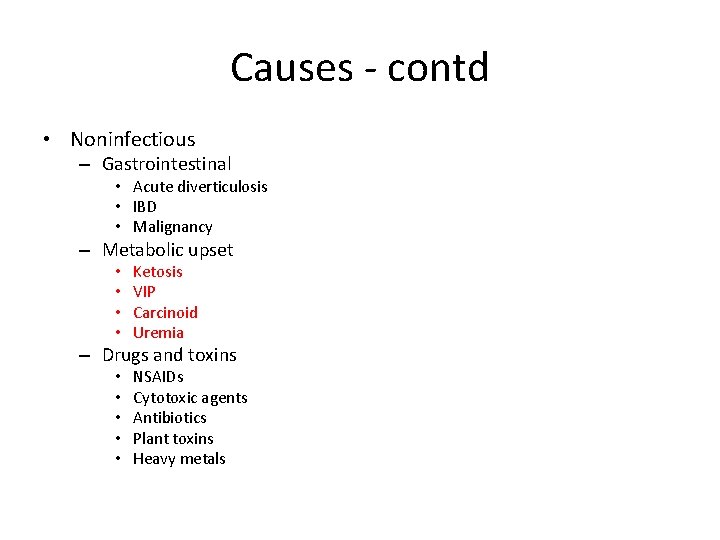
Causes - contd • Noninfectious – Gastrointestinal • Acute diverticulosis • IBD • Malignancy – Metabolic upset • • Ketosis VIP Carcinoid Uremia – Drugs and toxins • • • NSAIDs Cytotoxic agents Antibiotics Plant toxins Heavy metals
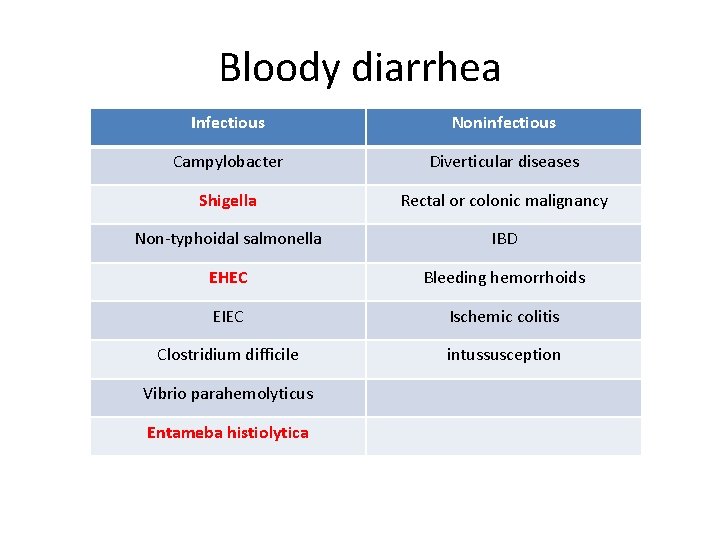
Bloody diarrhea Infectious Noninfectious Campylobacter Diverticular diseases Shigella Rectal or colonic malignancy Non-typhoidal salmonella IBD EHEC Bleeding hemorrhoids EIEC Ischemic colitis Clostridium difficile intussusception Vibrio parahemolyticus Entameba histiolytica
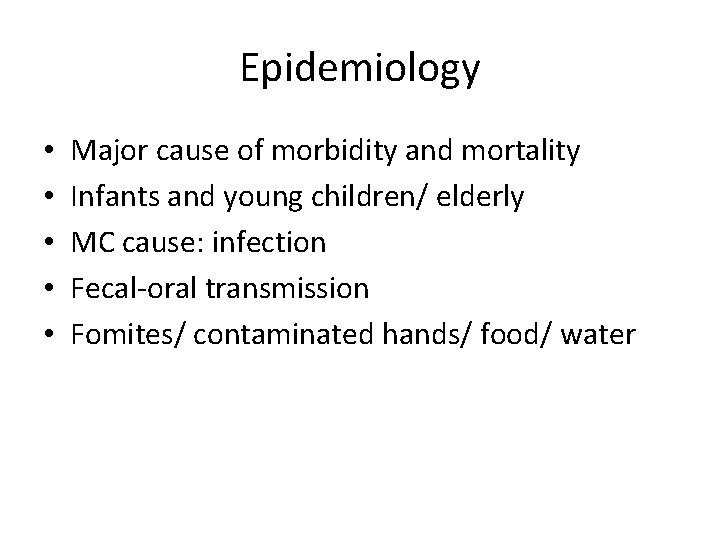
Epidemiology • • • Major cause of morbidity and mortality Infants and young children/ elderly MC cause: infection Fecal-oral transmission Fomites/ contaminated hands/ food/ water
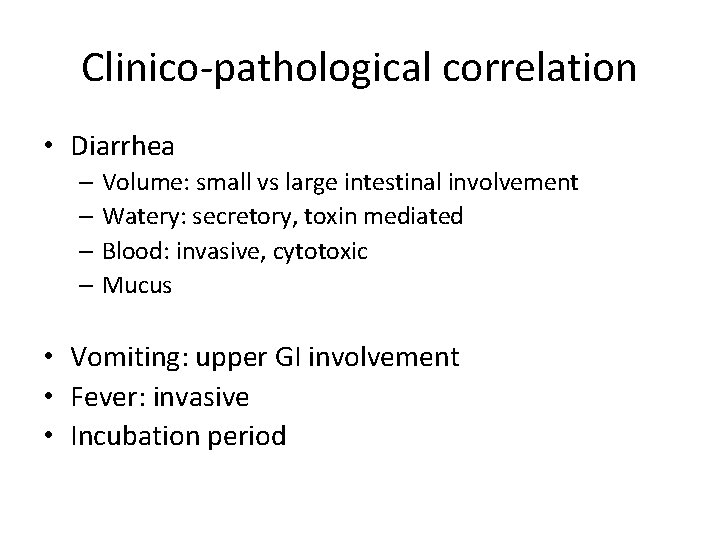
Clinico-pathological correlation • Diarrhea – Volume: small vs large intestinal involvement – Watery: secretory, toxin mediated – Blood: invasive, cytotoxic – Mucus • Vomiting: upper GI involvement • Fever: invasive • Incubation period
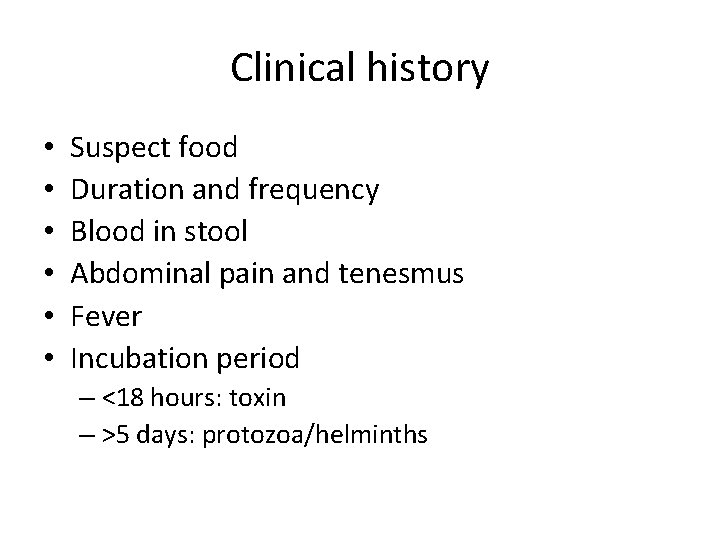
Clinical history • • • Suspect food Duration and frequency Blood in stool Abdominal pain and tenesmus Fever Incubation period – <18 hours: toxin – >5 days: protozoa/helminths
Physical examination • Dehdration – Skin turgor/ mucous membranes – Blood pressure – Urine output • Severity
Investigations • Stool examination – Blood – Leucocytes – Parasites – Culture • Blood counts • Electrolytes • Renal functions
Treatment • Isolation • Principles: – Fluid replacement – Antimicrobial therapy – Adjunctive antidiarrheal therapy
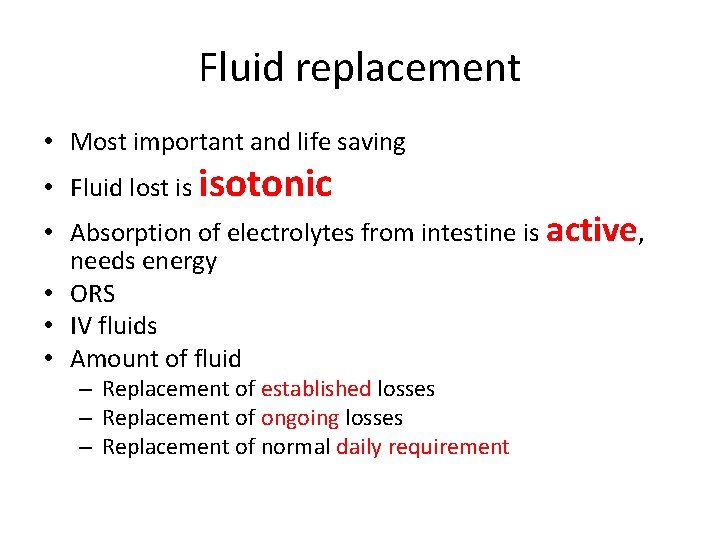
Fluid replacement • Most important and life saving • Fluid lost is isotonic • Absorption of electrolytes from intestine is active, needs energy • ORS • IV fluids • Amount of fluid – Replacement of established losses – Replacement of ongoing losses – Replacement of normal daily requirement
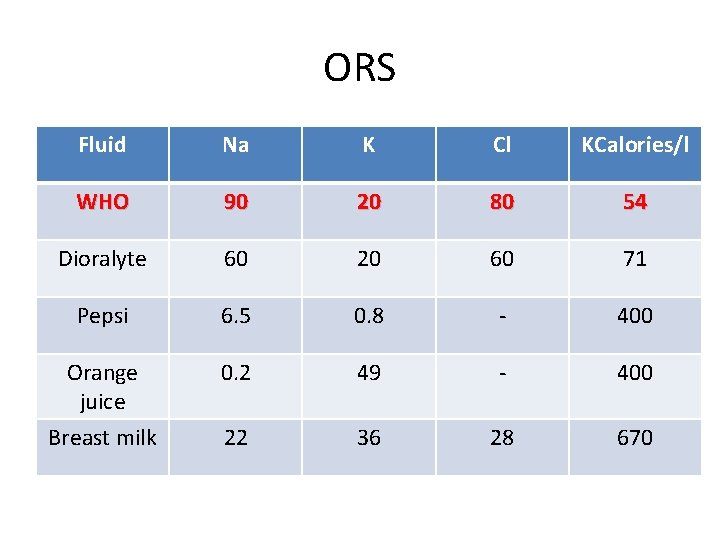
ORS Fluid Na K Cl KCalories/l WHO 90 20 80 54 Dioralyte 60 20 60 71 Pepsi 6. 5 0. 8 - 400 Orange juice Breast milk 0. 2 49 - 400 22 36 28 670
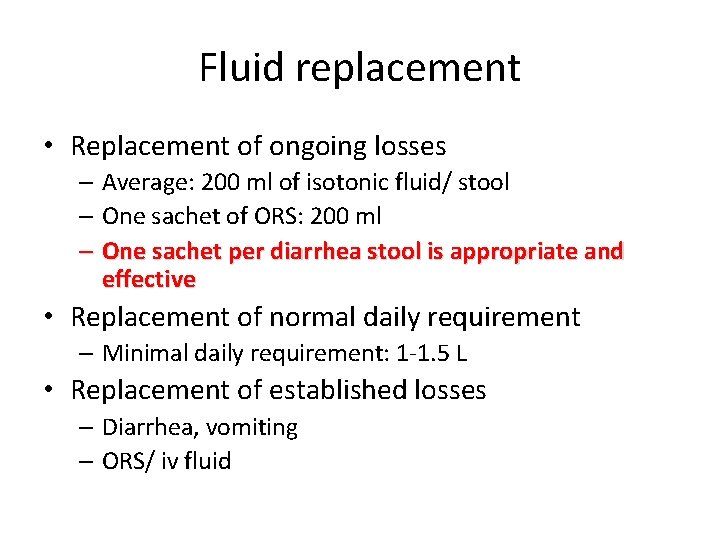
Fluid replacement • Replacement of ongoing losses – Average: 200 ml of isotonic fluid/ stool – One sachet of ORS: 200 ml – One sachet per diarrhea stool is appropriate and effective • Replacement of normal daily requirement – Minimal daily requirement: 1 -1. 5 L • Replacement of established losses – Diarrhea, vomiting – ORS/ iv fluid
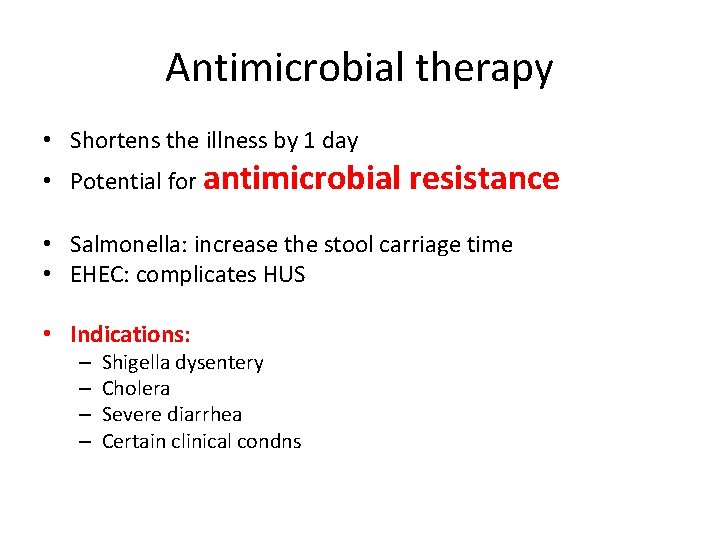
Antimicrobial therapy • Shortens the illness by 1 day • Potential for antimicrobial resistance • Salmonella: increase the stool carriage time • EHEC: complicates HUS • Indications: – – Shigella dysentery Cholera Severe diarrhea Certain clinical condns
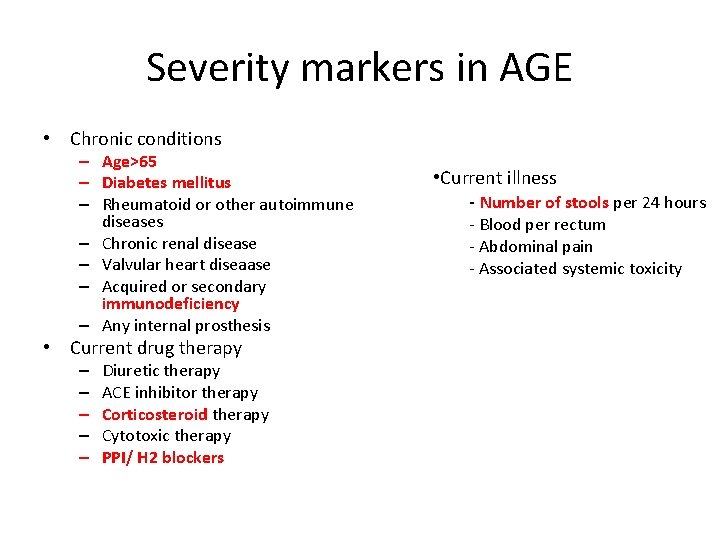
Severity markers in AGE • Chronic conditions – Age>65 – Diabetes mellitus – Rheumatoid or other autoimmune diseases – Chronic renal disease – Valvular heart diseaase – Acquired or secondary immunodeficiency – Any internal prosthesis • Current drug therapy – – – Diuretic therapy ACE inhibitor therapy Corticosteroid therapy Cytotoxic therapy PPI/ H 2 blockers • Current illness - Number of stools per 24 hours - Blood per rectum - Abdominal pain - Associated systemic toxicity
Antimotility, antisecretory, antidiarrheal drugs • Not recommended or contraindicated in infective diarrhea
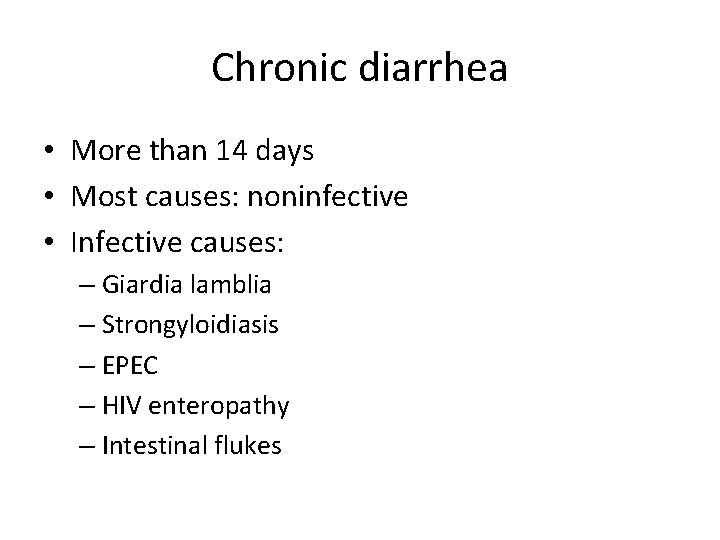
Chronic diarrhea • More than 14 days • Most causes: noninfective • Infective causes: – Giardia lamblia – Strongyloidiasis – EPEC – HIV enteropathy – Intestinal flukes