
16 Cognitive Dissonance Theory of Leon Festinger A
- Slides: 19
16 Cognitive Dissonance Theory of Leon Festinger A First Look at Communication Theory 9 th edition Em Griffin Andrew Ledbetter Glenn Sparks Copyright © 2015 Mc. Graw-Hill Education. All rights reserved. No reproduction or distribution without the prior written consent of Mc. Graw-Hill Education.
Dissonance: Discord Between Behavior and Belief Slide 2 Cognitive dissonance–distressing mental state caused by inconsistency between a person’s two beliefs, or a belief and an action The need to avoid dissonance is as basic as the need for safety or to satisfy hunger Aversive drive that goads us to be consistent Copyright © 2015 Mc. Graw-Hill Education. All rights reserved. No reproduction or distribution without the prior written consent of Mc. Graw-Hill Education.
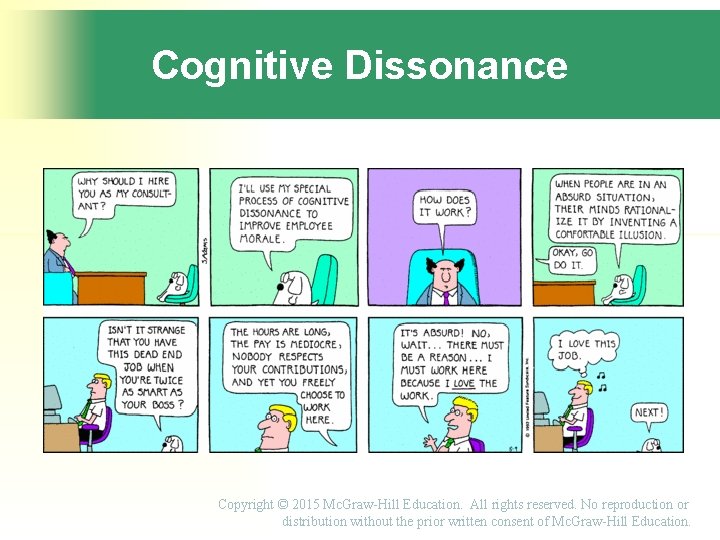
Cognitive Dissonance Copyright © 2015 Mc. Graw-Hill Education. All rights reserved. No reproduction or distribution without the prior written consent of Mc. Graw-Hill Education.
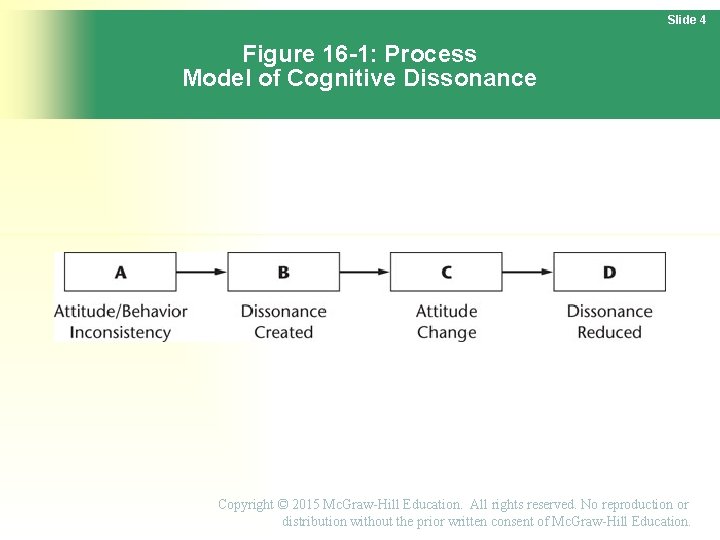
Slide 4 Figure 16 -1: Process Model of Cognitive Dissonance Copyright © 2015 Mc. Graw-Hill Education. All rights reserved. No reproduction or distribution without the prior written consent of Mc. Graw-Hill Education.
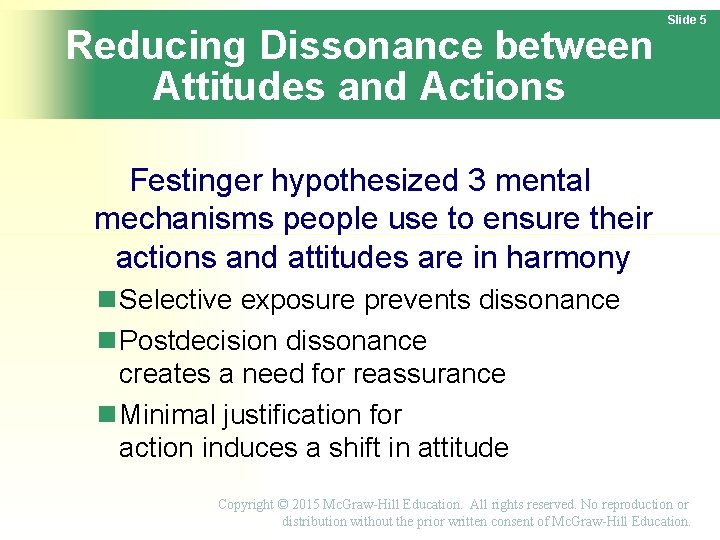
Reducing Dissonance between Attitudes and Actions Slide 5 Festinger hypothesized 3 mental mechanisms people use to ensure their actions and attitudes are in harmony Selective exposure prevents dissonance Postdecision dissonance creates a need for reassurance Minimal justification for action induces a shift in attitude Copyright © 2015 Mc. Graw-Hill Education. All rights reserved. No reproduction or distribution without the prior written consent of Mc. Graw-Hill Education.
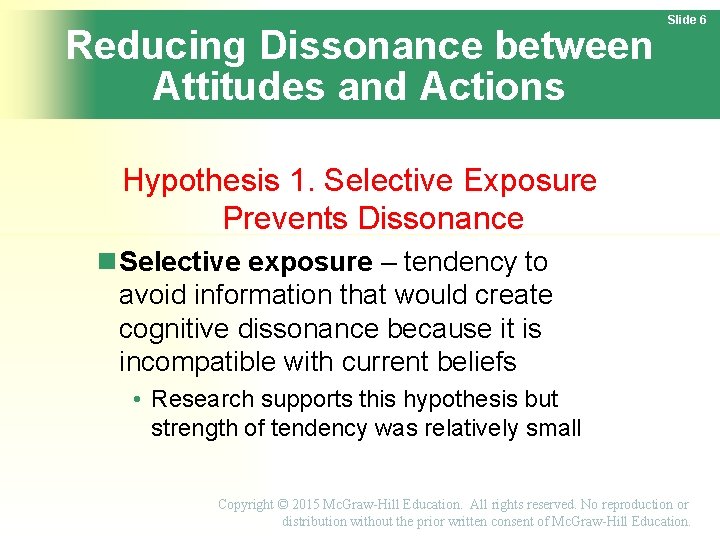
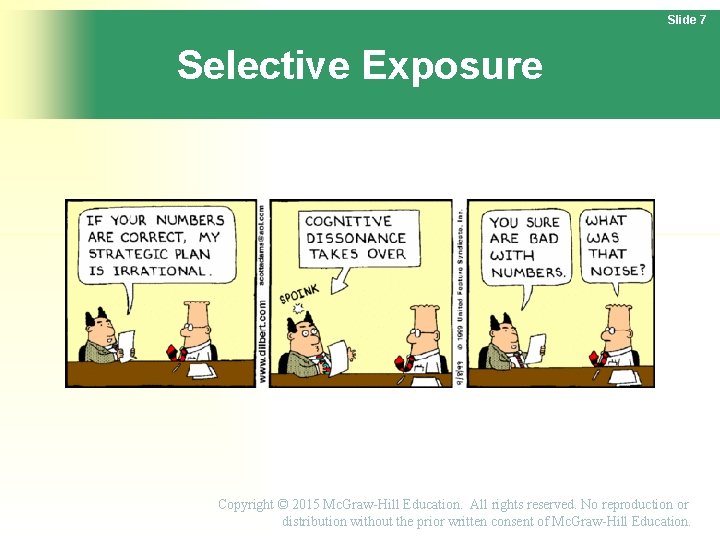
Reducing Dissonance between Attitudes and Actions Slide 6 Hypothesis 1. Selective Exposure Prevents Dissonance Selective exposure – tendency to avoid information that would create cognitive dissonance because it is incompatible with current beliefs • Research supports this hypothesis but strength of tendency was relatively small Copyright © 2015 Mc. Graw-Hill Education. All rights reserved. No reproduction or distribution without the prior written consent of Mc. Graw-Hill Education.
Slide 7 Selective Exposure Copyright © 2015 Mc. Graw-Hill Education. All rights reserved. No reproduction or distribution without the prior written consent of Mc. Graw-Hill Education.
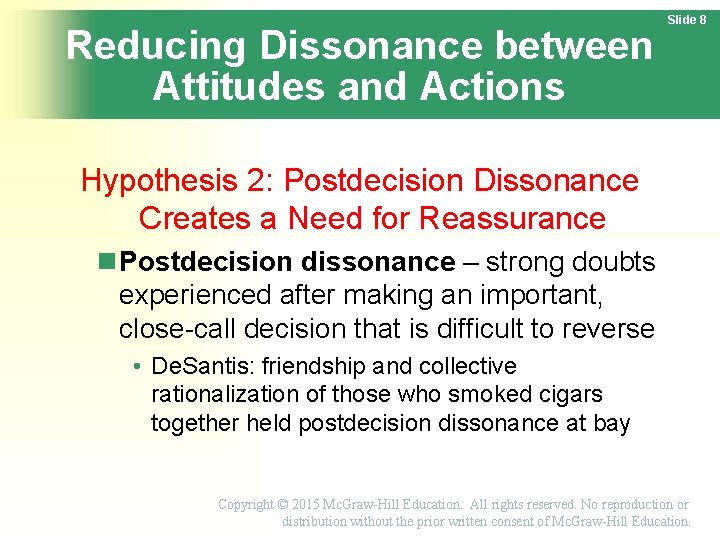
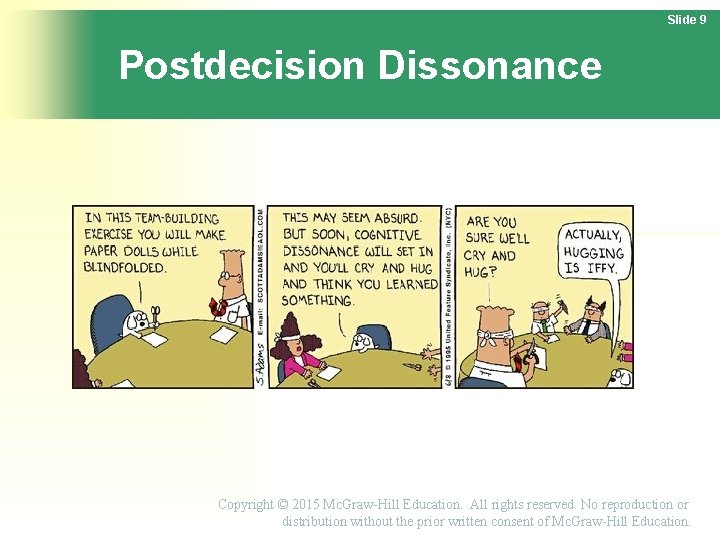
Reducing Dissonance between Attitudes and Actions Slide 8 Hypothesis 2: Postdecision Dissonance Creates a Need for Reassurance Postdecision dissonance – strong doubts experienced after making an important, close-call decision that is difficult to reverse • De. Santis: friendship and collective rationalization of those who smoked cigars together held postdecision dissonance at bay Copyright © 2015 Mc. Graw-Hill Education. All rights reserved. No reproduction or distribution without the prior written consent of Mc. Graw-Hill Education.
Slide 9 Postdecision Dissonance Copyright © 2015 Mc. Graw-Hill Education. All rights reserved. No reproduction or distribution without the prior written consent of Mc. Graw-Hill Education.
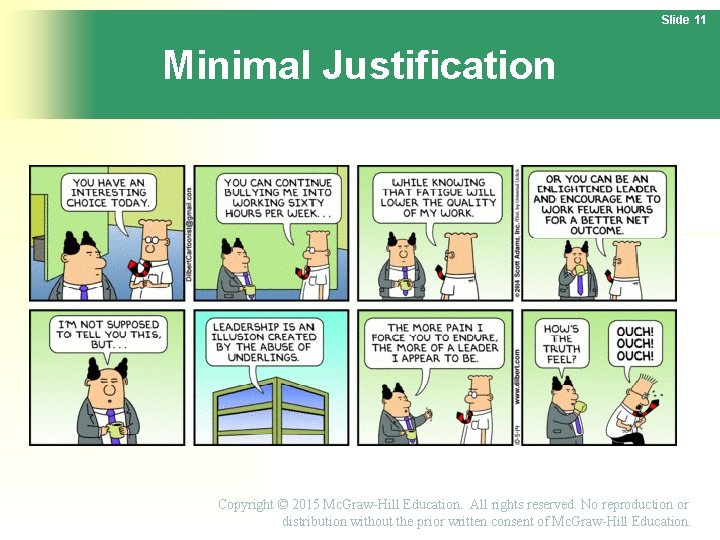
Reducing Dissonance between Attitudes and Actions Slide 10 Hypothesis 3: Minimal Justification for Action Induces a Shift in Attitude Minimal justification hypothesis – best way to stimulate an attitude change in others is to offer just enough incentive to elicit counterattitudinal behavior Behavior Attitude Copyright © 2015 Mc. Graw-Hill Education. All rights reserved. No reproduction or distribution without the prior written consent of Mc. Graw-Hill Education.
Slide 11 Minimal Justification Copyright © 2015 Mc. Graw-Hill Education. All rights reserved. No reproduction or distribution without the prior written consent of Mc. Graw-Hill Education.
Reducing Dissonance between Attitudes and Actions Slide 12 Hypothesis 3 (continued) Compliance – public conformity to another’s expectation without necessarily having a private conviction that matches the behavior • Example: Marlboro Man given gift in return for silence but remains antagonistic to former employers Copyright © 2015 Mc. Graw-Hill Education. All rights reserved. No reproduction or distribution without the prior written consent of Mc. Graw-Hill Education.
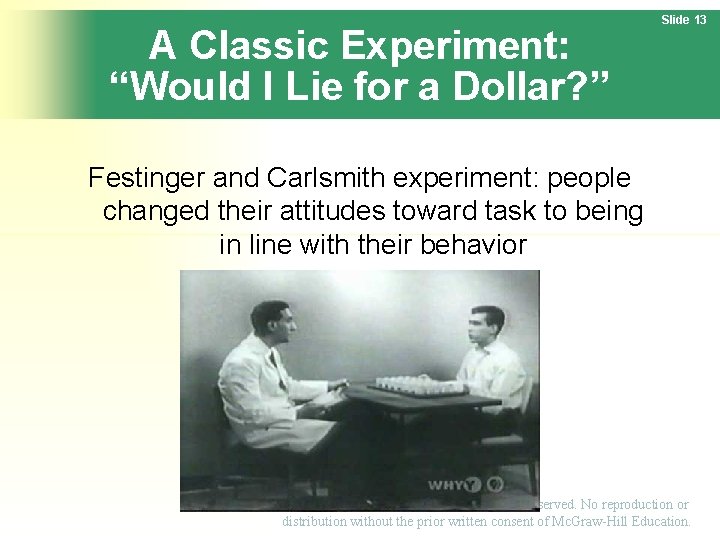
A Classic Experiment: “Would I Lie for a Dollar? ” Slide 13 Festinger and Carlsmith experiment: people changed their attitudes toward task to being in line with their behavior Copyright © 2015 Mc. Graw-Hill Education. All rights reserved. No reproduction or distribution without the prior written consent of Mc. Graw-Hill Education.
A Classic Experiment: “Would I Lie for a Dollar? ” Slide 14 Some students were asked to lie for $1, while others were asked to lie for $20 Students who lied for $20 admitted the task was dull and experienced little or no tension between action and attitude Students who lied for $1 claimed task was more enjoyable and had to create another justification Copyright © 2015 Mc. Graw-Hill Education. All rights reserved. No reproduction or distribution without the prior written consent of Mc. Graw-Hill Education.
Instead of “Would You Lie for a Dollar? ” Let's play WHAT WOULD YOU DO FOR A MILLION DOLLARS? Copyright © 2015 Mc. Graw-Hill Education. All rights reserved. No reproduction or distribution without the prior written consent of Mc. Graw-Hill Education.
Slide 16 Three State-of-the-Art Revisions: The Cause and Effect of Dissonance Self-Consistency: The Rationalizing Animal Aronson concluded the issue was inconsistency between cognition and selfconcept Questions #4, 5 and 8 Copyright © 2015 Mc. Graw-Hill Education. All rights reserved. No reproduction or distribution without the prior written consent of Mc. Graw-Hill Education.
Slide 17 Three State-of-the-Art Revisions: The Cause and Effect of Dissonance Personal Responsibility for Bad Outcomes (The New Look) Cooper argues we experience dissonance when we believe our actions have unnecessarily hurt another person Questions # 1, 2 and 3 Copyright © 2015 Mc. Graw-Hill Education. All rights reserved. No reproduction or distribution without the prior written consent of Mc. Graw-Hill Education.
Slide 18 Three State-of-the-Art Revisions: The Cause and Effect of Dissonance Self-Affirmation to Dissipate Dissonance Most people are greatly motivated to maintain an overall image of moral and adaptive adequacy Denial, forgetfulness and trivialization of the incident blot out dissonance Questions #6, 7, 9 and 10 Copyright © 2015 Mc. Graw-Hill Education. All rights reserved. No reproduction or distribution without the prior written consent of Mc. Graw-Hill Education.
Critique: Dissonance over Dissonance Slide 19 Cognitive dissonance has achieved name recognition within popular culture However, there is no way to prove theory wrong (that is, it lacks falsafiability) Festinger never specified a reliable way to detect degrees of dissonance Copyright © 2015 Mc. Graw-Hill Education. All rights reserved. No reproduction or distribution without the prior written consent of Mc. Graw-Hill Education.