
16 360 Lecture 19 Maxwell equations E electric
- Slides: 21
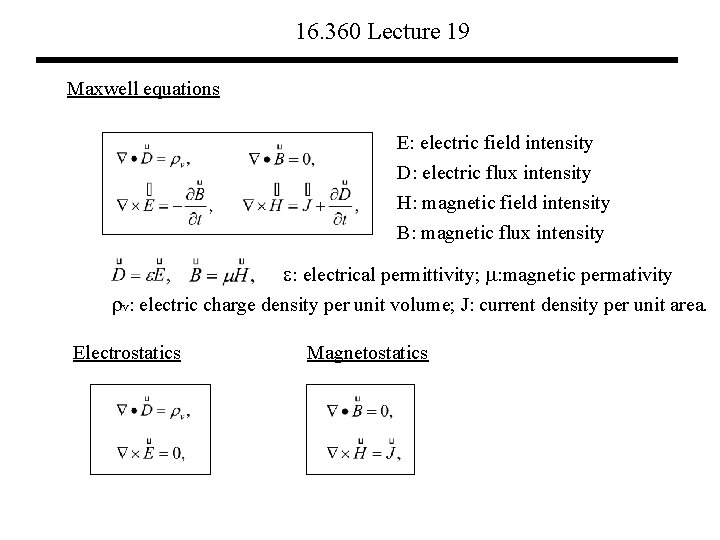
16. 360 Lecture 19 Maxwell equations E: electric field intensity D: electric flux intensity H: magnetic field intensity B: magnetic flux intensity : electrical permittivity; : magnetic permativity v: electric charge density per unit volume; J: current density per unit area. Electrostatics Magnetostatics
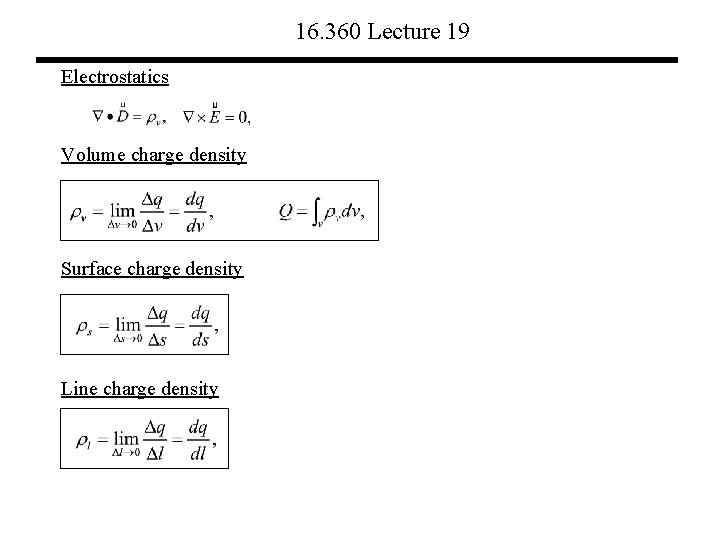
16. 360 Lecture 19 Electrostatics Volume charge density Surface charge density Line charge density
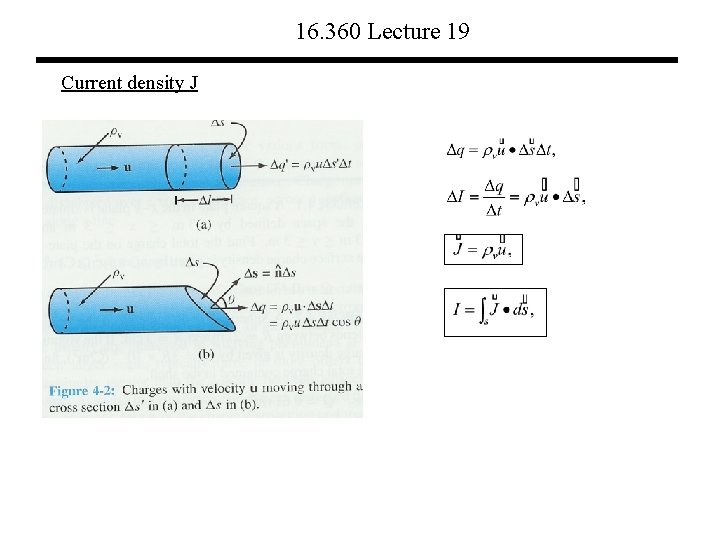
16. 360 Lecture 19 Current density J
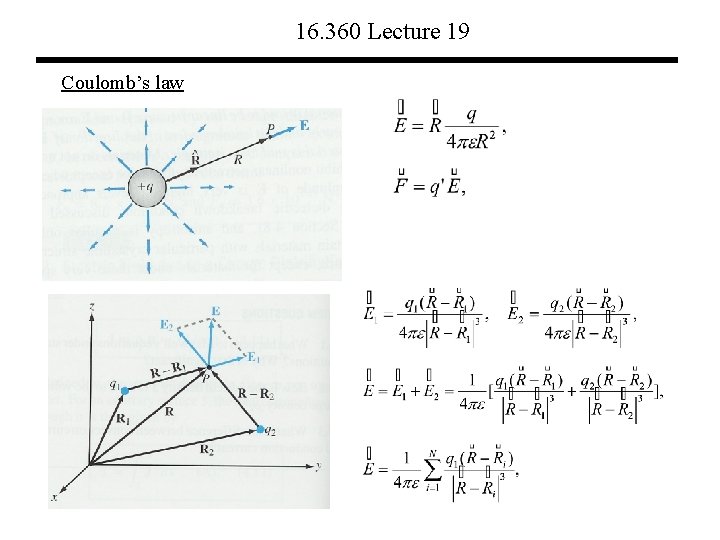
16. 360 Lecture 19 Coulomb’s law
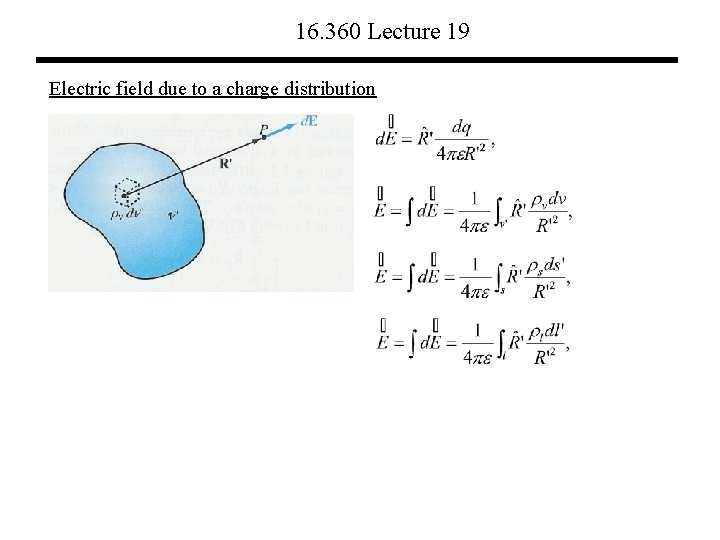
16. 360 Lecture 19 Electric field due to a charge distribution
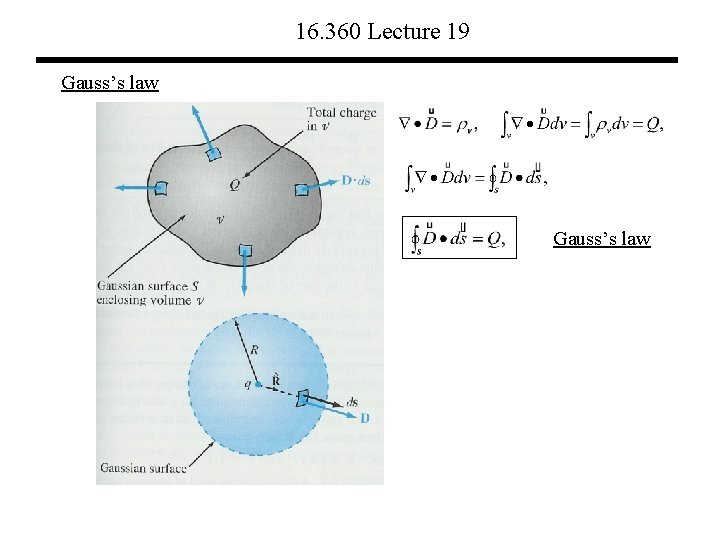
16. 360 Lecture 19 Gauss’s law
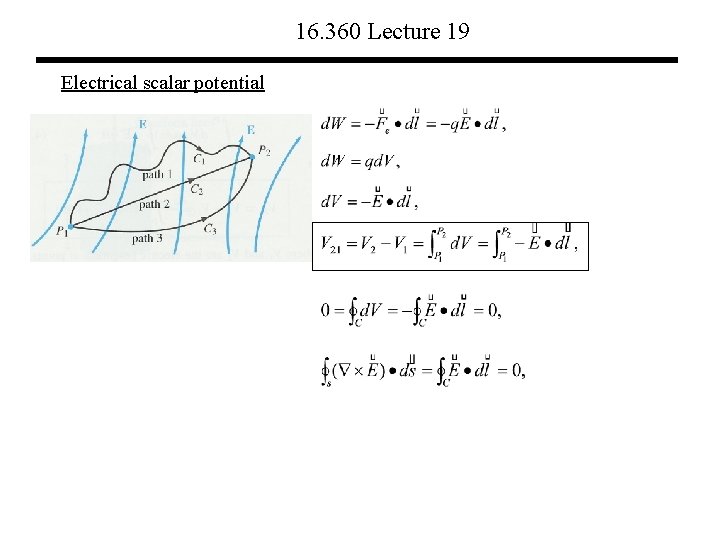
16. 360 Lecture 19 Electrical scalar potential
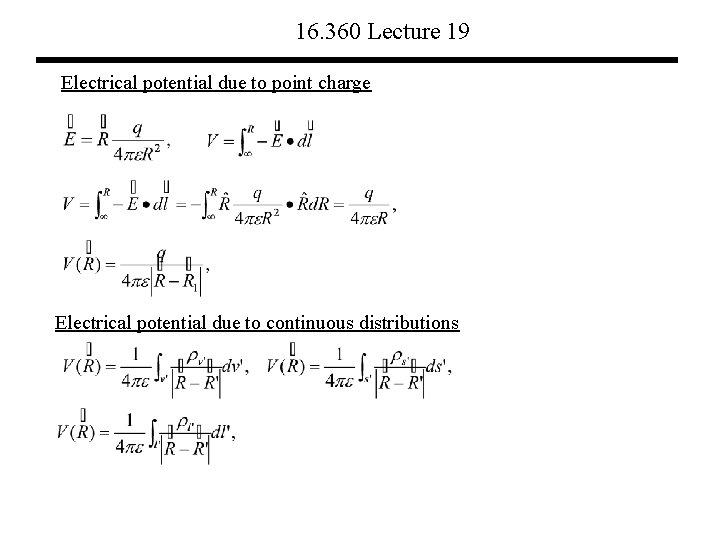
16. 360 Lecture 19 Electrical potential due to point charge Electrical potential due to continuous distributions
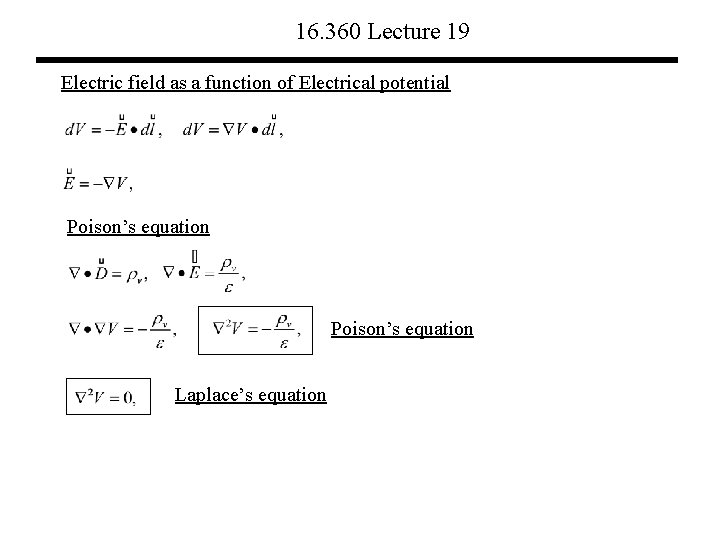
16. 360 Lecture 19 Electric field as a function of Electrical potential Poison’s equation Laplace’s equation
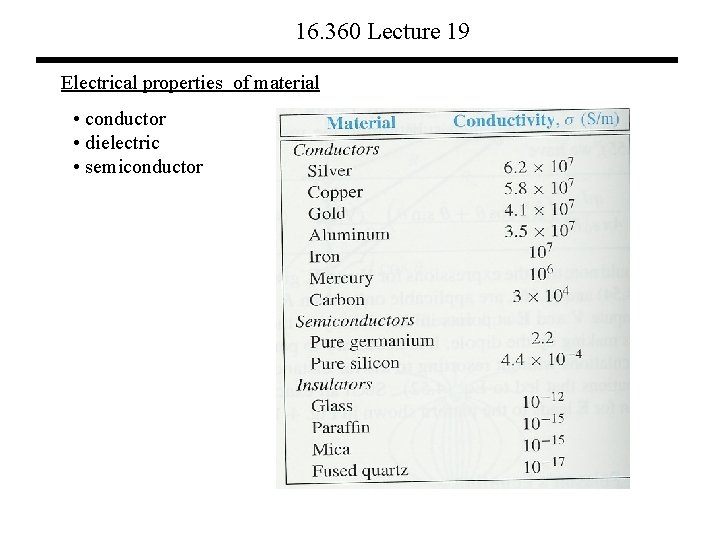
16. 360 Lecture 19 Electrical properties of material • conductor • dielectric • semiconductor
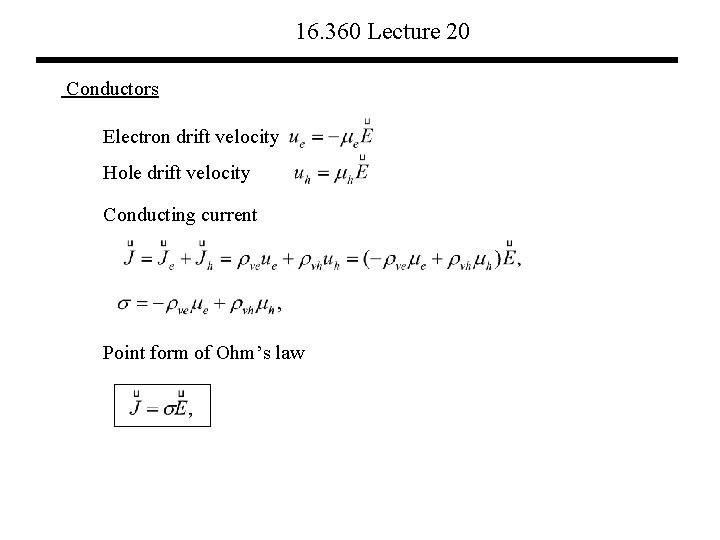
16. 360 Lecture 20 Conductors Electron drift velocity Hole drift velocity Conducting current Point form of Ohm’s law
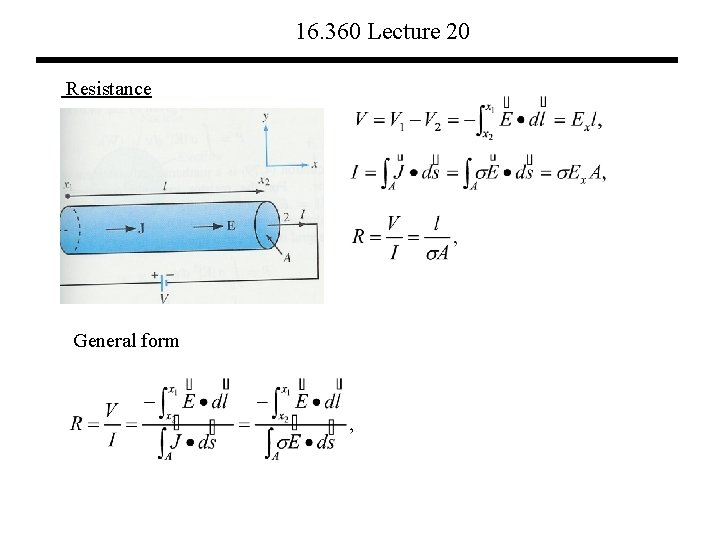
16. 360 Lecture 20 Resistance General form
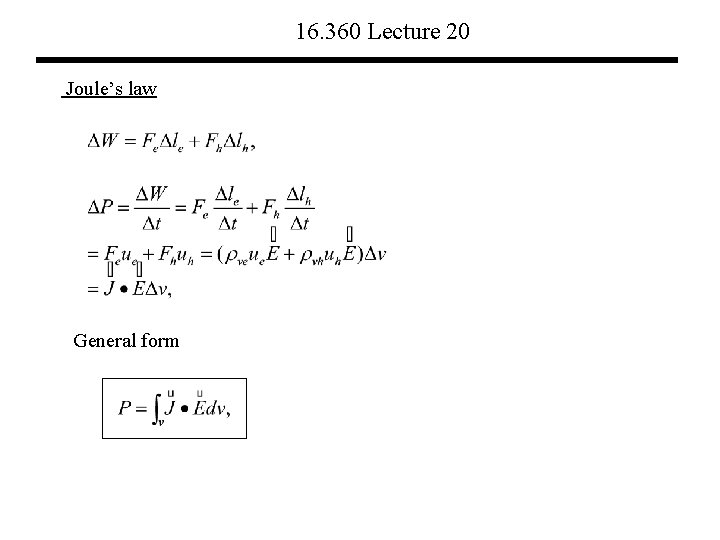
16. 360 Lecture 20 Joule’s law General form
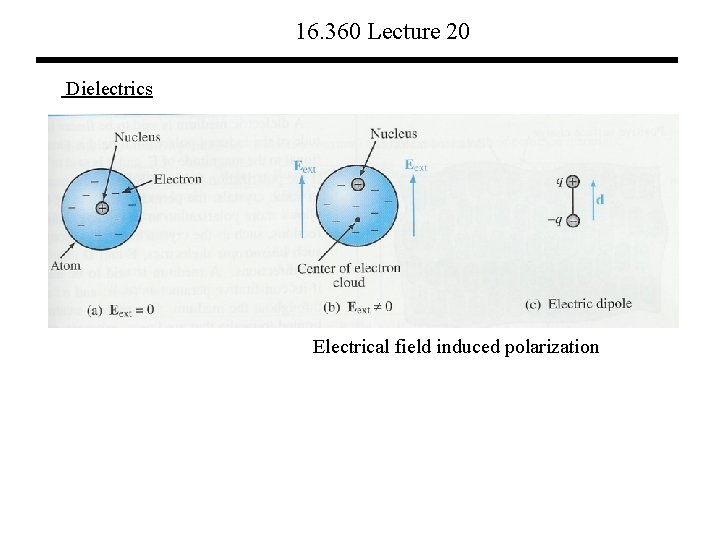
16. 360 Lecture 20 Dielectrics Electrical field induced polarization
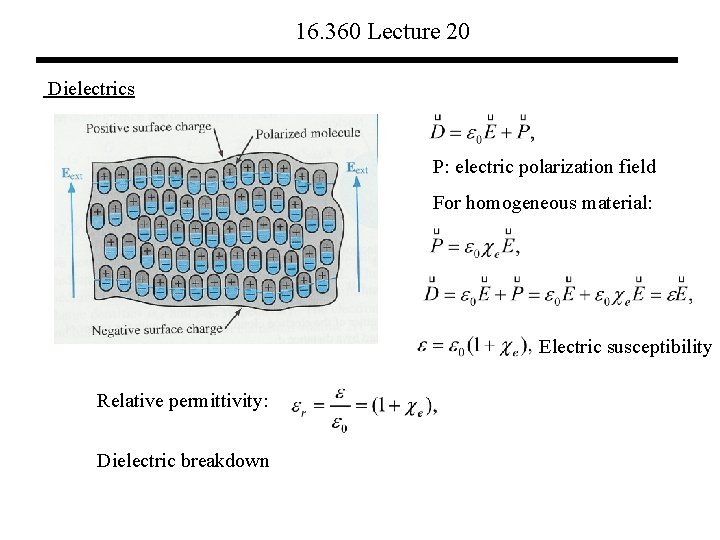
16. 360 Lecture 20 Dielectrics P: electric polarization field For homogeneous material: Electric susceptibility Relative permittivity: Dielectric breakdown
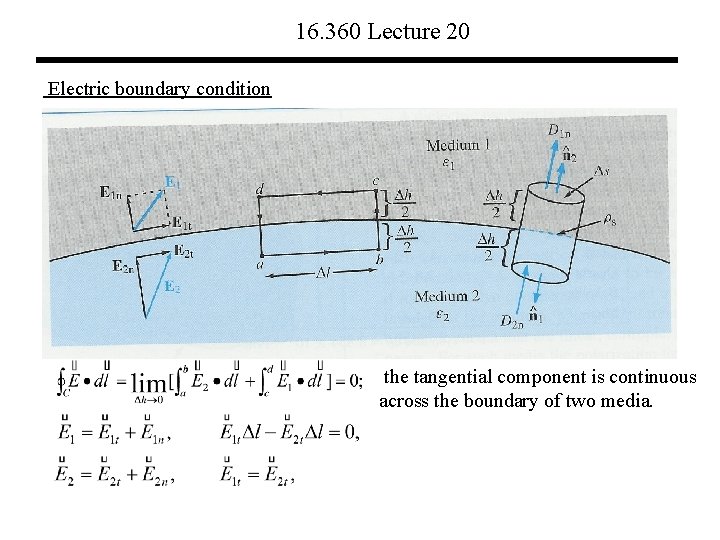
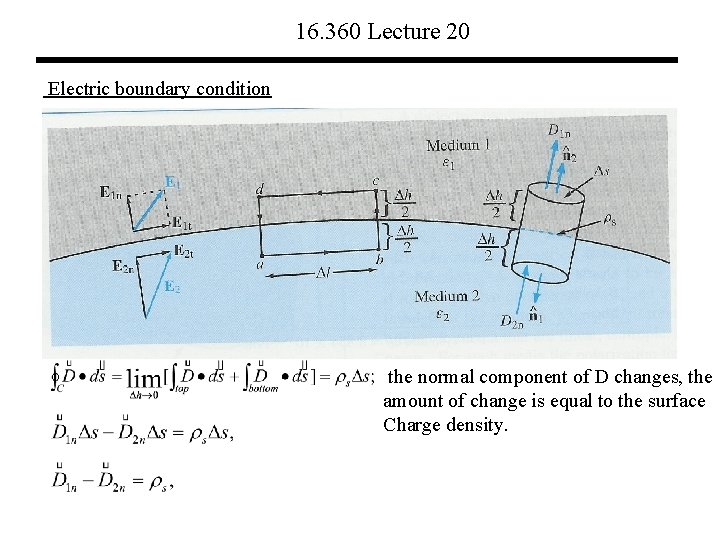
16. 360 Lecture 20 Electric boundary condition the tangential component is continuous across the boundary of two media.
16. 360 Lecture 20 Electric boundary condition the normal component of D changes, the amount of change is equal to the surface Charge density.
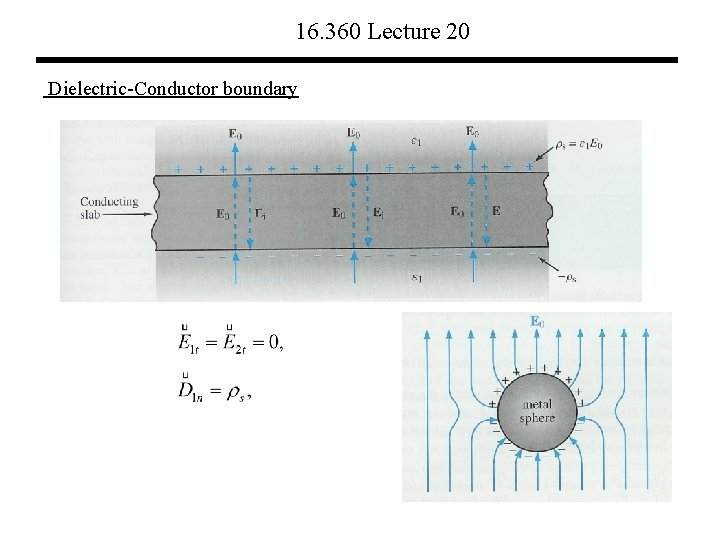
16. 360 Lecture 20 Dielectric-Conductor boundary
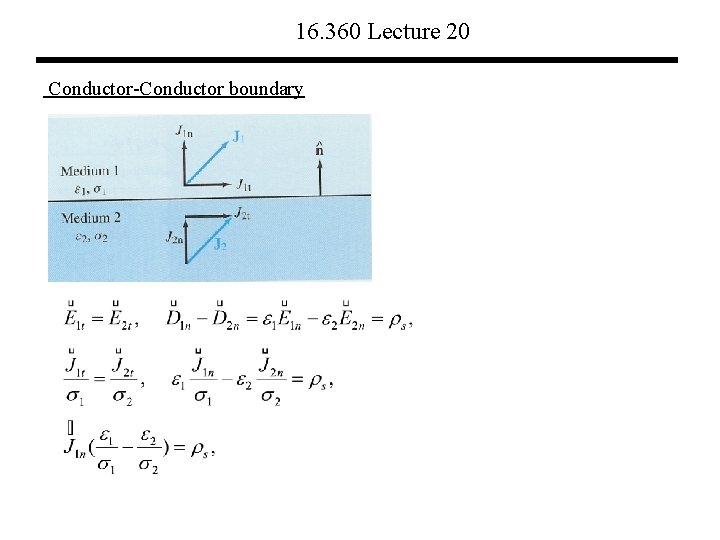
16. 360 Lecture 20 Conductor-Conductor boundary
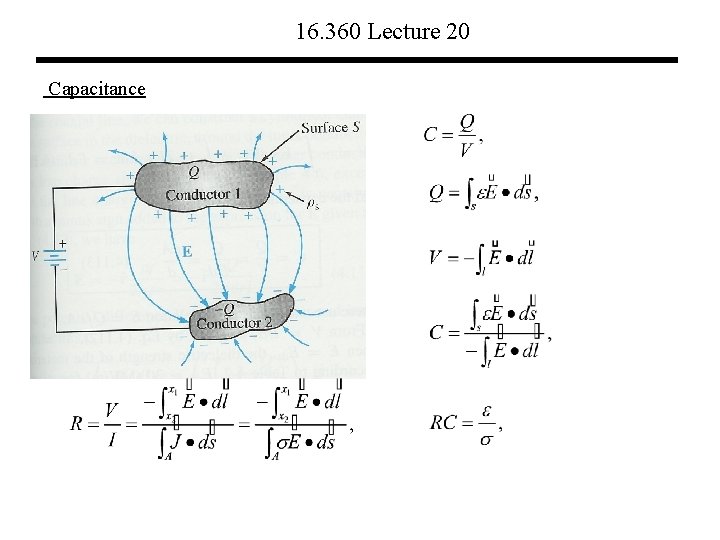
16. 360 Lecture 20 Capacitance
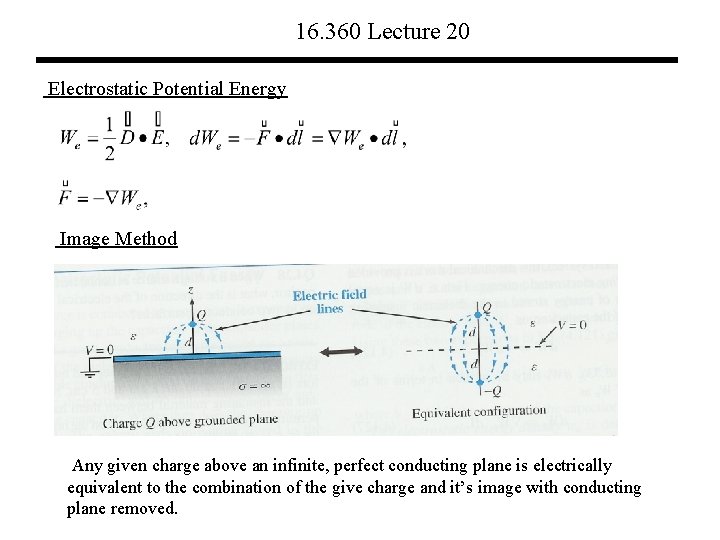
16. 360 Lecture 20 Electrostatic Potential Energy Image Method Any given charge above an infinite, perfect conducting plane is electrically equivalent to the combination of the give charge and it’s image with conducting plane removed.