
16 1 Human Population Growth And Natural Resources
- Slides: 33
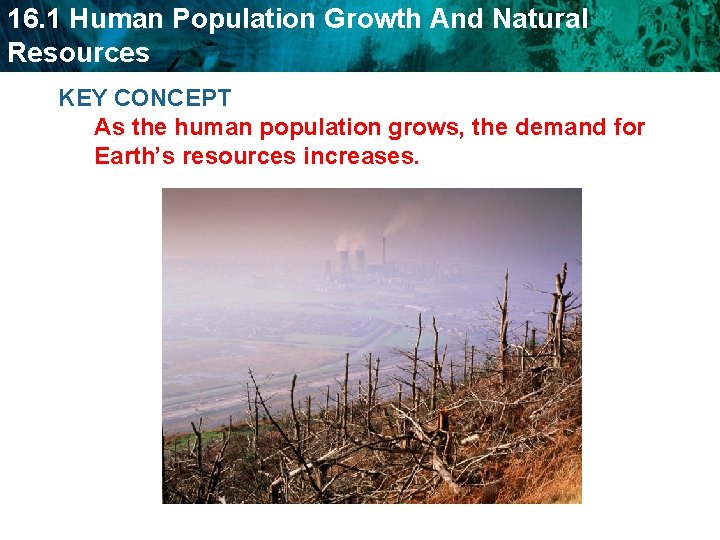
16. 1 Human Population Growth And Natural Resources KEY CONCEPT As the human population grows, the demand for Earth’s resources increases.
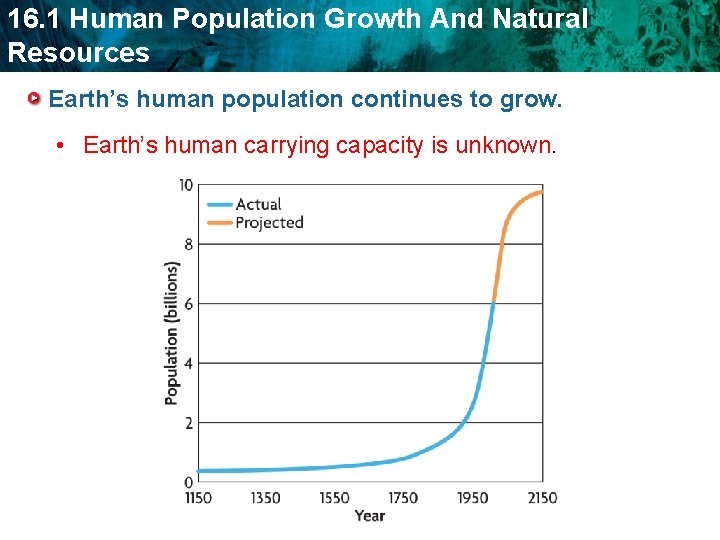
16. 1 Human Population Growth And Natural Resources Earth’s human population continues to grow. • Earth’s human carrying capacity is unknown.
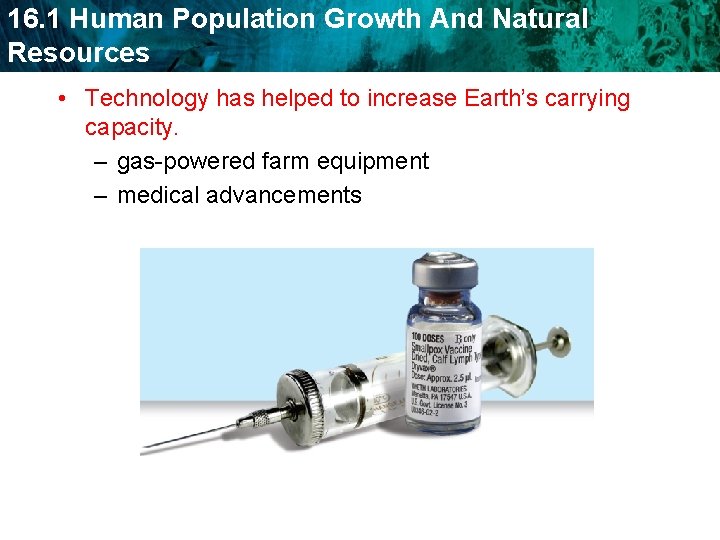
16. 1 Human Population Growth And Natural Resources • Technology has helped to increase Earth’s carrying capacity. – gas-powered farm equipment – medical advancements
16. 1 Human Population Growth And Natural Resources The growing human population exerts pressure on Earth’s natural resources. • Nonrenewable resources are used faster than they form. – coal – oil
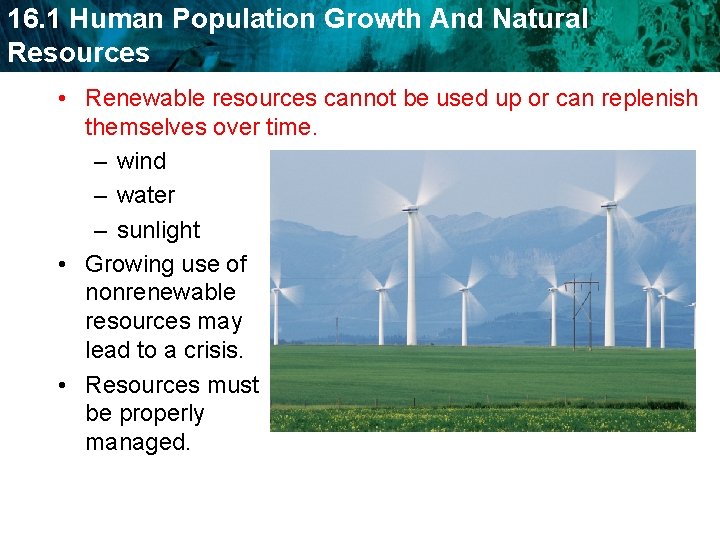
16. 1 Human Population Growth And Natural Resources • Renewable resources cannot be used up or can replenish themselves over time. – wind – water – sunlight • Growing use of nonrenewable resources may lead to a crisis. • Resources must be properly managed.
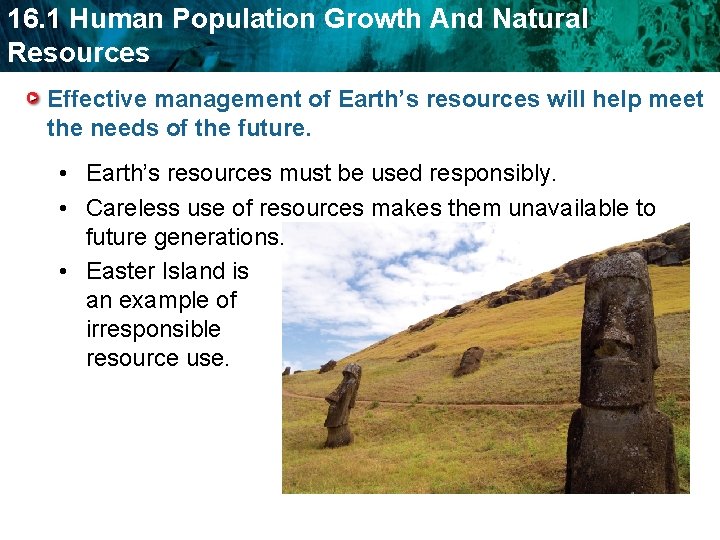
16. 1 Human Population Growth And Natural Resources Effective management of Earth’s resources will help meet the needs of the future. • Earth’s resources must be used responsibly. • Careless use of resources makes them unavailable to future generations. • Easter Island is an example of irresponsible resource use.
16. 1 Human Population Growth And Natural Resources • An ecological footprint is the amount of land needed to support a person. • The land must produce and maintain enough – food and water – shelter – energy – waste
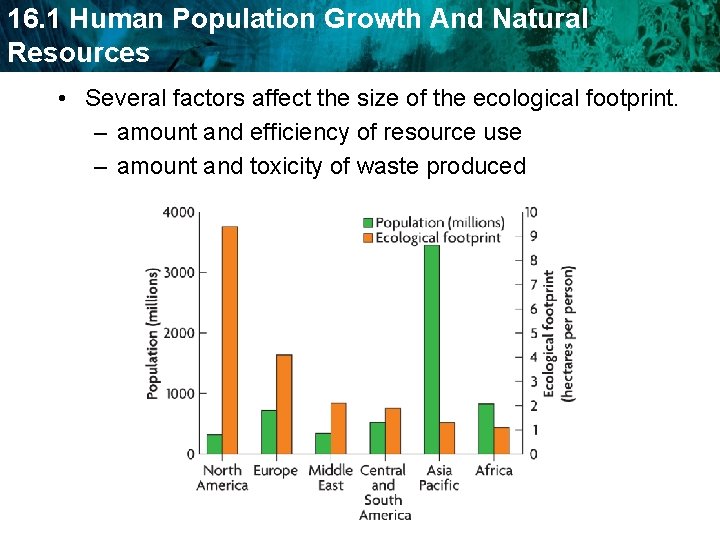
16. 1 Human Population Growth And Natural Resources • Several factors affect the size of the ecological footprint. – amount and efficiency of resource use – amount and toxicity of waste produced
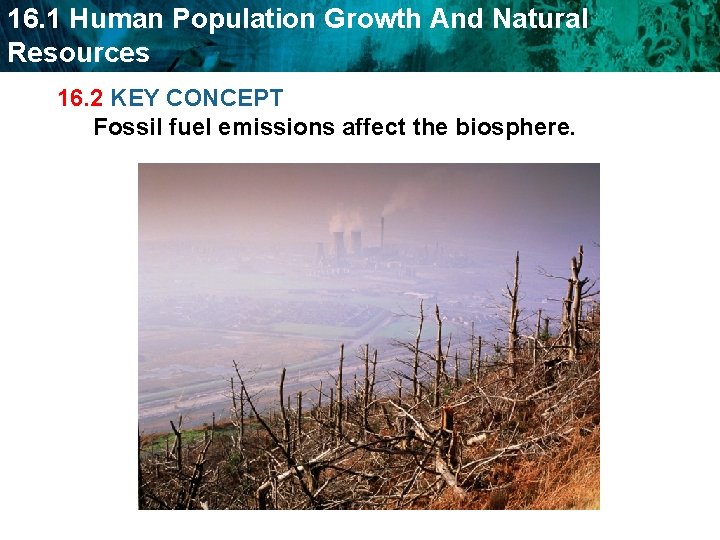
16. 1 Human Population Growth And Natural Resources 16. 2 KEY CONCEPT Fossil fuel emissions affect the biosphere.
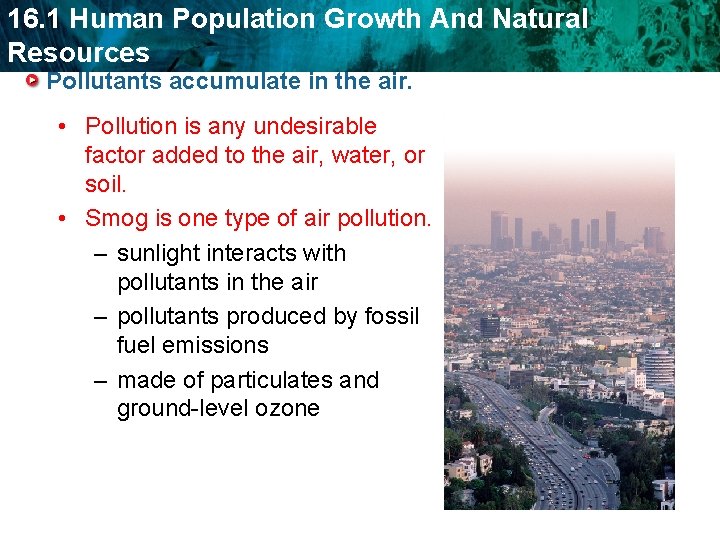
16. 1 Human Population Growth And Natural Resources Pollutants accumulate in the air. • Pollution is any undesirable factor added to the air, water, or soil. • Smog is one type of air pollution. – sunlight interacts with pollutants in the air – pollutants produced by fossil fuel emissions – made of particulates and ground-level ozone
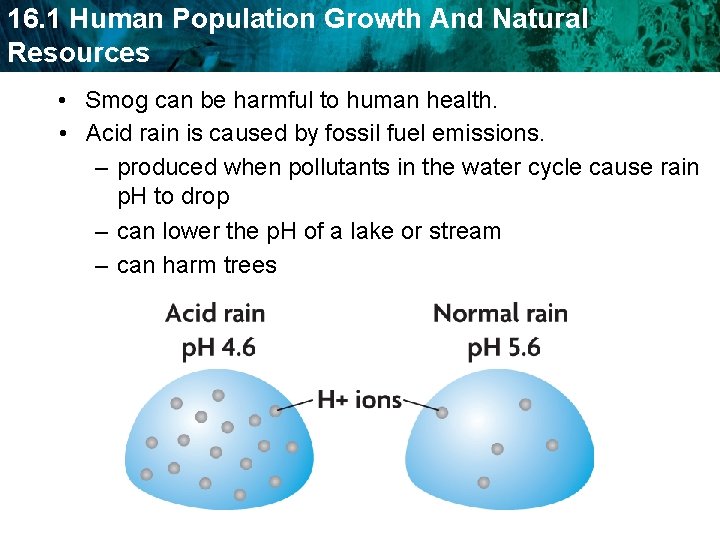
16. 1 Human Population Growth And Natural Resources • Smog can be harmful to human health. • Acid rain is caused by fossil fuel emissions. – produced when pollutants in the water cycle cause rain p. H to drop – can lower the p. H of a lake or stream – can harm trees
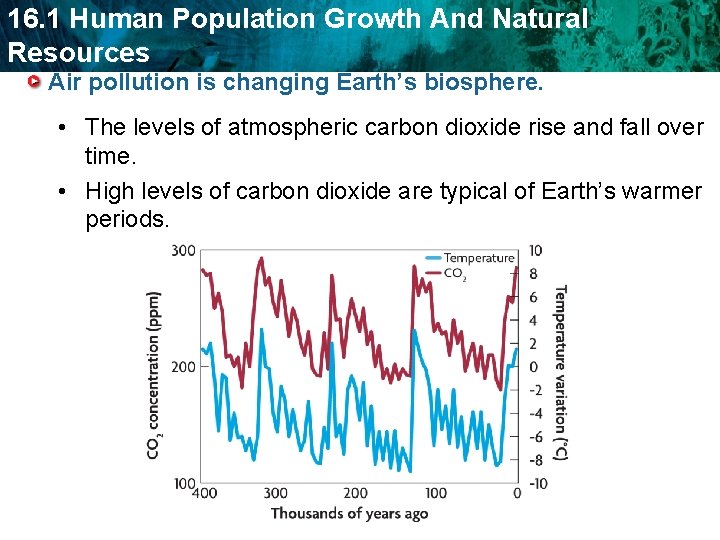
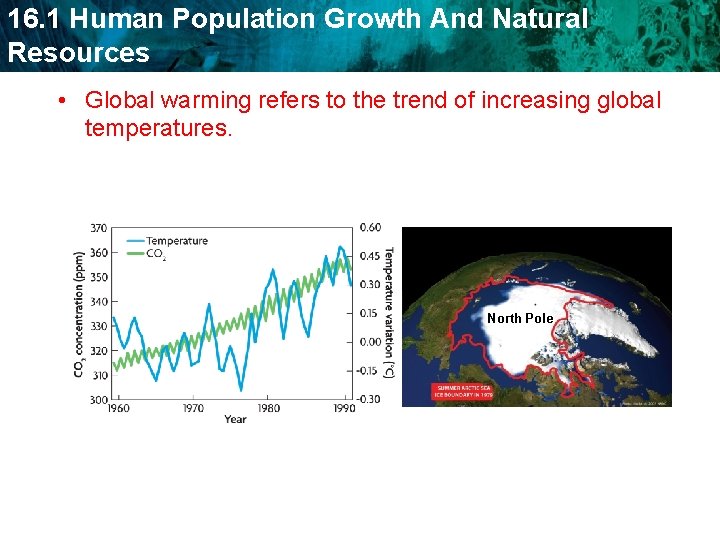
16. 1 Human Population Growth And Natural Resources Air pollution is changing Earth’s biosphere. • The levels of atmospheric carbon dioxide rise and fall over time. • High levels of carbon dioxide are typical of Earth’s warmer periods.
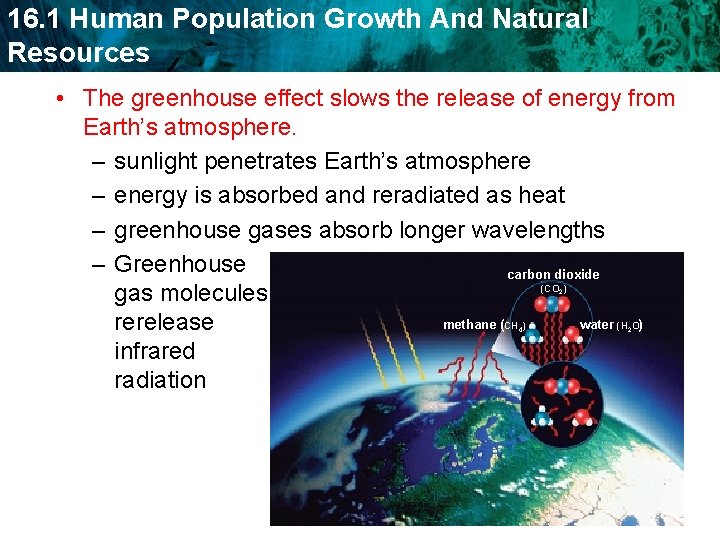
16. 1 Human Population Growth And Natural Resources • The greenhouse effect slows the release of energy from Earth’s atmosphere. – sunlight penetrates Earth’s atmosphere – energy is absorbed and reradiated as heat – greenhouse gases absorb longer wavelengths – Greenhouse carbon dioxide (CO ) gas molecules methane (CH ) water (H O) rerelease infrared radiation 2 4 2
16. 1 Human Population Growth And Natural Resources • Global warming refers to the trend of increasing global temperatures. North Pole
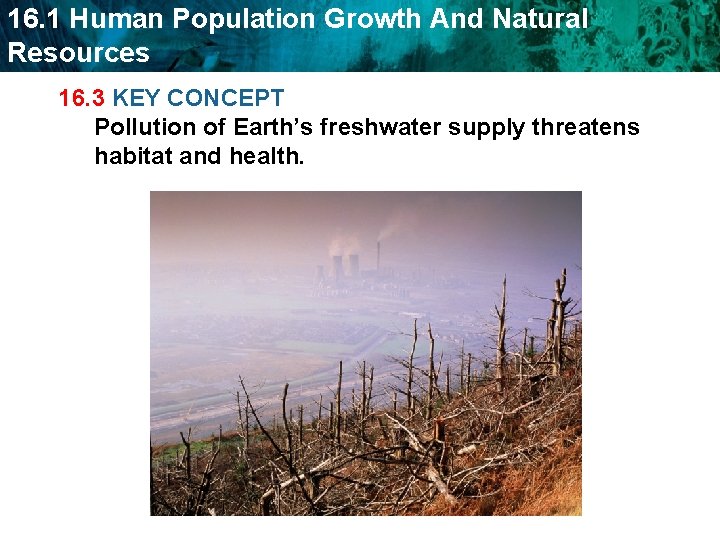
16. 1 Human Population Growth And Natural Resources 16. 3 KEY CONCEPT Pollution of Earth’s freshwater supply threatens habitat and health.
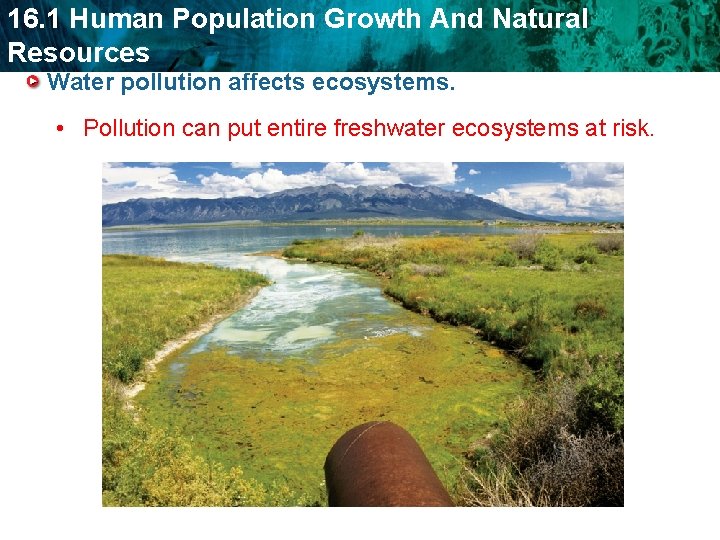
16. 1 Human Population Growth And Natural Resources Water pollution affects ecosystems. • Pollution can put entire freshwater ecosystems at risk.
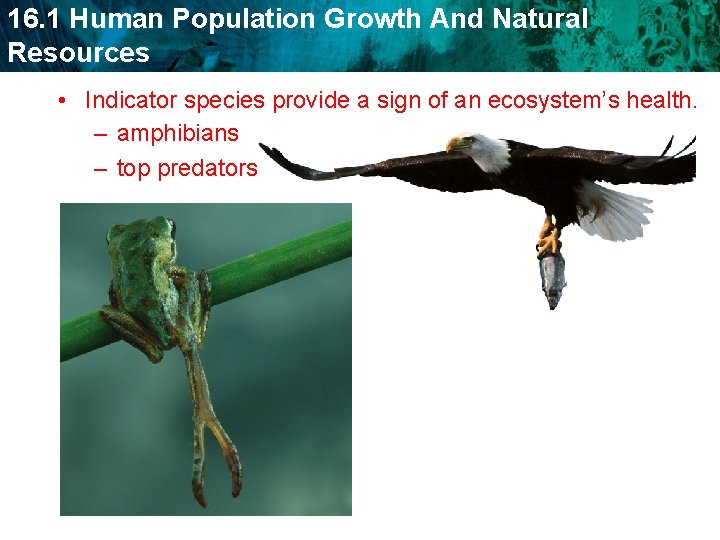
16. 1 Human Population Growth And Natural Resources • Indicator species provide a sign of an ecosystem’s health. – amphibians – top predators
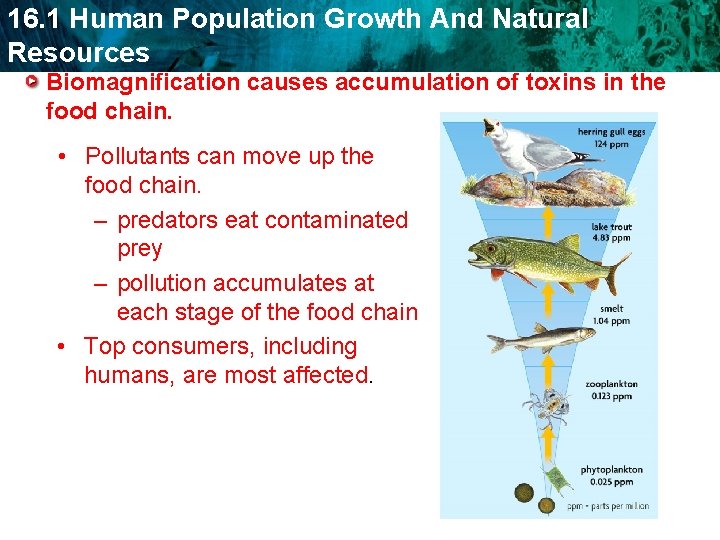
16. 1 Human Population Growth And Natural Resources Biomagnification causes accumulation of toxins in the food chain. • Pollutants can move up the food chain. – predators eat contaminated prey – pollution accumulates at each stage of the food chain • Top consumers, including humans, are most affected.
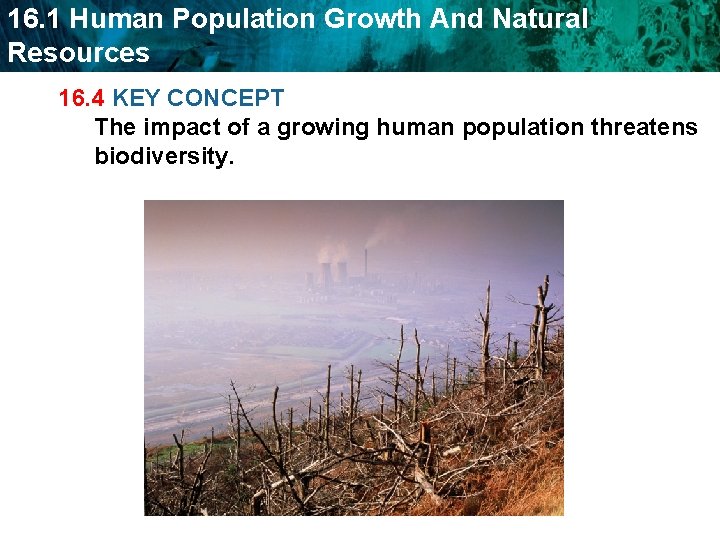
16. 1 Human Population Growth And Natural Resources 16. 4 KEY CONCEPT The impact of a growing human population threatens biodiversity.
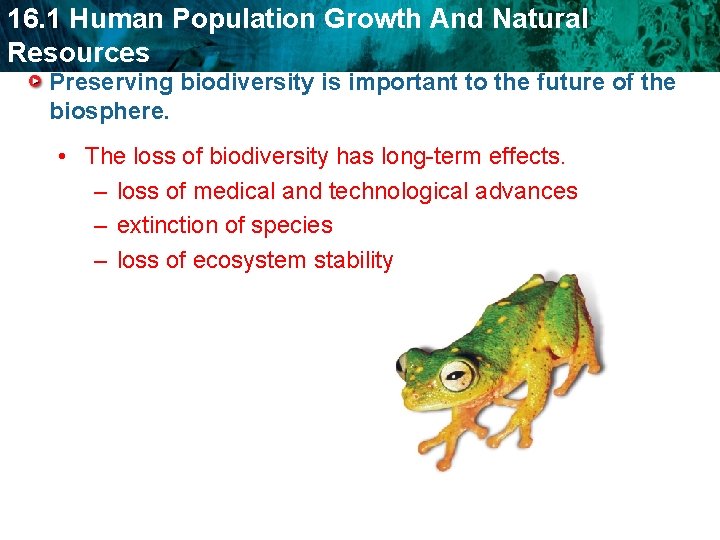
16. 1 Human Population Growth And Natural Resources Preserving biodiversity is important to the future of the biosphere. • The loss of biodiversity has long-term effects. – loss of medical and technological advances – extinction of species – loss of ecosystem stability
16. 1 Human Population Growth And Natural Resources Loss of habitat eliminates species. • Habitat fragmentation prevents an organism from accessing its entire home range. – occurs when a barrier forms within the habitat – often caused by human development
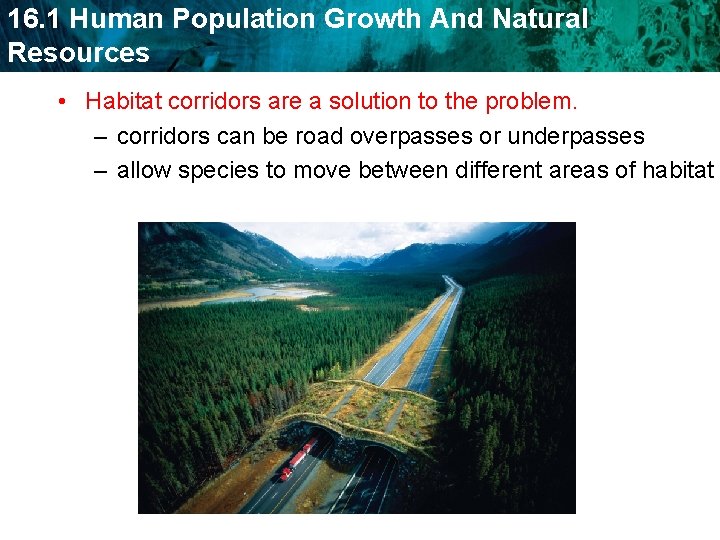
16. 1 Human Population Growth And Natural Resources • Habitat corridors are a solution to the problem. – corridors can be road overpasses or underpasses – allow species to move between different areas of habitat
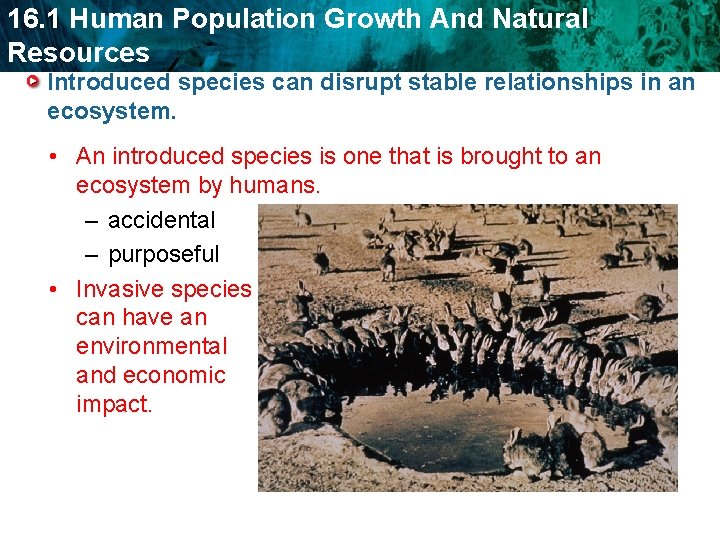
16. 1 Human Population Growth And Natural Resources Introduced species can disrupt stable relationships in an ecosystem. • An introduced species is one that is brought to an ecosystem by humans. – accidental – purposeful • Invasive species can have an environmental and economic impact.
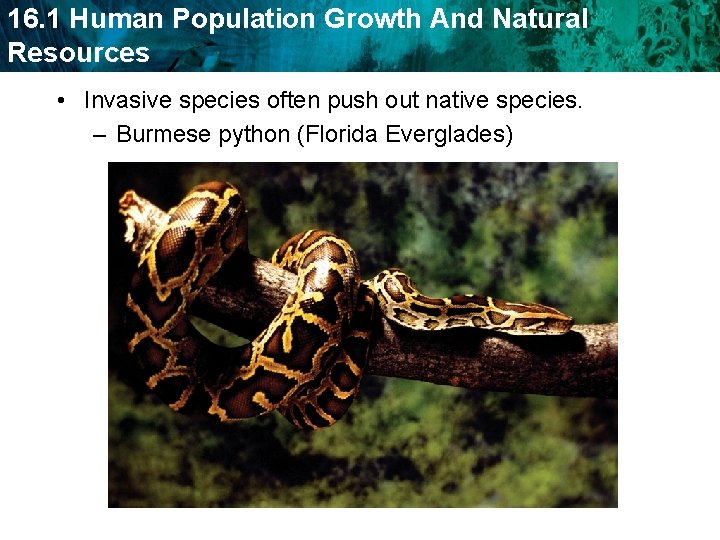
16. 1 Human Population Growth And Natural Resources • Invasive species often push out native species. – Burmese python (Florida Everglades)
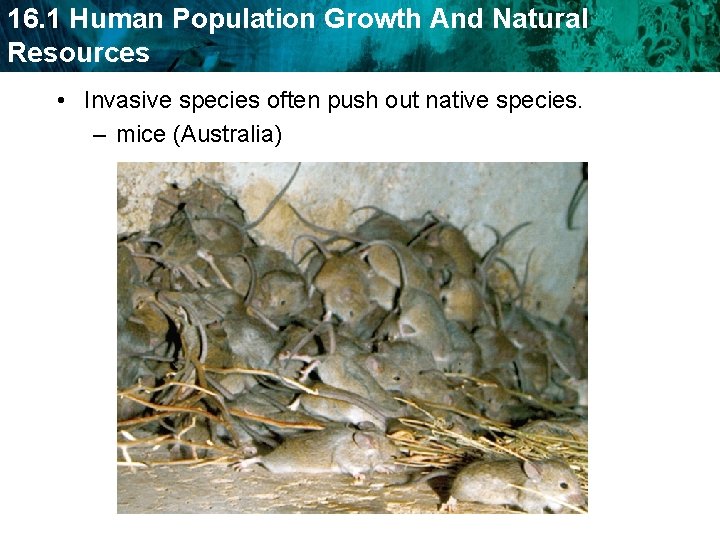
16. 1 Human Population Growth And Natural Resources • Invasive species often push out native species. – mice (Australia)
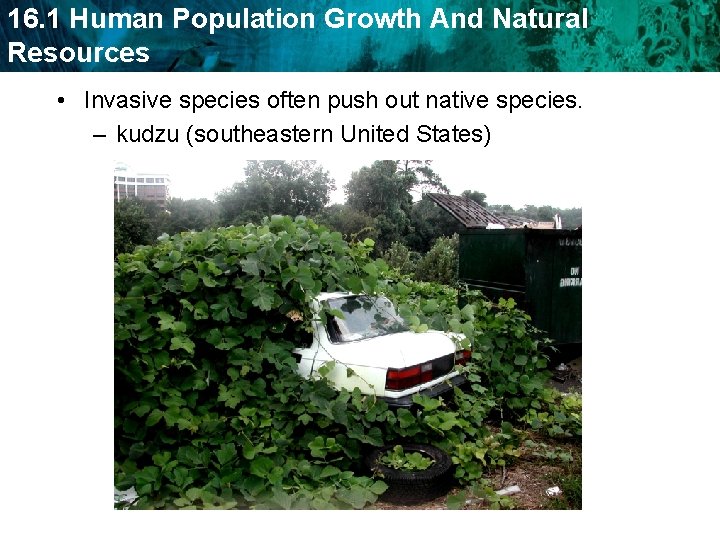
16. 1 Human Population Growth And Natural Resources • Invasive species often push out native species. – kudzu (southeastern United States)
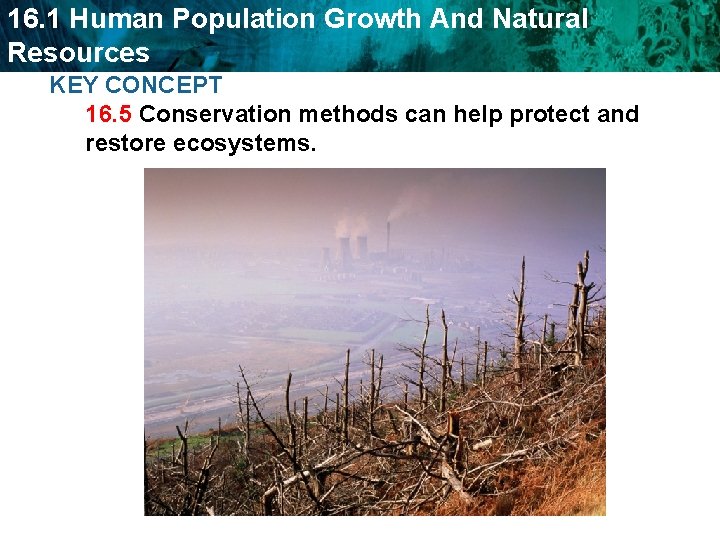
16. 1 Human Population Growth And Natural Resources KEY CONCEPT 16. 5 Conservation methods can help protect and restore ecosystems.
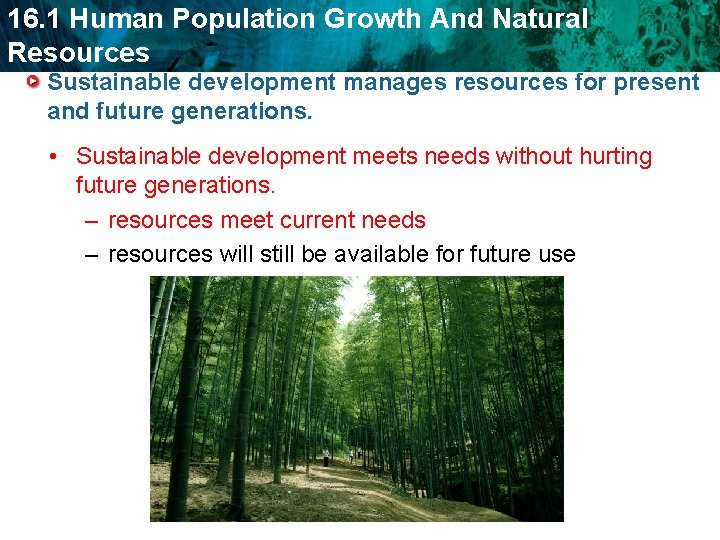
16. 1 Human Population Growth And Natural Resources Sustainable development manages resources for present and future generations. • Sustainable development meets needs without hurting future generations. – resources meet current needs – resources will still be available for future use
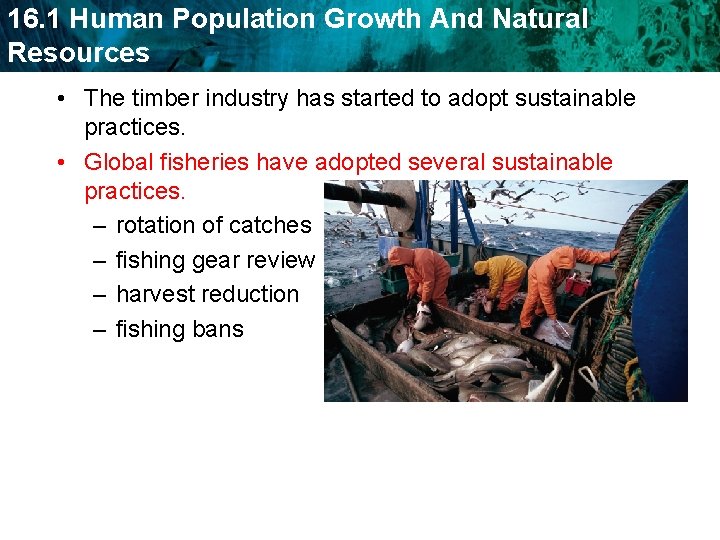
16. 1 Human Population Growth And Natural Resources • The timber industry has started to adopt sustainable practices. • Global fisheries have adopted several sustainable practices. – rotation of catches – fishing gear review – harvest reduction – fishing bans
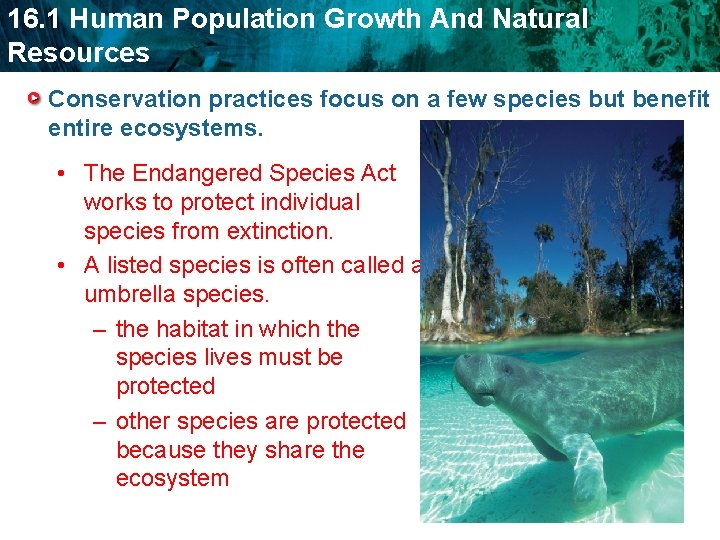
16. 1 Human Population Growth And Natural Resources Conservation practices focus on a few species but benefit entire ecosystems. • The Endangered Species Act works to protect individual species from extinction. • A listed species is often called an umbrella species. – the habitat in which the species lives must be protected – other species are protected because they share the ecosystem
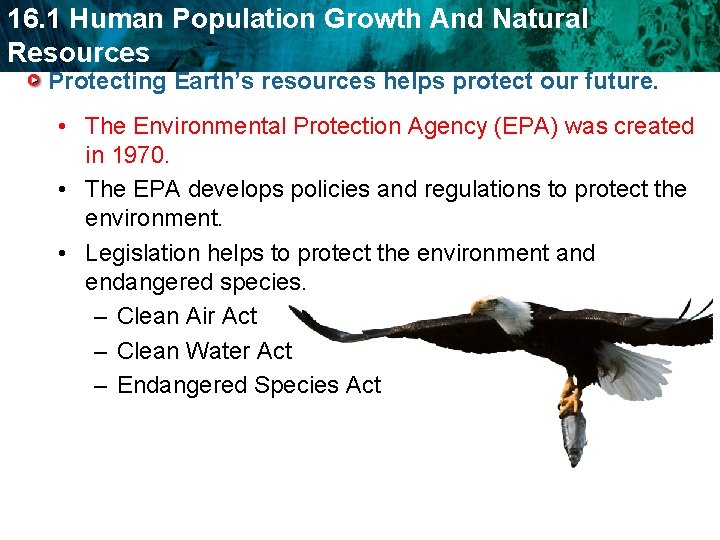
16. 1 Human Population Growth And Natural Resources Protecting Earth’s resources helps protect our future. • The Environmental Protection Agency (EPA) was created in 1970. • The EPA develops policies and regulations to protect the environment. • Legislation helps to protect the environment and endangered species. – Clean Air Act – Clean Water Act – Endangered Species Act
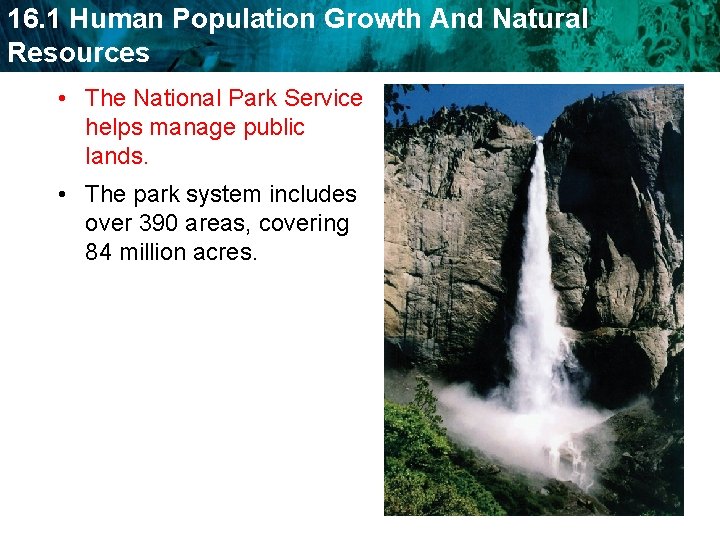
16. 1 Human Population Growth And Natural Resources • The National Park Service helps manage public lands. • The park system includes over 390 areas, covering 84 million acres.
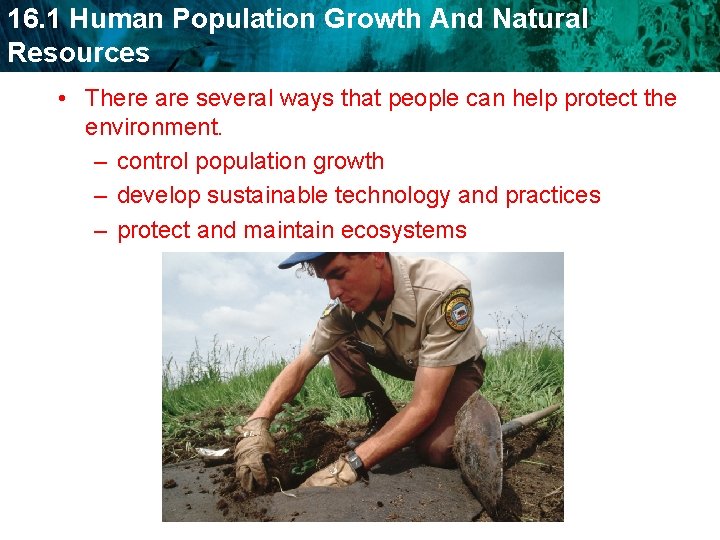
16. 1 Human Population Growth And Natural Resources • There are several ways that people can help protect the environment. – control population growth – develop sustainable technology and practices – protect and maintain ecosystems