
16 1 Human Population Growth And Natural Resources
- Slides: 33
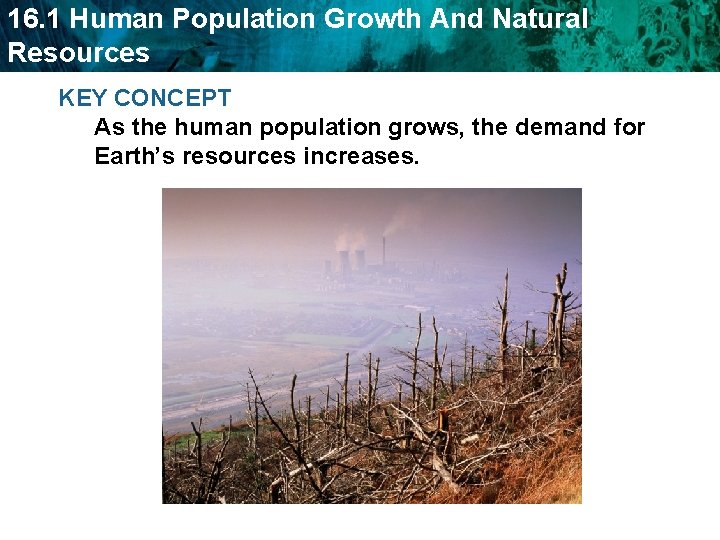
16. 1 Human Population Growth And Natural Resources KEY CONCEPT As the human population grows, the demand for Earth’s resources increases.
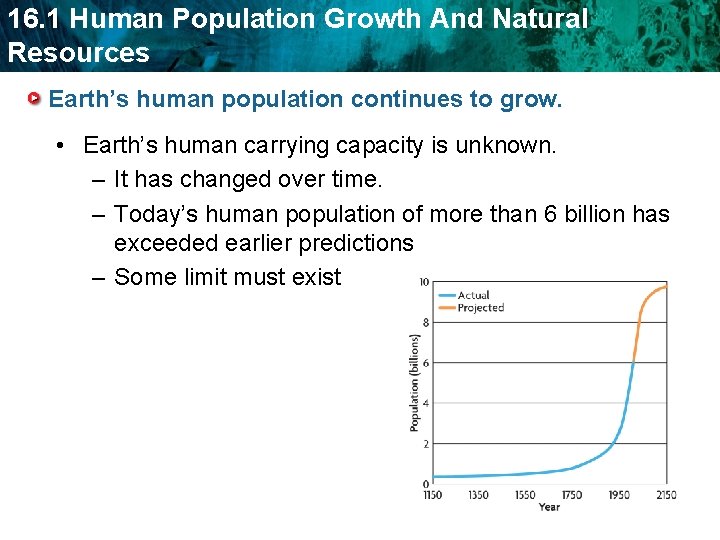
16. 1 Human Population Growth And Natural Resources Earth’s human population continues to grow. • Earth’s human carrying capacity is unknown. – It has changed over time. – Today’s human population of more than 6 billion has exceeded earlier predictions – Some limit must exist
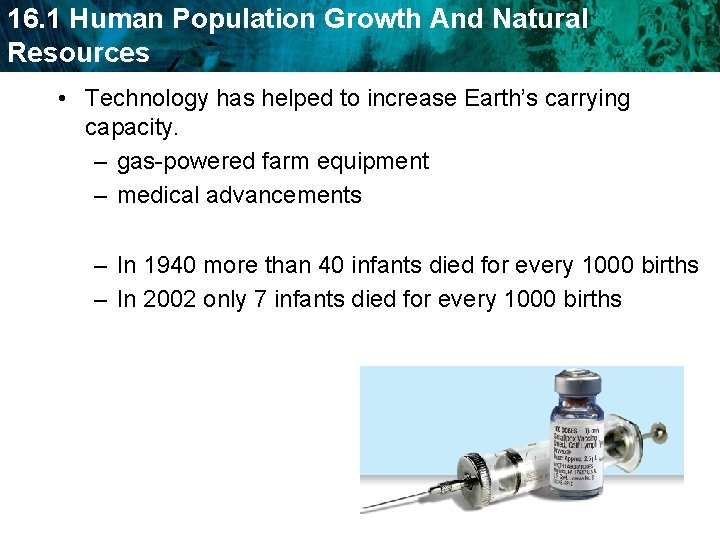
16. 1 Human Population Growth And Natural Resources • Technology has helped to increase Earth’s carrying capacity. – gas-powered farm equipment – medical advancements – In 1940 more than 40 infants died for every 1000 births – In 2002 only 7 infants died for every 1000 births
16. 1 Human Population Growth And Natural Resources The growing human population exerts pressure on Earth’s natural resources. • Nonrenewable resources are used faster than they form. – coal – Oil – The growing use of limited resources will lead to energy crisis in decades ahead unless technologies are developed to use other forms of energy.
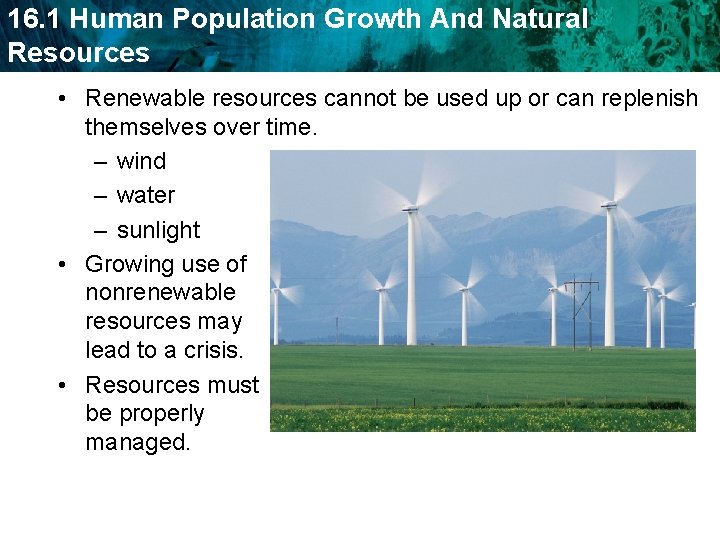
16. 1 Human Population Growth And Natural Resources • Renewable resources cannot be used up or can replenish themselves over time. – wind – water – sunlight • Growing use of nonrenewable resources may lead to a crisis. • Resources must be properly managed.
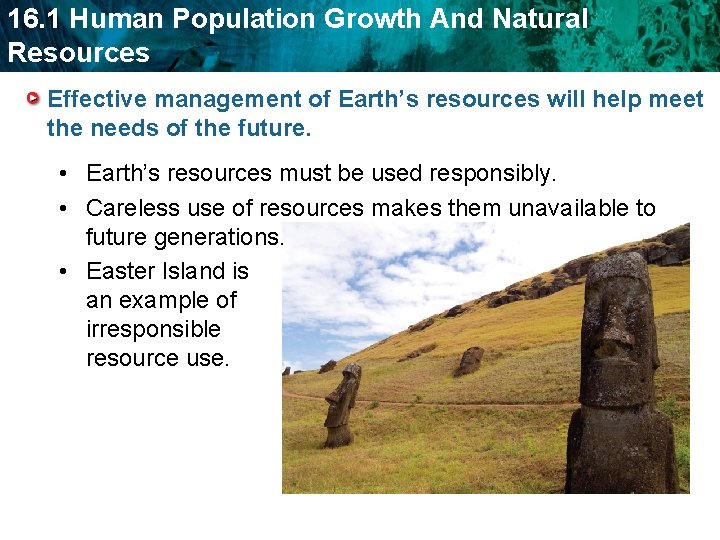
16. 1 Human Population Growth And Natural Resources Effective management of Earth’s resources will help meet the needs of the future. • Earth’s resources must be used responsibly. • Careless use of resources makes them unavailable to future generations. • Easter Island is an example of irresponsible resource use.
16. 1 Human Population Growth And Natural Resources • An ecological footprint is the amount of land needed to support a person. • The land must produce and maintain enough – food and water – shelter – energy – waste
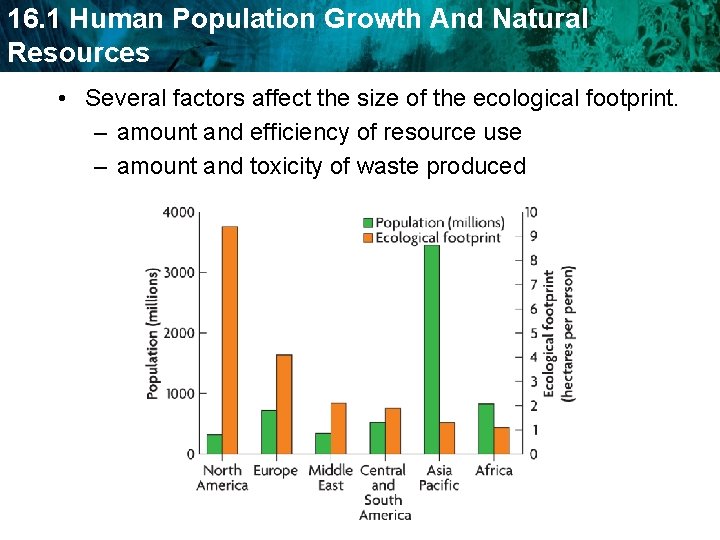
16. 1 Human Population Growth And Natural Resources • Several factors affect the size of the ecological footprint. – amount and efficiency of resource use – amount and toxicity of waste produced
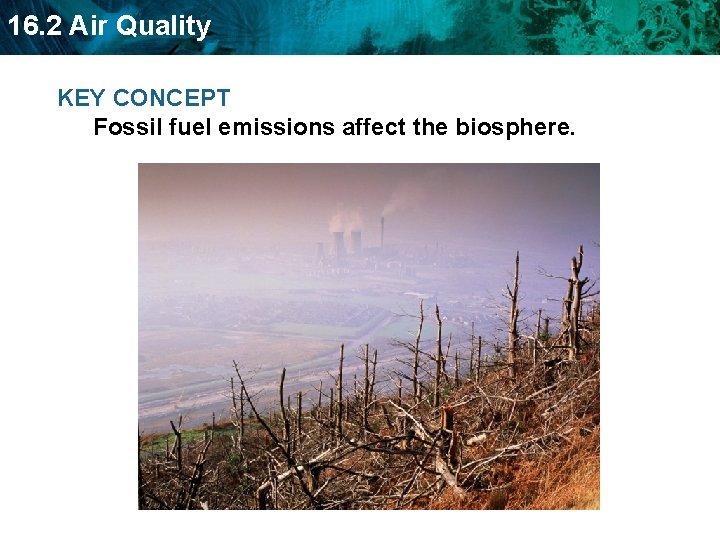
16. 2 Air Quality KEY CONCEPT Fossil fuel emissions affect the biosphere.
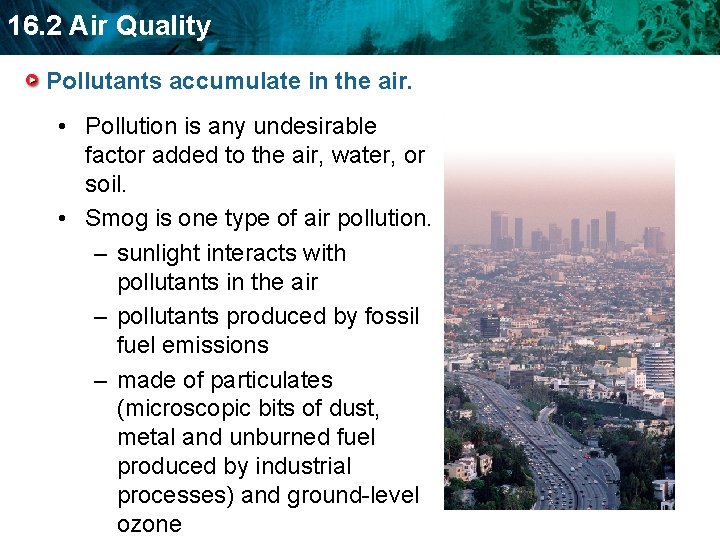
16. 2 Air Quality Pollutants accumulate in the air. • Pollution is any undesirable factor added to the air, water, or soil. • Smog is one type of air pollution. – sunlight interacts with pollutants in the air – pollutants produced by fossil fuel emissions – made of particulates (microscopic bits of dust, metal and unburned fuel produced by industrial processes) and ground-level ozone
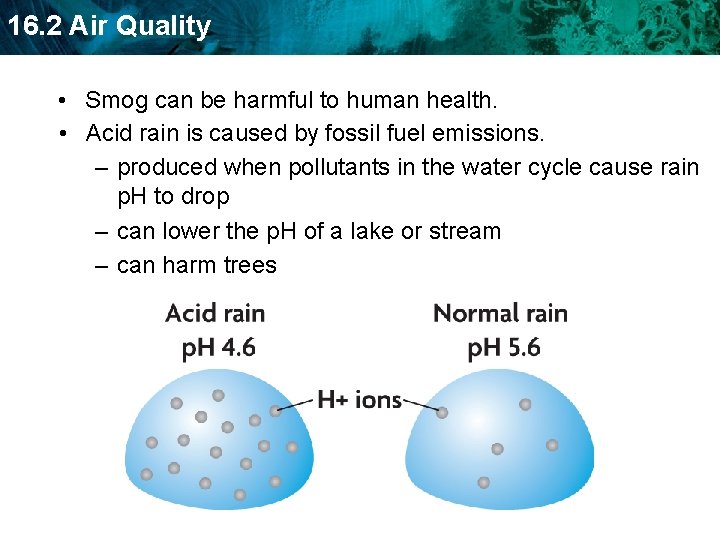
16. 2 Air Quality • Smog can be harmful to human health. • Acid rain is caused by fossil fuel emissions. – produced when pollutants in the water cycle cause rain p. H to drop – can lower the p. H of a lake or stream – can harm trees
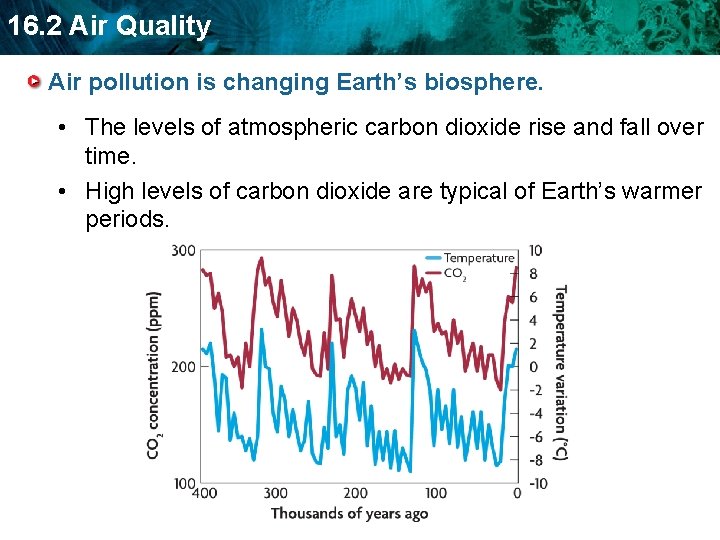
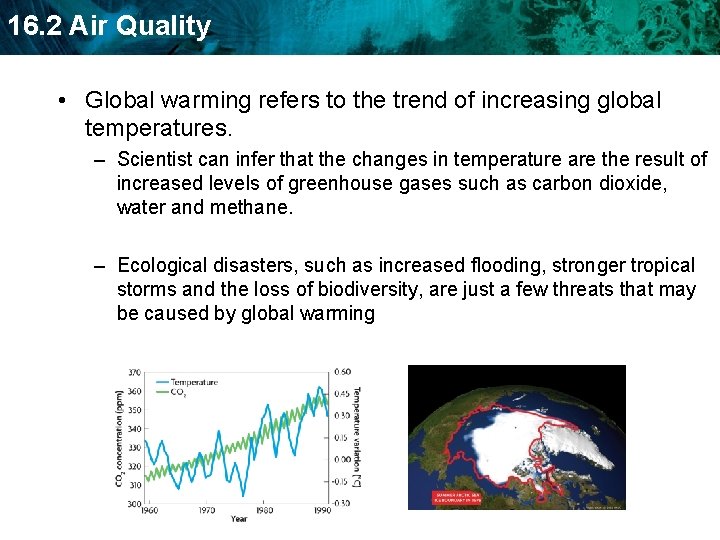
16. 2 Air Quality Air pollution is changing Earth’s biosphere. • The levels of atmospheric carbon dioxide rise and fall over time. • High levels of carbon dioxide are typical of Earth’s warmer periods.
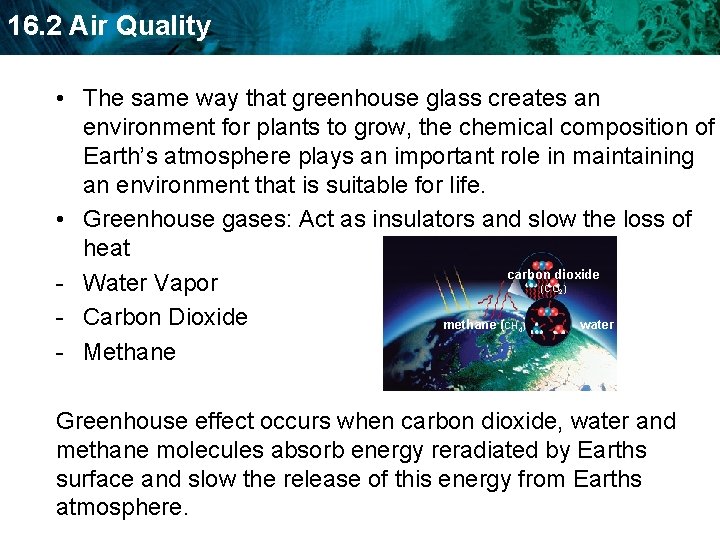
16. 2 Air Quality • The same way that greenhouse glass creates an environment for plants to grow, the chemical composition of Earth’s atmosphere plays an important role in maintaining an environment that is suitable for life. • Greenhouse gases: Act as insulators and slow the loss of heat carbon dioxide - Water Vapor (CO ) - Carbon Dioxide methane (CH ) water (H O) - Methane 2 4 2 Greenhouse effect occurs when carbon dioxide, water and methane molecules absorb energy reradiated by Earths surface and slow the release of this energy from Earths atmosphere.
16. 2 Air Quality • Global warming refers to the trend of increasing global temperatures. – Scientist can infer that the changes in temperature are the result of increased levels of greenhouse gases such as carbon dioxide, water and methane. – Ecological disasters, such as increased flooding, stronger tropical storms and the loss of biodiversity, are just a few threats that may be caused by global warming
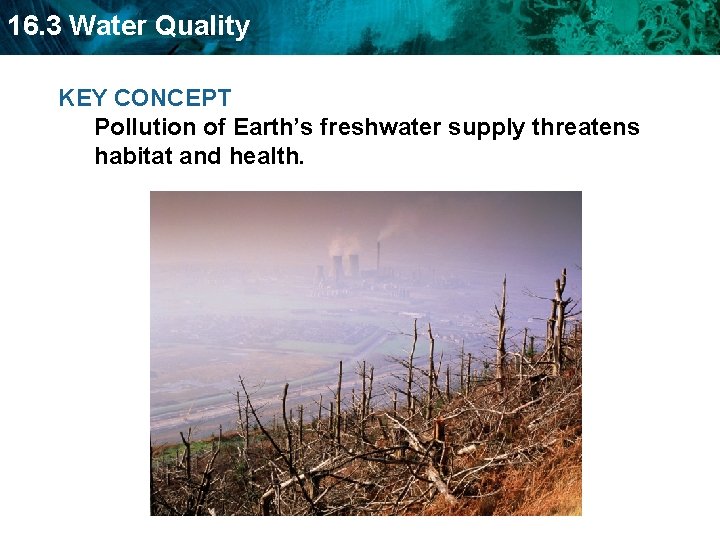
16. 3 Water Quality KEY CONCEPT Pollution of Earth’s freshwater supply threatens habitat and health.
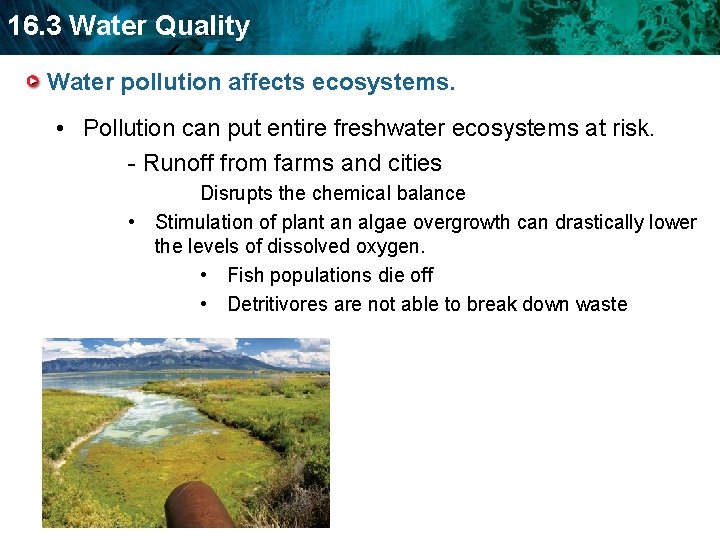
16. 3 Water Quality Water pollution affects ecosystems. • Pollution can put entire freshwater ecosystems at risk. - Runoff from farms and cities Disrupts the chemical balance • Stimulation of plant an algae overgrowth can drastically lower the levels of dissolved oxygen. • Fish populations die off • Detritivores are not able to break down waste
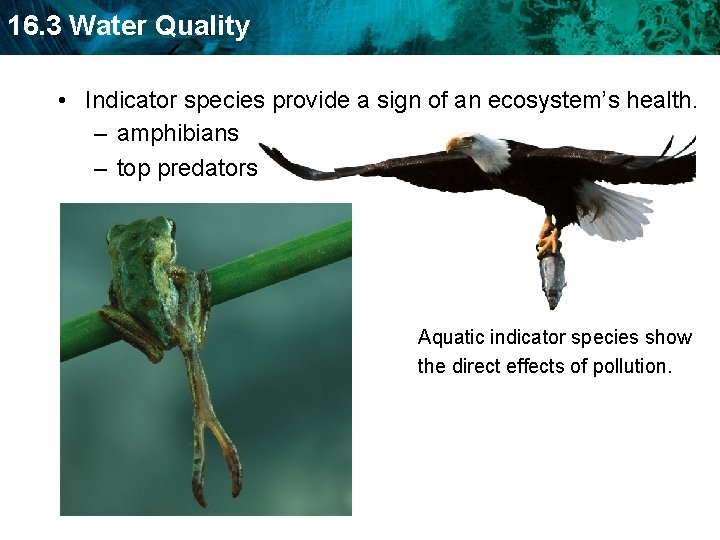
16. 3 Water Quality • Indicator species provide a sign of an ecosystem’s health. – amphibians – top predators Aquatic indicator species show the direct effects of pollution.
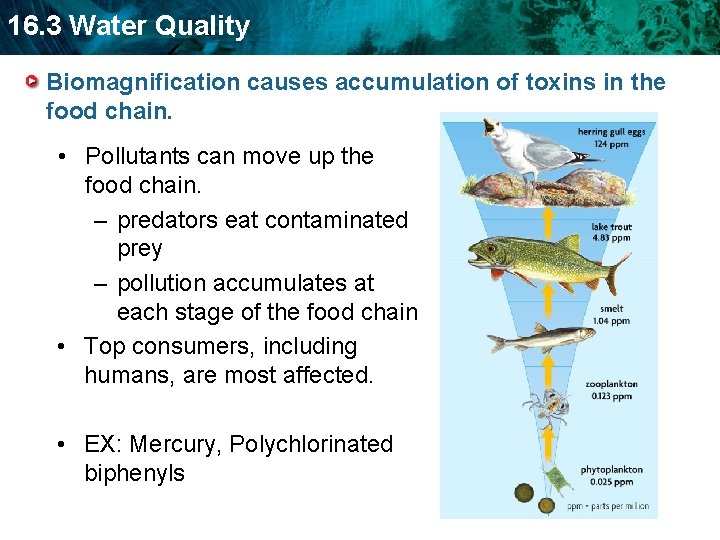
16. 3 Water Quality Biomagnification causes accumulation of toxins in the food chain. • Pollutants can move up the food chain. – predators eat contaminated prey – pollution accumulates at each stage of the food chain • Top consumers, including humans, are most affected. • EX: Mercury, Polychlorinated biphenyls
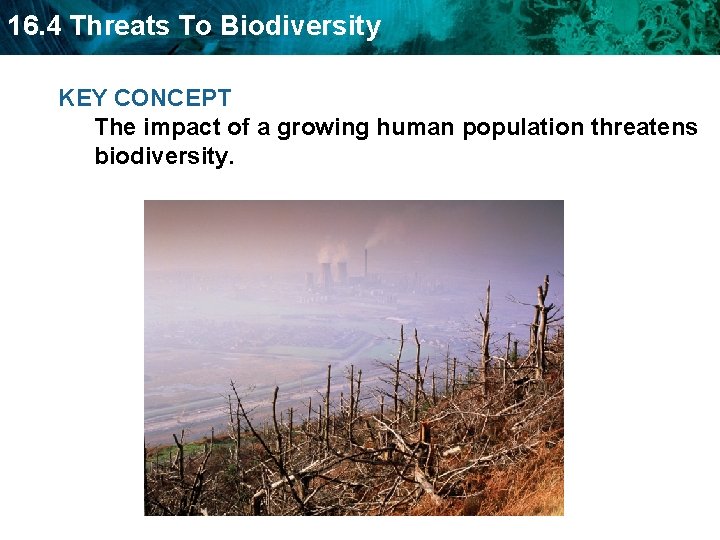
16. 4 Threats To Biodiversity KEY CONCEPT The impact of a growing human population threatens biodiversity.
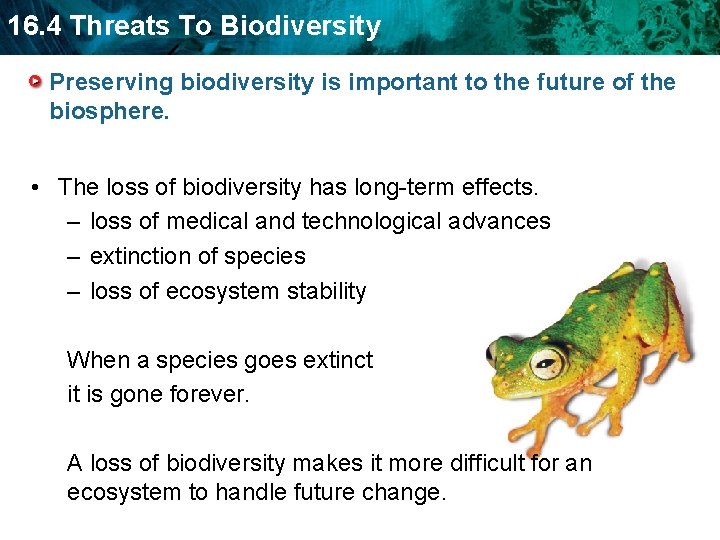
16. 4 Threats To Biodiversity Preserving biodiversity is important to the future of the biosphere. • The loss of biodiversity has long-term effects. – loss of medical and technological advances – extinction of species – loss of ecosystem stability When a species goes extinct it is gone forever. A loss of biodiversity makes it more difficult for an ecosystem to handle future change.
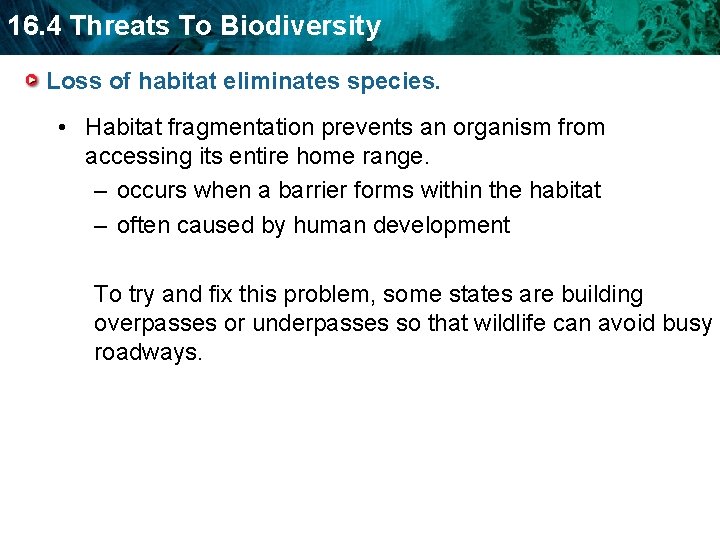
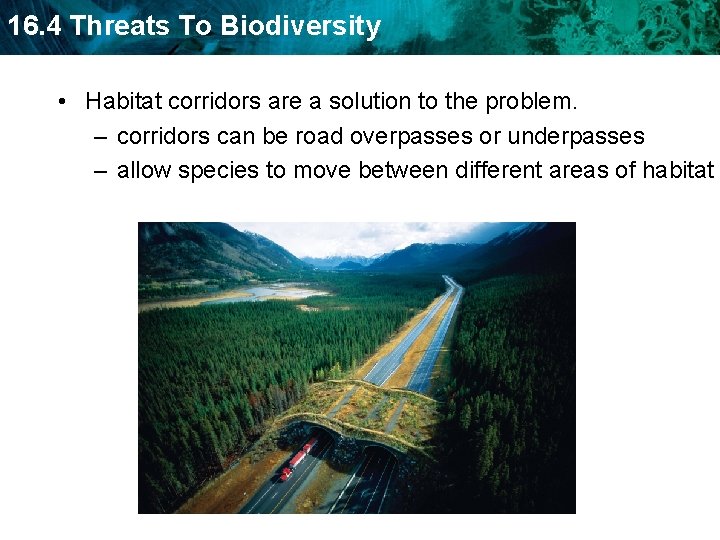
16. 4 Threats To Biodiversity Loss of habitat eliminates species. • Habitat fragmentation prevents an organism from accessing its entire home range. – occurs when a barrier forms within the habitat – often caused by human development To try and fix this problem, some states are building overpasses or underpasses so that wildlife can avoid busy roadways.
16. 4 Threats To Biodiversity • Habitat corridors are a solution to the problem. – corridors can be road overpasses or underpasses – allow species to move between different areas of habitat
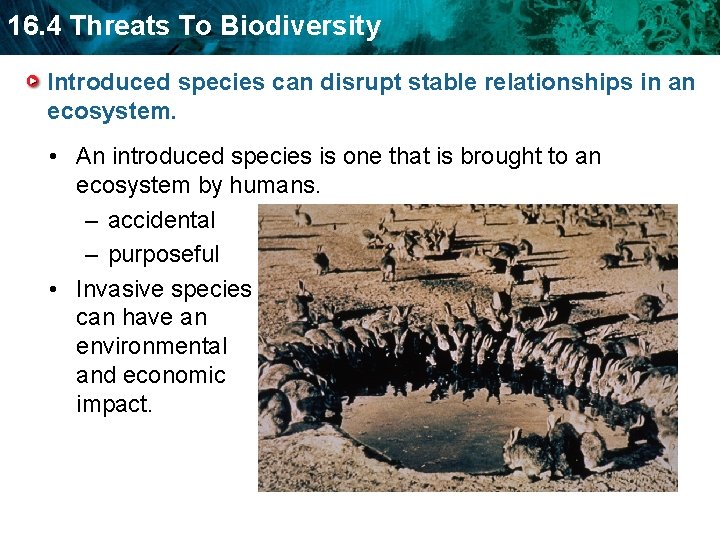
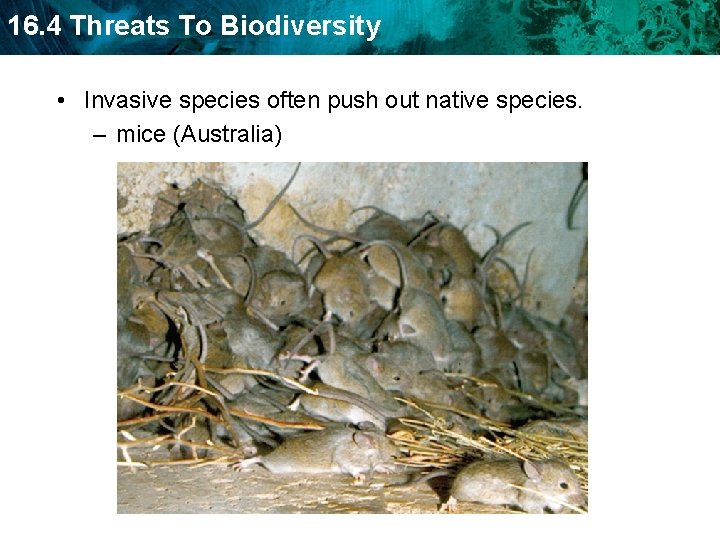
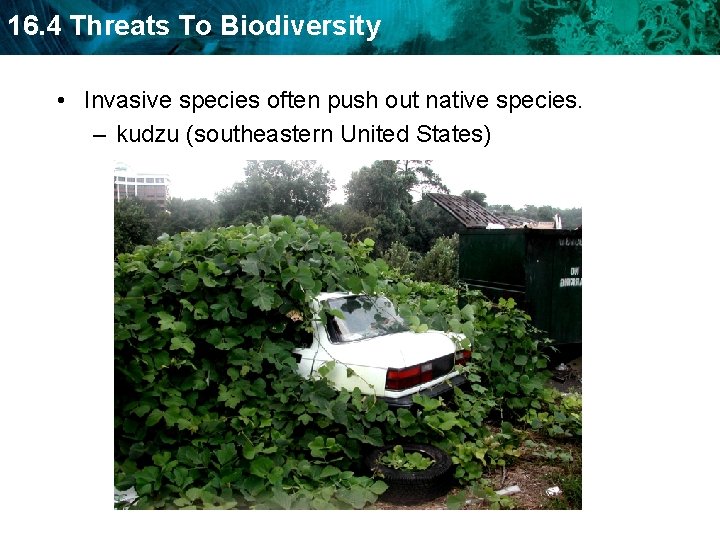
16. 4 Threats To Biodiversity Introduced species can disrupt stable relationships in an ecosystem. • An introduced species is one that is brought to an ecosystem by humans. – accidental – purposeful • Invasive species can have an environmental and economic impact.
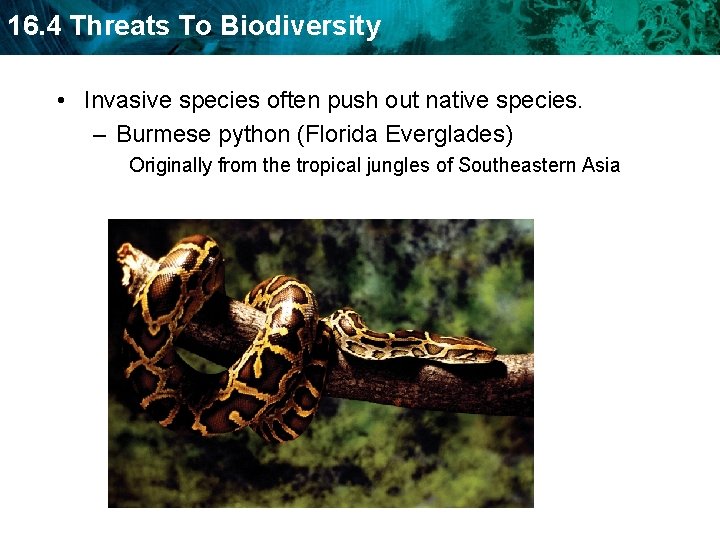
16. 4 Threats To Biodiversity • Invasive species often push out native species. – Burmese python (Florida Everglades) Originally from the tropical jungles of Southeastern Asia
16. 4 Threats To Biodiversity • Invasive species often push out native species. – mice (Australia)
16. 4 Threats To Biodiversity • Invasive species often push out native species. – kudzu (southeastern United States)
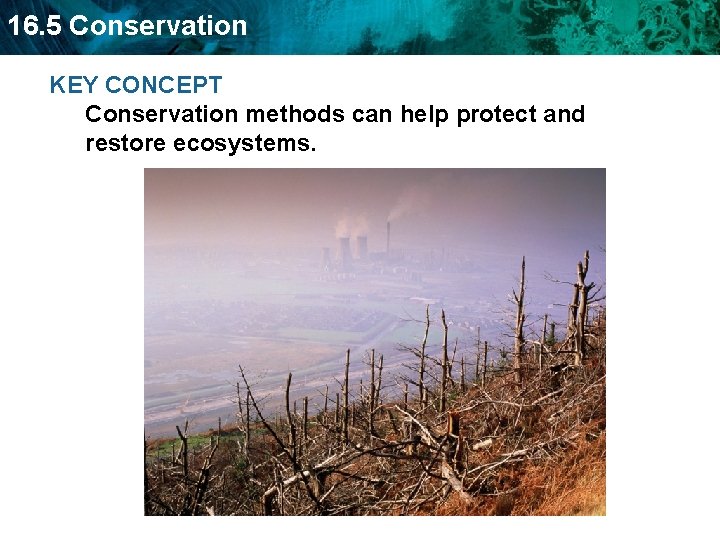
16. 5 Conservation KEY CONCEPT Conservation methods can help protect and restore ecosystems.
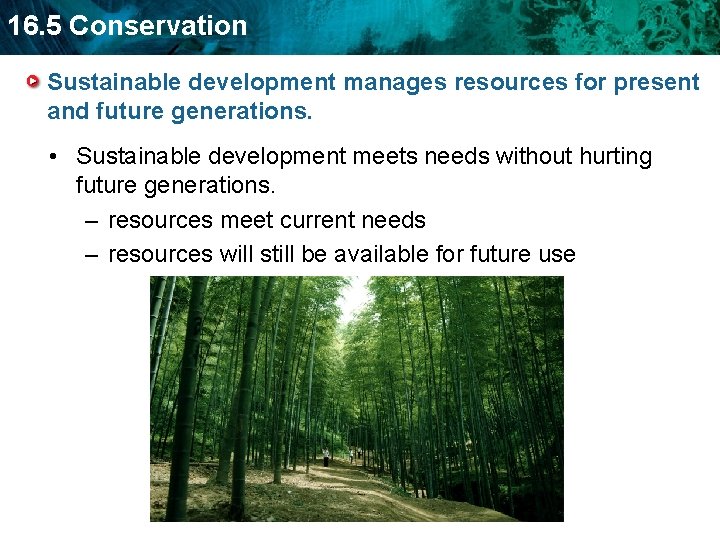
16. 5 Conservation Sustainable development manages resources for present and future generations. • Sustainable development meets needs without hurting future generations. – resources meet current needs – resources will still be available for future use
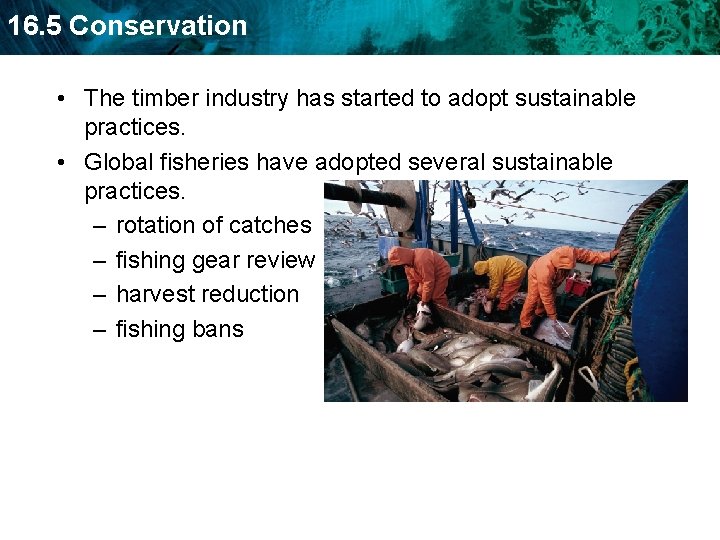
16. 5 Conservation • The timber industry has started to adopt sustainable practices. • Global fisheries have adopted several sustainable practices. – rotation of catches – fishing gear review – harvest reduction – fishing bans
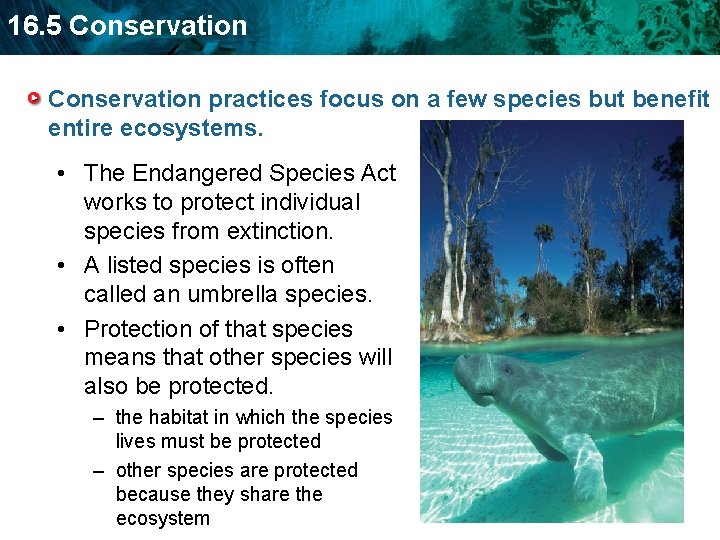
16. 5 Conservation practices focus on a few species but benefit entire ecosystems. • The Endangered Species Act works to protect individual species from extinction. • A listed species is often called an umbrella species. • Protection of that species means that other species will also be protected. – the habitat in which the species lives must be protected – other species are protected because they share the ecosystem
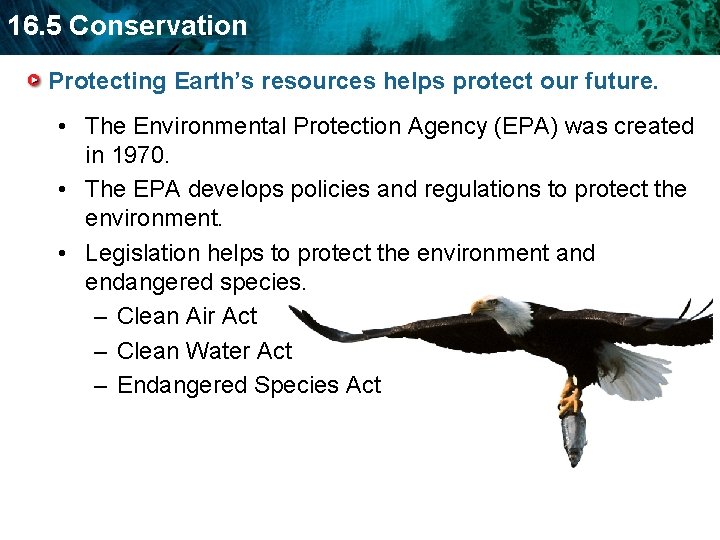
16. 5 Conservation Protecting Earth’s resources helps protect our future. • The Environmental Protection Agency (EPA) was created in 1970. • The EPA develops policies and regulations to protect the environment. • Legislation helps to protect the environment and endangered species. – Clean Air Act – Clean Water Act – Endangered Species Act
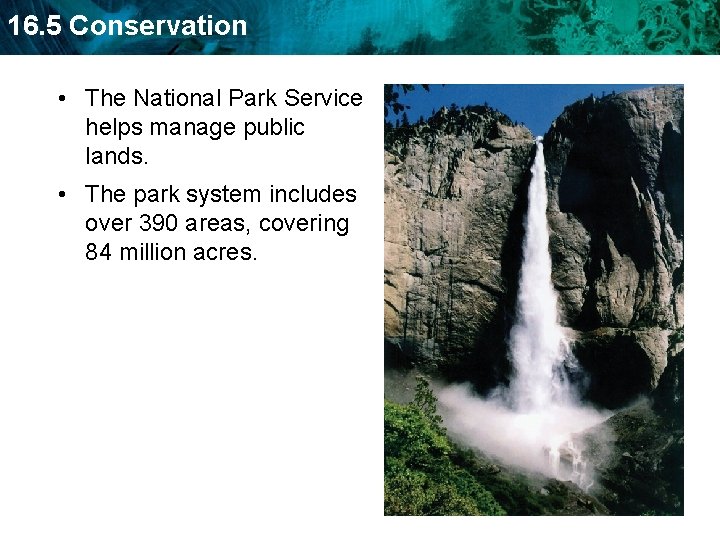
16. 5 Conservation • The National Park Service helps manage public lands. • The park system includes over 390 areas, covering 84 million acres.
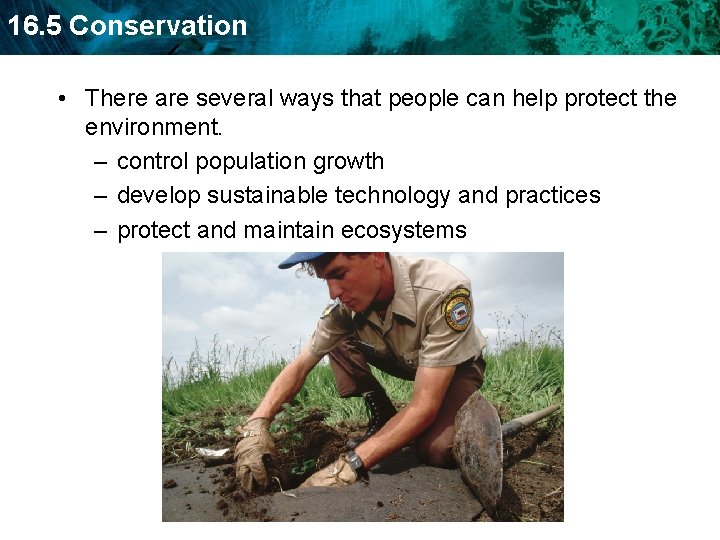
16. 5 Conservation • There are several ways that people can help protect the environment. – control population growth – develop sustainable technology and practices – protect and maintain ecosystems