
16 1 2020 Master Protocols and Platform Trials
- Slides: 31
16. 1. 2020 Master Protocols and Platform Trials in Type 1 Diabetes Prof. Adrian Mander Centre for Trials Research, Cardiff University Intelligent Clinical Trials in INNODIA
Outline • Introduce INNODIA network • Introduce the FDA guidelines on Master Protocols • Show Master Protocols have been used • Where are we with the INNODIA master protocol
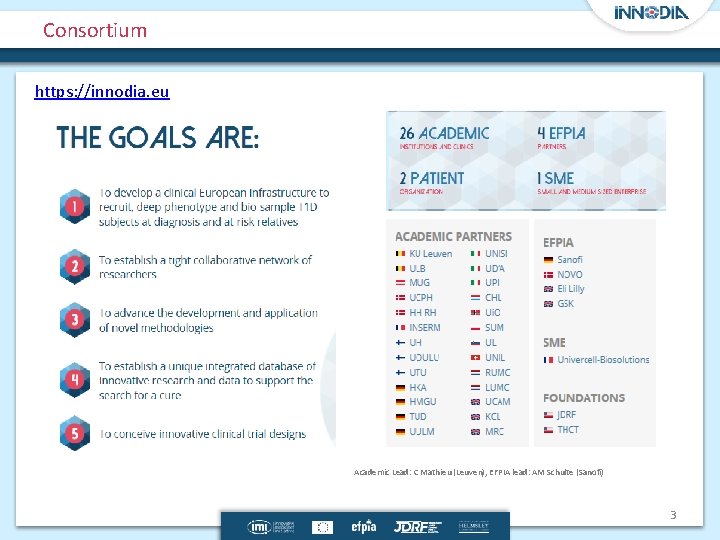
Consortium https: //innodia. eu Academic Lead: C Mathieu (Leuven), EFPIA lead: AM Schulte (Sanofi) 3
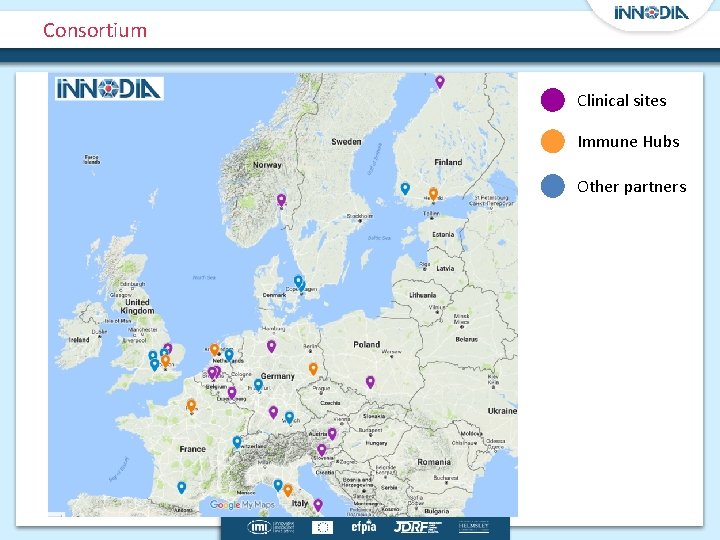
Consortium Clinical sites Immune Hubs Other partners
Accredited Clinical Network 15 clinical sites across 10 countries responsible for the care of over 15 thousand people with Type 1 Diabetes All sites have been accredited by INNODIA for their capability and expertise in conducting studies and clinical trials in T 1 D Compliance with INNODIA sample and data collection (INNODIA protocol and SOPs) Accreditation included handbook, questionnaire and site visit 5
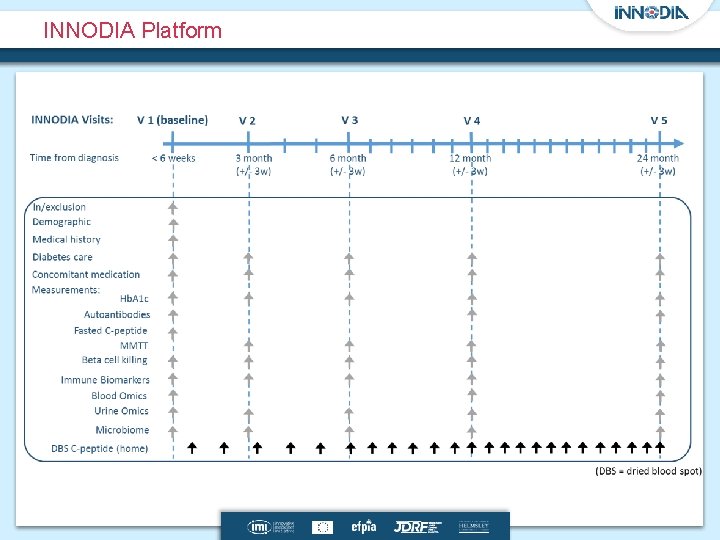
Standardisation – sample collection 1. Identical study procedures across all clinical centres a. Common study manual and SOPs for collection, preparation, storage and shipment of samples b. Including standardisation of MMTT and liquid meal used 2. Centralised analysis/storage of clinically relevant samples a. Centralised analysis of auto-antibodies, C-peptide (plasma and DBS) b. Centralised storage of samples for future ‘omics’ c. Centralised “omics” processing of samples DBS = dried blood spot, MMTT = mixed meal tolerance test 6
Master Protocol - Published information FDA published draft guideline for Master Protocols https: //www. fda. gov/downloads/Drugs/Guidance. Compliance. Regulator y. Information/Guidances/UCM 621817. pdf Recommendations for the design and conduct of trials in cancer to simultaneously investigate more than one investigational drug, and/or investigate more than one cancer type within the same trial structure References Janet Woodcock and Lisa M La. Vange (2017) "Master protocols to study multiple therapies, multiple diseases, or both" NEJM MW Redman and CJ Allegra (2015) "The Master protocol concept” Semin. Oncol. A Hirakawaa et al. (2018) “Master protocol trials in oncology: Review and new trial designs" Cont. Clin. Trials Comms.
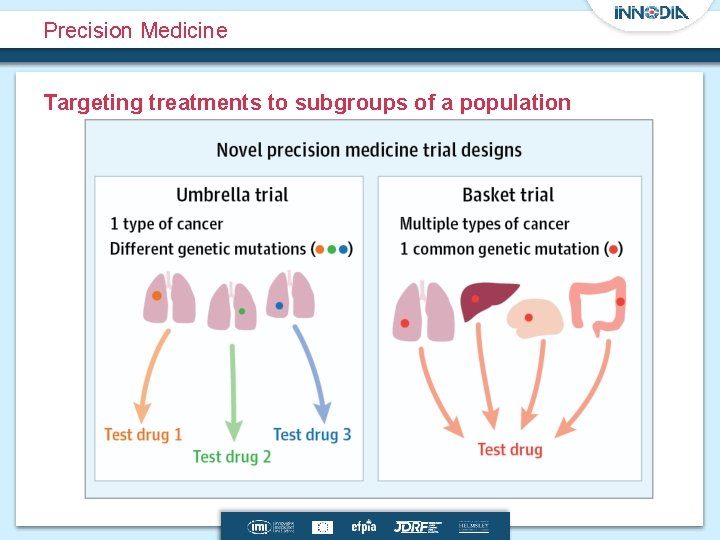
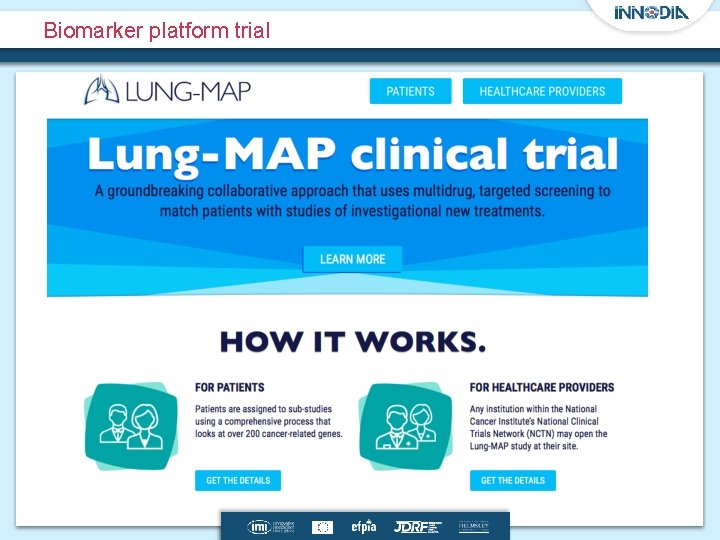
Background Operational Efficiency Expediting late-stage drug development through • Developing trials designs that test multiple drugs and/or multiple cancer subpopulations in parallel under a single protocol (master protocol) • Master protocol is often used to describe the design of trials such as – Umbrella, basket or platform trials – Example include Lung-MAP, NCI-MATCH trial and I-Spy 2 trials • Given a single infrastructure these trials need to be well designed and conducted to ensure patient safety and to obtain quality data.
Precision Medicine Targeting treatments to subgroups of a population
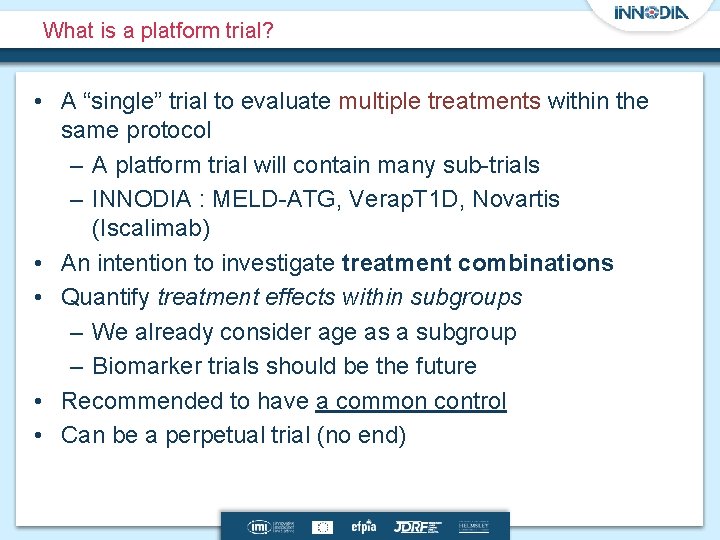
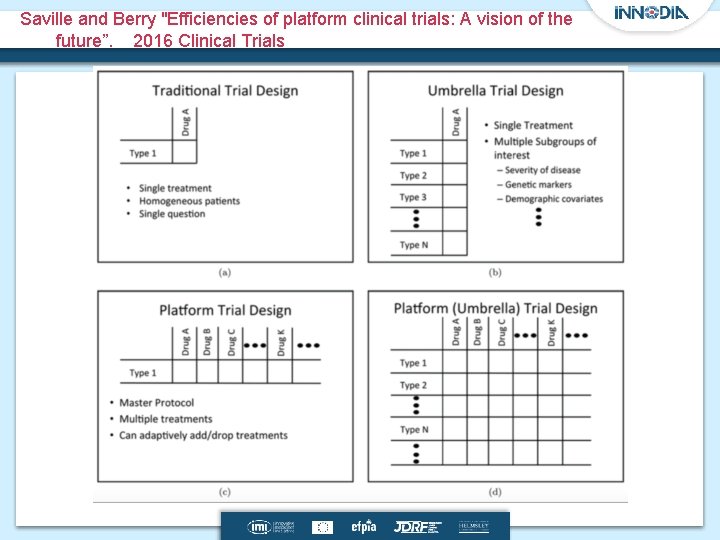
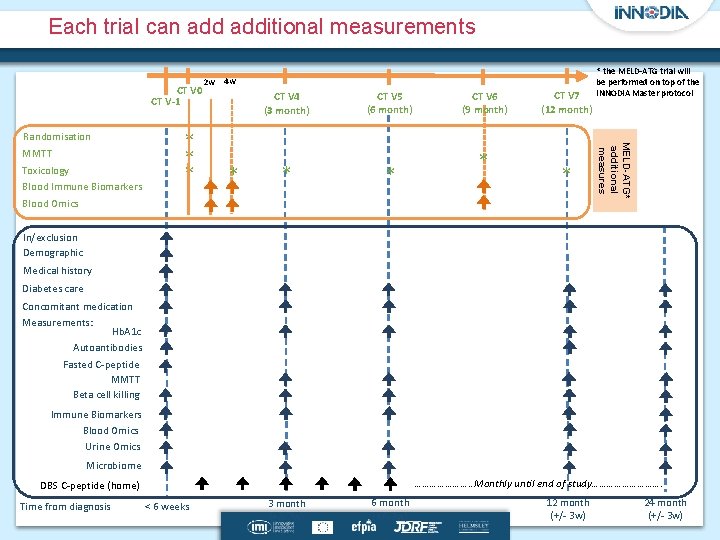
What is a platform trial? • A “single” trial to evaluate multiple treatments within the same protocol – A platform trial will contain many sub-trials – INNODIA : MELD-ATG, Verap. T 1 D, Novartis (Iscalimab) • An intention to investigate treatment combinations • Quantify treatment effects within subgroups – We already consider age as a subgroup – Biomarker trials should be the future • Recommended to have a common control • Can be a perpetual trial (no end)
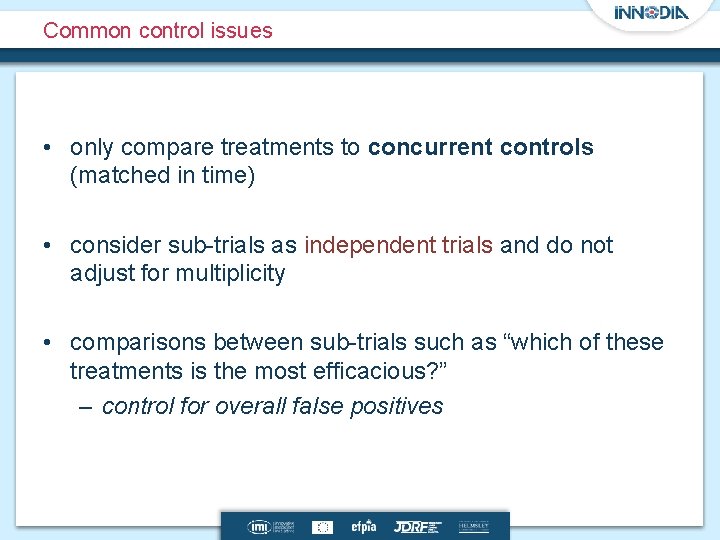
Common control issues • only compare treatments to concurrent controls (matched in time) • consider sub-trials as independent trials and do not adjust for multiplicity • comparisons between sub-trials such as “which of these treatments is the most efficacious? ” – control for overall false positives
Saville and Berry "Efficiencies of platform clinical trials: A vision of the future”. 2016 Clinical Trials
Biomarker platform trial
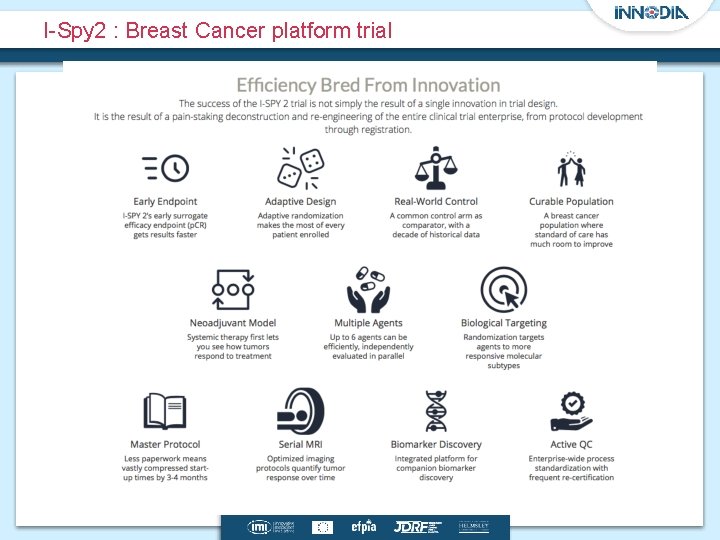
I-Spy 2 : Breast Cancer platform trial
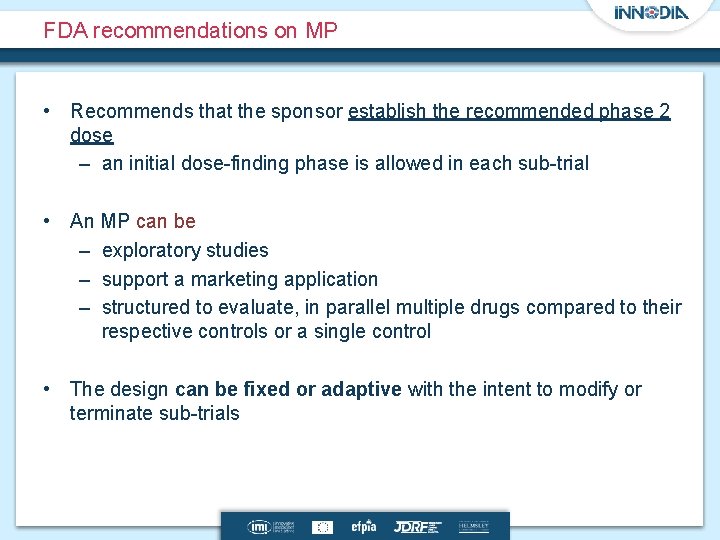
FDA recommendations on MP • Recommends that the sponsor establish the recommended phase 2 dose – an initial dose-finding phase is allowed in each sub-trial • An MP can be – exploratory studies – support a marketing application – structured to evaluate, in parallel multiple drugs compared to their respective controls or a single control • The design can be fixed or adaptive with the intent to modify or terminate sub-trials
Key Areas • • Consortium building/Partnership alliances Regulatory strategy Recruitment Data management Safety management Drug Acquisition and Management Trial Oversight (financial, contractual, IT, etc. . ) Training/Education
INNODIA Platform
Each trial can additional measurements CT V 0 CT V-1 MMTT Toxicology Blood Immune Biomarkers Blood Omics * * * 4 w CT V 4 (3 month) * * CT V 5 (6 month) * CT V 6 (9 month) * CT V 7 (12 month) * * the MELD-ATG trial will be performed on top of the INNODIA Master protocol MELD-ATG* additional measures Randomisation 2 w In/exclusion Demographic Medical history Diabetes care Concomitant medication Measurements: Hb. A 1 c Autoantibodies Fasted C-peptide MMTT Beta cell killing Immune Biomarkers Blood Omics Urine Omics Microbiome …………………. . Monthly until end of study……………. DBS C-peptide (home) Time from diagnosis < 6 weeks 3 month (+/- 3 w) 6 month (+/- 3 w) 12 month (+/- 3 w) 24 month (+/- 3 w)
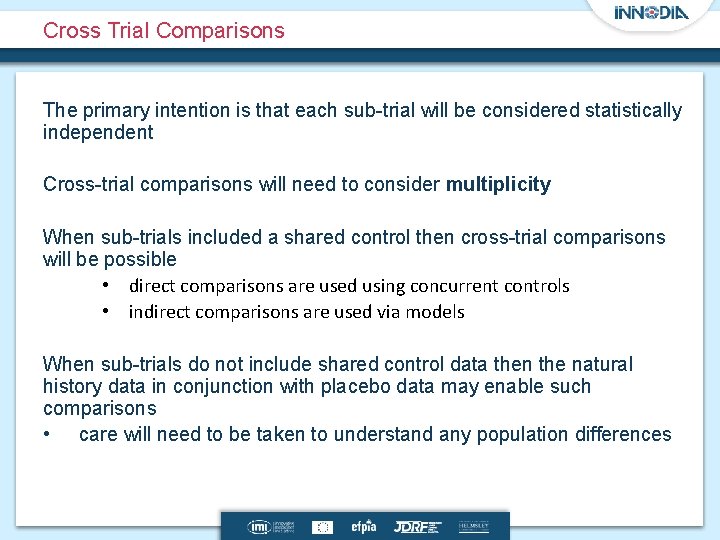
Cross Trial Comparisons The primary intention is that each sub-trial will be considered statistically independent Cross-trial comparisons will need to consider multiplicity When sub-trials included a shared control then cross-trial comparisons will be possible • direct comparisons are used using concurrent controls • indirect comparisons are used via models When sub-trials do not include shared control data then the natural history data in conjunction with placebo data may enable such comparisons • care will need to be taken to understand any population differences
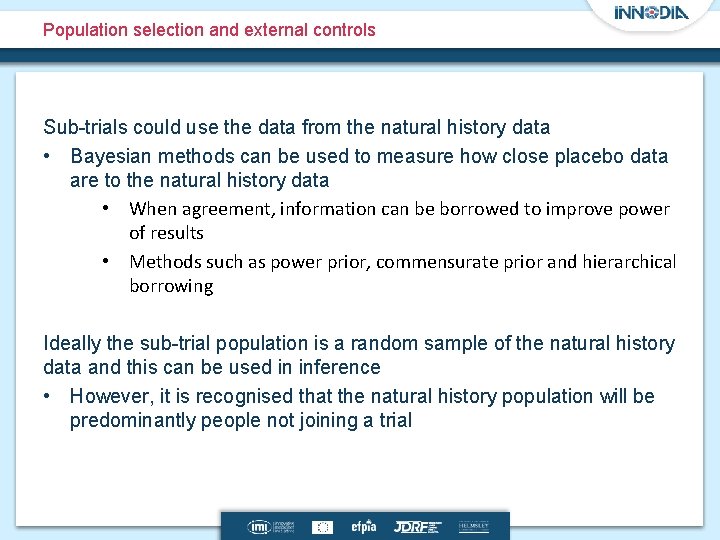
Population selection and external controls Sub-trials could use the data from the natural history data • Bayesian methods can be used to measure how close placebo data are to the natural history data • When agreement, information can be borrowed to improve power of results • Methods such as power prior, commensurate prior and hierarchical borrowing Ideally the sub-trial population is a random sample of the natural history data and this can be used in inference • However, it is recognised that the natural history population will be predominantly people not joining a trial
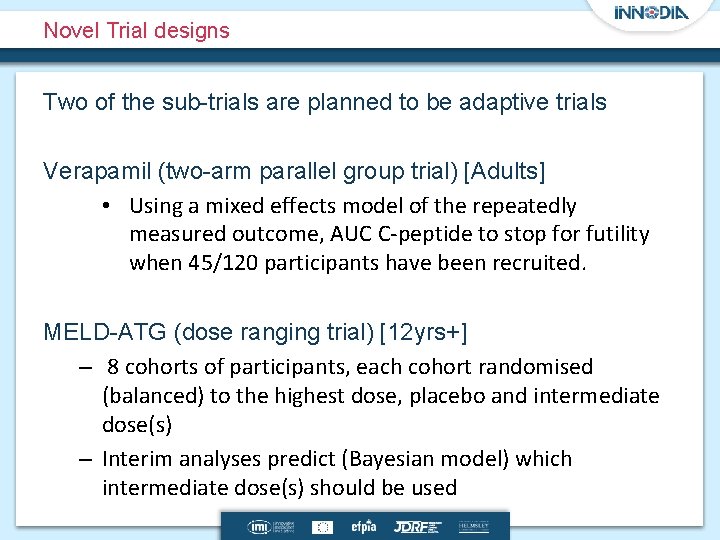
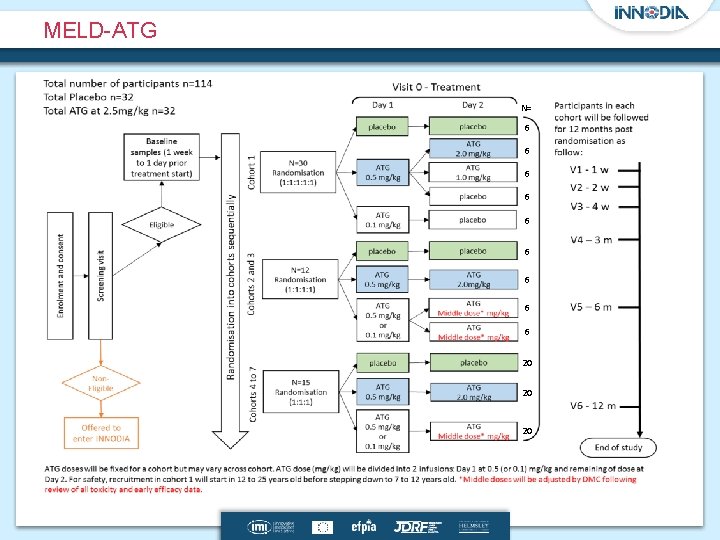
Novel Trial designs Two of the sub-trials are planned to be adaptive trials Verapamil (two-arm parallel group trial) [Adults] • Using a mixed effects model of the repeatedly measured outcome, AUC C-peptide to stop for futility when 45/120 participants have been recruited. MELD-ATG (dose ranging trial) [12 yrs+] – 8 cohorts of participants, each cohort randomised (balanced) to the highest dose, placebo and intermediate dose(s) – Interim analyses predict (Bayesian model) which intermediate dose(s) should be used
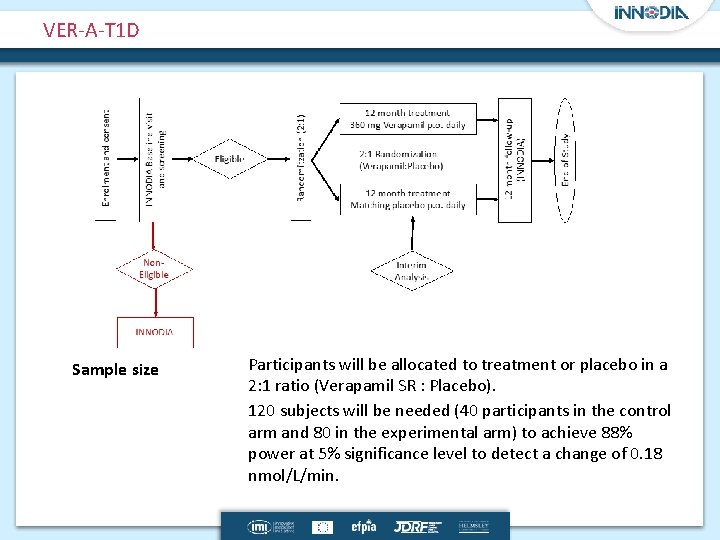
VER-A-T 1 D Sample size Participants will be allocated to treatment or placebo in a 2: 1 ratio (Verapamil SR : Placebo). 120 subjects will be needed (40 participants in the control arm and 80 in the experimental arm) to achieve 88% power at 5% significance level to detect a change of 0. 18 nmol/L/min.
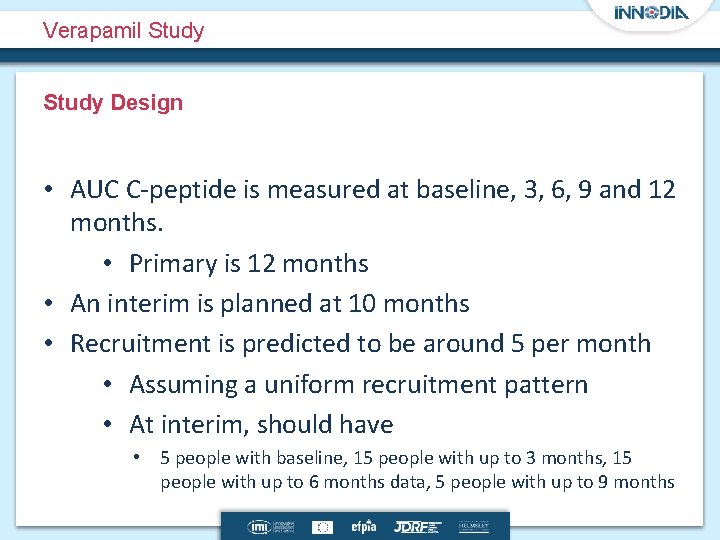
Verapamil Study Design • AUC C-peptide is measured at baseline, 3, 6, 9 and 12 months. • Primary is 12 months • An interim is planned at 10 months • Recruitment is predicted to be around 5 per month • Assuming a uniform recruitment pattern • At interim, should have • 5 people with baseline, 15 people with up to 3 months, 15 people with up to 6 months data, 5 people with up to 9 months
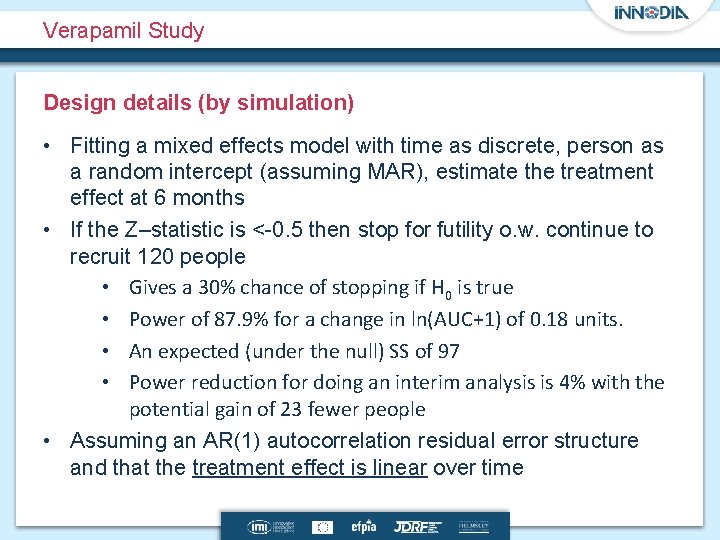
Verapamil Study Design details (by simulation) • Fitting a mixed effects model with time as discrete, person as a random intercept (assuming MAR), estimate the treatment effect at 6 months • If the Z–statistic is <-0. 5 then stop for futility o. w. continue to recruit 120 people • Gives a 30% chance of stopping if H 0 is true • Power of 87. 9% for a change in ln(AUC+1) of 0. 18 units. • An expected (under the null) SS of 97 • Power reduction for doing an interim analysis is 4% with the potential gain of 23 fewer people • Assuming an AR(1) autocorrelation residual error structure and that the treatment effect is linear over time
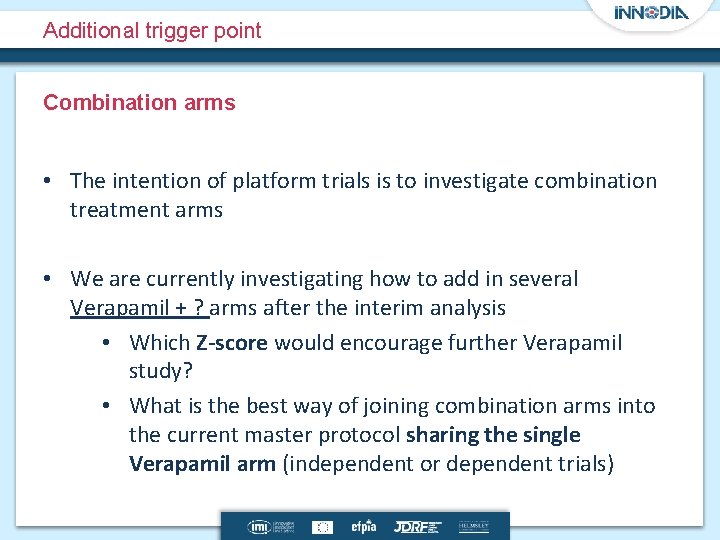
Additional trigger point Combination arms • The intention of platform trials is to investigate combination treatment arms • We are currently investigating how to add in several Verapamil + ? arms after the interim analysis • Which Z-score would encourage further Verapamil study? • What is the best way of joining combination arms into the current master protocol sharing the single Verapamil arm (independent or dependent trials)
MELD-ATG N= 6 6 6 6 6 20 20 20
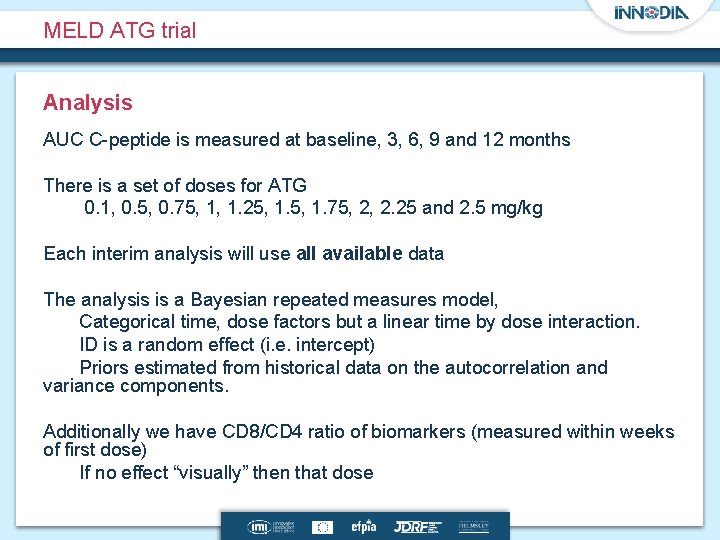
MELD ATG trial Analysis AUC C-peptide is measured at baseline, 3, 6, 9 and 12 months There is a set of doses for ATG 0. 1, 0. 5, 0. 75, 1, 1. 25, 1. 75, 2, 2. 25 and 2. 5 mg/kg Each interim analysis will use all available data The analysis is a Bayesian repeated measures model, Categorical time, dose factors but a linear time by dose interaction. ID is a random effect (i. e. intercept) Priors estimated from historical data on the autocorrelation and variance components. Additionally we have CD 8/CD 4 ratio of biomarkers (measured within weeks of first dose) If no effect “visually” then that dose
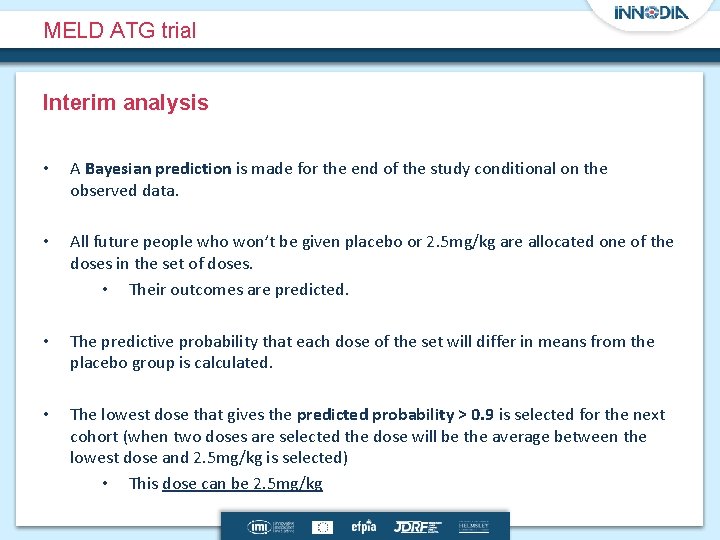
MELD ATG trial Interim analysis • A Bayesian prediction is made for the end of the study conditional on the observed data. • All future people who won’t be given placebo or 2. 5 mg/kg are allocated one of the doses in the set of doses. • Their outcomes are predicted. • The predictive probability that each dose of the set will differ in means from the placebo group is calculated. • The lowest dose that gives the predicted probability > 0. 9 is selected for the next cohort (when two doses are selected the dose will be the average between the lowest dose and 2. 5 mg/kg is selected) • This dose can be 2. 5 mg/kg
Additional information Dried Blood Spot C-peptide (DBS C-peptide) There is the potential to model more frequently measured DBS Cpeptide jointly with the Mixed Meal Tolerance Test C-peptide This would allow more accurate predictions and help with the assumptions of the primary missing outcome data.
Status and achievements (last 6 months) Master protocol EMA Scientfic Advice Ø Discussion with SAWP Scientfic officer (Dr. T Vetter) throughout 2019 Ø Final application to SAWP committee sent on August 22 for CHMPH Qualification opinion Ø Response received October 7 with list of questions Ø Written response sent to EMA SAWP sent (November 15) Ø Slide deck for F 2 F meeting to be submitted by November 20 Ø Scientific Advice F 2 F meeting scheduled for November 27 in Amsterdam Ø Studies due to start mid 2020
Conclusions MPs are difficult to write and are complex BUT they lead to operational efficiencies MPs contain standardization, common quality control, a single database across multiple studies Shared controls and the natural history data should lead to statistical efficiencies and a better understanding of results between trials