
16 1 2 Microbial Ecology 16 1 Microbes

16. 1 -2 Microbial Ecology
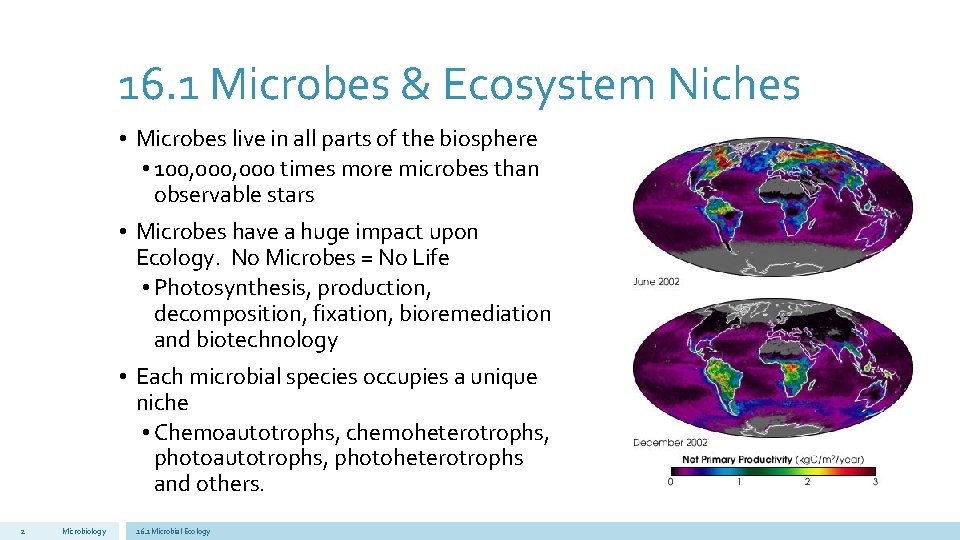
16. 1 Microbes & Ecosystem Niches • Microbes live in all parts of the biosphere • 100, 000 times more microbes than observable stars • Microbes have a huge impact upon Ecology. No Microbes = No Life • Photosynthesis, production, decomposition, fixation, bioremediation and biotechnology • Each microbial species occupies a unique niche • Chemoautotrophs, chemoheterotrophs, photoautotrophs, photoheterotrophs and others. 2 Microbiology 16. 1 Microbial Ecology
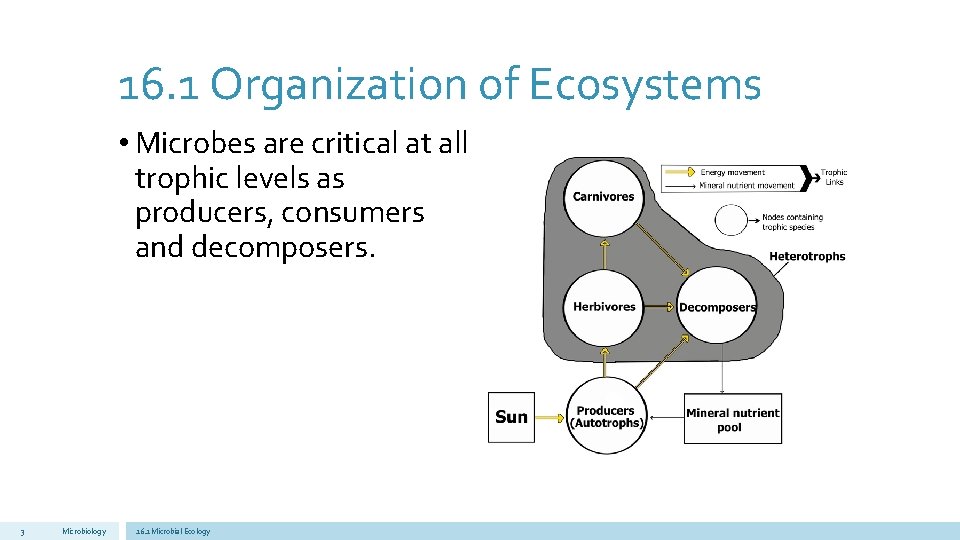
16. 1 Organization of Ecosystems • Microbes are critical at all trophic levels as producers, consumers and decomposers. 3 Microbiology 16. 1 Microbial Ecology
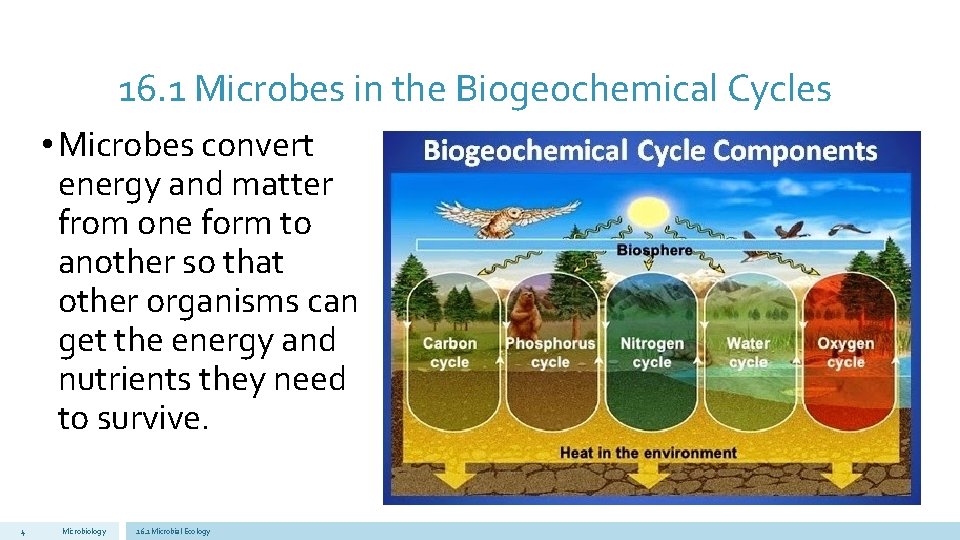
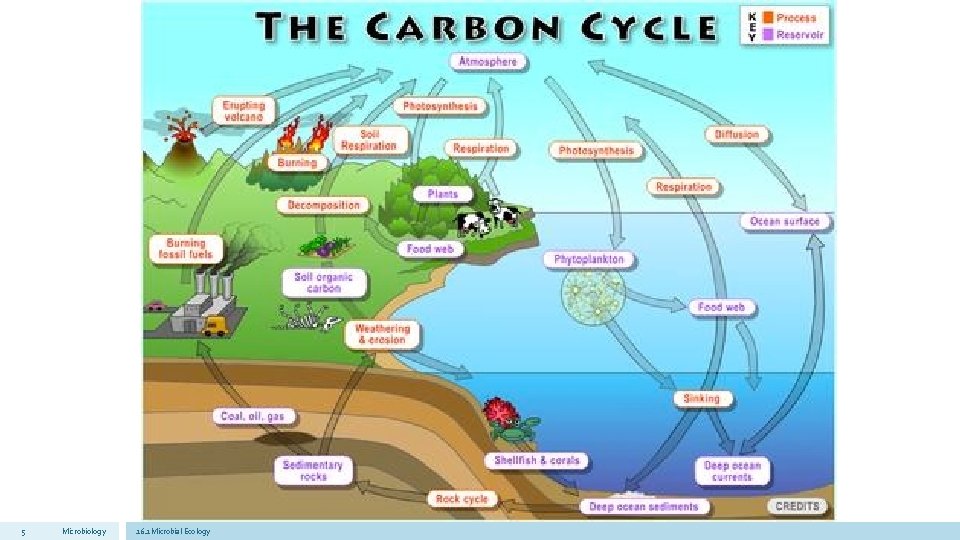
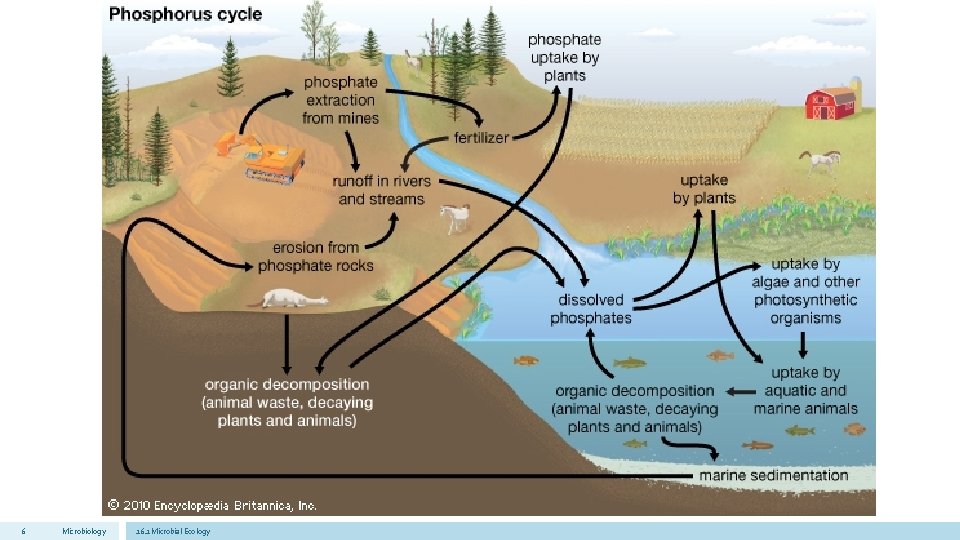
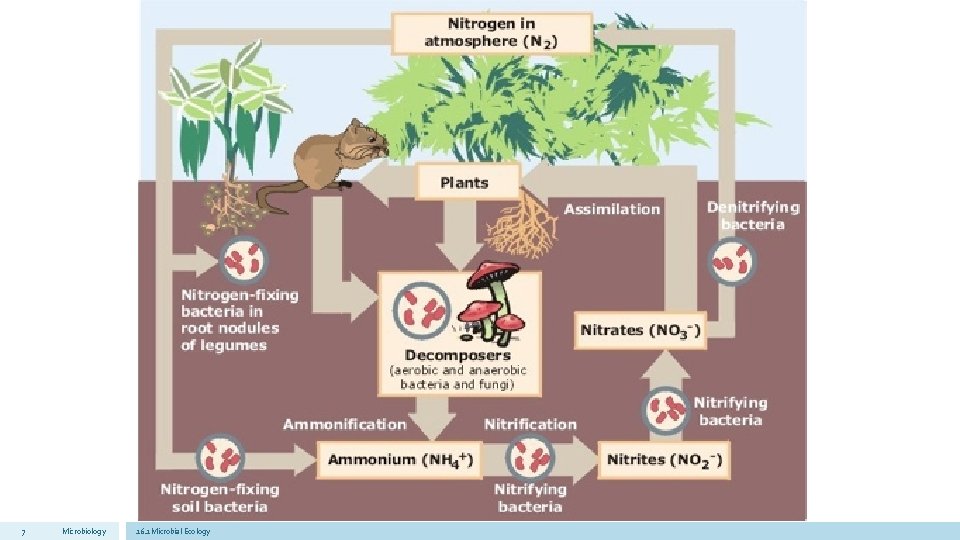
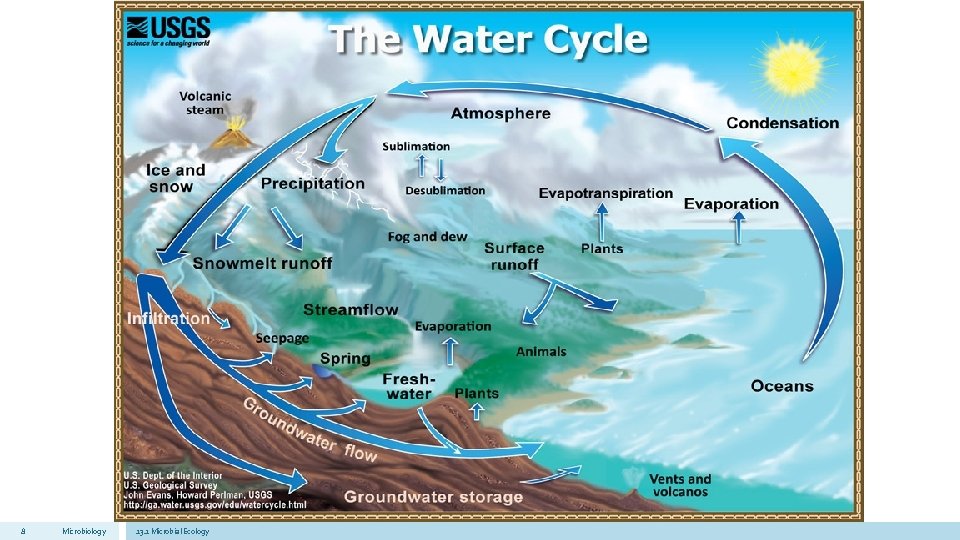
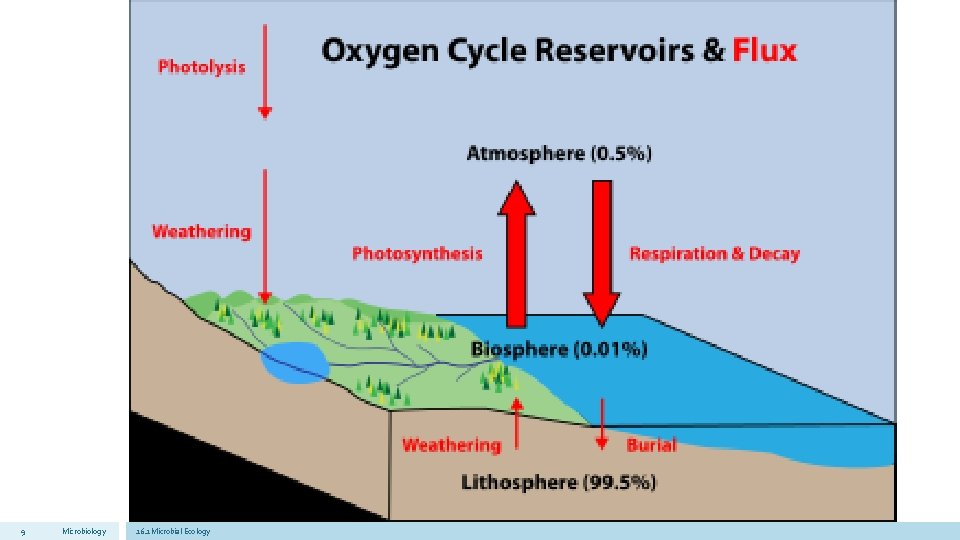
16. 1 Microbes in the Biogeochemical Cycles • Microbes convert energy and matter from one form to another so that other organisms can get the energy and nutrients they need to survive. 4 Microbiology 16. 1 Microbial Ecology
5 Microbiology 16. 1 Microbial Ecology
6 Microbiology 16. 1 Microbial Ecology
7 Microbiology 16. 1 Microbial Ecology
8 Microbiology 13. 1 Microbial Ecology
9 Microbiology 16. 1 Microbial Ecology
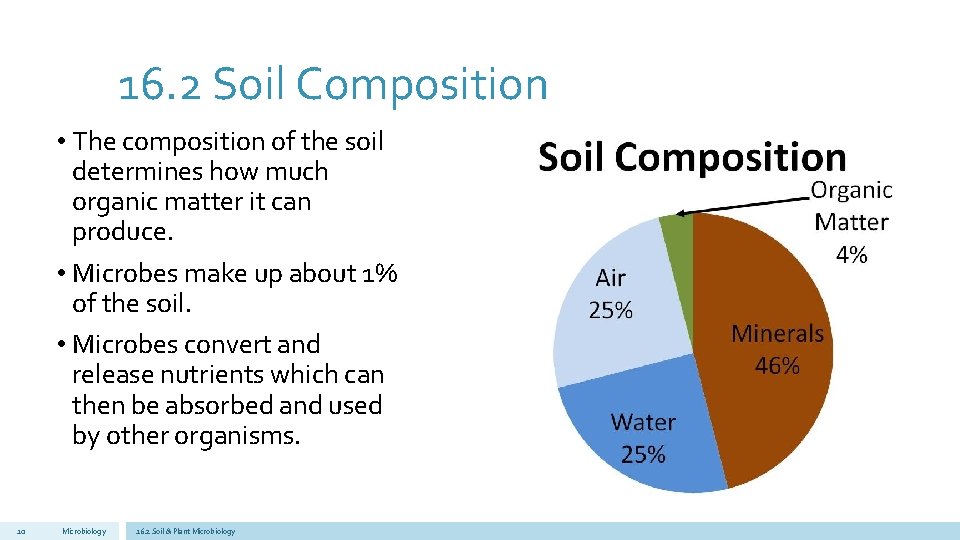
16. 2 Soil Composition • The composition of the soil determines how much organic matter it can produce. • Microbes make up about 1% of the soil. • Microbes convert and release nutrients which can then be absorbed and used by other organisms. 10 Microbiology 16. 2 Soil & Plant Microbiology
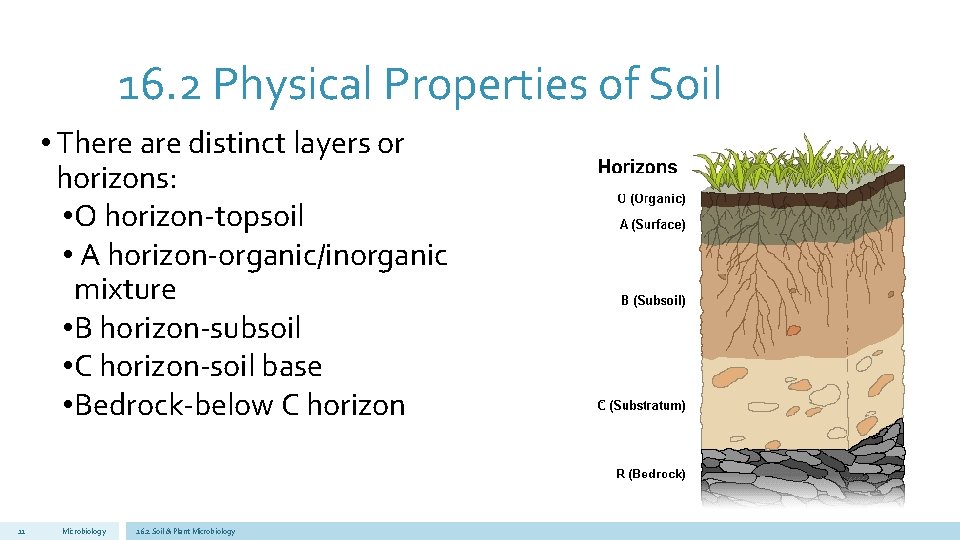
16. 2 Physical Properties of Soil • There are distinct layers or horizons: • O horizon-topsoil • A horizon-organic/inorganic mixture • B horizon-subsoil • C horizon-soil base • Bedrock-below C horizon 11 Microbiology 16. 2 Soil & Plant Microbiology
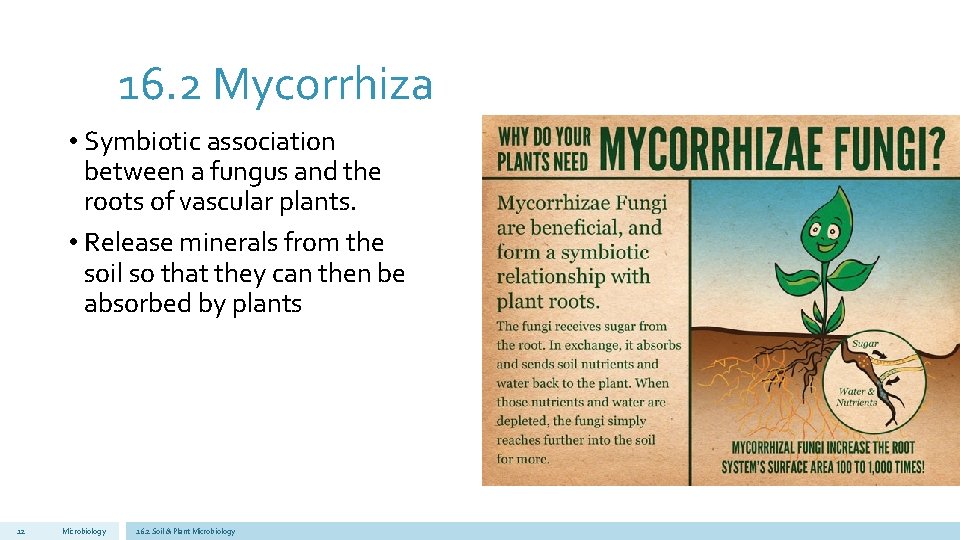
16. 2 Mycorrhiza • Symbiotic association between a fungus and the roots of vascular plants. • Release minerals from the soil so that they can then be absorbed by plants 12 Microbiology 16. 2 Soil & Plant Microbiology
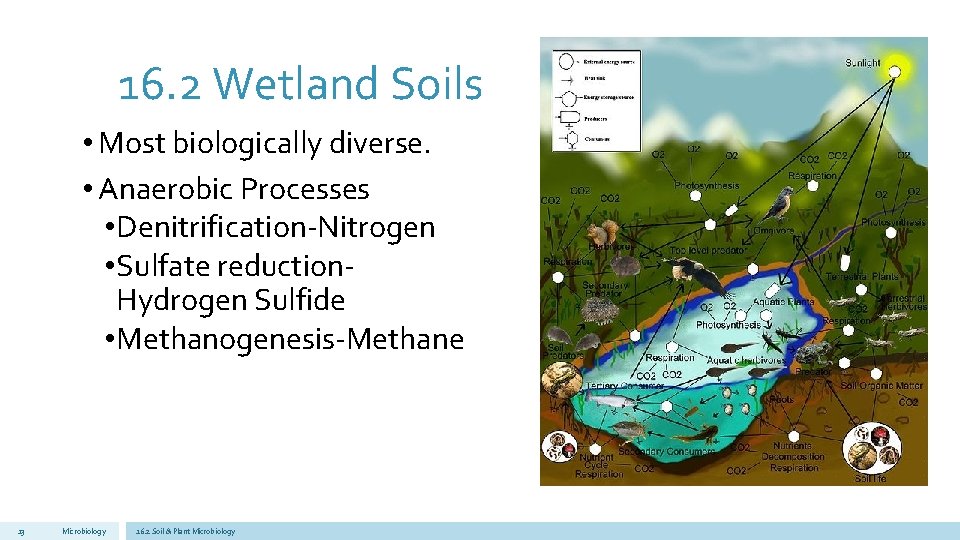
16. 2 Wetland Soils • Most biologically diverse. • Anaerobic Processes • Denitrification-Nitrogen • Sulfate reduction. Hydrogen Sulfide • Methanogenesis-Methane 13 Microbiology 16. 2 Soil & Plant Microbiology
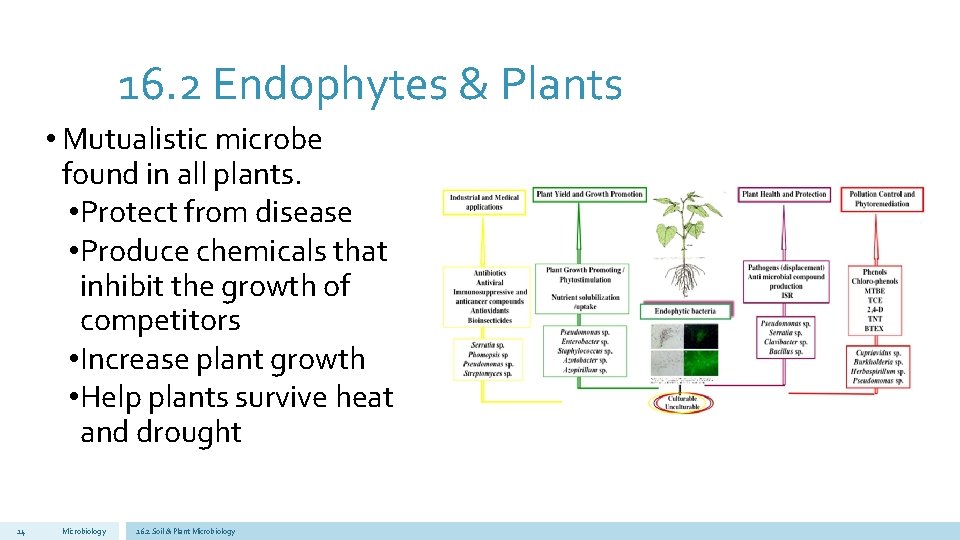
16. 2 Endophytes & Plants • Mutualistic microbe found in all plants. • Protect from disease • Produce chemicals that inhibit the growth of competitors • Increase plant growth • Help plants survive heat and drought 14 Microbiology 16. 2 Soil & Plant Microbiology
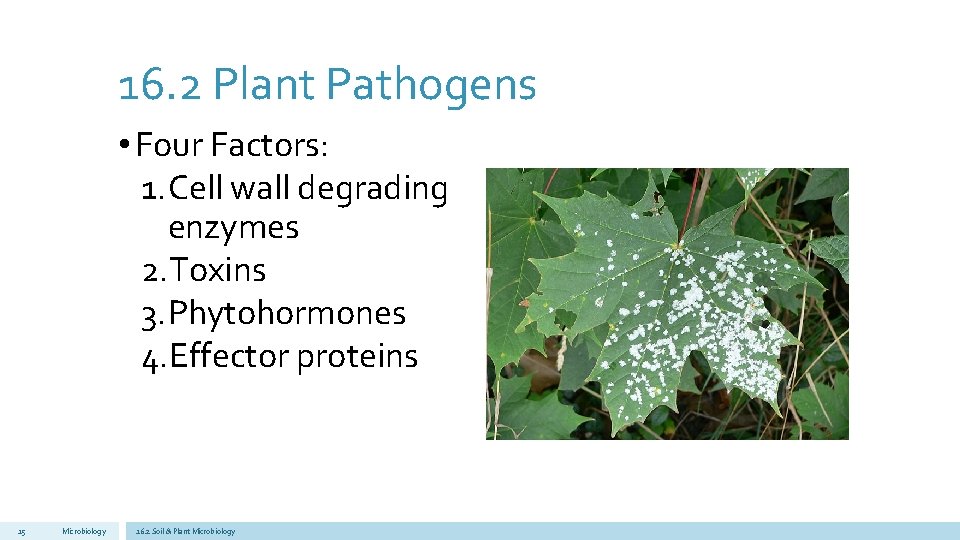
16. 2 Plant Pathogens • Four Factors: 1. Cell wall degrading enzymes 2. Toxins 3. Phytohormones 4. Effector proteins 15 Microbiology 16. 2 Soil & Plant Microbiology
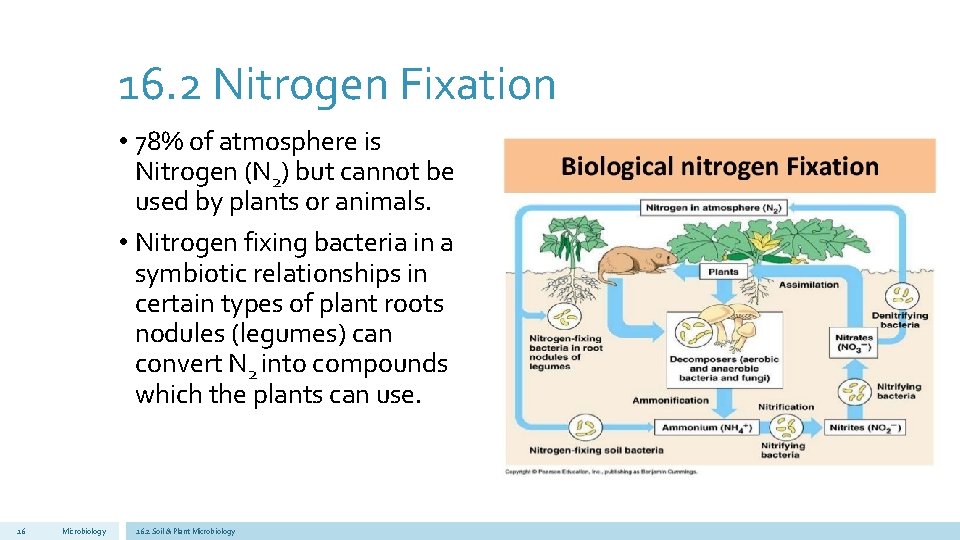
16. 2 Nitrogen Fixation • 78% of atmosphere is Nitrogen (N 2) but cannot be used by plants or animals. • Nitrogen fixing bacteria in a symbiotic relationships in certain types of plant roots nodules (legumes) can convert N 2 into compounds which the plants can use. 16 Microbiology 16. 2 Soil & Plant Microbiology
- Slides: 16