
154 Topic 5 1 Modeling Stated Preference Data








- Slides: 29
1/54: Topic 5. 1 – Modeling Stated Preference Data Microeconometric Modeling William Greene Stern School of Business New York University New York NY USA 5. 1 Modeling Stated Preference Data
2/54: Topic 5. 1 – Modeling Stated Preference Data Concepts • • Revealed Preference Stated Preference Attribute Nonattendance Random Utility Attribute Space Experimental Design Choice Experiment Environmental Attitude Models • • • Multinomial Logit Model Latent Class MNL Nested Logit Mixed Logit Error Components Logit
3/54: Topic 5. 1 – Modeling Stated Preference Data Revealed Preference Data p p Advantage: Actual observations on actual behavior n Market (ex-post, e. g. , supermarket scanner data) n Individual observations Disadvantage: Limited range of choice sets and attributes – does not allow analysis of switching behavior.
4/54: Topic 5. 1 – Modeling Stated Preference Data Purely hypothetical – does the subject take it seriously? p No necessary anchor to real market situations p Vast heterogeneity across individuals p E. g. , contingent valuation
5/54: Topic 5. 1 – Modeling Stated Preference Data Strategy Repeated choice situations to explore the attribute space p Typically combined RP/SP constructions p n n p Mixed data Expanded choice sets Accommodating “panel data” n n n Multinomial Probit [marginal, impractical] Latent Class Mixed Logit
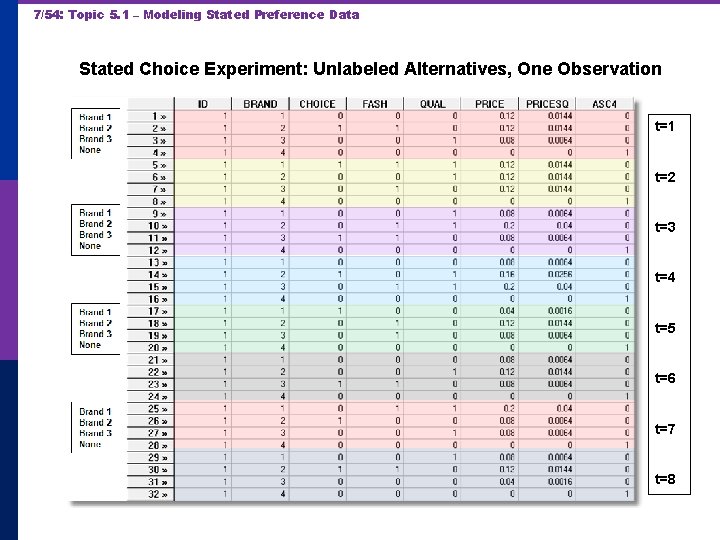
6/54: Topic 5. 1 – Modeling Stated Preference Data Application: Shoe Brand Choice p Simulated Data: Stated Choice, n n p 400 respondents, 8 choice situations, 3, 200 observations 3 choice/attributes + NONE n n n Fashion = High / Low Quality = High / Low Price = 25/50/75, 100 coded 1, 2, 3, 4 Heterogeneity: Sex (Male=1), Age (<25, 25 -39, 40+) p Underlying data generated by a 3 class latent class p process (100, 200, 100 in classes)
7/54: Topic 5. 1 – Modeling Stated Preference Data Stated Choice Experiment: Unlabeled Alternatives, One Observation t=1 t=2 t=3 t=4 t=5 t=6 t=7 t=8
8/54: Topic 5. 1 – Modeling Stated Preference Data Application: Pregnancy Care Guidelines
9/54: Topic 5. 1 – Modeling Stated Preference Data Application: Travel Mode Survey sample of 2, 688 trips, 2 or 4 choices per situation Sample consists of 672 individuals Choice based sample Revealed/Stated choice experiment: Revealed: Drive, Short. Rail, Bus, Train Hypothetical: Drive, Short. Rail, Bus, Train, Light. Rail, Express. Bus Attributes: Cost –Fuel or fare Transit time Parking cost Access and Egress time
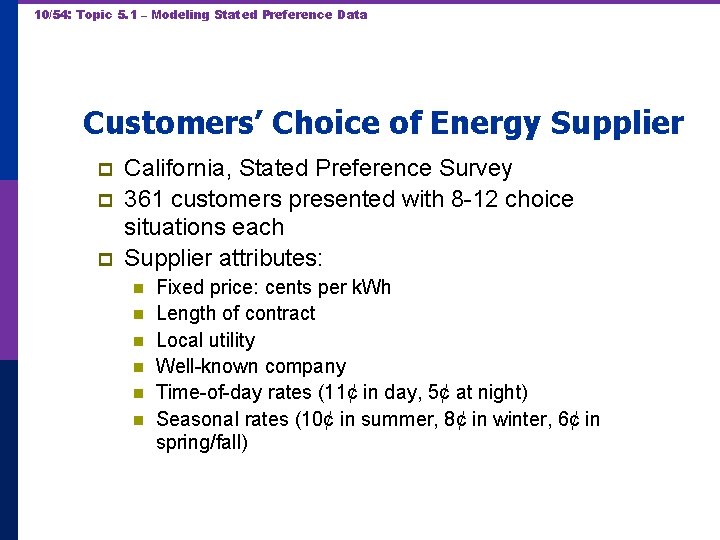
10/54: Topic 5. 1 – Modeling Stated Preference Data Customers’ Choice of Energy Supplier p p p California, Stated Preference Survey 361 customers presented with 8 -12 choice situations each Supplier attributes: n n n Fixed price: cents per k. Wh Length of contract Local utility Well-known company Time-of-day rates (11¢ in day, 5¢ at night) Seasonal rates (10¢ in summer, 8¢ in winter, 6¢ in spring/fall)
11/54: Topic 5. 1 – Modeling Stated Preference Data Combining RP and SP Data Sets - 1 Enrich the attribute set by replicating choices p E. g. : p n n p RP: Bus, Car, Train (actual) SP: Bus(1), Car(1), Train(1) Bus(2), Car(2), Train(2), … How to combine?
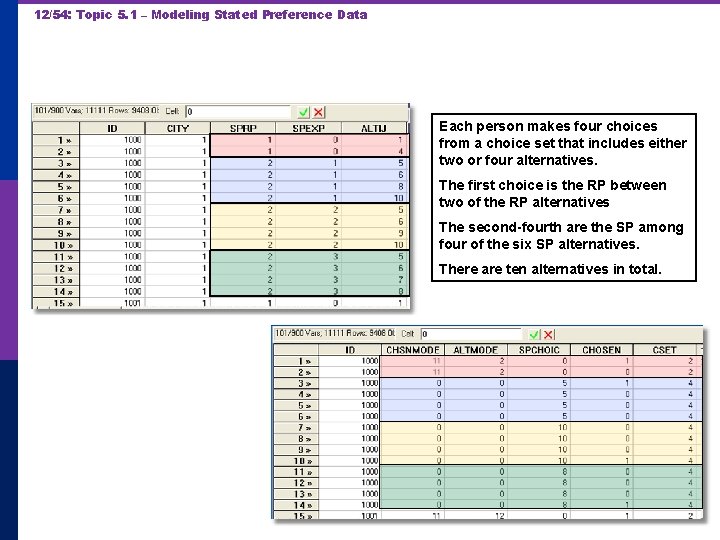
12/54: Topic 5. 1 – Modeling Stated Preference Data Each person makes four choices from a choice set that includes either two or four alternatives. The first choice is the RP between two of the RP alternatives The second-fourth are the SP among four of the six SP alternatives. There are ten alternatives in total.
13/54: Topic 5. 1 – Modeling Stated Preference Data An Underlying Random Utility Model
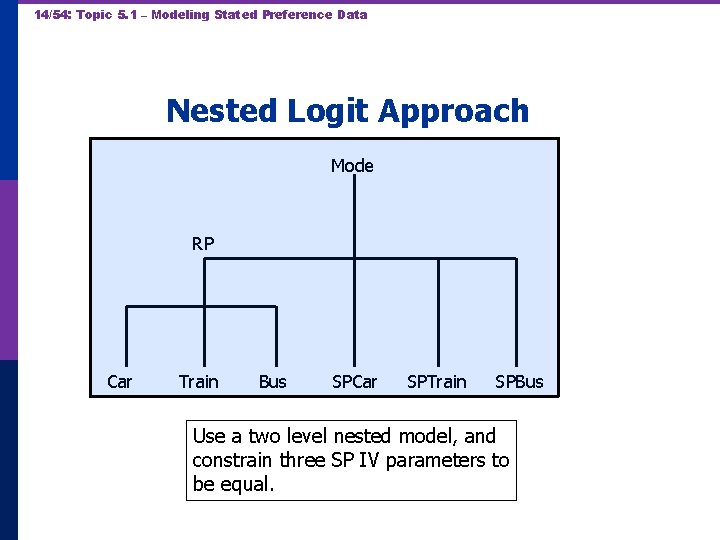
14/54: Topic 5. 1 – Modeling Stated Preference Data Nested Logit Approach Mode RP Car Train Bus SPCar SPTrain SPBus Use a two level nested model, and constrain three SP IV parameters to be equal.
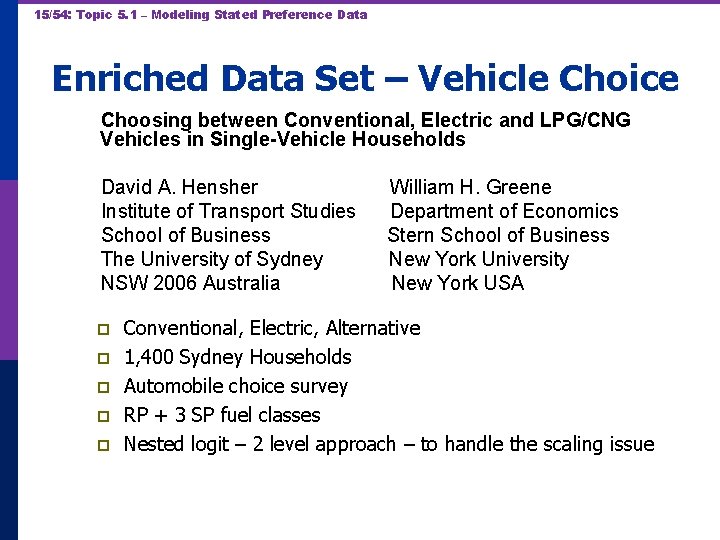
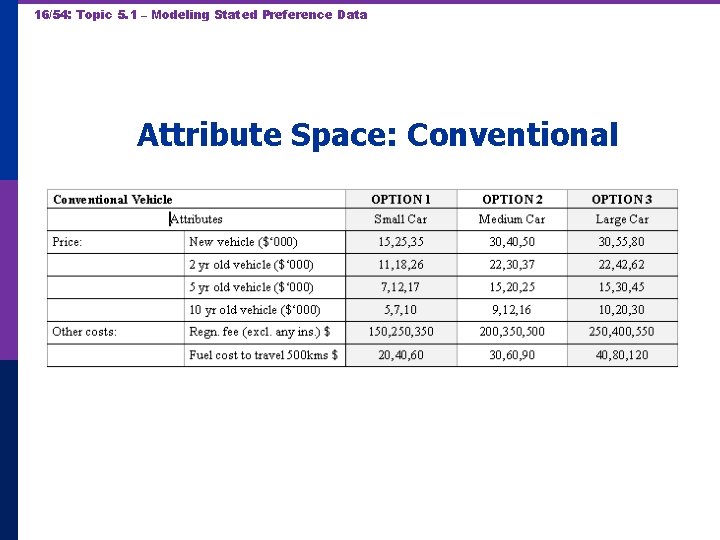
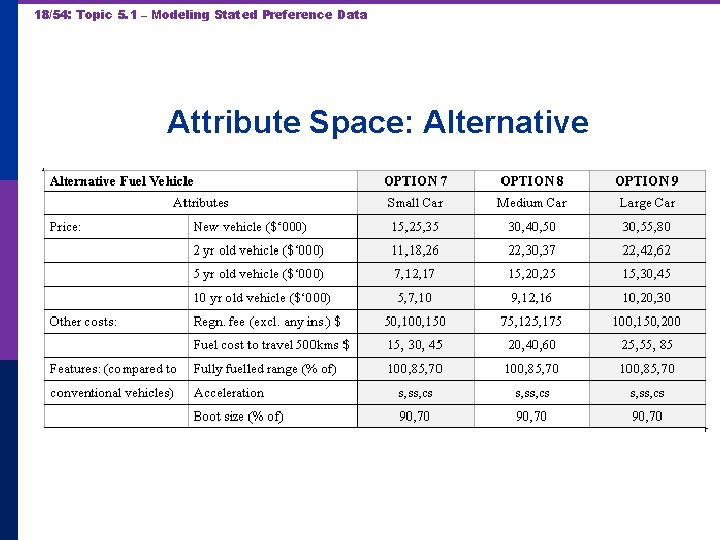
15/54: Topic 5. 1 – Modeling Stated Preference Data Enriched Data Set – Vehicle Choice Choosing between Conventional, Electric and LPG/CNG Vehicles in Single-Vehicle Households David A. Hensher Institute of Transport Studies School of Business The University of Sydney NSW 2006 Australia p p p William H. Greene Department of Economics Stern School of Business New York University New York USA Conventional, Electric, Alternative 1, 400 Sydney Households Automobile choice survey RP + 3 SP fuel classes Nested logit – 2 level approach – to handle the scaling issue
16/54: Topic 5. 1 – Modeling Stated Preference Data Attribute Space: Conventional
17/54: Topic 5. 1 – Modeling Stated Preference Data Attribute Space: Electric
18/54: Topic 5. 1 – Modeling Stated Preference Data Attribute Space: Alternative
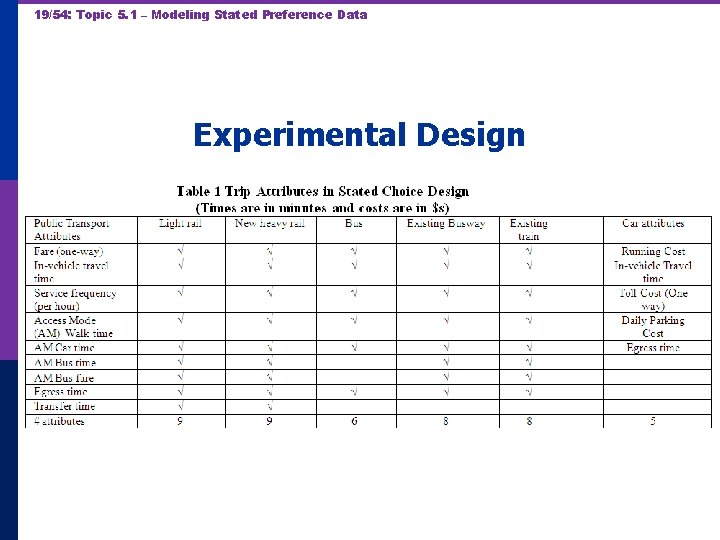
19/54: Topic 5. 1 – Modeling Stated Preference Data Experimental Design
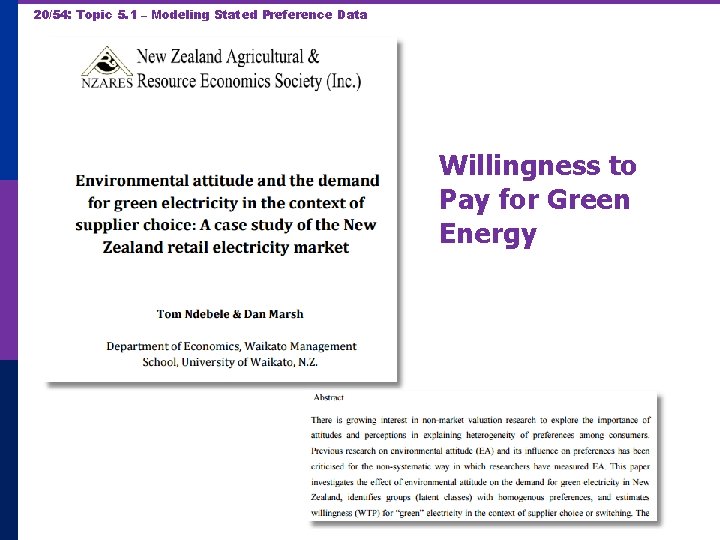
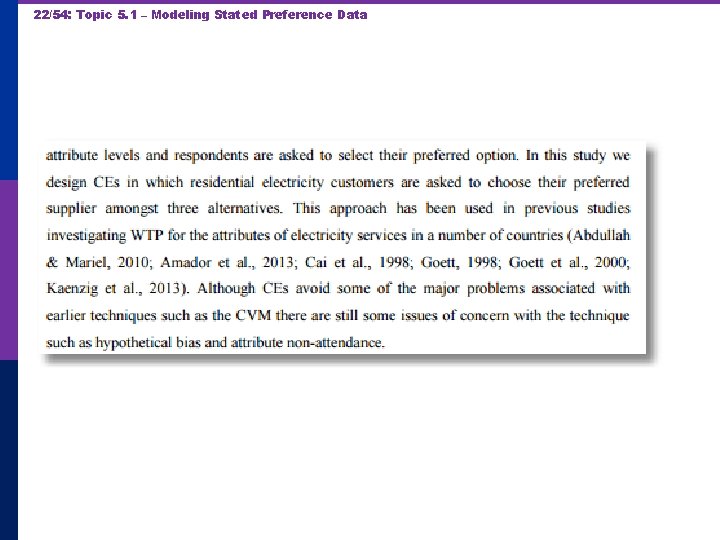
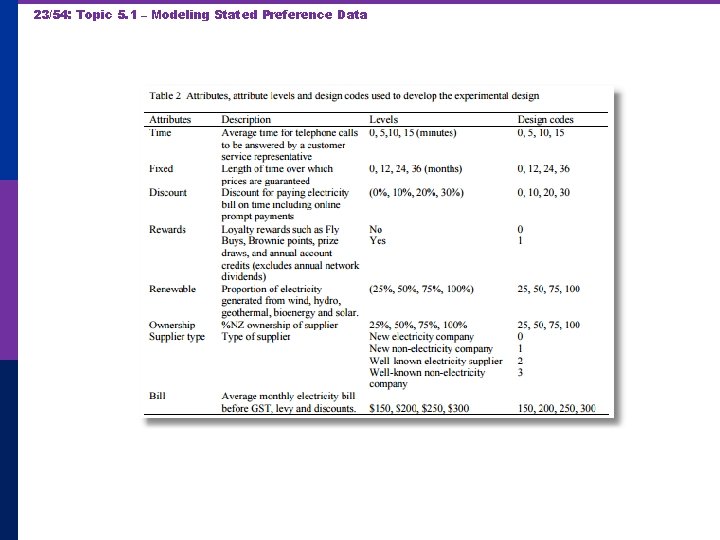
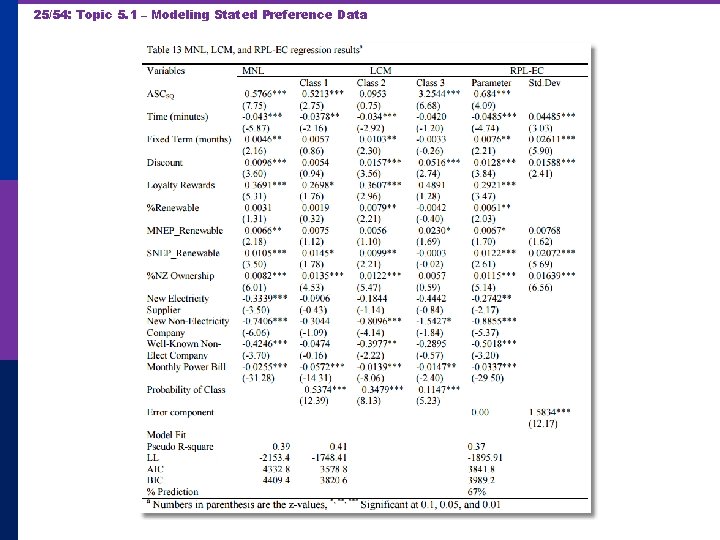
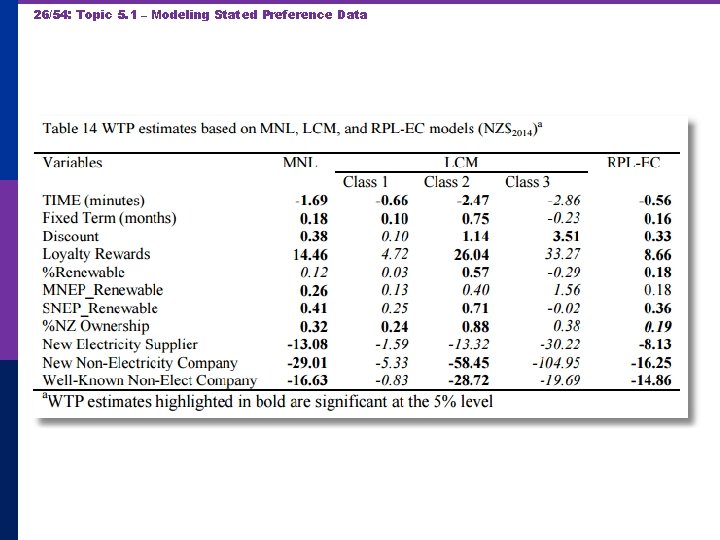
20/54: Topic 5. 1 – Modeling Stated Preference Data Willingness to Pay for Green Energy
21/54: Topic 5. 1 – Modeling Stated Preference Data
22/54: Topic 5. 1 – Modeling Stated Preference Data
23/54: Topic 5. 1 – Modeling Stated Preference Data
24/54: Topic 5. 1 – Modeling Stated Preference Data
25/54: Topic 5. 1 – Modeling Stated Preference Data
26/54: Topic 5. 1 – Modeling Stated Preference Data
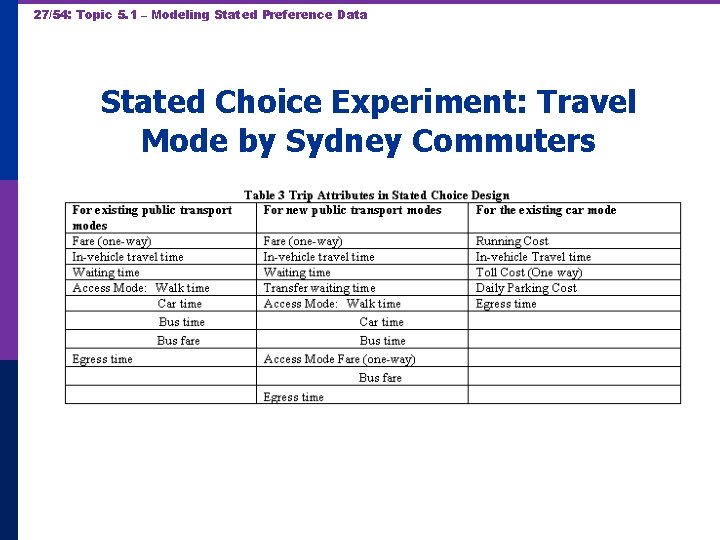
27/54: Topic 5. 1 – Modeling Stated Preference Data Stated Choice Experiment: Travel Mode by Sydney Commuters
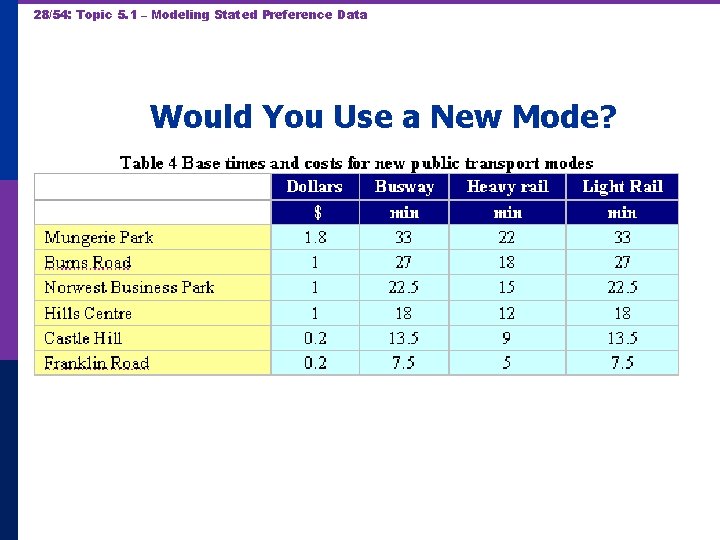
28/54: Topic 5. 1 – Modeling Stated Preference Data Would You Use a New Mode?
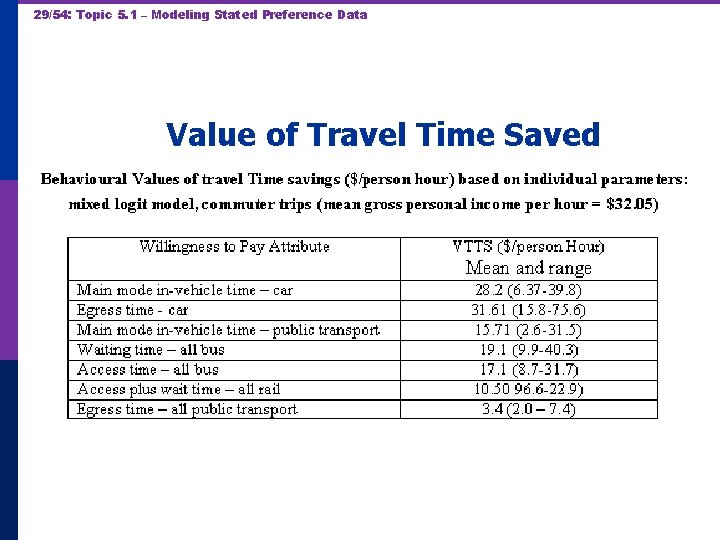
29/54: Topic 5. 1 – Modeling Stated Preference Data Value of Travel Time Saved