
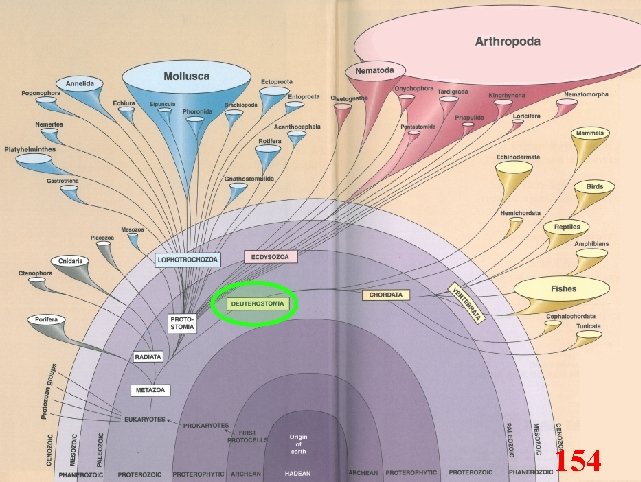
154 Deuterostomia Phylogeny 3 Phyla 3 Subphyla Parazoa
154
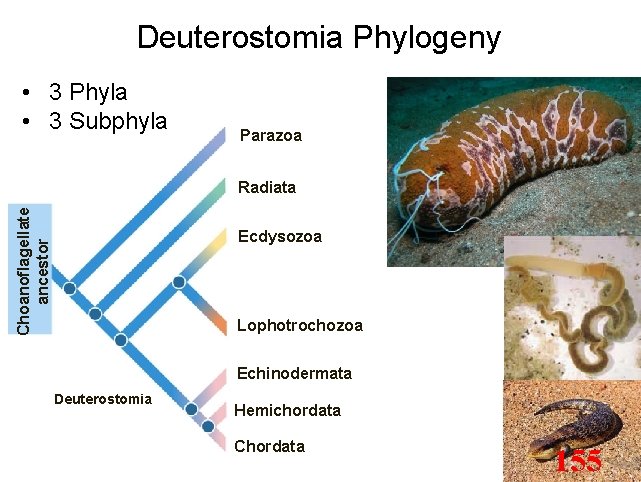
Deuterostomia Phylogeny • 3 Phyla • 3 Subphyla Parazoa Choanoflagellate ancestor Radiata Ecdysozoa Lophotrochozoa Echinodermata Deuterostomia Hemichordata Chordata 155
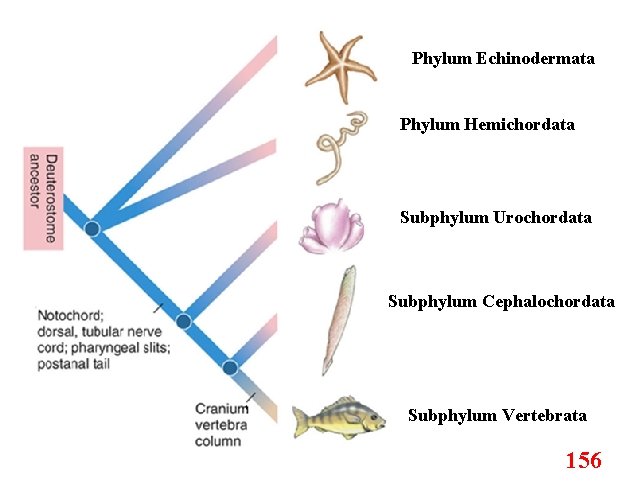
Phylum Echinodermata Phylum Hemichordata Subphylum Urochordata Subphylum Cephalochordata Subphylum Vertebrata 156
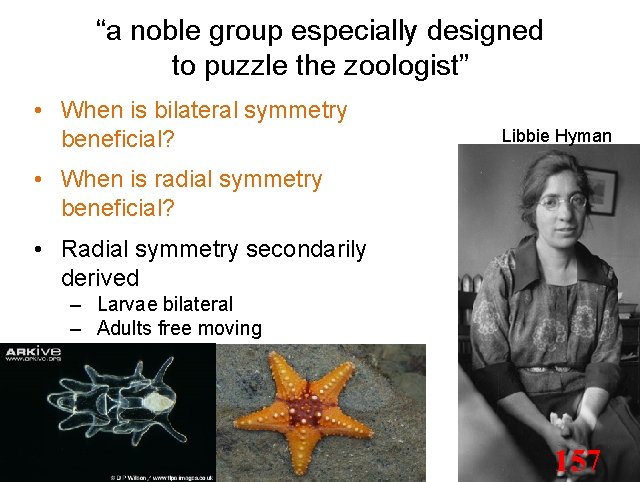
“a noble group especially designed to puzzle the zoologist” • When is bilateral symmetry beneficial? Libbie Hyman • When is radial symmetry beneficial? • Radial symmetry secondarily derived – Larvae bilateral – Adults free moving 157
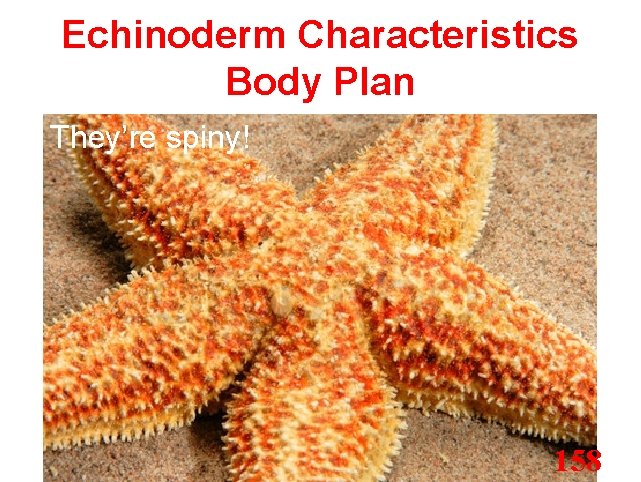
Echinoderm Characteristics Body Plan They’re spiny! 158
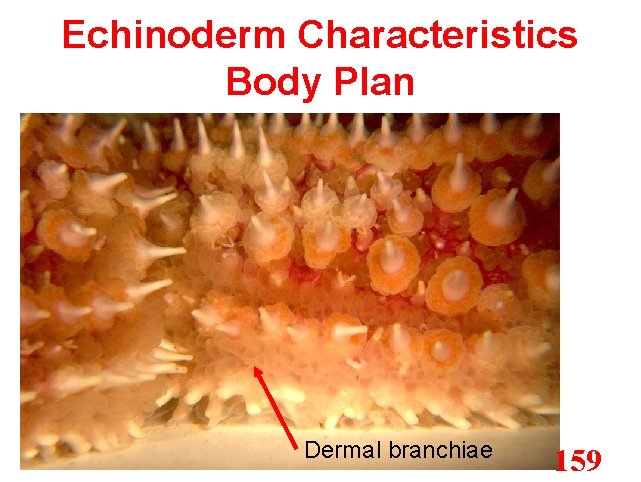
Echinoderm Characteristics Body Plan Dermal branchiae 159
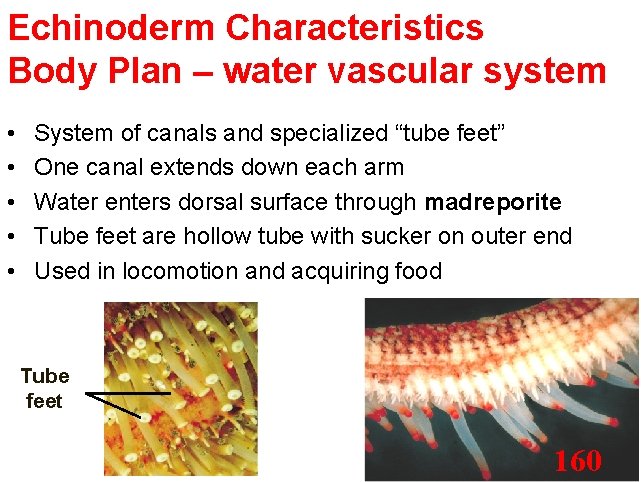
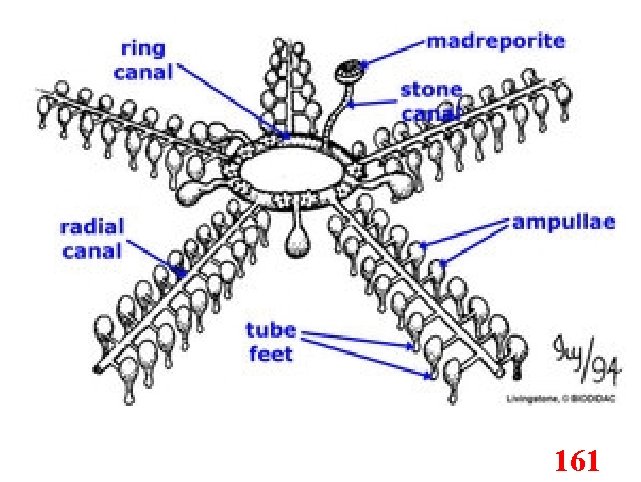
Echinoderm Characteristics Body Plan – water vascular system • • • System of canals and specialized “tube feet” One canal extends down each arm Water enters dorsal surface through madreporite Tube feet are hollow tube with sucker on outer end Used in locomotion and acquiring food Tube feet 160
161
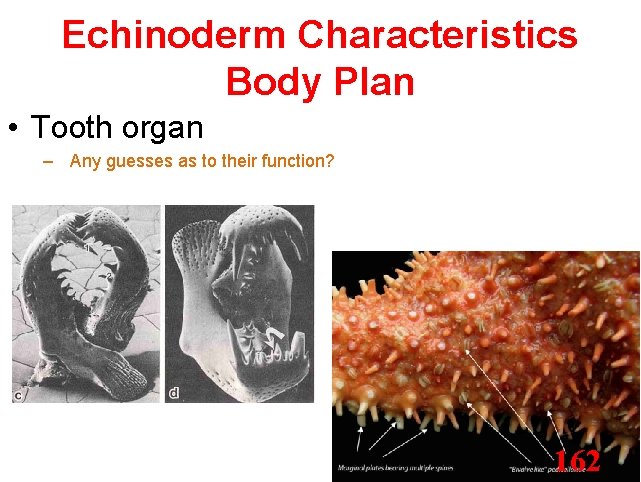
Echinoderm Characteristics Body Plan • Tooth organ – Any guesses as to their function? 162
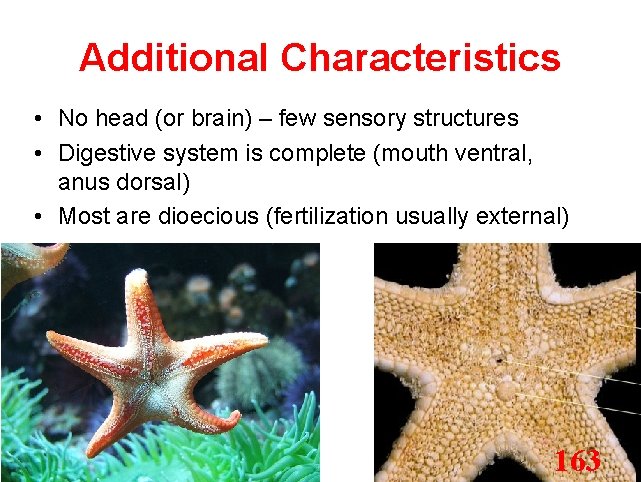
Additional Characteristics • No head (or brain) – few sensory structures • Digestive system is complete (mouth ventral, anus dorsal) • Most are dioecious (fertilization usually external) 163
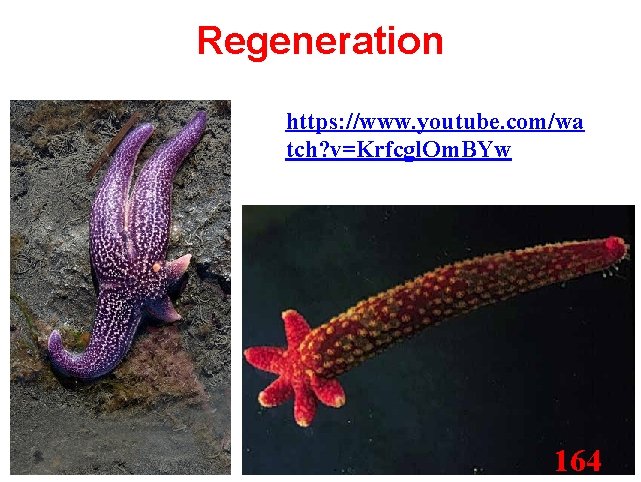
Regeneration https: //www. youtube. com/wa tch? v=Krfcgl. Om. BYw 164
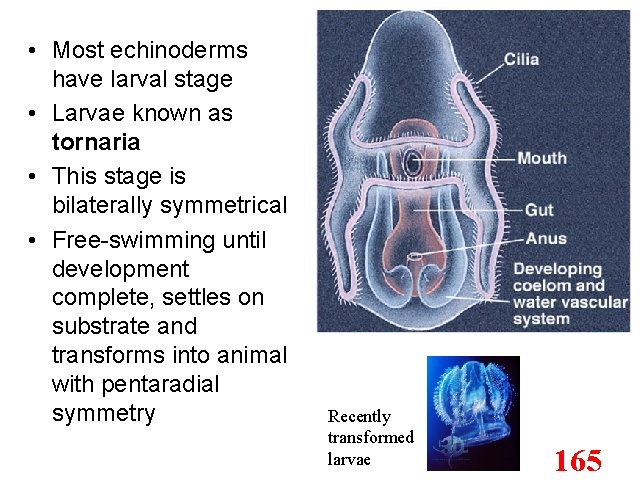
• Most echinoderms have larval stage • Larvae known as tornaria • This stage is bilaterally symmetrical • Free-swimming until development complete, settles on substrate and transforms into animal with pentaradial symmetry Recently transformed larvae 165
Echinoderm Taxa Phylum Echinodermata Class Ophiuroidea Class Concentricycloidea Class Echinoidea Class Holothuroidea Class Crinoidea Class Asteroidea 166
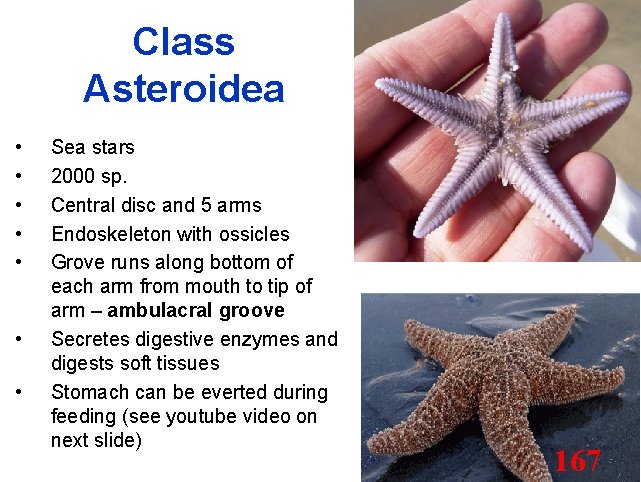
Class Asteroidea • • Sea stars 2000 sp. Central disc and 5 arms Endoskeleton with ossicles Grove runs along bottom of each arm from mouth to tip of arm – ambulacral groove Secretes digestive enzymes and digests soft tissues Stomach can be everted during feeding (see youtube video on next slide) 167
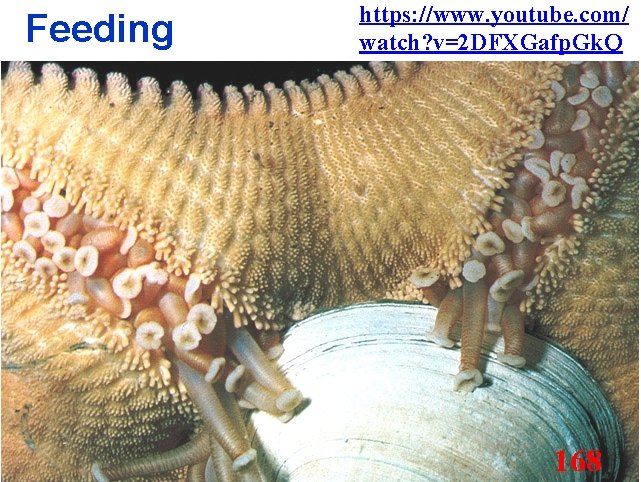
Feeding https: //www. youtube. com/ watch? v=2 DFXGafp. Gk. Q 168
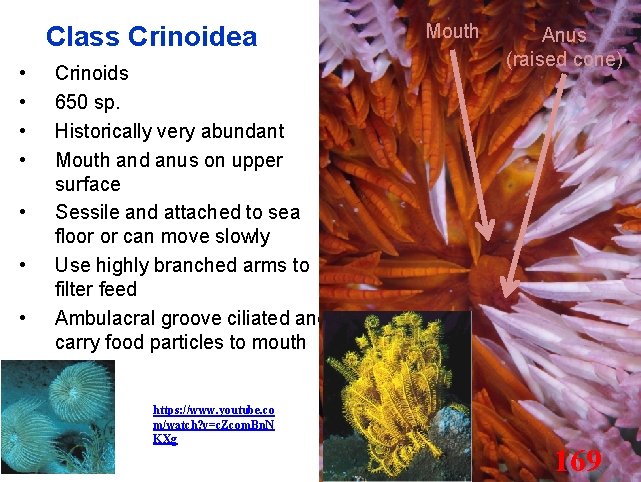
Class Crinoidea • • Crinoids 650 sp. Historically very abundant Mouth and anus on upper surface Sessile and attached to sea floor or can move slowly Use highly branched arms to filter feed Ambulacral groove ciliated and carry food particles to mouth https: //www. youtube. co m/watch? v=c. Zcom. Bn. N KXg Mouth Anus (raised cone) 169
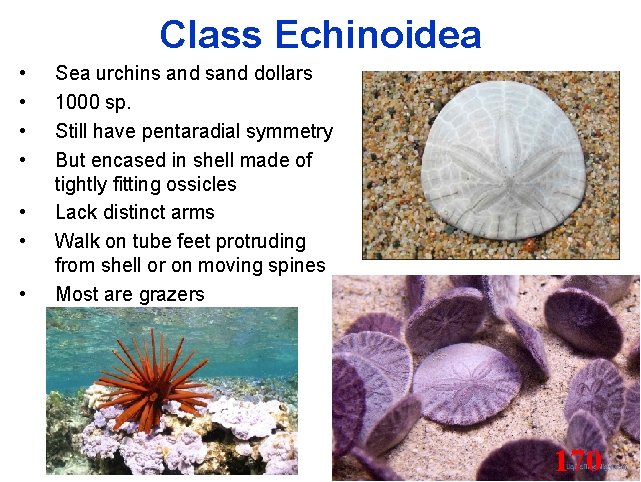
Class Echinoidea • • Sea urchins and sand dollars 1000 sp. Still have pentaradial symmetry But encased in shell made of tightly fitting ossicles Lack distinct arms Walk on tube feet protruding from shell or on moving spines Most are grazers 170
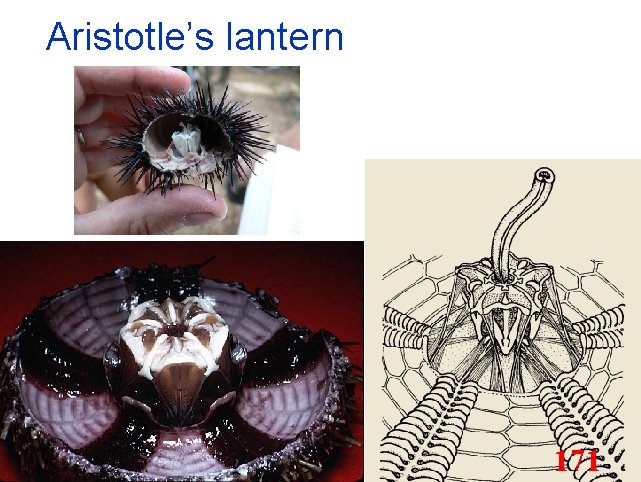
Aristotle’s lantern 171
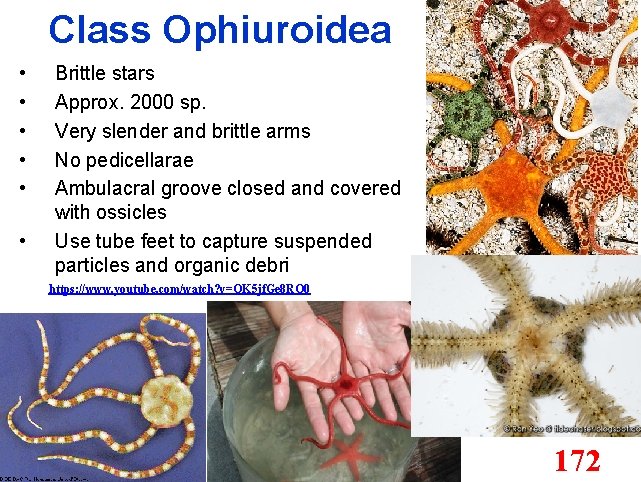
Class Ophiuroidea • • • Brittle stars Approx. 2000 sp. Very slender and brittle arms No pedicellarae Ambulacral groove closed and covered with ossicles Use tube feet to capture suspended particles and organic debri https: //www. youtube. com/watch? v=OK 5 jf. Ge 8 RO 0 172
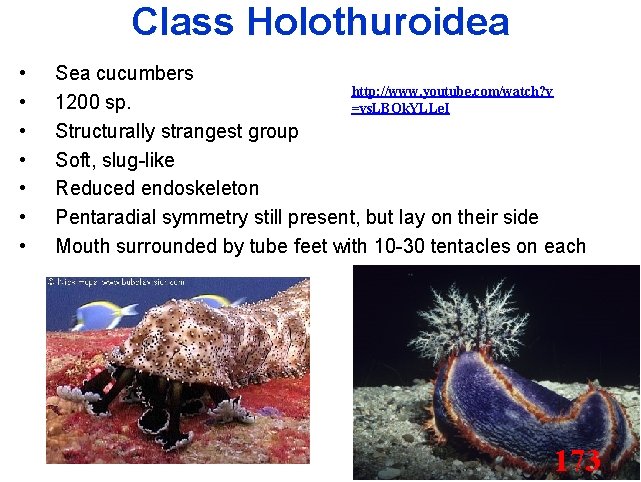
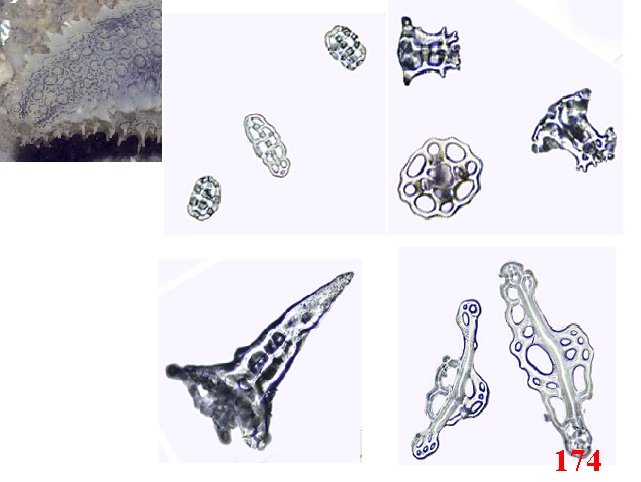
Class Holothuroidea • • Sea cucumbers http: //www. youtube. com/watch? v 1200 sp. =vs. LBOk. YLLe. I Structurally strangest group Soft, slug-like Reduced endoskeleton Pentaradial symmetry still present, but lay on their side Mouth surrounded by tube feet with 10 -30 tentacles on each 173
174
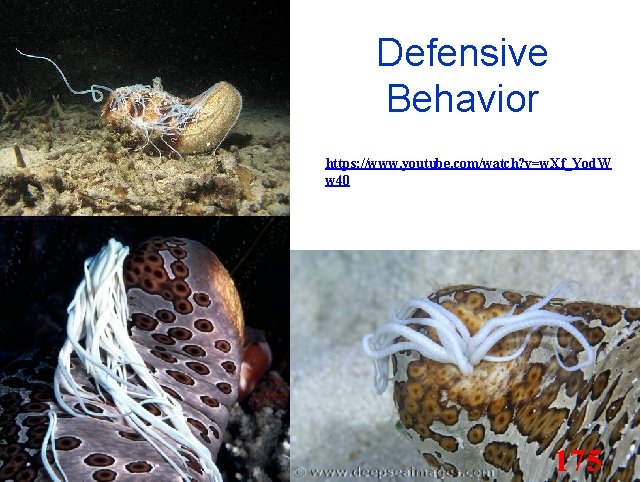
Defensive Behavior https: //www. youtube. com/watch? v=w. Xf_Yod. W w 40 175
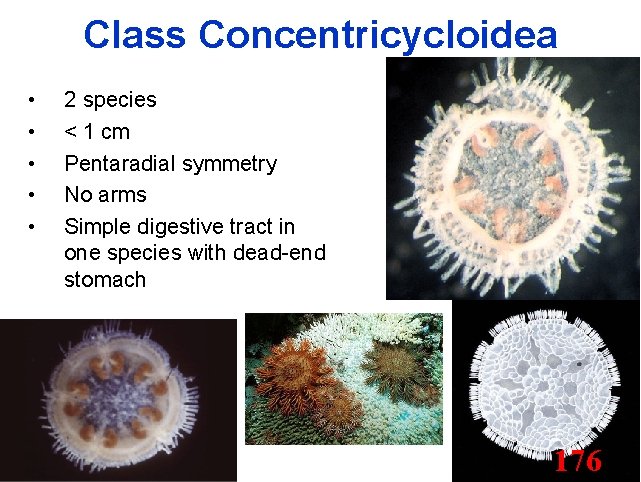
Class Concentricycloidea • • • 2 species < 1 cm Pentaradial symmetry No arms Simple digestive tract in one species with dead-end stomach 176
- Slides: 23