
15 th NASPCC2019 Low Risk Localized Prostate Cancer


- Slides: 17
15 th NASPCC-2019: Low Risk Localized Prostate Cancer Panel: Genomic Tests Judd W. Moul, M. D. FACS James H Semans Professor of Surgery -Duke Cancer Institute Duke University Medical Center Durham, NC---Oct 19, 2019
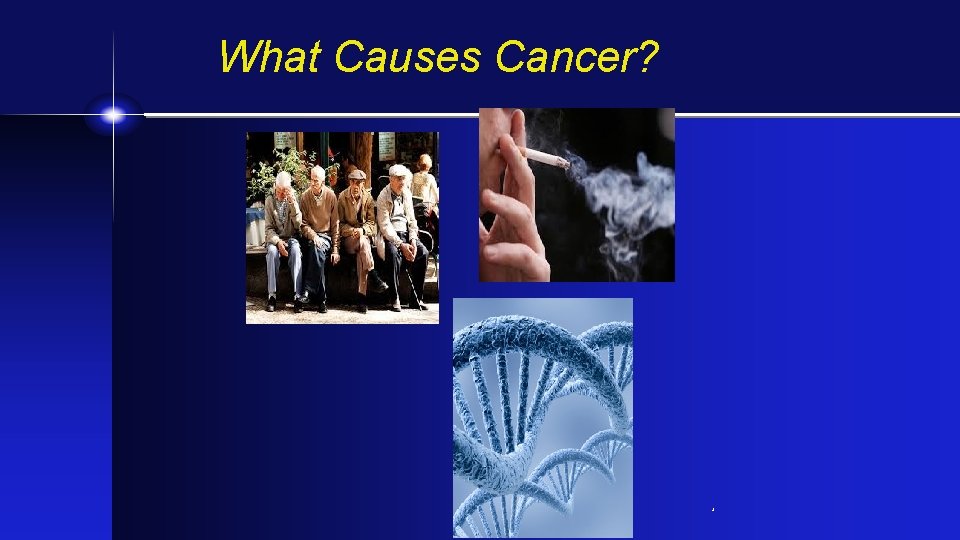
What Causes Cancer? 2
Genetics are major cause of cancer
Genomics and Cancer-Hot Topic!
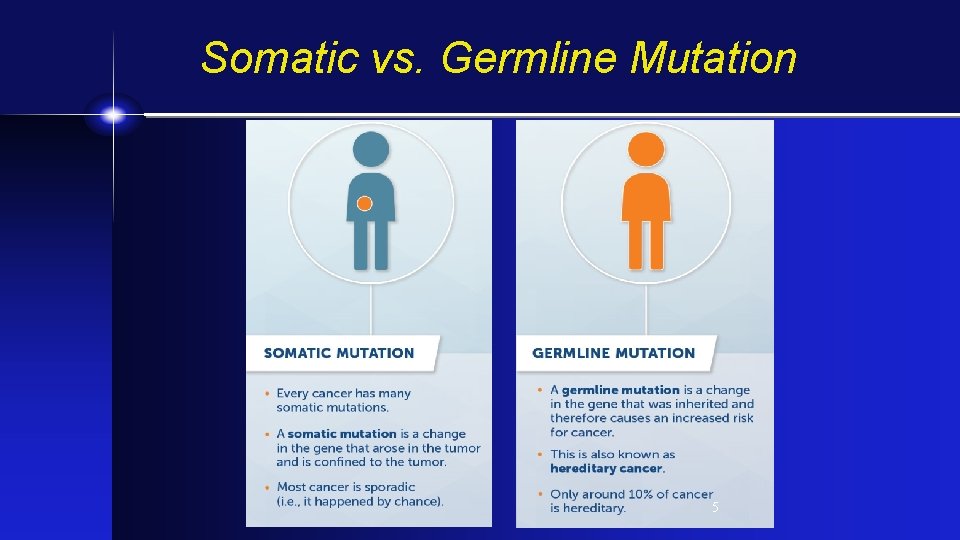
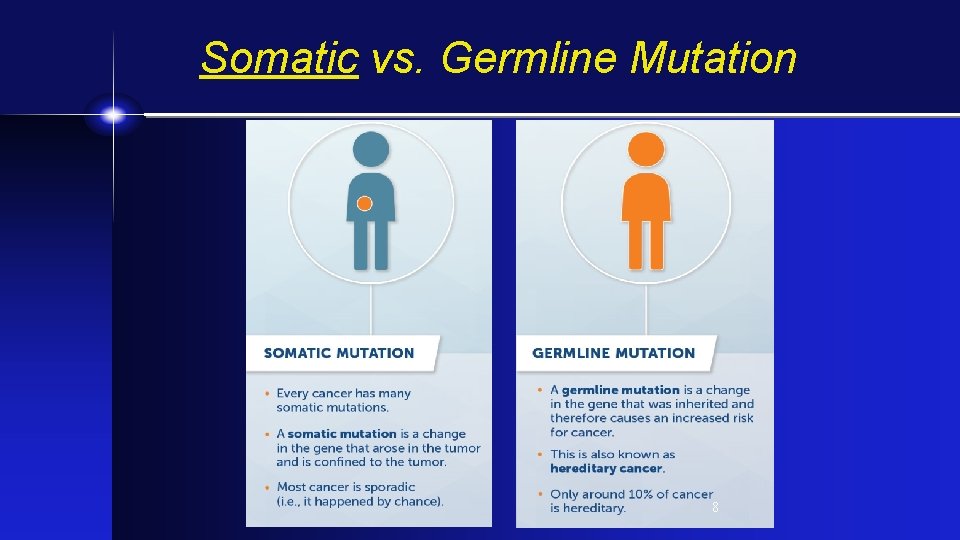
Somatic vs. Germline Mutation 5
Genetic Tests Remain Controversial. Prostate • Germline/Hereditary: Legal Privacy Concerns; limited targeted therapeutics; accuracy and cost of current multi-gene tests and “which one is best” • Somatic: lack of prospective RCTs; expense; accuracy; “which one is best”; lack of clear guidelines
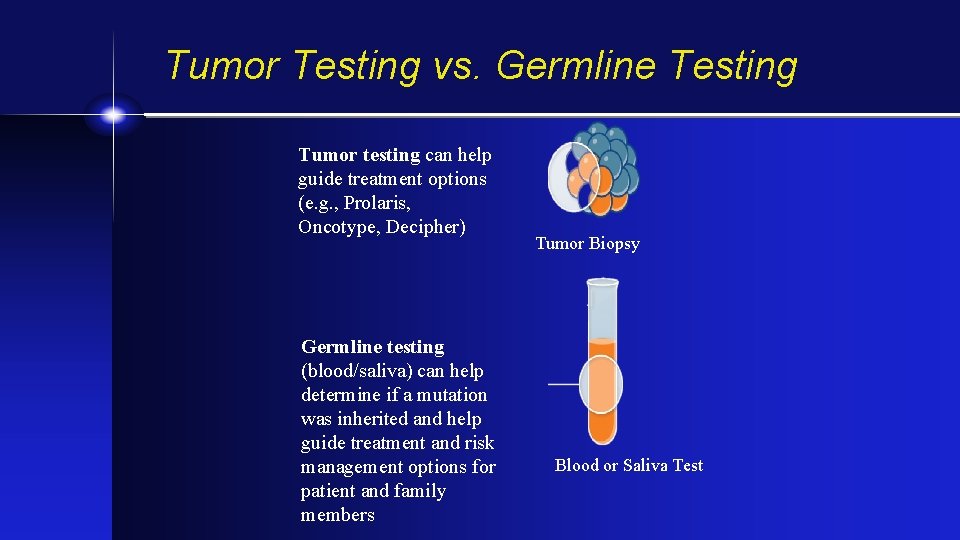
Tumor Testing vs. Germline Testing Tumor testing can help guide treatment options (e. g. , Prolaris, Oncotype, Decipher) Germline testing (blood/saliva) can help determine if a mutation was inherited and help guide treatment and risk management options for patient and family members Tumor Biopsy Blood or Saliva Test
Somatic vs. Germline Mutation 8
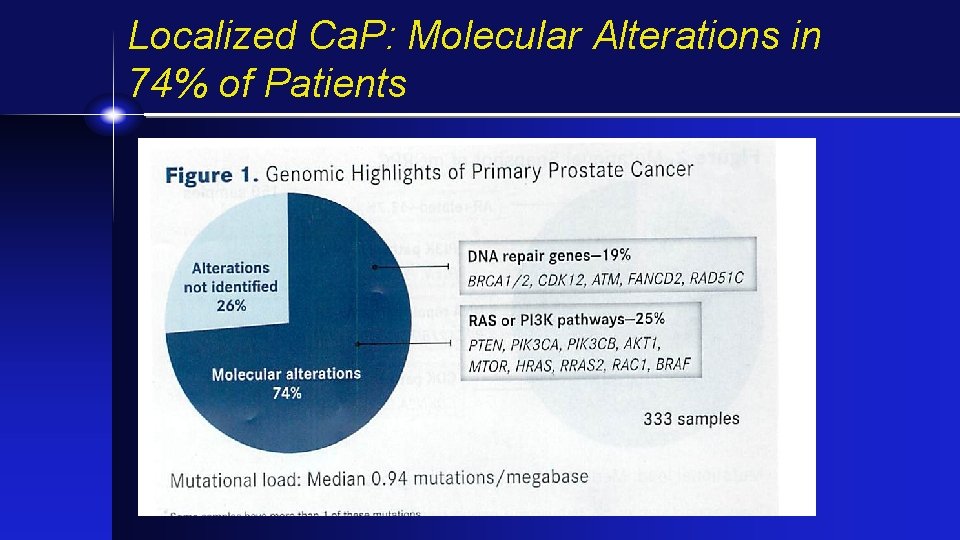
Localized Ca. P: Molecular Alterations in 74% of Patients
Molecular Risk Tools-2019 • Serum Markers -PHI (Beckman Coulter) -4 K Score (Opko Labs) • Prostate Biopsy Tissue -Confirm MDx (MDx Health) -Prolaris (Myriad Genetics) -Oncotype GPS (Genomic Health) -Decipher (Genome Dx) Radical Prostatectomy Tissue -Prolaris (Myriad Prolaris) -Decipher (Genome Dx)
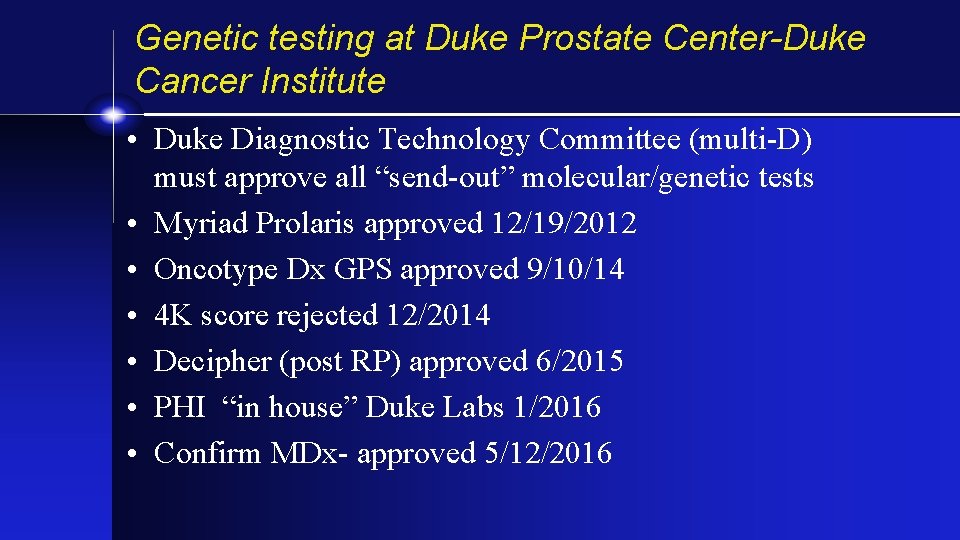
Genetic testing at Duke Prostate Center-Duke Cancer Institute • Duke Diagnostic Technology Committee (multi-D) must approve all “send-out” molecular/genetic tests • Myriad Prolaris approved 12/19/2012 • Oncotype Dx GPS approved 9/10/14 • 4 K score rejected 12/2014 • Decipher (post RP) approved 6/2015 • PHI “in house” Duke Labs 1/2016 • Confirm MDx- approved 5/12/2016
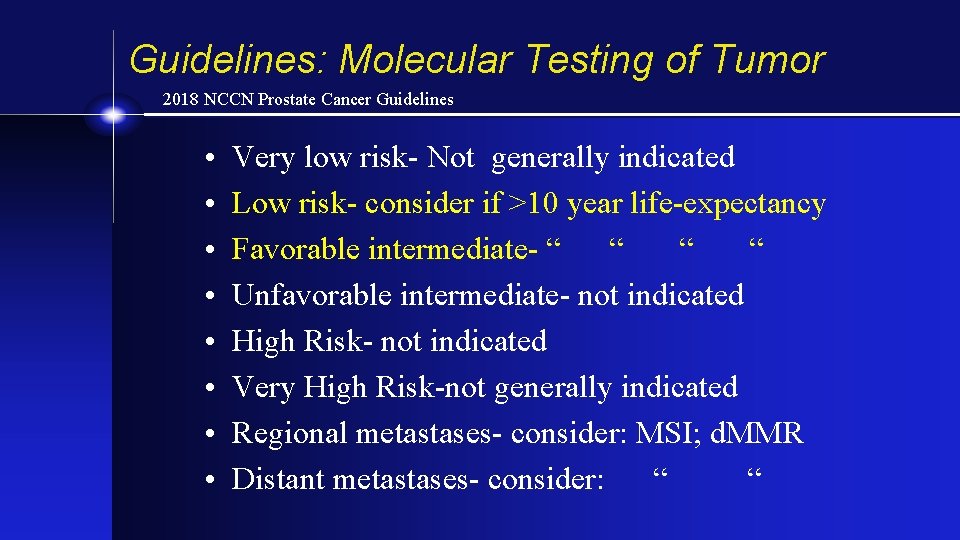
Guidelines: Molecular Testing of Tumor 2018 NCCN Prostate Cancer Guidelines • • Very low risk- Not generally indicated Low risk- consider if >10 year life-expectancy Favorable intermediate- “ “ Unfavorable intermediate- not indicated High Risk- not indicated Very High Risk-not generally indicated Regional metastases- consider: MSI; d. MMR Distant metastases- consider: “ “
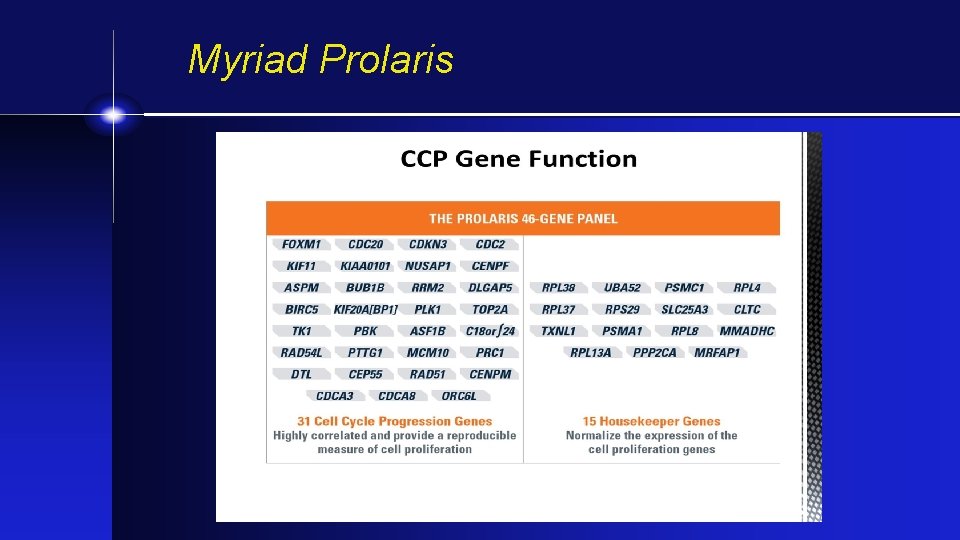
Myriad Prolaris
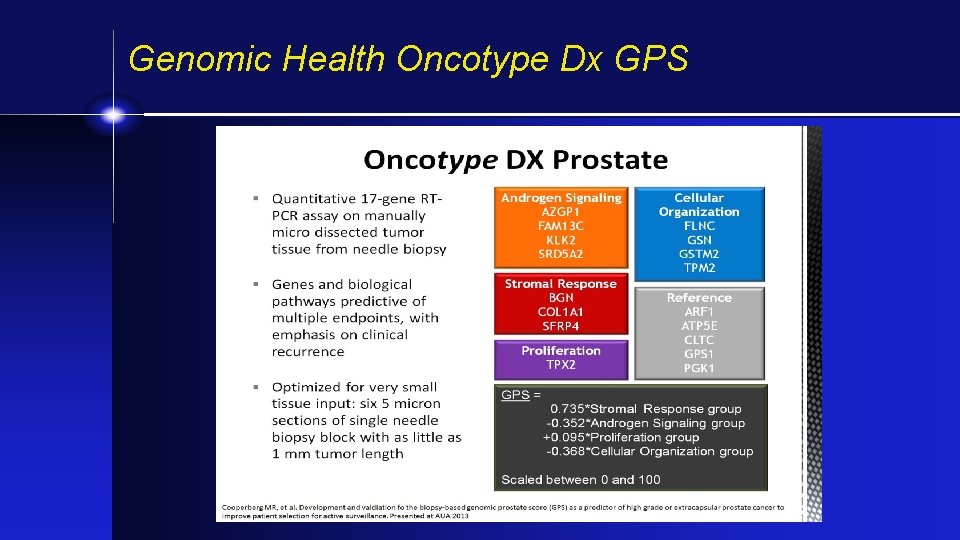
Genomic Health Oncotype Dx GPS
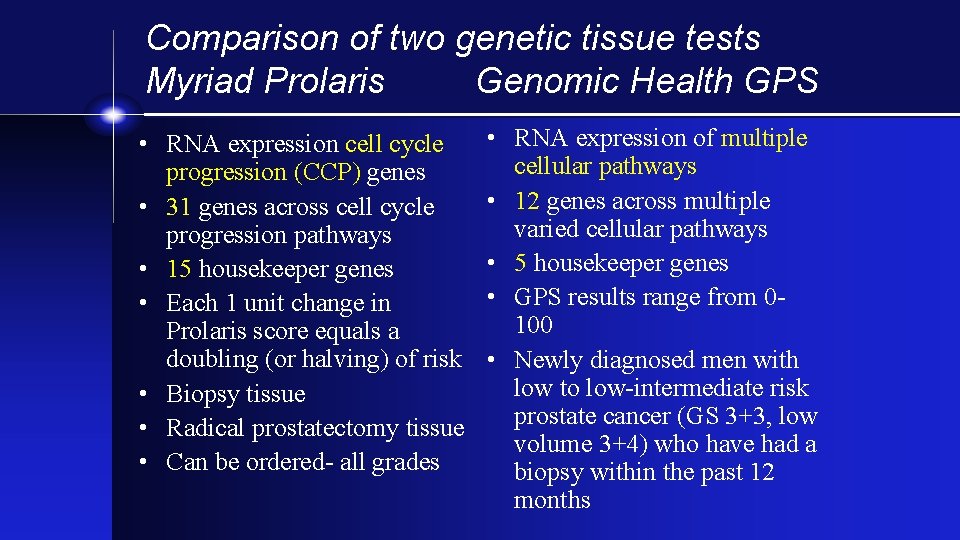
Comparison of two genetic tissue tests Myriad Prolaris Genomic Health GPS • RNA expression cell cycle progression (CCP) genes • 31 genes across cell cycle progression pathways • 15 housekeeper genes • Each 1 unit change in Prolaris score equals a doubling (or halving) of risk • Biopsy tissue • Radical prostatectomy tissue • Can be ordered- all grades • RNA expression of multiple cellular pathways • 12 genes across multiple varied cellular pathways • 5 housekeeper genes • GPS results range from 0100 • Newly diagnosed men with low to low-intermediate risk prostate cancer (GS 3+3, low volume 3+4) who have had a biopsy within the past 12 months
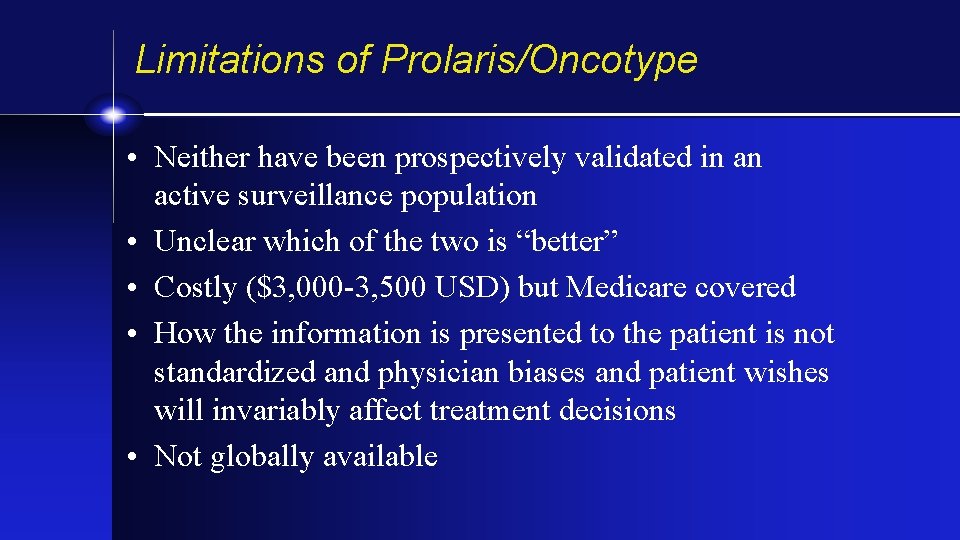
Limitations of Prolaris/Oncotype • Neither have been prospectively validated in an active surveillance population • Unclear which of the two is “better” • Costly ($3, 000 -3, 500 USD) but Medicare covered • How the information is presented to the patient is not standardized and physician biases and patient wishes will invariably affect treatment decisions • Not globally available
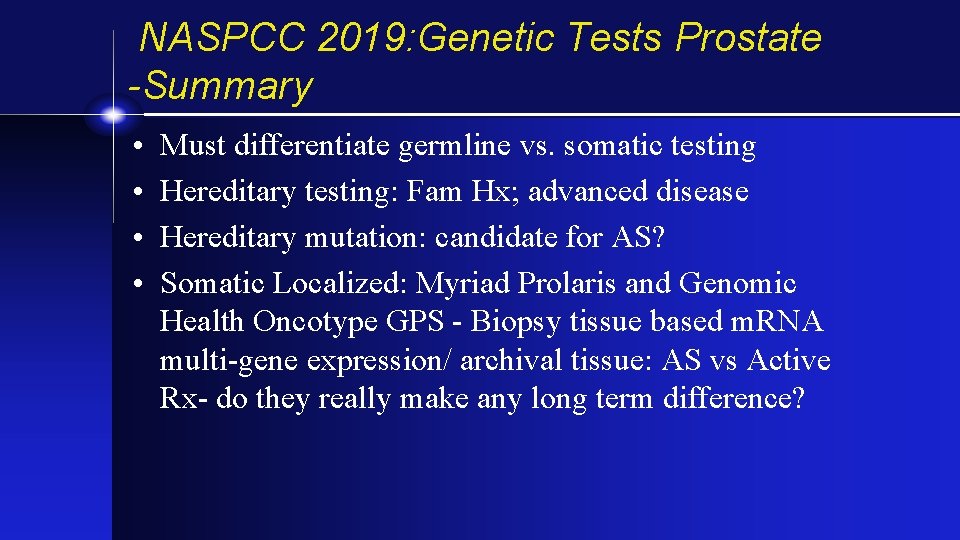
NASPCC 2019: Genetic Tests Prostate -Summary • • Must differentiate germline vs. somatic testing Hereditary testing: Fam Hx; advanced disease Hereditary mutation: candidate for AS? Somatic Localized: Myriad Prolaris and Genomic Health Oncotype GPS - Biopsy tissue based m. RNA multi-gene expression/ archival tissue: AS vs Active Rx- do they really make any long term difference?