
15 Federal Budgets The Tools of Fiscal Policy
15 Federal Budgets: The Tools of Fiscal Policy
Previously • During the Great Recession – lower output – high unemployment • However, the Great Depression in the 1930 s was much worse and lasted much longer. • Classical economists: – market is self-correcting – focus on long-run growth (expanding the LRAS) • Keynesian economists: – market corrections can take time due to sticky wages – focus on policy aimed at AD
Big Questions 1. How does the government spend? 2. How does the government tax? 3. What are budget deficits?
Government Budgets— 1 • 2001– 2005 – Budget deficit averaged $300 billion per year • 2006– 2008 – Budget deficit averaged $700 billion per year • 2009 – Budget deficit was $1. 4 trillion • Questions: – Is this dangerous? Is debt killing the economy? – What are the contributing causal factors? – Who will pay this debt in the future?
Government Budgets— 2 • A budget describes plans for spending and income. • Government budget: – plan for spending and raising funds for the government • Income or revenue: sources of funds • Spending or “outlays”: uses of funds
Outlays and Revenue— 1 • The U. S. government spends $3 trillion each year ($10, 000 for every citizen!) • Transfer payments: – Payments made to individuals when no good or service is received in return • Income assistance (welfare) • Social security Government outlays = Government spending + Transfer payments
Outlays and Revenue— 2 • Government spending vs. transfer payments – Spending: government buys goods or services – Transfer: money is moved from one group to another • Government revenues – Generally raised through taxes – Other small fees as well (national park admittance)
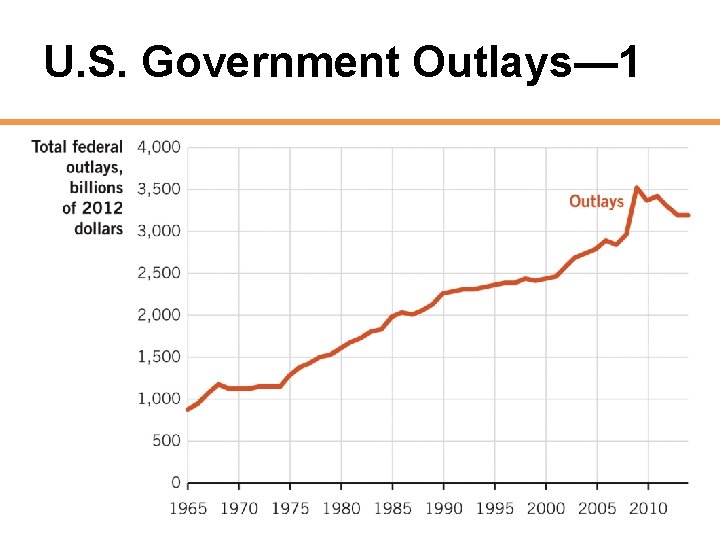
U. S. Government Outlays— 1
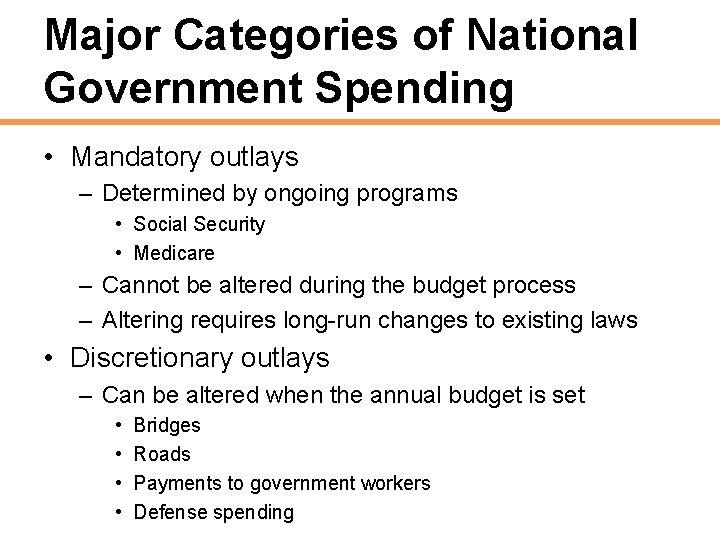
Major Categories of National Government Spending • Mandatory outlays – Determined by ongoing programs • Social Security • Medicare – Cannot be altered during the budget process – Altering requires long-run changes to existing laws • Discretionary outlays – Can be altered when the annual budget is set • • Bridges Roads Payments to government workers Defense spending
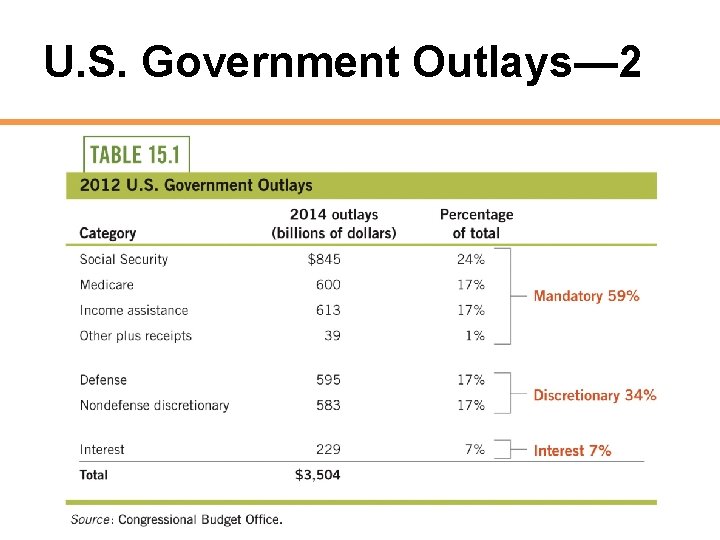
U. S. Government Outlays— 2
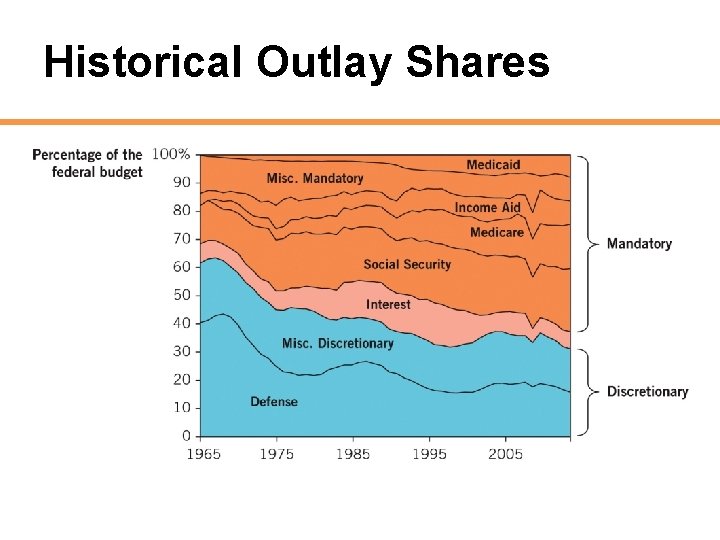
Historical Outlay Shares
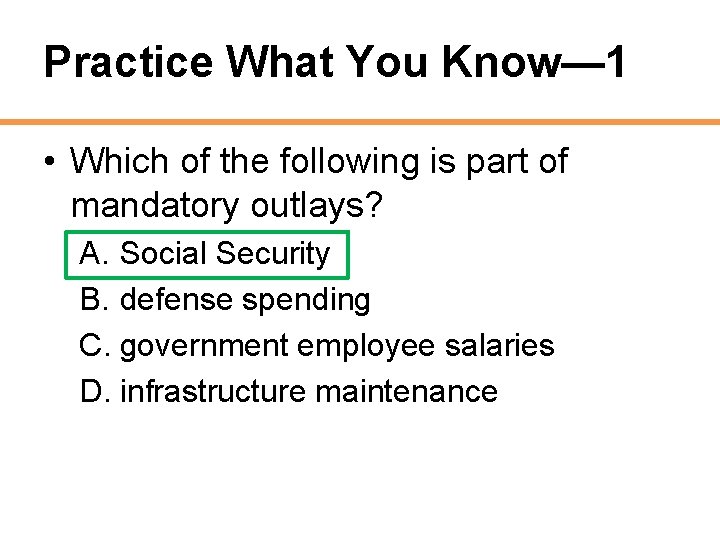
Practice What You Know— 1 • Which of the following is part of mandatory outlays? A. Social Security B. defense spending C. government employee salaries D. infrastructure maintenance
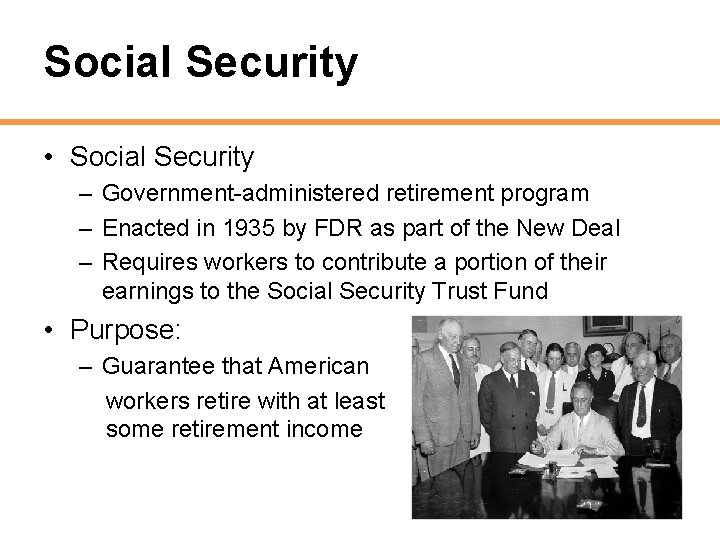
Social Security • Social Security – Government-administered retirement program – Enacted in 1935 by FDR as part of the New Deal – Requires workers to contribute a portion of their earnings to the Social Security Trust Fund • Purpose: – Guarantee that American workers retire with at least some retirement income
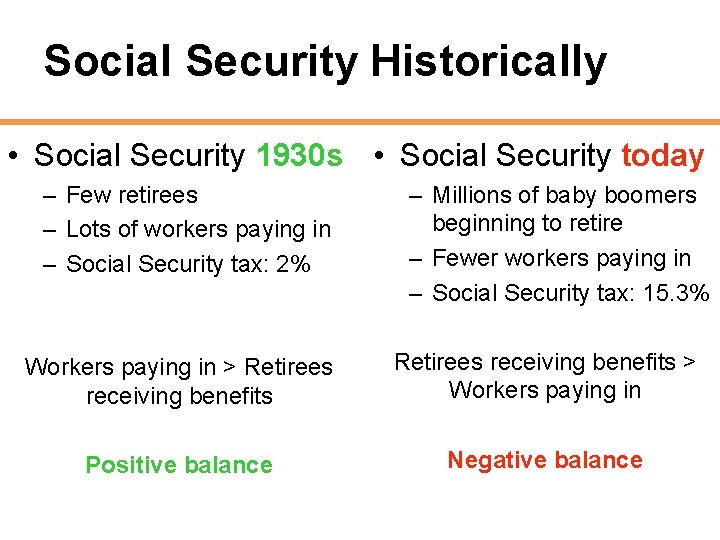
Social Security Historically • Social Security 1930 s • Social Security today – Few retirees – Lots of workers paying in – Social Security tax: 2% – Millions of baby boomers beginning to retire – Fewer workers paying in – Social Security tax: 15. 3% Workers paying in > Retirees receiving benefits > Workers paying in Positive balance Negative balance
Medicare • Medicare – Federal program that funds health care for retirees – Established in 1965 by Lyndon Johnson – Law requires current workers to pay Medicare taxes (with promise of insurance upon retirement) • Goal – Ensure that all retired workers have some funding for their health care
Social Security and Medicare • Addition and expansion of programs • Demographic changes – People are living longer today. – Baby boomers are now entering retirement and drawing benefits.
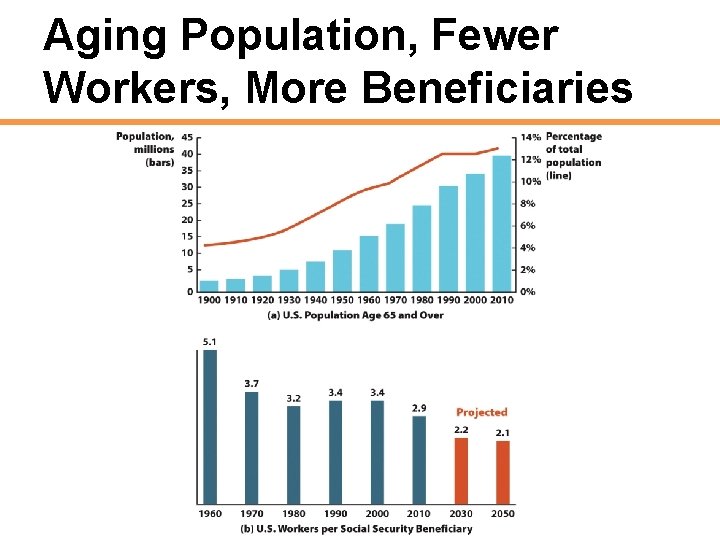
Aging Population, Fewer Workers, More Beneficiaries
The First S. S. Recipient • The first Social Security recipient: Ida May Fuller – Received check 00 -001 in January 1940 • Taxes and outlays – Ida May Fuller worked for three years under the program, and was taxed a total of $24. 75. – She lived to be 100 years old and collected a total of $22, 888. 92 from Social Security! – If this were a typical experience, the program would not be sustainable.
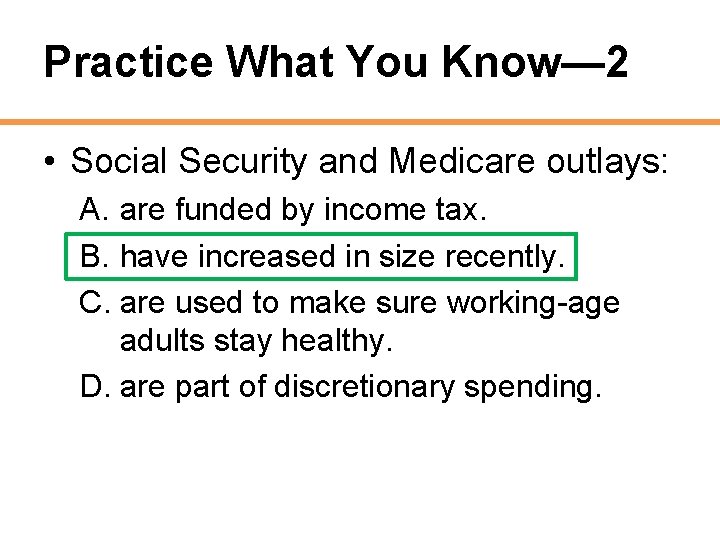
Practice What You Know— 2 • Social Security and Medicare outlays: A. are funded by income tax. B. have increased in size recently. C. are used to make sure working-age adults stay healthy. D. are part of discretionary spending.
Current Fiscal Issues • Increased government spending began recently: 1. Increased defense spending following Sept. 11, 2001 • • 2001: Defense spending was 16. 5% of the federal budget 2010: Defense spending was 19. 1% of the federal budget 2. Increased spending on Social Security and Medicare 3. Government responses to the Great Recession (2008) • • 2007: $2. 87 trillion outlay 2009: $3. 58 trillion outlay
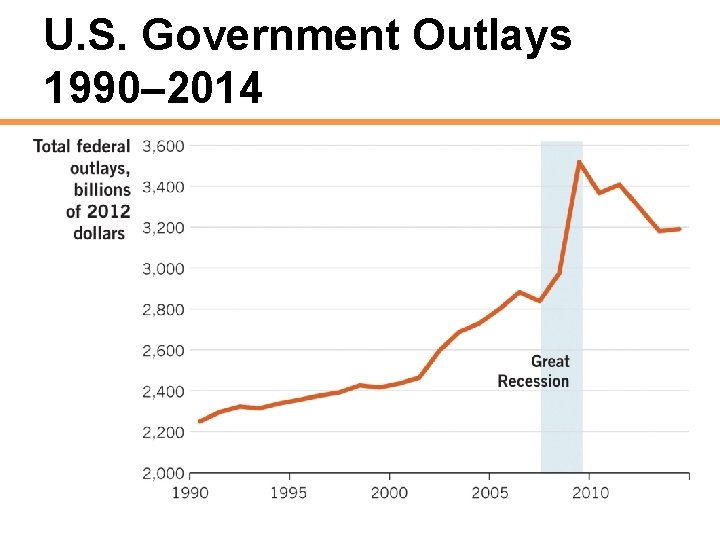
U. S. Government Outlays 1990– 2014
How do Federal Governments Raise Revenue? • Most government revenue comes from taxes • Payroll taxes (deducted from paychecks) – Income, Social Security, and Medicare tax combined for 80% of all federal tax revenue in 2014 • Other tax revenue sources – Corporate, estate and gift, excise, and custom taxes
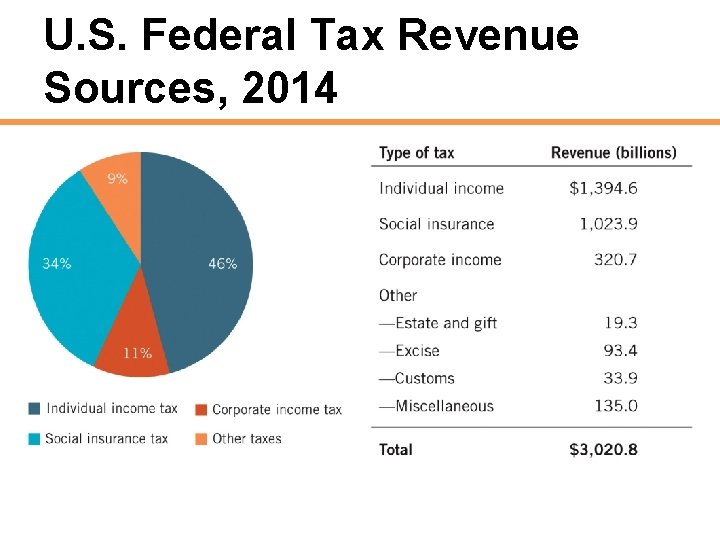
U. S. Federal Tax Revenue Sources, 2014
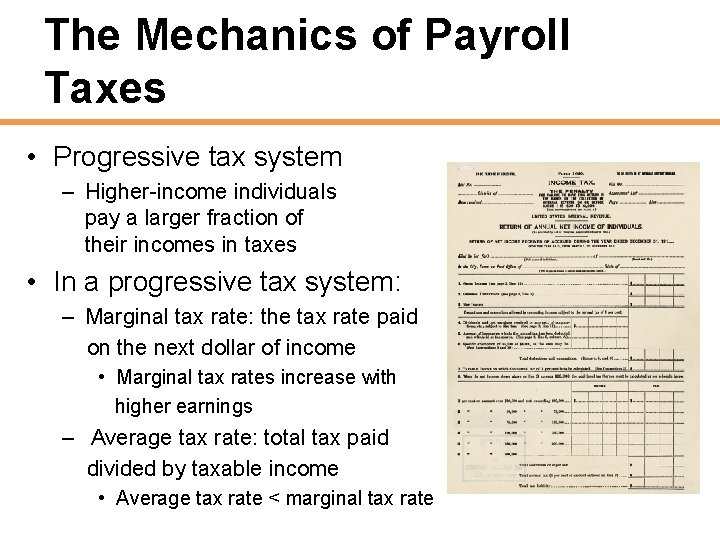
The Mechanics of Payroll Taxes • Progressive tax system – Higher-income individuals pay a larger fraction of their incomes in taxes • In a progressive tax system: – Marginal tax rate: the tax rate paid on the next dollar of income • Marginal tax rates increase with higher earnings – Average tax rate: total tax paid divided by taxable income • Average tax rate < marginal tax rate
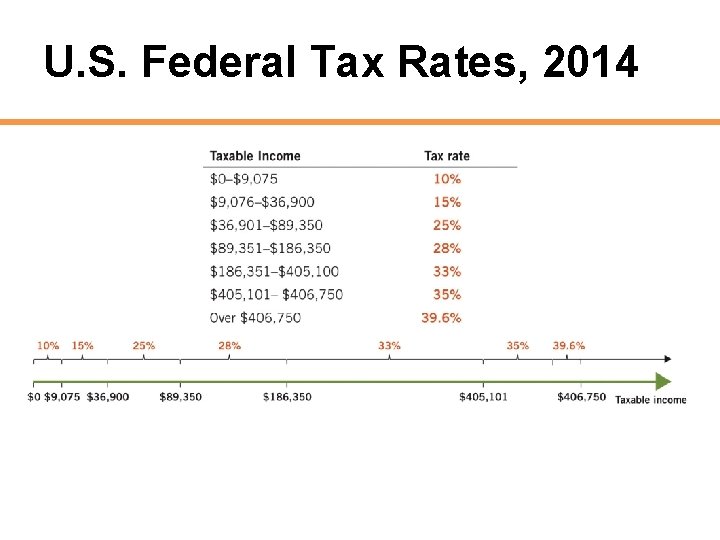
U. S. Federal Tax Rates, 2014
Historical Income Tax Rates • The U. S. income tax is only about 100 years old – The highest marginal tax rate in 1913 was 6% – Applied to earnings over $500, 000 ($11 million today) • Marginal tax rates rose quickly – The top marginal rate in 1918 was 77% – Applied to income over $2 million – Highest top marginal rates occurred in 1945 at 94%
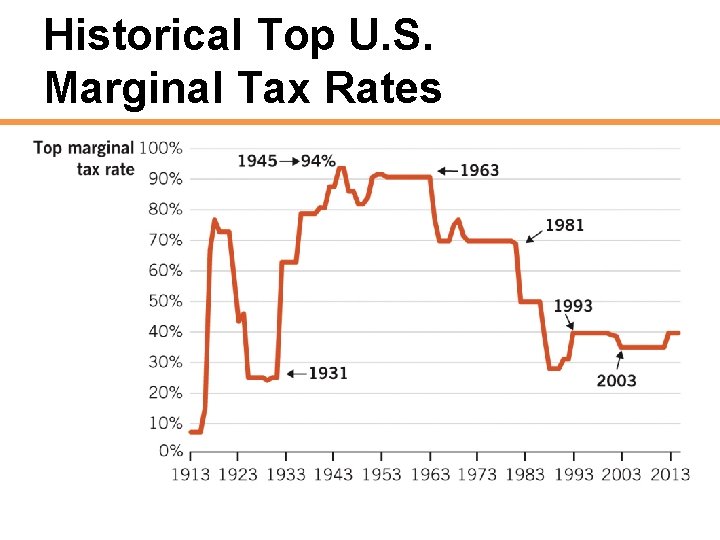
Historical Top U. S. Marginal Tax Rates
Practice What You Know— 3 • Income taxes in the United States can be described as: A. progressive. B. regressive. C. flat. D. U-shaped.
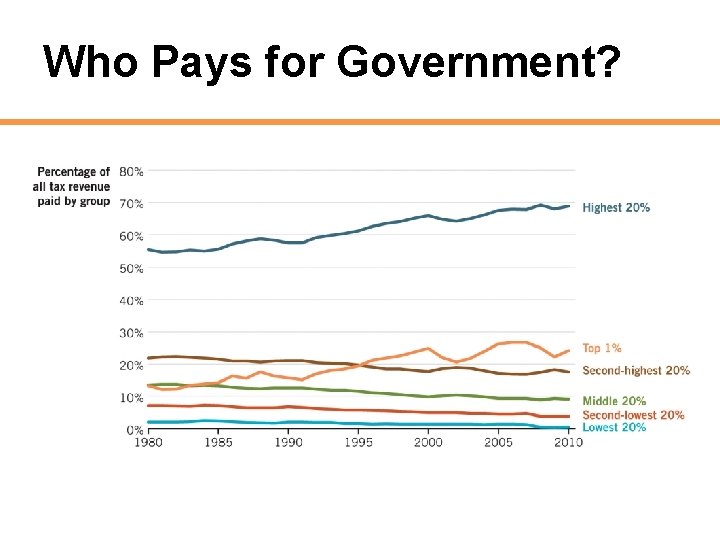
Who Pays for Government?
Outlays and Revenue— 3 • Budget deficit Outlays > Revenues – More funds flowing out than in • Budget surplus Revenues > Outlays – More funds flowing in than out 2009: $1. 4 trillion budget deficit, largest in U. S. history
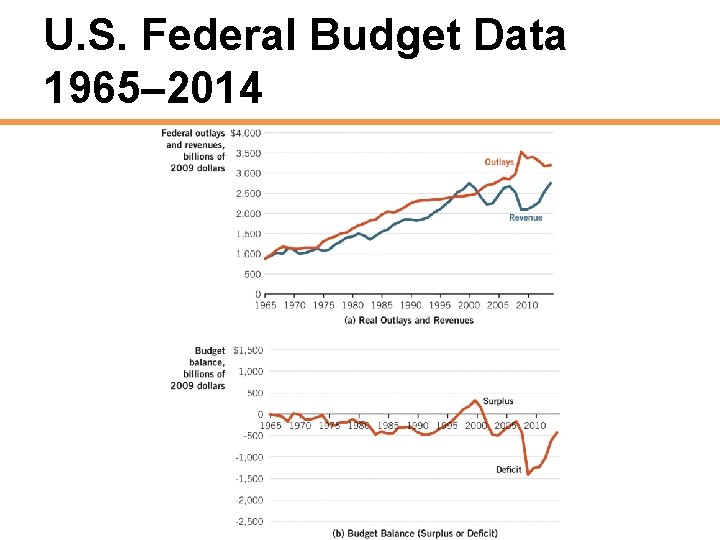
U. S. Federal Budget Data 1965– 2014
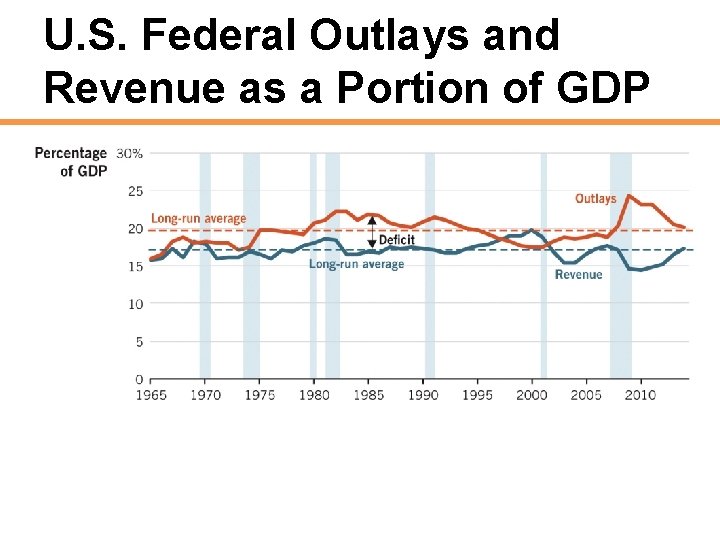
U. S. Federal Outlays and Revenue as a Portion of GDP
Practice What You Know— 4 • Which of the following is FALSE regarding deficits? A. Deficits grow when outlays increase. B. Deficits tend to grow during recessions. C. Deficits grow when revenues increase. D. Recent U. S. budget deficits are large in a historical context.
Outlays and Revenue— 4 • Three general observations: 1. Deficits grow when: • • • Outlays ↑ Revenues ↓ Outlays ↑ and revenues ↓ 2. Deficits tend to grow during recessionary periods 3. Recent U. S. budget deficits are historically large
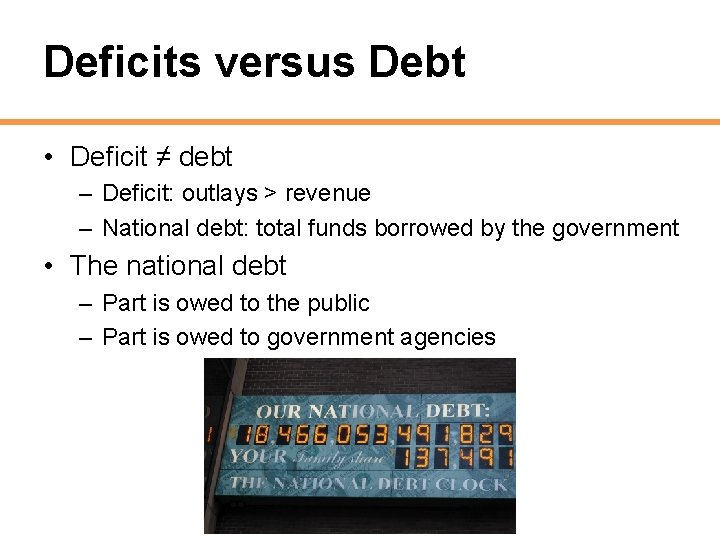
Deficits versus Debt • Deficit ≠ debt – Deficit: outlays > revenue – National debt: total funds borrowed by the government • The national debt – Part is owed to the public – Part is owed to government agencies
Discuss the National Debt • www. usdebtclock. org
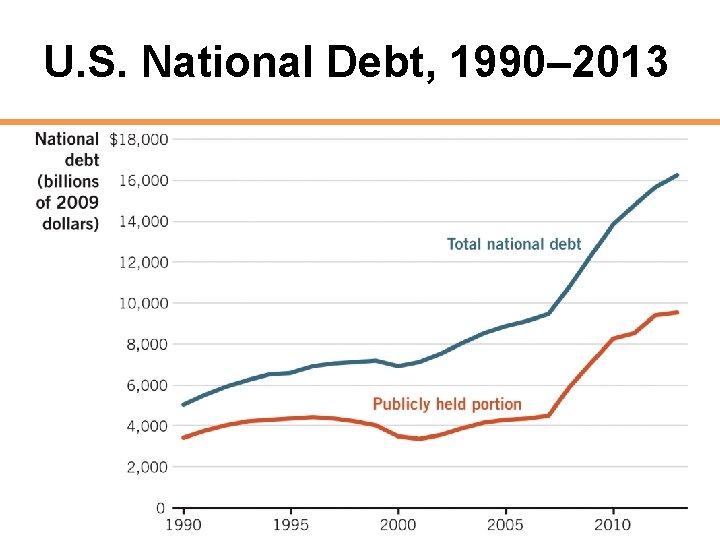
U. S. National Debt, 1990– 2013
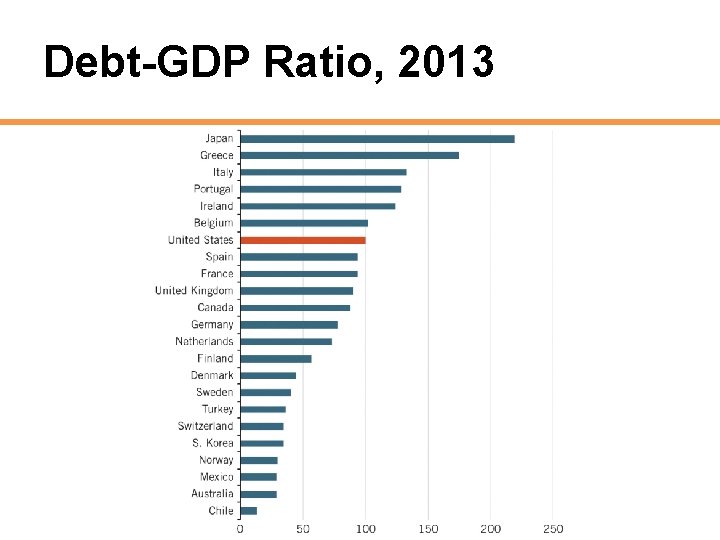
Debt-GDP Ratio, 2013
Practice What You Know— 5 • Which of the following is true? A. The United States generally has a budget surplus. B. National debt is the same as deficit. C. The national debt is the sum of yearly budget deficits. D. A deficit will occur when revenues exceed outlays.
Foreign Ownership of U. S. Debt • There has been public concern over international ownership of U. S. debt, but: – – 67% of national debt held domestically 33% held internationally Foreign lending increases the supply of loanable funds Decreases interest rates
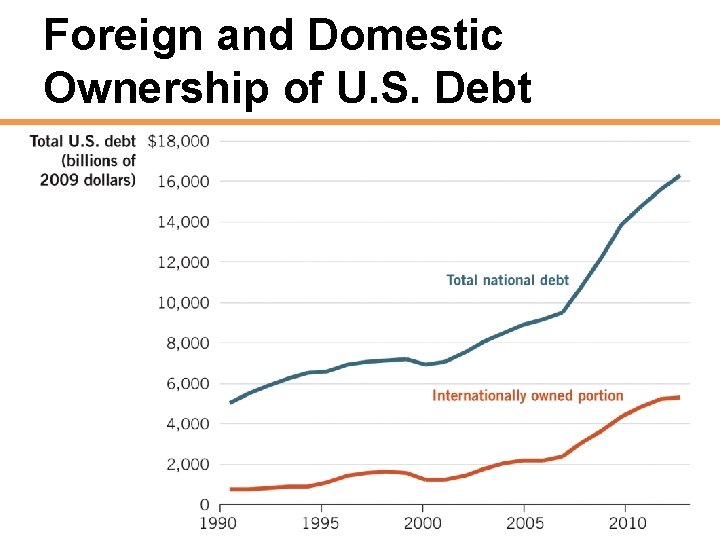
Foreign and Domestic Ownership of U. S. Debt
Conclusion • • Government outlays = government spending + transfer payments Government revenues: taxes The U. S. income tax system is progressive Debt is the cumulative sum of all annual deficits Largest portion of outlays: – Social Security – Medicare increased due to demographic changes
- Slides: 42