
15 D Other Invertebrates Page 468 473 Phylum
15 D – Other Invertebrates Page 468 – 473
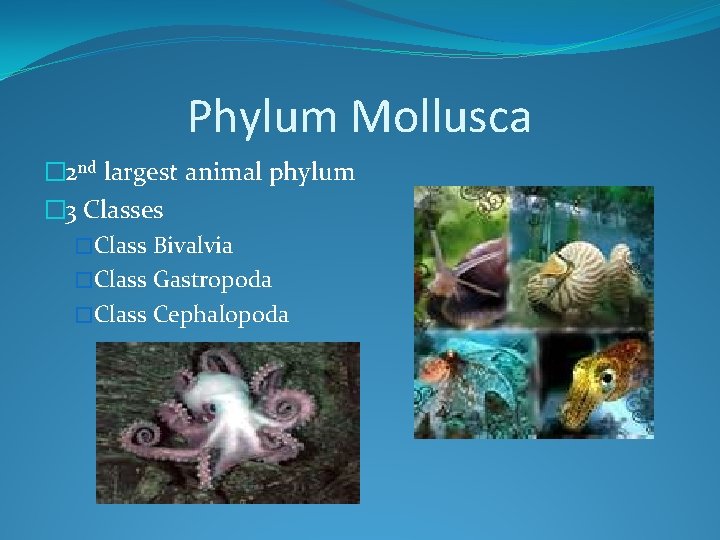
Phylum Mollusca � 2 nd largest animal phylum � 3 Classes �Class Bivalvia �Class Gastropoda �Class Cephalopoda
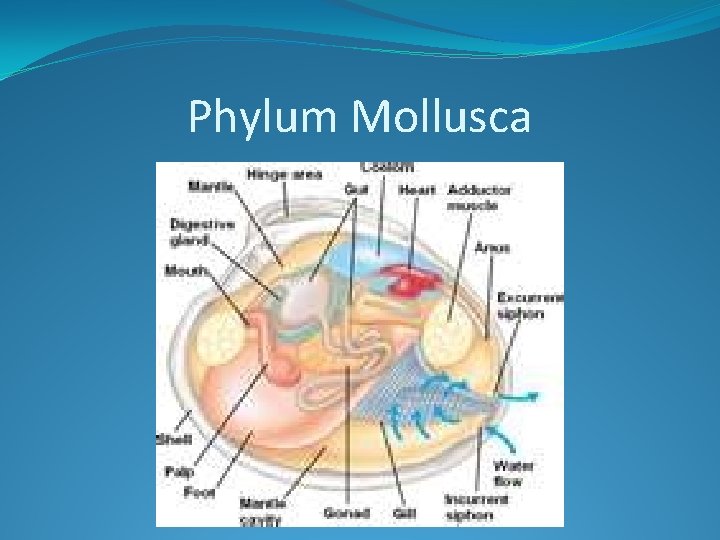
Phylum Mollusca �Octopus, oysters, snails, slugs, squid, clams �All Mollusca have the following: �Mantle: protects the organs (insides); helps it breathe �Shell: hard outer covering; protects the body �Visceral Hump: holds the heart, stomach, and excretory organs (where it pees and poops) �Foot: allows it to move �Radula: organ with small teeth that grabs food and pulls the food into the mouth �Babies are called trochophore
Phylum Mollusca
Class Bivalvia �Oysters, clams, mussels, and scallops �This class has a shell with two halves �Called “filter feeders” because they pull in water and eat the smaller animals out of the water �Water is pulled in and pushed back out by siphons – these work like straws �Gills allow Class Bivalvia to breathe �These are usually sessile (don’t move) with 2 external (outside the animal) shells
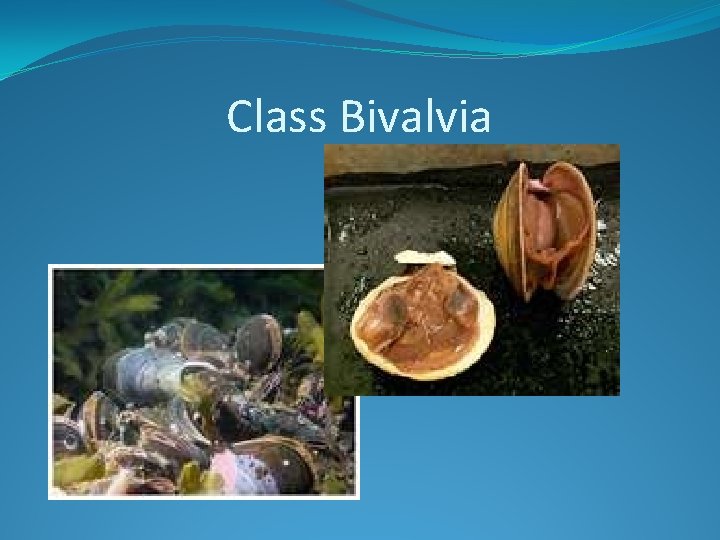
Class Bivalvia
Class Gastropoda �Called Stomach-footed mollusks because they have their foot under their visceral hump �Snails, slugs, nudibranches �Usually move by crawling �Usually have one external shell (not slugs) �Usually have a mantle cavity: a space between the shell and the body that acts as a lung
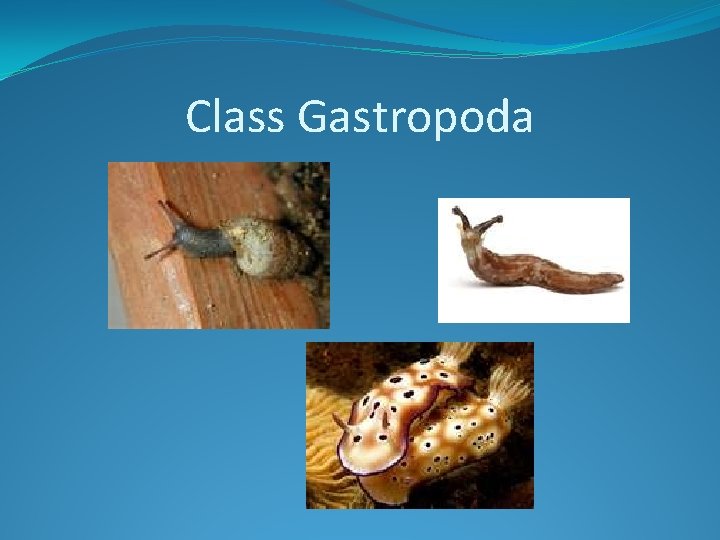
Class Gastropoda
Class Cephalopoda �Octopus and squid – the foot is divided into arms with suckers that are used to catch food �Called head-footed mollusks because their foot is under their head �They live in the ocean and swim

Class Cephalopoda
Phylum Echinodermata �Sea urchins, starfish, sand dollars, sea cucumbers, brittle stars, basket stars, sea lilies, and feather stars �Live in the ocean �They have an endoskeleton called ossicles �They have radial symmetry �They have a water-vascular system: they pull water into themselves in order to change water pressure around them and work the suction cups on their arms
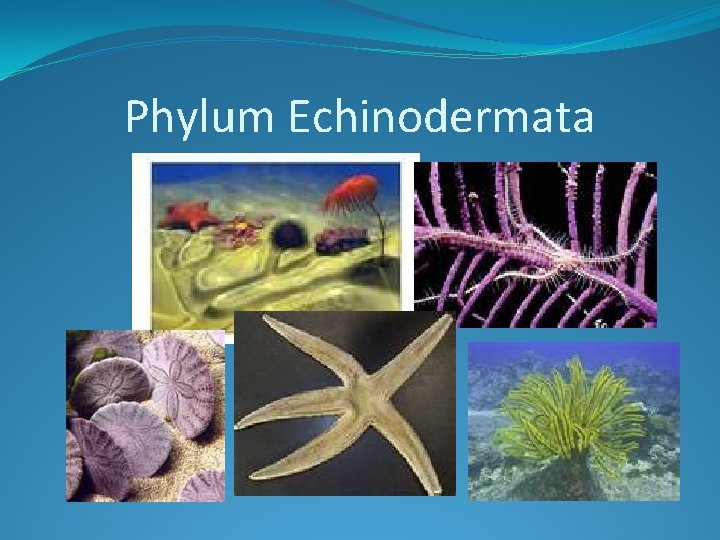
Phylum Echinodermata
Class Asteroida �Starfish �Tube feet are the suction cups inside of the rays (arms) that help the starfish grab food and move �They regenerate (if you cut a part off, it will grow back)
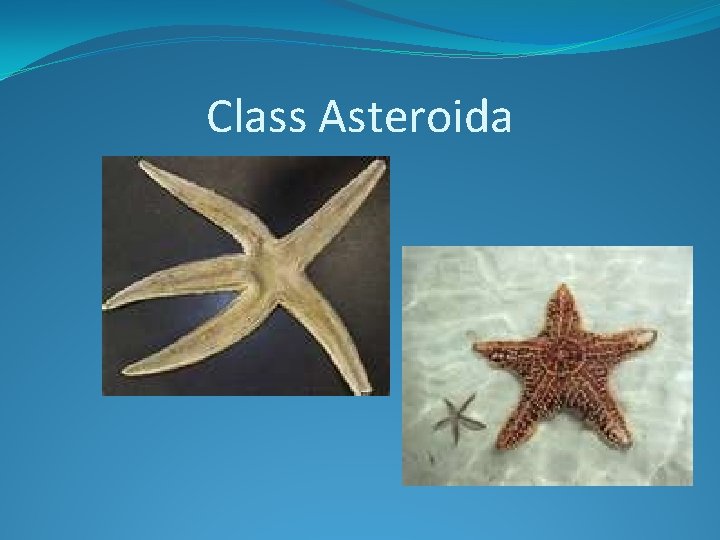
Class Asteroida
Class Enchinoidea �Sea Urchins and Sand Dollars �They have spines that protect them �They are scavengers: they will eat anything
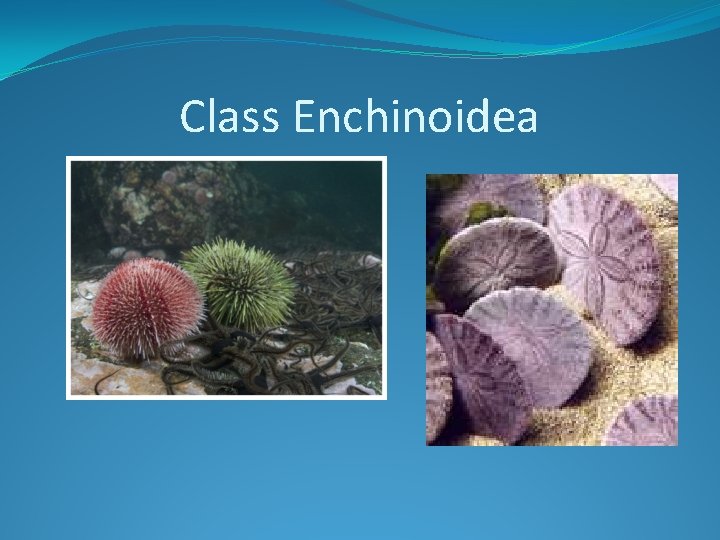
Class Enchinoidea
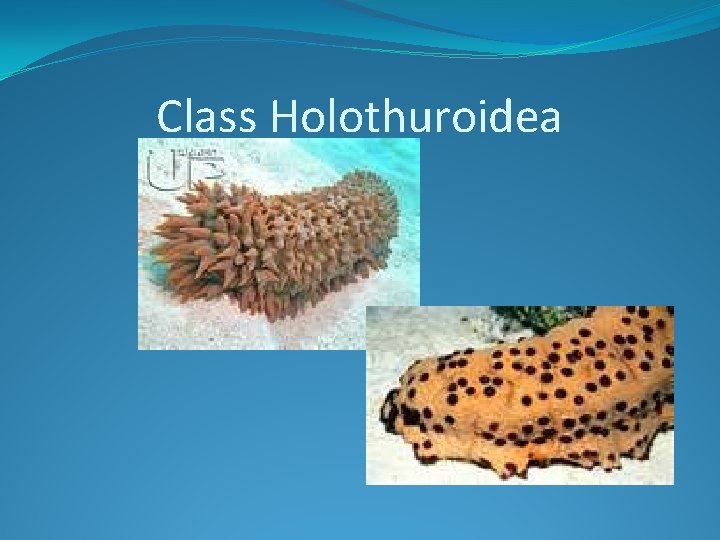
Class Holothuroidea �Sea Cucumbers �They are slow-moving and eat whatever they can trap �When they are attacked, they throw out their internal organs and run away, then regenerate (make) new organs
Class Holothuroidea
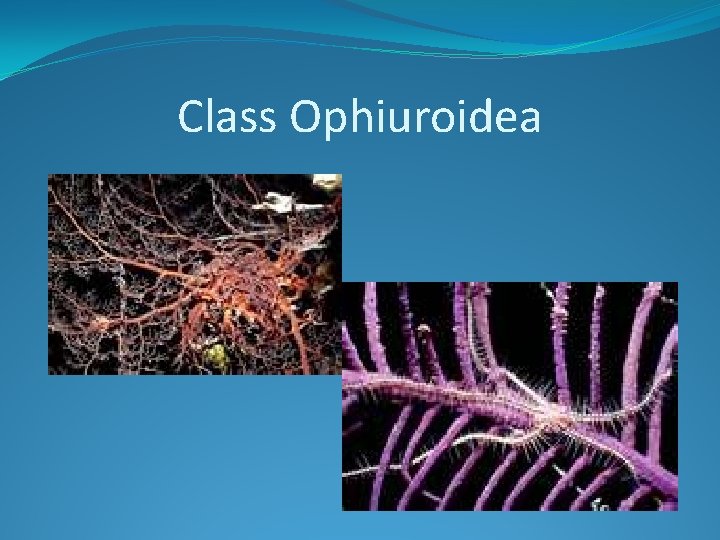
Class Ophiuroidea �Brittle Stars and Basket Stars �Brittle stars throw away their arms when they are attacked, then regenerate their arms �Basket Stars eat at night – they raise their arms to make a basket shape to trap small animals and eat them
Class Ophiuroidea
Class Crinoidea �Sea Lilies and Feather Stars �Sea lilies are sessile (don’t move) �Feather stars are able to crawl slowly
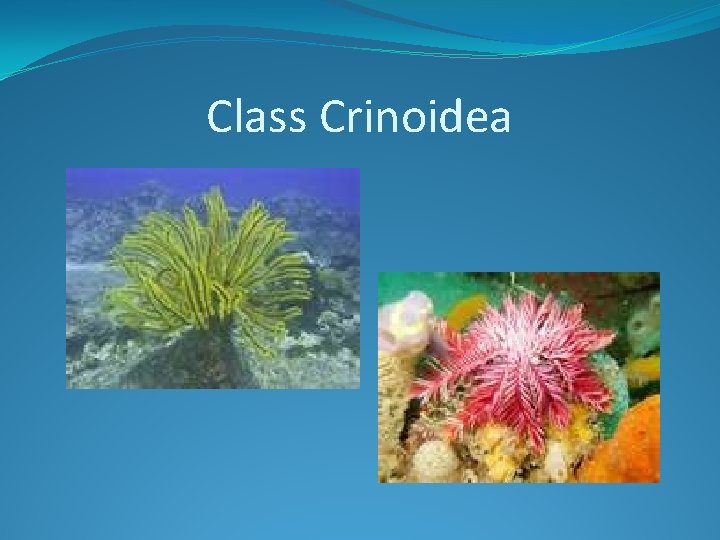
Class Crinoidea
- Slides: 22