
15 CARDINAL RULES 1 a 2 All patients
- Slides: 4
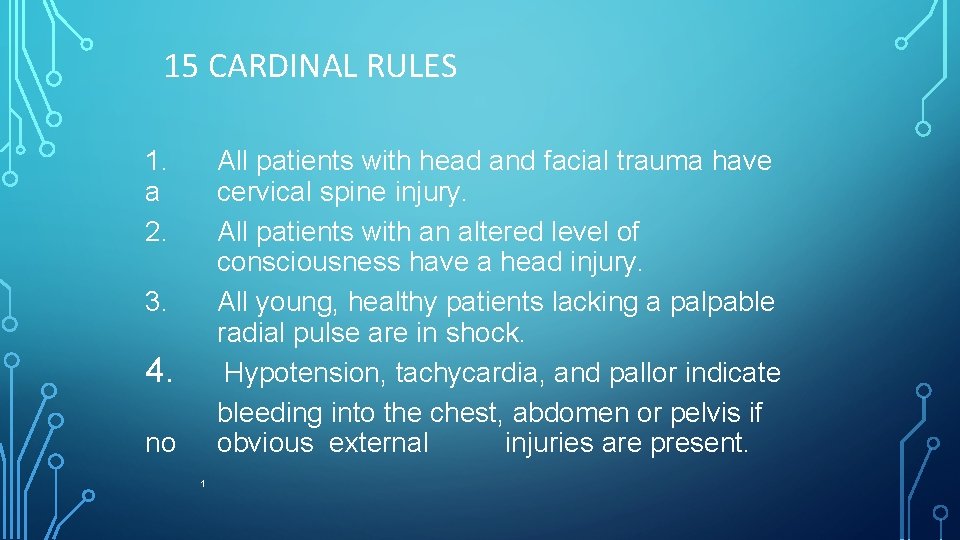
15 CARDINAL RULES 1. a 2. All patients with head and facial trauma have cervical spine injury. All patients with an altered level of consciousness have a head injury. All young, healthy patients lacking a palpable radial pulse are in shock. Hypotension, tachycardia, and pallor indicate bleeding into the chest, abdomen or pelvis if obvious external injuries are present. 3. 4. no 1
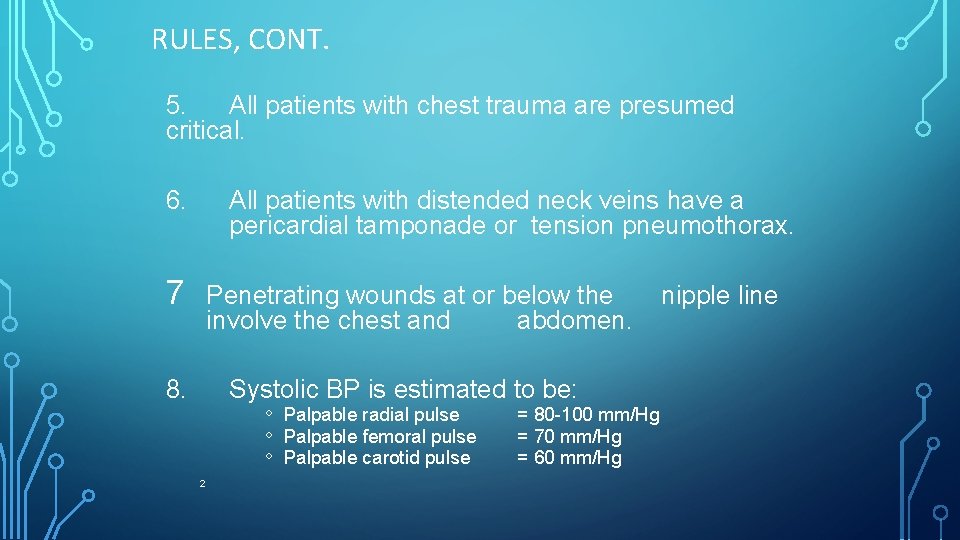
RULES, CONT. 5. All patients with chest trauma are presumed critical. 6. All patients with distended neck veins have a pericardial tamponade or tension pneumothorax. 7 Penetrating wounds at or below the involve the chest and abdomen. 8. Systolic BP is estimated to be: ◦ ◦ ◦ 2 Palpable radial pulse Palpable femoral pulse Palpable carotid pulse = 80 -100 mm/Hg = 70 mm/Hg = 60 mm/Hg nipple line
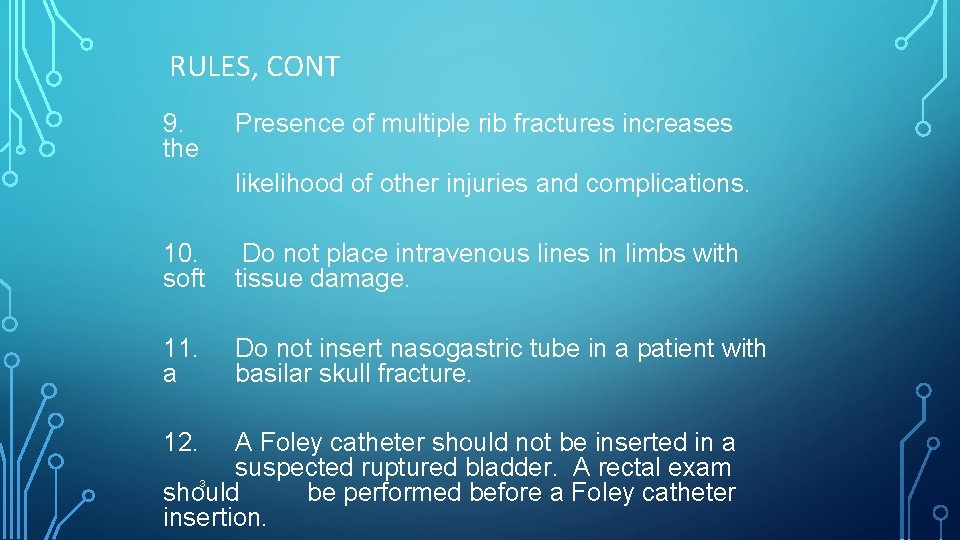
RULES, CONT 9. the Presence of multiple rib fractures increases likelihood of other injuries and complications. 10. soft Do not place intravenous lines in limbs with tissue damage. 11. a Do not insert nasogastric tube in a patient with basilar skull fracture. 12. A Foley catheter should not be inserted in a suspected ruptured bladder. A rectal exam 3 should be performed before a Foley catheter insertion.
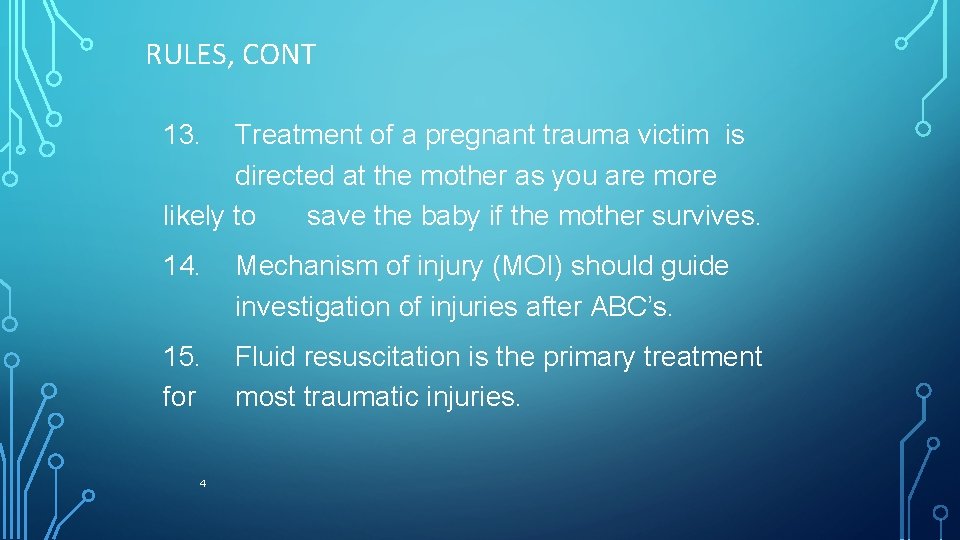
RULES, CONT 13. Treatment of a pregnant trauma victim is directed at the mother as you are more likely to save the baby if the mother survives. 14. Mechanism of injury (MOI) should guide investigation of injuries after ABC’s. 15. for Fluid resuscitation is the primary treatment most traumatic injuries. 4