
15 744 Computer Networking L12 Data Center Networking
- Slides: 40
15 -744: Computer Networking L-12 Data Center Networking I
Overview • Data Center Overview • Routing in the DC • Transport in the DC 2
Datacenter Arms Race • Amazon, Google, Microsoft, Yahoo!, … race to build next-gen mega-datacenters • Industrial-scale Information Technology • 100, 000+ servers • Located where land, water, fiber-optic connectivity, and cheap power are available 3
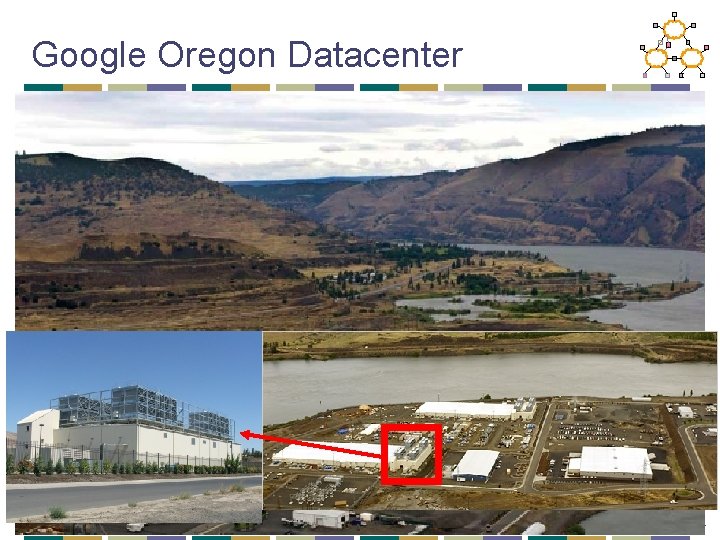
Google Oregon Datacenter 4
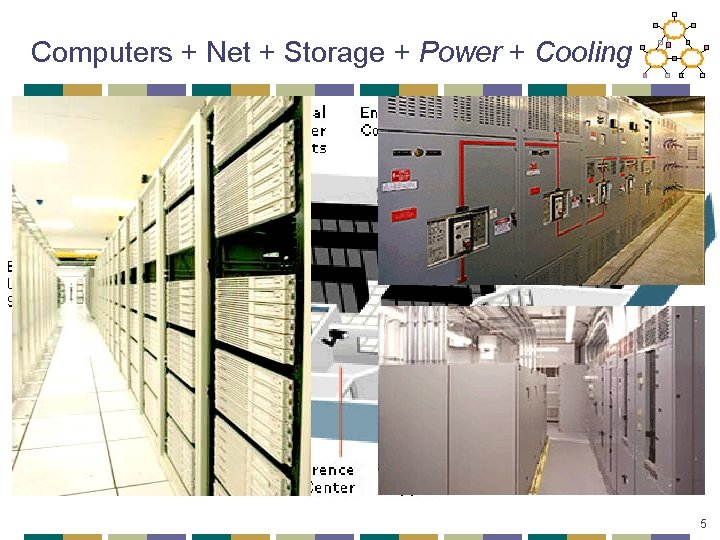
Computers + Net + Storage + Power + Cooling 5
Overview • Data Center Overview • Routing in the DC • Transport in the DC 6
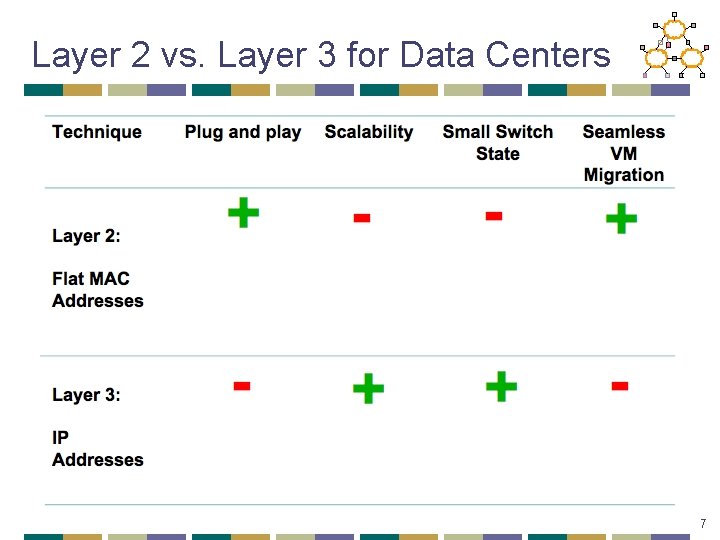
Layer 2 vs. Layer 3 for Data Centers 7
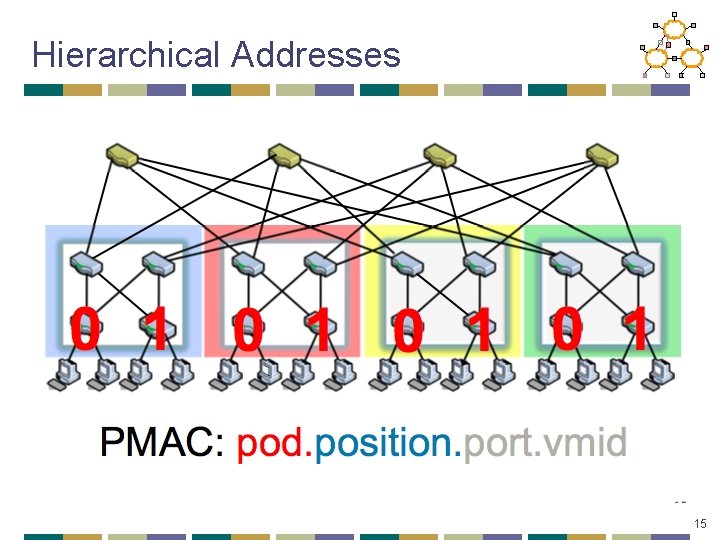
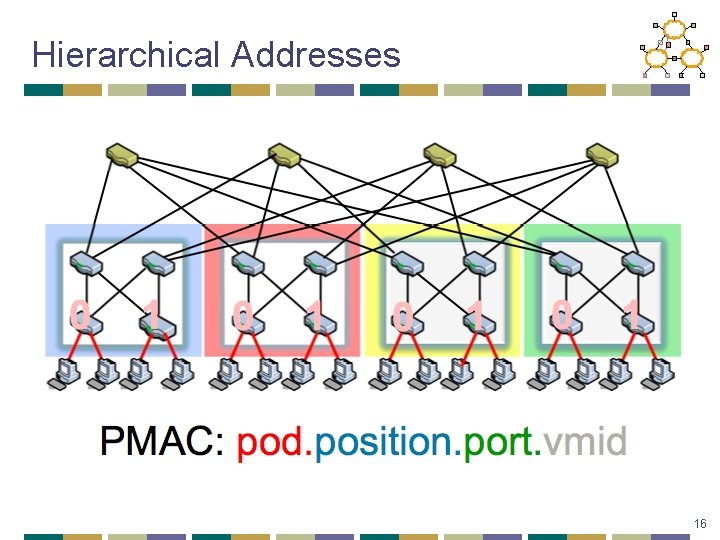
Flat vs. Location Based Addresses • Commodity switches today have ~640 KB of low latency, power hungry, expensive on chip memory • Stores 32 – 64 K flow entries • Assume 10 million virtual endpoints in 500, 000 servers in datacenter • Flat addresses 10 million address mappings ~100 MB on chip memory ~150 times the memory size that can be put on chip today • Location based addresses 100 – 1000 address mappings ~10 KB of memory easily accommodated in switches today 8
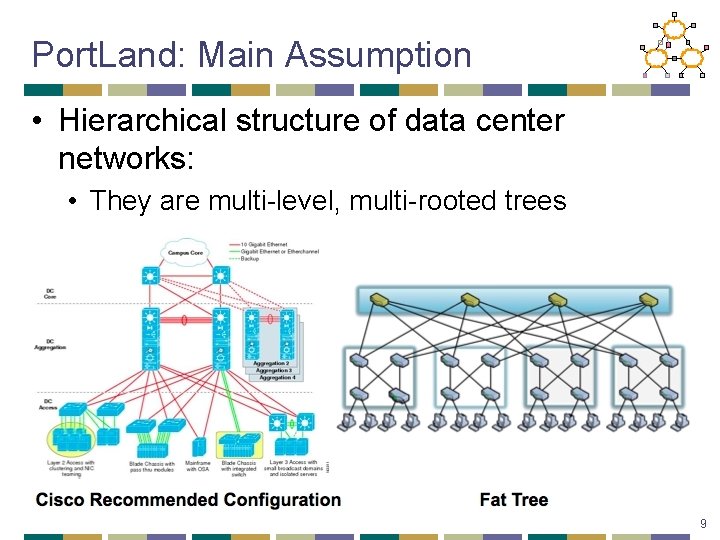
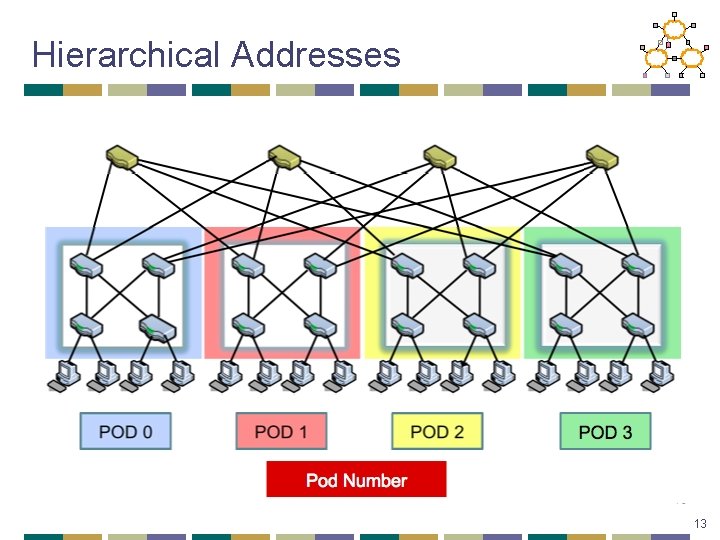
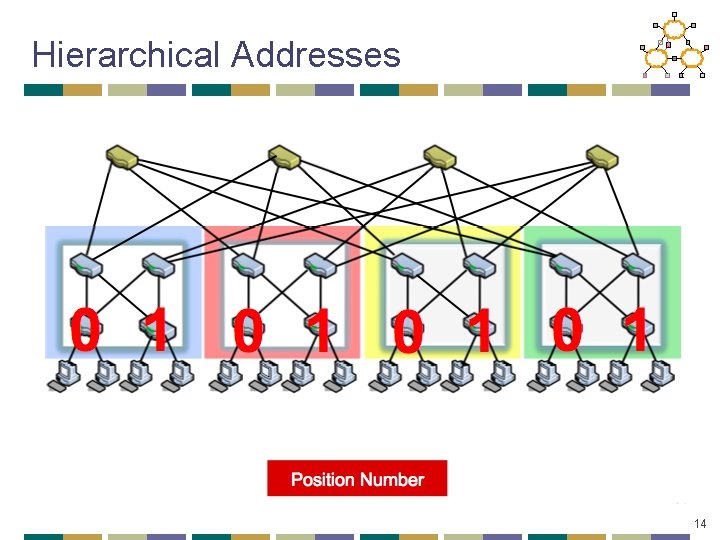
Port. Land: Main Assumption • Hierarchical structure of data center networks: • They are multi-level, multi-rooted trees 9
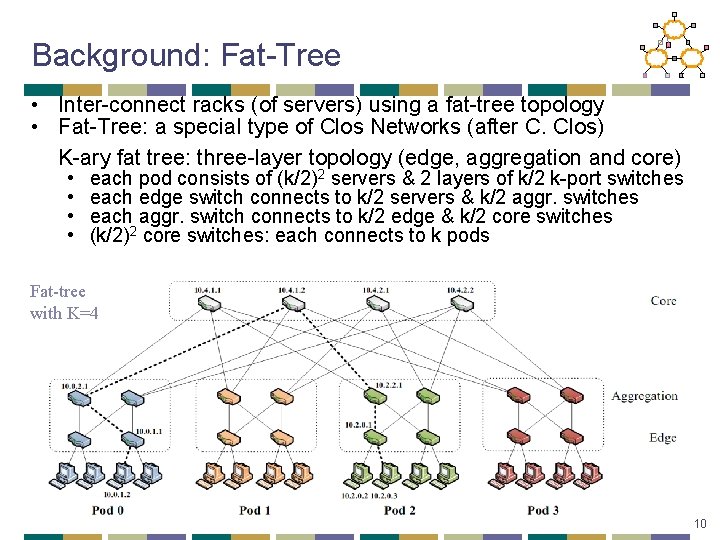
Background: Fat-Tree • Inter-connect racks (of servers) using a fat-tree topology • Fat-Tree: a special type of Clos Networks (after C. Clos) K-ary fat tree: three-layer topology (edge, aggregation and core) • • each pod consists of (k/2)2 servers & 2 layers of k/2 k-port switches each edge switch connects to k/2 servers & k/2 aggr. switches each aggr. switch connects to k/2 edge & k/2 core switches (k/2)2 core switches: each connects to k pods Fat-tree with K=4 10
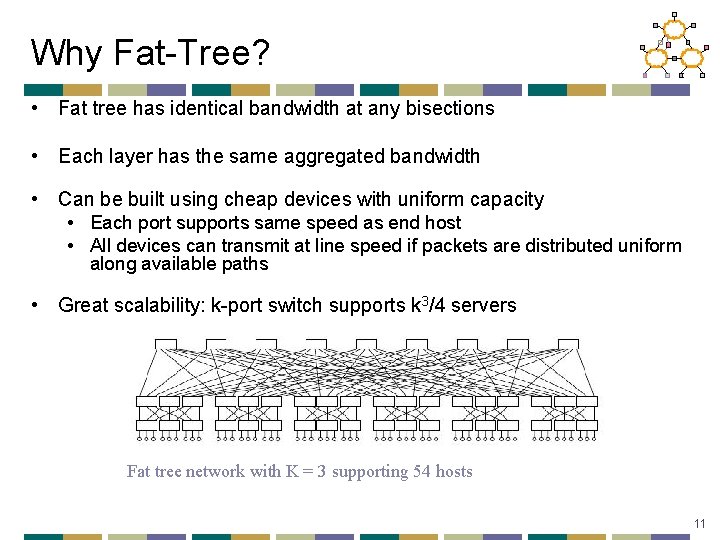
Why Fat-Tree? • Fat tree has identical bandwidth at any bisections • Each layer has the same aggregated bandwidth • Can be built using cheap devices with uniform capacity • Each port supports same speed as end host • All devices can transmit at line speed if packets are distributed uniform along available paths • Great scalability: k-port switch supports k 3/4 servers Fat tree network with K = 3 supporting 54 hosts 11
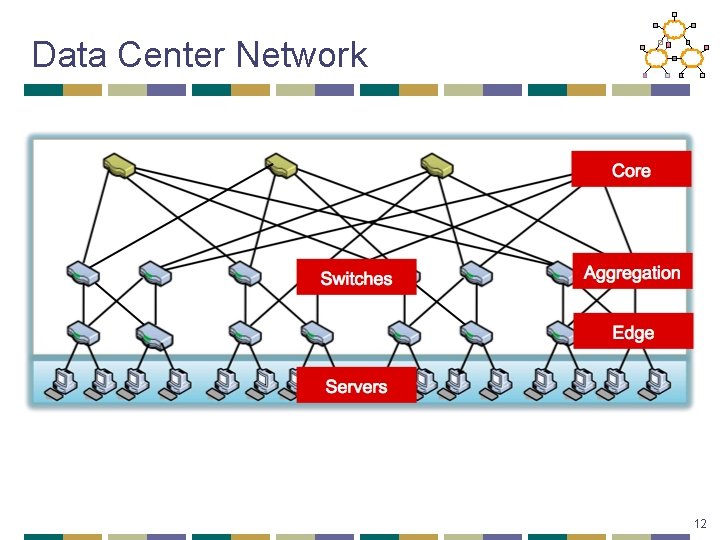
Data Center Network 12
Hierarchical Addresses 13
Hierarchical Addresses 14
Hierarchical Addresses 15
Hierarchical Addresses 16
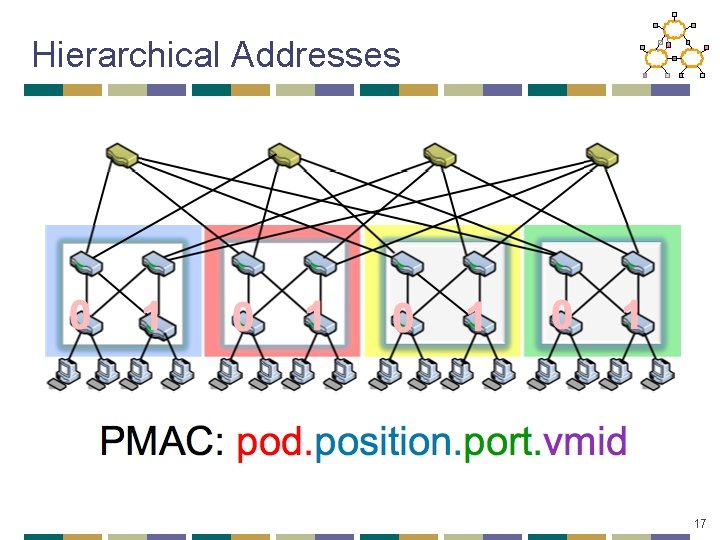
Hierarchical Addresses 17
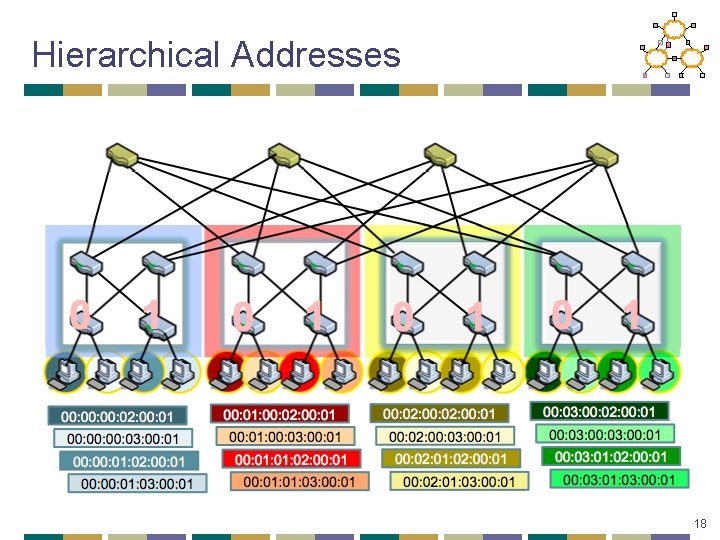
Hierarchical Addresses 18
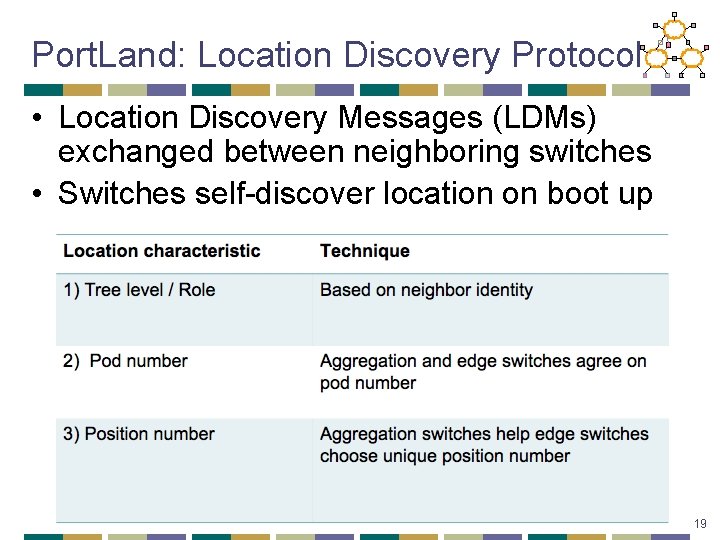
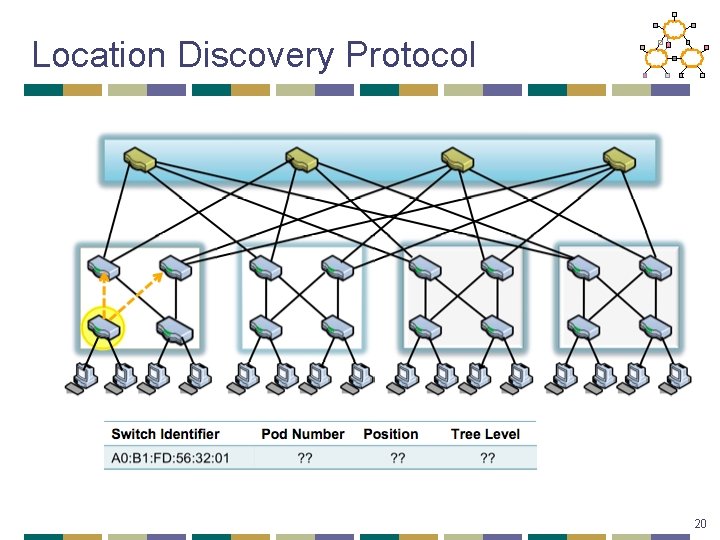
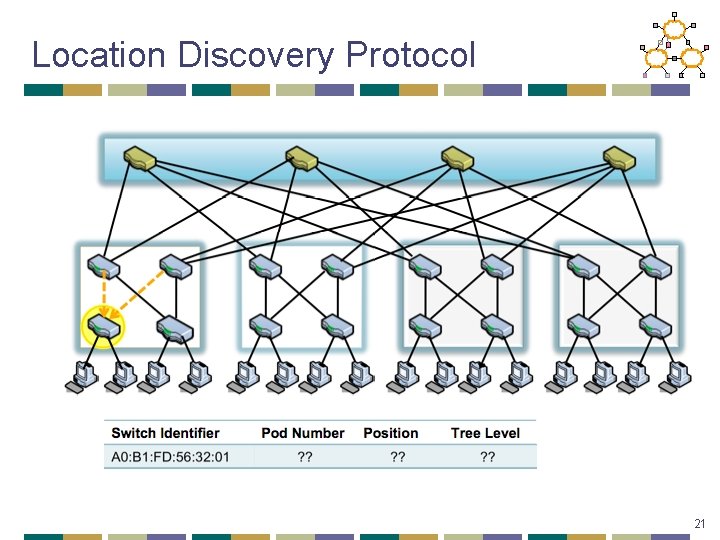
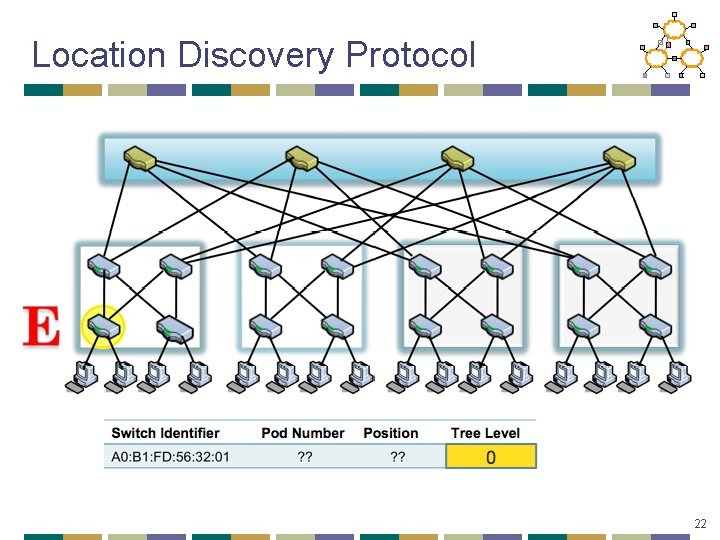
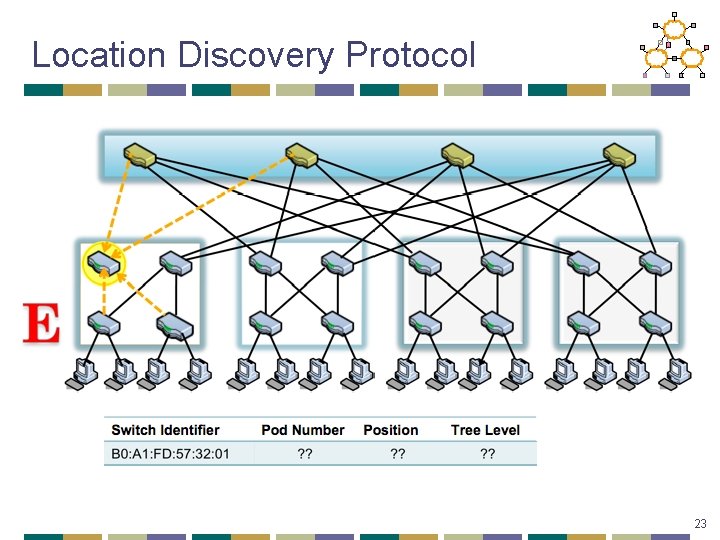
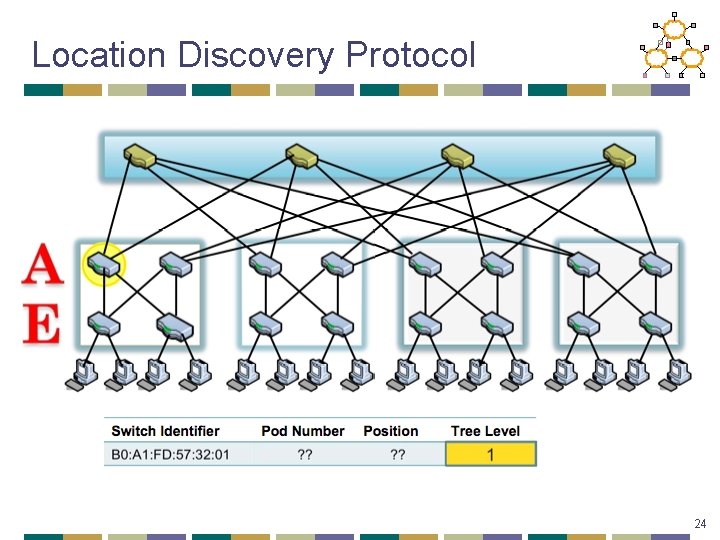
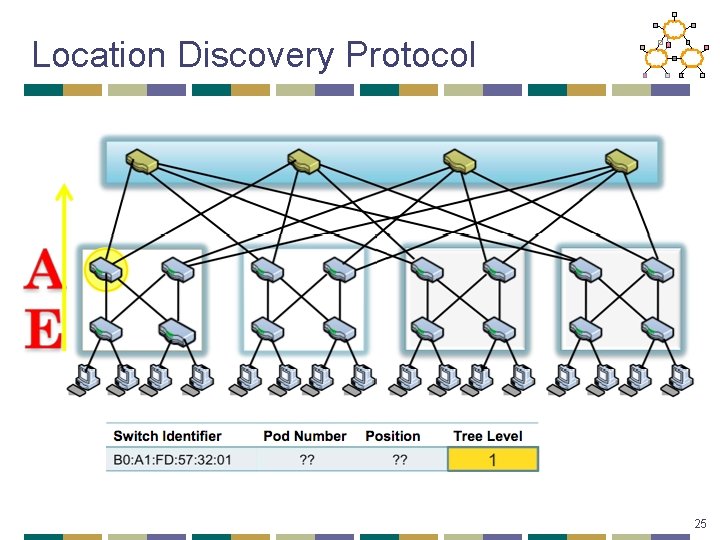
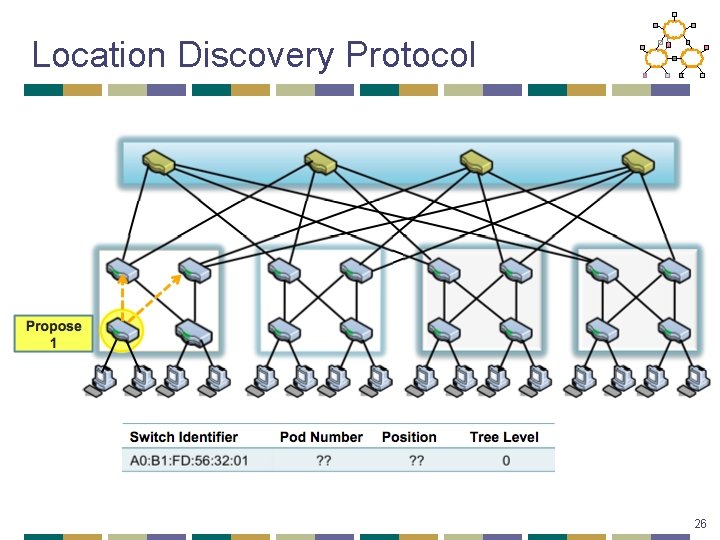
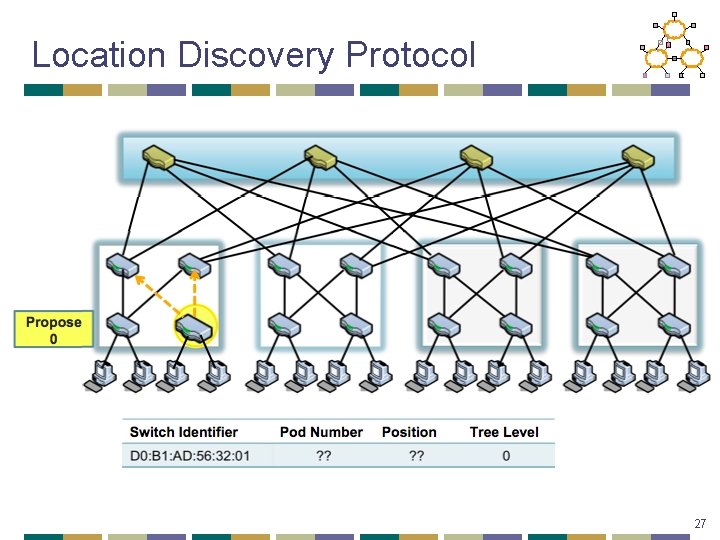
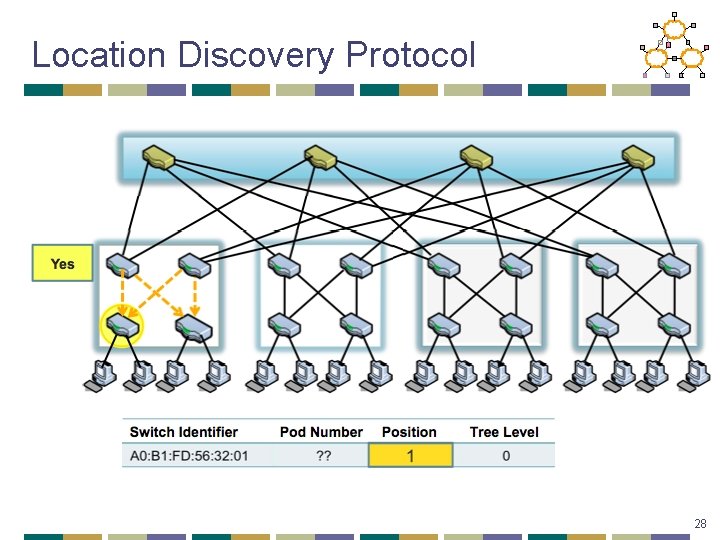
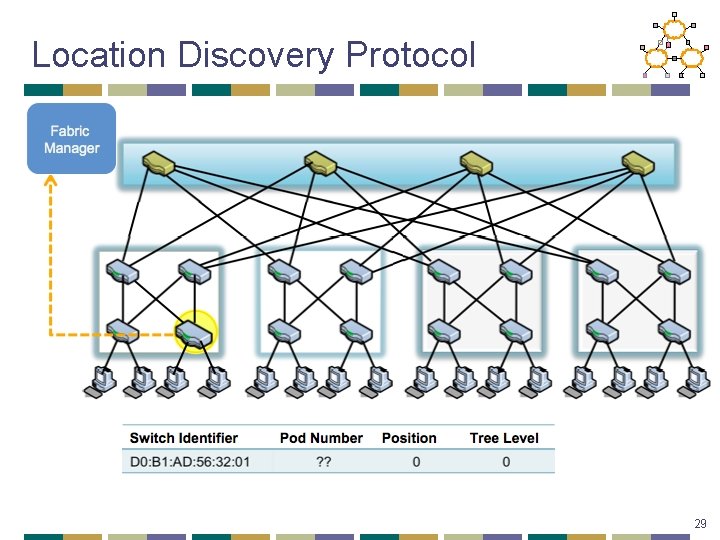
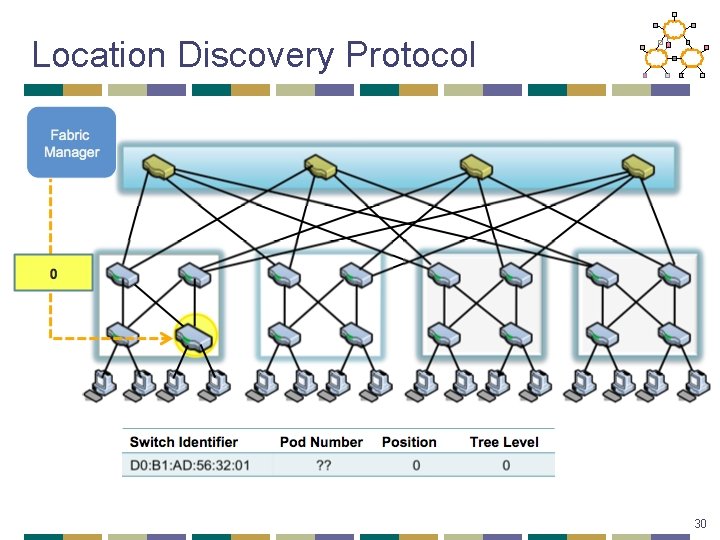
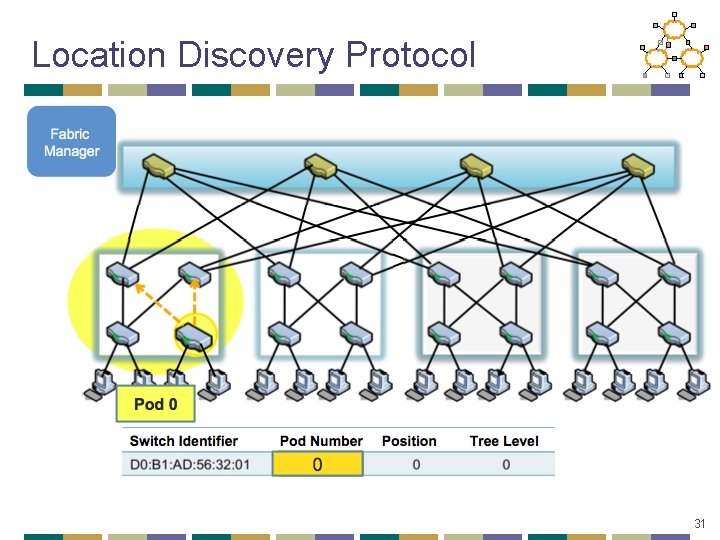
Port. Land: Location Discovery Protocol • Location Discovery Messages (LDMs) exchanged between neighboring switches • Switches self-discover location on boot up 19
Location Discovery Protocol 20
Location Discovery Protocol 21
Location Discovery Protocol 22
Location Discovery Protocol 23
Location Discovery Protocol 24
Location Discovery Protocol 25
Location Discovery Protocol 26
Location Discovery Protocol 27
Location Discovery Protocol 28
Location Discovery Protocol 29
Location Discovery Protocol 30
Location Discovery Protocol 31
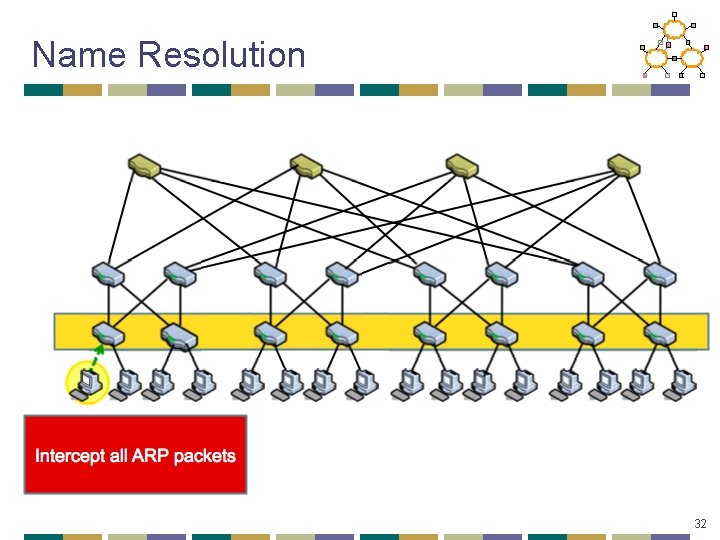
Name Resolution 32
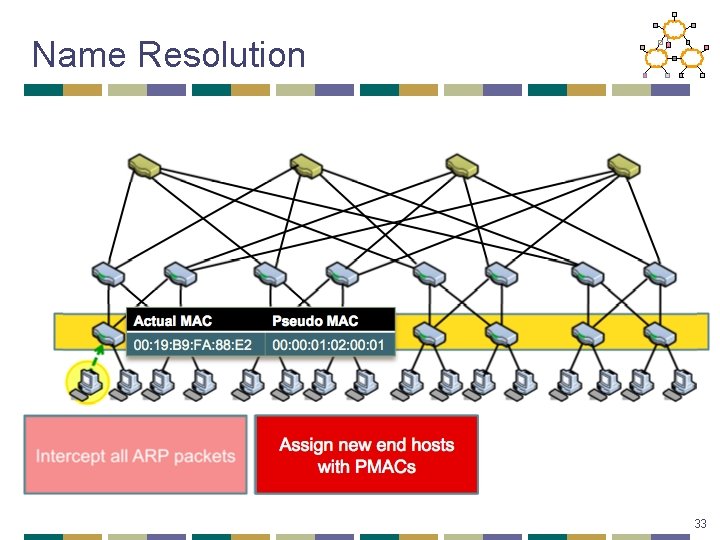
Name Resolution 33
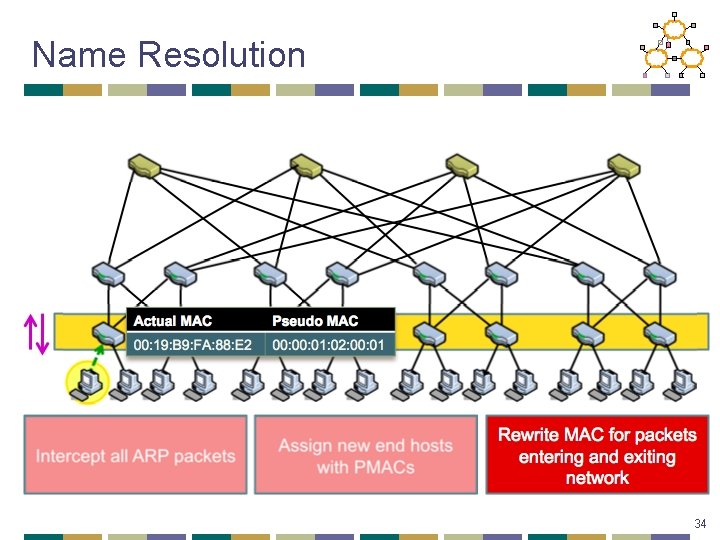
Name Resolution 34
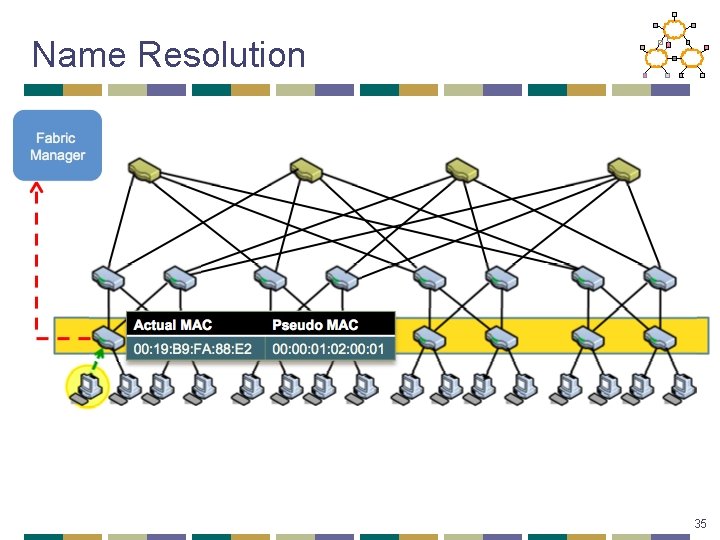
Name Resolution 35
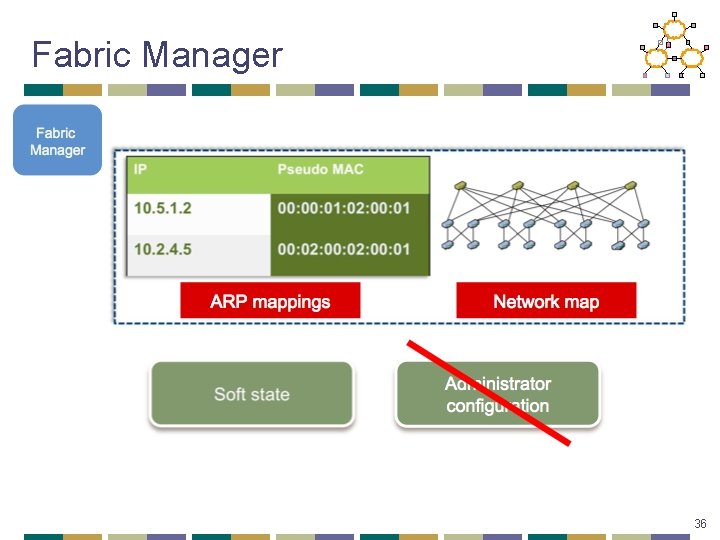
Fabric Manager 36
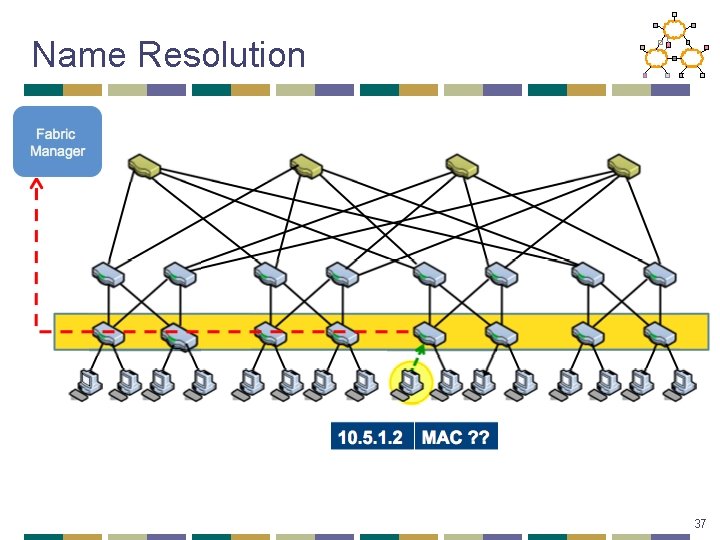
Name Resolution 37
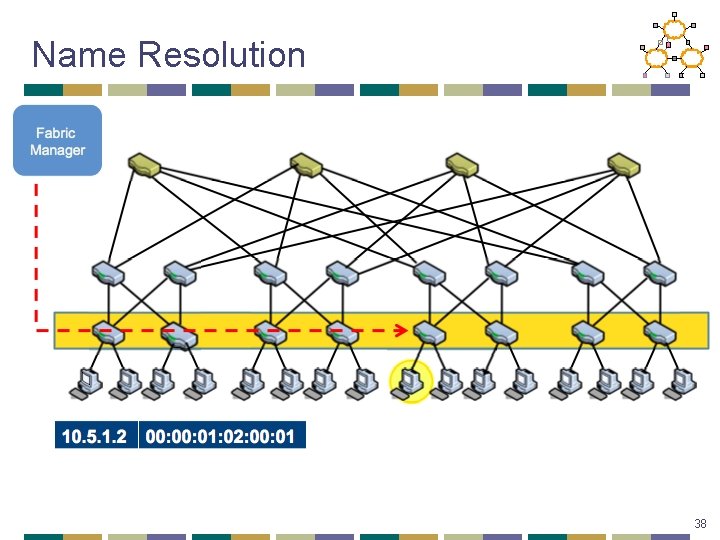
Name Resolution 38
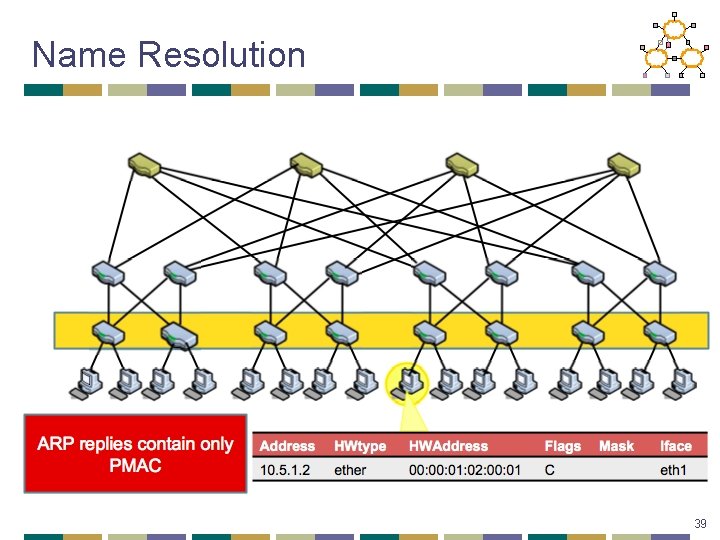
Name Resolution 39
Next Lecture • Data center topology • Data center scheduling • Required reading • Efficient Coflow Scheduling with Varys • c-Through: Part-time Optics in Data Centers 43